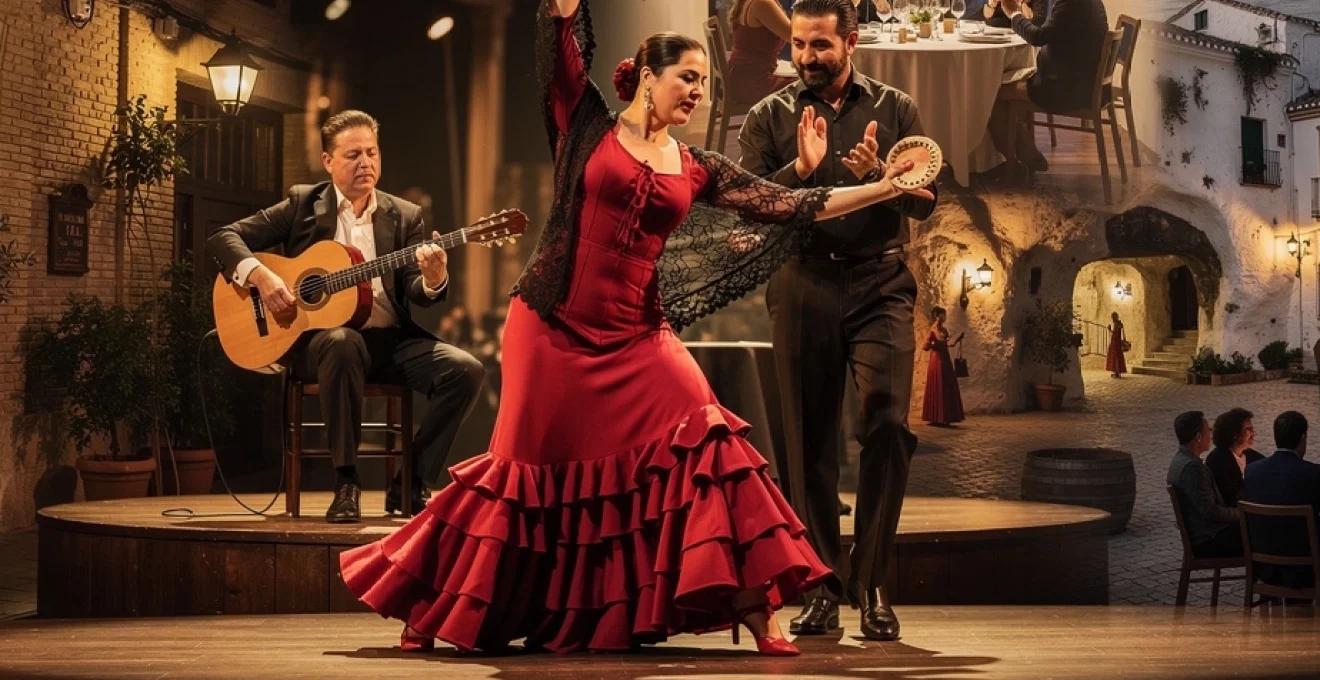
Spain’s flamenco culture represents one of the world’s most passionate and technically demanding art forms, where the convergence of music, dance, and poetry creates an experience that transcends mere entertainment. This UNESCO-recognised Intangible Cultural Heritage emerged from the cultural crossroads of Andalusia, where Romani, Moorish, Jewish, and Andalusian traditions merged over centuries to create something entirely unique. Today, flamenco continues to evolve whilst maintaining its authentic essence, attracting millions of visitors who seek to witness the raw emotion and extraordinary skill that defines this Spanish cultural treasure.
The geography of flamenco in Spain tells a story of regional diversity and artistic innovation. From the birthplace traditions of Jerez de la Frontera to the contemporary interpretations found in Madrid’s modern venues, each city offers distinct perspectives on this multifaceted art form. Understanding where to experience flamenco requires appreciating not just the performance venues themselves, but the cultural contexts that shape how this art form is preserved, taught, and celebrated across different Spanish territories.
Seville’s authentic flamenco patrimony and legendary tablaos
Seville stands as the undisputed capital of contemporary flamenco culture, where the art form achieved its golden age during the 19th and early 20th centuries. The city’s position along the Guadalquivir River made it a natural meeting point for diverse cultural influences, creating the perfect environment for flamenco’s evolution from intimate family gatherings to professional theatrical presentations. Today, Seville maintains over thirty active tablaos, making it the world’s most concentrated hub for authentic flamenco performance.
The distinctive palos (flamenco styles) associated with Seville include the melancholic soleares and the celebratory alegrías, both of which showcase the city’s ability to express the full spectrum of human emotion through flamenco. Professional cantaores (singers), bailaores (dancers), and tocaores (guitarists) consider Seville performances as the ultimate test of their artistic capabilities, where discerning audiences demand nothing less than technical perfection combined with profound emotional authenticity.
Casa de la memoria flamenco performance venue analysis
Casa de la Memoria operates within a meticulously restored 15th-century palace, where intimate performances unfold in a setting that honours flamenco’s historical roots. The venue’s programming philosophy emphasises educational value alongside entertainment, featuring pre-performance talks that explain the cultural significance of each palo being presented. This approach creates a deeper appreciation for the art form amongst international visitors whilst maintaining the respect that local aficionados demand.
The acoustic design of Casa de la Memoria deserves particular attention, as the venue’s architects have carefully balanced the need for amplification with the preservation of flamenco’s natural sound dynamics. The intimate 100-seat capacity ensures that every audience member can observe the subtle facial expressions and intricate footwork that constitute essential elements of flamenco communication. Performances typically feature a rotation of established artists and promising newcomers, providing a comprehensive overview of contemporary Sevillian flamenco styles.
El arenal theatre traditional palo presentations
El Arenal Theatre represents the pinnacle of theatrical flamenco presentation in Seville, where full-scale productions combine multiple palos into cohesive artistic narratives. The venue’s programming includes both traditional presentations that follow classical flamenco structures and innovative productions that explore contemporary themes whilst maintaining authentic musical foundations. This approach attracts both purist audiences and those seeking to understand how flamenco continues to evolve as a living art form.
The theatre’s technical capabilities allow for sophisticated lighting designs that enhance the dramatic impact of flamenco without overshadowing the performers themselves. Professional costume workshops on-site ensure that traditional flamenco attire meets the highest standards of authenticity, from the precise construction of trajes de flamenca to the selection of appropriate accessories that complement specific palos. Educational programmes offered by El Arenal include masterclasses in flamenco appreciation for serious students and cultural tourists alike.
Los gallos tablao
Los gallos tablao artistic heritage and master performers
Los Gallos, located on Plaza de Santa Cruz, is one of Seville’s oldest and most respected tablaos, active since 1966. Its reputation rests on a consistent commitment to artistic excellence, prioritising small ensembles of top-tier performers over large-scale spectacle. The venue’s intimate rectangular stage places the audience within a few metres of the artists, allowing you to feel every heel strike of the zapateado and every breath of the cante. For travellers seeking an authentic flamenco experience in Spain, Los Gallos functions almost like a living museum of classic Sevillian style.
Programming at Los Gallos usually features around ten artists per evening, rotating between different palos and formations to show the breadth of the flamenco repertoire. You might see a solemn seguiriyas followed by an explosively joyful bulerías, each interpreted by dancers with distinct personal styles. Unlike some larger tourist-oriented shows, microphone use is discreet and designed to preserve the natural timbre of voice and guitar. Booking ahead is strongly recommended, particularly during spring fair season and the autumn cultural calendar, when demand for high-quality flamenco in Seville peaks.
Museo del baile flamenco educational programmes
The Museo del Baile Flamenco, founded by famed dancer Cristina Hoyos, combines an interactive museum with a professional performance space and training centre. For visitors eager to understand flamenco beyond a single show, the museum’s multimedia exhibits explain the evolution of the art from Romani and Andalusian roots to its current global recognition. Large-scale projections, archival recordings, and costume displays help demystify technical terms like compás (rhythmic structure) and palmas (hand clapping), making the complexity of flamenco more approachable. This is one of the best places in Seville to experience flamenco as both culture and contemporary performance practice.
In addition to daily shows, the Museo del Baile Flamenco offers short courses and intensive workshops that attract students from around the world. These programmes range from beginner introductions to professional-level technique classes in baile, cante, and toque. If you have ever wondered what it feels like to mark time in a 12-beat soleá or coordinate hand claps with footwork, the museum’s classes provide a structured way to try. For serious enthusiasts considering longer stays in Seville, the museum staff can advise on local dance schools, festivals, and peñas where you can deepen your engagement with authentic flamenco culture.
Madrid’s contemporary flamenco scene and professional training institutes
Madrid may not be flamenco’s birthplace, but it has become a powerful magnet for professional artists from across Spain. As the national capital, the city offers year-round performance opportunities, high-profile festivals, and access to recording studios and television production. This concentration of talent has turned Madrid into a laboratory for new flamenco, where traditional palos coexist with jazz, Latin, and contemporary dance influences. For travellers, this means you can experience both classic tablao formats and boundary-pushing productions within the same city.
The most recognisable flamenco styles performed in Madrid include emotionally intense tientos-tangos, driving bulerías, and virtuosic fandangos. Because many artists base themselves in Madrid between international tours, you are likely to encounter award-winning dancers and singers even in relatively small venues. The city also hosts several professional training institutes and academies where emerging bailaores and cantaores refine their technique. If Seville is often compared to flamenco’s spiritual heart, Madrid functions as its creative brain, constantly generating new interpretations and careers.
Cardamomo tablao modern fusion performances
Cardamomo Tablao, located near Madrid’s central Puerta del Sol area, has earned its reputation as a stage where traditional and modern flamenco intersect. Officially recognised as of cultural interest by Madrid’s city council, the venue is known for tightly curated line-ups featuring both established maestros and rising stars. The typical Cardamomo programme showcases a wide range of palos, from deep, introspective tarantos to high-energy rumba flamenca pieces that flirt with pop and Latin rhythms. For many visitors, this is their first exposure to contemporary flamenco fusion in Spain.
The performance space at Cardamomo is compact, which intensifies the acoustic power of guitar and footwork. Modern lighting and sound design support, rather than overshadow, the raw energy of live performance, highlighting details like sweat, flying ruffles, and the subtle visual dialogue between dancer and guitarist. Because shows often sell out, advance online booking is advisable, particularly on weekends and during peak tourism months. If you are interested in seeing how young artists reinterpret flamenco for 21st-century audiences, Cardamomo should be high on your Madrid itinerary.
Corral de la morería michelin-starred dining integration
Corral de la Morería, founded in 1956, is widely regarded as one of the most prestigious tablaos in the world. Situated near Madrid’s Royal Palace, it combines high-calibre flamenco with Michelin-starred gastronomy, making it an ideal choice if you want a single, immersive evening of Spanish culture. Legendary performers such as Paco de Lucía, Antonio Gades, and Blanca del Rey have appeared on its small stage, and the venue continues to attract top-tier artists. The intimate layout ensures that even while enjoying a gourmet tasting menu, your focus remains firmly on the performers.
The culinary offering at Corral de la Morería emphasises contemporary Basque and Spanish cuisine, carefully timed so that service does not interrupt key numbers in the show. This integration of fine dining and live flamenco requires precise coordination between kitchen and stage managers, turning the evening into a carefully choreographed experience. Expect to pay a premium compared with other flamenco venues in Madrid, but in return you receive both a reference-quality performance and one of the city’s most acclaimed dinners. For special occasions or for travellers with limited nights in the capital, this is often the recommended option to experience high-end flamenco in Spain.
Centro de arte flamenco professional development courses
Madrid’s role as a training hub for flamenco is reflected in specialised centres such as the city’s dedicated flamenco art institutes. These organisations focus on long-term professional development, offering structured study plans for aspiring dancers, singers, and guitarists. Courses typically include daily technique classes, repertoire study by palo, musical theory related to flamenco rhythm, and performance practice. Like a conservatory for classical music, a flamenco art centre in Madrid provides systematic training that prepares students for careers on national and international stages.
Many of these institutes collaborate with local tablaos, allowing advanced students to gain stage experience under real performance conditions. You will often find that the dancer who impressed you in a late-night show is also a teacher or alumnus of one of these centres. Short-term intensive courses, often held in summer, attract international students who want to deepen their understanding of flamenco technique and history. If you are considering more than just a casual workshop and want to study flamenco in Spain in a serious way, researching Madrid’s flamenco art centres is a strategic first step.
Villa-matas flamenco academy master class methodology
Among Madrid’s specialised academies, institutions like Villa-Matas Flamenco Academy have developed distinctive teaching methodologies for advanced practitioners. Their master classes focus less on basic steps and more on interpretation, stage presence, and improvisation within traditional structures. For example, a session on bulerías might explore how to enter and exit the compás, communicate with musicians, and build a personal style without losing respect for canonical forms. This kind of instruction is essential for dancers seeking to move from technical proficiency to true artistry.
The academy’s approach often blends individual coaching with ensemble work, mirroring the conditions of a professional tablao. Students learn not only how to execute difficult turns and footwork but also how to listen to live guitar and cante in real time, adjusting their phrasing accordingly. Observers frequently compare this interaction to jazz improvisation, where structure and spontaneity must coexist harmoniously. While these master classes are aimed primarily at experienced dancers, some academies open selected sessions to observers, offering culture-focused visitors a rare behind-the-scenes look at how flamenco excellence is built.
Granada’s sacromonte cave dwelling zambra traditions
Granada’s relationship with flamenco is inseparable from the Sacromonte district, where cave dwellings carved into the hillside have hosted performances for more than a century. Here, the dominant style is zambra, a form associated with the city’s Romani and Moorish heritage, traditionally performed at weddings and family celebrations. Unlike the more formal tablao format, zambra emphasises circular dancing, barefoot movement, and a strong sense of communal participation. When you attend a cave show in Sacromonte, you are stepping into an environment where flamenco feels less like theatre and more like a living social ritual.
The physical characteristics of the caves dramatically shape the flamenco experience. Low, whitewashed ceilings and curved walls act as natural amplifiers, creating an echo that intensifies hand claps, heel strikes, and vocal ornamentation. Performers often move along the length of the space, with the audience seated on either side, so you are never far from the action. Reputable venues in Sacromonte limit audience numbers to preserve this intimacy, even during peak season. For many visitors, a night of zambra in Granada ranks among the most memorable flamenco experiences in Spain, especially when paired with views of the Alhambra illuminated at night.
Jerez de la frontera’s pure flamenco origins and festival calendar
Jerez de la Frontera is frequently described as one of flamenco’s spiritual birthplaces, particularly for cante jondo, the “deep song” tradition. The city’s working-class neighbourhoods have produced many of the most influential singers and guitarists of the last century. Here, flamenco is woven into everyday life, from informal gatherings in tabancos (traditional sherry bars) to organised performances in peñas and theatres. If you are interested in experiencing flamenco in its most unvarnished, emotionally raw form, Jerez deserves a dedicated visit rather than a brief stopover.
The city’s flamenco calendar is anchored by several key events, including the winter Villancicos flamencos (flamenco-style Christmas carols) and various summer series in local bodegas. However, the highlight is undoubtedly the Festival de Jerez, which draws artists, critics, and aficionados from around the world. During festival weeks, the atmosphere in Jerez shifts entirely: you might attend a world-class theatre premiere in the evening and still find spontaneous singing continuing in small bars into the early hours. Planning your visit around this period is one of the most effective ways to immerse yourself in authentic flamenco culture in Spain.
Festival de jerez annual programming structure
The Festival de Jerez, usually held between late February and early March, focuses heavily on flamenco dance while still showcasing high-level cante and guitar. The official programme is divided between main-stage productions at venues such as Teatro Villamarta and more intimate performances in smaller spaces and bodegas. Large-scale works often premiere here, with renowned choreographers using the festival as a platform to debut new creations. Simultaneously, late-night series spotlight emerging talent, ensuring a balance between established names and the next generation.
In addition to performances, the festival is internationally known for its extensive programme of workshops and courses, attracting hundreds of students each year. Classes are grouped by level and palo, ranging from beginners’ tangos to advanced seguiriyas and bulerías por fiesta. A typical day for a festival student might include morning technique classes, afternoon repertoire sessions, and evening performances followed by informal gatherings. Because many courses sell out months in advance, early registration is crucial if you plan to study as well as watch flamenco in Jerez.
Peña flamenca la bulería community gatherings
Peña Flamenca La Bulería is one of Jerez’s most respected peñas, renowned for preserving the city’s distinctive style of bulerías. Unlike commercial tablaos, peñas are membership-based cultural associations that prioritise community over tourism. Nevertheless, visitors are generally welcome at programmed events, provided they respect local etiquette and the informal atmosphere. At La Bulería, you are likely to encounter intergenerational line-ups where veteran singers share the stage with young relatives, reflecting flamenco’s transmission through family lines.
Performances at La Bulería often feel closer to a family celebration than a staged show. Audience members may join in with hand clapping, shouts of encouragement, or even impromptu dancing when the mood is right. This participatory aspect can be surprising if you are used to more formal theatre environments, but it is central to understanding flamenco as a living, social practice. To make the most of your visit, arrive early, purchase a drink or light snack at the bar, and be prepared to stay late—some of the most powerful moments happen after midnight when the schedule loosens and spontaneity takes over.
Bodegas gonzález byass cultural events integration
Jerez’s identity as both a sherry capital and flamenco cradle comes together in venues such as Bodegas González Byass, home of the famous Tío Pepe brand. While primarily a working winery, the bodega frequently hosts cultural events that pair wine tasting with live flamenco performances. These evenings highlight how local cante styles evolved alongside the rhythms of vineyard work and cellar life, creating a strong link between landscape, labour, and musical expression. For visitors, this integration offers a multisensory introduction to Jerez culture.
Event formats at González Byass vary from small-scale recitals in historic courtyards to larger concerts staged among the sherry barrels. Lighting, acoustics, and seating are carefully arranged so that the industrial architecture enhances rather than competes with the performance. Typically, tickets include a guided tour of the bodega and a tasting flight of different sherries, encouraging you to associate specific flavours with moments from the show. If you are planning a flamenco-focused itinerary in Andalusia, including at least one bodega event in Jerez provides a valuable perspective on how music and local industry intertwine.
Real escuela andaluza del arte ecuestre flamenco collaborations
The Real Escuela Andaluza del Arte Ecuestre, or Royal Andalusian School of Equestrian Art, is best known for its classical dressage performances featuring purebred Andalusian horses. However, the institution also collaborates with flamenco artists to create joint productions that showcase two of Jerez’s most iconic cultural exports: horsemanship and music. In these shows, choreographed riding sequences are synchronised with live flamenco, drawing parallels between the precision of equestrian movements and the rhythmic complexity of zapateado. The result is a highly theatrical experience that remains rooted in local tradition.
These collaborative performances are particularly appealing if you are travelling with family or mixed-interest groups, as they offer a broader spectacle than a standard flamenco recital. Schedules vary seasonally, so it is advisable to check event calendars and book tickets in advance, especially during festival periods. While purists may prefer the intimacy of a peña, witnessing the dialogue between dancer, singer, guitarist, and horse provides a compelling example of how flamenco adapts to new contexts without losing its expressive core. For many visitors, this fusion encapsulates the elegance and intensity associated with Jerez and Andalusia as a whole.
Cádiz’s maritime flamenco heritage and carnival connections
Cádiz, one of Western Europe’s oldest continuously inhabited cities, offers a distinctive strand of flamenco shaped by its maritime history and famous carnival traditions. As a major port connecting Spain with the Americas, Cádiz absorbed musical influences from Caribbean rhythms and Latin song forms, which subtly filtered into local tanguillos and alegrías. The city’s flamenco is often described as lighter and more playful than the darker styles of inland Andalusia, yet beneath the humour lies a strong sense of social commentary. If you are interested in how geography and trade routes influence flamenco in Spain, Cádiz provides a fascinating case study.
The annual Carnival of Cádiz, held in February, is particularly important for understanding the city’s performance culture. Street groups known as chirigotas and comparsas perform satirical songs that, while not strictly flamenco, share its emphasis on rhythm, wordplay, and improvisation. Many local flamenco artists participate in carnival, moving fluidly between genres throughout the year. For visitors, this crossover means that an evening in Cádiz might begin with formal flamenco in a tablao and end with carnival-style singing in a neighbourhood bar, illustrating the city’s broad spectrum of musical expression.
Regional flamenco palo variations across spanish territories
While Andalusia is undoubtedly the heartland of flamenco, the art form has developed distinct regional characteristics across Spain. Each territory interprets core palos through its own history, dialect, and musical influences, much like different wine regions produce unique expressions from the same grape. Understanding these variations can help you decide which cities to prioritise if you want to experience a particular flavour of flamenco in Spain. It also reveals how adaptable flamenco is, capable of thriving in both traditional and cosmopolitan environments.
In Seville and Jerez, you will encounter some of the most traditional and emotionally intense forms, such as soleá, seguiriyas, and bulerías sung with a distinctive local accent. Granada emphasises zambra and fandangos del Albaicín, reflecting the city’s Romani and Moorish legacies in both melody and movement. Cádiz is synonymous with alegrías de Cádiz and tanguillos, characterised by bright, witty lyrics and agile footwork that mirror the city’s carnival spirit. Each of these styles uses similar rhythmic frameworks but inflects them with specific melodic turns and performance attitudes.
Beyond Andalusia, Madrid has become a melting pot where regional styles converge and hybridise, producing innovative fusions that incorporate jazz, contemporary dance, and world music. Barcelona’s flamenco scene similarly blends Andalusian roots with Catalan cultural influences and an international audience, often foregrounding experimental projects. Even in cities like Valencia, Bilbao, or Palma de Mallorca, you can now find quality venues and festivals where local musicians collaborate with flamenco artists. As you plan your journey through Spain’s best cities for flamenco, consider which combination of tradition, innovation, and regional flavour most appeals to you—there is no single “correct” place to experience this art, only different perspectives on a shared, deeply expressive language.