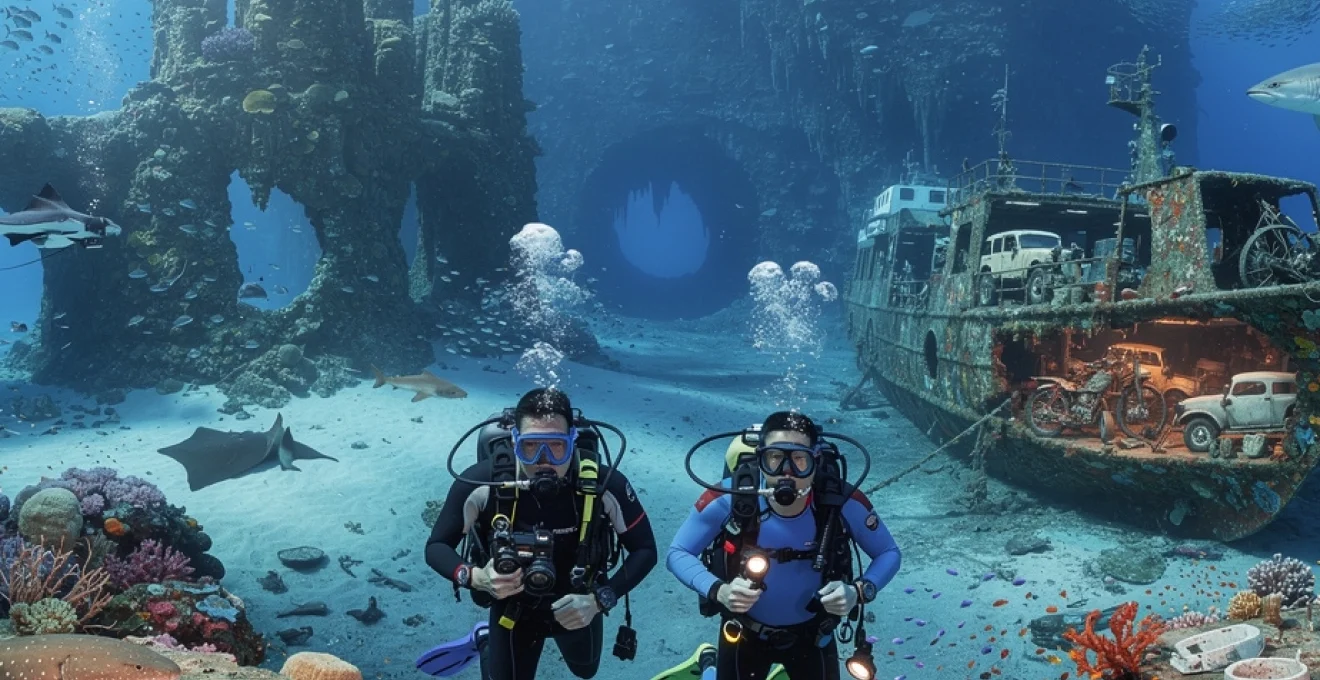
The underwater realm harbours some of Earth’s most spectacular and diverse ecosystems, where kaleidoscopic coral gardens, enigmatic shipwrecks, and majestic marine megafauna create experiences that transcend ordinary travel. For those who seek to explore beneath the surface, certain destinations stand apart—not merely for their aquatic beauty, but for the extraordinary encounters they consistently deliver. From nutrient-rich currents that summon vast schools of hammerhead sharks to crystalline walls adorned with soft corals in every conceivable hue, these locations represent the pinnacle of what scuba diving can offer. Whether you’re drawn to adrenaline-fuelled drift dives through powerful channels, contemplative wreck explorations steeped in history, or intimate macro photography sessions with diminutive reef residents, the world’s premier diving destinations cater to every underwater aspiration.
Indo-pacific coral triangle: raja ampat and komodo national park dive sites
Situated at the epicentre of marine biodiversity, the Coral Triangle encompasses waters so rich in species that marine biologists have documented over 1,500 fish species and 600 coral species within a single region. Raja Ampat and Komodo National Park exemplify this extraordinary concentration of life, offering divers access to ecosystems that function as evolutionary laboratories. The sheer density of marine organisms here creates underwater landscapes where every square metre teems with activity—from cryptic pygmy seahorses clinging to gorgonian fans to thundering schools of jacks that momentarily blot out the sun. Water temperatures typically range between 27-29°C, allowing for comfortable diving year-round, though seasonal variations influence visibility and species encounters significantly.
The geological complexity of these Indonesian archipelagos contributes substantially to their ecological richness. Volcanic seamounts rise abruptly from abyssal depths, creating upwellings that funnel nutrients from the deep ocean into shallow reef systems. These nutrient highways attract pelagic species whilst simultaneously supporting the intricate food webs that sustain Indo-Pacific coral reefs. Current patterns vary dramatically between sites and seasons, with some locations delivering gentle conditions suitable for novice divers whilst others challenge even advanced practitioners with surge, downcurrents, and velocities exceeding three knots.
Misool’s soft coral gardens and pelagic encounters at boo windows
The southern reaches of Raja Ampat harbour Misool, an area distinguished by its exceptionally healthy soft coral formations that cascade down reef walls in vivid cascades of orange, purple, and crimson. Boo Windows stands amongst Misool’s most celebrated sites, where a natural archway at approximately 18 metres creates a theatrical frame for the cobalt water beyond. The topography here features multiple swim-throughs and caverns adorned with whip corals and sea fans that host Coleman shrimp and various nudibranch species. During incoming currents, grey reef sharks patrol the deeper sections whilst trevally and barracuda congregate near the wall’s edge, creating dynamic encounters that shift with tidal cycles.
Visibility at Misool sites frequently exceeds 30 metres during the October-to-April dry season, when plankton concentrations remain relatively low. The protected status of surrounding waters has allowed fish populations to recover substantially, with biomass levels now approaching historical baselines. Night diving at Boo Windows reveals an entirely different cast of characters: Spanish dancers undulate through the water column, bobtail squids hover above the sand, and epaulette sharks use their pectoral fins to “walk” along the bottom in search of crustaceans. The combination of macro diversity and pelagic action makes this location particularly valuable for underwater photographers seeking variety within a single dive.
Batu bolong’s Nutrient-Rich currents and macro photography opportunities
Komodo National Park’s Batu Bolong represents one of Indonesia’s most exhilarating dive sites, where a submerged pinnacle rises from depths exceeding 60 metres to within five metres of the surface. The site’s name translates to “rock with a hole,” referencing a small archway near the summit that divers can navigate during slack tide. What distinguishes Batu Bolong isn’t merely its dramatic topography but the powerful currents that sweep
nutrient-rich water up the seamount. These upwellings act like an underwater conveyor belt, supplying plankton that in turn feeds an immense biomass of reef fish, turtles, and cruising pelagics. On the sheltered side, you can drift lazily over gardens of acropora and plate corals, pausing to photograph leaf scorpionfish, orangutan crabs, and juvenile boxfish. On the current-facing side, however, your focus shifts to maintaining trim and depth control as big schools of fusiliers, surgeonfish, and snappers funnel past like a living river.
Because conditions at Batu Bolong can change rapidly, local guides typically time dives around slack tide and restrict routes to the lee side when currents accelerate. Many operators consider it a no-go site for novice divers during spring tides, and you are usually briefed to avoid the blue and remain close to the reef to prevent being swept into downcurrents. For macro photographers, the upper terraces offer relatively calm pockets where you can search for pygmy seahorses on sea fans, tiny squat lobsters on black corals, and flamboyant nudibranchs creeping across sponge-encrusted boulders. The juxtaposition of adrenaline-fuelled current diving and meticulous macro hunting is one of the reasons Batu Bolong remains a staple on advanced liveaboard itineraries.
Castle rock seamount: manta ray cleaning stations and schooling trevally
Further north in Komodo, Castle Rock rises from deep water to within a few metres of the surface, forming a classic seamount that intercepts open-ocean currents. This underwater outpost functions as a meeting point for pelagic predators and reef residents alike, with several manta ray cleaning stations located along its flanks. During peak flow you can hook into the rock with a reef hook, settle into a stable position, and watch as mantas loop effortlessly overhead, pausing to have parasites picked off by clouds of cleaner wrasse. Behind them, giant trevally, dogtooth tuna, and schooling barracuda cruise in and out of the blue, capitalising on baitfish driven into the current.
Dive profiles at Castle Rock typically begin with a negative entry up-current of the seamount, followed by a rapid descent to around 25–30 metres where the action is most intense. From there, you either drift along the plateau or use your hook to remain stationary in the strongest part of the flow. Because currents here can exceed three knots, an advanced open water certification and confidence in blue-water ascents are strongly recommended. In calmer conditions, you can explore the leeward side of the rock in greater detail, finding scorpionfish, lionfish, and ribbon eels tucked between coral heads. The site encapsulates why Komodo is considered one of the best destinations in the world for unforgettable scuba diving experiences that combine big-animal encounters with challenging, rewarding conditions.
Dampier strait’s pygmy seahorse habitats and wobbegong shark sightings
Back in Raja Ampat, the Dampier Strait functions as a bottleneck between the Pacific and Indian Oceans, channelling vast water masses through relatively narrow passages. This hydrological squeeze supercharges nutrient delivery and creates some of the region’s most iconic dive sites, including Cape Kri, Blue Magic, and Sardine Reef. On these reefs, massive gorgonian sea fans flourish in areas of moderate current, providing essential habitat for several species of pygmy seahorse. Finding these thumbnail-sized fish requires patience and a keen eye, but with a knowledgeable guide and a good macro lens you can capture portraits of Bargibant’s, Denise’s, or even Pontohi pygmy seahorses clinging to their host corals.
The benthic community here also supports a healthy population of tasseled wobbegong sharks, masters of camouflage that often lie motionless beneath coral bommies or along ledges. At Blue Magic, it’s not uncommon to encounter multiple wobbegongs on a single dive, their fringed lobes blending seamlessly with the surrounding sponges. Meanwhile, the mid-water column may be dominated by swirling anthias, batfish, and barracuda, with occasional appearances by oceanic mantas using cleaning stations on the reef’s shoulders. Given the variety of microhabitats compressed into relatively small areas, many divers opt to repeat key sites in the Dampier Strait, alternating between wide-angle and macro configurations to fully appreciate the spectrum of life on display.
Caribbean basin: cozumel’s drift diving and belize barrier reef systems
While the Indo-Pacific Coral Triangle is famed for its species richness, the Caribbean Basin offers a different yet equally compelling set of scuba diving experiences. Cozumel and the Belize Barrier Reef—part of the Mesoamerican Reef, the world’s second-largest barrier reef system—provide clear, warm waters, dramatic walls, and effortless drift dives that are ideal for both intermediate and advanced divers. Visibility often exceeds 30 metres, especially during the dry season from December to April, making these destinations particularly attractive for underwater photographers and videographers. Here, the emphasis shifts from labyrinthine coral gardens to towering limestone formations, extensive spur-and-groove reef structures, and iconic blue holes that plunge into the depths.
Current plays a central role in shaping the diving character of Cozumel in particular. Most dives are conducted as drifts, with boats following the trail of bubbles as divers glide along reef edges and sandy channels. This style of diving minimises finning effort, allowing you to focus on buoyancy control, gas management, and observation rather than navigation. In Belize, long barrier reefs and offshore atolls such as Lighthouse, Turneffe, and Glover’s offer a mix of gentle wall dives, shallow coral gardens, and bucket-list adventures like the Great Blue Hole. Together, these Caribbean sites demonstrate how varied and rewarding tropical diving can be, even outside the hyper-diverse Indo-Pacific.
Palancar reef’s cathedral formations and swim-through corridors
Palancar Reef, located off Cozumel’s southwestern coast, is arguably the island’s signature dive complex, encompassing several named sites such as Palancar Gardens, Palancar Horseshoe, and Palancar Caves. What unites these areas is their striking topography: towering buttresses of coral and limestone interspersed with canyons, archways, and cavern-like swim-throughs. As you drift along at depths between 15 and 25 metres, sunbeams pierce openings in the reef, creating cathedral-like shafts of light that illuminate schools of chromis and angelfish. The sensation is often compared to gliding through an underwater cathedral, with each chamber revealing a new tableau of sponges, sea fans, and overhangs draped in rope corals.
The relative shelter provided by Palancar’s formations makes it an attractive site even when surface conditions are choppy, and many sections are suitable for divers with only a few logged drift dives. That said, overhead environments require disciplined buoyancy control and situational awareness to avoid stirring up sediment or colliding with fragile structures. Turtles, nurse sharks, and southern stingrays are frequent visitors, while eagle rays tend to appear more often during the cooler months from January to March. If you are planning a multi-day trip focused on the best destinations in the world for unforgettable scuba diving experiences, allocating several dives to Palancar allows you to explore different routes and lighting conditions, especially for wide-angle photography.
Great blue hole: stalactite formations at 40-metre depths
Few dive sites are as instantly recognisable as Belize’s Great Blue Hole, a near-perfect circular sinkhole more than 300 metres across and approximately 125 metres deep. From the air, its deep indigo core sharply contrasts with the surrounding shallow reefs, but the real spectacle lies within its vertical walls. Standard recreational dive profiles descend along the limestone wall to around 40 metres, where you encounter immense stalactites and stalagmites formed during a previous ice age when sea levels were far lower. Swimming between these formations feels akin to exploring a submerged cathedral carved by geological time rather than human hands.
Because of the depth and the potential for nitrogen narcosis, the Great Blue Hole is recommended only for experienced advanced open water divers with solid buoyancy and gas management skills. There is relatively little colourful marine life at depth; instead, the attraction is the surreal, almost lunar environment and the sense of scale as you glide past metre-thick stalactites. During ascent and safety stops on the shallower rim, reef sharks and large groupers are sometimes seen circling the perimeter. Many Belize liveaboard itineraries combine a single deep dive in the Blue Hole with subsequent, shallower dives on nearby reefs where coral cover and fish life are more abundant, ensuring you experience both the geological and biological highlights of the region.
Turneffe atoll’s wall diving and eagle ray migration routes
Turneffe Atoll, the largest of Belize’s offshore atolls, offers an extensive network of fringing reefs and vertical walls that drop from shallow coral gardens into the deep blue. Sites along the eastern and southern edges of the atoll, such as Black Beauty and The Elbow, are especially prized for their dramatic wall diving. Here, you can start your dive in just a few metres of water among brain corals and sea fans, then follow the slope until it transitions into an abrupt drop-off where sponges and black corals thrive in the dimmer, cooler water. Along these walls, you may encounter schools of snapper and jacks forming dense aggregations that resemble airborne flocks, shifting direction in perfect synchrony.
Turneffe is also situated along known migration routes for spotted eagle rays, which are often seen flying gracefully along the reef edge, particularly during late winter and early spring. For many divers, hovering mid-water as these rays pass by is a highlight on par with any shark encounter. Currents at Turneffe tend to be milder than at more exposed atolls, making the area suitable for divers who want to experience wall diving without the added complexity of strong flows. Most operators base trips out of Belize City or Ambergris Caye, with full-day excursions or liveaboard itineraries allowing you to explore multiple sectors of the atoll and appreciate its varied topography and marine life.
Santa rosa wall’s deep-water gorgonians and nurse shark aggregations
Back in Cozumel, Santa Rosa Wall showcases the island’s classic combination of steep drop-offs and relaxed drift diving. The wall itself begins at around 15 metres and plummets into depths far beyond recreational limits, its face adorned with large barrel sponges, sea whips, and deep-water gorgonians swaying gently in the current. Drifting along this vertical expanse, you may feel as though you are flying beside an underwater cliff, with the Caribbean’s cobalt void stretching endlessly beneath you. The ledges and crevices along the wall provide refuge for lobsters, green moray eels, and shy black groupers, while the sandy shallows above are frequented by southern stingrays and peacock flounders.
Nurse sharks are particularly common at Santa Rosa, often resting motionless under overhangs or cruising slowly along the reef in search of crustaceans. Their docile nature makes them excellent subjects for photography, provided you maintain respectful distance and avoid obstructing their path. Because of the site’s depth variation and variable current strength, guide briefings usually emphasise staying with the group and monitoring no-decompression limits carefully. For many divers visiting Cozumel, Santa Rosa Wall epitomises the island’s appeal: effortless drifting, expansive vistas, and regular encounters with charismatic megafauna in clear, warm water.
Red sea wrecks: ss thistlegorm and ras mohammed marine park
The northern Red Sea has long been a cornerstone of global dive tourism, thanks to its remarkable blend of healthy coral reefs, dramatic drop-offs, and historically significant wrecks. Water temperatures range from 22–28°C depending on the season, and visibility commonly exceeds 20 metres, especially during the late summer and early autumn months. Among the many sites accessible from Egyptian ports such as Sharm El Sheikh and Hurghada, the SS Thistlegorm and the reefs of Ras Mohammed Marine Park stand out as essential experiences. Together, they offer a compelling mix of cultural history and natural splendour that few other regions can match.
Unlike many tropical destinations, the Red Sea’s isolation from major river systems keeps sediment loads low, contributing to its signature crystalline clarity and vibrant reef colours. Steep coastal bathymetry means that deep blue water lies close to shore, allowing even day boats to reach world-class dive sites within a relatively short time. For divers seeking the best destinations in the world for unforgettable scuba diving experiences that combine wreck exploration with prolific marine life, the northern Red Sea consistently delivers, whether on short liveaboard safaris or land-based excursions.
Thistlegorm’s WWII cargo holds and motorcycle artefact preservation
The SS Thistlegorm, a British merchant vessel sunk by German bombers in 1941, rests at depths of around 16–33 metres in the Straits of Gubal and is widely regarded as one of the finest wreck dives anywhere. What makes the Thistlegorm unique is not just its size but the extraordinary preservation of its cargo: trucks, BSA and Norton motorcycles, locomotives, aircraft parts, and crates of ammunition lie frozen in time within its holds. Penetration dives allow you to swim through these cargo bays, weaving between vehicles that appear almost ready to drive off the ship’s ramps, albeit now draped in soft corals and sponges.
Because of the wreck’s popularity, dive operators carefully manage routes and depth limits to minimise congestion and preserve both artefacts and safety. Penetration should only be attempted with a qualified guide and appropriate training; silt-outs and disorientation are real risks in enclosed spaces. Outside the hull, schooling batfish, trevally, and barracuda circle the structure, and it is not uncommon to see crocodilefish resting along the deck. Over the decades, the Thistlegorm has transformed from a wartime casualty into a thriving artificial reef, illustrating how human history and marine ecology can intertwine beneath the waves.
Shark and yolanda reef: toilet bowl wreckage and barracuda vortexes
At the southern tip of the Sinai Peninsula, Ras Mohammed Marine Park protects a cluster of reefs and walls that rank among the Red Sea’s most photogenic. Shark and Yolanda Reef, often dived as a single drift, is renowned for its surreal combination of natural and man-made features. The site takes its name from two shallow pinnacles rising from a saddle of coral, as well as the wreck of the Yolanda, a Cypriot cargo ship that spilled an eclectic load of toilets, bathtubs, and bathroom fixtures across the reef slope in 1980. Today, these porcelain relics lie scattered among the corals, colonised by sponges and small reef fish, creating a scene that feels almost like an underwater art installation.
Beyond the novelty of the “toilet garden,” the surrounding drop-offs and plateaus host dense schools of fusiliers, snappers, and barracuda that often form swirling vortexes in the blue. During summer months, when pelagic activity peaks, you may also encounter grey reef sharks and even occasional hammerheads cruising along the current-swept edge. Most dives here start on Shark Reef, where you hover over the vertical wall, and finish on Yolanda Reef among the scattered cargo. Strong currents are common, so negative entries and prompt descents are standard practice; for many divers, the exhilarating drift and kaleidoscopic fish life make this one of the absolute highlights of a Red Sea itinerary.
Elphinstone reef’s oceanic whitetip shark encounters in deep blue
Further south, off the coast of Marsa Alam, Elphinstone Reef is a narrow, cigar-shaped coral formation famed for high-voltage pelagic encounters. The reef sits in open water, with its plateaus at roughly 20–25 metres on the north and south ends dropping steeply into the abyss. During the autumn months, Elphinstone becomes one of the world’s most reliable locations for observing oceanic whitetip sharks in recreational depths. These powerful pelagics often approach divers curiously in the blue, their long pectoral fins and distinctive white-tipped dorsal fin silhouetted against the deep cobalt background.
Given the open-ocean environment and the presence of large predators, dives at Elphinstone require strict adherence to briefing protocols and calm, controlled behaviour in the water. Many operators insist on advanced certification and a minimum number of logged dives, particularly when currents are strong or seas are rough. Along the reef itself, you’ll find lush soft corals, anthias clouds, and occasional turtles or grey reef sharks patrolling the drop-off. For those in search of truly unforgettable scuba diving experiences centred on big-animal encounters, a successful oceanic whitetip sighting at Elphinstone is often a defining moment.
Galápagos archipelago: darwin’s arch and wolf island hammerhead aggregations
Isolated nearly 1,000 kilometres off the coast of Ecuador, the Galápagos Islands occupy a unique position at the intersection of several major ocean currents, including the Humboldt, Cromwell, and Panama currents. This convergence brings cool, nutrient-rich water to the surface, fuelling plankton blooms that support an extraordinary food web both above and below the waterline. For divers, the crown jewels of the archipelago are Darwin’s Arch (now a pair of pillars after the natural bridge collapsed in 2021) and Wolf Island, remote outposts accessible only by liveaboard vessels. These sites are renowned for massive aggregations of scalloped hammerhead sharks, often numbering in the hundreds, that circle cleaning stations along steep volcanic walls.
Diving in the Galápagos is best suited to experienced adventurers comfortable in cold water, surge, and strong currents. Water temperatures around Darwin and Wolf can range from 18–26°C depending on the season, and thermoclines are common, so layering or a 7mm wetsuit with hood is advisable. Typical dive profiles involve dropping to 20–30 metres, finding a rock to stabilise yourself, and then watching as walls of hammerheads, Galápagos sharks, and sometimes silky sharks pass overhead. Between June and November, when the Humboldt Current is strongest, whale sharks are also frequently encountered, some exceeding 12 metres in length. Few places on Earth can match the Galápagos for sheer biomass and the feeling of immersion in a raw, untamed oceanic ecosystem.
Beyond the big fish, the Galápagos also offers uniquely evolved endemic species such as marine iguanas, which can be seen grazing on algae in shallow coastal zones around sites like Cabo Douglas. Sea lions and fur seals are ubiquitous and often interact playfully with divers, darting through bubbles and mimicking your movements. Given the protected status of the islands and strict park regulations, trips must be booked well in advance, and diver numbers are carefully controlled. If you are building a lifetime scuba diving bucket list focused on the very best destinations in the world for unforgettable underwater experiences, a hammerhead-filled week aboard a Galápagos liveaboard is hard to surpass.
Micronesian atolls: palau’s jellyfish lake and chuuk lagoon’s ghost fleet
Scattered across a vast swathe of the western Pacific, the islands and atolls of Micronesia offer a compelling mix of pristine reefs, blue holes, and historically significant wrecks. Palau and Chuuk Lagoon (formerly Truk Lagoon) are the region’s marquee destinations, each representing a different facet of what makes Micronesia so alluring to divers. Palau is celebrated for its strong-current channels, exuberant reef life, and the otherworldly experience of snorkelling in a lake filled with millions of stingless jellyfish. Chuuk, by contrast, is synonymous with its “Ghost Fleet” of more than 60 Japanese WWII wrecks, many of which are now draped in soft corals and inhabited by dense schools of reef fish.
In Palau, sites like Blue Corner and Ulong Channel showcase the power of tidal currents to concentrate marine life. Divers use reef hooks to anchor themselves on exposed plateaus while grey reef sharks, barracuda, and snappers circulate in immense numbers, capitalising on the conveyor belt of food passing overhead. Between dives, many itineraries include a visit to Jellyfish Lake, where you can gently float among golden jellyfish that have evolved to lose most of their stinging ability due to the absence of predators. Although scuba is no longer permitted in the lake to protect its fragile ecosystem, the snorkelling experience alone ranks among the most surreal aquatic encounters you can have.
Chuuk Lagoon offers a markedly different ambience, one steeped in wartime history and poignant reminders of human conflict. During Operation Hailstone in 1944, Allied forces sank a significant portion of the Imperial Japanese Navy’s Pacific fleet here, leaving behind a concentration of wrecks unmatched anywhere else in the world. Many lie within recreational depths of 18–40 metres, their holds still containing trucks, tanks, aircraft parts, and personal artefacts. Over time, these hulks have become vibrant artificial reefs, with soft corals, sponges, and gorgonians carpeting decks and superstructures. The combination of historical exploration and marine biodiversity makes Chuuk a magnet for technical divers, photographers, and history enthusiasts alike.
Diving Chuuk safely requires careful planning due to depth, potential overhead environments, and the temptation to extend bottom times to fully explore each wreck. Nitrox is highly recommended, and many visitors pursue advanced or technical certifications prior to arrival. Visibility varies seasonally but often ranges between 15 and 30 metres, with water temperatures hovering around 28°C year-round. For those willing to make the journey, Micronesia rewards you with a rare blend of adventure, reflection, and some of the most evocative scuba diving experiences on the planet.
South pacific channels: fiji’s beqa lagoon shark feeds and french polynesia’s rangiroa pass
The South Pacific conjures images of palm-fringed atolls, turquoise lagoons, and coral reefs brimming with life—and beneath the surface, it more than lives up to this reputation. Fiji and French Polynesia in particular have carved out niches as premier destinations for divers seeking both high-energy shark encounters and expansive pelagic playgrounds. In Fiji, Beqa Lagoon has gained global fame for its controlled shark feeds, where bull sharks, tiger sharks, and several reef species can be observed at close range. In French Polynesia, passes like Tiputa and Avatoru in Rangiroa channel open-ocean water into atoll lagoons, creating powerful drifts that attract dolphins, grey reef sharks, and great hammerheads.
Fiji’s moniker as the “soft coral capital of the world” is well-earned; nutrient-rich currents bathe its reefs, encouraging extravagant growths of Dendronephthya and other soft corals that burst into colour when the tide turns. Between shark dives in Beqa, you can explore nearby reefs adorned with sea fans, anemones, and schooling anthias. Meanwhile, French Polynesia offers a different palette: gin-clear visibility, dramatic drop-offs, and encounters with pelagic predators in water so blue it seems almost unreal. Both destinations highlight how current-driven environments act as magnets for marine life, and how careful management can provide unforgettable scuba diving experiences while maintaining ecological balance.
At Beqa Lagoon, shark dives are conducted at depths of around 18–25 metres, often against a backdrop of coral-studded reef or a purpose-built arena. Divers kneel behind a low wall of rocks while experienced feeders in chainmail suits present fish heads and other bait to incoming sharks. The choreography is tightly controlled to minimise risk, and strict protocols are followed to avoid conditioning sharks to associate humans with food outside designated sites. Watching a bull shark glide past within a few metres, muscles rippling beneath its skin, is both humbling and exhilarating—a reminder that we are visitors in their realm.
In Rangiroa, the focus shifts from stationary observation to dynamic drift diving. During an incoming tide, clear oceanic water floods through Tiputa Pass into the lagoon, creating a conveyor belt that carries divers past schools of snapper, barracuda, and jacks. Grey reef sharks congregate in the current, positioning themselves like kites on invisible strings, while bottlenose dolphins sometimes appear to surf the same flow, spiralling playfully around groups of divers. In deeper water, particularly during the austral summer, great hammerheads and even tiger sharks may be seen patrolling the channel.
Dive operators in Rangiroa tailor entry points and depths to the strength of the current and the experience level of the group. Negative entries and rapid descents are standard when the flow is strong, and it is crucial to stay close to your guide and maintain neutral buoyancy to avoid being swept too high or too low in the water column. With water temperatures hovering around 26–29°C and visibility frequently exceeding 30 metres, conditions are generally comfortable, but the intensity of the drifts means that advanced training and good situational awareness are important. For many divers, a day spent riding the passes of Rangiroa encapsulates everything they seek in the best destinations in the world for unforgettable scuba diving experiences: raw nature, heart-pounding excitement, and moments of quiet awe as the pelagic world rushes by.