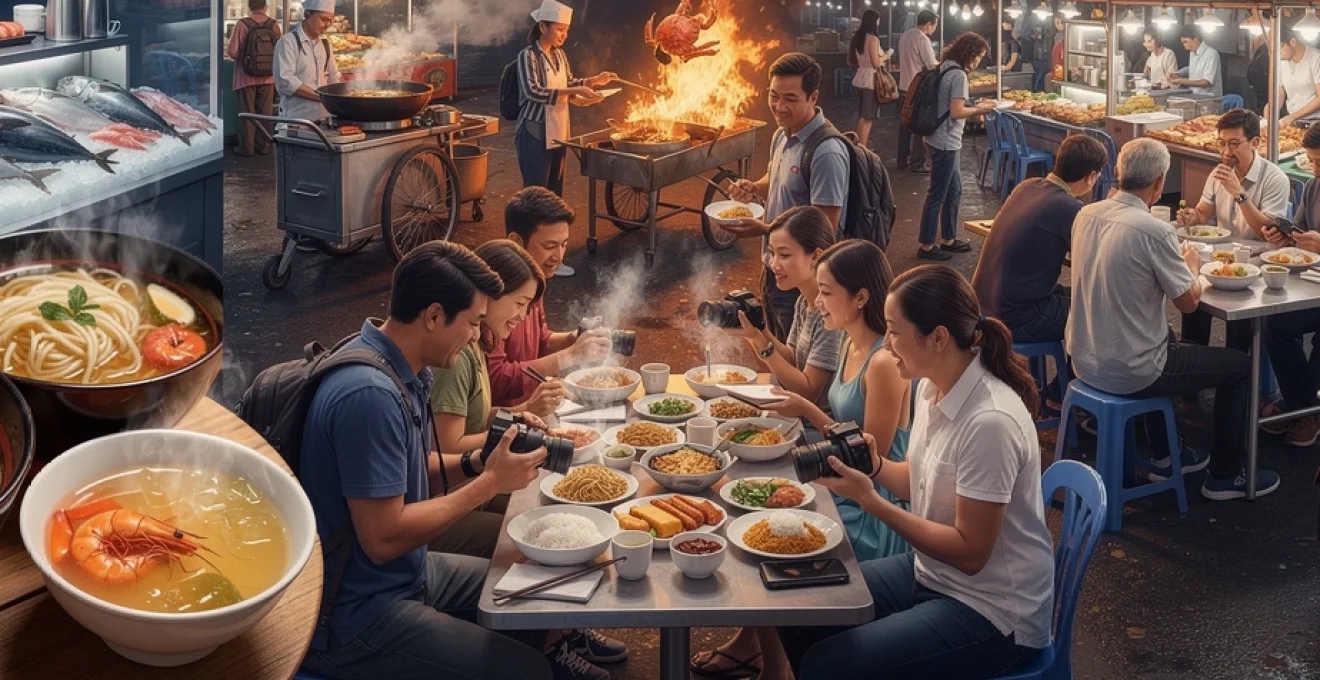
Asia’s culinary landscape represents one of the world’s most diverse and exciting gastronomic frontiers, where ancient cooking traditions intersect with contemporary innovation across bustling metropolises. From the smoky char of Bangkok’s street-side wok stations to the precision-crafted sushi counters of Tokyo, each city offers travellers an immersive journey into flavour profiles shaped by centuries of cultural exchange, migration, and refinement. The continent’s food cities have evolved into pilgrimage sites for those who understand that authentic cultural understanding begins at the dining table, whether that table is a plastic stool beside a hawker cart or a seat at a Michelin-starred establishment. This exploration delves into the most compelling culinary destinations across Asia, examining the techniques, traditions, and specific dishes that define each location’s gastronomic identity whilst providing practical guidance for navigating these complex food ecosystems.
Tokyo’s tsukiji outer market and Michelin-Starred ramen culture
Tokyo’s position as the world’s most Michelin-starred city—with over 230 establishments holding distinctions—reflects both the technical mastery Japanese chefs bring to their craft and the city’s remarkable culinary breadth. The metropolis houses approximately 160,000 registered restaurants, creating a dining density that can overwhelm even experienced food travellers. Yet this abundance showcases Tokyo’s commitment to shokunin craftsmanship, where chefs dedicate decades to perfecting singular dishes rather than sprawling menus. The city’s food culture operates on principles of seasonality, ingredient purity, and preparation techniques refined across generations, making it essential territory for anyone seeking to understand how tradition and modernity coexist within Asian gastronomy.
The Tsukiji Outer Market remains operational despite the wholesale fish market’s relocation to Toyosu in 2018, maintaining its role as a nerve centre for Tokyo’s seafood distribution and immediate consumption. The surrounding streets pulse with vendors offering fresh uni (sea urchin), grilled scallops, and tamagoyaki (rolled omelette) prepared before your eyes. This area demonstrates how Tokyo’s food infrastructure supports both professional chefs sourcing ingredients and travellers seeking authentic market experiences. The market’s continuation alongside Toyosu’s modern facilities illustrates Tokyo’s pragmatic approach to preserving culinary heritage whilst embracing necessary modernisation.
Sushi dai and daiwa sushi: navigating the Pre-Dawn queue strategy
These legendary sushi counters, now relocated within Toyosu Market’s facilities, continue to draw queues forming as early as 4 AM, with wait times regularly extending beyond three hours. The commitment required to secure a seat reflects not just hype but the exceptional quality these establishments deliver: omakase sets featuring the morning’s premier catches, prepared by chefs with direct access to auction results. The experience offers travellers a masterclass in edomae sushi tradition, where rice temperature, fish cutting angles, and nigiri formation follow exacting standards. Arriving before 5 AM provides the best chance of seating within the first service rotation, though the queue management system has become more sophisticated since the Toyosu transition.
The strategic approach involves checking the previous day’s queue reports through social media channels and adjusting arrival times accordingly, as wait durations fluctuate based on tourism seasons and cruise ship schedules. Alternative options within Toyosu offer comparable quality with shorter waits, including Sushi Dai’s neighbouring competitors who source from identical auction lots. The key consideration is whether the specific Sushi Dai experience justifies the opportunity cost of those morning hours, particularly for travellers with limited Tokyo days. Many seasoned visitors recommend experiencing one marquee queue during a trip whilst exploring lesser-known exceptional establishments for subsequent meals.
Ichiran and afuri: tonkotsu versus yuzu shio ramen profiles
Tokyo’s ramen landscape divides into distinct regional styles and innovative fusions, with Ichiran representing the Hakata-style tonkotsu (pork bone broth) approach and Afuri championing lighter, citrus-accented profiles. Ichiran’s individual booth system, where diners order via vending machines and eat in semi-privacy, initially strikes Western visitors as
alien, but it reflects a broader cultural preference for focus and contemplation around food. Ichiran’s broth is opaque, collagen-rich, and deeply savoury, designed for customization: you choose noodle firmness, garlic level, spice intensity, and richness, making it ideal if you want to understand the building blocks of tonkotsu ramen. In contrast, Afuri’s signature yuzu shio ramen presents a clear, chicken-and-fish-based broth lifted by aromatic Japanese citrus, producing a cleaner, more refreshing bowl that appeals to travellers who find heavy broths overwhelming in warm weather. Together, these two ramen institutions illustrate how Tokyo has embraced both regional authenticity and modern, lighter interpretations within its ramen culture.
When comparing these ramen profiles as a food-focused traveller in Asia, consider not only flavour but also context and timing. A late-night bowl after bar hopping in Shinjuku might call for the comfort and intensity of Ichiran’s pork-rich broth, while a midday meal between museum visits suits Afuri’s zesty, palate-cleansing style. You will notice the attention to texture at both: firm, springy noodles in boiling-hot broth, precisely timed soft-boiled eggs, and carefully balanced toppings rather than overstuffed bowls. Think of it as comparing a robust red wine with a crisp white — both excellent, but best enjoyed when they match your mood and surroundings.
Depachika food halls: mitsukoshi and isetan basement gastronomy
To understand why Tokyo is often cited among the best food cities in Asia for travellers, you need to descend into its depachika — the basement food halls beneath major department stores like Mitsukoshi in Ginza and Isetan in Shinjuku. These spaces function as curated marketplaces where patisserie counters, bento specialists, regional snack vendors, and high-end butchers coexist in a meticulously arranged labyrinth of flavours. Here, you can sample everything from Hokkaido dairy products and Kyushu karashi mentaiko (spicy cod roe) to delicate wagashi sweets crafted to mirror the current season. For travellers, depachika are an efficient way to explore a cross-section of Japanese food culture in a single stop.
Beyond sheer variety, what sets these food halls apart is the obsessive emphasis on presentation and seasonality. Boxes of sushi are aligned with geometric precision, fried croquettes are replaced the second they lose their crispness, and fruit is displayed like jewellery, often at luxury price points. You may find yourself wondering: is this a supermarket or a museum? In practice, it is both, and that duality reflects Tokyo’s approach to everyday gastronomy. Practical tip: arrive around one to two hours before closing, when many counters discount prepared foods, allowing you to assemble an elevated yet affordable depa-bento dinner to enjoy back at your hotel.
Yakitori alley in yurakucho: charcoal-grilled skewer techniques
Steps from the polished facades of Tokyo’s business district, the low-slung arches of Yurakucho shelter one of the city’s most atmospheric food zones: yakitori alley. These narrow lanes, wedged under the train tracks, are lined with tiny izakaya where chefs tend to long rows of skewers over glowing binchotan charcoal. Unlike ordinary charcoal, binchotan burns hotter and cleaner, imparting a delicate smokiness without smothering the natural flavour of the chicken, vegetables, or offal. Watching a seasoned grill master at work — adjusting distance from the embers, basting with tare sauce at precise intervals — is as instructive as any cooking class.
For travellers exploring Tokyo’s food culture, Yurakucho offers a relaxed counterpoint to Michelin-focused dining, demonstrating how simple ingredients can become memorable through technique alone. You will encounter various cuts rarely highlighted in Western restaurants: negima (chicken and leek), tsukune (minced chicken patties), reba (liver), and even bonjiri (tail), each with distinct textures and flavours. Pair skewers with nama biru (draft beer) or a glass of nihonshu (sake), and you have a complete masterclass in Japanese izakaya culture. As with many of Asia’s best food streets, it pays to follow your senses: choose the counter with the liveliest energy, the most fragrant smoke, and, very often, the longest line of local office workers.
Bangkok’s street food ecosystems: from yaowarat to sukhumvit soi 38
Bangkok consistently ranks near the top of global lists of best food cities, and for good reason: its street food ecosystems are dense, dynamic, and remarkably affordable. Rather than existing in a single designated zone, Bangkok’s food culture spills onto pavements, down alleyways, and into night markets that ignite after sunset. From Chinatown’s neon-lit Yaowarat Road to the informal food courts of Sukhumvit Soi 38, the city functions as an open-air laboratory of Thai flavours. For culinary travellers, this means that your most memorable meals might emerge from a wok balanced on a propane tank rather than a white-tablecloth restaurant.
Understanding Bangkok’s food streets is like reading a living map of migration and regional influences in Thailand. Teochew Chinese communities introduced noodle and rice dishes that evolved into Bangkok classics, while Isaan migrants to the capital brought with them grilled meats, sticky rice, and fermented salads that now dominate late-night corners. You will see the same core ingredients — lemongrass, galangal, chilies, palm sugar, fish sauce — recombined in dozens of ways, from sour tom yum broths to rich curries and fiery dips. Navigating this variety can feel daunting at first, but once you learn basic visual cues (busy stalls, limited menus, fast turnover), Bangkok becomes one of the easiest Asian cities to eat well in.
Chinatown’s yaowarat road: guay teow reua and hainanese chicken rice vendors
Yaowarat Road, Bangkok’s historic Chinatown, is arguably the city’s most compelling culinary stage. As evening falls, carts roll into position, gas burners flare to life, and queues form almost by instinct around stallholders known for specific specialities. Among the must-try dishes for travelling food lovers are guay teow reua (boat noodles) and Hainanese chicken rice, both reflecting the area’s deep Chinese heritage adapted to Thai palates. Boat noodles, once served directly from boats along Bangkok’s canals, are now ladled from street-side cauldrons into small bowls layered with rice noodles, herbs, and a complex broth that may include spices, beef or pork, and sometimes a splash of blood for extra richness.
Hainanese chicken rice vendors along Yaowarat illustrate a different kind of technical mastery: poaching whole birds at controlled temperatures, rendering the meat silky while preserving the skin’s delicate texture. The rice, simmered in chicken fat and stock, becomes as essential as the protein itself, and the accompanying dipping sauces — ginger-garlic, chili-lime, fermented bean — are finely tuned to balance richness with brightness. As you weave through Yaowarat, you will notice that the best stalls specialise narrowly: one for noodles, another for roast duck, another for desserts like yaowarat toast dripping with condensed milk. In Asia’s great food cities, such specialisation is often the clearest signal that a stall has perfected its craft over generations.
Jay fai’s crab omelette: wok hei technique and michelin recognition
No discussion of Bangkok’s food for travellers would be complete without mentioning Jay Fai, the street-side chef whose crab omelette earned a Michelin star and global fame. Her restaurant, a modest shophouse rather than a luxury dining room, embodies the idea that technical excellence can thrive in humble settings. Jay Fai’s signature dish is deceptively simple — an omelette stuffed with generous chunks of crab — yet executed with a level of skill that transforms eggs and shellfish into something near architectural. The key lies in her command of wok hei, the elusive “breath of the wok” that results from cooking over extreme heat with constant motion.
Securing a seat at Jay Fai now often requires advance reservations or patience with multi-hour waits, prompting many travellers to ask if the omelette is “worth it.” That question, however, misses part of the point. Watching the chef at work — goggles on, flames leaping as she controls heat and timing to the second — is itself a lesson in how technique defines Southeast Asia’s best street food. If your schedule or budget does not align with a visit, you can still experience exceptional wok hei in lesser-known noodle stalls and seafood shophouses throughout Bangkok. Look for stations with powerful charcoal or gas burners and cooks who rarely take their hands off the wok; the taste of properly seared ingredients will be your confirmation.
Or tor kor market: royal project produce and regional thai specialities
Across the river from Bangkok’s famous Chatuchak Weekend Market lies Or Tor Kor, often described as one of the cleanest and most curated fresh markets in Asia. Originally a wholesale hub for the Marketing Organization for Farmers, it has evolved into an upscale showcase of Thai produce, meats, and prepared foods. Many of the fruits and vegetables sold here originate from Thailand’s Royal Project initiatives, which promote sustainable agriculture in formerly opium-growing regions of the north. For culinary travellers, wandering Or Tor Kor is like paging through an illustrated encyclopedia of Thai ingredients.
You will encounter glistening piles of nam prik chili pastes, neatly arranged dried fish, and ready-to-eat curries that span the country’s regions: milder coconut-based dishes from Central Thailand, herb-heavy salads from the northeast, and southern curries notorious for their heat. Fresh fruit is a highlight, from perfumed mangosteens and longans to perfectly ripened durian segments presented more like pastries than produce. Because stalls are carefully regulated for hygiene and quality, Or Tor Kor is an ideal place to taste unfamiliar items without worry. Think of it as a controlled gateway into Bangkok’s more chaotic markets, allowing you to build flavour literacy before heading back into the city’s bustling food streets.
Boat noodle alley at victory monument: ancient ayutthaya recipes
Near Victory Monument, a warren of canalside shophouses forms what locals often call “boat noodle alley,” a concentrated pocket of vendors dedicated to guay teow reua. Historically, these noodles were sold from boats plying the waters around Ayutthaya, Thailand’s former capital, and the recipes you taste here preserve elements of that heritage. Bowls are intentionally small, encouraging diners to order several rounds and compare variations in broth, spice level, and toppings. Some shops focus on beef, others on pork, and the most traditional incorporate a touch of animal blood into the broth, lending it a denser body and deeper colour.
For food-focused travellers, boat noodle alley offers more than just delicious soup; it provides insight into how regional dishes migrate and adapt within major Asian cities. Sitting elbow-to-elbow with office workers and students, you can move from stall to stall, noting differences in noodle thickness, herbal garnishes, and side dishes such as crackling pork rinds. It is a reminder that Bangkok’s status as a top food city does not rest solely on headline-grabbing venues like Jay Fai, but on hundreds of small, specialised shops sustaining centuries-old cooking traditions. Arrive hungry, carry cash, and be prepared to stack empty bowls like trophies — that tower becomes a visual record of your own noodle pilgrimage.
Singapore’s hawker centre heritage and peranakan gastronomy
Singapore’s rise as one of the best food cities in Asia for travellers is anchored in its hawker centre culture, now recognised by UNESCO for its intangible cultural heritage. What began as itinerant street vendors serving dockworkers and office clerks has been formalised into clean, purpose-built food courts where each stall focuses on a narrow menu honed over generations. The result is a city where you can eat exceptional, historically rooted dishes for just a few dollars, often from cooks who have inherited recipes and techniques from parents and grandparents. At the same time, Singapore’s unique Peranakan (or Nyonya) cuisine — a fusion of Malay, Chinese, and local influences — adds another layer of culinary complexity.
As a traveller, you benefit from the city-state’s deliberate efforts to preserve and elevate its food culture. Government subsidies help keep prices at hawker centres low, while media coverage and food awards highlight standout stalls like Liao Fan Hawker Chan, once the world’s most affordable Michelin-starred meal. At the other end of the spectrum, Peranakan restaurants explore family recipes with modern presentation, turning heirloom dishes into tasting menus that still feel deeply personal. In Singapore, eating your way through hawker centres and Peranakan dining rooms is not just about satisfying hunger; it is a way of tracing the island’s complex history of migration, trade, and cultural blending.
Maxwell food centre and lau pa sat: UNESCO-recognised street food structures
Among Singapore’s many hawker centres, Maxwell Food Centre in Chinatown and Lau Pa Sat in the central business district are particularly important stops for culinary travellers. Maxwell, housed in a low-rise complex, is beloved by locals for its concentration of classic stalls: from Hainanese chicken rice and char kway teow to herbal soups and fresh sugarcane juice. Lau Pa Sat, by contrast, occupies a restored Victorian cast-iron structure dating back to the 19th century, its soaring ceilings and decorative arches a reminder of Singapore’s colonial port history. At night, the streets around Lau Pa Sat transform into a satay zone, with smoke from charcoal grills perfuming the financial district air.
Visiting these centres, you can see why Singapore’s hawker culture merited global recognition. Each stall operates almost like a micro-restaurant, with its own brand, loyal following, and tightly defined menu. Prices remain accessible, which means you can sample multiple dishes in a single sitting without straining your travel budget. The key challenge is one of choice: with hundreds of options under one roof, where do you begin? A good strategy is to look for long queues of office workers at lunchtime and to prioritise stalls with limited, focused menus — a strong signal that every dish has been fine-tuned over years of repetition.
Hainanese chicken rice at tian tian versus boon tong kee preparations
Hainanese chicken rice is often called Singapore’s unofficial national dish, and tasting different versions is a rite of passage for food-focused visitors. Two of the most discussed names are Tian Tian at Maxwell Food Centre and Boon Tong Kee, a restaurant chain with several branches across the city. At Tian Tian, the emphasis falls squarely on the rice: glossy, fragrant grains cooked in chicken stock and fat, infused with ginger and pandan. The poached chicken itself is tender and subtly seasoned, relying on the trio of dipping sauces — chili-garlic, ginger paste, and dark soy — to complete the flavour profile.
Boon Tong Kee, meanwhile, offers a slightly richer, more restaurant-style interpretation. The chicken often has a firmer bite and a more pronounced savoury seasoning, while the rice is equally aromatic but sometimes less oily, appealing to diners seeking a “cleaner” feel. Which is better for you as a traveller seeking the best food in Asia? Much depends on your preference: Tian Tian delivers a classic hawker experience, complete with queues and shared tables, while Boon Tong Kee provides air-conditioned comfort and expanded menus that include zi char (stir-fry) dishes. If time allows, trying both gives you a mini masterclass in how a single heritage dish can evolve across different dining formats.
Katong and joo chiat: authentic nyonya laksa and kueh craftsmanship
On the eastern side of Singapore, the neighbourhoods of Katong and Joo Chiat preserve strong Peranakan roots, visible in both their pastel shophouses and their food offerings. For travellers, this area is ground zero for tasting authentic Nyonya laksa, a coconut-based noodle soup perfumed with dried shrimp, laksa leaves, and a complex spice paste. Unlike some Malaysian versions, Katong-style laksa often features cut noodles that you can eat with just a spoon, along with cockles, prawns, and fishcake slices. The broth strikes a delicate balance between richness and spice, warming without overwhelming.
Beyond laksa, Joo Chiat’s bakeries and home-style eateries showcase the art of kueh — colourful steamed or baked snacks made from rice flour, tapioca, coconut, and palm sugar. These bite-sized sweets and savouries might look simple, but their textures and layering require meticulous technique, much like fine French patisserie. Watching a Peranakan baker assemble kueh lapis layer by layer can feel akin to observing a watchmaker at work: every step must be precise, or the final product falters. As you sample these treats, you are not only enjoying dessert but also stepping into a living tradition, one that families in this neighbourhood have fought to maintain despite rising rents and rapid urban development.
Tekka centre’s little india: dosai, biryani and tamil culinary traditions
Located in the heart of Little India, Tekka Centre is another essential stop for travellers exploring Singapore’s multicultural food tapestry. Here, the air is thick with the aroma of spices — cumin, cardamom, cloves — emanating from stalls serving South Indian and Tamil Muslim dishes. Freshly griddled dosai (fermented rice-and-lentil crepes) arrive crispy at the edges and soft in the centre, accompanied by coconut chutney and sambar. Nearby, biryani vendors plate up fragrant mounds of long-grain rice layered with marinated meat and caramelised onions, a dish that bears clear traces of Mughal and Arab influence adapted to local tastes.
What makes Tekka Centre particularly rewarding for culinary travellers is the way it compresses multiple traditions into a single, walkable space. You can move from a vegetarian Tamil stall to a Halal biryani counter to a shop frying vadai (lentil fritters) within minutes, each representing a different strand of Singapore’s Indian community. For many visitors, this is also an accessible introduction to South Asian flavours, especially if you find the sheer size of cities like Mumbai or Chennai intimidating. As you navigate the crowded aisles, remember that the apparent chaos masks a deep order: each stall has its niche, its regulars, and its role within the broader ecosystem of Little India’s food culture.
Penang’s georgetown: UNESCO world heritage hawker specialisations
Penang’s George Town is often mentioned in the same breath as Singapore when discussing the best food cities in Asia, yet its culinary environment feels markedly different. Where Singapore’s hawkers have been consolidated into formal centres, Penang’s remain scattered across streets, shophouses, and open-air markets, creating an urban landscape where food discovery happens at every corner. The city’s UNESCO World Heritage status reflects not only its preserved colonial architecture but also its living cultural mash-up of Malay, Chinese, Indian, and Eurasian communities. Each community brings its own specialities, turning the historic core into a walkable tasting menu of Southeast Asian street food.
Signature dishes such as asam laksa, char kway teow, and nasi kandar have achieved near-mythic status among food travellers, yet what truly sets Penang apart is the depth of its bench. A single morning at Chowrasta Market might introduce you to roti canai flipped on hot griddles, apom pancakes scented with coconut, and herbal broths brewed by traditional Chinese medicine shops. By evening, Chulia Street’s night market transforms those same streets into a maze of mobile kitchens. Compared with more regulated cities, Penang’s looser framework allows vendors to retain idiosyncratic methods: charcoal-fired woks, inherited spice blends, and improvisational plating that feels refreshingly unpolished.
Osaka’s dotonbori district and kansai comfort food traditions
If Tokyo represents precision and breadth in Japanese dining, Osaka embodies indulgence and comfort, earning its reputation as the nation’s “kitchen.” The Dotonbori district, with its blazing neon signs and throngs of street-side food stalls, is the city’s most famous culinary showcase. Here, the local philosophy of kuidaore — “eat until you collapse” — plays out in the form of piping-hot takoyaki (octopus-filled batter balls), griddled okonomiyaki savoury pancakes, and skewers of deep-fried kushi-katsu. For travellers, Dotonbori offers an accessible crash course in Kansai-region comfort foods, many of which began as inexpensive worker meals and have since become beloved national dishes.
Osaka’s food culture is also defined by its informality and warmth. Whereas some of Tokyo’s top restaurants can feel intimidating to newcomers, Osaka’s izakaya and yakitori joints tend to be boisterous, welcoming spaces where strangers clink beer glasses over shared platters. You might find yourself tucking into a bubbling pot of oden (simmered fish cakes, daikon, and tofu) at a streetside cart, the broth having simmered for days like a well-tended stock in a French bistro. This is a city that invites you to lower your guard and simply enjoy eating, making it a particularly friendly destination if you are new to culinary travel in Asia and still finding your bearings.
Chengdu’s sichuan peppercorn cuisine and teahouse culture
Chengdu, the capital of China’s Sichuan province, offers one of the most distinctive flavour landscapes in Asia, anchored by its use of Sichuan peppercorns and fermented chili bean paste. Officially recognised by UNESCO as a City of Gastronomy, Chengdu is where you come to understand the concept of ma la — the simultaneous numbing (ma) and spicy (la) sensations that define many local dishes. From bubbling hotpot cauldrons studded with chilies and peppercorns to delicate hongyou chaoshou (wontons in red oil) and tianshuimian (sweet-water noodles), the city’s food scene excels at layering heat, fragrance, and texture in complex yet addictive ways.
But Chengdu’s status as a top Asian food city is not just about intensity. Its historic teahouses, some set around tranquil ponds or nestled in old neighbourhoods, provide a deliberate counterbalance to the spice on your plate. Here, you can linger for hours over pots of jasmine or green tea, watching locals play mahjong or have their ears cleaned — a traditional service offered by itinerant practitioners. This rhythm of fiery meals followed by languid tea sessions shapes daily life in Chengdu, offering travellers a powerful analogy for the broader experience of culinary exploration in Asia: moments of sensory overload, followed by spaces to slow down, reflect, and prepare for the next unforgettable bite.