# Best islands in the Indian Ocean for a dream tropical escape
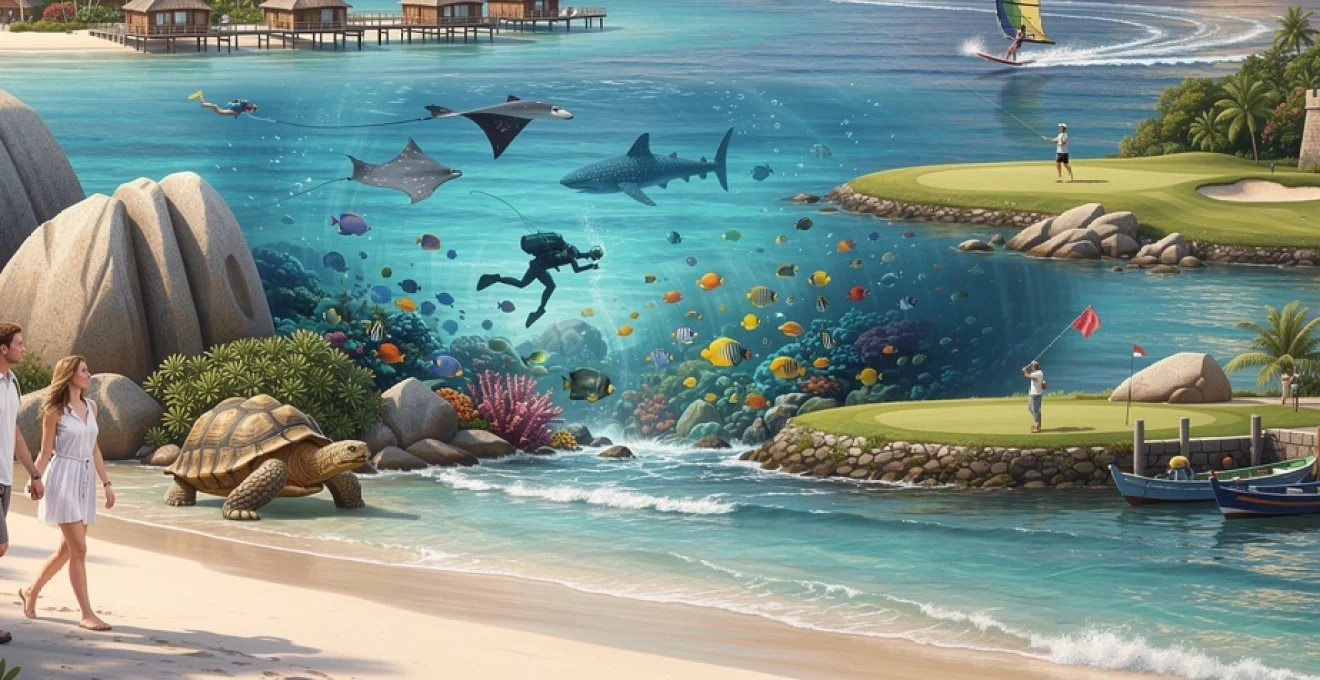
The Indian Ocean cradles some of the planet’s most extraordinary island destinations, where powdery white sands meet impossibly turquoise waters and dramatic landscapes unfold in every direction. From the granite boulders of the Seychelles to the pristine atolls of the Maldives, each archipelago offers its own distinctive blend of natural beauty, cultural heritage, and unforgettable experiences. Whether you’re seeking a romantic honeymoon retreat, an adventurous exploration of volcanic peaks, or simply a peaceful escape surrounded by world-class marine biodiversity, these tropical paradises deliver beyond expectation.
Understanding which Indian Ocean island suits your travel aspirations requires examining what makes each destination unique. Some islands specialise in overwater luxury and coral reef encounters, while others captivate with UNESCO-protected forests, colonial architecture, or active volcanic landscapes. The diversity across this vast oceanic region ensures that every traveller—from wildlife enthusiasts to cultural explorers, from diving aficionados to mountain hikers—can find their perfect slice of paradise.
Seychelles archipelago: granite formations and UNESCO-Protected marine ecosystems
The Seychelles archipelago comprises 115 islands scattered across the western Indian Ocean, positioned approximately 1,000 miles east of Kenya. This tropical nation represents one of the world’s most geologically ancient island groups, with granite formations dating back millions of years creating the distinctive boulder-strewn coastlines that have become synonymous with the destination. Beyond the dramatic topography, the Seychelles harbours exceptional biodiversity both above and below the waterline, with numerous protected areas safeguarding rare endemic species found nowhere else on Earth.
What sets the Seychelles apart from neighbouring Indian Ocean destinations is the remarkable preservation of its natural environment. Nearly half of the nation’s landmass enjoys protected status, whilst extensive marine protected areas shield fragile coral ecosystems from overexploitation. The archipelago’s unique position, isolated from continental landmasses for millions of years, has fostered the evolution of distinct flora and fauna that continue to fascinate naturalists and casual visitors alike. From rare seabirds to ancient palm species, the islands function as living laboratories of evolutionary adaptation.
Praslin island: vallée de mai nature reserve and anse lazio beach
Praslin, the second-largest island in the Seychelles, hosts the legendary Vallée de Mai Nature Reserve, a UNESCO World Heritage Site protecting one of only two places on Earth where the extraordinary coco de mer palm grows naturally. These prehistoric palms produce the largest seeds in the plant kingdom, with individual nuts weighing up to 25 kilograms. Walking through the primordial forest feels like stepping back millions of years, as towering palms create a dense canopy above whilst rare black parrots call from the shadows. The reserve’s well-maintained trails allow you to explore this botanical treasure whilst minimising environmental impact.
Beyond its ecological significance, Praslin claims some of the most photographed beaches in the world. Anse Lazio, consistently ranked among the planet’s finest stretches of sand, presents a perfect crescent of powdery white beach framed by massive granite boulders and lapped by crystalline turquoise waters. The relatively shallow bay provides excellent swimming conditions, whilst the surrounding rocks create natural pools perfect for families with young children. Snorkelling along the boulder formations reveals colourful reef fish darting between the rocks, making this beach as rewarding beneath the surface as above.
La digue: colonial architecture and anse source d’argent’s photogenic boulder formations
La Digue island operates on a delightfully slower timescale than its neighbours, with ox-carts and bicycles replacing motorised transport on most of the island’s sandy lanes. This deliberate preservation of traditional transport methods maintains the island’s peaceful atmosphere whilst reducing environmental impact. The diminutive island, measuring just five kilometres long and three kilometres wide, reveals charming Creole architecture throughout its scattered settlements, with traditional colonial-era houses featuring corrugated iron roofs and wooden verandas painted in cheerful tropical colours.
Anse Source d’Argent beach dominates virtually every “world’s best beaches” list, and for excellent reason
for its surreal beauty. Here, smooth pink-tinged granite boulders are strewn across the shoreline like an open-air sculpture park, rising from talcum-soft sand and shallow, shimmering lagoons. At low tide, you can wade through knee-deep water between rock pools and sandbars, discovering sheltered coves that feel almost private. Photographers and Instagram enthusiasts are drawn to the beach’s shifting light and colours, especially around sunrise and sunset when the boulders glow in warm hues and the sea turns a deeper shade of turquoise. Despite its global fame, Anse Source d’Argent still rewards those who explore beyond the first crowded stretch, where quieter corners often await just a short walk away.
To reach the beach, you typically pass through L’Union Estate, a former coconut and vanilla plantation where you can see traditional copra mills and visit the old colonial house. This short journey adds a layer of cultural context to the natural spectacle, reminding you that La Digue’s landscapes have long been intertwined with local livelihoods. Once on the sand, facilities such as small beachfront kiosks, kayak rentals, and basic snorkelling gear make it easy to spend a full day enjoying the lagoon. For the best experience, check tide times before you go—high tide offers better swimming, while low tide reveals the most dramatic rock formations and shallow pools ideal for families.
Mahé island: morne seychellois national park hiking trails
Mahé, the largest island in the Seychelles and home to the capital Victoria, offers far more than its necklace of beaches. Rising behind the coastline, the lush interior is dominated by the Morne Seychellois National Park, which covers over 20% of the island’s land area. This protected region safeguards cloud forests, endemic palms, and mist-shrouded peaks, with the island’s highest point—Morne Seychellois—reaching 905 metres above sea level. Hiking here provides a striking contrast to the coastal scenery, with cool temperatures, panoramic viewpoints, and the chance to encounter rare bird species such as the Seychelles bulbul and blue pigeon.
The park features a network of clearly marked hiking trails ranging from easy one-hour walks to more demanding full-day treks. Popular routes like the Copolia Trail reward you with sweeping views over Victoria, the Sainte Anne Marine National Park, and the outer reef, while the Morne Blanc Trail passes through old tea plantations before opening onto dramatic cliffside viewpoints. If you are new to tropical hiking, consider joining a guided tour, as local guides can identify endemic plants and share insight into conservation challenges facing these fragile ecosystems. Good footwear, plenty of water, and early starts are essential, especially during the warmer, more humid months.
Aldabra atoll: giant tortoise conservation and coral reef biodiversity
Aldabra Atoll, situated over 1,000 kilometres southwest of Mahé, is one of the most remote and strictly protected parts of the Seychelles—and indeed the entire Indian Ocean. Designated a UNESCO World Heritage Site, Aldabra is often compared to the Galápagos Islands for its ecological importance and minimal human impact. The atoll is home to the world’s largest population of wild giant tortoises, with estimates exceeding 100,000 individuals. Watching these prehistoric reptiles graze on scrub vegetation or slowly traverse the coral landscape is like witnessing a living link to Earth’s deep past.
Access to Aldabra is heavily regulated to preserve its delicate ecosystems, so visits are usually limited to scientific expeditions and small, carefully managed cruise ship landings. For travellers who are fortunate enough to step ashore, the experience includes guided walks on the atoll’s raised limestone and boat excursions through its tidal channels. Below the surface, Aldabra’s coral reefs harbour exceptional biodiversity, including reef sharks, groupers, parrotfish, and abundant invertebrates. Because the atoll remains largely untouched by mass tourism, its reefs serve as an important reference point for marine scientists studying climate change and coral resilience across the Indian Ocean.
Maldives: overwater bungalows and house reef snorkelling sanctuaries
The Maldives, a chain of 26 natural atolls stretching across the central Indian Ocean, has become almost synonymous with luxury island escapes. Thousands of tiny coral islands form a patchwork of shallow lagoons, sandbanks, and reef systems that are as appealing to marine biologists as they are to honeymooners. One of the Maldives’ defining features is its collection of private island resorts, each typically occupying its own palm-fringed islet with overwater bungalows, beachfront villas, and direct access to house reef snorkelling. For many visitors, the ability to step from their villa deck straight into warm, clear water filled with tropical fish is the ultimate barefoot luxury.
Yet the Maldives offers far more than pretty lagoons. Around 70% of the country’s GDP is linked to tourism, and in recent years there has been a strong push toward sustainable practices and marine conservation. Many resorts employ resident marine biologists who monitor reef health, run coral restoration programmes, and lead educational snorkel safaris for guests. If you are interested in responsible travel in the Indian Ocean, choosing a property with visible, well-documented conservation initiatives can help ensure that your dream getaway also supports reef protection and local communities.
North malé atoll: proximity to velana international airport and resort accessibility
North Malé Atoll, home to the capital city Malé and Velana International Airport, is often the first stop for travellers arriving in the Maldives. Its proximity to the main transport hub makes it one of the most accessible regions for a short Indian Ocean break, with many resorts reachable in under 30 minutes by speedboat. This reduces transfer time and cost, making North Malé an excellent choice if you prefer to maximise your time on the beach rather than in transit. Despite its relative development, the atoll still features pristine coral reefs, idyllic sandbanks, and secluded resort islands that feel a world away from the bustle of Malé’s streets.
Resorts here cater to a broad range of budgets and travel styles, from ultra-luxury private pool villas to more modest guesthouses on local islands. Because of the shorter transfer times, North Malé is particularly appealing for long weekend stays or multi-destination itineraries combining the Maldives with Sri Lanka or the UAE. When choosing a resort in this atoll, consider whether you prioritise direct house reef access, surf breaks, or spa facilities—each island offers a slightly different balance. If you are sensitive to light pollution or boat traffic, it may be worth selecting a resort farther from the capital, where the night skies are darker and the sense of remoteness greater.
Baa atoll biosphere reserve: hanifaru bay manta ray aggregation sites
Baa Atoll holds the prestigious status of UNESCO Biosphere Reserve, recognised for its exceptional marine biodiversity and pioneering conservation management. At the heart of its reputation lies Hanifaru Bay, a small lagoon that plays host to one of the world’s most spectacular manta ray aggregation events. During the southwest monsoon season, typically from June to October, nutrient-rich currents funnel plankton into the bay, attracting dozens—sometimes hundreds—of reef manta rays that circle in mesmerising “feeding trains.” Whale sharks also occasionally join the feast, creating a once-in-a-lifetime snorkelling opportunity.
To protect this sensitive site, strict regulations limit visitor numbers, time in the water, and the use of scuba equipment within the bay. Snorkelling only is permitted, and certified guides brief guests on respectful wildlife interactions, including maintaining distance and avoiding flash photography. If you hope to experience Hanifaru Bay, plan your Indian Ocean holiday carefully around the peak plankton months and consider staying at a resort or guesthouse with a strong eco-credential. Even outside the manta season, Baa Atoll offers superb diving, thriving coral reefs, and lagoon systems that support everything from sea turtles to schooling fusiliers, making it a top destination for serious underwater enthusiasts.
South ari atoll: whale shark migration patterns and diving hotspots
South Ari Atoll is globally renowned as one of the most reliable places on Earth to encounter whale sharks year-round. These gentle giants, which can grow up to 12 metres in length, are drawn to the nutrient-rich waters along the atoll’s outer reef, where plankton and small fish abound. Unlike many destinations where whale shark sightings are highly seasonal, South Ari benefits from a resident population that can be observed in most months, with slightly higher chances between August and November. This makes the region particularly attractive if swimming or diving with whale sharks is high on your Indian Ocean bucket list.
Dive operators and conservation groups in South Ari work together to minimise disturbance to these protected animals. Code-of-conduct guidelines typically include approaching from the side, maintaining a respectful distance, and restricting the number of boats and swimmers around any one shark. In addition to whale shark encounters, South Ari offers a mix of vibrant reef dives, drift dives, and thila (underwater pinnacle) sites populated by grey reef sharks, eagle rays, and dense schools of snapper. Whether you are a novice snorkeller or an advanced diver, you will find operators who can tailor excursions to your experience level and comfort in open water.
Addu atoll: british wartime history and equatorial channel diving
Addu Atoll, the southernmost atoll in the Maldives, straddles the Equator and offers a very different atmosphere from the central resort hubs. Historically, Addu served as a strategic British naval and air base during the Second World War and the Cold War, remnants of which can still be seen today in the form of causeways, old barracks, and the submerged wreck of the oil tanker Loyalty. Divers can explore this impressive wreck, now encrusted with coral and inhabited by an array of marine life, including batfish, groupers, and schooling jacks. The combination of history and underwater exploration gives Addu a distinctive appeal for travellers who enjoy both culture and adventure.
Addu’s geography—featuring deep channels and exposed outer reefs—also makes it a hotspot for pelagic diving. Strong currents sweep in nutrient-rich water, attracting sharks, rays, and large schools of tuna and trevally. Because it lies off the usual tourist circuit, Addu feels less commercialised than some northern atolls, and local guesthouses sit alongside a small selection of resort properties. Reaching Addu requires a domestic flight from Malé followed by a short transfer, but for divers seeking challenging sites and fewer crowds, the journey is well worthwhile.
Mauritius: volcanic landscapes and multi-cultural heritage tourism
Mauritius, located in the southwest Indian Ocean east of Madagascar, combines dramatic volcanic landscapes with a rich multi-cultural heritage shaped by African, Indian, European, and Chinese influences. Ringed by coral reefs and calm lagoons, the island offers some of the region’s most accessible beaches, yet its interior of forested peaks, waterfalls, and fertile plateaus adds depth for travellers who want more than a classic sun-and-sand escape. The island’s population of around 1.3 million people speaks a mix of Creole, French, and English, and this cultural tapestry is reflected in its cuisine, music, festivals, and religious architecture.
For many visitors, Mauritius serves as an ideal all-round Indian Ocean destination, especially for those travelling with family or looking for a blend of relaxation and soft adventure. Luxury beach resorts line the west, north, and east coasts, often with extensive spa facilities, kids’ clubs, and inclusive water sports. Meanwhile, smaller boutique hotels and guesthouses provide more intimate stays, particularly in the south and central highlands. Whether you are teeing off on championship golf courses, hiking through endemic forests, or sampling street food in bustling markets, the island’s compact size and good road infrastructure make it easy to explore multiple facets of Mauritian life in a single trip.
Le morne brabant: UNESCO world heritage site and kite surfing conditions
Le Morne Brabant, a striking basaltic monolith rising 556 metres from the southwest tip of Mauritius, is both a natural landmark and a powerful cultural symbol. Recognised as a UNESCO World Heritage Site, Le Morne commemorates the history of maroon slaves who sought refuge on its slopes during the 18th and early 19th centuries. Today, a network of hiking trails leads partway up the mountain, offering panoramic views over the turquoise lagoon and nearby islets. Guided hikes provide historical context as well as insight into local flora, making the climb a meaningful experience rather than just a photo opportunity.
The lagoon surrounding Le Morne has become famous among water sports enthusiasts, particularly kite surfers. Consistent trade winds, shallow flat water, and world-class wave spots such as “One Eye” create ideal conditions from roughly May to October. Several kite schools and centres line the beach, catering to both beginners and advanced riders. If you prefer a less adrenaline-fuelled day, the same lagoon offers excellent swimming, stand-up paddleboarding, and glass-bottom boat tours over the reef. The juxtaposition of a solemn heritage site with a vibrant outdoor playground encapsulates the way Mauritius balances remembrance with contemporary leisure.
Black river gorges national park: endemic flora and waterfall trekking routes
Black River Gorges National Park, the largest protected area in Mauritius, stretches across the island’s southwestern highlands and preserves what remains of its once extensive native forest. This rugged landscape shelters over 300 species of flowering plants and numerous endemic birds, including the Mauritius kestrel, pink pigeon, and echo parakeet—species that have narrowly escaped extinction thanks to intensive conservation efforts. Visiting the park offers a chance to experience a very different side of Mauritius, where cool mountain air replaces coastal humidity and sweeping viewpoints reveal undulating green valleys rather than white sand beaches.
Well-marked trekking routes of varying difficulty criss-cross the park, leading to scenic spots such as Alexandra Falls, the Black River Peak (the island’s highest point), and river gorges ideal for picnics. If you are new to hiking in tropical environments, it is wise to plan walks for the morning to avoid midday heat and sudden afternoon showers, particularly during the wetter summer months from November to April. Guided tours can deepen your understanding of the park’s fragile ecosystems, drawing attention to invasive species management and reforestation projects that are essential to the survival of native plants and animals. For photographers, the park’s viewpoints over the coastline at dusk are among the island’s most rewarding.
Île aux cerfs: lagoon water sports and championship golf courses
Located off Mauritius’ east coast, Île aux Cerfs is a small island within a vast turquoise lagoon that has become synonymous with day trips and water-based recreation. Speedboats, catamarans, and traditional pirogues ferry visitors from the mainland, often combining the crossing with snorkelling stops or dolphin-spotting when conditions allow. Once ashore, you find long sandy beaches, calm shallows ideal for swimming, and a range of facilities offering parasailing, tube rides, and kayak rentals. For travellers seeking a classic tropical island experience with a social atmosphere and plenty of activities, Île aux Cerfs is a compelling choice.
The island is also home to one of Mauritius’ most celebrated 18-hole golf courses, designed by Bernhard Langer. Golfers play against a backdrop of lagoon vistas, mangroves, and lush vegetation, with several holes requiring shots over water. Tee times can book up quickly in peak season, so advance reservations are recommended if you want to include a round as part of your Indian Ocean holiday. Even if golf is not on your agenda, you can enjoy beach restaurants serving fresh seafood and Mauritian specialities, or simply walk along quieter stretches of shore to find a more secluded spot away from the main landing areas.
Port louis: caudan waterfront and aappavasi ghat historical complex
Port Louis, the capital of Mauritius, provides a vivid window into the island’s multicultural identity and colonial history. The city’s bustling markets, temples, churches, and mosques all coexist within a compact urban area framed by harbour and mountains. A natural starting point for visitors is the Caudan Waterfront, a revitalised harbourfront precinct featuring shops, restaurants, cafés, and a craft market. Here you can sample Mauritian street food such as dholl puri and boulettes, browse local artisan products, or simply watch ferries and cargo ships move across the port.
Just a short distance away lies the Aapravasi Ghat, another UNESCO World Heritage Site and one of the most important heritage attractions in the Indian Ocean. This historic immigration depot was the primary landing point for indentured labourers from India in the 19th century, whose descendants now make up a significant portion of Mauritius’ population. Exhibitions and guided tours explain how the system of indenture shaped the island’s demographics, economy, and culture. Combining a visit to Aapravasi Ghat with time at the Central Market and nearby Chinatown offers a powerful overview of how centuries of migration and trade have created the vibrant, layered society you encounter across Mauritius today.
Zanzibar archipelago: swahili coast culture and spice plantation tours
The Zanzibar Archipelago, lying off Tanzania’s east coast, blends Indian Ocean island beauty with centuries of Swahili, Arab, Persian, and European influences. Unguja—often simply called Zanzibar Island—is the main gateway, while Pemba and a constellation of smaller islands remain more rural and less visited. What sets Zanzibar apart from many other Indian Ocean destinations is the way cultural heritage and beach life intertwine. You might spend the morning wandering through labyrinthine alleys in Stone Town, a UNESCO World Heritage Site, and the afternoon snorkelling over coral reefs or relaxing on sugar-soft sand.
Stone Town’s carved wooden doors, crumbling merchant houses, and lively markets tell the story of a historic trading hub once central to the spice and slave trades. Today, its atmospheric streets host rooftop restaurants, art galleries, and boutique hotels set in restored buildings. For a deeper understanding of the archipelago’s agricultural legacy, many travellers join spice plantation tours just outside town. These excursions reveal how cloves, cinnamon, nutmeg, vanilla, and other crops transformed Zanzibar into the “Spice Island,” and they often include tastings and cooking demonstrations. Paired with beach stays in areas like Nungwi, Kendwa, or Paje—each known for distinct personalities ranging from lively nightlife to world-class kitesurfing—Zanzibar offers a holistic Indian Ocean escape where culture, cuisine, and coastline are all key ingredients.
Réunion island: active piton de la fournaise volcano and cirque formations
Réunion Island, an overseas department of France located between Madagascar and Mauritius, delivers one of the most dramatic landscapes in the Indian Ocean. Rather than flat atolls or low-lying cays, this volcanic island rises steeply from the sea, its interior carved into deep amphitheatre-like cirques and dominated by two major volcanic massifs. Piton de la Fournaise, one of the world’s most active volcanoes, frequently stages effusive eruptions that are closely monitored by local authorities and volcanologists. When conditions are safe and activity is visible, visitors can often witness glowing lava flows from designated viewpoints, an experience that rivals any natural spectacle on Earth.
Beyond the volcano, Réunion’s three cirques—Cilaos, Mafate, and Salazie—offer exceptional opportunities for hiking, canyoning, and scenic drives. Mafate is accessible only on foot or by helicopter, creating a sense of remoteness rarely found in European territories. Trails wind past waterfalls, Creole villages, and terraced gardens, with well-marked routes suitable for both day hikes and multi-day treks. On the coast, black and white sand beaches fringe parts of the island, some protected by coral reefs that provide safe lagoons for swimming and snorkelling. Combining French infrastructure and healthcare with a wild, tropical aesthetic, Réunion is ideal if you crave adventure travel in the Indian Ocean but still appreciate good roads, mountain lodges, and excellent patisseries.
Sri lanka’s coastal gems: ancient fortifications and whale watching corridors
Sri Lanka, often described as the teardrop of the Indian subcontinent, offers a coastline that rivals its famous Cultural Triangle and tea country in appeal. Encircling the island, diverse beach regions range from surf-friendly bays in the southwest to secluded, palm-fringed coves in the east. Many of these coastal towns are anchored by historic fortifications or colonial-era buildings, legacies of Portuguese, Dutch, and British rule. Galle Fort, a UNESCO World Heritage Site on the south coast, is among the most evocative. Within its ramparts, cobbled streets and restored villas house boutique hotels, cafés, and galleries, while views from the walls take in both the Indian Ocean and the town’s red-tiled roofs.
For wildlife enthusiasts, Sri Lanka’s offshore waters are some of the best in the world for whale watching. Off Mirissa and Dondra Head in the south, deep oceanic trenches lie close to shore, creating nutrient-rich conditions that attract blue whales, sperm whales, and large pods of dolphins between roughly November and April. On the east coast, around Trincomalee, whale watching is typically best from May to October, coinciding with calmer seas during the opposite monsoon. Choosing responsible operators who respect minimum approach distances and speed limits is crucial to reducing disturbance to these marine giants. When combined with visits to national parks such as Yala or Udawalawe—where leopards, elephants, and abundant birdlife roam—Sri Lanka’s coasts become more than just a beach destination; they function as gateways to a broader biodiversity hotspot and a cultural landscape shaped by centuries of maritime trade.