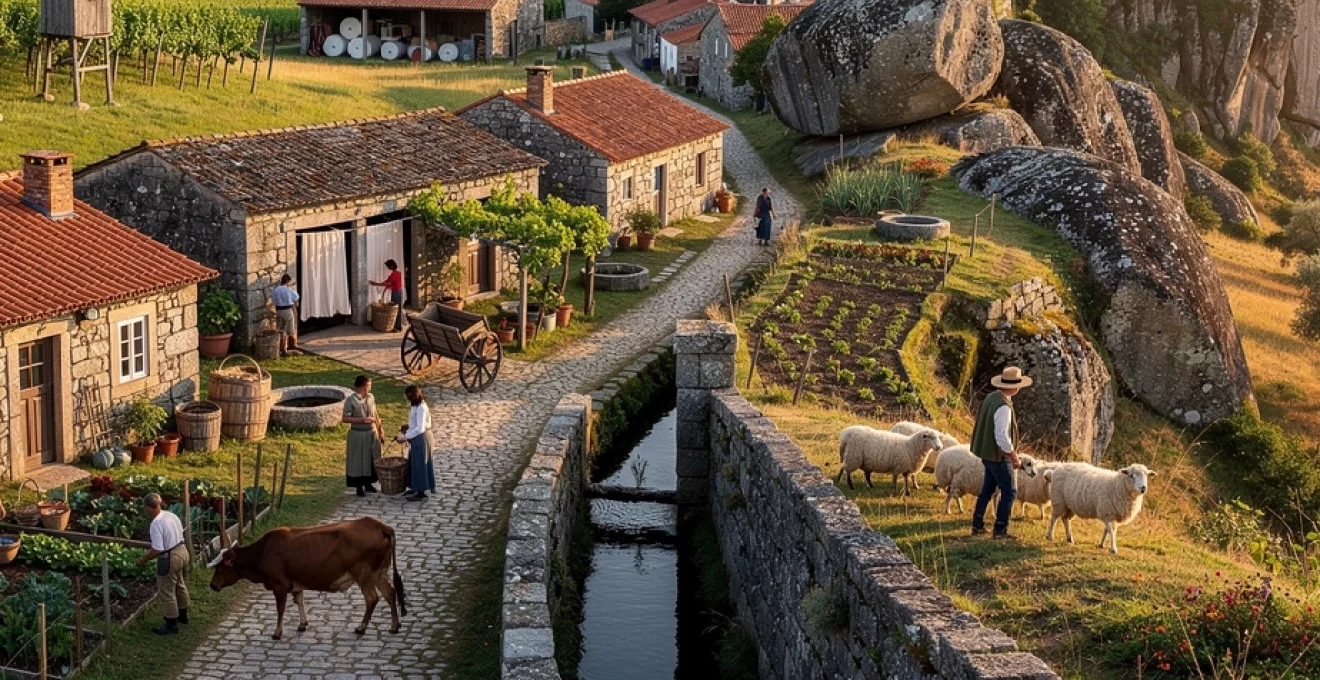
Portugal’s countryside harbours some of Europe’s most authentic village experiences, where centuries-old traditions continue to shape daily life in remarkable ways. From the granite granaries of Minho’s ancient settlements to the schist-built hamlets clinging to mountain slopes in the Beiras region, these communities offer visitors genuine insights into Portugal’s rural heritage. The country’s diverse landscapes have fostered distinct cultural practices, architectural styles, and agricultural systems that remain largely unchanged despite modern pressures.
Beyond the well-trodden tourist routes lies a Portugal where traditional craftsmanship thrives, where seasonal agricultural cycles still govern community rhythms, and where architectural innovations from medieval times continue to serve practical purposes. These villages represent living museums of Portuguese culture, offering travellers the opportunity to witness authentic ways of life that have endured for generations.
Minho province rural communities: traditional agricultural heritage and stone architecture
The Minho province in northern Portugal showcases some of the country’s most distinctive rural architecture and agricultural practices. This verdant region, characterised by its Atlantic-influenced climate and fertile valleys, has maintained traditional farming methods and stone-building techniques that date back centuries. The landscape here tells the story of human adaptation to challenging terrain, where communities developed ingenious solutions for food storage, defence, and agricultural productivity.
The region’s unique vinho verde wine-making traditions and granite construction techniques create a distinctive cultural landscape. Villages throughout Minho demonstrate how geographic constraints shaped architectural innovation, resulting in structures that are both functional and aesthetically striking. These communities continue to practice traditional crafts, from textile production to stone masonry, providing visitors with authentic cultural experiences.
Soajo village espigueiros: ancient granite granary preservation techniques
Soajo’s collection of granite granaries, known as espigueiros, represents one of Portugal’s most remarkable examples of traditional food preservation architecture. These elevated stone structures, built between the 18th and 19th centuries, demonstrate sophisticated understanding of moisture control and pest prevention. The granaries feature intricate ventilation systems and raised foundations designed to protect stored grain from rodents and dampness.
The village maintains approximately 24 espigueiros arranged in a spectacular formation on a granite outcrop. Each structure showcases different construction techniques and decorative elements, reflecting individual family traditions and regional variations. Local craftsmen still possess the knowledge required to maintain these monuments, using traditional tools and methods passed down through generations.
Lindoso settlement: medieval castle integration with terraced farming systems
Lindoso exemplifies the integration of defensive architecture with agricultural innovation. The village’s 13th-century castle overlooks elaborate terraced farming systems that maximise cultivation in mountainous terrain. These terraces, known locally as socalcos, represent centuries of careful landscape modification and continue to support traditional crop rotation practices.
The settlement’s layout demonstrates medieval urban planning principles, with houses positioned to optimise both defence and agricultural access. Residents maintain traditional farming techniques, including the cultivation of heritage grain varieties and the practice of seasonal transhumance with livestock. The village’s blacksmith workshop and traditional bread ovens remain active, providing essential services to the community.
Ponte da barca: lima valley wine production and vinho verde traditions
Ponte da Barca serves as a living laboratory for traditional vinho verde production methods. The town’s location in the Lima Valley provides ideal conditions for this unique wine style, characterised by its light, slightly effervescent qualities. Local quintas (wine estates) maintain traditional vineyard management practices, including the distinctive pergola training systems that allow vines to grow high above ground level.
The community preserves ancient wine-making techniques, from grape harvesting ceremonies to traditional fermentation methods. Family-owned cellars continue to produce small-batch wines using indigenous grape varieties, many of which are found nowhere else in the world. The town’s annual wine festivals celebrate these traditions while providing visitors with authentic tasting experiences.
Arcos de valdevez: minho river basin textile manufacturing heritage
Arcos de Valdevez maintains Portugal’s oldest continuous textile manufacturing traditions, with workshops that have operated for over 400 years. The town’s location along the Minho River provided the water power necessary
for early fulling mills and dye houses. Over time, this evolved into small-scale factories and family workshops specialising in woollen blankets, linen, and later cotton textiles. Walking through Arcos de Valdevez today, you can still find artisans weaving on traditional looms, producing high-quality cloth using techniques that pre-date industrialisation. Many of these workshops welcome visitors by prior arrangement, offering demonstrations of spinning, dyeing with natural pigments, and hand-finishing fabrics.
The town’s textile heritage also shaped its social and economic structures. Cooperative models of production and shared water rights along the river ensured that even small producers could access vital resources. For travellers interested in authentic village life in Portugal, Arcos de Valdevez provides a useful case study of how rural communities adapted to early industrial processes without losing their artisanal identity. When you buy a blanket or scarf here, you are not just purchasing a souvenir; you are supporting a living tradition that has survived for centuries.
Beiras region mountain villages: schist architecture and transhumance pastoral systems
The Beiras region, stretching across central Portugal, is defined by rugged mountain ranges, deep valleys, and an extensive network of historic villages built from schist and granite. These remote settlements developed in close relationship with seasonal pastoralism and subsistence agriculture, creating a distinctive cultural landscape. For travellers seeking to discover authentic village life in Portugal, the Beiras mountains offer a rare glimpse of traditional transhumance systems still practised today.
Villages in this region are often constructed entirely from locally quarried schist, a layered metamorphic rock that gives houses their characteristic dark tones and irregular textures. Narrow alleyways, stone staircases, and terraced fields reveal centuries of adaptation to steep slopes and harsh winters. Many communities continue to manage communal grazing lands, rotating flocks between high-summer pastures and lower winter valleys, much as their ancestors did. This dynamic relationship between architecture, livestock movement, and mountain ecology remains one of the Beiras’ most compelling features.
Monsanto village: granite boulder integration in medieval urban planning
Monsanto is perhaps the most emblematic example of how Portuguese mountain communities learned to build with, rather than against, their environment. Perched on the slopes of a granite outcrop, the village’s medieval urban plan weaves streets, stairways, and houses around enormous boulders. In many cases, the rock itself forms one or more walls of a dwelling, providing natural insulation and protection from the elements. Instead of clearing these massive stones, early builders treated them as structural allies.
Exploring Monsanto on foot, you will notice how the village layout follows the contours of the hill, with narrow lanes that twist between rocks and abrupt viewpoints over the surrounding plains. The castle ruins at the summit complete this defensive scheme, once allowing residents to monitor movement across the borderlands with Spain. While tourism has grown since the village gained greater visibility, daily life still revolves around small family farms, local bakeries that use wood-fired ovens, and seasonal religious festivals. Visiting outside peak summer months can provide a more tranquil encounter with this remarkable granite settlement.
Piódão settlement: schist stone construction and alpine agricultural terraces
Piódão, tucked into a horseshoe-shaped valley of the Serra do Açor, is renowned for its schist architecture and carefully sculpted agricultural terraces. From a distance, the village seems to merge with the mountainside, its slate-coloured houses stepping down the slope like a geological formation. Traditionally, inhabitants used schist not only for walls but also for roofing and paving, creating a coherent built environment that maximises the rock’s durability and thermal properties.
Surrounding Piódão, narrow terraces support small plots of maize, potatoes, beans, and fruit trees, irrigated by channels that divert water from mountain springs. These alpine-style agricultural systems make efficient use of limited arable land, and they are still maintained by older residents who follow seasonal planting calendars. For visitors, walking trails connect Piódão to neighbouring hamlets, offering insight into how transhumance routes and footpaths once linked isolated communities. When you pause on a terrace path and look back at the village, it becomes clear how architecture and agriculture are interwoven here, much like the threads of a handwoven blanket.
Sortelha fortified village: 13th century defensive architecture preservation
Sortelha stands out as one of Portugal’s best-preserved medieval fortified villages, its 13th-century walls and castle enclosing a compact cluster of granite houses. Unlike in many European settlements where historic cores were heavily modified, Sortelha’s defensive architecture remains largely intact, providing a clear view of how a border stronghold functioned in the Middle Ages. The circular wall follows the rocky hilltop, with gates, battlements, and lookout points oriented toward historic invasion routes.
Within the walls, narrow lanes wind past stone dwellings, small chapels, and communal spaces such as the former pillory and cistern. Many houses retain traditional elements like stone lintels carved with crosses or coats of arms, and some have been sensitively restored as guesthouses. This allows travellers to stay overnight within the fortifications and experience the village after day-trippers have left. As you walk along the ramparts at sunset, the landscape unfolds in all directions, illustrating why Sortelha’s strategic position was so crucial in defending the nascent Portuguese kingdom.
Aldeia da serra: estrela mountain sheep herding and queijo da serra production
Scattered across the Serra da Estrela range are small hamlets often referred to collectively as aldeias da serra, where sheep herding and cheese-making remain central to local identity. These high-altitude communities manage flocks of the native Bordaleira da Serra da Estrela breed, whose milk is used to produce the renowned Queijo da Serra. This raw-milk, semi-soft cheese, coagulated with thistle rennet, has been protected by a Denominação de Origem Protegida (DOP) designation since the 1990s, reflecting its deep cultural and economic importance.
In many villages, you can observe elements of transhumance pastoral systems still in operation: shepherds guiding flocks between summer pastures on high plateaus and winter quarters in more sheltered valleys. Cheese production typically follows a seasonal rhythm, with peak activity in colder months when milk fat content is highest. Visitors interested in authentic village life in central Portugal can arrange farm visits or tastings through local tourism offices, gaining insight into every step of the process—from milking and curdling to ageing the wheels in cool, stone-built cellars. Watching a shepherd at work here is a bit like seeing a living time capsule of pre-industrial agriculture.
Castelo novo: renaissance water management and irrigation canal systems
Castelo Novo, one of Portugal’s designated Historic Villages, offers a different perspective on mountain life through its sophisticated Renaissance-era water management systems. Set against the flank of the Gardunha range, the village developed an intricate network of fountains, tanks, and irrigation canals that harness spring water for both domestic use and agriculture. The central square is dominated by a public fountain and former town hall, symbols of a civic approach to managing shared resources.
As you explore Castelo Novo, you will notice stone channels running along streets, feeding small orchards and gardens on the outskirts. These gravity-fed systems allowed farmers to cultivate fruit trees, vegetables, and olive groves in otherwise challenging terrain, much like arteries distributing lifeblood through a body. Interpretive panels explain how these works were organised and maintained, while some local guides offer thematic tours focused specifically on water heritage. For travellers, understanding this hydraulic infrastructure adds a new layer of appreciation to what might first appear as simple rural scenery.
Alentejo cork oak landscapes: montado ecosystem and traditional craft industries
The Alentejo region, covering much of southern Portugal’s interior, is defined by its rolling plains, cork oak forests, and slow-paced villages where agriculture and traditional crafts remain key livelihoods. Here, the montado ecosystem—a mosaic of cork and holm oak trees interspersed with pasture and cereal crops—plays a crucial role in both biodiversity conservation and rural economies. According to recent estimates, Portugal supplies roughly half of the world’s cork, and a significant portion originates from these Alentejo landscapes.
Villages scattered across the montado often preserve whitewashed architecture with coloured trims, narrow streets that follow ancient paths, and communal spaces where seasonal festivals mark the rhythms of agricultural life. Cork harvesting, carried out by skilled workers every nine to twelve years, is still performed with hand tools and strict techniques to avoid damaging the trees. This manual craft is complemented by local industries that transform cork into stoppers, insulation, and contemporary design objects. For visitors hoping to experience authentic village life in Portugal, the Alentejo offers an ideal combination of living traditions, open scenery, and culinary excellence.
Monsaraz hilltop settlement: medieval fortification and alqueva reservoir views
Monsaraz occupies a commanding hilltop position overlooking the Guadiana River basin and the vast Alqueva reservoir, one of Europe’s largest artificial lakes. Encircled by medieval walls and crowned by a 13th-century castle, the village has preserved its narrow cobbled streets and whitewashed houses with minimal modern intrusion. Walking through the main gate is akin to stepping into a historical tableau where layers of pre-Roman, Moorish, and Christian occupation can still be read in the urban fabric.
The transformation of the surrounding landscape following the construction of the Alqueva dam has only heightened Monsaraz’s scenic appeal. Terraced fields, olive groves, and vineyards now frame expansive water views that change colour with the time of day. Local producers have seized this opportunity to develop wine tourism and olive oil tasting experiences rooted in long-standing agricultural practices. If you visit in the shoulder seasons, you are likely to encounter everyday village life—residents tending kitchen gardens, artisans working in small studios, and neighbours exchanging news in the shade of the church square—rather than crowds of day-trippers.
Marvão granite escarpment: strategic border position and defensive architecture
Perched dramatically on a granite escarpment near the Spanish border, Marvão is another exemplar of how geography and defence shaped village development in Portugal. The town’s fortified walls and castle cling to sheer cliffs, creating a natural fortress that once played a key role in controlling access between the Iberian interior and the Atlantic coast. From the ramparts, the surrounding Alentejo plains and the Serra de São Mamede unfold like a map, making clear why medieval rulers invested heavily in Marvão’s fortifications.
Inside the walls, the village retains its characteristic whitewashed houses, often framed by stone doorways and wrought-iron balconies. Many buildings incorporate older structures or sit atop former defensive elements, illustrating how domestic and military architecture intertwined over time. Today, Marvão balances heritage preservation with small-scale tourism, offering family-run guesthouses and traditional restaurants rather than large hotels. Exploring early in the morning or toward evening, when the light softens and day visitors thin out, can give you a sense of what life might have felt like here centuries ago—a quiet yet vigilant existence on the frontier.
Évora monte: renaissance urban planning and cork processing heritage
Évora Monte, often overshadowed by the larger city of Évora, is a compact hilltop settlement notable for its unusual castle-palace and Renaissance-influenced urban layout. The fortress, rebuilt in the 16th century, combines military and residential functions in a single structure, with cylindrical bastions and a palatial interior that once hosted noble families. Around it, the village follows a more regular street plan than many medieval towns, reflecting early experiments with ordered urban design.
The surrounding countryside is dominated by cork oak plantations and mixed montado landscapes, supporting a network of small cork-processing workshops. Many local families have long-standing connections to cork stripping and preparation, passing down specialised knowledge about reading tree bark, timing harvests, and grading material. Visitors interested in traditional industries can often arrange visits through regional tourism offices to see elements of the process firsthand. In this way, Évora Monte allows you to connect high-level historical narratives—such as the signing of the 1834 Convention of Évora Monte, which ended Portugal’s civil war—with the everyday realities of rural work that continue to sustain the village today.
Terena village: roman archaeological integration with agricultural practices
Terena, located in the Alentejo’s northeastern corner, offers a subtler but equally fascinating blend of deep history and contemporary rural life. The village itself is crowned by a modest castle and a church dedicated to Nossa Senhora da Boa Nova, but the surrounding fields conceal traces of Roman occupation, including villa ruins and segments of ancient roadways. Over centuries, farmers have integrated these archaeological remains into their plots, sometimes reusing dressed stones in field walls or outbuildings.
This quiet coexistence of ancient artefacts and modern agriculture illustrates how layered the Alentejo landscape truly is. When you walk the lanes around Terena, you may pass olive groves and cereal fields that follow parcel boundaries established many generations ago, if not in antiquity. Local guides and regional museums can help interpret this palimpsest, connecting visible ruins with less obvious patterns in land use. For travellers, Terena demonstrates that discovering authentic village life in Portugal often involves looking beyond the obvious monuments to see how everyday practices—ploughing, pruning, harvesting—are informed by long historical continuities.
Douro valley quintas: port wine terroir and UNESCO world heritage viticulture
The Douro Valley, recognised by UNESCO as a World Heritage cultural landscape, is world-famous for port wine, but its soul lies in the small villages and quintas (wine estates) that cling to terraced hillsides. Here, steep slopes carved into stone-walled vineyards form one of the most dramatic examples of human-shaped agricultural terrain in Europe. Many of these terraces were built by hand over centuries, using dry-stone techniques that stabilise the soil while allowing vines to root deeply in the schist bedrock.
Staying at a family-run quinta offers one of the most direct ways to experience authentic village life in the Douro. Hosts often involve guests in seasonal activities—from pruning and tying vines in winter to harvesting grapes in September—providing hands-on insight into traditional viticulture. While large port houses dominate exports, it is these smaller producers who preserve older grape varieties, field blends, and labour-intensive methods such as foot-treading grapes in granite lagares. Visiting in shoulder seasons can be especially rewarding, as you will see farmers preparing the vineyards or tending barrels in cool cellars without the peak-season crowds.
Azores volcanic island communities: crater lake agriculture and thermal spring utilisation
The Azores archipelago, set in the mid-Atlantic, presents a different facet of Portuguese village life shaped by volcanic soils, high rainfall, and relative isolation. On islands such as São Miguel, Terceira, and Pico, small communities have developed distinctive agricultural practices around crater lakes and lava fields. Fertile volcanic soils support tea plantations, dairy farming, and vegetable plots arranged on terraced slopes, while stone-walled fields protect crops and cattle from persistent Atlantic winds.
In places like Furnas on São Miguel, residents have long harnessed geothermal activity for everyday use. Communal cooking pits utilise steam and heat from fumaroles to prepare traditional stews, slowly cooked underground in sealed pots for several hours. Public thermal baths and washing basins, fed by mineral-rich springs, historically served both hygienic and social functions, much as village fountains did on the mainland. When you visit these island communities, you can observe how modern life—schools, cafés, Wi-Fi—coexists with practices that depend directly on the volcanic forces beneath your feet, a reminder that rural authenticity is often a story of adaptation rather than nostalgia.
Madeira levada systems: 16th century irrigation engineering and subtropical agriculture
On Madeira, a mountainous island rising abruptly from the Atlantic, village life has long depended on an extraordinary network of irrigation channels known as levadas. Begun in the 16th century and expanded over hundreds of years, these narrow conduits carry water from the rainy north-facing slopes to drier southern terraces where most settlements and crops are located. Built by hand along cliff faces, through tunnels, and across ravines, the levadas function like an artificial river system, redistributing vital resources to support subtropical agriculture.
Today, many Madeiran villages still organise water distribution schedules based on traditional rights, with farmers allotted specific hours to divert levada water to their plots of bananas, vines, sugar cane, and vegetables. Walking along the maintenance paths beside these channels—now some of Portugal’s most popular hiking routes—you pass through working landscapes where residents tend small terraced fields and orchard gardens. In this sense, the levadas are both engineering marvels and social institutions, stitching together isolated hamlets into a shared hydraulic community. For travellers seeking the best places to discover authentic village life in Portugal, following a levada trail offers a literal and figurative cross-section through Madeira’s living rural heritage.