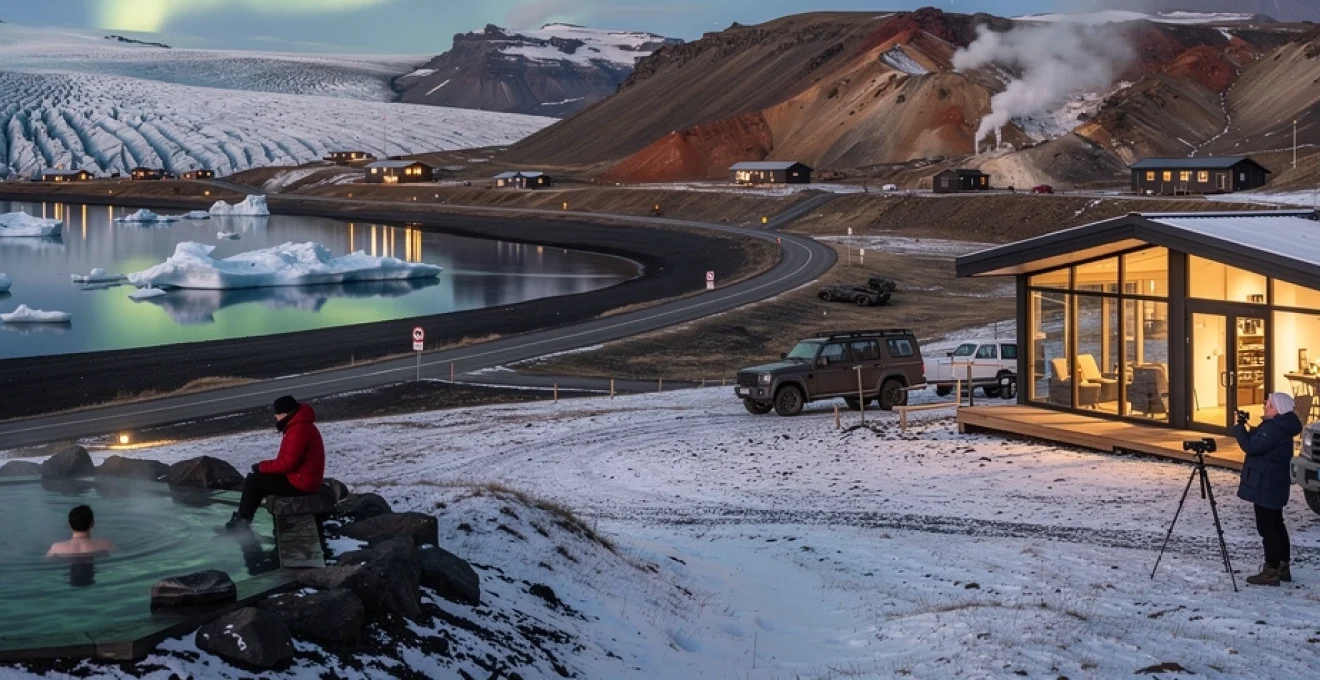
Iceland’s dramatic landscape offers an unparalleled natural theatre where ancient glaciers carve through volcanic terrain while the aurora borealis paints the Arctic sky. This Nordic island nation presents one of the world’s most remarkable concentrations of geological phenomena, creating extraordinary opportunities for travellers seeking to witness Earth’s most spectacular displays. The strategic positioning of accommodation across Iceland’s diverse regions determines your access to these natural wonders, making location selection a critical factor in maximising your experiences.
The country’s unique position along the Mid-Atlantic Ridge creates a geological playground where fire and ice coexist in dramatic harmony. From the massive Vatnajökull ice cap covering 8% of the country to active volcanic systems that regularly reshape the landscape, Iceland’s natural phenomena operate on timescales both ancient and immediate. Understanding the geographical distribution of these features allows travellers to position themselves strategically for optimal viewing opportunities throughout their journey.
Seasonal timing plays an equally crucial role in phenomenon accessibility. While glaciers and volcanic activity remain year-round attractions, the northern lights require specific conditions that favour autumn and winter months. The interplay between these natural forces creates distinct regional advantages, with certain areas offering superior access to multiple phenomena simultaneously.
Strategic location selection for glacier proximity and ice cave access
Iceland’s glacial systems represent some of Europe’s most accessible ice formations, with accommodation options strategically positioned to provide intimate access to these frozen giants. The country’s glaciers cover approximately 11,000 square kilometres, creating diverse opportunities for exploration ranging from glacier hiking to ice cave adventures. Selecting accommodation near major glacial outlets significantly enhances your ability to experience these formations during optimal weather windows.
Jökulsárlón glacier lagoon and diamond beach accommodation options
The Jökulsárlón Glacier Lagoon stands as Iceland’s crown jewel of glacial phenomena, where thousand-year-old ice calves into a deep lagoon before floating toward Diamond Beach. Fosshotel Glacier Lagoon provides the closest luxury accommodation, positioning guests within walking distance of both the lagoon and the adjacent black sand beach where icebergs create constantly changing sculptures. The hotel’s panoramic windows frame the lagoon’s ethereal beauty, while its elevated position offers unobstructed views of the Breiðamerkurjökull glacier tongue.
Hotel Jökulsárlón, recently constructed to meet growing demand, offers modern amenities while maintaining environmental sensitivity through sustainable design principles. Its proximity to boat tour departure points enables early morning zodiac excursions when lighting conditions create optimal photography opportunities. The nearby Hali Country Hotel provides a more intimate experience, with traditional Icelandic hospitality and home-cooked meals featuring local ingredients.
Skaftafell national park lodge proximity to svínafellsjökull glacier
Skaftafell Nature Reserve offers unparalleled access to Svínafellsjökull glacier, where guided ice climbing and glacier walking experiences reveal the dynamic nature of glacial systems. Hotel Skaftafell serves as the primary basecamp for glacier exploration, with its simple yet comfortable accommodations designed specifically for adventure-focused travellers. The hotel’s location provides immediate access to marked trails leading to Svartifoss waterfall and glacier viewing points.
The proximity to Svínafellsjökull glacier offers unique opportunities to witness glacial movement and calving events that occur throughout the day, creating an ever-changing landscape of ice formations.
Vatnajökull glacier region guesthouses and ice cap viewing points
Europe’s largest ice cap by volume, Vatnajökull, spawns numerous outlet glaciers accessible from various accommodation bases. Guesthouses throughout the region provide authentic Icelandic farm stays while positioning visitors near lesser-known glacial tongues. These family-operated establishments offer insider knowledge of glacial conditions and access routes that larger hotels cannot match.
The Vagnsstaðir HI Hostel provides budget-conscious accommodation with premium glacier access, particularly to the Hoffellsjökull glacier where ice cave formations change seasonally. Private guesthouses like Seljavellir offer exclusive access to glacial viewpoints and personalised guidance for glacier photography
during the shoulder seasons when ice cave access is at its safest. Many of these properties maintain close relationships with local glacier guides, meaning you can often arrange early morning pick‑ups directly from your door to maximise daylight on the ice.
Sólheimajökull glacier access from south coast accommodations
For travellers following the South Coast, Sólheimajökull glacier offers one of the most accessible glacier hiking areas in Iceland, conveniently located between Skógafoss and Vík. Accommodation clusters around Skógar, Sólheimajökull and Vík provide excellent bases for half‑day and full‑day glacier excursions. Properties such as Hotel Skógafoss, Hotel Skóga and Volcano Hotel position you within a short driving distance of the glacier parking area, minimising time spent on the road when weather windows are tight.
Choosing to stay in Vík extends your access beyond Sólheimajökull to the wider Katla Geopark, allowing you to combine glacier walks with black sand beach exploration and ice cave tours inside Katla volcano’s glacier cap. Guesthouses and cabins in the surrounding countryside often sit under relatively dark skies, offering the rare chance to photograph both glacier‑fed river plains and the northern lights from the same vantage point. When planning where to stay in Iceland for glaciers and volcanoes, this stretch of coast offers one of the best all‑round bases.
Volcanic activity monitoring zones and thermal accommodation
Iceland’s position on the Mid‑Atlantic Ridge creates an evolving volcanic landscape, where new fissures can open and lava fields form within human timescales. While active eruptions are highly regulated and often restricted, several accommodation zones place you within safe observing distance of recent and historical volcanic activity. Staying in these areas allows you to witness steaming lava fields, fresh craters and geothermal systems shaped by eruptions without sacrificing comfort or safety.
Reykjanes peninsula geothermal hotels near fagradalsfjall eruption sites
The Reykjanes Peninsula has entered a new volcanic era since 2021, with multiple eruptions near Fagradalsfjall drawing global attention. Accommodation in towns such as Grindavík and Reykjanesbær (Keflavík) offers convenient access to designated viewing trails when conditions allow. Properties like Northern Light Inn and airport‑area hotels provide a practical base where you can combine arrival or departure logistics with short drives to volcanic vantage points.
Geothermal hotels on Reykjanes benefit from the region’s abundant hot water, with many offering outdoor hot tubs and spa facilities heated directly by the earth. This means you can soak while watching steam plumes rise from the lava fields on the horizon, a visual reminder of Iceland’s constant geological activity. Because access to eruption sites can change quickly based on gas levels and ground stability, staying nearby allows you to adapt your schedule as civil protection authorities update guidance.
Blue lagoon silica hotel and svartsengi geothermal field proximity
The Blue Lagoon area, built around the Svartsengi geothermal power plant, offers one of Iceland’s most iconic examples of harnessed volcanic energy. Staying at Silica Hotel or The Retreat at Blue Lagoon places you directly within this geothermal field, where high‑silica water fills milky‑blue pools framed by jet‑black lava. While this zone is not an active lava site, it sits within the broader Reykjanes volcanic system, giving you an immediate sense of how geothermal energy and tourism coexist.
Guests in these hotels benefit from private lagoon access and quieter bathing areas, especially valuable in peak season when day‑visitor numbers are high. If you are interested in the science behind Iceland’s geothermal infrastructure, this is an excellent base for arranging tours of power plants and learning how volcanic heat is converted into electricity and hot water. From a practical perspective, combining a night here with your first or last day in Iceland allows you to experience both geothermal bathing and, when conditions permit, guided excursions toward nearby eruption zones.
Landmannalaugar highland huts for rhyolite mountain and hot spring access
Landmannalaugar, in the Fjallabak Nature Reserve, showcases colourful rhyolite mountains created by past volcanic activity, alongside one of Iceland’s most beloved natural hot spring areas. Accommodation here is rustic and seasonal: mountain huts, basic cabins and designated camping areas managed by the Icelandic Touring Association. These highland bases are open primarily from late June to early September, when F‑roads become passable and river crossings safe for 4×4 vehicles.
Staying in Landmannalaugar’s huts allows you to begin classic treks such as the Laugavegur trail directly from your doorstep, with sunrise and sunset lighting the orange, red and green mineral bands of the surrounding peaks. After a day of hiking obsidian lava fields and fumarole‑rich valleys, you can soak in the naturally warm river that gives Landmannalaugar its name. Because this region is remote and weather‑sensitive, we recommend booking bunks well in advance and monitoring road conditions daily through the Icelandic Road Administration.
Westman islands volcano monitoring stations and heimaey accommodation
The Westman Islands (Vestmannaeyjar), and particularly Heimaey, offer a living laboratory of recent volcanic history. The 1973 Eldfell eruption famously buried parts of the town, and today you can stay in comfortable guesthouses and hotels built beside still‑warm lava fields. Accommodation options in Heimaey place you within walking distance of the Eldheimar museum, where preserved houses and monitoring data tell the story of this sudden eruption and the evacuation that followed.
Choosing Heimaey as a base lets you combine volcano education with wildlife encounters, including one of Iceland’s largest puffin colonies in summer. From your hotel, you can hike up Eldfell and Helgafell to observe lava flows that reshaped the island’s coastline, all while current monitoring stations keep a quiet watch on the archipelago’s volcanic systems. For travellers interested in how communities adapt to living beside volcanoes, this compact island town delivers both insight and atmosphere.
Aurora borealis optimal viewing locations and dark sky accommodation
While you can sometimes glimpse the northern lights from Reykjavík on clear, strong aurora nights, the most reliable viewing comes from darker, less light‑polluted regions. Choosing accommodation in Iceland with dark sky access, low horizon obstructions and minimal artificial lighting significantly improves your chances. Because space weather forecasts and cloud cover change quickly, it is often wiser to prioritise flexible, aurora‑ready bases over single “bucket list” locations.
Borgarnes region light pollution minimal zones and farm stays
West Iceland around Borgarnes offers an excellent balance of accessibility and dark skies. Just over an hour from Reykjavík on well‑maintained roads, the region hosts numerous farm stays and countryside guesthouses set back from major settlements. These properties often dim exterior lighting on clear nights and provide northern lights wake‑up calls, allowing you to rest without constantly checking the sky yourself.
Staying near Borgarfjörður also positions you to explore geothermal sites such as Deildartunguhver and historic locations like Reykholt by day, then return to wide‑open valley views for aurora watching at night. Because the region sits west of many of Iceland’s prevailing weather systems, cloud gaps can open unexpectedly, giving you surprise aurora opportunities even on mixed‑forecast evenings. If you’re asking where to stay in Iceland to see the northern lights without long winter drives, Borgarnes and its surrounding farms are a strong contender.
Snæfellsnes peninsula northern lights photography hotels
The Snæfellsnes Peninsula is often called “Iceland in miniature” and doubles as a prime northern lights photography destination. Accommodation near landmarks like Kirkjufell, Búðir and Arnarstapi gives you access to dramatic foregrounds – iconic mountains, basalt cliffs and lonely churches – that elevate aurora images from simple sky shots to memorable compositions. Hotels such as Hótel Búðir and small lodges in Grundarfjörður are particularly popular with photographers.
Many properties on Snæfellsnes understand the needs of night photographers, offering flexible breakfast hours, thermos fills and advice on local vantage points. Because light pollution is low and horizon views are wide, you can often see the aurora arc from one side of the peninsula to the other when activity is strong. Think of Snæfellsnes as an outdoor studio for northern lights photography: the sky provides the show, while the peninsula supplies the props.
Akureyri and lake mývatn aurora forecast monitoring bases
North Iceland offers some of the country’s clearest winter skies, making Akureyri and Lake Mývatn valuable bases for aurora hunters. Akureyri, the region’s main town, combines urban comforts with quick access to darker vantage points within a 20–30‑minute drive. Numerous hotels and guesthouses here coordinate with local northern lights tour operators who monitor space weather and cloud cover, adjusting departure times and routes to chase clearer skies.
Lake Mývatn, about 1.5 hours east of Akureyri, offers even darker skies and a more volcanic backdrop. Staying at countryside hotels or cabins around the lake allows you to pair daytime visits to Dimmuborgir lava fields and Námafjall geothermal area with nighttime aurora watching over still water. Because the region sits inland and at slightly higher elevation, it often escapes coastal cloud banks that can obscure the lights further west.
Westfjords remote lodges for maximum magnetic field activity exposure
The Westfjords, one of Iceland’s least populated regions, provide some of the darkest skies in Europe. Remote lodges near Ísafjörður, Súðavík and Patreksfjörður sit far from major artificial light sources, allowing even faint aurora activity to stand out clearly. When geomagnetic conditions peak, the lights can appear directly overhead and even to the south, creating dramatic corona formations that are difficult to see in brighter locations.
That said, winter access to the Westfjords can be challenging, with narrow roads, frequent snow and occasional closures. If you choose this region as your northern lights base, we recommend renting a 4×4 vehicle, monitoring weather and road conditions daily, and being prepared to adjust your route. For those comfortable with remote travel logistics, the reward is an unparalleled combination of wild fjord scenery and crystal‑clear aurora displays.
Multi-phenomenon experience bases along the ring road
One of Iceland’s greatest advantages is the way its main Ring Road (Route 1) links multiple natural phenomena in a single driveable loop. By choosing bases strategically along this route, you can experience glaciers, volcanoes and northern lights from the same accommodation hubs. This multi‑phenomenon approach is ideal if you prefer to minimise one‑night stays while still maximising the diversity of what you see.
For example, a classic 8–10‑day itinerary might anchor you in Reykjavík or the Golden Circle area, then move east to Vík or Kirkjubæjarklaustur, onward to the Jökulsárlón region, and finally north to Egilsstaðir and the Mývatn–Akureyri corridor before looping back west. Each of these bases offers a different combination of experiences: waterfalls and black beaches in the South, glaciers and ice caves in the southeast, geothermal fields and lava deserts in the north, and potential aurora viewing almost everywhere outside the larger towns. By spacing your driving days and building in at least two nights per key base, you allow for weather flexibility – crucial when you are trying to see both glaciers and northern lights on the same trip.
Seasonal timing strategies for optimal natural phenomena convergence
When is the best time to stay in Iceland for glaciers, volcanoes and the northern lights together? Because each phenomenon has its own seasonal peak, the most successful trips balance compromise and timing strategy rather than chasing a single “perfect” week. Glaciers and volcanoes are essentially year‑round, but safe ice cave access is usually limited to late autumn through early spring, while highland volcanic areas such as Landmannalaugar are primarily accessible in summer.
If your priority is combining ice caves with strong aurora potential, late October to March offers the best overlap, with long nights and cooler temperatures that stabilise ice structures. However, storms are more frequent, so building in extra nights at key glacier bases like Skaftafell or Jökulsárlón gives you backup days if high winds or heavy snow close access roads. For travellers more interested in colourful rhyolite mountains, highland hot springs and easier driving conditions, July and August are ideal, though you will trade northern lights for the midnight sun.
Shoulder seasons – late September to early October and April – can provide a sweet spot for many visitors. During these months, you may still access some ice caves and lower‑elevation trails while enjoying darker skies for aurora viewing and less extreme weather than mid‑winter. Regardless of season, aligning your accommodation choices with both long‑range climate norms and short‑term forecasts (for cloud cover, wind and road conditions) is the most effective way to stack the odds in your favour.
Premium observatory accommodations and scientific research station access
For travellers who want to go beyond standard sightseeing, a small number of Icelandic accommodations integrate directly with observatories or scientific initiatives. These properties offer not only comfortable stays but also deeper insight into the processes shaping glaciers, volcanoes and the aurora. In some cases, you may even sleep within walking distance of telescopes or research equipment monitoring the skies and the earth beneath your feet.
Hotel Rangá in South Iceland is one of the best‑known examples, featuring an on‑site observatory equipped with high‑quality telescopes and guided stargazing sessions on clear nights. Its rural location beside the East Rangá river reduces light pollution, making it an excellent base for both northern lights viewing and deep‑sky observation. Combined with its proximity to South Coast waterfalls, Sólheimajökull glacier and the Eyjafjallajökull volcanic system, this property acts as a multi‑phenomenon hub for science‑curious guests.
Elsewhere in the country, some remote guesthouses and highland huts collaborate informally with glaciologists, volcanologists and aurora researchers who frequent their regions. While these are not formal research stations, staying in such places can give you access to lectures, evening talks or casual conversations with experts returning from the field. If you have a strong interest in Earth sciences, consider contacting accommodations in advance along the Vatnajökull, Mývatn or Westfjords corridors to ask about seasonal research presence. You may find that your chosen base becomes not only a place to sleep, but also a front‑row seat to the ongoing story of Iceland’s changing landscape.