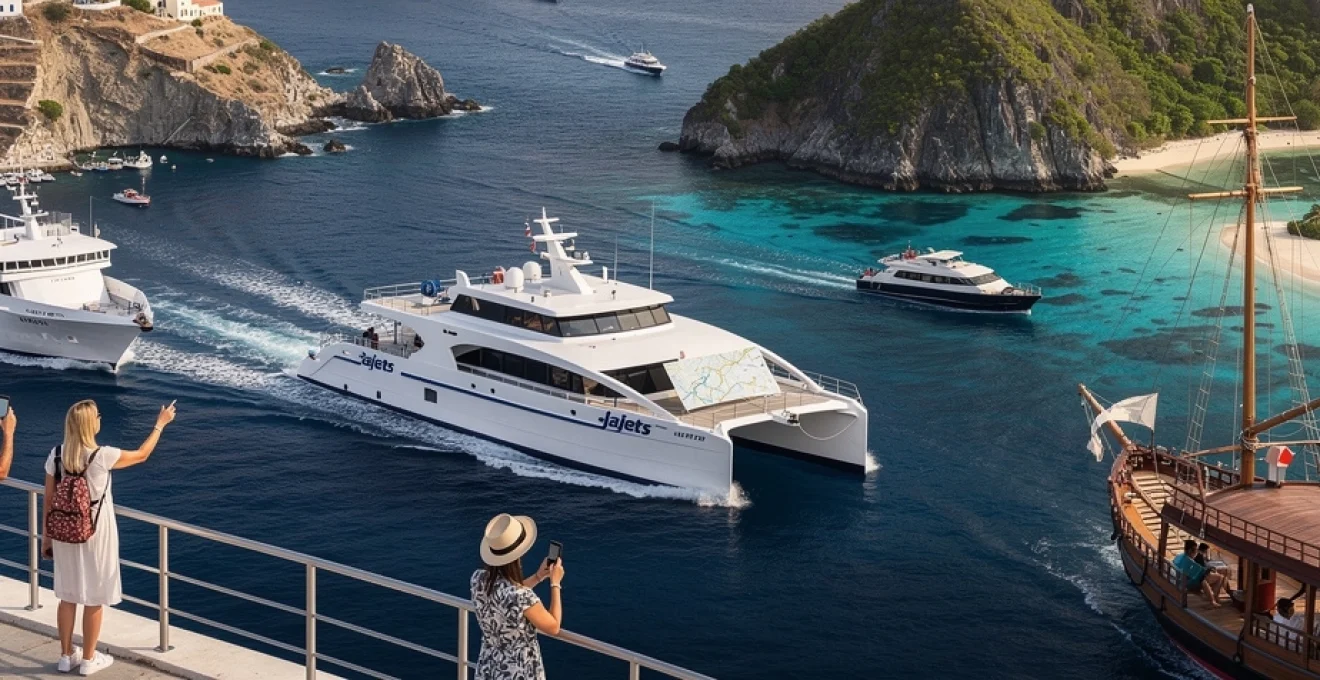
Island-hopping adventures represent some of the most captivating travel experiences available to modern explorers. Whether you’re drawn to the crystalline waters surrounding Greece’s ancient archipelagos or the tropical paradise of Indonesia’s sprawling island chain, understanding the intricacies of inter-island transportation becomes essential for crafting memorable journeys. The art of seamlessly moving between islands requires careful consideration of ferry schedules, weather patterns, seasonal variations, and budget constraints. Maritime transportation networks in these destinations have evolved significantly over the past decades, offering travellers an impressive array of options ranging from traditional wooden vessels to high-speed catamarans equipped with modern amenities.
Ferry networks and maritime route planning in the greek archipelago
Greece’s extensive ferry network stands as one of Europe’s most comprehensive maritime transportation systems, connecting over 200 inhabited islands across the Aegean and Ionian seas. The Greek ferry industry operates with remarkable efficiency during peak season, handling millions of passengers annually whilst maintaining competitive pricing structures. Understanding the intricacies of this network requires familiarity with the major ferry companies, including Blue Star Ferries, SeaJets, and Hellenic Seaways, each offering distinct advantages in terms of speed, comfort, and route coverage.
The ferry booking process has been revolutionised through digital platforms, allowing travellers to secure reservations months in advance. Peak season bookings, particularly for popular routes to Santorini and Mykonos, often sell out weeks ahead of departure dates. Ferry operators implement dynamic pricing strategies, with costs fluctuating based on demand, vessel type, and accommodation class. High-speed services typically command premium pricing, whilst conventional ferries offer more economical alternatives with longer journey times.
Route planning requires careful consideration of ferry frequencies, which vary dramatically between summer and winter schedules. Summer services operate with remarkable frequency, offering multiple daily departures between major hubs. Winter schedules, however, become significantly reduced, with some routes operating only twice weekly. Weather conditions play a crucial role in ferry operations, particularly during the autumn and winter months when strong winds can disrupt services across the Aegean Sea.
Cyclades ferry connections: mykonos, santorini and paros transit hubs
The Cyclades archipelago benefits from exceptional connectivity through strategic positioning of major ferry hubs. Mykonos and Santorini function as primary gateways, receiving direct connections from Athens’ Piraeus port throughout the year. These islands serve as stepping stones for reaching smaller destinations like Ios, Naxos, and Folegandros. Ferry journey times between Cycladic islands typically range from 45 minutes to 3 hours, depending on vessel type and route distance.
Paros emerges as a central hub within the Cyclades, offering convenient connections to neighbouring islands whilst maintaining frequent services to mainland Greece. The island’s strategic location makes it an ideal base for exploring the archipelago, with same-day return trips possible to several destinations. Ferry terminals in Paros provide excellent facilities, including parking areas, cafeterias, and tourist information centres that enhance the overall travel experience.
Dodecanese Island-Hopping routes via rhodes and kos maritime terminals
Rhodes dominates the Dodecanese ferry network as the principal hub, connecting the southeastern Aegean islands with mainland Greece and international destinations. The island’s modern ferry terminal handles both domestic and international services, including routes to Turkey and Cyprus. Ferry connections from Rhodes reach smaller islands like Symi, Halki, and Tilos, often requiring advance planning due to limited sailing frequencies.
Kos serves as an important secondary hub within the Dodecanese, particularly for northern island connections. The island benefits from excellent connectivity to Kalymnos, Leros, and Patmos, with journey times rarely exceeding two hours. Ferry services between Kos and Rhodes operate daily during summer months, providing essential connectivity for comprehensive island-hopping itineraries across the Dodecanese archipelago.
Ionian sea ferry services: corfu to zakynthos seasonal scheduling
The Ionian Islands present unique transportation challenges due to their western positioning and distinct ferry network operations. Unlike the Aegean islands, Ionian ferry services operate with different seasonal patterns, heavily influenced
by both tourism demand and local commuter needs. Core year-round routes connect Corfu with Igoumenitsa and Lefkada with the mainland, while more complex multi‑stop services link Kefalonia, Ithaca, and Zakynthos primarily between May and October. Travellers should be aware that direct ferries from Corfu to Zakynthos are rare; most itineraries require at least one change, often via Kefalonia or Killini on the Peloponnese.
Because of this fragmented network, effective route planning in the Ionian Sea often means thinking in terms of “island clusters” rather than point‑to‑point trips. For example, combining Zakynthos and Kefalonia works well, as does pairing Corfu with Paxos and Antipaxos. Services are generally less frequent than in the Cyclades, so you’ll want to check timetables several weeks in advance and build in buffer days if your schedule is tight. During shoulder seasons, some peripheral routes may run only a few times per week, making flexibility a key asset for any Ionian island‑hopping itinerary.
High-speed catamaran services: seajets and golden star ferries fleet analysis
High-speed catamarans have transformed how quickly you can travel between Greek islands, dramatically shortening journey times on busy corridors like Piraeus–Mykonos–Santorini. Operators such as SeaJets and Golden Star Ferries deploy modern high‑speed vessels capable of cruising at 30–40 knots, often cutting traditional ferry times in half. The trade‑off, however, is higher fares and slightly stricter luggage policies compared to slower, conventional ships.
From a practical standpoint, high‑speed ferries are ideal if you are on a tight schedule and want to visit multiple islands in one week without spending entire days in transit. These vessels usually depart from main ports like Piraeus, Rafina, Heraklion, and the major Cycladic hubs, offering multiple departures per day in peak season. Because they are more susceptible to cancellations during high winds, especially the Meltemi in July and August, it is wise to avoid scheduling critical long‑haul connections (such as same‑day flights) immediately after a high‑speed segment. When possible, we recommend mixing one or two high‑speed legs with slower, more scenic crossings to balance cost, comfort, and reliability.
Indonesian Inter-Island transportation infrastructure and logistics
Indonesia, with over 17,000 islands, presents a far more dispersed and complex inter‑island transportation system than Greece. Instead of a single unified network, travellers encounter a patchwork of national, regional, and private operators, each serving specific corridors. Major hubs like Jakarta, Surabaya, Makassar, and Bali act as gateways, funnelling passengers onto ferries, fast boats, and domestic flights that radiate out into the archipelago. Understanding how these systems intersect is crucial if you want your Indonesian island‑hopping itinerary to run smoothly rather than feel like a logistical puzzle.
While distances between islands can be vast, Indonesia has invested heavily in maritime connectivity through its state‑run ferry company and public infrastructure. This has made it entirely feasible to combine popular islands like Java, Bali, Lombok, and Flores in a single trip, especially if you are comfortable using a mix of overnight ferries and short domestic flights. However, services can be affected by weather, local holidays, and regional events, so maintaining flexibility and building generous time buffers into your schedule is particularly important here.
Pelni state ferry network: Java-Sumatra-Sulawesi connectivity systems
The backbone of Indonesia’s long‑distance maritime transport is the Pelni state ferry network, which operates large passenger vessels linking major islands such as Java, Sumatra, Kalimantan, Sulawesi, Papua, and Nusa Tenggara. These ships often function like floating buses and cargo carriers combined, stopping at multiple ports on multi‑day routes. For budget‑conscious travellers, Pelni ferries can be an economical way to traverse large distances, for example between Jakarta and Makassar or Surabaya and Ambon, while experiencing a more local side of Indonesian life.
Pelni vessels typically offer various classes of accommodation, ranging from shared economy decks to private cabins with air‑conditioning. Booking can usually be done via official Pelni offices, authorised agents, or local travel agencies near the ports, though online options have been improving in recent years. If you are considering Pelni for island hopping, think of it as a slow but immersive alternative to flying, ideal when you want to integrate the journey itself into your experience rather than simply move as fast as possible from A to B.
Fast boat operations in Bali-Lombok-Gili islands maritime corridor
In contrast to the slower Pelni network, the Bali–Lombok–Gili corridor is dominated by privately operated fast boats that cater primarily to international visitors. These high‑speed vessels connect popular departure points such as Sanur, Serangan, and Padang Bai in Bali with Senggigi or Bangsal in Lombok, as well as Gili Trawangan, Gili Air, and Gili Meno. Journey times typically range from 1.5 to 3 hours, depending on the route and sea conditions, making this one of the most efficient ways to hop between Indonesia’s most famous holiday islands.
However, standards vary considerably between operators, so taking time to compare safety records, vessel age, and customer reviews is highly advisable. Because sea conditions in the Lombok Strait can be rough, particularly during the rainy season and transitional months, travellers prone to seasickness may want to choose morning departures, when winds are often calmer, and opt for larger, more stable boats. Many companies offer package deals including hotel pick‑up and drop‑off, simplifying logistics if you prefer not to organise multiple transfers independently.
Speedboat charter services: flores to komodo national park access routes
For travellers heading east to explore Komodo National Park, speedboat services based around Labuan Bajo on Flores have become the primary means of access. These high‑powered boats offer both shared day tours and private charters, whisking you between islands like Komodo, Rinca, and Padar in a matter of hours. Compared to traditional wooden vessels, speedboats allow you to see multiple highlights—such as the famous pink beach, manta ray snorkelling spots, and dragon‑inhabited valleys—in a single day.
Private charters are particularly attractive for small groups or photographers who want control over timing and lighting at each stop. Because the seas around Komodo can be choppy and subject to strong currents, reputable operators will adjust routes based on daily conditions, putting safety ahead of rigid schedules. When evaluating options, you should look beyond price alone and consider the inclusion of certified guides, safety equipment, and park fee management, as these factors significantly influence overall trip quality and peace of mind.
Traditional wooden boat transport: pinisi vessels in eastern indonesian waters
Beyond modern speedboats and ferries, Indonesia’s maritime heritage comes alive through the use of traditional wooden pinisi vessels, particularly in eastern regions like Sulawesi, Flores, and Raja Ampat. These two‑masted schooners, historically used by Bugis and Makassarese sailors, have been adapted into liveaboard boats for multi‑day cruises. Travelling on a pinisi can feel like stepping back in time, blending slow travel with access to remote bays, coral reefs, and lesser‑visited islands.
Pinisi liveaboards range from simple, backpacker‑oriented ships with shared cabins to high‑end yachts offering en‑suite cabins, on‑board chefs, and dive facilities. Because many of these cruises follow flexible itineraries shaped by tides and weather, they are best suited if you value experience over rigid scheduling. Think of them like floating eco‑lodges: once aboard, your accommodation, transport, and most activities are bundled together, which can actually simplify logistics in far‑flung areas where regular public transport options are sparse.
Aviation networks for Multi-Island archipelago connectivity
While ferries and boats form the romantic backbone of island travel, aviation networks provide the speed and reliability that many itineraries require, particularly across large archipelagos. In both Greece and Indonesia, domestic flights can dramatically reduce travel times, turning what might be a 10‑hour overnight sea journey into a 45‑minute hop. For travellers balancing limited holiday time with a desire to see multiple regions, strategic use of flights is often the most efficient way to travel between islands.
In Greece, Athens International Airport functions as the primary hub, with frequent connections to major islands such as Crete, Rhodes, Corfu, Santorini, and Mykonos. Smaller regional airports on islands like Naxos, Paros, and Skiathos provide additional options, especially in summer when seasonal routes expand. Indonesia, by contrast, relies on a network of hubs including Jakarta (CGK), Surabaya (SUB), Denpasar Bali (DPS), and Makassar (UPG), from which you can reach secondary airports like Labuan Bajo (LBJ), Lombok (LOP), and Sorong (SOQ) for Raja Ampat. When planning your island‑hopping trip, it can help to visualise these hubs as “switching stations” in a rail network, where you route yourself through major nodes to reach smaller destinations with minimal backtracking.
Private charter solutions and luxury maritime transport options
For travellers seeking maximum flexibility or a higher degree of privacy, private charter solutions open up a different dimension of island hopping. In Greece, chartering a sailboat, catamaran, or motor yacht allows you to design bespoke routes through the Cyclades, Dodecanese, or Ionian islands, stopping in secluded coves and lesser‑visited harbours that scheduled ferries rarely reach. Similarly, in Indonesia, private speedboat charters and luxury liveaboards enable tailored exploration of regions like Komodo, Raja Ampat, and the Alor archipelago.
Of course, these premium options come at a significantly higher cost than public ferries or regular fast boats, but when divided among a group, they can be more attainable than many travellers expect. A one‑week catamaran charter split between six to eight people, for instance, can sometimes rival the combined cost of mid‑range hotels and multiple ferry tickets, while offering far greater freedom. If you’re imagining your island‑hopping adventure as a once‑in‑a‑lifetime trip, it can be worth comparing these charter prices early in your planning phase rather than assuming they are out of reach.
Cost-effectiveness analysis: budget optimization strategies for Island-Hopping itineraries
Designing a cost‑effective island‑hopping itinerary is a bit like solving a travel puzzle: you balance transport, accommodation, and activity costs to fit within your budget while still reaching your must‑see destinations. In both Greece and Indonesia, transportation can quietly become one of the biggest line items, especially if you rely heavily on high‑speed vessels or last‑minute flights. By thinking strategically about route order, travel dates, and transport modes, you can often reduce overall costs without sacrificing too much in terms of comfort or time.
One useful approach is to cluster islands geographically and minimise long, diagonal crossings—these are usually the most expensive and time‑consuming segments. For example, in Greece, it is generally cheaper to move gradually through the Cyclades (Athens–Syros–Paros–Naxos–Santorini) than to bounce back and forth between distant islands. In Indonesia, combining Bali, Lombok, and the Gilis into one leg, then flying onward to Flores or Sulawesi, is often more economical than making multiple back‑and‑forth journeys across the archipelago. Booking ferries and flights well in advance, especially outside of peak holiday periods, can also yield substantial savings.
Seasonal considerations and Weather-Dependent transport planning
Seasonality is a critical factor in planning how to travel between islands in destinations like Greece and Indonesia. In Greece, the peak summer months of July and August bring the highest ferry frequencies but also the strongest Meltemi winds, which can disrupt high‑speed catamaran schedules. Shoulder seasons such as May–June and September–October often offer a sweet spot of reliable services, milder temperatures, and fewer crowds. In Indonesia, the wet and dry seasons vary by region, but as a broad rule, sea conditions are more benign during the dry months, making fast boat and liveaboard travel safer and more comfortable.
Because weather can change quickly over open water, particularly in straits and channels, building contingency plans into your itinerary is wise. This might mean allowing an extra night in a transport hub before a long‑haul flight home or keeping one “free” day every week that can absorb potential delays. Think of your schedule as a flexible framework rather than a rigid checklist: by leaving space for the unexpected, you not only reduce stress but often gain the freedom to linger in places you fall in love with along the way.