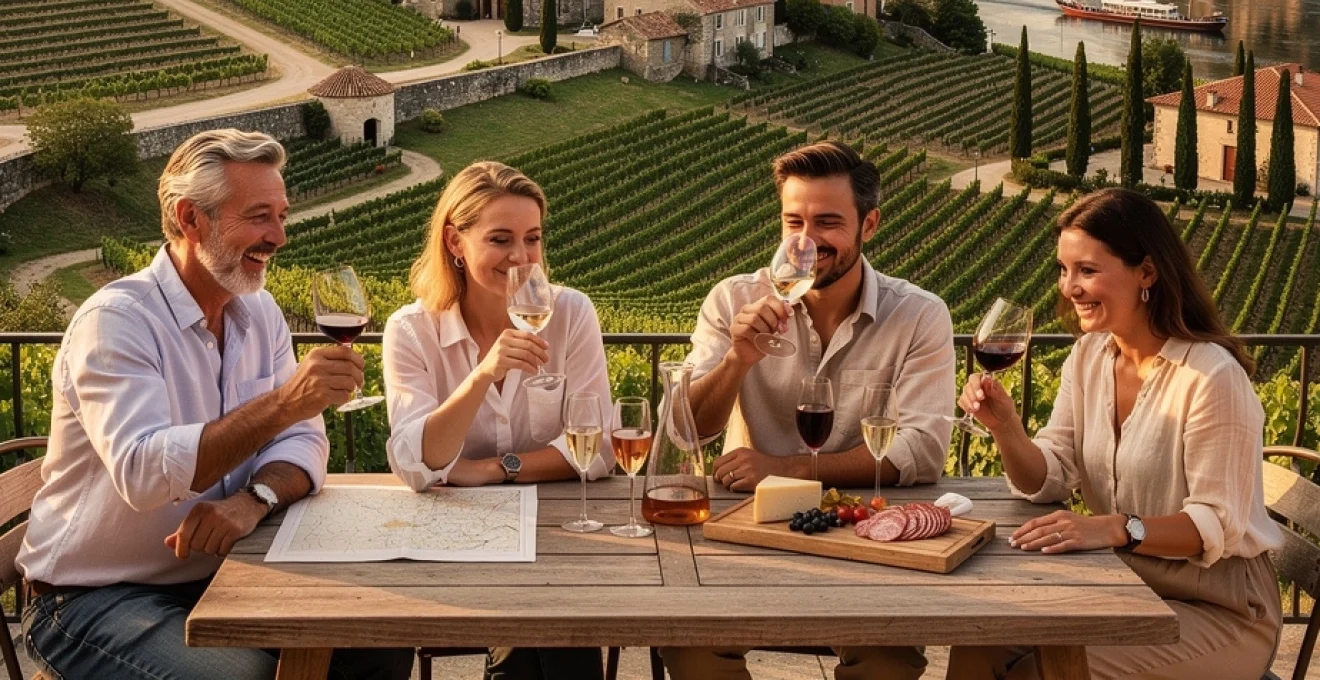
Europe stands as the undisputed epicentre of global viticulture, offering wine enthusiasts an extraordinary tapestry of terroirs, grape varieties, and winemaking traditions that span millennia. From the prestigious châteaux of Bordeaux to the hidden gems of Slovenia’s Podravje region, the continent presents an unparalleled diversity of wine experiences that cater to every palate and preference. The sheer concentration of world-class wine regions within relatively short distances makes Europe the ultimate destination for serious wine tourism.
Contemporary wine travel has evolved far beyond simple tastings, encompassing immersive experiences that blend terroir exploration with cultural discovery, gastronomic adventures, and sustainable tourism practices. Modern wine regions are increasingly focused on providing authentic, educational experiences that allow visitors to understand the intricate relationship between soil, climate, tradition, and the wines that emerge from these magical combinations. Whether you’re seeking the grandeur of legendary appellations or the intimate charm of emerging wine territories, Europe’s diverse landscape offers something extraordinary for every wine lover.
Bordeaux wine region: left bank cabernet sauvignon dominance and right bank merlot excellence
Bordeaux remains the gold standard of international wine excellence, where centuries of viticultural refinement have created some of the world’s most coveted and collectible wines. This legendary region, situated in southwestern France along the Gironde estuary, encompasses over 120,000 hectares of vineyards producing approximately 700 million bottles annually. The region’s reputation rests not merely on volume but on an unwavering commitment to quality that has established Bordeaux as synonymous with fine wine across global markets.
The Left Bank and Right Bank division creates a fascinating study in terroir expression and grape variety adaptation. The Left Bank’s gravelly soils provide excellent drainage and heat retention, creating ideal conditions for Cabernet Sauvignon to achieve full phenolic ripeness while maintaining elegant structure. Conversely, the Right Bank’s clay and limestone compositions favour Merlot, producing wines of exceptional richness and approachability. This geographical dichotomy has shaped Bordeaux’s winemaking philosophy for generations, demonstrating how soil composition fundamentally influences grape selection and wine style.
Médoc peninsula classified growth châteaux and Saint-Estèphe terroir analysis
The Médoc Peninsula represents the pinnacle of Bordeaux’s Left Bank achievement, where the famous 1855 Classification continues to guide quality perception nearly two centuries after its establishment. The peninsula’s unique position between the Atlantic Ocean and Gironde estuary creates a distinctive microclimate that moderates temperature fluctuations and extends the growing season. This maritime influence proves crucial for Cabernet Sauvignon maturation, allowing the grape to develop complex tannin structures while retaining essential acidity.
Saint-Estèphe, the northernmost appellation of the Médoc, showcases how subtle terroir variations create distinct wine personalities within Bordeaux’s framework. The commune’s higher clay content and cooler temperatures result in wines of notable structure and longevity, often requiring extended cellaring to reveal their full potential. Properties like Cos d’Estournel and Montrose have demonstrated how Saint-Estèphe’s challenging conditions can produce wines of exceptional depth and complexity when managed with expertise and patience.
Pomerol and Saint-Émilion limestone plateau viticulture techniques
Pomerol represents perhaps Bordeaux’s most exclusive appellation, where tiny vineyard holdings on iron-rich clay soils produce Merlot-based wines of extraordinary concentration and elegance. The appellation’s compact size—just 800 hectares—belies its international influence, with properties like Pétrus commanding astronomical prices for wines that epitomise Right Bank excellence. The iron-rich boutonnière clay provides exceptional water retention while forcing vine roots deep into the subsoil, creating wines of remarkable mineral complexity.
Saint-Émilion’s limestone plateau offers a different expression of Right Bank terroir, where ancient limestone foundations create perfect drainage while providing essential mineral nutrients to the vines. The plateau’s elevation provides crucial air circulation, reducing disease pressure while enabling optimal sun exposure throughout the growing season. This combination of factors allows
vineyards to produce Merlot and Cabernet Franc with an almost architectural sense of precision and balance. Many estates farm these limestone parcels with low yields, meticulous canopy management, and increasingly organic or biodynamic practices to preserve soil life and water balance. As a visitor, you can often see this up close, walking shallow-rooted plots on the slopes and then stepping just a few metres onto older, deeply rooted vines clinging to the plateau. Tasting the resulting wines side by side reveals how limestone can translate into tension, salinity, and remarkable ageing potential in Right Bank Bordeaux.
Sauternes noble rot dessert wine production methods
South of Bordeaux city, the appellations of Sauternes and Barsac represent one of the most singular wine landscapes in Europe. Here, morning mists from the cool Ciron River collide with warmer air from the Garonne, creating the ideal conditions for Botrytis cinerea, the so‑called noble rot. This benevolent fungus slowly dehydrates the grapes, concentrating sugars, acids, and flavour compounds while imparting unique honeyed, saffron‑like aromas. It is an extraordinarily risky form of viticulture: in some years nature cooperates perfectly, while in others, noble rot either fails to appear or becomes grey rot, destroying the crop.
Harvesting in Sauternes is a labour‑intensive, almost surgical process, carried out in multiple tries (passages through the vineyard). Skilled pickers select berry by berry, choosing only those bunches that exhibit the ideal degree of botrytisation. Fermentation takes place in oak, often with a high proportion of new barrels, and can be slow due to the extreme must density, frequently lasting weeks. The best properties balance this lavish concentration with vibrant acidity, crafting dessert wines that age gracefully for decades and pair as well with foie gras and blue cheese as they do with classic fruit‑based desserts.
From a wine tourism perspective, a visit to Sauternes immerses you in the slow, patient side of Bordeaux winemaking. Many châteaux offer vineyard walks where you can literally see the mist line on autumn mornings, as well as barrel tastings that highlight the differences between individual parcels and oak regimes. For travellers looking to understand how microclimate can shape an entire wine style, there are few better regions in Europe than Sauternes.
Entre-deux-mers white wine appellations and sauvignon blanc expressions
Sandwiched between the Dordogne and Garonne rivers, Entre‑Deux‑Mers is often overshadowed by Bordeaux’s more famous red wine communes, yet it is a vital source of refreshing, great‑value whites. The rolling hills here are planted predominantly to Sauvignon Blanc, Sémillon, and Muscadelle, thriving on clay‑limestone and gravel soils. While much of the production is straightforward and crisp, a growing number of quality‑focused estates are elevating the region’s profile with low yields, careful harvesting, and extended lees ageing. For travellers seeking an approachable introduction to Bordeaux white wines, this area is a logical and budget‑friendly starting point.
Modern Entre‑Deux‑Mers Sauvignon Blanc expressions tend to emphasise citrus, white peach, and herbal notes, with a subtle chalky finish derived from the limestone substrata. Some producers experiment with partial barrel fermentation or ageing, adding a creamy texture without overwhelming the grape’s natural freshness. Compared with the more structured and age‑worthy whites of Pessac‑Léognan, Entre‑Deux‑Mers wines are typically designed for earlier drinking and relaxed, bistro‑style food pairings. Think grilled seafood, goat cheeses, or simply a glass on a sunny terrace overlooking the Gironde basin—could there be a more accessible way to experience Bordeaux?
From a practical standpoint, the Entre‑Deux‑Mers region is also well‑suited to sustainable and organic viticulture, with many estates embracing cover crops and reduced chemical inputs. As you cycle or drive between villages, you’ll notice increasing biodiversity, hedgerows, and mixed farming. This makes the area particularly appealing if you prioritise eco‑conscious wine tourism and want to see how contemporary Bordeaux balances heritage with environmental responsibility.
Burgundy’s côte d’or pinot noir terroir hierarchy and chardonnay mastery
Where Bordeaux impresses with scale and classification systems based on estates, Burgundy seduces through its intricate patchwork of climats and lieux‑dits, each defined by subtle variations in slope, soil, and exposure. The Côte d’Or—literally the “golden slope”—is the spiritual home of Pinot Noir and Chardonnay, and understanding its terroir hierarchy is essential for any serious wine lover visiting Europe. Rather than focusing on large châteaux, Burgundy revolves around vineyard names, many of which have been recognised for centuries for their unique character.
The region’s appellation structure is famously nuanced, with wines classified from regional Bourgogne up through village, Premier Cru, and Grand Cru levels. This pyramid reflects not just prestige but genuine differences in microclimate and geology. Thin topsoils over limestone, slight changes in altitude, or a few degrees of slope can significantly alter drainage and heat retention, translating into distinct wine personalities. For visitors, walking these vineyards—sometimes just a stone’s throw apart—offers a vivid, almost tactile lesson in terroir.
Côte de nuits grand cru vineyard classification from Gevrey-Chambertin to Vosne-Romanée
The northern half of the Côte d’Or, the Côte de Nuits, is Pinot Noir country at its most profound. Stretching from Marsannay down to Nuits‑Saint‑Georges, the heart of this strip lies between Gevrey‑Chambertin and Vosne‑Romanée, home to most of Burgundy’s red Grand Crus. Here, east and south‑east facing slopes capture the morning sun, while well‑drained limestone‑rich soils encourage vines to struggle just enough, concentrating flavours without excessive vigour. The result is Pinot Noir that can be simultaneously delicate and powerful, aromatic and deeply structured.
Gevrey‑Chambertin is known for its muscular, often more tannic style, especially from Grand Crus such as Chambertin and Clos de Bèze, which combine dark fruit with earthy, gamey nuances. Moving south, Chambolle‑Musigny offers a contrasting expression, often described as more floral and silky, with Grand Crus like Musigny and Bonnes‑Mares showcasing perfume and finesse over sheer power. Vosne‑Romanée, sitting on a particularly complex mosaic of limestone and clay, is arguably the pinnacle, with legendary sites such as Romanée‑Conti and La Tâche producing wines that marry spice, depth, and an almost ethereal texture. Tasting across these villages in a single day can feel like hearing variations on a single musical theme, each vineyard adding its own timbre.
For travellers, the Côte de Nuits offers an unusually immersive terroir experience. Many domaines now host structured tastings where you can compare village, Premier Cru, and Grand Cru bottlings from the same producer, effectively isolating the impact of vineyard hierarchy. While allocations of top wines are limited, there are still numerous family‑run estates where you can explore outstanding Pinot Noir at more accessible price points. Planning ahead is essential—appointments are often mandatory—but the reward is unparalleled insight into one of Europe’s most complex wine landscapes.
Côte de beaune premier cru sites and meursault chardonnay minerality
The southern half of the Côte d’Or, the Côte de Beaune, is renowned both for elegant Pinot Noir and, perhaps even more famously, for some of the world’s greatest Chardonnay. While names like Montrachet and Corton‑Charlemagne capture global attention, much of the region’s charm lies in its Premier Cru sites, where quality often rivals Grand Cru status at a fraction of the cost. Villages such as Volnay and Pommard highlight the red wines of the Côte de Beaune, with Volnay noted for its perfumed, almost Burgundian “Burgundy in silk” character, and Pommard for its firmer, more structured style.
Meursault, however, stands out as a benchmark for Chardonnay mastery. Despite lacking any officially recognised Grand Cru vineyards, its Premier Cru sites—such as Perrières, Genevrières, and Charmes—regularly produce wines of astonishing depth and longevity. The underlying mosaic of marl and limestone, combined with well‑exposed mid‑slope positions, yields whites that balance richness with a signature nutty, mineral edge. Imagine the texture of clarified butter combined with the cut of a squeezed lemon—that tension is what makes Meursault so compelling. Increasingly, producers are moderating new oak usage and picking slightly earlier, resulting in wines that are more chiselled and terroir‑driven than the heavily oaked styles of the 1990s.
From a wine travel standpoint, the Côte de Beaune is particularly welcoming, with the town of Beaune serving as an ideal base. You can easily drive or cycle between villages, stopping at domaines that offer cellar tours in centuries‑old caves. Many estates now provide comparative tastings of different Premier Cru parcels, allowing you to experience directly how slope, soil depth, and exposition imprint themselves on Chardonnay. If you’re keen to deepen your understanding of European white wine beyond simple varietal labels, a few days in Meursault and its neighbours are invaluable.
Chablis kimmeridgian soil composition and petit chablis appellation structure
Separated from the Côte d’Or by roughly a two‑hour drive, Chablis forms its own cool‑climate enclave in northern Burgundy. Here, Chardonnay takes on a completely different personality, shaped by a marginal climate and distinctive Kimmeridgian limestone soils studded with ancient marine fossils. This unique geological substrate, shared with parts of Champagne and southern England, acts like a natural mirror, reflecting light and heat back to the vines while contributing a recognisable saline, oyster‑shell character to the wines. It’s a vivid example of how soil type can be as influential as grape variety in defining regional style.
The appellation hierarchy in Chablis is straightforward yet instructive: at the base lies Petit Chablis, often planted on higher, wind‑exposed Portlandian limestones that yield lighter, early‑drinking wines. Classic Chablis AOC occupies more favourable mid‑slopes, while Premier Cru and Grand Cru sites are concentrated on the best south‑ and south‑west facing exposures above the Serein River. Grand Crus like Les Clos or Vaudésir can age for a decade or more, evolving from green apple and citrus into complex notes of hazelnut, flint, and honey. In contrast, Petit Chablis is typically best enjoyed young, offering a crisp, uncomplicated snapshot of Chablis’ cool climate at a more accessible price point.
For visitors, Chablis is compact and easy to explore in a day or two, yet rich enough in nuance to reward a longer stay. Many domaines welcome walk‑in tastings, and it’s common to sample across the full hierarchy—from Petit Chablis to Grand Cru—within a single flight. Standing atop the hill of the Grand Crus and looking down on the village and Serein River, you can literally trace the geological layers that define each appellation. If you’ve ever wondered how “minerality” translates from textbook to tasting glass, Chablis provides one of the clearest, most tangible lessons in Europe.
Beaujolais cru villages gamay carbonic maceration techniques
South of the Côte d’Or lies Beaujolais, long pigeonholed by its simple Beaujolais Nouveau wines but increasingly recognised for its serious, age‑worthy expressions from the ten Cru villages. Here, the Gamay grape reigns supreme, thriving on granitic and schist soils that lend structure and aromatic lift. The key to Beaujolais’ distinctive style is often its use of carbonic or semi‑carbonic maceration, a fermentation technique that can create wines bursting with red fruit, floral notes, and supple tannins. Think of it as fermenting the grapes from the inside out: whole clusters are placed in a sealed vat, and as carbon dioxide builds, berries begin to ferment intracellularly before being crushed.
The Cru Beaujolais villages—such as Morgon, Moulin‑à‑Vent, Fleurie, and Juliénas—each offer their own personality, shaped by small variations in altitude, aspect, and soil depth. Morgon and Moulin‑à‑Vent, for example, tend to produce more structured, “serious” Gamay capable of ageing for a decade or more, often drawing comparisons to Burgundy Pinot Noir. Fleurie and Chiroubles, with higher altitudes and lighter soils, generally yield more delicate, floral wines that are a joy to drink in their youth. Winemakers can dial up or down the influence of carbonic maceration, using full carbonic for bright, juicy, early‑drinking styles and blending it with traditional destemmed ferments for more complexity and longevity.
For wine travellers, Beaujolais offers a relaxed, less formal alternative to Burgundy while still providing a rigorous education in terroir. You can hike between villages, visit small family domaines, and taste directly from concrete or old wooden vats where semi‑carbonic fermentations bubble away. If you’re intrigued by how winemaking technique can transform a single grape into wildly different expressions, exploring Gamay in the Cru villages is both instructive and utterly delicious.
Champagne méthode champenoise production and terroir-driven cuvée selection
No survey of the best wine regions to visit in Europe would be complete without Champagne, the spiritual home of sparkling wine and the origin of the traditional method—méthode champenoise—used around the world. Located about 150 kilometres northeast of Paris, Champagne is defined by its cool continental climate and chalk‑rich subsoils, which together produce grapes with high natural acidity and moderate ripeness. This is precisely what you want for traditional‑method sparkling wine, where secondary fermentation in bottle and prolonged lees ageing add layers of complexity and texture over time.
The production process itself reads like a carefully choreographed dance. After harvesting, base wines are fermented dry, often in stainless steel but sometimes in oak, and then blended across varieties (Chardonnay, Pinot Noir, and Meunier), villages, and vintages to create house styles. A liqueur de tirage is then added, initiating a second fermentation in bottle that traps carbon dioxide as bubbles. Bottles rest on their lees for anywhere from 15 months for non‑vintage to a decade or more for prestige cuvées, developing notes of brioche, pastry, and toasted nuts. Finally, disgorgement removes the yeast sediment, and dosage fine‑tunes the sweetness level. If you’ve ever wondered why Champagne commands a premium, spending a day in the cellars watching this meticulous process unfold provides an immediate answer.
Terroir‑driven cuvée selection has become an increasingly important theme in modern Champagne. While the grandes maisons still anchor their reputations on consistent non‑vintage blends, grower‑producers are championing single‑village, single‑parcel, or even single‑vineyard Champagnes that express the nuances of specific crus. Villages like Avize and Le Mesnil‑sur‑Oger on the Côte des Blancs yield incisive, chalk‑etched Chardonnay, while lieux‑dits in Aÿ or Bouzy produce richer, more vinous Pinot‑based wines. Tasting across these sites is akin to moving from one orchestral section to another, each terroir adding its own timbre to the sparkling symphony.
From a travel perspective, Champagne is remarkably accessible, with high‑speed trains connecting Paris to Reims or Épernay in under an hour. Many historic houses offer guided tours through labyrinthine chalk cellars—some carved by the Romans—followed by comparative tastings of their ranges. At the same time, smaller grower domaines provide a more intimate counterpoint, often hosting visitors in family homes or modest cuveries. Whether you’re intrigued by the technical side of secondary fermentation or simply want to understand why one Champagne pairs perfectly with oysters while another sings with roast poultry, the region offers layered experiences for every level of wine knowledge.
Tuscany’s Sangiovese-Based denominazioni and super tuscan innovation
Tuscany embodies many travellers’ ideal vision of European wine country: rolling hills, stone farmhouses, cypress‑lined drives, and medieval hill towns perched above vineyards and olive groves. At the heart of its wine identity lies Sangiovese, a naturally high‑acid, tannic grape that can convey everything from bright red cherry and herbs to deep, savoury complexity with age. The region’s key denominazioni—Chianti Classico, Brunello di Montalcino, Vino Nobile di Montepulciano—each offer a distinct lens through which to understand both Sangiovese and Tuscan terroir.
Chianti Classico, situated between Florence and Siena, is perhaps the most immediately accessible, with altitudes, exposures, and soils that range widely but generally encourage freshness and aromatic lift. Regulations today require a high percentage of Sangiovese, often complemented by local varieties like Canaiolo or international grapes such as Merlot or Cabernet Sauvignon. Brunello di Montalcino, by contrast, mandates 100% Sangiovese (locally called Brunello) and longer ageing, resulting in more structured, powerful wines drawn from warmer, drier conditions south of Siena. Vino Nobile di Montepulciano occupies an intermediate stylistic space, blending Sangiovese (Prugnolo Gentile) with small amounts of other varieties to create supple yet age‑worthy reds.
The story of Super Tuscans adds a fascinating modern chapter to Tuscany’s wine narrative. Beginning in the 1960s and 1970s, a handful of visionary producers on the Tuscan coast and in Chianti began experimenting with Cabernet Sauvignon, Merlot, and new oak, often outside DOC regulations. Initially relegated to humble table wine status, these wines—think Sassicaia, Tignanello, Ornellaia—quickly gained international acclaim, prompting a rethinking of Italy’s appellation laws. Today, coastal appellations such as Bolgheri are celebrated for Bordeaux‑inspired blends that still reflect Mediterranean terroir, with cooling sea breezes, gravelly soils, and long growing seasons.
For visitors, Tuscany is one of the most rewarding wine regions in Europe to explore, offering everything from rustic agriturismi to polished design hotels on working estates. You can walk historic vineyards around Radda or Gaiole in Chianti in the morning, then drive an hour to taste maritime reds overlooking the Tyrrhenian Sea in the afternoon. Many estates combine winery tours with olive oil tastings and farm‑to‑table dining, giving you a holistic sense of Tuscan agricultural life. If you’ve ever wanted to see how tradition and innovation can coexist in a single region, tasting Sangiovese‑based DOCG wines alongside Super Tuscans provides an illuminating side‑by‑side comparison.
Douro valley port wine fortification methods and quinta estate experiences
The Douro Valley in northern Portugal is one of Europe’s most dramatically beautiful wine landscapes, its steep terraced vineyards cascading down to the sinuous Douro River. Recognised as a UNESCO World Heritage Site, this is the birthplace of Port wine, a fortified style that has shaped both the region’s economy and its cultural identity for centuries. Here, indigenous grape varieties such as Touriga Nacional, Touriga Franca, Tinta Roriz, and Tinto Cão cling to schistous slopes, enduring hot summers and cold winters in a truly heroic form of viticulture.
Port production hinges on a distinctive fortification method. During fermentation, when roughly half the grape sugars have been converted to alcohol, winemakers add a neutral grape spirit (aguardente) to arrest fermentation. This step locks in natural sweetness while boosting alcohol to around 19–20%, creating a stable, age‑worthy wine. The resulting Ports are then aged in a variety of vessels—large wooden vats, small pipes, or even in bottle—depending on the desired style. Ruby Ports preserve primary fruit intensity, while Tawny Ports oxidise gently in cask, developing nutty, caramelised flavours. Vintage Ports, made only in declared years, spend relatively little time in wood before bottling and then evolve slowly over decades, offering some of the longest ageing horizons of any European wine.
Visiting the Douro allows you to see both the rugged vineyard terrain and the more urban side of Port in Vila Nova de Gaia, across the river from Porto. In the valley itself, traditional quintas (wine estates) increasingly welcome guests, offering guided tours of terraced plots, lagares (granite troughs) where grapes are still foot‑trodden at some properties, and ageing cellars. Many quintas have also developed boutique accommodations and restaurants, so you can wake up among the vines, take a boat trip on the river, and finish your day with a vertical tasting of old Tawnies as the sun sets over the schist hillsides. It’s hard to imagine a more immersive way to grasp how geography, climate, and human ingenuity combine to create Port’s unique profile.
Germanic riesling excellence: mosel slate terroir and rheingau spätlese classifications
Germany’s cool climate and diverse soils make it one of Europe’s most compelling destinations for white wine lovers, with Riesling at the centre of the story. Far from being a monolithic style, German Riesling spans the spectrum from bone‑dry to lusciously sweet, with precise labelling and classification systems to guide the curious traveller. Two regions stand out both historically and aesthetically: the Mosel, with its vertiginous slate slopes, and the Rheingau, a compact region along the Rhine River that has helped define quality standards for centuries.
The Mosel’s hallmark is its steep, south‑facing vineyards planted on blue, grey, or red slate, which absorb and radiate heat in this marginal climate. Vines here often root into tiny crevices, with slopes so precipitous that mechanisation is nearly impossible—harvesting remains almost entirely by hand. The resulting Rieslings can be astonishingly light in alcohol yet intensely flavoured, combining green apple, lime, and white blossom with a characteristic smoky, slatey minerality. Kabinett and Spätlese styles from top sites such as Wehlen, Bernkastel, or Piesport showcase a delicate interplay of sweetness and acidity that feels more like tension than sugar, making them versatile at the table.
The Rheingau, by contrast, offers a more compact, slightly warmer profile, with vineyards lining a unique east–west bend in the Rhine that maximises sun exposure. Historically linked to monasteries such as Kloster Eberbach, the region was instrumental in formalising the concept of Spätlese (late harvest) in the 18th century. Today, Rheingau Rieslings often show a firmer structure and more pronounced stone fruit, with dry (trocken) styles gaining increasing prominence alongside traditional off‑dry and sweet bottlings. The Prädikat system—ranging from Kabinett up to Auslese, Beerenauslese, and Trockenbeerenauslese—indicates must weight at harvest, offering a useful roadmap for visitors navigating German wine lists.
For wine travellers, both Mosel and Rheingau provide a striking blend of natural beauty and cultural depth. You can hike through terraced vineyards, cruise the rivers past medieval castles, and visit family‑run Weingüter where multi‑generational winemakers pour flights that trace vintages and sweetness levels. If you’ve ever hesitated over Riesling because of confusion about dryness or residual sugar, standing in front of a slate wall in the Mosel or a sunlit Rheingau hillside while tasting Kabinett and Spätlese side by side will clarify the picture instantly. In the end, these regions exemplify how cool‑climate European vineyards can produce wines of incredible intensity and balance without relying on high alcohol—a powerful reminder of Riesling’s unique place in the world of fine wine.