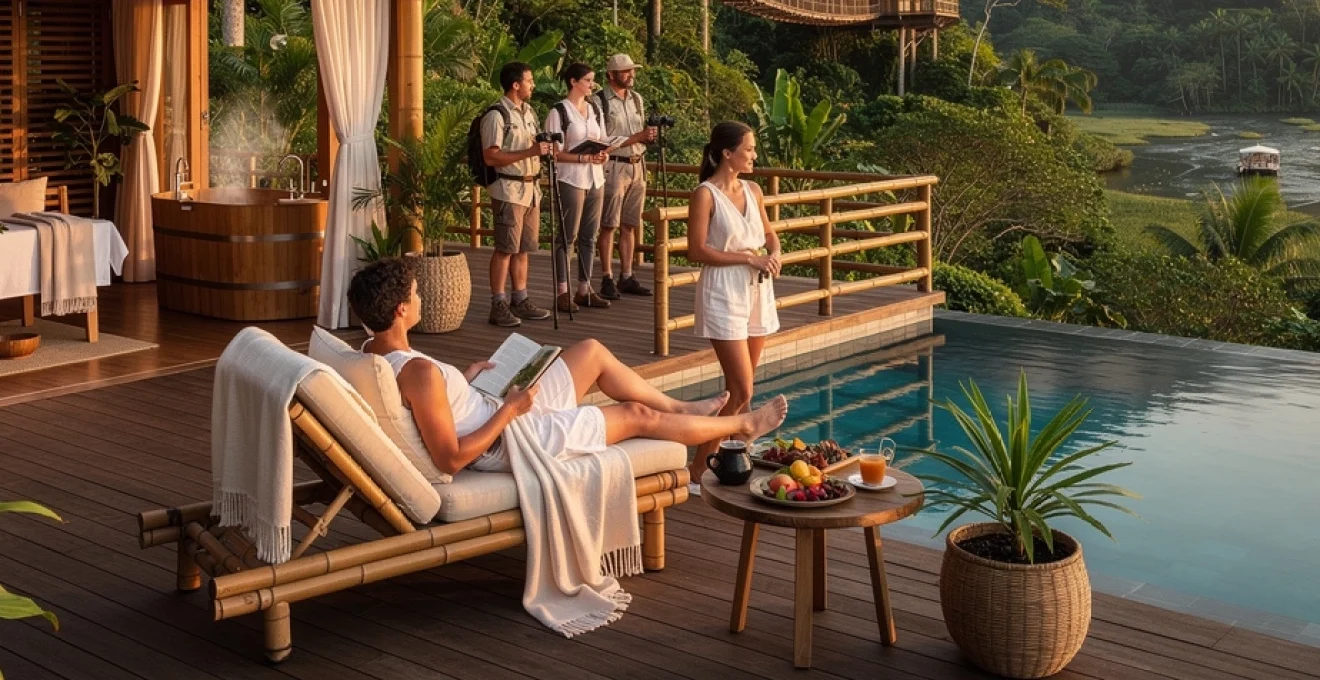
Costa Rica stands as a pioneering destination for sustainable tourism, where the marriage of environmental consciousness and luxurious comfort creates an unparalleled travel experience. The country’s commitment to conservation has fostered a remarkable collection of eco-lodges that demonstrate how responsible hospitality can thrive within some of the world’s most biodiverse ecosystems. These establishments go beyond mere accommodation, serving as gateways to authentic wildlife encounters while maintaining the highest standards of environmental stewardship. From the misty cloud forests of Monteverde to the pristine beaches of the Osa Peninsula, Costa Rica’s eco-lodges represent a new paradigm in travel where conscious luxury takes precedence over conventional extravagance.
Sustainable architecture and green building standards in costa rican eco-lodges
The architectural philosophy behind Costa Rica’s most successful eco-lodges reflects a profound understanding of tropical construction principles and environmental harmony. These properties demonstrate that sustainable building practices can create structures that are both environmentally responsible and aesthetically stunning. The integration of local materials, renewable energy systems, and innovative design solutions has established new benchmarks for eco-friendly hospitality architecture throughout Central America.
LEED and rainforest alliance certification requirements for hospitality properties
Costa Rica’s hospitality sector has embraced internationally recognised certification programmes that validate genuine sustainability efforts. The Leadership in Energy and Environmental Design (LEED) certification process requires properties to meet stringent criteria across energy efficiency, water conservation, materials selection, and indoor environmental quality. Properties pursuing LEED certification must demonstrate measurable reductions in energy consumption, typically achieving 20-30% greater efficiency than conventional buildings. The Rainforest Alliance certification goes further, encompassing social responsibility and community engagement alongside environmental protection measures.
The certification process involves comprehensive audits covering everything from waste management protocols to staff training programmes. Properties must implement detailed monitoring systems that track resource consumption, carbon emissions, and biodiversity impact metrics. Third-party verification ensures that sustainability claims are substantiated by documented performance data rather than marketing rhetoric. Many eco-lodges in Costa Rica have achieved both certifications, positioning themselves as leaders in the global sustainable tourism movement.
Solar panel integration and renewable energy systems in remote jungle locations
The challenge of providing reliable electricity in remote rainforest locations has driven remarkable innovation in renewable energy deployment. Modern eco-lodges employ hybrid systems combining photovoltaic solar arrays, micro-hydroelectric generators, and battery storage solutions to achieve energy independence. These installations must withstand extreme humidity, intense rainfall, and dense canopy coverage that can limit solar exposure during certain periods of the year.
Successful implementations typically feature grid-tie inverters with battery backup systems that can store 72-96 hours of power for essential operations. Solar panel arrays are strategically positioned to maximise exposure while minimising forest clearance, often utilising canopy gaps or elevated platforms. Some properties have achieved remarkable efficiency rates, generating 100-120% of their energy requirements during peak solar conditions, allowing excess power to be stored or shared with local communities.
Greywater treatment and rainwater harvesting infrastructure design
Water management systems in eco-lodges represent sophisticated engineering solutions adapted to tropical environments. Greywater treatment facilities utilise constructed wetlands, biofilters, and settling ponds to process wastewater from sinks, showers, and laundry operations. These systems can achieve 85-95% pollutant removal efficiency while creating habitat for beneficial microorganisms and native plant species.
Rainwater harvesting infrastructure incorporates large-capacity storage tanks, filtration systems, and distribution networks designed to capture and utilise Costa Rica’s abundant precipitation. Properties in high-rainfall areas can collect 1,500-2,000 litres per square metre of roof surface annually. Advanced systems include first-flush diverters that eliminate initial rainfall contamination and UV sterilisation units that ensure potable water quality without chemical additives.
Locally sourced bamboo and reclaimed hardwood construction techniques
The use of indigenous materials represents both an environmental imperative and an aesthetic choice that connects buildings to their natural surroundings. Bamboo cultivation provides rapidly renewable construction material that can be harvested every 3-
seven years, significantly reducing pressure on old-growth forests. When treated and engineered correctly, bamboo can rival steel in tensile strength while remaining lightweight and flexible, ideal for structures in seismic and high-wind zones common to Costa Rica. Many eco-lodges pair bamboo framing with reclaimed hardwood for flooring, cladding, and decorative elements, giving new life to timber sourced from decommissioned buildings or fallen trees rather than fresh logging.
Construction techniques often combine traditional carpentry skills with modern engineering standards. Artisanal joinery methods reduce the need for metal fasteners, which can corrode in salty or humid environments, and allow for easier disassembly or repair. By prioritising locally sourced bamboo and reclaimed hardwood, eco-lodges decrease transportation emissions, support regional forestry cooperatives, and maintain an authentic sense of place that mass-produced materials simply cannot replicate.
Passive cooling ventilation systems for tropical climate management
In a humid tropical climate, effective passive cooling can make the difference between an energy-hungry resort and a genuinely sustainable eco-lodge in Costa Rica. Rather than relying heavily on air conditioning, many properties are designed around cross-ventilation, stack effect airflows, and strategic shading. Elevated structures on stilts, high-pitched roofs with ventilated ridges, and generous roof overhangs allow hot air to escape and protect interiors from direct sun and heavy rain.
Architects orient guest rooms and common areas to capture prevailing breezes, often incorporating large operable windows, louvres, and screened openings that promote constant air circulation while keeping out insects. Thermal mass elements, such as stone floors or rammed earth walls, help stabilise interior temperatures by absorbing daytime heat and slowly releasing it overnight. The result is a comfortable indoor environment that feels more like a shaded forest clearing than a sealed, mechanically cooled box.
Some advanced eco-lodges integrate hybrid systems that combine passive design with low-energy ceiling fans and high-efficiency mini-split units used only when absolutely necessary. This approach can cut cooling-related energy consumption by 50-70% compared with conventional hotels in similar locations. For travellers, the experience is not only more sustainable but also more immersive, as you fall asleep to natural sounds carried on the breeze instead of the hum of compressors.
Premier eco-lodge destinations across costa rica’s biodiversity hotspots
Costa Rica’s eco-lodges are strategically located within or adjacent to some of the most important biodiversity hotspots on the planet. Each region offers a distinct combination of ecosystems, from coastal mangroves and lowland rainforest to cloud forests and riverine wetlands. Choosing where to stay is often your most important decision: do you prioritise remote wilderness, easy beach access, birdwatching in the canopy, or a blend of several experiences in one itinerary?
By understanding the strengths of each destination, you can craft a journey that balances nature immersion with comfort and logistical practicality. In the following examples, we highlight representative properties that embody the ethos of eco-lodges in Costa Rica—each with its own architectural style, conservation focus, and level of luxury. While specific lodge offerings may evolve over time, the core appeal of these regions remains remarkably consistent.
Osa peninsula wilderness lodges: lapa rios and bosque del cabo
The Osa Peninsula is often described as Costa Rica’s wildest corner, harbouring 2.5% of the planet’s biodiversity on less than 0.001% of its landmass. Eco-lodges such as Lapa Rios and Bosque del Cabo sit on private reserves that function as vital extensions of Corcovado National Park. Their locations on ridgelines and coastal bluffs provide sweeping views of the Golfo Dulce and Pacific Ocean while keeping built infrastructure clear of sensitive beach nesting sites and flood-prone lowlands.
Lapa Rios, long recognised as a pioneer of regenerative tourism, protects over 1,000 acres of primary and secondary rainforest. Guests access elevated bungalows via jungle paths, passing buttress-rooted trees and hanging lianas alive with howler monkeys and scarlet macaws. Bosque del Cabo, perched at the tip of Cabo Matapalo, combines bluff-top cabins with an extensive network of private trails descending to secluded beaches and river gorges. Both lodges invest heavily in local employment, environmental education, and wildlife monitoring programmes, making a stay here as much an act of conservation as a holiday.
Given the remoteness of the Osa, getting there usually involves a domestic flight from San José followed by a 4×4 transfer or boat ride. This relative inaccessibility is precisely what keeps the region feeling truly wild. If your vision of an eco-lodge in Costa Rica includes waking to the roar of howler monkeys and falling asleep under a sky untouched by light pollution, the Osa Peninsula is hard to beat.
Manuel antonio canopy accommodations: arenas del mar and tulemar resort
For travellers who want easy beach access without sacrificing rainforest immersion, the Manuel Antonio area offers an appealing compromise. Arenas del Mar and Tulemar Resort are two examples of properties that bring eco-lodge sensibilities to a more accessible, infrastructure-rich destination. Situated on the Pacific coast, roughly a three-hour drive from San José, Manuel Antonio pairs lush hillsides with small coves and the popular Manuel Antonio National Park.
Arenas del Mar focuses on beachfront sustainability, with buildings terraced into the hillside to reduce visual impact and maintain wildlife corridors between forest and sea. Native landscaping and wildlife-friendly lighting help protect nocturnal species like kinkajous and nesting sea turtles. Tulemar Resort, tucked into a steep, forested property, features bungalow-style accommodations with expansive views over the canopy and ocean. While it operates more like a resort than a traditional rustic lodge, its emphasis on habitat conservation, water management, and community partnerships aligns with broader eco-tourism principles.
Because Manuel Antonio is more developed than regions such as Tortuguero or the Osa Peninsula, it is ideal for first-time visitors to Costa Rica or families seeking nature and comfort with convenient access to restaurants, clinics, and paved roads. You can spend the morning hiking forest trails with white-faced capuchins and the afternoon relaxing on a beach with full amenities—a blend of wilderness and comfort that many travellers appreciate.
Monteverde cloud forest retreats: hotel belmar and nayara gardens
Monteverde is synonymous with cloud forests, hanging bridges, and cool mist drifting through epiphyte-laden branches. Eco-lodges here must adapt to a different set of environmental conditions than their coastal counterparts, including lower temperatures, strong winds, and frequent fog. Hotel Belmar and Nayara Gardens represent two distinct expressions of eco-conscious hospitality in this highland setting, each drawing from the region’s deep conservation heritage.
Hotel Belmar, an early adopter of sustainable practices, blends chalet-style architecture with modern green technologies such as biodigesters and advanced wastewater treatment. Its location near the famed Monteverde and Curi-Cancha reserves makes it a favourite base for birders seeking resplendent quetzals and three-wattled bellbirds. Nayara Gardens, meanwhile, brings a boutique luxury approach, pairing private villas and plunge pools with native landscaping and on-site nature trails that link into broader wildlife corridors.
Because Monteverde sits at around 1,400 metres above sea level, temperatures are significantly cooler than on the coasts, and many guests appreciate the novelty of needing a sweater in the tropics. The journey up can involve winding mountain roads, but improved infrastructure now makes the region accessible by standard rental car in most seasons. If you are drawn to moss-draped trees, nocturnal wildlife walks, and eco-lodges with an almost alpine feel, Monteverde is a compelling choice.
Tortuguero national park riverside lodges: pachira lodge and mawamba lodge
Tortuguero, often called the “Amazon of Costa Rica,” is a labyrinth of canals and flooded forests on the Caribbean coast. There are no roads into the village; instead, you arrive by boat or small plane, gliding past herons, caimans, and towering jungle vegetation. Riverside eco-lodges such as Pachira Lodge and Mawamba Lodge are designed as amphibious retreats, with boardwalks, raised walkways, and boat docks functioning as the main circulation routes.
Pachira Lodge sits directly across the canal from Tortuguero village, offering guests easy access to national park boat tours and seasonal turtle nesting excursions on the beach. Mawamba Lodge stretches between canal and sea, its grounds threaded with trails and gardens that attract poison dart frogs, iguanas, and a remarkable variety of birds. Both lodges focus on low-impact operations: limited air-conditioning, natural ventilation, and carefully managed waste streams in a landscape where improper disposal would quickly contaminate waterways.
Tortuguero is particularly popular between July and October, when green turtles come ashore at night to nest in large numbers. Visiting during this period offers one of the most powerful wildlife experiences in Costa Rica, but it also requires adherence to strict guidelines enforced by park authorities and trained local guides. For travellers who love the idea of an eco-lodge accessible only by boat, surrounded by water and forest on all sides, Tortuguero is unmatched.
Wildlife conservation integration and biological corridor management
True eco-lodges in Costa Rica are not isolated islands of sustainability; they function as active nodes within larger conservation landscapes. Many properties are strategically located within biological corridors that connect national parks, private reserves, and community-managed forests. These corridors allow wide-ranging species—such as jaguars, tapirs, and spider monkeys—to move between habitats for feeding, breeding, and genetic exchange, which is essential for long-term population viability.
To support these ecological networks, eco-lodges often engage in land restoration projects, reforesting former pasture with native tree species that provide food and shelter for wildlife. Some participate in camera-trap monitoring initiatives, sharing data with universities and conservation NGOs to map animal movements and identify priority areas for protection. Guests may be invited to join reforestation activities or citizen science projects, turning a holiday into a direct contribution to conservation.
From a design perspective, corridor management influences everything from building placement to lighting plans. Lodges avoid fencing large areas, maintain vegetated riparian buffers along streams, and use wildlife-friendly crossing points where access roads intersect known animal paths. Night-time lighting is kept low and directed downward to minimise disturbance to nocturnal species and migratory birds. When you choose an eco-lodge that invests in corridor management, you are effectively helping to stitch fragmented habitats back together—one of the most pressing challenges in tropical conservation today.
Luxury amenities and comfort standards in remote natural settings
One of the defining features of modern eco-lodges in Costa Rica is their ability to deliver high levels of comfort without compromising environmental performance. Rather than gold-plated fixtures or oversized pools, luxury is reinterpreted as space, silence, fresh air, and thoughtful details that enhance your connection to place. How do these properties provide such comfort while operating off-grid or semi-off-grid in remote landscapes?
The answer lies in carefully calibrated design decisions: efficient appliances powered by renewables, natural materials that age gracefully in the tropical climate, and services tailored to the rhythms of the environment rather than a 24/7 urban schedule. In practice, this might mean open-air lounges catching the breeze instead of enclosed air-conditioned lobbies, or plunge pools sized for cooling off rather than grand displays. You still enjoy the hallmarks of a premium stay—excellent beds, refined dining, attentive service—but framed within a low-impact, biophilic setting.
High-thread-count organic cotton bedding and natural fibre furnishings
Restful sleep is central to any nature-focused holiday, especially when days are filled with hikes, snorkelling, or wildlife excursions at dawn. To meet this need, many upscale eco-lodges in Costa Rica invest in high-thread-count organic cotton bedding, hypoallergenic pillows, and mattresses crafted with natural latex or other sustainable materials. Organic fabrics avoid pesticides and harsh chemical finishes, supporting both guest health and responsible agricultural practices.
Interior furnishings often feature natural fibres such as rattan, sisal, and woven palm, combined with responsibly sourced wood. These materials are not only visually harmonious with the surrounding forest but also breathable and pleasant to the touch in a humid climate. Upholstery and soft furnishings may use low-VOC dyes and finishes, improving indoor air quality. When you slide into bed after a night walk or early-morning birding tour, the tactile comfort of these elements reinforces the sense that luxury and sustainability can coexist seamlessly.
Open-air spa treatments using indigenous plant extracts and volcanic clay
Spa programmes at eco-lodges take advantage of Costa Rica’s rich ethnobotanical heritage, incorporating indigenous plant extracts, volcanic clay, and mineral-rich thermal waters where available. Treatment pavilions are often open-air structures set within gardens or on forest edges, allowing you to hear birdsong, streams, or ocean waves during your massage or body wrap. This integration of setting and therapy creates a holistic experience that is as much about reconnecting with nature as it is about physical relaxation.
Many spa menus highlight local super-ingredients such as cacao, coffee, aloe vera, guanábana leaves, and essential oils distilled from native species. These are sourced from on-site permaculture gardens or nearby organic farms whenever possible, reducing transport emissions and supporting rural livelihoods. In some lodges, traditional healing practices from Indigenous or Afro-Caribbean cultures inform signature treatments, offered with appropriate cultural sensitivity and community partnerships. The result is wellness that feels grounded and place-specific rather than generic.
Farm-to-table gastronomy featuring native costa rican superfoods
Dining is one of the most tangible ways guests experience sustainability in eco-lodges across Costa Rica. Many properties operate their own organic gardens, orchards, or small-scale agroforestry systems, supplying the kitchen with fresh greens, herbs, root crops, and seasonal fruits. Menus are built around what is abundant and in season, supplemented by responsibly sourced seafood and free-range meats from nearby producers. This approach reduces “food miles” while offering a genuine taste of local terroir.
Chefs increasingly highlight Costa Rican superfoods and heirloom ingredients—think cacao nibs, purple corn, heart of palm, pejibaye (peach palm), yucca, and wild-harvested greens. Dishes may reinterpret traditional recipes such as gallo pinto, olla de carne, or Caribbean-style coconut stews using contemporary techniques and presentation. For guests with dietary restrictions, eco-lodges are often adept at providing plant-based, gluten-free, or low-allergen options without sacrificing flavour. You might find yourself asking: is this a remote jungle lodge or a fine-dining restaurant with toucans in the background?
To deepen the connection between plate and place, some lodges offer cooking classes, garden tours, or tastings focused on coffee, chocolate, or rum. These experiences help demystify sustainable agriculture and give you practical ideas to bring home—turning a memorable meal into lasting lifestyle inspiration.
Private terrace design with panoramic rainforest and ocean vistas
Privacy and immersion are two of the greatest luxuries eco-lodges can offer. Architects intentionally orient suites and bungalows to maximise views while minimising sightlines between neighbours. Private terraces, often equipped with hammocks, daybeds, or plunge pools, become your personal observatories for watching passing wildlife and dramatic tropical weather. Thoughtful rail heights, screen angles, and planting schemes ensure you can enjoy these vistas without feeling exposed.
Materials for outdoor spaces must be selected with durability and sustainability in mind. Reclaimed hardwood decking, locally fired tiles, and corrosion-resistant fixtures can withstand intense sun, salt-laden breezes, and heavy rain. Access to the outdoors is typically seamless, with wide sliding doors or folding walls that blur the boundary between inside and out. Whether you are overlooking the Pacific from a bluff-top cabin or gazing into the misty canopy from a cloud forest balcony, these terraces embody the core promise of eco-lodges in Costa Rica: nature and comfort, side by side.
Adventure activity programming and naturalist guide expertise
Adventure programming is where eco-lodges truly bring the surrounding landscape to life. Carefully curated activities—guided hikes, canopy tours, river safaris, snorkelling, night walks—are designed not only for excitement but also for education and minimal environmental impact. Instead of mass-market excursions, you typically join small groups led by certified naturalist guides who interpret the ecosystem with depth and nuance.
These guides are often local residents with years of field experience and formal training in biology, ecology, or environmental education. Their ability to spot a camouflaged sloth or identify birds by call transforms what might have been a pleasant walk into an eye-opening exploration. Many lodges require or strongly encourage guests to use guides for certain trails or boat trips, both for safety and to reduce off-trail impacts that can erode soil and disturb wildlife.
Activity programmes are usually tiered to accommodate different fitness levels and interests. You might choose a gentle early-morning birding outing, a moderate waterfall hike, or a full-day trek into primary rainforest with river crossings and steep ascents. Water-based adventures—such as sea kayaking in the Golfo Dulce, rafting the Pacuare River, or canoeing Tortuguero’s canals—are conducted with appropriate safety gear and briefings. The overarching goal is to foster a sense of wonder and respect that lasts long after you have rinsed the mud off your boots.
Transportation networks and accessibility to remote eco-lodge properties
Reaching an eco-lodge in Costa Rica is often part of the adventure, but it also has implications for your trip’s overall environmental footprint. The country has invested heavily in domestic aviation, road improvements, and boat transport routes that link key nature destinations to San José and Liberia. For remote properties on the Osa Peninsula, Tortuguero, or along the Pacuare River, the most efficient routes typically involve a combination of short domestic flights, shared shuttles, and boat transfers.
Many eco-lodges coordinate logistics directly with guests, arranging airport pickups, ground transfers, and scheduled boat departures to minimise waiting times and unnecessary vehicle trips. This consolidation reduces emissions and simplifies planning for travellers unfamiliar with local conditions. In some cases, lodges encourage guests to offset the carbon associated with flights and vehicle transfers through verified programmes that fund reforestation or renewable energy projects within Costa Rica.
For those who prefer to travel overland, well-maintained highways connect the Central Valley with coastal hubs such as Quepos (for Manuel Antonio), Jacó, Tamarindo, and Puerto Viejo. Secondary roads to Monteverde, Arenal, and some Nicoya Peninsula locations may still be steep or unpaved in sections, particularly in the rainy season. Renting a high-clearance vehicle or using shared shuttle services can make these journeys more comfortable and safer. As you plan, it helps to think of transportation not merely as a way to get from point A to point B, but as another opportunity to experience the country’s varied landscapes—from coffee-clad highlands to mangrove-lined estuaries—in a thoughtful, low-impact way.