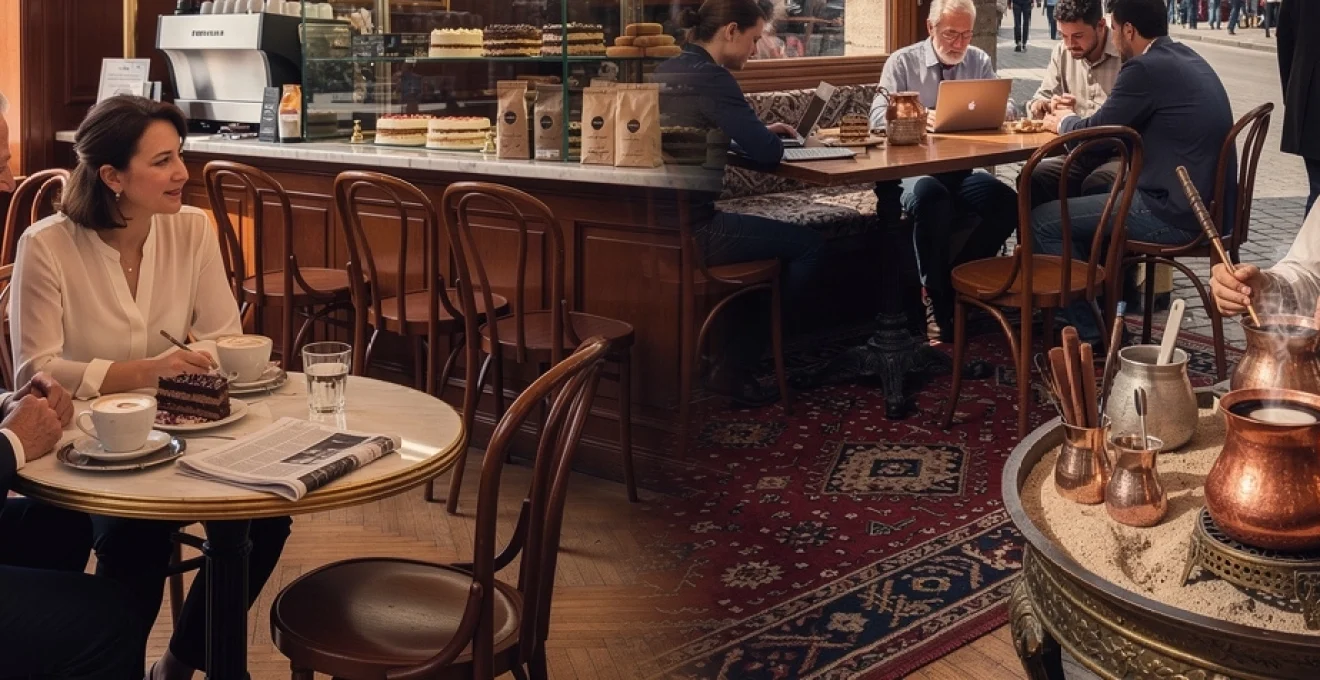
Coffee culture serves as more than a simple beverage preference in European and Middle Eastern cities—it functions as a fundamental social institution that shapes urban rhythms, economic patterns, and cultural identity. In Vienna and Istanbul, two cities with profoundly different yet equally influential coffee traditions, the daily consumption of coffee transcends mere caffeine intake to become a defining characteristic of civic life. These urban centres demonstrate how historical coffee practices evolve into contemporary social frameworks that influence everything from architectural design to tourism revenue, creating distinctive cultural landscapes that attract millions of visitors annually.
The relationship between coffee and urban identity in these cities reveals fascinating insights into how cultural traditions adapt to modern metropolitan demands while preserving their essential character. Vienna’s refined Kaffeehauskultur and Istanbul’s dynamic coffee scene represent two distinct approaches to integrating coffee consumption into the fabric of daily urban existence, each offering unique perspectives on how beverage culture can define a city’s personality and economic vitality.
Historical evolution of viennese kaffeehauskultur and ottoman coffee traditions
The historical development of coffee culture in Vienna and Istanbul reveals parallel yet distinctly different trajectories that continue to influence contemporary urban life. Both cities experienced transformative moments when coffee shifted from exotic curiosity to essential social infrastructure, fundamentally altering their cultural landscapes.
Habsburg empire coffee house establishments in 18th century vienna
The Habsburg Empire’s embrace of coffee culture during the 18th century established Vienna as Europe’s premier coffee capital, creating institutional frameworks that persist today. Following the initial introduction of coffee after the 1683 Ottoman siege, Viennese entrepreneurs rapidly developed sophisticated coffee house networks that served multiple social functions beyond beverage service. These establishments became centres of intellectual discourse, commercial negotiation, and social mobility, attracting diverse clienteles from aristocrats to merchants, writers to political activists.
The architectural sophistication of Habsburg-era coffee houses reflected their elevated social status, featuring elaborate interior designs with marble-topped tables, upholstered banquettes, and newspaper reading areas. This period established the foundational elements of Kaffeehauskultur that UNESCO later recognised as intangible cultural heritage, emphasising the unique role these spaces played in fostering democratic discourse and cultural exchange.
Ottoman empire’s introduction of coffee to constantinople in 1540
Istanbul’s coffee culture predates Vienna’s by more than a century, with the first coffee houses appearing in Constantinople around 1540 under Ottoman patronage. These early establishments, known as kahvehane, quickly became integral to Ottoman urban life, serving as venues for political discussion, entertainment, and social networking. The Ottoman approach to coffee culture differed significantly from later European models, emphasising communal participation and oral tradition preservation.
The rapid proliferation of coffee houses throughout Ottoman territories created standardised brewing techniques and service protocols that influenced coffee preparation methods across the empire. These early traditions established the foundation for modern Turkish coffee culture, with specific emphasis on ceremonial preparation and social etiquette surrounding coffee consumption.
Melange culture development at café central and café sacher
Viennese coffee houses like Café Central and Café Sacher developed distinctive beverage preparations that became synonymous with Austrian coffee culture, particularly the Melange and various cream-topped specialities. These establishments created standardised recipes and service rituals that distinguished Viennese coffee culture from other European traditions, emphasising presentation quality and ceremonial service elements.
The social protocols surrounding coffee service in these venues established patterns that continue to influence contemporary café operations, from the silver tray presentation to the mandatory glass of water accompaniment. These traditions created economic models that supported extended patron visits, encouraging the coffee house as workspace concept that modern establishments continue to emulate.
Turkish coffee brewing methodology using cezve and sand heating
Traditional Turkish coffee preparation using the cezve (small copper pot) and sand heating method represents one of coffee culture’s most sophisticated brewing techniques, requiring precise temperature control and timing expertise. This methodology, developed over centuries of refinement, produces distinctive flavour profiles that differ markedly from espresso-based preparations popular in contemporary coffee culture.
The technical mastery required for proper Turkish coffee preparation elevated coffee making to an art form, with skilled practitioners
were often judged on the fineness of the grind, the thickness of the foam, and the timing of the pour. In Istanbul’s historic districts, some coffee houses still use sand heating, where the cezve is buried in hot sand to achieve a slow, even extraction. For visitors used to push‑button espresso machines, watching this process can feel almost like observing a laboratory experiment conducted over an open fire—precise, deliberate, and deeply rooted in tradition.
In daily life, this brewing method shapes how people schedule and experience their coffee breaks. Turkish coffee is not something you “grab and go”; it is brewed to be shared, sipped slowly, and often followed by conversation or even fortune-telling from the coffee grounds. In this way, the method itself reinforces a slower rhythm of urban life, even in a fast-paced city like Istanbul, where traffic and modern office culture might otherwise push everything toward speed and efficiency.
UNESCO recognition of turkish coffee culture and intangible heritage status
In 2013, UNESCO inscribed Turkish coffee culture and tradition on its Representative List of the Intangible Cultural Heritage of Humanity, formally recognising what many in Istanbul had long understood: coffee is a social ritual as much as a beverage. This status emphasises not only the brewing technique with the cezve, but also the customs of hospitality, storytelling, and community-building that surround each cup. Much like Vienna’s inclusion of its coffeehouse culture on a similar list, the UNESCO designation frames coffee as part of a living heritage that must be preserved and actively practised.
The recognition has had practical impacts on how coffee culture is presented to visitors and taught to younger generations. Cultural institutions and municipalities now support workshops, demonstrations, and festivals that showcase traditional coffee service, sometimes pairing it with music or oral storytelling. For travellers, this means you are more likely to encounter guided Turkish coffee tastings in Istanbul’s neighbourhoods, from Beyoğlu to Üsküdar, where you can learn how grind size or sugar level alters the experience. The UNESCO label also acts as a kind of quality benchmark, encouraging cafes and artisans to remain faithful to core elements of the tradition even as they experiment with modern flavours and café design.
Architectural design and spatial configuration of traditional coffee establishments
The architecture of coffee spaces in Vienna and Istanbul reveals how deeply coffee culture is woven into each city’s urban fabric. Coffeehouses are not simply rooms with tables; they are carefully choreographed environments that shape how people meet, work, and linger. When we look closely at Viennese Kaffeehäuser and Istanbul’s kahvehane, we see how seating arrangements, materials, and circulation patterns reflect social hierarchies, cultural values, and changing economic models.
From the polished Thonet chairs and marble tables of Ringstrasse cafés to the low stools and copper kettles near Istanbul’s Grand Bazaar, spatial design subtly guides behaviour. Do you stay for hours with a newspaper, or stand, drink, and leave within minutes? Are you invited to observe, to be observed, or to disappear into a corner? The answers often lie in how these places are built and furnished, and in the silent rules that long-time regulars instinctively understand.
Viennese coffeehouse interior design principles and thonet chair integration
Traditional Viennese coffeehouses are defined by a set of design elements that have changed little since the late 19th century. High ceilings, large windows, and mirrored walls create an impression of space and light, while heavy curtains and warm wood tones introduce a sense of intimacy. Marble-topped tables, arranged in flexible groupings, encourage both solitary reading and lively group debates. This balance between grandeur and cosiness helps explain why many Viennese still describe the coffeehouse as an “extended living room.”
The iconic bentwood Thonet chair, particularly the No. 14 model, is central to this aesthetic. Lightweight yet sturdy, it can be easily moved to accommodate shifting social constellations—two friends catching up, a family gathering, or a spontaneous literary circle. Over time, the creak of Thonet chairs on parquet floors has become as much a part of Viennese coffee culture as the Melange itself. For modern café owners looking to evoke authentic Kaffeehauskultur, integrating these chairs, along with newspaper stands and subdued lighting, remains a simple but powerful design strategy.
Istanbul’s traditional kahvehane layout and social seating hierarchies
In contrast, Istanbul’s traditional kahvehane have historically prioritised communal layouts that highlight social hierarchy and group interaction. Low wooden tables and stools are often arranged in rings or rows that face inward, making it easy for customers to join conversations, watch backgammon games, or listen to a storyteller. Older patrons or respected regulars frequently occupy the most central or visible seats, subtly signalling their status within the micro-community of the coffeehouse.
The spatial configuration encourages shared attention: most people can see and hear one another, which reinforces coffee’s role as a collective rather than individual experience. Even in more contemporary Istanbul cafés, you can still observe this logic in long communal tables or outdoor seating spilling onto sidewalks. For visitors, understanding where to sit—whether you choose a front-row seat facing the street or a quieter corner—can shape the kind of interactions you are likely to have, from casual small talk to intense political debate.
Café griensteidl’s literary salon configuration and reading corner systems
Café Griensteidl, though no longer operating in its original form, remains a classic example of how Viennese coffeehouses once functioned as literary salons. Its layout combined open central areas for animated discussion with semi-secluded niches where writers could concentrate. Tables near windows and along walls became coveted spots for authors and journalists, who needed both access to the social buzz and enough privacy to write. Newspaper racks and magazine tables were strategically placed to encourage browsing and quiet reading, turning the café into an informal library.
This configuration created zones of differing intensity: lively debate at the centre, more reflective work at the periphery. Today, many Viennese cafés reproduce this pattern with reading corners, soft lighting, and strategically placed plug sockets for laptops. If you are looking for a place to work in Vienna, seeking out a café with these “salon-style” features—seating variety, clear views across the room, and a quiet back area—can help you benefit from the historic interplay of sociability and solitude that defined establishments like Café Griensteidl.
Grand bazaar coffee stall architecture and copper vessel display methods
In Istanbul’s Grand Bazaar, coffee is often served not in full-scale cafés but in compact stalls and tiny shops integrated into the labyrinth of trade. Space is at a premium, so architecture and display design must work doubly hard. Narrow counters, wall-mounted shelves, and ceiling hooks are used to showcase rows of gleaming copper cezve, intricately engraved cups, and tins of freshly ground coffee. The vertical stacking of items transforms the stall into a living catalogue, inviting you to browse with your eyes before you ever place an order.
These stalls demonstrate how coffee culture can thrive even in cramped urban environments. The simple presence of a small bench or a couple of stools can convert a sales point into a micro-kahvehane, where shopkeepers and customers share a quick cup and exchange news. Architecturally, the contrast between the bazaar’s vaulted brick corridors and the shiny copper vessels creates a powerful visual metaphor: centuries-old trade routes reflected in the polished surfaces of contemporary coffee tools. For design-minded travellers, observing how these stalls use light, colour, and texture offers an accessible lesson in how architecture can support both commerce and culture around a single beverage.
Economic impact and tourism revenue generation through coffee culture
Coffee culture in Vienna and Istanbul is not only a matter of taste or tradition; it is also big business. Cafés, roasteries, and coffee festivals generate substantial tourism revenue, create jobs, and anchor broader hospitality ecosystems. When a visitor sits down for a Melange near Schönbrunn or orders Turkish coffee in Sultanahmet, they are taking part in an economic chain that includes farmers, transporters, roasters, baristas, and tour operators.
Urban planners and tourism boards in both cities increasingly recognise that promoting coffee culture can attract high-value cultural tourism. Instead of viewing cafés as mere side attractions, they are positioned as key touchpoints in the visitor journey—places where people learn about history, architecture, and local life. As climate and economic pressures reshape global travel, coffee-centred experiences offer relatively low-impact, year-round attractions that can stabilise revenue beyond peak seasons.
Schönbrunn palace district café tourism revenue analysis
The area surrounding Schönbrunn Palace in Vienna illustrates how coffee culture and heritage tourism intersect. Visitors who tour the imperial rooms and gardens often extend their stay by visiting nearby cafés, many of which design their menus and interiors to echo Habsburg-era elegance. While precise figures vary by year, Austrian tourism statistics consistently show that food and beverage spending represents around one-third of total visitor expenditure, and coffeehouses are a significant part of that category.
For café owners in the Schönbrunn district, aligning opening hours, multilingual menus, and outdoor “Schanigärten” with palace visiting patterns can markedly increase turnover. You might notice that many cafés here offer classic Austrian pastries—Sachertorte, Apfelstrudel—alongside detailed coffee menus, creating bundled experiences that are both photogenic and historically themed. For travellers, planning a coffee break before or after a palace tour not only enhances comfort; it also supports small local businesses that keep Viennese Kaffeehauskultur economically viable in residential neighbourhoods, not just in the city centre.
Sultanahmet square coffee shop economic contribution metrics
A similar dynamic plays out in Istanbul’s Sultanahmet Square, where iconic landmarks like the Blue Mosque and Hagia Sophia attract millions of visitors each year. Surrounding streets host a dense network of cafés and coffee stands that cater to both tourists and locals working in the area. Estimates from Istanbul’s tourism authorities indicate that small hospitality businesses, including coffee shops, contribute significantly to local tax revenues and employment, especially in service roles for young people.
Because Sultanahmet experiences strong seasonal fluctuations, coffee shops often diversify their offerings with Turkish delight, baklava, and light meals to stabilise income. Yet Turkish coffee remains a core draw: many visitors consider drinking it within sight of Ottoman monuments an essential experience. For operators, this means that investing in staff training—so baristas can explain the cezve method or the symbolism of serving water and sweets—can directly translate into higher per-customer spending. For you as a visitor, choosing independent cafés over generic chains in Sultanahmet helps keep this historic coffee economy resilient.
Demel confectionery’s brand heritage marketing and international expansion
Demel, one of Vienna’s most famous confectioneries and coffeehouses, shows how a single brand can turn coffee culture into a global marketing asset. Founded in the late 18th century, Demel has leveraged its imperial connections—once serving as a purveyor to the royal court—to build a reputation that attracts tourists from around the world. Its elegant interiors, glass display cases filled with cakes, and formal service rituals create a carefully curated experience rooted in authenticity and nostalgia.
In recent decades, Demel has extended its reach through branded products, cookbooks, and collaborations with international retailers. By exporting packaged coffee, chocolate, and pastries, the company sells not just sweets but a condensed version of Viennese Kaffeehauskultur. This heritage marketing strategy demonstrates how iconic cafés can monetise their stories as much as their menus. For cities, supporting such brands through heritage protection and promotional campaigns can bring indirect benefits, as global recognition encourages new visitors to come and taste the “original” experience in situ.
Turkish coffee festival economic impact on beyoğlu district commerce
In Istanbul, the Turkish Coffee Festival and similar events held in the Beyoğlu district highlight how festivals can stimulate local economies while celebrating intangible heritage. During these multi-day events, streets and squares fill with stands from roasters, equipment makers, café owners, and artisans selling cups, cezve, and sweets. Temporary stages host demonstrations, workshops, and concerts, turning coffee into a multi-sensory attraction. Local authorities report noticeable spikes in foot traffic, hotel occupancy, and restaurant bookings during festival periods.
For small businesses in Beyoğlu, participation in the festival can serve as a launchpad for reaching new customers and testing products. Visitors, meanwhile, gain exposure to a wide range of brewing techniques—from traditional sand-brewed Turkish coffee to modern cold brew—within a concentrated space. If you are planning a trip to Istanbul, aligning your visit with such a festival can provide an efficient way to sample the city’s evolving coffee scene while directly supporting the neighbourhoods that host these events.
Contemporary coffee consumption patterns and third wave coffee movement integration
In both Vienna and Istanbul, contemporary coffee consumption patterns reflect a blending of traditional rituals with the global “third wave” coffee movement. Third wave coffee—characterised by an emphasis on single-origin beans, precise brewing, and transparency from farm to cup—has reshaped expectations around quality and storytelling. Yet in these cities, it has not replaced older forms; instead, it sits alongside them, creating layered coffee identities that shift depending on time of day, location, and social context.
In Vienna, younger consumers might start the day with a flat white at a specialty café in Neubau, then meet their grandparents for a classic Melange at a traditional coffeehouse in the afternoon. In Istanbul, office workers may brew Turkish coffee at home in the morning, grab an espresso-based drink from an international chain at lunchtime, and seek out a small roastery in Karaköy for a pour-over on the weekend. These hybrid habits show that coffee culture is becoming less about strict categories and more about flexible choice—coffee as a toolkit, not a single ritual.
Third wave cafés in both cities have also introduced new forms of expertise and language into everyday life. Baristas discuss tasting notes, processing methods, and roast profiles with customers, much as sommeliers speak about wine. At the same time, many of these venues consciously reference local traditions—offering, for example, a “modern Melange” made with single-origin beans, or serving filtered coffee alongside Turkish delight. For visitors curious about how to navigate this landscape, a practical approach is to experience at least one traditional coffee ritual and one third wave café in each city; doing so gives you a more complete picture of how coffee defines daily life today.
Social rituals and cultural protocols surrounding coffee service traditions
Coffee in Vienna and Istanbul is governed by a rich set of social rituals and unspoken rules that shape how people interact. Understanding these protocols can turn an ordinary café visit into a deeper cultural experience. In both cities, coffee is closely linked to hospitality, respect, and even life milestones such as engagements or business agreements. The way a cup is served, received, and consumed can communicate far more than personal taste.
In Vienna’s traditional coffeehouses, for instance, it is perfectly acceptable—expected, even—to linger for hours over a single cup, reading or writing without feeling rushed. The arrival of a silver tray holding your coffee, a glass of water, and sometimes a small biscuit signals that you have, in effect, rented a seat in a public living room. In Istanbul, a small cup of Turkish coffee offered at home or in a shop acts as a symbolic welcome; declining it without explanation can be perceived as distancing. Have you ever noticed how such small gestures shape your perception of a place?
Specific rituals also mark important social moments. In some Turkish families, when a couple is considering marriage, the prospective groom’s family visits the bride’s home, where she prepares Turkish coffee for the guests. A playful custom sometimes involves salting the groom’s coffee to test his patience and sense of humour. In Vienna, literary and political circles still use coffeehouses as neutral meeting grounds where discussions can unfold on “common territory,” neither fully private nor strictly public. For travellers and new residents, recognising these patterns helps you read between the lines of everyday interactions and participate more thoughtfully.
Comparative analysis of bean sourcing and roasting methodologies between austrian and turkish markets
Despite their shared love of coffee, Austria and Türkiye differ markedly in how they source and roast their beans, and these choices directly influence flavour profiles and consumer expectations. Historically, both markets relied on imported beans from regions such as Ethiopia, Brazil, and Yemen, yet they applied distinct roasting philosophies. Austrian roasters traditionally favoured medium to dark roasts suitable for espresso-based drinks and Melange-style beverages, emphasising balance and smoothness. Turkish coffee, by contrast, has typically used finely ground beans roasted to medium or slightly darker levels, optimised for boiling in a cezve rather than for espresso extraction.
In recent years, global supply chains and third wave trends have introduced more diversity into both markets. Specialty roasters in Vienna now feature single-origin beans from Africa and Latin America with clearly labelled farm information, processing methods, and roast dates. Istanbul’s new wave roasteries have likewise expanded beyond traditional blends to highlight Ethiopian or Colombian coffees suited for filter brewing as well as Turkish preparation. This evolution raises an interesting question: when we drink a “local” coffee in Vienna or Istanbul today, how much of what we taste is defined by geography, and how much by roasting technique and brewing ritual?
Methodologically, Austrian roasters often use drum roasters and profile software to fine-tune temperature curves, aiming for repeatable results that suit espresso machines and fully automatic home devices. Turkish roasters, especially those catering to domestic consumption, focus on achieving an ultra-fine grind and consistent oil development that creates the dense foam prized in Turkish coffee. For consumers keen to recreate these experiences at home, understanding these differences can guide purchasing decisions: if you love Viennese-style espresso drinks, look for blends roasted for espresso; if you want authentic Turkish coffee, choose beans specifically labelled for cezve use and invest in a quality grinder capable of very fine settings.
At a broader level, sustainability concerns are beginning to influence both markets, with growing interest in fair-trade certifications, direct trade relationships, and environmentally friendly packaging. Austrian and Turkish roasters alike are experimenting with lighter roasts that highlight origin characteristics, reflecting a shift towards transparency and ethical sourcing. As you navigate coffee menus in Vienna and Istanbul, paying attention to origin information, roast level, and brewing recommendations can help you appreciate not only the taste in your cup, but also the complex global and local systems that brought it to your table.