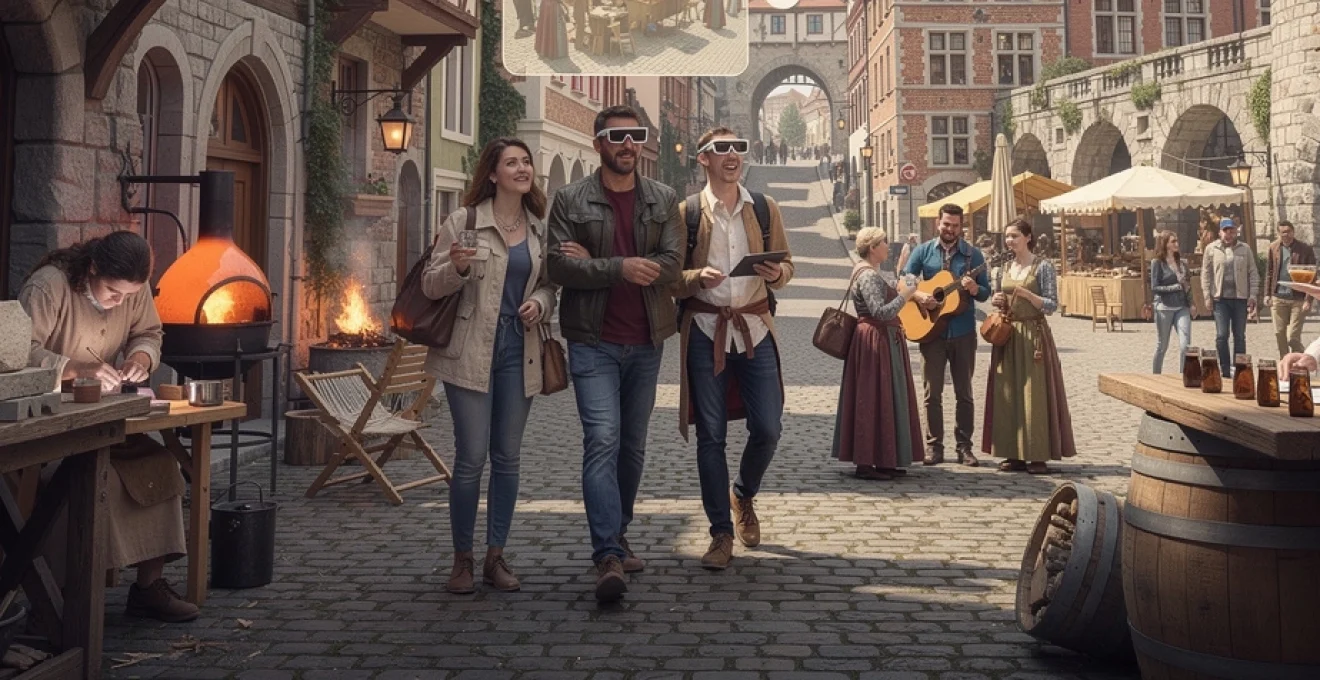
Historic cities serve as magnificent time capsules, preserving centuries of human achievement within their ancient walls and cobblestone streets. These remarkable urban environments offer travellers an unprecedented opportunity to experience authentic cultural heritage through immersive encounters with architectural marvels, traditional crafts, and living customs that have endured for generations. From the Roman ruins of Bath to the medieval splendour of Bruges, historic urban centres provide tangible connections to our collective past whilst maintaining their relevance in the modern world. The preservation of these living heritage sites represents one of humanity’s greatest cultural achievements, demonstrating how traditional practices can thrive alongside contemporary life. Through innovative conservation techniques, cutting-edge interpretation technologies, and community-based heritage programmes, these cities continue to evolve whilst honouring their historical authenticity.
UNESCO world heritage site preservation methodologies in historic urban centres
The preservation of historic urban centres requires sophisticated methodologies that balance conservation with contemporary urban needs. UNESCO World Heritage Sites represent the pinnacle of preservation excellence, employing rigorous standards that ensure authenticity whilst accommodating modern infrastructure requirements. These preservation frameworks integrate scientific research, community engagement, and sustainable tourism practices to maintain the historical integrity of urban environments.
Contemporary preservation methodologies emphasise the importance of understanding historical building materials and construction techniques. Advanced analytical tools, including X-ray fluorescence spectroscopy and ground-penetrating radar, enable conservators to assess structural conditions without compromising original fabric. This scientific approach ensures that restoration work respects historical accuracy whilst incorporating necessary modern safety measures.
Authenticity assessment protocols for medieval town centres like rothenburg ob der tauber
Rothenburg ob der Tauber exemplifies successful authenticity assessment protocols that maintain medieval character whilst supporting contemporary urban life. The town’s preservation strategy focuses on maintaining original building materials, traditional construction techniques, and historical urban layout patterns. Assessment protocols evaluate every intervention against strict authenticity criteria, ensuring that modern additions remain invisible or clearly distinguishable from historic fabric.
The authenticity assessment process involves detailed documentation of existing conditions, historical research into original construction methods, and careful evaluation of proposed interventions. This comprehensive approach ensures that the town’s medieval atmosphere remains intact whilst accommodating essential modern amenities such as heating, plumbing, and electrical systems.
Adaptive conservation techniques in kraków’s old town district
Kraków’s Old Town demonstrates innovative adaptive conservation techniques that successfully integrate contemporary functions into historic structures. The district’s conservation strategy employs reversible interventions, compatible materials, and minimal visual impact approaches. These techniques enable historic buildings to accommodate modern commercial, residential, and cultural activities without compromising their architectural integrity.
The city’s conservation programme emphasises the importance of traditional craftsmanship in maintaining authentic character. Local artisans receive specialised training in historical construction techniques, ensuring that restoration work employs appropriate materials and methods. This approach maintains employment opportunities whilst preserving essential traditional skills that might otherwise disappear.
Digital documentation standards for historic fabric recording in chester’s roman walls
Chester’s Roman Walls showcase advanced digital documentation standards that create comprehensive records of historic fabric condition and evolution. High-resolution 3D scanning, photogrammetry, and drone surveys produce detailed digital archives that support conservation planning and public interpretation. These documentation standards establish baseline conditions for monitoring structural changes and planning future interventions.
Digital documentation enables virtual accessibility for researchers and visitors who cannot physically access sensitive archaeological areas. The comprehensive digital archive supports ongoing research into Roman construction techniques whilst providing educational resources for schools and universities. This approach demonstrates how technology can enhance heritage understanding without compromising physical preservation.
Community-based heritage management models in bruges’ merchant quarter
Bruges’ Merchant Quarter exemplifies successful community-based heritage management that engages local residents as active participants in preservation efforts. The management model recognises that historic urban centres remain vibrant communities rather than museum displays. Local residents contribute traditional knowledge, participate in conservation activities, and benefit economically from heritage tourism.
The community-based approach includes resident training programmes in traditional crafts, heritage interpretation skills, and sustainable tourism practices. This comprehensive engagement ensures that preservation efforts support local economic development whilst maintaining authentic cultural practices. The model demonstrates how heritage conservation
supports both the safeguarding of historic fabric and the wellbeing of those who live and work in these quarters. For visitors, this means encountering a living heritage environment where traditional merchant houses, guild halls, and canalside warehouses still operate as shops, cafes, and workshops rather than static exhibits. The result is a historic city experience that feels authentic and inhabited, allowing travellers to participate in local life while directly supporting the long-term preservation of the urban landscape.
Immersive heritage interpretation technologies transforming visitor experiences
As historic cities welcome increasing numbers of visitors, heritage professionals are turning to immersive interpretation technologies to communicate complex stories without overloading physical sites. These tools help travellers step back in time and explore living heritage in ways that static panels and guidebooks cannot match. Carefully designed digital experiences deepen understanding of historic cities while reducing physical wear on fragile monuments and archaeological remains.
Immersive heritage technologies range from augmented reality overlays to three-dimensional soundscapes and fully interactive virtual reality environments. When applied thoughtfully, they complement rather than replace traditional guided tours and on-site interpretation. For travellers, this means you can experience historic cities through multiple sensory layers, choosing the level of detail and interaction that best matches your interests and accessibility needs.
Augmented reality archaeological reconstructions at pompeii’s villa of papyri
The Villa of Papyri at Pompeii demonstrates how augmented reality archaeological reconstructions can transform visitor engagement with damaged or partially buried sites. Using handheld devices or wearable headsets, visitors can view digital overlays that reconstruct collapsed colonnades, frescoed interiors, and garden courtyards directly on top of the surviving ruins. This approach allows you to visualise the villa as it might have appeared before the eruption of Vesuvius, while still appreciating the original archaeological remains.
Behind the scenes, these reconstructions are based on meticulous research, combining excavation data, historical drawings, and comparative architectural analysis. Augmented reality applications employ accurate scale models and material textures, enabling conservators to test hypothetical reconstructions without physically altering the site. For heritage managers, this technology supports non-invasive interpretation that protects fragile masonry while giving visitors an extraordinarily rich sense of place.
Haptic feedback systems for tactile heritage exploration in bath’s roman baths
Bath’s Roman Baths illustrate another frontier in immersive interpretation: haptic feedback systems that recreate the tactile sensations of ancient materials and environments. Specially designed interfaces, including gloves, touch panels, and vibrational platforms, allow visitors to feel the texture of carved stone, the warmth of thermal waters, or the uneven surfaces of Roman mosaics through digitally mediated touch. This technology is particularly valuable for visitors with visual impairments, enabling more inclusive access to historic environments.
In practice, haptic replicas of key artefacts are linked to digital models, providing real-time sensory feedback when visitors explore different surfaces or reliefs. These systems are calibrated using high-resolution 3D scans of original objects, ensuring that the tactile experience remains faithful to the historic fabric. By adding a carefully controlled physical dimension to interpretation, Bath’s Roman Baths offer a multi-sensory historic city experience that deepens emotional connection and understanding without exposing original artefacts to excessive handling.
Soundscape recreation technologies in colonial williamsburg’s artisan workshops
In Colonial Williamsburg, soundscape recreation technologies bring artisan workshops and historic streetscapes to life through carefully curated audio environments. Hidden speakers, directional sound emitters, and interactive triggers recreate the subtle background noises of eighteenth-century life, from the ring of the blacksmith’s hammer to the murmur of market conversations. Visitors moving through these spaces experience an acoustic layer that complements what they see, creating a more convincing sense of historical immersion.
Sound designers work closely with historians and craftspeople to ensure that each recreated sound reflects authentic tools, materials, and working rhythms. Modern acoustic modelling software analyses how sound would have travelled through timber-framed buildings and narrow alleys, adjusting volume and reverberation accordingly. For travellers, this means that walking into a reconstructed workshop feels less like entering a silent museum set and more like stepping into a living, working town where heritage is still unfolding.
Virtual reality time portal installations at edinburgh’s royal mile
Edinburgh’s Royal Mile showcases how virtual reality time portal installations can reveal multiple historical layers within a single urban streetscape. Designated VR stations positioned along the thoroughfare invite visitors to don headsets and experience the same location at different points in time, such as the medieval Old Town, the Enlightenment era, or the industrial nineteenth century. These immersive sequences transform familiar buildings into dynamic backdrops for changing fashions, street activities, and political events.
Virtual reality time portals rely on detailed urban archaeology, archival maps, and historic illustrations to construct accurate digital cityscapes. By allowing users to “stand still” while the surrounding environment shifts through centuries, the installations make temporal stratification in historic cities instantly understandable. For visitors with limited time or mobility, these VR experiences provide an efficient way to grasp the long-term evolution of the Royal Mile before exploring specific sites in more depth on foot.
Living heritage demonstration programmes in european historic quarters
Beyond high-tech interpretation, many European historic quarters are investing in living heritage demonstration programmes that keep traditional skills and customs actively practiced. Rather than presenting crafts and rituals as static displays, these initiatives integrate artisans, performers, and local communities into the daily life of historic cities. As a traveller, you move through environments where heritage is still being made, not only remembered.
Such programmes often combine training schemes, public demonstrations, and heritage tourism experiences that generate income for practitioners. They also help historic urban centres resist the tendency toward homogenised souvenir shops and short-term rentals. By prioritising living traditions, these quarters preserve the intangible cultural heritage—skills, stories, recipes, and rituals—that gives each historic city its distinctive character.
Traditional craft revival initiatives in toledo’s damascening workshops
Toledo’s historic centre is renowned for its damascening workshops, where artisans inlay precious metals into steel to create intricate decorative motifs. Traditional craft revival initiatives in this district focus on sustaining the skills required for high-quality damascening while adapting to contemporary markets. Apprenticeship schemes, supported by municipal authorities and heritage organisations, pair young learners with master craftsmen to ensure that complex techniques are transmitted accurately.
For visitors, many workshops now offer scheduled demonstrations and short participatory sessions where you can observe each stage of the process—from preparing the metal surface to hammering fine gold wire into engraved channels. These encounters highlight the time and patience behind authentic pieces, helping travellers distinguish genuine heritage crafts from mass-produced imitations. By purchasing directly from workshops, you contribute to a heritage-based local economy that keeps historic city centres vibrant and productive.
Culinary heritage preservation through gastronomy tourism in modena’s balsamic vinegar cellars
In Modena, culinary heritage preservation is closely linked to the region’s historic balsamic vinegar cellars, many of which are housed in centuries-old attics within the city’s core. Gastronomy tourism initiatives invite visitors to explore these ageing lofts, where rows of wooden barrels slowly transform grape must into dense, aromatic vinegar over decades. Guided tastings explain how barrel size, wood species, and microclimate influence flavour, providing insight into artisanal processes that have remained largely unchanged for generations.
These experiences are carefully regulated to balance visitor access with the delicate conditions required for long-term ageing. Cellar owners collaborate with heritage authorities to interpret their properties as part of Modena’s living food heritage, rather than simple production facilities. For travellers, booking a visit to an accredited acetaia is both a sensory journey and an ethical choice, supporting small-scale producers who maintain traditional methods in the face of industrial competition.
Artisanal skill transfer programmes in murano’s glass-making district
Murano’s glass-making district near Venice offers a powerful example of artisanal skill transfer programmes designed to sustain fragile craft ecosystems. Historic furnaces and workshops scattered across the island operate within buildings that themselves form part of the cultural landscape, with chimneys, courtyards, and canals reflecting centuries of industrial activity. To prevent the loss of specialist techniques, local institutions have established training centres that combine formal instruction with hands-on experience in active furnaces.
Visitors to Murano can witness glassblowers shaping molten glass into chandeliers, vases, and beads, often within view of archival photographs and historic tools that link present-day production to its medieval origins. Selected programmes allow small groups to participate in supervised activities, such as shaping simple objects or applying coloured decoration. These initiatives demonstrate how intergenerational knowledge transfer keeps both buildings and crafts alive, ensuring that Murano remains a working historic city rather than a purely touristic showcase.
Folk tradition continuity projects in český krumlov’s medieval taverns
Český Krumlov’s medieval core is famous for its narrow streets, castle complex, and riverside setting, but its taverns also play a crucial role in sustaining local folk traditions. Continuity projects in these establishments focus on preserving storytelling, music, and seasonal rituals that have long accompanied food and drink. Rather than staging generic medieval banquets, participating taverns collaborate with ethnographers and local performers to curate evenings based on documented regional customs.
For travellers, this means you might encounter live folk music played on traditional instruments, demonstrations of historic brewing methods, or narratives that connect local legends to the city’s architectural landmarks. Importantly, these events are integrated into the regular social life of residents, avoiding the feeling of a purely staged performance. By choosing taverns that participate in recognised folk continuity schemes, visitors help support authentic cultural practices that might otherwise fade under pressure from mass tourism.
Temporal stratification analysis in multi-period urban archaeological sites
Many historic cities are built on layers of earlier settlements, creating complex urban palimpsests where Roman streets, medieval cellars, and modern foundations coexist in close proximity. Temporal stratification analysis seeks to understand and interpret these overlapping time layers, providing a framework for both archaeological research and visitor experience design. When applied to multi-period urban sites, this analysis allows heritage professionals to explain not only what survives, but how and why cities changed over time.
Contemporary approaches combine traditional excavation with digital tools such as GIS mapping, 3D stratigraphic modelling, and building archaeology surveys. By synchronising data from different periods, researchers can visualise how street patterns shifted, buildings were repurposed, and defensive walls expanded or contracted. For travellers, the results of temporal stratification analysis are often translated into layered maps, interactive exhibits, and guided routes that highlight specific chronological sequences, helping you to read the historic city as a richly annotated timeline.
Heritage tourism infrastructure development without compromising historical authenticity
As interest in historic cities grows, the challenge of developing heritage tourism infrastructure without eroding authenticity becomes increasingly urgent. New hotels, transport hubs, and visitor centres must accommodate modern comfort and safety standards while respecting sensitive urban fabrics. Poorly planned interventions can overwhelm narrow streets, displace local communities, and reduce historic centres to stage sets devoid of everyday life.
Effective strategies prioritise adaptive reuse of existing buildings over new construction, limit vehicle access in core areas, and distribute visitor services across wider districts to prevent overcrowding. Design guidelines encourage contemporary architecture that is clearly modern yet harmonious in scale, materials, and massing. For travellers, choosing locally owned accommodation in restored historic properties, using public transport or walking routes, and visiting during shoulder seasons are practical ways to support sustainable heritage tourism development that keeps historic cities liveable for residents.
Cultural landscape interpretation strategies for time-layered historic cities
Time-layered historic cities are not defined solely by individual monuments, but by broader cultural landscapes that include streets, rivers, parks, and surrounding countryside. Interpretation strategies that focus on this larger scale help visitors understand how natural features, economic networks, and social patterns shaped urban development. Instead of treating sites in isolation, cultural landscape approaches encourage you to see cathedrals, markets, and neighbourhoods as interconnected elements within a dynamic system.
Practical methods include thematic walking routes that link waterfronts to merchant quarters, panoramic viewpoints with annotated cityscape diagrams, and interpretive signage that highlights historical land uses such as shipyards, orchards, or defensive fields. Digital story maps, accessible via mobile devices, allow travellers to follow narratives that cross administrative boundaries and historical periods. By adopting a cultural landscape perspective, historic cities invite visitors to experience heritage not just in buildings and museums, but in the everyday spaces where past and present continue to interact.