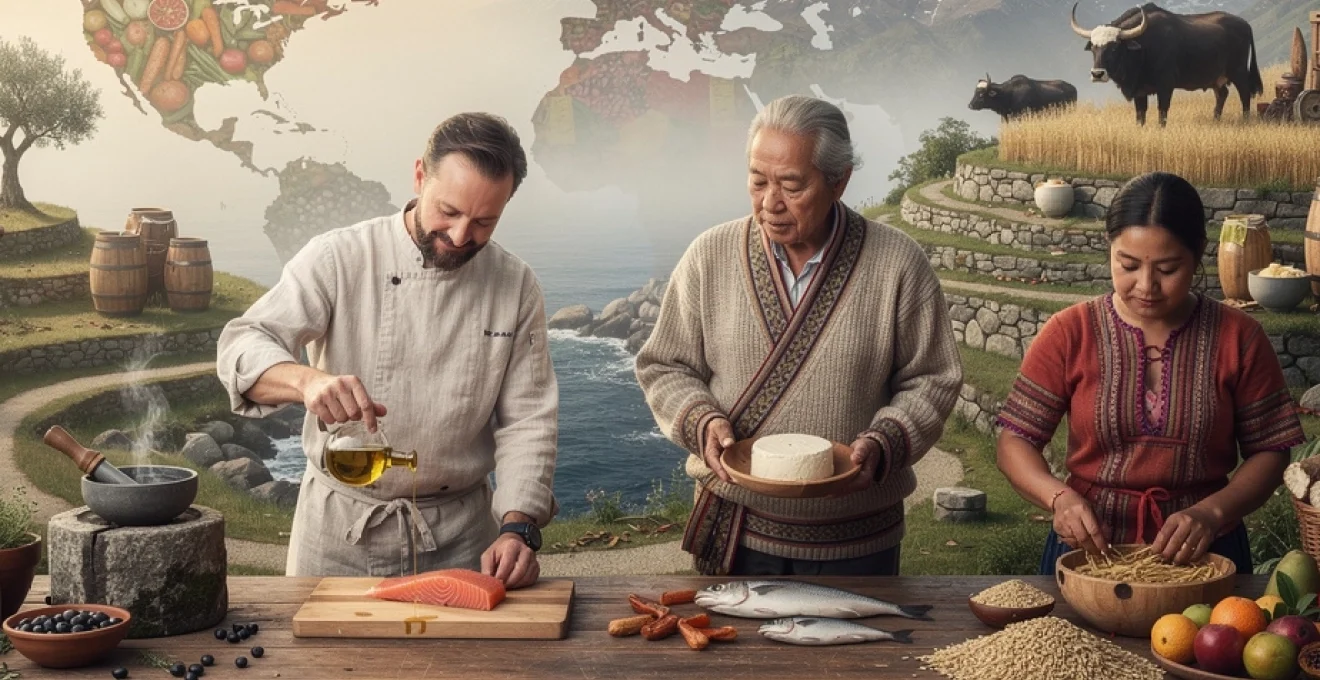
The relationship between local ingredients and regional cuisines represents one of humanity’s most fundamental connections to place. From the sun-drenched olive groves of the Mediterranean to the high-altitude barley fields of the Himalayas, the ingredients available in each region have shaped distinctive culinary traditions that tell the story of geography, climate, and culture. This intricate dance between terroir and taste has created the diverse tapestry of global cuisine we celebrate today, where each bite carries the essence of its homeland.
Understanding how local ingredients influence regional cooking traditions reveals more than just culinary preferences—it unveils the profound relationship between humans and their environment. The availability of specific crops, the seasonal rhythms of harvests, and the preservation techniques developed out of necessity have all contributed to the unique flavour profiles that define regional identities. As globalisation continues to reshape food systems worldwide, appreciating these traditional connections becomes increasingly important for preserving culinary heritage and understanding authentic flavour development.
Terroir theory: how climate, soil, and geography define regional culinary identities
The concept of terroir extends far beyond wine production to encompass all agricultural products and their unique characteristics derived from environmental factors. This fundamental principle explains why tomatoes grown in volcanic Sicilian soil possess a distinctive minerality, whilst Scottish carrots develop enhanced sweetness in cooler climates. The interplay of soil composition, microclimate conditions, topography, and altitude creates distinctive flavour profiles that cannot be replicated elsewhere, making each region’s produce genuinely unique.
The marriage of ancient flavours with cutting-edge techniques allows chefs to present local culinary identities in ways that surprise and delight, whilst still maintaining a connection to tradition.
Modern agricultural science has validated what traditional farmers have long understood: environmental factors profoundly influence plant metabolism and flavour compound development. Temperature fluctuations, rainfall patterns, and daylight hours all affect the concentration of sugars, acids, and aromatic compounds in fruits and vegetables. This scientific understanding helps explain why certain regions become renowned for specific ingredients—from the intense flavours of high-altitude herbs to the complex sugars developed in slow-ripening fruits from cooler climates.
Mediterranean basin: olive oil production and Salt-Cured preservation techniques
The Mediterranean’s unique climate of hot, dry summers and mild, wet winters has created ideal conditions for olive cultivation spanning thousands of years. The region’s limestone-rich soils and abundant sunshine produce olives with exceptional oil content and complex flavour profiles. Traditional olive oil production methods, including stone pressing and cold extraction, preserve the delicate compounds that give each region’s oil its distinctive character—from the peppery notes of Tuscan oils to the fruity richness of Greek varieties.
Salt-cured preservation techniques developed naturally in coastal Mediterranean regions where abundant sea salt and warm, dry climates created perfect conditions for food preservation. These methods transformed necessity into culinary art, producing specialities like Spanish jamón ibérico and Italian bresaola. The precise balance of salt concentration, humidity control, and air circulation required for successful curing reflects generations of accumulated knowledge about working with local environmental conditions.
Scandinavian coastal regions: Cold-Smoking methods and fermented fish traditions
The harsh northern climate of Scandinavia necessitated innovative preservation techniques that evolved into signature regional flavours. Cold-smoking methods, utilising juniper and birch woods native to the region, developed as a way to preserve fish through long winters whilst imparting distinctive aromatic qualities. The consistent cool temperatures and low humidity of Scandinavian coastal areas create ideal conditions for extended smoking processes that would be impossible in warmer climates.
Fermented fish traditions like Swedish surströmming and Norwegian rakfisk represent extreme adaptations to resource scarcity and climate challenges. These intense preservation methods, whilst acquired tastes, demonstrate how environmental constraints can drive culinary innovation. The fermentation processes developed in these cold climates produce unique umami-rich flavours that have become integral to regional food identity, showing how necessity can evolve into cultural tradition.
Himalayan High-Altitude agriculture: yak dairy products and barley cultivation
The extreme altitude and harsh climate of the Himalayas have shaped a unique agricultural system centred around hardy crops and livestock adapted to thin air and temperature extremes.
Yak, with their thick coats and sure-footedness, provide milk, meat, and transport, making them central to Himalayan food culture. Their rich, high-fat milk is transformed into butter, yogurt, and hard cheeses like chhurpi, which can be smoked or dried until rock-hard to survive long, cold winters. Barley, one of the few grains that thrives at altitude, is roasted and ground into tsampa, a flour that can be mixed with tea, butter, or broth to create filling, portable meals. Together, yak dairy and barley form a resilient food system perfectly adapted to steep slopes, short growing seasons, and limited arable land.
These local ingredients directly shape iconic regional dishes and daily eating patterns. Butter tea made with yak butter and salt provides both hydration and vital calories in thin mountain air, while barley-based dumplings and porridges deliver slow-release energy for physically demanding lifestyles. Even religious practices and hospitality rituals are interwoven with these ingredients, as offering tea enriched with yak butter or bowls of tsampa is both a sign of welcome and an expression of cultural identity. In this way, the Himalayan highlands show how a small set of hardy ingredients can anchor an entire regional cuisine.
Amazonian rainforest biodiversity: indigenous root vegetables and tree fruit integration
The Amazon basin, by contrast, is defined by lush biodiversity rather than scarcity. Its tropical climate, abundant rainfall, and dense forest canopy nurture an extraordinary range of root vegetables, fruits, nuts, and freshwater fish that underpin Amazonian regional cuisines. Indigenous communities have long cultivated and foraged cassava, yams, and taro, developing sophisticated techniques to detoxify bitter cassava and transform it into flours, breads, and porridges. This deep knowledge of edible and medicinal plants has allowed people to thrive in an environment that can appear overwhelming to outsiders.
Tree fruits such as açaí, cupuaçu, guava, and bacaba are not occasional treats but everyday staples, integrated into smoothies, porridges, sauces, and fermented drinks. Rather than relying on a few domesticated crops, Amazonian food systems draw from many species at once, creating diets that are both diverse and resilient. You can think of the Amazonian pantry as a living library: each plant and fruit is a “book” of knowledge about seasonality, soil, and flavour that has been curated over generations. This integration of forest fruits and root crops into daily cooking demonstrates how local ingredients shape not just taste, but also sustainable relationships with one of the world’s most complex ecosystems.
Seasonal availability patterns and traditional preservation methods across continents
Across the globe, seasonal availability dictates what is cooked, when it is eaten, and how ingredients are preserved for leaner times. Before refrigeration, communities developed ingenious preservation methods—drying, fermenting, salting, smoking, and confit—to bridge the gap between harvests and to stabilise fragile local ingredients. These techniques did more than simply extend shelf life; they created new layers of flavour and texture that became central to regional culinary identities.
In many ways, preservation is a form of time travel on the plate. A jar of summer tomatoes brightens a midwinter stew; cured meats embody the labour of autumn in the heart of spring. As we explore regional cuisines, we see that seasonal cooking and preservation cycles function like a culinary calendar, guiding when certain iconic dishes appear. Even today, when global supply chains make strawberries and tomatoes available year-round, chefs and home cooks increasingly return to seasonal rhythms to recapture the deeper flavours and nutritional benefits of local, in-season produce.
Japanese seasonal kaiseki: sakura blossoms to autumn matsutake mushrooms
Few culinary traditions express seasonal availability as delicately as Japanese kaiseki, a multi-course meal that showcases ingredients at the precise moment of their peak. In spring, cherry blossoms and tender mountain vegetables (sansai) appear in light broths and tempura, symbolising renewal and transience. By summer, the focus shifts to cooling preparations—chilled noodles, crisp vegetables, and lightly grilled river fish that reflect the humid heat of the season. Each course is carefully composed to echo not only what is available, but also how the season feels.
Autumn brings prized matsutake mushrooms, chestnuts, and persimmons, celebrated in rice dishes, soups, and sweets that evoke the richness of the harvest. Winter kaiseki menus lean into hearty root vegetables, pickles, and hot pots, often featuring preserved elements such as miso-fermented ingredients and dried seaweed stocks. Underpinning this seasonal dance is a network of preservation traditions—pickling, fermenting, drying—that ensure continuity of flavour across the year. When you enjoy a kaiseki meal, you are not just tasting a dish; you are tasting a particular place at a precise moment in time.
French charcuterie evolution: confit techniques and saucisson production cycles
In rural France, seasonal abundance and scarcity shaped the evolution of charcuterie, turning practical preservation into an art form. Traditional pig slaughter in late autumn, known as la tuerie du cochon, marked the start of a production cycle that filled larders for the winter months. Meat destined for confit was salted and slowly cooked in its own fat before being stored in earthenware jars, protected from air by a thick layer of fat. This allowed households to enjoy tender duck legs or pork months after slaughter, with flavours that deepened over time.
Dry-cured sausages like saucisson sec follow their own seasonal rhythms, relying on cool, stable temperatures and controlled humidity during the curing process. Certain regions became renowned for specific charcuterie specialities because their microclimates offered ideal conditions for safe drying and ageing. Today, when we pair rustic pâtés and cured meats with bread and wine, we are still participating in a seasonal preservation system refined over centuries. Understanding these cycles helps us appreciate why “authentic” charcuterie tastes so different from industrial products that bypass time-intensive curing.
Indian monsoon adaptations: pickle-making and dried spice preservation systems
In the Indian subcontinent, the dramatic shift between dry seasons and the monsoon has long dictated how ingredients are stored and consumed. Before the rains arrive, households traditionally prepare large batches of pickles—using mangoes, limes, chillies, and seasonal vegetables—preserved in oil, salt, and spices. These pickles, or achar, serve as flavour-packed insurance policies, providing acidity, heat, and complexity when fresh produce becomes scarce or transport is disrupted by heavy weather.
Spices, the backbone of Indian regional cuisines, are also carefully dried, roasted, and stored to withstand humidity and warmth. Complex masala blends are often prepared in bulk just before the monsoon, taking advantage of dry conditions that help prevent mould and flavour loss. This careful timing ensures that households can maintain consistent taste profiles in their curries, dals, and snacks throughout the year. When you bite into a tangy mango pickle alongside a simple lentil dish, you are experiencing a centuries-old strategy for coping with climate, built entirely around local ingredients and preservation wisdom.
Canadian maple syrup production: seasonal tapping and sugar concentration methods
In eastern Canada and the northeastern United States, the transition from winter to spring is marked by maple syrup season, a short window when fluctuating temperatures cause sap to flow in sugar maples. Local producers tap the trees and collect sap that is mostly water, then slowly boil it down to concentrate the natural sugars into syrup. It can take roughly 40 litres of sap to produce just one litre of maple syrup, underscoring how intensely local conditions shape this regional ingredient.
Historically, Indigenous communities developed the earliest techniques for sap collection and reduction, which were later adapted by European settlers. Over time, maple syrup became not just a sweetener but a symbol of regional identity, featuring in everything from baked beans and granola to glazes and desserts. Modern sugar shacks still follow the same seasonal cycle, turning a fleeting climatic phenomenon into a deeply rooted food tradition. When you drizzle maple syrup over pancakes, you are tasting a concentrated expression of forest, temperature, and time.
Endemic species integration in traditional cooking techniques
Endemic species—plants and animals found only in a specific region—often become the cornerstones of local cuisines, shaping cooking techniques developed specifically to highlight their unique properties. From Australia’s wattleseed and finger limes to Mexico’s huitlacoche and Oaxaca’s native corn varieties, these ingredients are more than curiosities; they are central to how communities define flavour and identity. Because they evolved in particular climates and soils, endemic species bring singular textures and aromas that are hard to replicate with substitutes.
Traditional cooking techniques frequently evolve hand-in-hand with these local species. Consider how Japanese kombu and katsuobushi are transformed into dashi, a delicate stock that underpins countless dishes, or how Pacific Island cultures developed earth-oven methods to gently steam starchy roots like taro and breadfruit. In many Indigenous foodways, endemic species are harvested following strict seasonal and spiritual guidelines, reinforcing sustainable relationships with local ecosystems. As chefs worldwide experiment with “new” endemic ingredients, there is a growing responsibility to respect and learn from the communities that have nurtured them for generations.
Agricultural domestication history and regional crop specialisation
The story of regional cuisines cannot be told without understanding how crops were first domesticated and later specialised in particular landscapes. Early agricultural centres in the Fertile Crescent, the Andes, Mesoamerica, and East Asia each developed distinct suites of domesticated plants—wheat and barley, potatoes and quinoa, maize and beans, rice and soy—that still dominate local food cultures today. Over millennia, farmers selected varieties that thrived in specific microclimates, gradually refining flavour, texture, and resilience.
This process of regional crop specialisation created powerful identities: Tuscany’s wheat fields and olive groves, the Andean terraces of potatoes and quinoa, or the rice paddies of Southeast Asia. In modern times, industrial agriculture has reduced some of this diversity, yet interest in ancient grains, heirloom vegetables, and heritage legumes is reviving older, more localised crop systems. When we choose these varieties, we are supporting not only richer flavours but also the biodiversity that underpins resilient food systems.
Ancient grain varieties: emmer wheat in tuscan cooking and quinoa in andean cuisine
Emmer wheat, one of the earliest domesticated cereals, has deep roots in Mediterranean agriculture and remains a quiet star in Tuscan regional cuisine. Known locally as farro, it appears in hearty soups, salads, and rustic bread, prized for its nutty flavour and firm texture. Its ability to grow in poor soils and withstand variable weather made it a reliable staple long before modern high-yield wheat varieties took centre stage. Today, as consumers seek nutrient-dense, minimally processed grains, emmer is regaining prominence in both traditional and contemporary dishes.
Quinoa, domesticated in the Andean highlands thousands of years ago, tells a similar story of resilience and local adaptation. Thriving at high altitudes and in marginal soils, quinoa became a cornerstone of Andean cuisine, appearing in porridges, soups, stews, and breads. For Indigenous communities, it is not just a “superfood” but a sacred crop connected to seasonal rituals and communal labour. As quinoa has gone global, there is an ongoing conversation about how to balance international demand with local food security—reminding us that regional ingredients are embedded in social as well as ecological systems.
Heirloom tomato cultivation: san marzano in neapolitan pizza and cherokee purple in american south
Heirloom tomatoes illustrate how regional selection can shape both flavour and culinary use. In the volcanic soils near Naples, San Marzano tomatoes developed a reputation for their low acidity, dense flesh, and intense sweetness—qualities that make them ideal for long-simmered sauces. Protected by geographical indication status in Italy, true San Marzano tomatoes are tightly linked to place, and their flavour has become a defining element of authentic Neapolitan pizza and southern Italian pasta dishes.
Across the Atlantic, the Cherokee Purple tomato, believed to have been shared by Cherokee communities in the 19th century, became a beloved variety in the American South. Its dusky, almost smoky flavour and high juice content lend themselves to fresh preparations: sliced on sandwiches, layered in salads, or simply sprinkled with salt. Both San Marzano and Cherokee Purple show how generations of seed saving and selection can tailor a single species to very different local culinary purposes. When you choose an heirloom tomato, you are effectively voting for a particular regional story of taste.
Indigenous bean varieties: tepary beans in southwestern american cuisine and borlotti in northern italy
Beans are another powerful example of regional crop specialisation. In the arid landscapes of the American Southwest, Indigenous communities cultivated tepary beans, which are exceptionally drought-tolerant and nutritionally dense. Their small size and rich flavour make them perfect for long-simmered stews, salads, and spreads, offering a sustainable source of protein in water-scarce environments. Recent interest in climate-resilient crops has brought tepary beans back into the spotlight as a model for future regional food systems.
In Northern Italy, borlotti beans—speckled and creamy when cooked—play a central role in comfort foods such as minestrone and pasta e fagioli. Developed in cooler, more temperate conditions, they absorb flavours beautifully and add body to soups and casseroles. While tepary and borlotti beans belong to the same broader botanical family, their regional adaptations and culinary roles are distinct. By exploring these indigenous bean varieties, we gain insight into how local environments and cultural preferences work together to shape what ends up on the table.
Spice trade routes and regional flavour profile development
The historic spice trade transformed regional cuisines by introducing powerful new flavouring agents across continents. Black pepper, cinnamon, cloves, nutmeg, and cardamom travelled along land and sea routes connecting South Asia, the Middle East, Africa, and Europe, becoming status symbols as well as culinary staples. Regions that once relied primarily on local herbs and aromatics suddenly had access to intense, long-lasting spices that could reshape sauces, marinades, and preserved foods.
This influx of non-local ingredients did not erase regional identities; instead, it layered new flavours onto existing traditions. Portuguese traders brought chilli peppers from the Americas to India and Southeast Asia, where they were rapidly integrated into curries and sambals, fundamentally altering perceived “authentic” flavour profiles. North African ras el hanout, French herbes de Provence, and Chinese five-spice all reflect specific blends of local and imported ingredients, codifying regional tastes shaped by centuries of exchange. When you enjoy a complex curry or a spiced stew, you are tasting the legacy of trade winds, caravan routes, and cross-cultural encounters.
Modern sustainability challenges: local sourcing versus global food systems
Today, regional cuisines exist within a global food system that can deliver almost any ingredient, almost anywhere, at any time. This unprecedented access comes with trade-offs: higher carbon footprints from long-distance transport, pressure on water and land resources, and vulnerability to supply chain disruptions. At the same time, many local farmers struggle to compete with imported commodities, threatening the survival of traditional crops and the culinary identities built around them. How do we balance the joy of global flavours with the need to support sustainable, local food systems?
One practical approach is to prioritise local and seasonal ingredients for everyday cooking while using imported products more thoughtfully for dishes where they are truly irreplaceable. Restaurants and home cooks can seek out small-scale producers, heritage varieties, and fair-trade certifications that support ethical, environmentally responsible supply chains. Urban farmers’ markets, community-supported agriculture schemes, and cooperative buying groups all help reconnect consumers with local terroir and reduce dependence on fragile global networks. As we make these choices, we are not only shaping our own diets but also influencing which ingredients—and therefore which regional cuisines—will thrive for future generations.