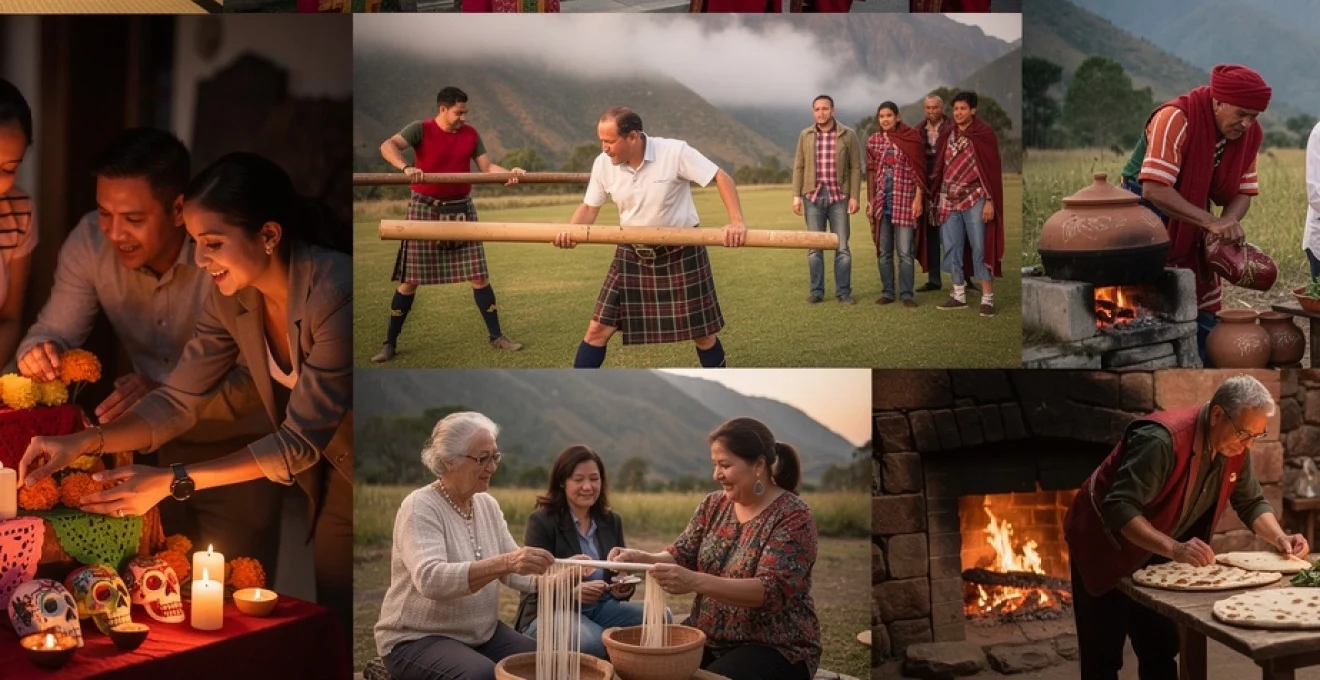
Travel transforms from mere sightseeing into profound cultural exchange when you engage deeply with local traditions. Rather than collecting passport stamps and tourist photos, meaningful travel invites you to step into the living heritage of communities worldwide. This immersive approach creates lasting memories that extend far beyond typical holiday experiences, fostering genuine connections with people whose customs have shaped their identity for generations.
The difference between surface-level tourism and authentic cultural engagement lies in participation rather than observation. When you learn to weave traditional textiles alongside Guatemalan artisans or participate in sacred ceremonies with indigenous communities, you gain insights that no guidebook can provide. These experiences create emotional bonds with destinations, transforming you from a casual visitor into someone who truly understands and respects local ways of life.
Authentic cultural immersion requires vulnerability and openness to learning. It means setting aside preconceptions and allowing local traditions to teach you new perspectives on community, spirituality, craftsmanship, and daily life. This approach to travel not only enriches your personal journey but also supports cultural preservation efforts by demonstrating genuine interest in traditional practices.
Cultural immersion through participatory traditional ceremonies and festivals
Religious and cultural ceremonies offer some of the most profound opportunities for meaningful travel experiences. These sacred moments provide windows into belief systems, community values, and spiritual practices that have guided societies for centuries. Participating respectfully in such ceremonies creates memories that resonate on emotional and spiritual levels long after you return home.
Festival participation allows you to witness cultures at their most vibrant and expressive. Unlike staged performances for tourists, authentic festivals celebrate genuine community milestones, seasonal changes, or religious observances. Your presence as a respectful participant, rather than a passive observer, contributes to the continuation of these traditions while enriching your understanding of local identity.
Dia de los muertos altar creation workshops in oaxaca, mexico
Oaxaca’s Día de los Muertos celebrations represent one of Mexico’s most deeply rooted traditions, blending pre-Hispanic indigenous beliefs with Catholic influences. Participating in altar creation workshops allows you to understand the profound spiritual significance behind this UNESCO-recognised cultural heritage. Local families guide visitors through the intricate process of constructing ofrendas, explaining the symbolic meaning of marigolds, copal incense, and favourite foods of departed loved ones.
These workshops extend beyond simple craft activities, offering insights into Mexican perspectives on death, memory, and family continuity. Participants learn to fold tissue paper into delicate flowers, arrange bread and chocolate, and understand how each element serves to welcome spirits back to the earthly realm. The experience transforms Western perceptions of mortality while highlighting the celebration of life that characterises Mexican culture.
Balinese hindu purnama full moon ceremony participation in ubud
Balinese Hinduism integrates daily life with spiritual practice through elaborate ceremonies that mark lunar cycles and agricultural seasons. Purnama full moon ceremonies invite respectful participation from visitors who demonstrate genuine interest in understanding Balinese spiritual philosophy. Local priests explain the significance of offerings, meditation practices, and community prayers that maintain harmony between human activities and natural cycles.
Participating in these ceremonies requires proper dress codes, including traditional sarongs and selendangs, which local communities often provide to international visitors. The experience teaches patience, mindfulness, and appreciation for rituals that connect Balinese communities with their ancestors, gods, and natural environment. These ceremonies demonstrate how spiritual practice integrates seamlessly into daily life in traditional Balinese society.
Japanese tea ceremony mastery sessions in kyoto’s urasenke foundation
The Japanese tea ceremony, or chado, represents a sophisticated art form that embodies principles of harmony, respect, purity, and tranquillity. Participating in formal tea ceremony training at Kyoto’s historic institutions provides profound insights into Japanese aesthetics, philosophy, and social customs. Master practitioners guide students through precise movements, explaining how each gesture reflects deeper cultural values about hospitality, mindfulness, and appreciation of beauty.
These intensive sessions teach participants to appreciate subtleties of seasonal awareness, spatial harmony, and interpersonal respect that characterise
the tea ceremony. Through repeated practice, you begin to see how this meticulous ritual mirrors broader Japanese values around order, humility, and attentiveness to others. What initially feels like a choreographed performance gradually reveals itself as a moving meditation, where every sound, pause, and movement contributes to an atmosphere of quiet reflection. By the time you can perform a simple ceremony yourself, sharing a bowl of matcha becomes less about drinking tea and more about honouring a shared moment in time.
Scottish highland games caber toss training in braemar
The Scottish Highland Games encapsulate centuries of clan history, physical prowess, and community pride. Attending as a spectator can be entertaining, but engaging in caber toss training in Braemar or other Highland communities creates a far deeper connection. Local athletes and coaches explain the origins of the games, from military training exercises to clan gatherings, before guiding you through warm-ups, stance, and safe lifting techniques.
Rather than simply watching from the sidelines, you feel the weight of the caber in your hands, learning how timing, balance, and courage combine in this iconic event. Instructors emphasise safety and cultural respect, often sharing stories of legendary competitors and how the games have helped preserve Scottish heritage. When you later watch professionals compete, you understand not only the technical skill but also the pride and identity embedded in every throw, transforming a fun day out into a meaningful cultural encounter.
Maasai coming-of-age ritual observation in kenya’s maasai mara
In Kenya’s Maasai Mara, age-set rituals play a central role in defining social roles, responsibilities, and identity within Maasai communities. While direct participation in sacred rites is typically reserved for community members, carefully structured observation programmes allow visitors to witness selected aspects of coming-of-age ceremonies in a respectful and non-intrusive way. Local leaders and cultural liaisons explain the symbolism of traditional clothing, songs, and dances, contextualising what you see within Maasai cosmology and history.
Responsible operators prioritise community consent, privacy, and benefit-sharing, ensuring that tourism supports rather than exploits these traditions. You might be invited to listen to elders describing how rituals have adapted over time in response to modern pressures, from climate change to formal education. By approaching these experiences with humility, you gain a nuanced understanding of how the Maasai negotiate continuity and change, and how rites of passage continue to anchor young people within a shared cultural framework.
Gastronomic heritage integration through traditional cooking methodologies
Food traditions are among the most accessible and rewarding ways to experience local culture during meaningful travel. Traditional cooking methodologies encode generations of knowledge about climate, agriculture, trade routes, and social customs. When you learn to prepare dishes using local tools and techniques rather than modern shortcuts, you gain insight into how communities have nourished themselves physically and spiritually for centuries.
Culinary immersion goes beyond restaurant dining to include markets, farms, and home kitchens where recipes are passed down orally. According to the World Tourism Organization, gastronomy is now a primary motivation for travel for nearly one in three international tourists, reflecting a growing desire for authentic, place-based food experiences. By engaging directly with gastronomic heritage, you not only enjoy unique flavours but also support small producers, preserve endangered techniques, and create memories that engage all your senses.
Tagine clay pot cooking techniques with berber families in morocco’s atlas mountains
In Morocco’s Atlas Mountains, the humble tagine clay pot serves as both a cooking vessel and a symbol of communal life. Joining a Berber family in their home to learn traditional tagine techniques introduces you to the slow, patient rhythms of rural Moroccan cooking. You discover how conical lids circulate steam, how spices are layered to build depth of flavour, and why locally grown olives, preserved lemons, and seasonal vegetables reflect the region’s agricultural cycles.
Rather than relying on gas stoves or electric ovens, many families still cook tagines over charcoal or wood fires, teaching you how heat control and timing influence texture and taste. As you chop, season, and arrange ingredients under the guidance of your hosts, conversation naturally turns to family stories, harvest experiences, and celebrations where particular tagines take centre stage. By the time you sit down to share the meal on a low table or woven mat, the dish in front of you represents far more than a recipe—it embodies hospitality, resilience, and mountain identity.
Soba noodle hand-pulling mastery in japan’s nagano prefecture
Nagano Prefecture, known for its cool climate and high-quality buckwheat, has nurtured a distinctive soba noodle culture. Participating in soba hand-pulling workshops connects you to meticulous Japanese culinary craftsmanship and regional pride. Under the watchful eye of a soba master, you learn how water temperature, humidity, and flour quality influence dough texture, and why every movement—from kneading to rolling to cutting—is calibrated with almost scientific precision.
What seems simple at first quickly reveals itself as a demanding art form, akin to learning a musical instrument. Your first uneven, slightly clumsy noodles highlight just how much patience and practice lie behind a perfectly balanced bowl of soba. Sharing the finished dish with your instructor and fellow learners completes the circle: you taste the direct result of your effort while absorbing stories about harvest seasons, local festivals, and the role of soba in New Year rituals and temple offerings.
Tandoor oven bread-making apprenticeships in punjab’s rural villages
In rural Punjab, the glowing tandoor oven remains a focal point of domestic and communal life. Joining a short-term bread-making apprenticeship in a village setting allows you to experience the tactile joy of shaping roti, naan, or kulcha while learning about the social significance of shared bread. Local women—or sometimes entire extended families—introduce you to kneading techniques, resting times, and the skill of slapping dough onto the inner walls of the tandoor without burning your hands.
As smoke curls upward and the scent of fresh bread fills the courtyard, conversations often turn to seasonal farming cycles, wedding feasts, and religious holidays where tandoor-cooked dishes play a starring role. You begin to understand how this cooking method symbolises both nourishment and togetherness, much like a communal hearth in other cultures. By the end of your stay, the simple act of tearing into warm bread becomes a sensory reminder of Punjab’s generosity and agricultural heritage.
Peruvian pachamanca earth oven preparation in cusco’s sacred valley
In Peru’s Sacred Valley, the traditional pachamanca earth oven ceremony offers one of the most immersive ways to connect with Andean cosmology and agrarian traditions. Working alongside Quechua hosts, you help dig the oven, heat stones over a wood fire, and carefully layer marinated meats, potatoes, corn, and native tubers before covering everything with banana leaves and earth. Each step is accompanied by explanations of offerings to Pachamama (Mother Earth) and the importance of reciprocity in Andean spirituality.
This slow-cooking process, which can take several hours, invites reflection and conversation. While the food steams underground, you might learn Quechua phrases, listen to panpipe melodies, or hear legends about the surrounding mountains. When the earth is finally opened and fragrant steam escapes, the communal feast that follows feels almost sacramental. The flavours are shaped not only by smoke and stone but also by the shared labour and gratitude that went into preparing the meal.
Indigenous artisanal craft acquisition and cultural knowledge transfer
Traditional crafts are living archives of cultural memory. Every motif, stitch, and pattern carries stories of migration, belief systems, and ecological knowledge. When you learn directly from artisans rather than purchasing mass-produced souvenirs, you participate in a form of cultural knowledge transfer that helps keep these practices alive. UNESCO estimates that more than 40% of the world’s intangible cultural heritage elements are linked to traditional craftsmanship, underscoring how crucial artisans are to cultural preservation.
Responsible craft experiences prioritise fair compensation, cultural context, and hands-on learning over quick demonstrations designed purely for tourists. By slowing down to understand why a particular dye plant is used, or what a specific symbol represents, you gain insight into how communities view themselves and their environment. At the same time, your financial contribution supports livelihoods, making traditional crafts a viable choice for younger generations who might otherwise abandon them.
Guatemalan maya backstrap loom weaving apprenticeships in chichicastenango
In Chichicastenango and other highland towns of Guatemala, Maya women continue to weave intricate textiles on backstrap looms, just as their ancestors did centuries ago. Joining a weaving apprenticeship—whether for a day or several—invites you into a world where mathematics, storytelling, and spirituality intersect. Your teacher helps you secure the loom around your waist, demonstrating how body posture, tension, and rhythm influence the tightness of the weave and the clarity of patterns.
As you slowly progress from simple stripes to more complex motifs, you learn that specific colours and designs can indicate a weaver’s village, marital status, or religious affiliations. Conversations often touch on language preservation, land rights, and how global fashion trends both threaten and inspire local textile traditions. When you finally complete a small piece, it becomes a tangible record of shared time, effort, and cross-cultural understanding rather than a generic souvenir.
Aboriginal australian dot painting techniques in alice springs art centres
In Alice Springs and surrounding communities, Aboriginal art centres offer carefully guided workshops in dot painting and other traditional techniques. These sessions are usually led or supervised by Indigenous artists, ensuring that cultural protocols and intellectual property rights are respected. Before you pick up a brush, facilitators often explain the significance of “Dreaming” stories, the role of art in mapping Country, and why certain sacred designs or narratives cannot be reproduced by outsiders.
Rather than copying iconic motifs, you might be invited to create a simple composition that reflects your own journey while learning basic dotting methods and natural pigment use. This approach emphasises respect over appropriation, helping you appreciate that Aboriginal art is not just decorative but deeply embedded in law, land, and lineage. Purchasing works directly from the art centre further supports community governance and long-term cultural sustainability.
Venetian murano glass-blowing workshops with master artisans
Murano, just a short boat ride from Venice, has been synonymous with glass-making for over 700 years. Participating in a hands-on glass-blowing workshop with a master artisan offers a rare glimpse into this fiercely protected heritage. Inside the glowing furnace rooms, you watch as silica, soda, and lime transform into molten glass—an alchemy of fire and sand honed through generations.
Under guidance, you attempt basic techniques such as gathering glass on a blowpipe, shaping it with tools, and rotating it to prevent sagging. Your first attempts at forming a simple ornament or drinking glass underscore the enormous skill behind the delicate chandeliers and sculptures displayed in galleries. Artisans often share how the industry has responded to global competition, tourism pressures, and environmental regulations, revealing the challenges of maintaining authenticity in a world of cheap imitations.
Rajasthani block printing methods in jaipur’s traditional workshops
Jaipur’s traditional block printing workshops preserve a craft that blends artistry with careful coordination. Entering one of these family-run studios, you are greeted by rows of carved wooden blocks, each bearing intricate floral, geometric, or figurative designs. Artisans explain how patterns are conceptualised, transferred to wood, and hand-carved—a process that can take days for a single block.
In your workshop, you learn how natural dyes are mixed and how fabric is aligned to ensure seamless repeats. The rhythm of stamping—block to dye, dye to cloth—creates a soothing, almost musical pattern as you progress across the textile. Mistakes are part of the learning process and highlight the human touch that distinguishes hand-printed fabric from machine-made alternatives. By the end, you leave not only with your own printed scarf or tablecloth but also with a deeper respect for the time and coordination required to produce high-quality handcrafted textiles.
Linguistic heritage preservation through native language immersion programmes
Language is one of the most intimate carriers of culture, encapsulating humour, worldview, and community memory in its idioms and structures. Engaging with native language immersion programmes during your travels allows you to access layers of meaning that remain invisible when relying solely on translation. Even short-term language learning can transform everyday encounters—from ordering food to asking for directions—into opportunities for connection and mutual respect.
Globally, UNESCO warns that nearly 40% of the world’s 7,000 languages are at risk of disappearing, many of them Indigenous. Choosing to study even a handful of phrases in an endangered or minority language signals that these linguistic traditions matter. Community-run schools, homestays, and cultural centres often integrate language learning with traditional music, storytelling, and crafts, creating a holistic immersion experience. You are not simply memorising vocabulary; you are stepping into another way of seeing the world.
Practical language immersion travel might involve spending a week in a Quechua-speaking village in Peru, a remote Māori community in Aotearoa New Zealand, or a Welsh-language town in rural Wales. Daily routines—shopping at markets, participating in local events, joining family meals—provide real-life practice that no classroom can replicate. You will make mistakes, of course, but those awkward moments often lead to shared laughter and generous corrections, reinforcing that communication is as much about intent and openness as it is about grammar.
For travellers seeking more meaningful trips, integrating linguistic heritage into your itinerary is both an educational and ethical choice. You support teachers, translators, and elders working to keep their languages vibrant while gaining tools to navigate cultural nuances more gracefully. Over time, you may find that a single proverb or untranslatable term learned abroad continues to influence how you think about community, nature, or time long after your journey ends.
Religious pilgrimage routes and sacred site engagement protocols
Visiting sacred sites and walking pilgrimage routes offers some of the most profound possibilities for reflective, meaningful travel. Whether or not you share the faith tradition behind a site, approaching it as a pilgrim rather than a tourist changes your mindset from consumption to contemplation. Instead of racing to tick off “must-see” temples or churches, you move more slowly, allowing the symbolism, rituals, and stories to sink in.
Examples of transformative pilgrimage travel include walking sections of Spain’s Camino de Santiago, following Japan’s Kumano Kodo trails, or visiting Buddhist monasteries in Bhutan. These journeys often blend physical challenge with spiritual introspection, creating space to disconnect from digital overload and reconnect with your inner life. Along the way, you encounter fellow travellers, local devotees, and religious leaders whose experiences broaden your understanding of faith in practice.
Respectful engagement with sacred sites requires learning and following local protocols. This may involve dress codes, photography restrictions, gender-specific spaces, or behavioural expectations such as silence, removing shoes, or avoiding certain areas altogether. Taking the time to understand why these rules exist—rather than viewing them as mere inconveniences—helps you appreciate the values they protect. In many places, guides or signage explain appropriate conduct; when in doubt, discreetly observing locals can be an effective guide.
Ethical pilgrimage travel also means recognising the living communities for whom these places are not attractions but anchors of identity. Contributing to donation boxes, supporting locally run guesthouses, and avoiding disruptive behaviour during ceremonies are simple but powerful ways to show respect. As you reflect on your journey, you may realise that the most meaningful souvenir from a sacred site is not a photograph or a trinket, but a shift in your own perspective on patience, humility, or interconnectedness.
Traditional music and dance performance integration methodologies
Music and dance are among the most immediate and emotionally resonant expressions of local traditions. A single rhythm or movement can communicate joy, grief, resistance, or devotion without the need for translation. Yet many travellers engage with local performance only as passive spectators at staged shows. Integrating traditional music and dance more actively into your trip—through workshops, jam sessions, or community events—turns entertainment into meaningful cultural exchange.
Participatory experiences might include learning basic flamenco steps in Seville, joining a capoeira roda in Salvador, or attending a hula class with Kumu hula (teachers) in Hawaiʻi. In each case, instructors usually begin by explaining the history, social context, and spiritual underpinnings of the form. You find that what appears as pure spectacle on stage is actually a codified language of gestures, postures, and rhythms that carry ancestral knowledge.
As you stumble through your first steps or struggle to keep time with traditional instruments, you experience first-hand the discipline and dedication required of local performers. This embodied learning acts like a bridge, turning abstract appreciation into empathetic understanding. Much like learning a few phrases in the local language, even modest participation in traditional music or dance often elicits encouragement and warmth from community members, who see your effort as a gesture of respect.
To ensure that your engagement remains ethical, it is important to choose programmes led by local artists or community organisations and to be mindful of contexts where performance is tied to sacred or ceremonial practices. Asking for consent before recording or sharing videos, paying fair fees, and crediting artists appropriately are all part of responsible cultural immersion. Ultimately, the songs and movements you carry home in your body may become some of your most cherished travel memories—living reminders of the people and places that welcomed you into their traditions.