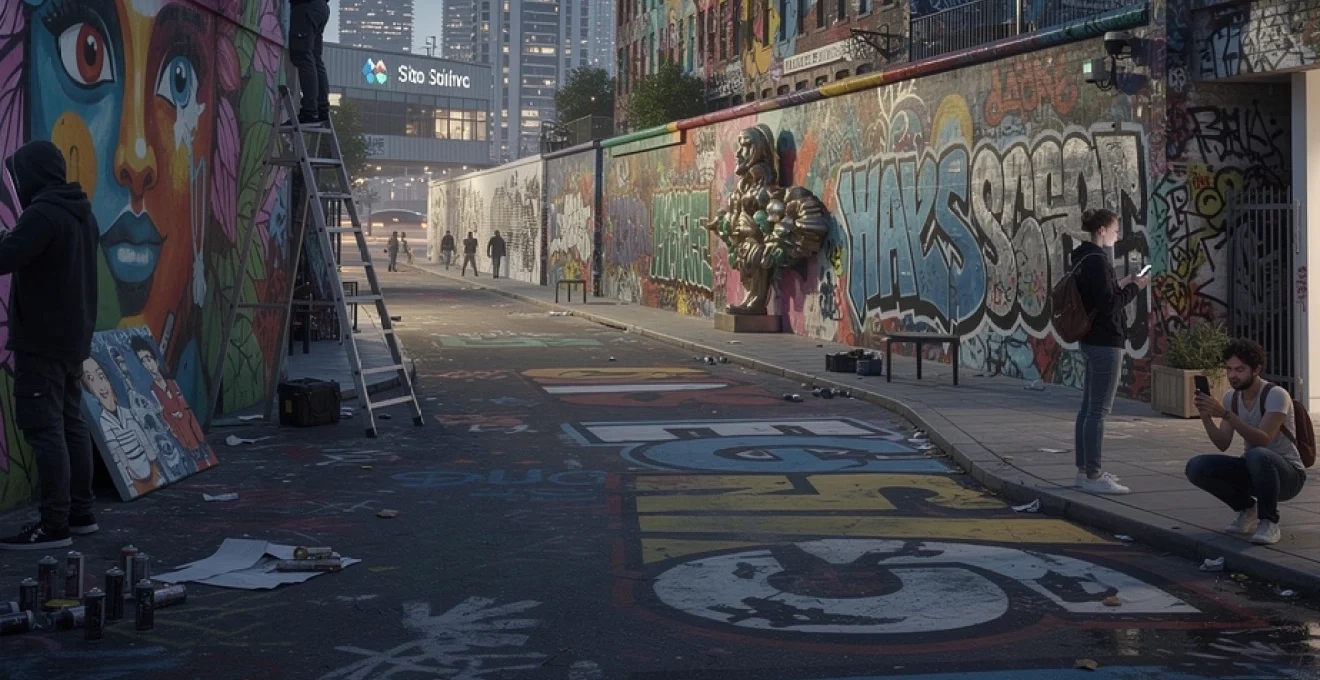
The vibrant colours splashed across concrete walls tell stories that traditional galleries cannot contain. From the bustling streets of São Paulo to the historic walls of Berlin, street art has evolved from an underground rebellion into a powerful cultural force reshaping urban landscapes across the globe. This transformation represents more than just aesthetic change; it signals a fundamental shift in how cities embrace creativity, community identity, and cultural expression. Street art has become a catalyst for urban regeneration, economic development, and social dialogue, proving that art belongs not just in museums but in the very fabric of our daily lives.
The impact of this artistic revolution extends far beyond individual murals or graffiti pieces. Cities worldwide are witnessing how strategic integration of street art can revitalise neighbourhoods, attract international tourism, and provide platforms for marginalised voices. From municipal policy frameworks that legitimise once-illegal practices to sophisticated documentation systems that preserve ephemeral works, the relationship between urban planning and street art has become increasingly complex and mutually beneficial.
Historical evolution from graffiti vandalism to legitimate artistic expression
The journey from outlaw art to gallery walls represents one of the most remarkable cultural shifts of the past five decades. Street art’s roots trace back to the 1960s and 1970s, when young artists in cities like New York and Philadelphia began using urban surfaces as canvases for self-expression. What began as simple tags and territorial markings evolved into sophisticated artistic movements that challenged conventional definitions of art, space, and ownership.
During the early years, graffiti was predominantly viewed through the lens of vandalism and urban decay. Municipal authorities invested millions in removal campaigns, whilst media coverage focused on the destructive aspects of unauthorised mark-making. However, as artistic techniques became more sophisticated and themes expanded beyond personal signatures to include social commentary and visual storytelling, perceptions began to shift. The emergence of artists like Jean-Michel Basquiat and Keith Haring demonstrated that street art could transcend its humble origins to achieve mainstream recognition.
The turning point came in the 1980s and 1990s when galleries began recognising the commercial and artistic value of street art. Pioneering exhibitions brought underground artists into legitimate art spaces, creating a bridge between street culture and institutional recognition. This transition was not without controversy, as purists argued that removing art from its urban context fundamentally altered its meaning and purpose. The debate continues today, with some viewing gallery exhibitions as validation whilst others see them as commercialisation of authentic rebellion.
Contemporary street art encompasses a vast spectrum of techniques and motivations, from traditional spray-can graffiti to elaborate installations incorporating digital technology. Cities like Melbourne, Bristol, and Berlin have developed sophisticated frameworks that acknowledge both the cultural value and potential challenges of street art. These frameworks represent a fundamental reimagining of public space, where authorised and unauthorised art coexist in complex ecosystems of creativity and regulation.
Banksy’s revolutionary impact on global street art perception and market valuation
No discussion of street art’s transformation can ignore the seismic impact of the anonymous British artist known as Banksy. Through a combination of provocative imagery, strategic mystery, and masterful publicity, Banksy has fundamentally altered how the world perceives street art. The artist’s work has achieved something previously thought impossible: commanding seven-figure auction prices whilst maintaining credibility within underground art communities.
Anonymous identity strategy and viral marketing techniques in contemporary art
Banksy’s decision to maintain anonymity has proven to be perhaps the most brilliant marketing strategy in contemporary art history. By refusing to reveal their identity, Banksy has created an aura of mystery that generates continuous media attention and public fascination. This approach has demonstrated how scarcity and intrigue can drive both cultural and economic value in ways that traditional artist promotion cannot match.
The viral nature of Banksy’s work extends beyond individual pieces to encompass entire projects. Social media platforms have become essential distribution channels, allowing single images to reach global audiences within hours of creation. This phenomenon has influenced countless other street artists, who now consider digital documentation and online sharing as integral components of their artistic practice. The result is a fundamental shift in how street art achieves impact and longevity.
Hotel walled off and dismaland: immersive installation projects redefining public space</h3
These immersive installations pushed the boundaries of what street art could be. Rather than limiting interventions to a single wall or alley, Banksy created entire environments that functioned as walk-through artworks and biting social critiques. They blurred the line between theme park, political theatre, and conceptual gallery show, demonstrating how street art tactics could be scaled up to architectural and urban dimensions.
The Walled Off Hotel in Bethlehem, opened in 2017, is a functioning hotel built adjacent to the Israeli West Bank barrier. Marketed as having “the worst view in the world”, it invites visitors to physically inhabit a contested landscape and confront the realities of occupation, surveillance, and segregation. In the same vein, Dismaland, a pop-up “bemusement park” in Weston-super-Mare in 2015, parodied consumer culture and the dark side of entertainment industries. Both projects turned temporary public spaces into experiential critiques of power, capitalism, and border politics.
For urban culture, these projects underscored how street art can transform not only surfaces but also how we move through and experience entire districts. You were no longer just looking at a mural from the pavement; you were checking into a hotel or queuing for a ride within an artwork that questioned the systems shaping your everyday life. This approach has inspired other artists and curators to develop site-specific, immersive street art festivals and installations, contributing to a more experimental and participatory public realm.
Auction house recognition and seven-figure sales at sotheby’s and christie’s
Banksy’s rise has also radically altered the market valuation of street art. Once dismissed as disposable, illegal scribbles, street artworks are now fetching record-breaking prices at blue-chip auction houses such as Sotheby’s and Christie’s. Iconic pieces including Devolved Parliament and Girl with Balloon (or its partially shredded reincarnation, Love is in the Bin) have sold for sums in the multi-million-pound range, signalling a seismic shift in how collectors and institutions value urban art.
This auction house recognition has had a ripple effect throughout the global art market. Galleries are more willing to represent artists whose careers began on the streets, and investors increasingly view street art as an asset class with strong growth potential. At the same time, the high prices raise complex questions: when a mural is chiselled off a wall and sold at auction, who owns the work, the wall, or the idea behind it? And does the removal of a piece from its original neighbourhood undermine its social impact and meaning?
For cities, these market dynamics bring both opportunities and risks. On one hand, association with a world-famous artist like Banksy can dramatically increase cultural tourism and international media exposure. On the other, skyrocketing values may encourage speculative behaviour, with private owners and developers prioritising resale potential over community benefit. As we navigate this new terrain, there is a growing need for ethical guidelines around conservation, removal, and sale of publicly accessible artworks.
Political commentary through stencil art and anti-establishment messaging
At the core of Banksy’s influence lies a simple yet powerful tool: the stencil. Stencilling allows for rapid, repeatable deployment of complex images in high-risk, highly visible locations, making it ideal for pointed political commentary. Banksy uses this technique to tackle themes such as militarisation, surveillance, migration, and consumerism, often combining childlike figures with stark symbols of power to produce striking emotional contrasts.
The anti-establishment messaging embedded in these works has helped normalise the idea that street art is a legitimate medium for civic debate. When passers-by encounter a rat carrying a sign, a protester throwing a bouquet instead of a Molotov cocktail, or a child frisking a soldier, they are invited to reflect on authority, fear, and resistance in ways that traditional news media rarely achieve. The public pavement becomes a kind of open-access editorial page, where humour and irony soften the edges of difficult conversations.
This model has been widely adopted by artists worldwide, who use stencils and other fast techniques to respond to events almost in real time. From pro-democracy slogans in Hong Kong to feminist iconography in Latin America, stencil-based street art functions as a visual push notification for urgent social issues. As you walk through your city, you may not realise it, but you are often reading a constantly updated feed of public opinion painted directly onto the urban fabric.
Urban regeneration through large-scale mural projects and community engagement
Beyond individual artists, street art has become a strategic tool in urban regeneration. Large-scale mural programmes and curated street art districts are revitalising former industrial zones, derelict corridors, and neglected neighbourhoods. When managed thoughtfully, these initiatives can foster community pride, strengthen local identity, and attract sustainable cultural tourism. When managed poorly, they risk accelerating gentrification without benefiting existing residents.
Successful projects share a common feature: they treat street art not as a cosmetic quick fix, but as a catalyst for broader community engagement. Artists collaborate with residents, business owners, and local organisations to co-create imagery that reflects shared histories and aspirations. This approach turns blank walls into community billboards, where stories of migration, labour, resilience, and creativity are openly displayed. The result is a richer, more inclusive urban narrative that you can literally read on the streets.
Wynwood walls miami: transforming industrial districts into cultural tourism destinations
The Wynwood district in Miami is one of the most cited examples of how curated street art can transform an industrial area into a global cultural hotspot. Launched in 2009 by developer and arts patron Tony Goldman, Wynwood Walls began as a project to turn large warehouse facades into an outdoor gallery of international graffiti and street art. Over the years, world-renowned artists have contributed murals, attracting millions of visitors annually and putting Wynwood on the map as a must-see destination during events like Art Basel Miami Beach.
The impact on the local economy has been dramatic. Formerly abandoned warehouses now house galleries, creative offices, cafes, and boutiques, whilst guided street art tours and night-time events generate significant tourism revenue. According to local business associations, property values and commercial rents have risen sharply, and the area has become a key node in Miami’s creative economy. For many visitors, Wynwood offers an accessible introduction to the power of large-scale mural art in shaping neighbourhood identity.
Yet Wynwood also illustrates the tension between cultural vibrancy and gentrification. Long-time residents and small industrial businesses have faced displacement pressures as the district’s popularity grew. For other cities hoping to replicate this model, the key lesson is clear: if you use street art to drive regeneration, you must also develop policies that protect affordable housing, support local entrepreneurs, and ensure that the people who gave the area its character are not priced out of the benefits.
Berlin’s east side gallery: post-reunification identity through collaborative street art
In Berlin, the East Side Gallery stands as a powerful example of how street art can become a living monument to political change. Stretching approximately 1.3 kilometres along the River Spree, it preserves the longest remaining section of the Berlin Wall. In 1990, shortly after the Wall fell, over 100 artists from around the world were invited to paint murals on this historic barrier, turning a symbol of division into a canvas for unity, memory, and hope.
The East Side Gallery functions simultaneously as an open-air museum, a tourist landmark, and a space for ongoing dialogue about Berlin’s complex history. Murals such as Dmitri Vrubel’s famous depiction of the “Fraternal Kiss” between Soviet leader Leonid Brezhnev and East German leader Erich Honecker have become global icons. The site draws around three million visitors per year, contributing significantly to Berlin’s cultural tourism economy and reinforcing the city’s reputation as a capital of street art and creative experimentation.
However, maintaining the Gallery has required continuous negotiation between preservation, free expression, and urban development. Graffiti tags, weather damage, and construction projects have prompted debates over restoration versus spontaneity. Should a historically significant mural be repainted by the original artist, or left to age and accumulate new layers of public intervention? These questions mirror broader conversations about how cities curate their street art heritage without freezing it in time.
Hosier lane melbourne: sanctioned graffiti zones and rotating gallery concepts
Melbourne’s Hosier Lane offers a different model: a sanctioned graffiti zone that functions as a constantly changing, open-access gallery. Located in the heart of the central business district, the lane’s walls are officially permitted spaces for street artists, leading to a dense, ever-evolving patchwork of pieces, throw-ups, stencils, and paste-ups. For locals and tourists alike, walking through Hosier Lane is akin to scrolling through a physical social media feed of urban creativity.
This rotating gallery concept has several advantages. It legitimises street art as part of the city’s cultural identity, reduces conflict between artists and authorities, and draws substantial foot traffic to nearby businesses. City of Melbourne officials often highlight Hosier Lane in promotional material, and the area is a staple on street art tours. Because works are frequently painted over, the space encourages experimentation and collaboration rather than long-term preservation, making it a live laboratory for new styles and messages.
At the same time, the lane illustrates the delicate balance between institutional support and grassroots authenticity. When a mass paint-throwing event in 2020 covered many works in a single colour, public opinion was sharply divided: was it vandalism within a legal graffiti zone, or just another act of creative intervention? The incident underscored an important point for other cities considering legal walls: once you invite uncontrolled creativity, you have to be prepared for outcomes that challenge official expectations.
5pointz new york legacy: gentrification pressures and artist community displacement
The story of 5Pointz in New York City is often cited as a cautionary tale about the fragility of street art communities under gentrification pressure. Located in Long Island City, Queens, 5Pointz was a sprawling industrial complex that, from the early 2000s, became an internationally renowned graffiti mecca. Curated by artist Jonathan Cohen (Meres One), the site hosted works by hundreds of writers from around the world and served as a hub for hip-hop culture, film shoots, and community events.
Despite its global reputation and role in transforming the neighbourhood’s image, 5Pointz was whitewashed overnight in 2013 and subsequently demolished to make way for luxury residential towers. The decision sparked legal battles and intense public debate about the value of ephemeral art versus property rights. In 2018, a US federal judge awarded 21 artists $6.7 million in damages under the Visual Artists Rights Act, recognising that 5Pointz’s works had achieved “recognized stature” and should not have been destroyed without notice.
The legacy of 5Pointz highlights a paradox: street art can help make an area attractive to investors, but the resulting developments can displace the very artists and communities that created that appeal. For planners and policymakers, the lesson is that street art-driven regeneration must be accompanied by long-term strategies for affordable workspace, cultural infrastructure, and legally enforceable protections for community-led projects. Otherwise, vibrant cultural ecosystems risk being replaced by branded aesthetics with little connection to local life.
Digital documentation and social media amplification of ephemeral street art
Street art is, by nature, ephemeral. Murals fade, tags are buffed, buildings are demolished. Yet, in the digital era, these works live on far beyond their physical lifespans. Photographers, bloggers, and everyday pedestrians routinely document pieces and share them online, creating vast, crowd-sourced archives of urban creativity. Platforms like Instagram, TikTok, and Flickr have effectively turned the global cityscape into a searchable, shareable gallery.
This digital documentation has several transformative effects. First, it dramatically extends the reach of local artists: a stencil sprayed overnight in Bristol can be viewed by thousands of people worldwide by breakfast. Second, it enables researchers, curators, and urban planners to track how visual culture in a neighbourhood evolves over time. Third, it turns street art into a driver of digital tourism, encouraging people to travel specifically to recreate or “collect” images they’ve seen online. Have you ever added a city to your travel list after seeing a striking mural on social media?
Social media also changes how artists plan and execute their work. Many now design pieces with photographic framing and shareability in mind, incorporating bold, graphic elements and interactive features that invite viewers to pose, touch, or stand within the artwork. In effect, walls become backdrops for user-generated content, and each selfie or short video functions as unpaid promotion for the district. While some critics argue this encourages superficial engagement, others see it as a powerful way to democratise art consumption.
At the same time, digital amplification raises questions about authorship and consent. When images of street art are reproduced on merchandise or used in marketing campaigns without permission, artists may find their work commodified without compensation. Tools such as Creative Commons licences, watermarking, and artist-led online archives are emerging as partial responses, but legal frameworks still lag behind practice. As cities lean into “Instagrammable” street art to boost their image, there is an urgent need to ensure that the creators behind these visuals are fairly credited and remunerated.
Municipal policy frameworks and legal status across global metropolitan areas
As street art has moved from criminalised subculture to celebrated cultural asset, municipal governments have been forced to rethink their policy frameworks. The result is a patchwork of approaches worldwide, ranging from zero-tolerance graffiti removal to officially funded mural programmes. How a city chooses to regulate street art sends a strong signal about whose voices are welcome in public space and what kind of urban culture it wants to promote.
Some administrations embrace a pragmatic middle ground, distinguishing between destructive tagging and high-quality murals, and working with artists to manage legal walls or curated zones. Others oscillate between support and repression, buffing politically sensitive works while commissioning tourist-friendly imagery. For artists and communities, navigating this shifting legal terrain can feel like walking a tightrope: one project may be publicly funded, while a similar unsanctioned piece around the corner risks fines or arrest.
Bristol’s graffiti tolerance policies and designated legal walls initiative
Bristol, widely known as Banksy’s hometown, has developed one of the UK’s more progressive approaches to graffiti and street art. Rather than treating all unauthorised writing as a problem to be eradicated, the city has experimented with tolerance zones and designated legal walls where artists can paint without fear of prosecution. These spaces, combined with festivals and publicly commissioned murals, have helped turn Bristol into a recognised street art destination.
The city’s policy framework differentiates between vandalism that causes damage or creates safety issues and artworks that add cultural value. Local authorities work with community groups and property owners to identify suitable surfaces for legal painting, often in underused or transitional areas. This collaborative model reduces enforcement costs, channels creative energy into agreed locations, and encourages artists to take greater responsibility for the visual impact of their work.
Bristol’s experience suggests that a nuanced, dialogue-based strategy can produce better outcomes than blanket crackdowns. By offering legitimate outlets, the city reduces the incentive for indiscriminate tagging whilst strengthening its brand as a creative hub. For other municipalities, one practical takeaway is to map potential legal walls near transport corridors, campuses, or cultural districts, then establish simple, transparent rules about usage, maintenance, and community input.
São paulo’s doria administration buff campaigns versus artist rights advocacy
In stark contrast, São Paulo’s relationship with street art has oscillated between celebration and erasure. The Brazilian metropolis is famed for its vibrant graffiti culture and large-scale murals, many of which have become symbols of the city’s identity. Yet in 2017, during João Doria’s mayoral administration, a controversial “Cidade Linda” (“Beautiful City”) campaign saw extensive buffing of walls, including the removal of acclaimed works along the iconic 23 de Maio corridor.
These buff campaigns sparked strong backlash from artists, cultural organisations, and segments of the public, who argued that the city was erasing an important part of its cultural heritage. Legal advocates and artist collectives raised questions about moral rights, compensation, and the criteria used to distinguish “visual pollution” from art. The conflict highlighted the absence of clear policies around the preservation of high-profile works and the need for structured dialogue between city hall and the creative community.
In the wake of these events, São Paulo has seen renewed efforts to document and protect key murals and to involve artists more directly in urban beautification initiatives. The episode serves as a reminder that unilateral clean-up campaigns can damage a city’s international reputation and alienate the very cultural actors who help make it distinctive. For global metropolitan areas, the lesson is that aesthetic regulation should be co-designed with local stakeholders rather than imposed from above.
Philadelphia mural arts program: public-private partnership models for urban beautification
Philadelphia offers yet another model, showing how long-term public-private partnerships can harness street art for social good. Founded in 1984 as part of the city’s Anti-Graffiti Network, the Mural Arts Program has grown into the largest public art initiative in the United States, having produced more than 4,000 murals across the city. What began as an attempt to curb illegal tagging evolved into a comprehensive strategy for urban beautification, community empowerment, and creative workforce development.
The programme operates through collaborations between city agencies, private funders, artists, and community groups. Projects often include extensive consultation processes, workshops, and educational components, ensuring that residents have meaningful input into the themes and design of each mural. Many initiatives focus on social issues such as mass incarceration, mental health, and environmental justice, using art as a platform for healing and policy discussion.
Philadelphia’s experience demonstrates that structured, well-funded programmes can provide stable employment for artists, improve neighbourhood aesthetics, and generate positive media coverage. At the same time, the city still contends with unsanctioned graffiti, underscoring that legal mural programmes complement but do not fully replace informal street practices. For other municipalities seeking to replicate this model, key ingredients include multi-year funding commitments, cross-sector partnerships, and a willingness to treat residents as co-creators rather than passive recipients of beautification.
Economic impact analysis: tourism revenue and property value correlations in street art districts
As street art districts have proliferated, researchers and policymakers have increasingly sought to quantify their economic impact. While exact figures vary by city, several consistent trends have emerged. Neighbourhoods with concentrated, high-quality street art often see increases in visitor numbers, hospitality spending, and, over time, property values. In some cases, these gains are substantial enough that city branding campaigns prominently feature murals and graffiti as key cultural assets.
Studies in cities such as London, Melbourne, and Lisbon have shown that guided street art tours can become significant micro-industries in their own right, employing local guides, photographers, and small business owners. In Melbourne, for example, laneways like Hosier Lane and AC/DC Lane have been credited with boosting nearby cafe and retail trade, as visitors linger to explore surrounding streets. Similarly, in London’s Shoreditch and Camden, street art has become a major draw for international tourists seeking “authentic” urban experiences.
On the property side, correlations between vibrant street art and rising real estate values are well documented, though causation is complex. Developers may capitalise on a neighbourhood’s edgy reputation to market loft conversions and creative office spaces, while existing landlords raise rents in response to increased demand. This process can, over a decade or so, transform former industrial zones into high-end residential or commercial districts—benefiting investors but often squeezing out low-income residents and small cultural venues.
For cities that want to leverage street art without exacerbating inequality, the challenge is to design policies that capture and redistribute some of the value created. Options include earmarking a portion of tourism taxes for community arts initiatives, establishing cultural districts with rent protections, or negotiating developer contributions to local creative infrastructure. By recognising that a mural can be as much an economic engine as a marketing slogan, urban leaders can better align cultural strategy with inclusive growth.
Ultimately, street art’s economic impact is inseparable from its cultural and social influence. The most successful street art districts are not those with the highest property prices, but those where residents feel that the visual transformation of their streets reflects their stories and supports their futures. As we continue to reimagine urban culture in cities around the world, the challenge—and opportunity—is to ensure that the colours on the wall translate into tangible benefits for the communities who live beneath them.