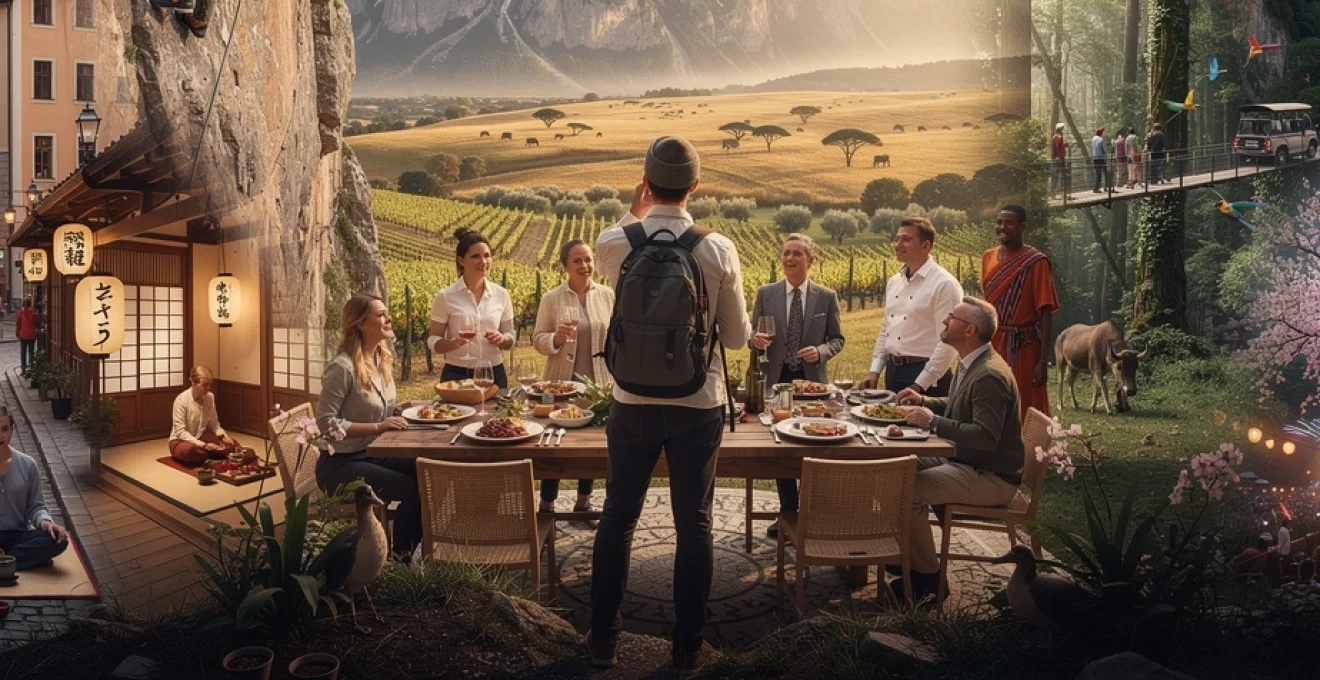
Travel has evolved far beyond simply ticking destinations off a bucket list. Modern travellers increasingly seek experiences that create lasting memories, challenge personal boundaries, and provide genuine transformation. The difference between a forgettable holiday and a life-changing journey often lies in the strategic selection of activities that engage multiple senses, trigger emotional responses, and align with individual values and interests.
Research in cognitive psychology reveals that certain types of experiences are significantly more likely to form enduring memories than others. Understanding these principles can dramatically enhance the impact of your travel investments, ensuring that each trip becomes a meaningful chapter in your personal story rather than a series of disconnected moments.
The key lies in recognising that not all experiences are created equal. Some activities fade from memory within weeks, whilst others remain vivid decades later. This distinction often depends on factors such as emotional intensity, novelty, personal relevance, and the degree of active participation required.
Identifying High-Impact experiential tourism categories for memory formation
The foundation of memorable travel lies in selecting experiences that naturally trigger strong memory formation processes. Neuroscience research indicates that memories are most effectively encoded when multiple cognitive and emotional systems are simultaneously activated. This principle guides the identification of high-impact tourism categories that consistently deliver transformative experiences.
Four primary categories emerge as particularly effective at creating lasting memories: cultural immersion programmes, adventure tourism activities, gastronomic heritage experiences, and wildlife conservation tourism. Each category engages different aspects of human psychology and physiology, creating multiple pathways for memory formation and personal growth.
Cultural immersion programmes in historic districts of prague and kyoto
Cultural immersion experiences in historically rich environments like Prague’s Old Town or Kyoto’s traditional districts create powerful memory anchors through their combination of visual splendour, cultural learning, and personal interaction. These programmes typically involve guided explorations with local historians, participation in traditional crafts, and intimate conversations with long-time residents.
The effectiveness of these experiences stems from their ability to create cognitive dissonance – the mental tension that arises when encountering unfamiliar customs or perspectives. This psychological state naturally enhances memory formation as the brain works to integrate new information with existing knowledge frameworks. Participants often report profound shifts in perspective regarding history, culture, and their own place in the global community.
Adventure tourism psychological markers: via ferrata routes in the dolomites
Adventure tourism activities, particularly those involving calculated risk and physical challenge, create exceptionally strong memories through the activation of stress response systems. Via ferrata climbing in the Italian Dolomites exemplifies this category, combining stunning alpine scenery with the psychological thrill of exposed climbing routes.
The memory-forming power of such experiences derives from their ability to trigger acute stress responses in controlled environments. This physiological arousal releases stress hormones that enhance memory consolidation, ensuring that the experience remains vivid long after completion. The sense of personal accomplishment achieved through overcoming fear and physical challenges creates lasting confidence and self-awareness.
Gastronomic heritage trails through provence and tuscany’s Michelin-Starred territories
Food-focused experiences tap into some of humanity’s most fundamental pleasure and survival systems, creating powerful memory associations through taste, aroma, and social connection. Gastronomic trails through renowned culinary regions like Provence or Tuscany offer immersive encounters with local food traditions, artisanal production methods, and family cooking secrets.
These experiences excel at memory formation because they engage multiple senses simultaneously whilst connecting participants to deeply personal and cultural narratives. The combination of gustatory pleasure, social interaction, and cultural learning creates rich, multi-layered memories that often influence long-term lifestyle choices and cultural appreciation.
Wildlife conservation tourism in kenya’s maasai mara and costa rica’s monteverde
Conservation-focused wildlife experiences create lasting impact through their combination of natural wonder, emotional connection, and meaningful purpose. Programmes in locations like Kenya’s Maasai Mara or Costa Rica’s Monteverde Cloud Forest offer participants direct involvement in conservation efforts whilst providing intimate encounters with endangered species.
The memory strength of these experiences stems from their ability to connect individual actions to larger global narratives.
The memory strength of these experiences stems from their ability to connect individual actions to larger global narratives.
When travellers see the direct impact of their presence – assisting researchers, funding anti-poaching patrols, or supporting reforestation – the experience becomes anchored to a sense of moral significance. Psychologists refer to this as meaning-making: the process of linking events to personal values and identity. This combination of awe, responsibility, and connection to something larger than oneself often transforms a wildlife trip from “a nice safari” into a defining life experience that continues to shape behaviour long after returning home.
Cognitive science principles behind transformative travel experiences
To consistently choose travel experiences that leave a real mark, it helps to understand what is happening inside your brain when a moment becomes unforgettable. Transformative travel is not a mystery; it follows predictable patterns rooted in neuroplasticity, emotional arousal, and memory consolidation. By aligning your itinerary with these cognitive science principles, you dramatically increase the odds that your travels will feel meaningful rather than merely busy.
Crucially, memorable trips are rarely about doing more. They are about doing fewer things with greater depth, attention, and emotional involvement. When you know which mechanisms drive memory and change, you can actively design your travel days to work with – rather than against – the way your mind functions.
Neuroplasticity activation through novel environmental stimuli
Neuroplasticity is the brain’s ability to reorganise itself by forming new neural connections. Travel, especially to unfamiliar environments, is one of the most effective natural triggers of this process. When you navigate Prague’s winding alleys for the first time or step into the moss-draped cloud forests of Monteverde, your brain is bombarded with novel stimuli that demand attention and adaptation.
Studies in environmental psychology suggest that new places increase activity in the hippocampus and prefrontal cortex – regions responsible for spatial navigation, learning, and decision-making. In practice, this means that trips rich in new challenges (learning basic phrases, using local transport, trying unfamiliar activities) promote neural growth far more than repetitive, resort-based holidays. When choosing experiences, ask yourself: “Will this require my brain to learn something genuinely new?” If the answer is yes, you are likely activating neuroplasticity rather than just passing time.
Memory consolidation mechanisms in multi-sensory travel encounters
Memories are not formed at the moment of experience; they are stabilised during a process called consolidation, which occurs in the hours and days afterwards. Multi-sensory travel encounters – those engaging sight, sound, smell, touch, and taste – create richer “data” for the brain to consolidate. A simple example is a Tuscan vineyard visit: the warmth of the sun, the smell of oak barrels, the feel of soil underfoot, the taste of Sangiovese, and the sound of Italian conversation all layer into one robust memory trace.
Neuroscientific research shows that multi-sensory encoding strengthens the connections between different brain regions, making the memory more resilient over time. To harness this on your trip, favour experiences where you are not just passively looking, but also tasting, feeling, smelling, or even moving through the environment. Later, you can reinforce consolidation by briefly journalling, sketching, or talking about what happened – a bit like hitting “save” on a complex document before closing your laptop.
Emotional arousal theory applications in destination experience design
According to emotional arousal theory, we are more likely to remember events that generate strong feelings – whether joy, fear, awe, or even sadness. This does not mean every day must be extreme, but it does mean that flat, emotionally neutral itineraries are less likely to leave a mark. The Dolomites via ferrata, a night walk in the Maasai Mara, or a tea ceremony in Kyoto all work because they carefully combine anticipation, tension, and release.
From a practical perspective, you can design for emotional arousal by choosing experiences that contain some form of meaningful uncertainty: a physical challenge with a safe degree of risk, a social interaction outside your comfort zone, or a cultural ritual you have never witnessed before. Think of this as setting up “emotional peaks” throughout your trip. Like a well-edited film, the contrast between calmer days and high-intensity moments is what makes the overall journey memorable.
Strategic experience selection using the peak-end rule methodology
The peak-end rule, a concept from behavioural economics and psychology, states that people remember an experience largely based on two moments: the most intense point (the peak) and the final phase (the end). For travel planning, this is extremely useful. Instead of trying to make every hour perfect, you can deliberately engineer a few powerful peaks and a strong finish to shape how the entire trip feels in hindsight.
In practice, this means identifying one or two emotionally charged highlights – perhaps the via ferrata day in the Dolomites or a private dinner with a local chef in Provence – and placing at least one towards the latter part of your itinerary. It also means protecting your final 24 hours from unnecessary stress. A calm last day in Kyoto’s gardens or an easy coastal walk in Tuscany will do more for your long-term impression of the trip than squeezing in one more rushed attraction. When you review potential activities, ask: “Is this likely to be a peak memory or just filler?” Prioritise accordingly.
Timing optimisation techniques for maximum experience impact
Even the most thoughtfully chosen experience can fall flat if the timing is wrong. Crowded streets, jet lag, poor light conditions, or seasonal closures all reduce emotional impact and memory formation. Timing optimisation is about aligning your body’s natural rhythms with the external rhythms of place: the seasons, the local calendar, and daily weather patterns. When these elements harmonise, the same activity can feel dramatically more powerful.
Rather than treating timing as an afterthought, build it into your decision-making from the start. Ask when a destination is at its experiential peak – not just climatically, but culturally and aesthetically. Then match that with your own energy patterns and tolerance for factors like heat, early mornings, or late nights.
Circadian rhythm considerations for activity scheduling
Your circadian rhythm – the internal 24-hour clock regulating energy and alertness – has a direct effect on how intensely you experience and encode events. Research shows that cognitive performance and mood tend to peak at specific times of day, which vary slightly between “morning” and “evening” types. Planning a complex walking tour or high-stakes adventure during your personal low-energy window increases fatigue and decreases enjoyment.
For long-haul travel, jet lag further complicates this picture. A useful rule of thumb is to keep your first day light, saving high-impact experiences for the second or third day when your body has partially adjusted. Consider scheduling emotionally significant activities – like a once-in-a-lifetime wildlife encounter or a major museum visit – for the time of day when you typically feel most alert at home. This might mean booking sunrise access tickets or, conversely, opting for evening slots when crowds thin and your focus returns.
Seasonal phenomenon capitalisation: northern lights in tromsø and cherry blossoms in yoshino
Some travel experiences are powerful precisely because they are fleeting. Seasonal phenomena like the Northern Lights over Tromsø or cherry blossoms in Yoshino are classic examples of high-impact experiences shaped almost entirely by timing. Their rarity and unpredictability heighten anticipation, which in turn amplifies emotional response when conditions align.
To increase your chances of memorable encounters, treat these phenomena as anchors around which you build the rest of your trip. For the aurora, that might mean visiting Tromsø between late September and early April, staying at least three or four nights, and choosing accommodation away from light pollution. For Yoshino’s sakura, it means tracking blossom forecasts, allowing date flexibility, and accepting that a degree of uncertainty is part of what will make the experience so vivid in your memory.
Cultural calendar integration with local festivals and celebrations
Local festivals, religious observances, and cultural celebrations concentrate meaning into short, intense windows of time. Participating thoughtfully in events like Prague’s Easter markets, Kyoto’s Gion Matsuri, or harvest festivals in rural Tuscany can create disproportionately strong memories due to the density of sensory input and emotional atmosphere. You are not just seeing a place; you are experiencing it in one of its most heightened states.
However, cultural calendar alignment requires balance. Major festivals can also bring crowds, higher prices, and logistical complexity. When evaluating whether to time your trip around a celebration, ask yourself how much friction you are willing to tolerate in exchange for depth. If you decide the trade-off is worthwhile, prepare in advance: book central accommodation early, learn basic etiquette, and plan at least one quieter day before or after the event to process what you have seen.
Weather pattern analysis for outdoor adventure activities
Weather shapes not only comfort but also safety, visibility, and emotional tone. A via ferrata route in bright, crisp conditions will feel exhilarating; the same route in fog and drizzle can feel miserable or even dangerous. Checking average weather patterns – not just daily forecasts – helps you choose both the right destination window and the right days within your trip for outdoor adventures.
Effective timing here is less about chasing “perfect” weather and more about aligning activity type with likely conditions. For example, plan rainforest hikes in Monteverde for mornings before clouds build, and schedule indoor cultural immersion in Prague on days with higher rain probabilities. By clustering outdoor, high-effort activities into expected good-weather windows and keeping flexible, lower-stakes options as backups, you protect the emotional impact of your key experiences.
Budget allocation frameworks for high-return experiential investments
A common mistake in travel planning is treating all expenses as equal. In reality, some investments – a specialist guide, a small-group conservation project, a sunrise hot-air balloon ride over a historic landscape – deliver far greater psychological returns than marginal hotel upgrades or additional souvenir purchases. A budget allocation framework helps you direct more of your resources towards the experiences that are most likely to leave a lasting mark.
One practical approach is to divide your travel budget into three broad categories: core experiences, supporting logistics, and non-essential extras. Core experiences are the 2–4 activities per trip that you expect to form your peak memories, such as a multi-day safari in the Maasai Mara or a private cooking workshop in Tuscany. Supporting logistics (transport, mid-range accommodation, simple meals) should be optimised for reliability and rest, not luxury for its own sake. Non-essential extras – impulse shopping, multiple similar tours, redundant attractions – are where you consciously choose to spend less so that you can spend more where it truly matters.
Before booking, list all potential experiences and rate each on two scales: expected emotional impact and alignment with your personal values or interests. A high-impact, high-alignment activity justifies a larger share of your budget, even if the upfront cost feels steep. Conversely, if an activity scores low on both, it is a strong candidate to cut. This kind of intentional trade-off ensures that your travel spending reflects your priorities rather than defaulting to what is cheap, convenient, or popular.
Post-experience documentation systems for long-term memory retention
Even the most powerful experiences fade if they are not revisited. Long-term memory retention depends not only on how you travel, but also on how you document and relive your trips afterwards. Effective documentation systems act as external hard drives for your mind, allowing you to access rich details and emotions years later. They also close the loop between travel and everyday life, turning a single journey into an ongoing source of insight and motivation.
The most sustainable documentation method is the one you will actually use. For some travellers, that might mean structured tools like destination spreadsheets, digital maps, or detailed blogs. For others, it might be a minimalist sketchbook, a curated photo book, or a wall of postcards and ticket stubs. The goal is not to create a perfect archive, but to deliberately reinforce the memories that matter most.
From a cognitive perspective, combining at least two formats – such as short written reflections and carefully selected photographs – is particularly effective. Writing helps you process meaning and emotion; images reignite sensory recall. A simple practice is to spend five minutes each evening noting three standout moments from the day and why they felt significant. Later, pairing those notes with a small set of photos or physical mementos creates a compact but powerful record.
Finally, schedule time after your trip to “revisit” it: share stories with friends, re-read your journal, or create a small album or map highlighting your peak experiences. Think of this as a deliberate second phase of travel, where you integrate what you learned into your ongoing life. By closing this loop, you ensure that the experiences you chose with such care continue to shape you long after your suitcase is unpacked.