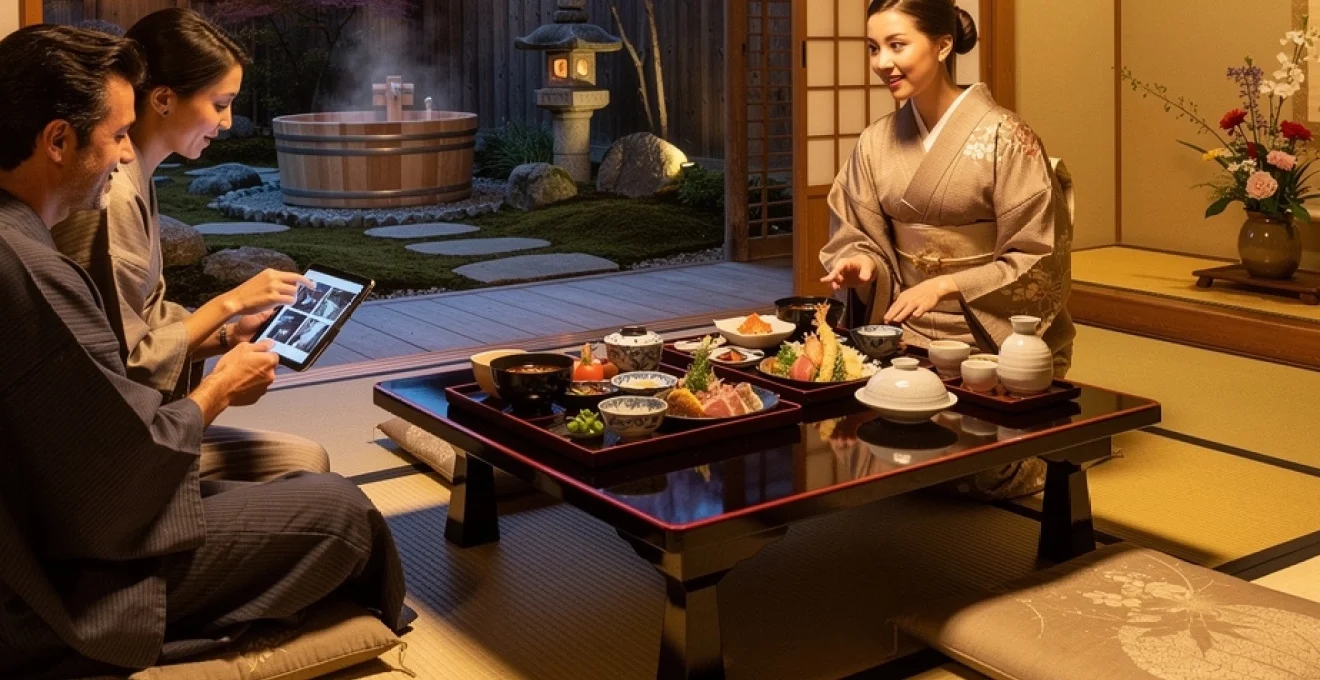
Selecting the ideal ryokan in Kyoto represents far more than simply booking accommodation; it’s choosing a gateway to experiencing Japan’s most refined cultural traditions. These traditional inns embody centuries of hospitality excellence, where every detail from architectural design to seasonal cuisine reflects the profound Japanese concept of omotenashi – selfless service that anticipates guests’ needs before they’re expressed. In Kyoto, the former imperial capital, ryokans reach their most sophisticated expression, nestled within historic districts where geishas still traverse cobblestone streets and ancient temples cast shadows over meticulously maintained gardens. Whether you’re seeking an intimate encounter with traditional kaiseki dining, the therapeutic embrace of natural hot springs, or the simple pleasure of sleeping on tatami mats beneath hand-painted sliding doors, understanding how to evaluate authentic ryokan experiences will transform your Kyoto visit from mere sightseeing into profound cultural immersion.
Understanding traditional ryokan architecture and design elements in kyoto’s historic districts
The architectural foundations of authentic Kyoto ryokans reflect centuries of refined Japanese design philosophy, where every element serves both functional and aesthetic purposes. Traditional ryokan construction emphasises harmony with natural surroundings, incorporating materials like locally sourced timber, handmade paper screens, and natural stone that age gracefully whilst maintaining structural integrity. These buildings often feature raised floors, deep eaves that protect from seasonal weather, and carefully positioned windows that frame garden views like living paintings throughout the seasons.
Machiya-style ryokan features in gion and pontocho neighbourhoods
In Kyoto’s most prestigious entertainment districts, many ryokans occupy restored machiya – traditional wooden townhouses that once housed merchant families. These narrow, deep structures feature distinctive architectural elements including latticed wooden fronts called koshi, internal courtyards that provide natural light and ventilation, and sequential rooms that create intimate spatial experiences. Authentic machiya ryokans maintain original structural elements like exposed wooden beams, traditional clay tile roofing, and stone foundations that speak to centuries of craftsmanship. The interior layout typically progresses from public reception areas through increasingly private spaces, culminating in secluded sleeping quarters that offer complete tranquillity despite urban surroundings.
Sukiya-zukuri architectural principles in premium establishments
The highest-tier Kyoto ryokans often incorporate sukiya-zukuri design principles originally developed for tea houses and refined residential architecture. This sophisticated style emphasises subtle elegance through restrained ornamentation, precise proportions, and seamless integration between indoor and outdoor spaces. Premium establishments showcase these principles through features like asymmetrical room layouts that create visual interest, carefully selected natural materials that highlight texture and grain, and deliberate imperfections that reflect the Japanese aesthetic concept of wabi-sabi. Windows and openings are positioned to capture seasonal changes, transforming guest rooms into viewing platforms for cherry blossoms, autumn maples, or snow-covered gardens.
Tatami mat specifications and room configuration standards
Authentic ryokans utilise traditional tatami mats woven from igusa rush grass over rice straw cores, creating surfaces that provide natural climate control and subtle fragrance. Room sizes in traditional ryokans are measured by tatami count, with standard configurations ranging from intimate 6-mat spaces suitable for couples to spacious 12-mat suites accommodating families or groups. Quality tatami exhibits tight, even weaving with minimal colour variation and edges bound with decorative cloth trim called heri. Well-maintained tatami should feel firm yet slightly yielding underfoot, with a fresh, grassy scent that indicates recent replacement or proper care. The layout typically positions tatami mats in specific patterns that follow traditional proportional relationships, creating rooms that feel balanced and harmonious regardless of their actual dimensions.
Fusuma sliding doors and tokonoma alcove authenticity markers
Genuine traditional ryokans feature fusuma sliding doors constructed with wooden frames and hand-applied paper or fabric surfaces, often decorated with seasonal motifs or landscape paintings. These functional art pieces should slide smoothly on wooden tracks, creating
smooth transitions between spaces. Look for fusuma with subtle, hand-painted scenes rather than mass-printed designs; tiny variations in brushwork and texture are often signs of genuine craftsmanship. Another key authenticity marker is the tokonoma alcove, a recessed space where a hanging scroll, seasonal flower arrangement, or ceramic piece is displayed. In a true Kyoto ryokan, the tokonoma décor changes with the seasons and is curated with almost ceremonial attention, offering a quiet focal point that expresses the inn’s aesthetic values and respect for tradition.
Evaluating omotenashi service standards and kaiseki dining experiences
Beyond architecture, what truly distinguishes an authentic ryokan stay in Kyoto is the standard of omotenashi and the quality of its kaiseki dining. While room photos can be deceiving, the way staff anticipate your needs, pace your meals, and guide you through unfamiliar customs reveals the depth of the establishment’s hospitality culture. When you compare ryokans, pay close attention to how they describe service and meals: are kaiseki dinners prepared in-house, do they highlight seasonal Kyoto ingredients, and is there mention of long-serving staff or family ownership? These subtle signals often indicate whether you’re booking a truly immersive cultural experience or a more generic “Japanese-style” stay.
Multi-course kaiseki meal presentation and seasonal ingredient integration
In Kyoto, kaiseki cuisine is considered a high art, and your ryokan dinner will often be the highlight of your stay. A thoughtfully curated kaiseki meal typically includes 8–12 small courses that move from delicate to more robust flavours, each highlighting seasonal ingredients sourced from local markets and farms. In spring, you might see bamboo shoots, mountain vegetables, and sakura-themed sweets; in autumn, expect chestnuts, wild mushrooms, and richly coloured garnishes echoing the foliage outside. Authentic Kyoto ryokans emphasise this seasonality in their menus, sometimes publishing sample menus for each time of year or referencing Kyoto-style kaiseki (Kyo-kaiseki) on their websites and booking materials.
When evaluating kaiseki offerings, look for descriptions of specific cooking methods and course types rather than vague references to “traditional dinner.” Terms such as sakizuke (appetiser), mukozuke (sashimi), nimono (simmered dish), and yakimono (grilled dish) suggest a structured, multi-course format rather than a simplified set menu. Many premium ryokans also offer alternative kaiseki for vegetarian, vegan, or pescatarian guests if notified in advance, though flexibility can be limited due to the precision involved in menu planning. If you are a selective eater, it can be helpful to email the property before booking; their response speed, detail, and willingness to accommodate reasonable requests will tell you a lot about their commitment to guest satisfaction.
Nakai-san service protocols and guest interaction expectations
At the heart of ryokan hospitality is the nakai-san, the attendant responsible for your room, meals, and many of your on-site arrangements. In traditional Kyoto ryokans, the same nakai-san will often welcome you, serve tea upon arrival, prepare your futon in the evening, and present each kaiseki course, offering brief explanations of ingredients or cooking methods. Their role is to be attentive yet discrete; they may slide open the fusuma doors with a soft knock, bow, and work quietly while you continue your conversation or relax. For many international travellers, this level of personal service can feel almost ceremonial, but it is central to the ryokan experience.
How can you assess service quality before you arrive? Guest reviews often mention particular staff members by title, commenting on how they handled late arrivals, dietary needs, or unexpected issues. Look for mentions of staff proactively suggesting alternate bathing times when the onsen is crowded, helping guests with kimono dressing, or preparing small surprises for birthdays and anniversaries. While English proficiency can vary, genuine omotenashi is less about language and more about attitude: patient explanations, willingness to demonstrate etiquette rather than simply correct you, and a calm, unhurried way of interacting that makes you feel both respected and at ease.
Ofuro bathing etiquette and private onsen facility standards
For many visitors, the ryokan bath—whether a mineral-rich onsen or a heated ofuro tub—is the most memorable part of their Kyoto stay. Communal bathing might feel unfamiliar at first, but once you understand the etiquette, it becomes a deeply relaxing ritual. Authentic ryokans provide clear guidance, either via illustrated cards in your room or signage in the bathing area, outlining the key steps: undress completely in the changing room, wash thoroughly at the seated shower stations, then soak quietly in the shared bath. Think of the washing area as your “shower” and the onsen as a shared “soaking pool” you enter only once you are completely clean.
If you’re comparing ryokans, pay attention to how they describe their bathing facilities. A genuine onsen uses natural hot spring water, often listed with specific mineral properties and source information, whereas regular baths may simply be called “large communal baths” or da-yokujō. High-end Kyoto ryokans may offer both gender-separated indoor and outdoor baths, with alternating schedules so men and women can experience each. If you prefer more privacy—or are travelling as a couple and want to soak together—look for ryokans with kazoku-buro (family baths) or private open-air baths attached to guest rooms. These options typically command a premium, but for shy bathers they can be the ideal compromise between tradition and comfort.
Yukata provision and traditional garment quality assessment
Slipping into a cotton yukata is one of the simple pleasures of staying in a ryokan, and the quality of these garments often reflects the establishment’s attention to detail. Most Kyoto ryokans provide a yukata, sash, and sometimes a light over-jacket known as haori in your room, along with indoor slippers. Higher-end properties may offer a choice of sizes and patterns at check-in, while some design-focused ryokans collaborate with local textile artisans to create custom prints or indigo-dyed designs. If you see photos of guests in coordinated, well-fitted yukata in the ryokan’s gallery, it’s usually a sign that the property takes this traditional element seriously.
In practical terms, check whether the ryokan mentions providing different sizes, children’s yukata, or seasonal adjustments such as lighter fabrics for summer and layered options for winter. This level of specificity suggests they expect you to wear the yukata not only in your room but also to dinner, the lounge, and onsen areas, supporting a fully immersive experience. When you arrive, don’t hesitate to ask staff to show you how to tie the sash correctly; most will be delighted to help, and the simple act of learning to wear your yukata can make you feel more connected to everyday Japanese rituals.
Location analysis for kyoto’s premier ryokan districts and cultural proximity
Kyoto may look sprawling on a map, but its main sightseeing areas cluster along a north–south axis between the Kamo River and the surrounding hills. Choosing where to stay in a ryokan is less about finding a single “best” location and more about aligning your priorities: do you want late-night strolls through lantern-lit alleys, easy daytime access to temples, or a retreat-like base surrounded by nature? Because most ryokans are relatively small, they tend to be embedded in existing neighbourhoods rather than in purpose-built hotel zones. This means your choice of district will shape not only your commute to major sights but also the everyday atmosphere you experience when you slide open your room’s shoji in the morning.
For travellers focused on traditional culture, Gion and nearby Higashiyama offer the highest density of historic streets, teahouses, and temples, with some ryokans located just steps from Yasaka Shrine or Kiyomizu-dera. Staying here allows you to explore early in the morning or late at night, when the day-trip crowds have thinned and the atmosphere is at its most magical. If you prefer a waterfront feel and easier access to Arashiyama and western Kyoto, consider ryokans along the Kamogawa River or near Pontocho, where narrow lanes lead to intimate restaurants and bars. For nature-oriented stays, Arashiyama itself—especially Sagano and the hills north of the train station—offers ryokans overlooking rivers, bamboo groves, and mountains, trading nightlife for tranquillity.
Budgeting considerations for authentic ryokan experiences across price tiers
One of the first surprises for many travellers is that ryokan rates are usually charged per person, not per room, and commonly include dinner and breakfast. At first glance, a night at a Kyoto ryokan can look expensive compared to a business hotel, but when you factor in a multi-course kaiseki dinner, traditional breakfast, private room service, and access to baths, the value equation becomes clearer. The key is to align your expectations with your budget: are you seeking a once-in-a-lifetime splurge with elaborate meals and riverside views, or a more modest but still authentic experience focused on tatami rooms and warm hospitality?
As a general guideline, entry-level ryokans and simplified “Japanese-style” inns in Kyoto might start around the equivalent of US$80–150 per person per night, often with breakfast included and dinner optional. Mid-range properties offering full kaiseki dinners and well-maintained communal baths typically range from US$200–400 per person, especially in central districts or scenic areas like Arashiyama. Premium and heritage ryokans can easily exceed US$500–800 per person, particularly during peak cherry blossom and autumn foliage seasons, but often justify the price with spacious suites, private open-air baths, and highly personalised service. If you’re watching costs, one practical strategy is to book a single indulgent night at a higher-end ryokan and spend the rest of your Kyoto stay in more budget-friendly accommodation.
Seasonal booking strategies for hanami, koyo, and festival periods
Kyoto’s ryokans are most in demand during hanami (cherry blossom season, typically late March to early April) and koyo (autumn foliage, usually November), when the city’s gardens and temple grounds reach peak beauty. During these windows, many small ryokans sell out months in advance, and minimum-stay requirements or higher seasonal rates are common. If your dream is to soak in an open-air bath while cherry petals drift into the water, you’ll need to plan well ahead—ideally booking 6–9 months before arrival, and even earlier for weekends or especially renowned properties. Flexible travellers who can visit just before or after the predicted peak often enjoy milder crowds, slightly lower prices, and still-beautiful scenery.
Summer and winter have their own charms and booking dynamics. July sees the famous Gion Matsuri festival, when central Kyoto becomes particularly busy and ryokan availability tightens; in this case, booking 4–6 months ahead is wise if you want to stay near the procession routes. In contrast, deep winter (January to early March) is often quieter and can offer better value, with occasional light snowfall adding a serene atmosphere to temple gardens and open-air baths. When planning, remember that Japan’s public holidays—such as Golden Week (late April to early May), Obon (mid-August), and New Year—also drive up domestic travel, so securing a ryokan room well in advance is essential. If you’re booking last minute, you may have more luck in slightly less central districts or by being flexible on whether dinner is included.
Verification methods for authentic ryokan credentials and heritage documentation
With the growing popularity of “Japanese-style” accommodation worldwide, it’s worth taking a few extra steps to verify that the ryokan you choose in Kyoto is genuinely rooted in local tradition. One straightforward method is to check membership in recognised regional or national associations, such as local ryokan guilds or tourism boards, which often require adherence to certain standards. Many long-established Kyoto ryokans proudly highlight their founding dates—sometimes over 100 or even 300 years ago—and may mention how many generations the property has remained in the same family. When you see detailed histories, old photographs, or explanations of the building’s architectural lineage on their website, it usually indicates a deeper commitment to heritage than a simple “Japanese-style room” label.
Guest reviews and independent travel resources also provide valuable context. Look for consistent comments about traditional elements—tatami rooms, kaiseki meals, omotenashi service, and onsen or large communal baths—rather than just décor. Satellite images and street-view tools can help you confirm whether the property is indeed located in a historic district, surrounded by machiya townhouses or temple grounds, or in a more modern area. If in doubt, you can email the ryokan directly with a few specific questions about their history, architecture, and meal style; attentive, detailed responses are usually a reassuring sign. By combining these verification methods, you’ll be far more likely to select a ryokan in Kyoto that delivers the authentic, culturally rich stay you’re looking for.