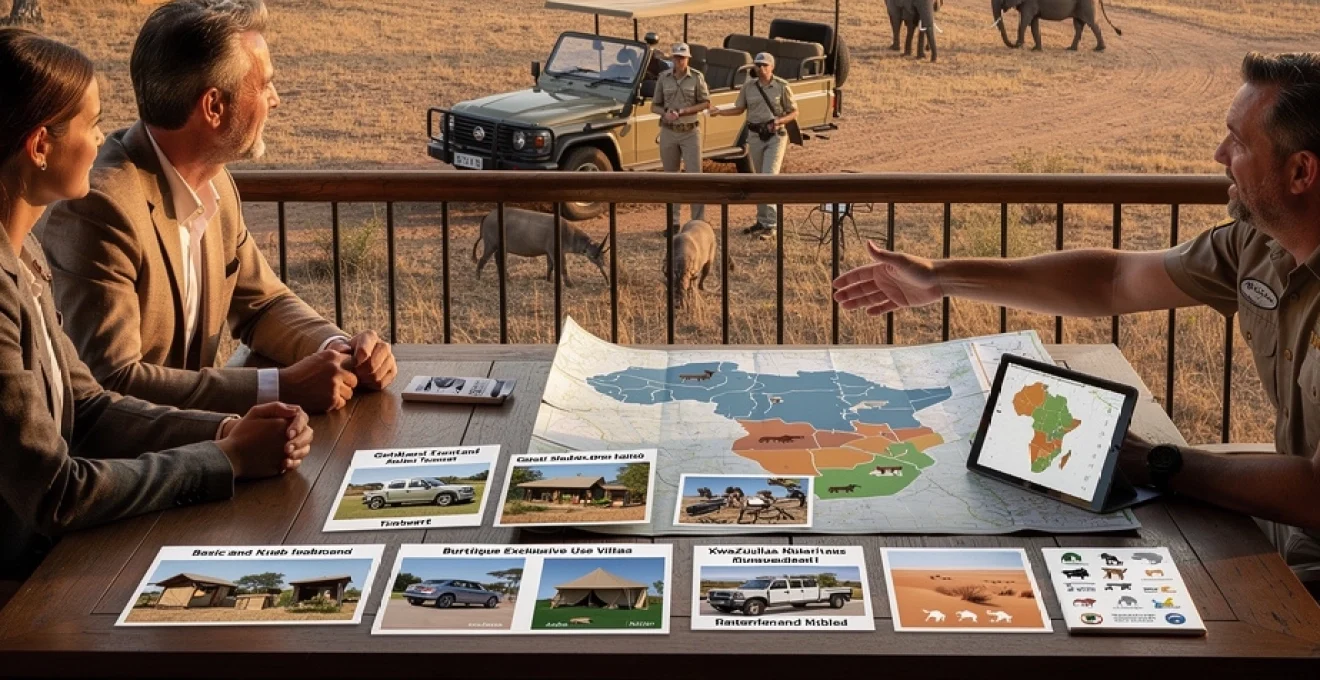
Selecting the perfect safari lodge in South Africa can transform your wildlife adventure from merely satisfactory to truly extraordinary. With over 300 lodges scattered across private reserves, national parks, and conservation areas, the decision requires careful consideration of numerous factors that extend far beyond simple accommodation preferences. South Africa’s safari landscape offers everything from intimate tented camps nestled in the heart of the bush to ultra-luxurious properties where contemporary design meets ancient wilderness. The country’s malaria-free reserves, exceptional wildlife density, and world-class guiding standards have positioned it as one of Africa’s premier safari destinations, attracting discerning travellers who seek both adventure and comfort.
Understanding the distinctions between lodge types, reserve classifications, and regional characteristics becomes essential when planning your safari experience. The choices you make will directly influence the quality of your game viewing, the exclusivity of your experience, and ultimately, the value you receive for your investment. Whether you’re tracking leopards through the dense riverine forests of the Sabi Sand, watching elephant herds traverse the Eastern Cape’s rolling hills, or witnessing the dramatic landscapes of the Kgalagadi, your lodge selection serves as the foundation for everything that follows.
Safari lodge classification systems: private reserves vs national park concessions
The fundamental distinction between private reserves and national park concessions shapes virtually every aspect of your safari experience. Private reserves operate on land owned or leased by conservation companies, typically offering exclusive traversing rights across vast unfenced wilderness areas. These properties maintain lower vehicle densities per sighting, implement flexible off-road driving policies, and frequently provide more personalised service due to smaller guest numbers. The economic model differs substantially from national parks, with higher rates supporting comprehensive conservation initiatives, anti-poaching operations, and community development programmes that extend benefits beyond tourism revenue.
National park concessions function within the regulatory framework of South African National Parks (SANParks) or provincial conservation authorities. Lodge operators secure tender agreements granting construction and operational rights within designated zones, subject to stringent environmental impact assessments and architectural guidelines. These concessions typically prohibit off-road driving, enforce specific operating hours, and require adherence to park-wide vehicle limits per sighting. Despite these constraints, concession lodges frequently occupy prime positions along watercourses or overlooking waterholes, providing exceptional game viewing from elevated decks and rooms. The rate structures generally prove more accessible than equivalent private reserve properties, making them attractive for budget-conscious travellers seeking quality experiences.
Sabi sand game reserve: unfenced boundaries with kruger national park
Sabi Sand Game Reserve exemplifies the private reserve model at its finest, sharing a 50-kilometre unfenced boundary with Kruger National Park that allows unrestricted wildlife movement between ecosystems. This connectivity ensures exceptional predator densities, particularly leopards, which have become habituated to safari vehicles through decades of respectful, consistent exposure. The reserve’s 65,000 hectares accommodate approximately fifteen lodges, each holding exclusive traversing rights within designated territories while maintaining reciprocal access agreements with neighbouring properties. This collaborative approach maximises sighting opportunities without compromising the wilderness experience through excessive vehicle presence.
The absence of fencing delivers tangible benefits for wildlife populations and genetic diversity, supporting natural migration patterns and territorial behaviours. Large predators move freely between Sabi Sand and Kruger, following prey concentrations and establishing territories that span both protected areas. This ecological integrity translates directly into superior game viewing, with Sabi Sand consistently ranking among the world’s premier leopard-viewing destinations. Daily sightings of multiple individuals occur regularly, alongside exceptional lion, elephant, buffalo, and rhino encounters that justify the premium rates commanded by properties within this reserve.
Addo elephant national park lodges: SANParks concession requirements
Addo Elephant National Park’s concession lodges operate under comprehensive regulatory frameworks established by SANParks to balance commercial tourism with conservation imperatives. The tender process demands detailed environmental management plans, architectural submissions incorporating indigenous materials and minimising visual impact, and commitments to employment equity favouring local communities. Successful bidders secure twenty-year concessions with renewal options, providing sufficient security for substantial capital investment in high-quality facilities. The lodges constructed under these agreements typically feature between ten and twenty rooms, positioning them as intimate alternatives to the park’s larger rest camps.
Concession operators contribute percentage-based fees calculated on turn
over payments and turnover, which are reinvested into habitat management, road maintenance, and anti-poaching operations. For you as a guest, this means your nightly rate directly supports the long-term sustainability of Addo’s elephants, black rhino, and rare species such as the flightless dung beetle. Concession lodges must also comply with strict waste, water, and energy-use policies, so you can expect solar power, grey-water systems, and low-impact lighting to be part of the experience.
From a practical standpoint, staying in an Addo concession lodge combines the structure of a national park with many comforts associated with private reserves. Game drives are conducted by professional guides in open vehicles, but they must remain on designated roads and adhere to park speed limits and gate times. This leads to a slightly more regimented schedule, yet the trade-off is competitive pricing and the ability to self-drive before or after guided activities. If you’re looking to stretch your safari budget without sacrificing comfort or wildlife quality, Addo’s concession lodges offer a compelling balance.
Madikwe game reserve: malaria-free private reserve characteristics
Madikwe Game Reserve, located along South Africa’s border with Botswana, is one of the country’s flagship malaria-free private reserves. Covering more than 75,000 hectares, Madikwe combines classic savannah with rocky hills and riverine woodland, providing habitat for the Big Five as well as African wild dog, a major draw for serious wildlife enthusiasts. Because there is no need for anti-malarial medication, Madikwe is particularly well suited to families with young children and travellers with health considerations who still want an authentic Big Five safari.
Lodges in Madikwe operate on an exclusive traversing model similar to Sabi Sand, but with tighter control over vehicle numbers at sightings and a deliberate focus on maintaining a low-density, uncrowded feel. The reserve is fully fenced to protect surrounding communities and farmland, yet within its boundaries, wildlife populations are self-sustaining and carefully managed. For you as a guest, this translates into excellent game viewing, night drives, and off-road access for key sightings, all wrapped in a high level of comfort and service. If you’re weighing up a Kruger safari versus a malaria-free option, Madikwe often emerges as the best compromise between safety, luxury, and wildlife density.
Timbavati private nature reserve: big five traversing rights
Timbavati Private Nature Reserve shares an unfenced western boundary with Kruger National Park and forms part of the Greater Kruger ecosystem. Spanning roughly 53,000 hectares, Timbavati is renowned for its low vehicle densities and diverse habitats, from mopane woodland to open grasslands. Lodges within Timbavati secure traversing rights over defined blocks of land, often sharing reciprocal access agreements with neighbouring properties to expand the area they can explore with guests. These traversing rights are a critical factor when you compare safari lodges, as they determine the variety of routes and the likelihood of high-quality Big Five sightings.
Historically known for its rare white lions, Timbavati continues to deliver excellent lion, leopard, and elephant encounters, often with fewer vehicles than in some busier parts of the Sabi Sand. Because the reserve operates on a private concession model, guides can drive off-road for specific sightings, position vehicles for optimal photography, and offer flexible timing for game drives and bush walks. If you value exclusivity, birding, and a slightly wilder, less manicured feel than some high-profile reserves, a lodge with extensive traversing rights in Timbavati can provide a deeply rewarding safari base.
Accommodation categories: from basic bush camps to ultra-luxury safari lodges
Once you understand how reserves and concessions work, the next step is choosing the type of safari accommodation that suits your travel style. In South Africa, “safari lodge” is a broad term that covers everything from simple bush camps with bucket showers to ultra-luxury suites that would not look out of place in a design magazine. Thinking of these categories as rungs on a ladder—from rustic immersion to high-end indulgence—helps you align expectations and budget. Do you want to feel like an early explorer, or are you looking for a five-star escape that just happens to be in the bush?
Your choice of accommodation impacts not only comfort but also atmosphere and daily rhythm. Smaller tented camps often have communal dining and campfire evenings that encourage social interaction, while larger lodges may offer private dining and spa treatments for a more secluded stay. When you compare safari lodges in South Africa, look beyond star ratings and consider details such as maximum guest numbers, room layout, and how much time you realistically plan to spend in your suite versus out on activities. Matching these factors to your priorities—romance, family time, photography, or pure relaxation—will help you select the right category.
Tented safari camps: canvas structures at rhino walking safaris and plains camp
Tented safari camps like Rhino Walking Safaris and Plains Camp in the Kruger region offer an experience that feels closer to traditional, old-world safaris. Accommodation is typically in raised canvas tents with proper beds, en-suite bathrooms, and decking, but the walls remain fabric, allowing you to hear the nocturnal sounds of the bush. Rather than compromising on comfort, this style enhances immersion—like swapping a city apartment for a cabin in the woods, you gain atmosphere in exchange for a little less insulation.
Rhino Walking Safaris and Plains Camp specialise in walking-focused itineraries, where vehicle time is balanced or even outweighed by time on foot with experienced trails guides. This makes them an excellent choice if you want a deeper, slower-paced engagement with the environment—learning about tracks, plants, and bird calls, not just ticking off the Big Five. Because tented camps tend to be smaller, with around 8–10 tents, service often feels more personal and relaxed. If you’re comfortable with the idea that tents can move slightly in the wind and that you’ll fall asleep to the distant whoop of hyenas, a tented safari camp can be one of the most rewarding—and often more affordable—ways to experience Kruger.
Classic safari lodges: stone-and-thatch architecture at singita boulders
Classic safari lodges, typified by properties like Singita Boulders in the Sabi Sand, use stone, timber, and thatch to create solid, permanent structures that blend into the landscape. Rooms are usually large suites with floor-to-ceiling glass, private plunge pools, fireplaces, and expansive decks overlooking rivers or open plains. This is the realm of ultra-comfortable beds, high-thread-count linens, and bathrooms that feel more like boutique hotel spas than remote bush facilities. For many travellers, this is the ideal middle ground: deep immersion in nature, but with all the creature comforts they expect from a premium hotel stay.
At lodges like Singita Boulders, the safari experience is as much about hospitality and fine dining as it is about wildlife. You can expect wine cellars curated by sommeliers, multi-course tasting menus, and thoughtful details such as heated seats and blankets on morning game drives. The higher nightly rates reflect the low guest-to-staff ratio, extensive conservation levies, and investment in top-tier guiding teams. If your goal is a once-in-a-lifetime safari lodge in South Africa where every detail is meticulously handled—from laundry to dietary requirements—a classic luxury lodge provides an effortlessly polished experience.
Boutique safari retreats: exclusive-use properties like royal malewane
Boutique safari retreats, including exclusive-use villas and small high-end lodges such as Royal Malewane’s private houses in the Greater Kruger, cater to travellers seeking maximum privacy and control over their schedule. Instead of sharing vehicles and communal spaces with other guests, your group enjoys a dedicated guide, tracker, chef, and hospitality team. Think of it as renting a private villa on the coast, but with elephants drinking at the waterhole rather than yachts in the harbour. This setup is particularly appealing for multi-generational families, celebratory trips, or groups of friends who value intimacy and flexibility.
Exclusive-use safari properties usually come with a premium price tag, but the cost can be attractive when spread across 6–8 guests compared to booking multiple suites at a top-end lodge. You set your own meal times, decide when to go on game drives, and can tailor activities to the interests and energy levels of your group—whether that’s extra time photographing leopards or leisurely afternoons by the pool. When comparing boutique safari retreats in South Africa, pay close attention to the size of the private concession, the qualifications of the guide and tracker team, and whether your villa has its own vehicle, as these factors strongly influence the overall quality of your safari.
Mobile safari camps: seasonal operations in kgalagadi transfrontier park
Mobile safari camps, especially those operating seasonally in remote regions like the Kgalagadi Transfrontier Park, offer a very different style of adventure. Here, lightweight canvas tents and minimal infrastructure are set up for a limited period in areas known for exceptional seasonal wildlife concentrations, such as after summer rains when predators follow migrating herbivores. Facilities tend to be simpler—think bucket showers, chemical or long-drop toilets, and communal dining under the stars—yet the trade-off is access to prime locations that permanent lodges simply can’t occupy year-round.
In the Kgalagadi, mobile safari camps often focus on photography and predator viewing, positioning you near dune valleys and pans where lions, cheetahs, and raptors hunt. Because these camps are typically small, with perhaps 6–8 guest tents, you gain an intense sense of wilderness and solitude that’s hard to replicate elsewhere. However, the comfort level is closer to glamping than hotel living, so you should be comfortable with dust, variable temperatures, and a more hands-on approach to daily life. If your ideal South Africa safari lodge experience is more about being in the right place at the right time than about marble bathrooms, a mobile camp in the Kgalagadi can be a highlight of your trip.
Game viewing infrastructure: vehicle specifications and guide qualifications
Even the most beautiful safari lodge in South Africa will disappoint if its game viewing infrastructure is substandard. The type of vehicle you travel in, how many guests share that vehicle, and the training level of your guide and tracker all shape the quality of your wildlife encounters. Think of these elements as the “hardware” and “software” of your safari: the vehicle is the hardware, while the guide’s expertise is the software that brings the bush to life. When comparing safari lodges, it’s worth asking detailed questions about both.
Top lodges usually cap vehicles at six guests, guaranteeing everyone a “window” seat and unobstructed views. Others may seat up to nine guests, which can reduce comfort and photographic opportunities, especially if you end up in a middle seat. Similarly, a professionally trained guide with a recognised qualification and several years of experience will transform ordinary sightings into rich, interpretive stories. Before you book, don’t hesitate to ask: how many people per vehicle? What are the guide’s certifications? These answers often reveal more about a lodge’s priorities than glossy marketing photos.
Open 4×4 safari vehicle standards: land cruiser vs land rover configurations
Most quality safari lodges in South Africa use open 4×4 vehicles—typically Toyota Land Cruisers or Land Rovers—modified with tiered seating for optimal visibility. Land Cruisers are renowned for their reliability and load-carrying capacity, making them the workhorses of the industry, while older Land Rovers are beloved for their off-road ability and iconic safari aesthetic. In practice, both can deliver an excellent game-drive experience if properly maintained and sensibly configured. The difference that matters most to you is seat layout, legroom, and whether the vehicle has a canopy for shade and rain protection.
When assessing vehicle standards, look for details such as individual bucket seats rather than bench seats, grab rails for stability, and padded armrests for comfort on longer drives. Some lodges also provide camera rests, USB charging points, and even heated seats or fleece-lined ponchos for winter drives. While these features might sound like extras, they can significantly enhance your enjoyment—especially if you plan multiple game drives a day for several days in a row. If you’re an avid photographer, ask whether a lodge can allocate you a seat in the last row or provide beanbags for lens support.
FGASA level 1 and level 2 field guide certifications
In South Africa, the Field Guides Association of Southern Africa (FGASA) provides widely recognised training and certification for guides. A FGASA Level 1 (now often referred to as Apprentice Field Guide) indicates that a guide has passed theoretical and practical assessments covering ecology, animal behaviour, tracking basics, and guest safety. Level 2 and Level 3 represent progressively deeper knowledge and experience, often including specialist skills like advanced tracking or birding. While a certification is not the only marker of a great guide, it is a reliable baseline when you compare safari lodges.
Many top-end lodges insist on at least FGASA Level 1 for their guides and provide continuous in-house training to keep standards high. Some properties proudly highlight senior guides with Level 3 or “Professional Field Guide” status, reflecting thousands of hours in the bush. As a guest, you don’t need to become an expert on these designations, but you can absolutely ask which qualifications are held by the guiding team. A lodge that invests in FGASA-certified guides is signalling its commitment to safety, interpretation quality, and guest satisfaction.
Night drive permits: provincial regulations in limpopo and KwaZulu-Natal
Night drives are a highlight of many safaris, offering the chance to see nocturnal species such as aardvark, genet, civet, and owls, as well as predators on the move. However, not all reserves or parks allow night drives, and regulations vary by province. In Limpopo, for example, private reserves within the Greater Kruger area typically manage their own night-driving policies and issue internal permits, while in provincial reserves and national parks, after-dark activities are tightly controlled and limited to authorised operators. This is designed to reduce disturbance to wildlife and prevent off-road damage.
KwaZulu-Natal (KZN) has its own regulatory framework, particularly in Ezemvelo KZN Wildlife reserves, where spotlighting and vehicle movement after dark are subject to strict timing and route restrictions. When you’re choosing a safari lodge in South Africa, it’s worth checking whether night drives are included, how long they last, and how often they are offered. If viewing nocturnal animals or photographing predators under the stars is high on your wish list, a lodge in a private reserve with flexible night-drive permits will serve you better than a concession with tighter curfews.
Walking safari credentials: trails guide and rifle handling requirements
Walking safaris demand an additional layer of training and regulation because you are entering potentially dangerous big-game territory on foot. In South Africa, lead walking guides typically require a dedicated Trails Guide qualification, which includes advanced training in animal behaviour, situational awareness, navigation, and emergency procedures. They must also demonstrate proficiency in rifle handling, including regular shooting assessments and scenario-based drills. An armed back-up guide or tracker often accompanies the group, providing extra eyes and ears in the bush.
Responsible lodges will enforce strict age limits, fitness requirements, and group sizes for walking safaris—often no more than six guests at a time. Before you join a walk, you should receive a clear safety briefing covering spacing, hand signals, and how to respond if you encounter big game at close range. When you compare safari lodges that advertise walking activities, ask whether the walks are short, interpretive strolls near camp or full morning trails into Big Five territory, and confirm that your lead guide holds a recognised Trails Guide qualification. This ensures that the thrill of walking in the wild is backed by robust safety protocols.
Geographic location analysis: regional wildlife density and seasonality factors
South Africa’s safari regions differ markedly in climate, habitat, and wildlife densities, so where you choose to go can be just as important as which lodge you book. The Greater Kruger area, Eastern Cape reserves, and KwaZulu-Natal each offer distinct advantages depending on the time of year, your tolerance for heat or cold, and the species you most want to see. Think of the country as a set of overlapping ecological zones: some are lush and seasonal, others arid and predator-rich, and each responds differently to rainfall patterns and temperature shifts.
Understanding these regional dynamics helps you avoid common pitfalls, such as booking a single, short stay in a marginal area during a low-sighting season. Instead, you can time your visit to coincide with peak wildlife concentrations or split your trip between two contrasting regions for a more rounded experience. As you weigh up different safari lodges in South Africa, consider not only the property’s amenities but also the broader landscape and climate it sits in.
Greater kruger area: seasonal migration patterns between sabi sands and timbavati
The Greater Kruger area, which includes the Sabi Sand, Timbavati, and several other private reserves, benefits from an open ecological system with Kruger National Park. While it does not experience the dramatic, long-distance migrations seen in East Africa, there are still notable seasonal movements as herbivores follow grazing and water availability. During the dry winter months (May to September), animals tend to concentrate around permanent water sources, making game viewing in both Sabi Sand and Timbavati especially rewarding. Visibility also improves as vegetation thins and grasses dry out.
In the wetter summer months (October to April), water and fresh grazing become more widespread, allowing plains game and some predators to disperse more broadly. This can result in slightly less predictable sightings, but it’s also the time when many species give birth, attracting predators and offering superb photographic opportunities. If you’re comparing safari lodges in Sabi Sand versus Timbavati, remember that both share broadly similar seasonal patterns, but local waterholes, river systems, and habitat types can create micro-variations in wildlife density. Lodges with access to riverine corridors or large dams often maintain strong game viewing even in green season.
Eastern cape reserves: shamwari and kwandwe big five reintroduction success
The Eastern Cape’s private reserves, such as Shamwari and Kwandwe, are celebrated case studies in successful Big Five reintroduction and habitat restoration. Many of these landscapes were once farmland or hunting areas; over the past three decades, they have been consolidated, rehabilitated, and restocked with historically occurring species. For you as a traveller, this means you can enjoy a malaria-free Big Five safari within a few hours’ drive of Port Elizabeth (Gqeberha), often combined with a Garden Route or Cape Town itinerary.
Because these reserves are enclosed for both animal and community safety, wildlife populations are actively managed to maintain ecological balance. While you won’t see long-distance migrations, you will encounter healthy densities of lion, elephant, rhino, and a variety of plains game in scenic, rolling landscapes. Seasonally, the Eastern Cape can be cooler and windier than the Lowveld, especially in winter, so packing layers is essential. If you’re looking for a family-friendly safari lodge in South Africa that can be paired with coastal self-drive routes and does not require malaria prophylaxis, Shamwari and Kwandwe are strong contenders.
Kwazulu-natal battlefields route: combining isibindi and thanda safari experiences
KwaZulu-Natal offers a unique opportunity to blend cultural history with wildlife by combining the Battlefields Route with nearby game reserves. Lodges associated with groups like Isibindi and Thanda Safari allow you to spend a few days exploring historic sites such as Isandlwana and Rorke’s Drift before or after your time in the bush. This combination adds a rich narrative layer to your trip, transforming it from a pure wildlife holiday into a deeper exploration of South Africa’s past and present.
From a wildlife perspective, KZN reserves can be slightly more seasonal than the Greater Kruger, with summer bringing lush vegetation and excellent birding, and winter offering clearer visibility for big game viewing. Many of these areas are also malaria-free or low-risk, but it’s still wise to check current medical guidance before you travel. If you enjoy the idea of following in the footsteps of 19th-century soldiers in the morning and tracking rhino in the afternoon, planning an itinerary that links Battlefields lodges with a stay at Thanda or an Isibindi property can be an excellent way to structure your South Africa safari.
Culinary standards and dietary accommodation protocols
Food has become a defining feature of the modern safari lodge experience in South Africa, with many properties rivaling top urban restaurants in creativity and quality. Multi-course dinners, artisanal bread, and expertly curated wine lists are now the norm at mid- to high-end lodges, while even simpler bush camps emphasise hearty, home-style cooking. When you’re staying in a remote reserve for several days, these meals punctuate your daily rhythm and contribute significantly to your overall impression of the lodge.
For travellers with specific dietary requirements—vegetarian, vegan, gluten-free, halal, kosher-style, or allergy-related—clear communication with your chosen lodge is vital. Most reputable lodges request dietary information in advance and can accommodate a wide range of needs, provided they have sufficient notice to order and prepare appropriate ingredients. It’s reasonable to ask how experienced the kitchen is with your particular requirements and whether separate prep areas or utensils are used if you have severe allergies. The best safari lodges in South Africa treat these conversations as standard, not as burdensome exceptions.
Beyond restrictions, you might also consider the culinary style that appeals to you. Do you prefer refined tasting menus and wine pairings, or do you gravitate toward simple, generous buffets and traditional braais (barbecues) around the fire? Some lodges integrate interactive elements such as open kitchens, cooking demonstrations, or boma dinners under the stars, while others favour quiet, private dining on your deck. If you’re a keen foodie, don’t hesitate to ask for sample menus or inquire about the lodge’s approach to sourcing—many now highlight farm-to-table produce, local suppliers, and South African specialties such as bobotie, chakalaka, and malva pudding.
Conservation levy structures and community partnership models
Behind every successful safari lodge in South Africa lies a financial model that supports conservation and community development. A key component of this model is the conservation levy—an additional per-night fee charged to guests and ring-fenced for specific environmental and social projects. These levies typically fund anti-poaching units, habitat management (such as alien-plant removal and controlled burning), wildlife veterinary interventions, and research partnerships with universities or NGOs. In many private reserves, conservation levies can range from US$10 to US$50 per person per night, depending on the level of operational complexity and security risk.
When comparing safari lodges, you may notice that some advertise all-inclusive rates with levies built in, while others itemise them separately. While separate line items can initially feel like an extra cost, they actually offer transparency: you can see exactly how much of your spend is directed toward conservation. If supporting long-term wildlife protection is important to you, ask lodges for examples of recent projects funded by levies, such as dehorning initiatives, aerial patrols, or collaring programs for elephants and predators. Lodges that are proud of their impact will be eager to share details.
Community partnership models are the other side of the conservation coin. Many reserves operate on land owned by local communities under long-term lease agreements or joint ventures. In these cases, a portion of lodge profits or fixed annual payments flows directly to community trusts, which in turn fund schools, clinics, bursaries, and infrastructure. Employment is another major benefit: at leading lodges, upwards of 80% of staff may be recruited from neighbouring villages, creating a tangible link between successful tourism and local livelihoods.
As a guest, you can look for lodges that go beyond token gestures to implement genuine, long-term partnerships. Indicators include transparent reporting on community projects, opportunities to visit supported initiatives (where appropriate and non-intrusive), and training pipelines that help local staff progress into skilled roles such as guiding, management, and hospitality. By choosing a safari lodge in South Africa with robust conservation levies and authentic community partnerships, you ensure that your dream trip also contributes to the resilience of the ecosystems and people that make it possible.