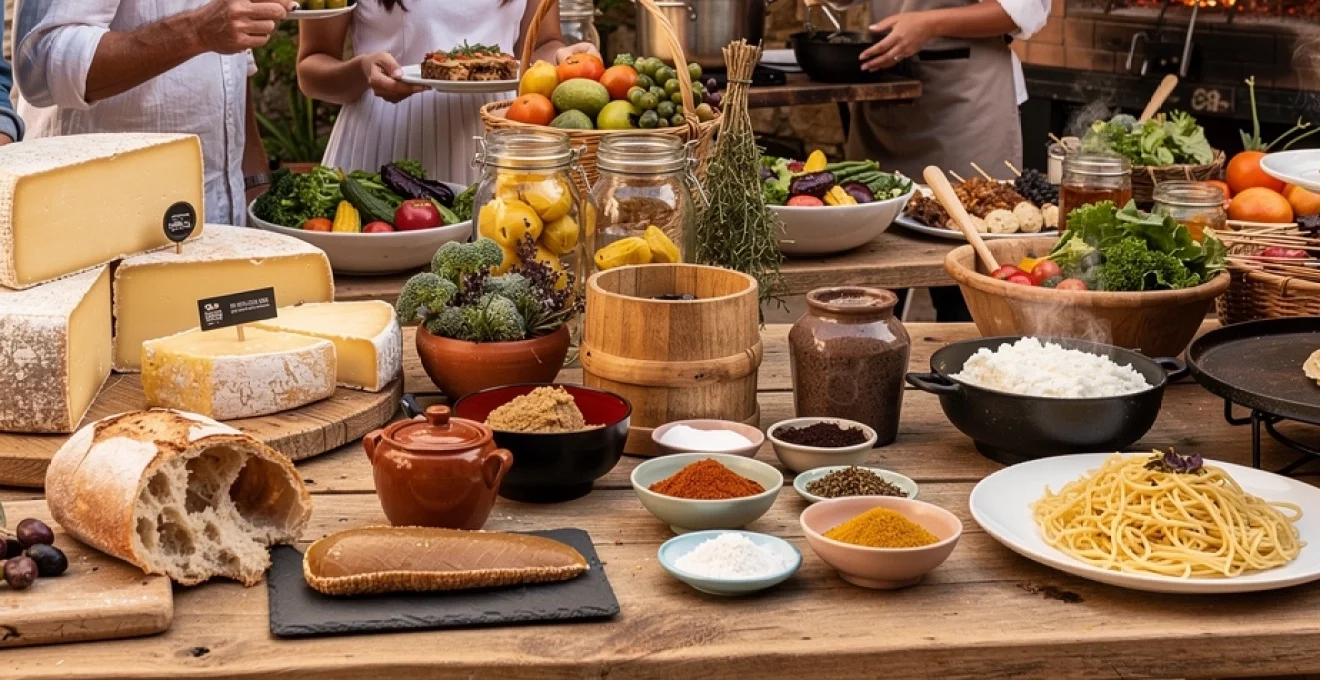
Discovering a destination through its regional cuisine offers travellers one of the most authentic and immersive ways to understand a place’s cultural identity. Food serves as a living testament to history, geography, and social traditions that have shaped communities for centuries. When you taste locally-sourced ingredients prepared using time-honoured techniques, you’re essentially consuming the essence of a place—its climate, soil, heritage, and the ingenuity of its people. This gastronomic approach to travel transforms ordinary sightseeing into a profound cultural exchange that engages all your senses.
Regional cuisine acts as an edible map of human civilization, revealing migration patterns, trade relationships, and cultural exchanges that have occurred over millennia. Each dish tells a story of adaptation, resourcefulness, and creativity born from specific environmental conditions and historical circumstances. Understanding these culinary narratives provides insights that no guidebook or museum can fully capture, making food tourism an invaluable tool for cultural exploration.
Gastronomic terroir analysis: understanding regional food heritage through indigenous ingredients
The concept of terroir—originally applied to wine production—extends far beyond vineyards to encompass the entire spectrum of regional food production. This fundamental principle recognizes that soil composition, climate patterns, altitude, and local microorganisms collectively influence the flavour profiles of indigenous ingredients. Understanding terroir helps you appreciate why Parmigiano Reggiano can only be authentically produced in specific provinces of Italy, or why genuine Roquefort cheese requires the unique limestone caves of southern France.
When exploring a destination’s gastronomic terroir, you begin to understand how geography shapes cuisine at the most fundamental level. The volcanic soils of Sicily impart distinct mineral notes to its vegetables, while the maritime climate of Brittany influences the brininess of its oysters and the particular flavour of its sea salt.
Denomination of origin products and protected geographical indicators in european cuisine
European Union’s Protected Designation of Origin (PDO) and Protected Geographical Indication (PGI) systems provide excellent frameworks for understanding authentic regional specialities. These certifications ensure that specific products maintain their traditional production methods and geographical authenticity. Champagne from the Champagne region of France, Prosciutto di Parma from Emilia-Romagna, and Feta cheese from Greece exemplify how legal protections preserve culinary heritage.
These designations serve as guideposts for discerning travellers seeking authentic flavour experiences. They guarantee that you’re tasting products crafted using traditional methods within their historical geographical boundaries. Understanding these certifications helps you navigate markets and restaurants with confidence, ensuring your culinary discoveries represent genuine regional traditions rather than commercial imitations.
Seasonal harvest patterns and traditional preservation techniques in mediterranean regions
Mediterranean cuisine exemplifies how seasonal rhythms and preservation techniques create distinctive regional flavour profiles. The ancient practice of sun-drying tomatoes in southern Italy, salt-curing olives throughout the region, and smoking fish along coastal areas developed from practical necessities but evolved into defining characteristics of regional cuisine. These techniques concentrate flavours while extending shelf life, creating taste profiles impossible to replicate through modern industrial methods.
Timing your visit to coincide with harvest seasons reveals how fresh ingredients transform into preserved specialities. Witnessing olive harvests in Andalusia or participating in tomato processing in Puglia provides intimate insights into how communities have adapted to their environment over generations. These seasonal experiences connect you directly to the agricultural rhythms that continue to influence contemporary cuisine.
Heirloom varieties and endemic species: corsican brocciu cheese and sardinian bottarga
Island cuisines often preserve unique ingredients and preparation methods isolated from mainland influences. Corsican Brocciu, crafted from sheep and goat milk using techniques unchanged for centuries, represents a direct connection to pastoral traditions. Similarly, Sardinian Bottarga—cured fish roe—demonstrates how isolated communities developed sophisticated preservation techniques using local resources.
These endemic specialities offer flavour experiences impossible to find elsewhere, making them essential discoveries for serious food travellers. The specific breeds of livestock, varieties of fish, and traditional processing methods create taste profiles that reflect millennia of local adaptation and refinement.
Climate-influenced cultivation methods: andalusian olive gr
oves and Tuscan Chianti vineyards illustrate how climate and cultivation methods shape not only local agriculture but also the flavour identity of an entire region. In Andalusia, centuries-old olive groves endure scorching summers and mild winters, producing oils with bold, peppery notes and high polyphenol content. Terraced hillsides and careful water management reflect an intimate understanding of scarce rainfall and intense sunlight.
In contrast, Tuscany’s Chianti vineyards thrive in a continental climate moderated by altitude and cooling breezes. Variations in slope, sun exposure, and soil composition (from galestro shale to alberese limestone) give Sangiovese grapes subtly different expressions even within the same valley. When you taste extra-virgin olive oil in Jaén or sip Chianti in Radda, you are tasting climate translated into flavour—an edible record of temperature, wind, and rainfall patterns across decades.
Artisanal production techniques: japanese miso fermentation and french comté aging processes
While climate and geography supply the raw materials, artisanal techniques act as the region’s “handwriting” on its food. Japanese miso and French Comté are excellent examples of how patient, time-intensive methods embed cultural values into everyday ingredients. In Japan, miso fermentation relies on koji (cultured rice or barley) and local microbes that vary from region to region. Long, slow fermentation—sometimes over several years—develops deep umami, much like a slow conversation allows nuance to emerge.
French Comté, produced in the Jura mountains, follows strict production rules that link milk quality, pasture altitude, and aging conditions inside stone cellars. Large wheels are turned, brushed, and salted by hand over months or years, developing complex aromas of hazelnut, butter, and alpine herbs. When you tour a miso kura in Nagano or a fruitière in Franche-Comté, notice how temperature, humidity, and even the cellar’s walls are treated as active ingredients. Understanding these artisanal processes gives you a richer appreciation of why authentic regional cuisine can never be fully replicated outside its home.
Street food anthropology: decoding urban culinary landscapes through market exploration
If terroir explains how landscapes shape ingredients, street food shows how cities shape the way people actually eat. Urban food markets and hawker centres act as microcosms of local society, where migration, class, and culture intersect over shared dishes. Observing who eats where, at what time, and with whom can reveal as much about a destination as any museum tour.
By approaching street food like an anthropologist, you start to notice patterns: which stalls attract intergenerational families, where office workers queue on their lunch break, and how vendors signal quality through cleanliness or visible cooking techniques. Markets are also ideal for budget-conscious travellers seeking authentic flavours, since turnover is high and menus change quickly with seasonal produce. The question is not just what to eat, but what these eating spaces tell you about local life.
Hawker centre ecosystems: singapore’s maxwell food centre and hong kong’s temple street markets
Singapore’s Maxwell Food Centre and Hong Kong’s Temple Street markets demonstrate how tightly regulated and informal food systems can coexist in Asia’s mega-cities. In Singapore, hawker centres are highly organised ecosystems: stalls are licensed, hygiene ratings are visible, and many recipes have been perfected over decades by the same families. Here, you can map cultural diversity by what’s on your tray—Hainanese chicken rice next to Tamil-style fish curry and Peranakan laksa.
Temple Street in Hong Kong, by contrast, is more fluid and improvisational. Temporary stalls, handwritten menus, and plastic stools create a sense of organised chaos that mirrors the city’s rapid pace. Yet both spaces function as social levellers where students, taxi drivers, and executives share tables. To decode these ecosystems, watch how locals navigate them: which stalls inspire long queues, how people reserve tables, and how quickly plates are cleared. Imitating local behaviour is often your best strategy for finding the most representative flavours.
Mercado municipal architecture and vendor hierarchy systems in latin america
Across Latin America, mercados municipales (municipal markets) reveal centuries of trading traditions embedded in architecture and vendor hierarchies. Many markets in Mexico, Peru, and Brazil are arranged like small cities under one roof: central aisles devoted to produce, peripheral stalls offering prepared foods, and mezzanines hosting small eateries. This layout is rarely accidental; it reflects historical decisions about sanitation, taxation, and social control.
Vendor hierarchies are equally instructive. Long-established families often occupy prime corners near entrances, while newer traders inhabit peripheral or upper-floor spaces. Prices, product variety, and even the way goods are displayed can shift from aisle to aisle. As you wander, ask yourself: Who sells staple ingredients? Who focuses on luxury items or festival foods? Identifying these patterns helps you understand local class structures and economic priorities—insights you simply cannot gain from a supermarket.
Seasonal menu rotation patterns in istanbul’s grand bazaar and marrakech’s jemaa el-fnaa
Historic markets like Istanbul’s Grand Bazaar and Marrakech’s Jemaa el-Fnaa function as living calendars, their menus rotating with religious festivals, harvests, and climatic shifts. In Istanbul, stalls near the bazaar adapt to Ramadan, offering special sweets like güllaç and expanded evening food options to break the fast. Winter brings hearty lentil soups and grilled meats, while summer menus lean toward lighter meze and fresh salads.
Jemaa el-Fnaa’s food stalls transform from day to night, and from season to season. Fresh orange juice and snail soup might dominate one month, while another showcases lamb mechoui and harira soup associated with specific celebrations. By visiting the same market at different times of day—or in different months—you can literally watch a city’s food culture breathe in and out with the year. This seasonal menu rotation is one of the most direct ways to experience how time shapes regional cuisine.
Indigenous cooking apparatus: tandoor ovens in delhi and comal griddles in oaxaca
Understanding a region’s traditional cooking tools is like learning its culinary grammar. In Delhi, the tandoor oven is central to North Indian cuisine, reaching temperatures over 400°C to bake naan, roast marinated meats, and impart a signature smoky char. The cylindrical clay walls, the way skewers are lowered, and the speed of cooking all influence the final texture and flavour in ways a standard oven cannot match.
In Oaxaca, the flat clay comal serves a similar foundational role. Tortillas, roasted chillies, and toasted spices owe their flavours to its even, dry heat and porous surface. Watch how cooks move ingredients across hotter and cooler zones of the comal, adjusting cooking time with simple gestures rather than digital controls. When you notice these indigenous cooking apparatus in use, you begin to see that regional cuisine is not just about recipes; it is about tools and techniques refined over generations to suit specific ingredients and fuel sources.
Ethnographic dining methodologies: immersive cultural exchange through traditional meal structures
Beyond what is on the plate, how a meal is structured can reveal deep cultural norms about time, hierarchy, and hospitality. Adopting an ethnographic mindset at the table means paying attention to seating arrangements, the order of dishes, and unspoken rules about sharing. Are meals quick and functional, or do they stretch across several hours? Is food served family-style, from large communal platters, or as individual portions?
In Japan, a kaiseki meal unfolds in carefully choreographed courses that mirror the seasons, each dish designed to contrast or complement the previous one. Meanwhile, in Ethiopia, injera platters encourage shared eating from the same surface, reinforcing ideas of community and trust. To immerse yourself fully, accept invitations to home-cooked meals, join communal tables when possible, and ask hosts to explain any rituals you notice. Simple questions—“Who usually serves the food?” or “What does this dish mean in your family?”—often open the door to meaningful cultural exchange that goes far beyond tourism clichés.
Culinary tourism cartography: mapping destination identity through signature dish distribution
One powerful way to discover a destination through its regional cuisine is to “map” it via signature dishes. Instead of plotting only museums and monuments, consider building a culinary map that links specific neighbourhoods, villages, or micro-regions to their emblematic foods. This approach turns travel planning into a form of edible cartography, where each stop tells you something new about local identity.
In Italy, you might trace a route from pesto in Liguria to ragù in Emilia-Romagna and arancini in Sicily, noting how each dish reflects local ingredients and history. In Mexico, you could follow the trail of moles across Oaxaca’s valleys or map coastal ceviche variations from the Yucatán to Baja California. As you do this, pay attention not just to the dish itself, but to where it is eaten: street stalls, family-run fondas, or formal dining rooms. Over time, patterns emerge that reveal how economic development, migration, and tourism reshape where certain foods are found.
Creating your own culinary tourism map can be as simple as marking must-try dishes on a digital map app and adding notes after each experience. Which neighbourhoods cluster around traditional bakeries? Where do you find newer fusion concepts? By the end of your trip, this personalised food atlas becomes a visual record of how you experienced the destination—not through highways and borders, but through flavours and textures.
Sensory evaluation protocols for authentic regional flavour profiling
To truly understand regional cuisine, it helps to develop a more systematic way of tasting. Sensory evaluation protocols might sound technical, but in practice they are simply structured ways of paying closer attention to what you eat and drink. By consciously analysing aroma, taste, texture, and aftertaste, you train yourself to notice subtle differences between, say, a coastal fish stew and its inland cousin, or between two bowls of ramen from neighbouring Japanese prefectures.
You do not need professional training to start; think of it as upgrading your curiosity. Before your first bite, note the appearance and aroma. As you chew, identify primary flavours (sweet, sour, salty, bitter, umami) and secondary notes like smoke, citrus, or herbs. Ask yourself: How long do these flavours linger? Does the texture change as you continue eating? Over time, this habit helps you build a mental library of authentic regional flavour profiles that you can recall long after your trip ends.
Umami recognition training in japanese dashi and korean doenjang preparations
Recognising umami—the savoury “fifth taste”—is essential for understanding East Asian regional cuisine. Japanese dashi and Korean doenjang offer two excellent training grounds. Traditional dashi relies on kombu (kelp) and katsuobushi (dried bonito flakes), whose glutamates and nucleotides combine to create a clean, oceanic depth of flavour. The broth is translucent, yet its impact on noodles, miso soup, or simmered vegetables is profound.
Doenjang, a fermented soybean paste, delivers umami in a denser, earthier form. When dissolved into stews like doenjang jjigae, it adds a rich complexity that speaks of long fermentation and robust microbial activity. To train your palate, taste small spoonfuls of prepared dashi and diluted doenjang side by side, focusing on how the savoury sensation feels—on the tongue, at the back of the throat, and in the lingering aftertaste. Once you can distinguish these shades of umami, you will find it easier to appreciate subtle regional differences in broths, sauces, and marinades across East Asia.
Terroir expression analysis: burgundian pinot noir versus barolo nebbiolo characteristics
Wine remains one of the clearest expressions of terroir, and comparing Burgundian Pinot Noir with Barolo Nebbiolo is an instructive exercise. Both are celebrated red wines from cool-climate European regions, yet their sensory profiles differ dramatically. Pinot Noir from Burgundy tends to be lighter in colour and body, with aromas of red cherries, violets, and forest floor. Fine-grained tannins and bright acidity reflect the limestone-rich soils and temperate climate.
Barolo, produced from Nebbiolo grapes in Piedmont, is typically more powerful and structured. Higher tannin levels, along with flavours of tar, roses, and dried herbs, mirror the region’s marl and sandstone soils and slightly warmer conditions. When you taste these wines side by side, pay attention to how they feel as much as how they taste: where do you sense the tannins, how does the acidity makes your mouth water, how long do the aromas persist? This kind of terroir expression analysis sharpens your ability to read landscapes through liquid.
Spice compound identification: garam masala variations across northern indian states
Spice blends like garam masala provide another lens for authentic regional flavour profiling. While the name is shared across northern India, the actual composition shifts subtly between Punjab, Uttar Pradesh, Rajasthan, and beyond. One household might emphasise cardamom and cinnamon for a sweeter profile, while another leans into cloves and black pepper for greater heat and pungency. These variations are not random; they often reflect climate, local agriculture, and historical trade routes.
To train your senses, smell and taste small pinches of different garam masalas—ideally purchased from local markets as you travel. Try to identify dominant notes: Is cardamom upfront? Do you sense smoky cumin or floral fennel? Keep a simple tasting notebook where you jot down impressions and where each blend was sourced. Over time, you will start to connect certain aromatic signatures with specific regions or even cities, turning what might seem like a generic “curry spice” into a detailed culinary map of northern India.
Texture classification systems: al dente pasta standards and sourdough crumb structure
Texture is often the least-discussed aspect of regional cuisine, yet it is crucial for authenticity. Italians, for instance, are uncompromising about al dente pasta—firm to the bite with a slight resistance in the centre. Overcooked pasta is not just a culinary error; it is a break with cultural expectations about how wheat should feel in the mouth. Paying attention to this standard helps you understand why cooking times on local packaging may differ from what you are used to at home.
Similarly, sourdough bread offers a rich field for texture analysis. A well-made loaf from San Francisco, Copenhagen, or Berlin will have a distinct crumb structure: open but not hollow, moist but not gummy, with a chewy crust that crackles when pressed. As you travel, compare how bakers in different regions interpret sourdough—are the holes large and irregular or fine and even? Is the crust deeply caramelised or lighter and thinner? Creating your own informal texture classification system gives you another dimension through which to appreciate regional baking traditions, and it reminds you that in food, how something feels can be just as revealing as how it tastes.