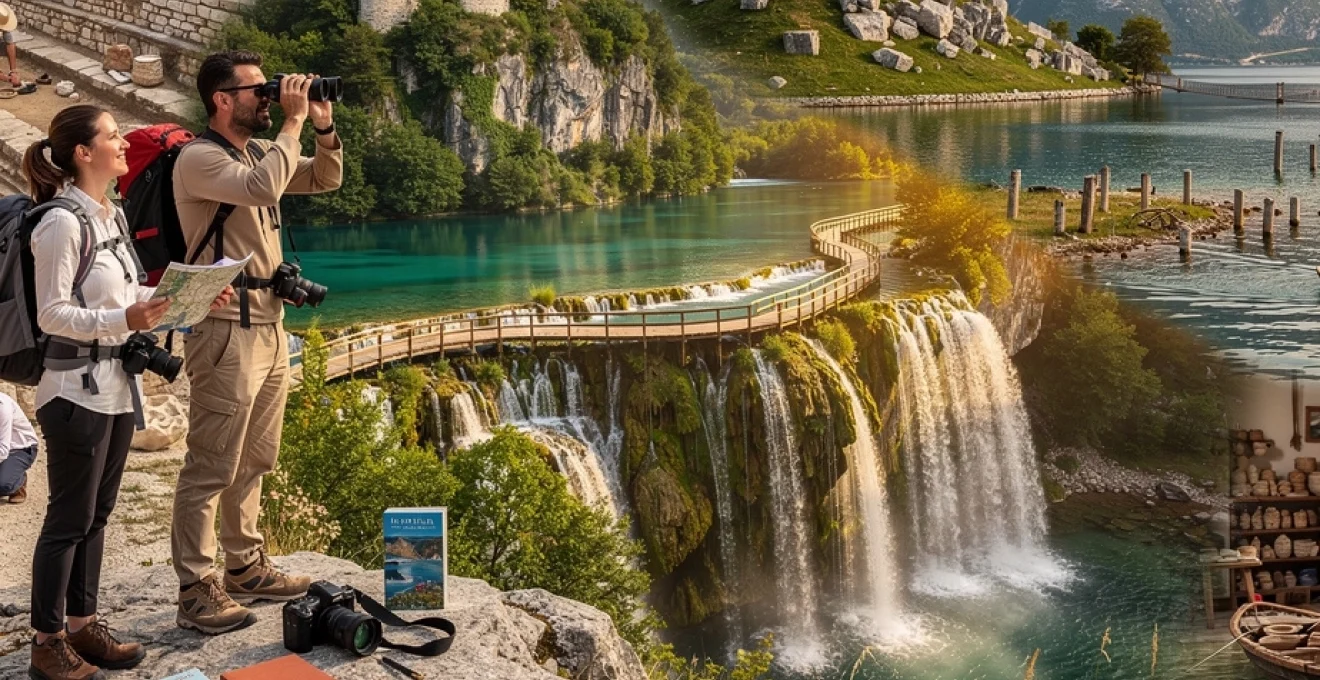
The Balkans represent one of Europe’s most culturally diverse and historically layered regions, where ancient civilisations have left their mark across a landscape of extraordinary natural beauty. From prehistoric settlements along pristine lakes to medieval monasteries perched on mountain cliffs, this southeastern European peninsula offers travellers an unparalleled opportunity to explore archaeological wonders, traditional crafts, and geological phenomena that remain largely untouched by mass tourism. The region’s complex history has created a unique tapestry of cultures, languages, and traditions that continue to thrive in remote villages and bustling market towns alike.
What sets the Balkans apart from other European destinations is the authentic preservation of cultural heritage alongside pristine natural environments. Unlike more developed tourist corridors, many Balkan treasures require genuine exploration and cultural curiosity to uncover. The reward for such efforts extends far beyond conventional sightseeing, offering profound insights into human civilisation, traditional craftsmanship techniques, and some of Europe’s most spectacular geological formations.
Archaeological excavation sites and UNESCO world heritage destinations across the balkans
The Balkans serve as a living museum of European civilisation, where archaeological layers spanning millennia continue to reveal new insights into human settlement patterns and cultural evolution. UNESCO recognition has highlighted numerous sites across the region, each offering unique perspectives on different historical periods and civilisational achievements. These destinations provide travellers with opportunities to witness ongoing archaeological work and understand the scientific methods used to uncover the past.
Butrint national park albania: byzantine and venetian stratified remains
Butrint National Park encompasses one of the Mediterranean’s most significant archaeological sites, where Greek, Roman, Byzantine, and Venetian civilisations have created a remarkable stratigraphic record. The site demonstrates continuous human occupation spanning over 2,500 years, with each civilisation adding distinct architectural and cultural layers. Visitors can observe the meticulous excavation techniques employed by international archaeological teams, who continue to uncover new structures and artefacts that reshape understanding of ancient Mediterranean trade networks.
The park’s wetland ecosystem provides an equally compelling dimension, supporting over 200 bird species and serving as a crucial stopover point for migratory routes between Europe and Africa. This combination of archaeological significance and biodiversity conservation makes Butrint a unique example of integrated heritage management. The site’s interpretation centre utilises advanced digital reconstruction techniques to help visitors visualise the ancient city at different historical periods.
Stari ras and sopoćani monastery complex serbia: medieval fortification systems
The medieval capital of the Serbian state demonstrates sophisticated urban planning and defensive architecture that influenced Balkan settlement patterns for centuries. The archaeological evidence reveals complex trade relationships between medieval Serbia and both Byzantine and Western European powers. Recent excavations have uncovered evidence of advanced metallurgical workshops and coin production facilities that highlight the economic sophistication of medieval Serbian society.
Sopoćani Monastery contains some of Europe’s finest Byzantine frescoes, painted using techniques that combined local pigments with imported materials from across the medieval world. The monastery’s architectural design reflects the synthesis of Byzantine and Romanesque influences that characterised Serbian medieval art. Conservation work continues to reveal previously hidden layers of decoration and provide insights into medieval painting techniques.
Plitvice lakes croatia: travertine cascade formation and biodiversity hotspots
The geological processes creating Plitvice’s famous cascades represent a rare example of active travertine formation, where calcium carbonate deposits continue to shape the landscape in real-time. The park’s sixteen interconnected lakes demonstrate how biological and geological processes collaborate to create one of Europe’s most dynamic natural environments. Scientific monitoring reveals that the travertine barriers grow approximately one centimetre annually, making this a living laboratory for geological research.
The park’s biodiversity extends beyond its famous waterfalls, supporting populations of brown bears, wolves, and over 160 bird species within a relatively compact area. The pristine forest ecosystems preserve examples of European old-growth woodland that have become increasingly rare across the continent. Research stations within the park conduct ongoing studies into climate change impacts on both geological and biological systems.
Ohrid lake macedonia: palaeolithic settlement evidence and endemic species
Lake Ohrid represents one of
the world’s oldest lakes and functions as a natural archive of climate and human activity in the Balkans. Sediment cores taken from the lake bed record environmental changes going back more than a million years, while underwater archaeological discoveries reveal evidence of Palaeolithic and Neolithic lakeshore settlements. Wooden pile-dwellings, tools, and ceramics recovered from the lake margins help researchers reconstruct daily life for some of Europe’s earliest farming communities, making Ohrid essential for anyone interested in prehistory and early human settlement patterns.
Beyond its archaeological value, Lake Ohrid is a biodiversity hotspot with over 200 endemic species, including unique sponge, snail, and fish taxa that have evolved in isolation. This high level of endemism has earned the lake the nickname “Europe’s Galápagos”, and scientists continue to study its ecosystems to better understand long-term evolutionary processes. Visitors can combine cultural exploration with nature-based experiences by taking guided boat trips to lakeside monasteries such as Saint Naum and walking along interpretive trails that explain both the lake’s ecological significance and its millennia of human occupation.
Durmitor national park montenegro: glacial morphology and tara river canyon
Durmitor National Park showcases classic glacial morphology in the heart of the Dinaric Alps, where Pleistocene glaciers carved cirque basins, U-shaped valleys, and sharp arêtes that remain clearly visible in the landscape. Over 18 glacial lakes, locally known as gorske oči (mountain eyes), dot the plateau, with Crno Jezero (Black Lake) being the most accessible for visitors. Geomorphologists consider the park a reference point for studying how ice, water, and karst interact, and hikers can follow well-marked trails to vantage points that illustrate these processes in three dimensions.
The Tara River Canyon, which forms part of the park’s northern boundary, is Europe’s deepest gorge, reaching depths of up to 1,300 metres. Its steep limestone walls, white-water rapids, and intact riparian forests have led UNESCO to recognise Durmitor as an outstanding example of a river-incised landscape in karst terrain. For travellers, rafting expeditions on the Tara provide not only adventure but also an immersive way to understand river erosion, hydrology, and conservation challenges. Choosing operators that follow strict environmental guidelines ensures that this fragile ecosystem remains a pristine “open-air textbook” for future generations.
Traditional craft workshops and artisanal production centres
While the Balkans are renowned for monumental monasteries and dramatic landscapes, many of the region’s most rewarding discoveries happen at a much smaller scale: in backstreet workshops, family-owned studios, and village cooperatives. Traditional crafts here are not simply souvenirs; they are living practices that encode local history, social identity, and technical knowledge passed down over centuries. Visiting these artisanal production centres allows you to see, and often try, techniques that are increasingly rare elsewhere in Europe.
Because many workshops operate informally and rely on word-of-mouth, reaching them often requires a little planning and curiosity. Asking at local tourist offices, chatting with café owners, or joining small-group craft tours can open doors that are otherwise closed to casual passers-by. When you purchase directly from artisans, you not only take home an authentic piece of Balkan heritage but also help sustain livelihoods in communities where traditional skills compete with cheap mass-produced imports.
Filigree silver metalworking techniques in prizren kosovo
Prizren has long been one of the Balkans’ most important centres for filigree metalwork, a delicate craft where artisans twist fine silver or gold wires into lace-like patterns. The technique demands extraordinary patience and precision: threads as thin as a hair are soldered together to form complex motifs inspired by Ottoman, Byzantine, and local Albanian design traditions. Watching a master filigree worker at their bench is like observing a calligrapher—each movement is small, controlled, and the result is far more intricate than the tools might suggest.
Many workshops in Prizren’s old quarter welcome visitors, particularly outside the peak midday heat when work is in full swing. You can often see every stage of production, from drawing out the metal wire to polishing finished earrings, brooches, and religious items. If you are considering a purchase, ask about the symbolism of particular motifs; many pieces carry protective or celebratory meanings tied to weddings, births, or religious holidays. Opting for hallmarked silver and buying directly from a known workshop is the best way to ensure quality and support the continuation of this highly specialised craft.
Carpet weaving cooperatives in tetovo north macedonia
The city of Tetovo and its surrounding villages preserve a rich tradition of handwoven carpets and kilims, influenced by both Ottoman aesthetics and local Albanian and Macedonian motifs. Historically, these textiles served as dowry items and status symbols, with colours and patterns signalling a family’s origins and social ties. Today, several cooperatives bring together women weavers who work on vertical looms, producing rugs that can take weeks or even months to complete depending on size and complexity.
Visiting a weaving cooperative offers insight into both the technical side of the work—natural dye preparation, warp setting, knot density—and the social role of these spaces as community hubs. You might find that a demonstration turns into an informal storytelling session about village life, weddings, or seasonal celebrations. For travellers, commissioning a small runner or cushion cover can be an affordable way to bring home an heirloom-quality object. Just remember that authentic handwoven carpets are heavier, slightly irregular, and more time-consuming to produce than machine-made versions, so pricing reflects the labour and skill involved.
Woodcarving guilds of tryavna bulgaria: revival period architecture
Tryavna, nestled in the northern foothills of Bulgaria’s Balkan Mountains, became a key centre of the Bulgarian National Revival thanks in part to its highly skilled woodcarvers. From the 18th to 19th centuries, local craftsmen decorated churches, homes, and public buildings with intricate wooden ceilings, iconostases, and facades. Walking through the preserved old town today, you can read this history in the carved doors, shutters, and porch columns that give Tryavna its distinctive character.
Several former guild houses have been converted into small museums and working studios where carvers continue to practise traditional techniques using chisels, knives, and locally sourced hardwoods. Patterns draw on floral, geometric, and religious motifs, and you can watch how designs are transferred from paper to wood, then gradually brought to life in relief. If you are interested in architecture, Tryavna also offers a rare opportunity to see how these decorative elements integrate with entire buildings, turning otherwise simple structures into complete works of art. Short workshops, sometimes available by prior arrangement, allow visitors to try basic carving under expert supervision.
Coppersmith workshops in mostar bosnia: ottoman-era hammering methods
In Mostar’s Kujundžiluk quarter, the rhythmic sound of hammer on metal has echoed for centuries along the cobbled lanes leading to the Old Bridge. Local coppersmiths, known as kujundžije, still shape and engrave copper plates, coffee sets, and decorative panels using techniques introduced during the Ottoman period. Sheets of copper are hand-formed over anvils, then chased with fine punches to create calligraphy, floral arabesques, or scenes of Mostar’s famous skyline.
As you walk through the bazaar, you can observe the entire process up close, often with just a workbench separating you from the artisan. Many craftsmen are happy to explain their tools and patterns if approached respectfully, and some will personalise items with names or dates on request. When choosing a piece to take home, look for clear, sharp engraving and even hammering, as these are signs of experienced workmanship. Supporting these small workshops helps ensure that the art of hand-hammered copper—once common from Istanbul to Sarajevo—remains a living tradition in the heart of the Balkans.
Gastronomic heritage routes and regional culinary specialities
Culinary traditions in the Balkans reflect centuries of interaction between empires, trade routes, and local agricultural practices. The result is a mosaic of dishes where Ottoman, Austro-Hungarian, Venetian, and Slavic influences coexist on the same table. Exploring gastronomic heritage routes is one of the most enjoyable ways to discover hidden treasures in the Balkans, as food often serves as a direct entry point into everyday life, seasonal rhythms, and regional identity.
Several regions have begun to formalise these experiences into wine roads, cheese trails, and slow-food itineraries, but many of the best discoveries still happen in family-run konobas, village guesthouses, and open-air markets. In coastal Croatia and Montenegro, you might follow a route that pairs fresh Adriatic seafood with local olive oil and indigenous grape varieties such as Plavac Mali or Vranac. Inland, particularly in Bosnia and Herzegovina, North Macedonia, and Serbia, grilled meats, slow-cooked stews, and burek pastries dominate, often accompanied by homemade rakija and pickled vegetables preserved from summer harvests.
For travellers who want to go beyond restaurant menus, it is worth seeking out cooking classes or farm visits where you can learn to prepare dishes like sarma (vine leaves or cabbage rolls), ajvar (roasted pepper spread), or pita pies with locally sourced cheese and herbs. Markets in cities such as Sarajevo, Skopje, and Tirana offer opportunities to taste regional honey, cured meats, and fresh produce while observing how locals shop and socialise. Asking stallholders about the origin of their products often leads to recommendations for villages, wineries, or mountain dairies that rarely appear in guidebooks but form the backbone of Balkan gastronomic culture.
Off-the-beaten-path natural phenomena and geological formations
Beyond its famous national parks and coastal scenery, the Balkans harbour a surprising range of lesser-known natural phenomena that are of high interest to geologists, biologists, and curious travellers alike. Remote rock formations, karst springs, and cave systems reveal the powerful forces that have shaped this tectonically active region. Many of these sites remain relatively uncrowded, offering a rare combination of scientific significance and genuine tranquillity.
Visiting these locations requires a bit more preparation than a casual beach day, but the rewards are considerable. You gain first-hand insight into erosion processes, groundwater dynamics, and subterranean ecosystems, often guided by local experts or park rangers. As you explore, it becomes clear that the “hidden treasures of the Balkans” are not just aesthetic; they are windows into deep geological time and the complex interactions between rock, water, and life.
Devil’s town rock formations serbia: erosion pillar classification
Devil’s Town (Đavolja Varoš) in southern Serbia is one of Europe’s most striking examples of earth pyramids—tall, thin pillars formed by differential erosion of soft soils capped by harder rock. Over 200 of these spires, some up to 15 metres high, cluster along a steep ravine, giving the landscape an otherworldly appearance that has inspired numerous local legends. Geomorphologists classify these formations as “hoodoos”, similar to those found in North America’s Bryce Canyon but with a distinct Balkan context.
The site is protected as a natural monument, with wooden walkways and viewpoints that allow visitors to observe the pillars without accelerating erosion. Informational panels explain how acidic rainfall, past volcanic activity, and soil composition combined to sculpt the formations over thousands of years. For a deeper understanding, consider joining a guided tour that discusses both the scientific and folkloric interpretations of the landscape—stories of petrified wedding guests sit side by side with detailed explanations of sediment layering and runoff channels.
Blue eye spring albania: karst aquifer discharge mechanisms
The Blue Eye (Syri i Kaltër) in southern Albania is a mesmerising karst spring where crystal-clear water emerges from a deep, vertical shaft surrounded by dense vegetation. Divers have reached depths of over 50 metres without finding the source, and the intense sapphire colour results from light scattering in the deep, cold water. Hydrologists study the Blue Eye as part of a wider karst aquifer system, where rainwater infiltrates through limestone, travels underground, and resurfaces under pressure at concentrated discharge points.
For visitors, wooden platforms provide safe vantage points above the spring, and short walking trails through the surrounding reserve offer peaceful views of smaller streams and pools. If you are interested in the science behind the spectacle, look for local guides who can explain seasonal flow variations and the environmental pressures posed by tourism and climate change. While swimming is often restricted to protect water quality, spending time here—listening to the constant rush of water and watching bubbles rise from the unseen depths—offers a powerful reminder of the hidden hydrological networks beneath the Balkan landscape.
Vjetrenica cave bosnia: speleological fauna biodiversity
Vjetrenica Cave, located in Herzegovina near the Croatian border, is one of the Balkans’ most important speleological sites, renowned for both its geological formations and its exceptional subterranean biodiversity. More than 200 animal species have been recorded here, including numerous troglobitic organisms adapted to permanent darkness—blind crustaceans, translucent insects, and the enigmatic olm, a rare cave salamander found only in the Dinaric karst. Biologists consider Vjetrenica a hotspot for evolutionary research, as many of its species are endemic to a single cave system or valley.
Guided tours take visitors along an illuminated section of the main passage, where you can observe stalactites, stalagmites, and underground streams while learning about cave conservation. Temperatures remain cool year-round, so warm clothing and sturdy footwear are essential. Photography is typically restricted to protect sensitive fauna, but the experience of walking through this “underground laboratory” is memorable in itself. For those keen to understand how surface activities affect cave ecosystems, local guides often discuss issues such as groundwater pollution, land use changes, and the importance of protected areas in the Dinaric karst region.
Matka canyon macedonia: tectonic activity and lake formation
Matka Canyon, just west of Skopje, offers a compact but striking example of how tectonic forces and river erosion cooperate to shape a landscape. Steep limestone cliffs rise above the emerald waters of an artificial lake created by the construction of Matka Dam in the 1930s, but the gorge itself is much older, formed as the River Treska exploited weaknesses along fault lines. Numerous caves, some still being explored, dot the canyon walls, providing valuable data on speleogenesis and past climate conditions in North Macedonia.
From a visitor’s perspective, Matka combines easy access with a genuine sense of wilderness, particularly if you move away from the main pier area. Kayak rentals and small boats allow you to navigate the lake and reach cave entrances such as Vrelo, one of Europe’s deepest underwater caves according to current measurements. As you paddle between the rock faces, it is worth remembering that what you see is only a fraction of the canyon’s vertical extent—much of its story lies hidden below the waterline and within the mountain. This interplay of visible and invisible geology makes Matka an ideal place to reflect on how landscapes evolve far beyond a human timescale.
Cultural festival calendars and ethnographic event programming
One of the most engaging ways to discover the hidden treasures of the Balkans is to align your trip with local festivals and ethnographic events. Across the region, calendar highlights range from village saint’s day celebrations and harvest fairs to large-scale music and dance festivals recognised by UNESCO for their cultural value. These gatherings turn town squares, monasteries, and mountain meadows into open-air stages where traditional costumes, instruments, and rituals are not mere performances but expressions of living identity.
Because many festivals follow religious or agricultural calendars, their dates can vary slightly each year, and information is not always widely advertised in English. This is where local knowledge becomes invaluable: tourist offices, small guesthouse owners, and even bus drivers can alert you to upcoming events that are not yet on international radars. When planning, consider building some flexibility into your itinerary so you can adjust travel days to coincide with regional celebrations—you might find that a detour to a trumpet festival in Serbia or a fire-dancing ritual in Bulgaria becomes the most memorable part of your journey.
Attending these events also requires cultural sensitivity and a willingness to participate respectfully. Dress modestly for religious occasions, ask before photographing individuals, and be prepared for generous offers of food and drink. Many Balkan communities place a high value on hospitality, and as a guest you may be invited into private homes or seated at communal tables. Accepting such invitations, within your comfort level, allows you to move beyond the role of spectator and experience the Balkans as an interconnected web of traditions rather than a checklist of attractions.
Navigation strategies for remote village exploration and cultural immersion
Reaching the most authentic corners of the Balkans often means leaving main highways and popular city breaks behind in favour of mountain roads and rural bus routes. While this can feel daunting—especially where signage is limited and English is less common—it is precisely in these remote villages that many of the region’s cultural and natural treasures are preserved. With a few practical navigation strategies, you can explore these areas safely and confidently, turning potential logistical challenges into part of the adventure.
First, consider combining digital tools with traditional navigation methods. Offline maps, downloaded in advance, are essential in areas with weak mobile coverage, but they are even more effective when cross-checked against paper maps or local advice. Asking for directions in small towns can be surprisingly effective, as residents often know not just the route but also current road conditions, seasonal closures, or unmarked viewpoints worth a stop. Learning a handful of basic phrases—such as “left”, “right”, “straight”, and “how far”—in local languages (Serbian, Albanian, Bulgarian, Macedonian, or Romanian, depending on your route) makes these interactions smoother and more rewarding.
Second, when your goal is cultural immersion rather than rapid transit, it helps to slow down your schedule. Instead of trying to cover multiple countries in a few days, focus on one or two regions and plan to stay at least two nights in key bases. Village guesthouses, sobe (rooms in private homes), and agritourism farms offer the most direct contact with local life, often including home-cooked meals and informal storytelling. Asking your hosts about walking paths, nearby monasteries, or weekly markets can reveal experiences that would never appear on digital platforms.
Finally, remember that in the Balkans, flexibility is an asset. Buses may run late, mountain weather can change quickly, and festivals might extend long into the night. Instead of viewing these uncertainties as obstacles, treat them as invitations to adapt and engage. By allowing extra time between destinations, carrying essentials such as water, snacks, and a light jacket, and remaining open to spontaneous detours, you give yourself the best chance to uncover the hidden treasures that make Balkan travel so distinctive and rewarding.