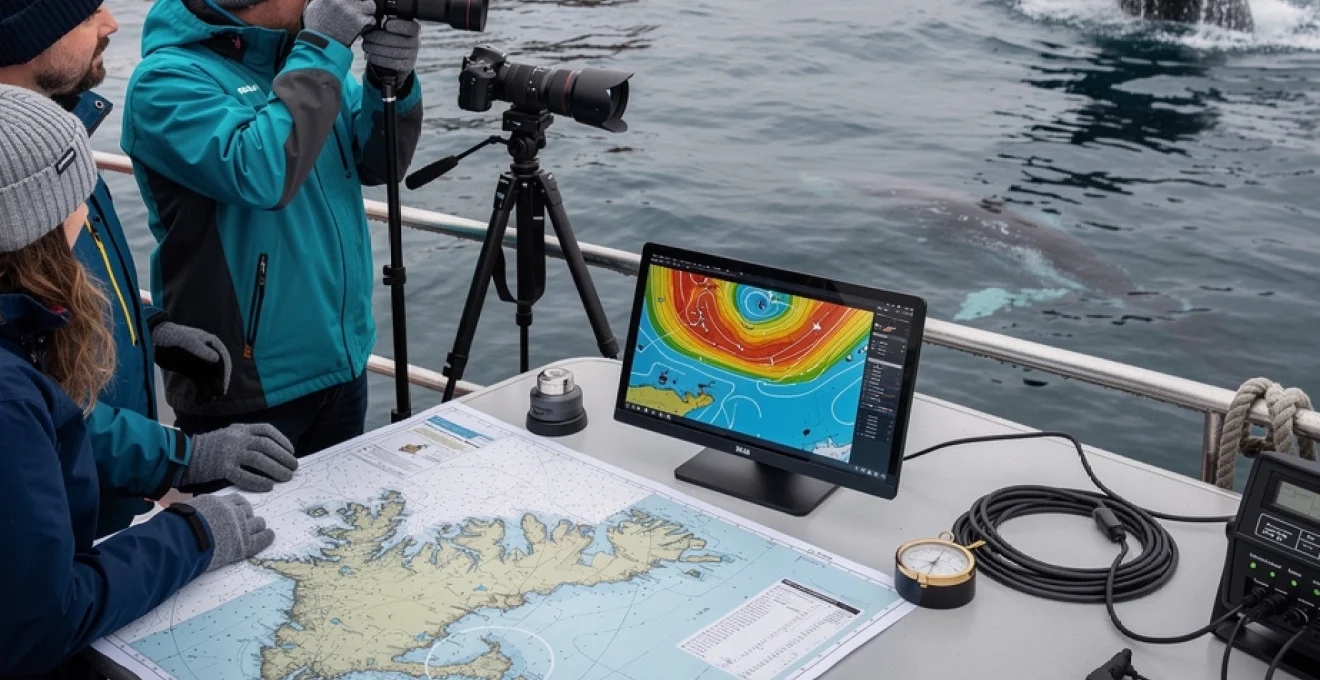
Iceland stands as one of the world’s premier whale watching destinations, where Arctic and Atlantic waters converge to create nutrient-rich feeding grounds for over 23 cetacean species. The island’s dramatic coastline, deep fjords, and unique geographical position along major whale migration routes offer exceptional opportunities to observe these magnificent marine mammals in their natural habitat. From the bustling harbours of Reykjavík to the remote fjords of the Westfjords, Iceland’s diverse marine ecosystems support year-round whale populations and seasonal visitors that migrate thousands of kilometres to feed in these productive waters.
Planning a successful whale watching expedition requires understanding the complex interplay between seasonal whale behaviour, weather patterns, vessel capabilities, and conservation practices. Each location around Iceland’s coastline offers distinct advantages, whether you’re seeking close encounters with curious minke whales, dramatic humpback whale breaching displays, or the rare opportunity to witness blue whales—the largest animals ever to have lived on Earth. The success of your whale watching experience depends largely on timing, location selection, and choosing operators who prioritise both guest satisfaction and marine conservation.
Iceland’s prime whale watching locations and seasonal migration patterns
Iceland’s coastal waters host distinct whale watching regions, each characterised by unique oceanographic conditions that attract different species throughout the year. Understanding these regional variations allows you to select locations that align with your specific interests, whether pursuing particular species or optimising weather conditions for your voyage.
Húsavík bay: north atlantic humpback and blue whale corridors
Húsavík, often termed the whale watching capital of Europe, benefits from the nutrient-rich waters of Skjálfandi Bay, where the continental shelf creates upwelling zones that concentrate marine life. The bay’s semi-enclosed nature provides calmer conditions whilst maintaining access to deep water feeding areas. Humpback whales arrive in significant numbers from May through September, with peak concentrations occurring during July and August when krill and herring populations reach their highest densities.
Blue whale sightings in Húsavík waters occur most frequently between June and August, though these encounters remain relatively rare due to the species’ preference for deeper offshore waters. When blue whales do venture into Skjálfandi Bay, they typically remain for several days, providing multiple viewing opportunities. The bay’s bathymetry, with depths exceeding 200 metres near the mouth, allows these deep-diving giants to access their preferred feeding zones whilst remaining accessible to whale watching vessels.
Reykjavík’s faxaflói bay: Year-Round minke and White-Beaked dolphin populations
Faxaflói Bay offers the most accessible whale watching opportunities in Iceland, with tours departing directly from Reykjavík’s Old Harbour. The bay’s relatively shallow waters, averaging 50-100 metres in depth, create ideal conditions for minke whales, which prefer coastal feeding areas rich in small schooling fish. White-beaked dolphins maintain year-round populations in these waters, often forming large pods of 20-50 individuals during summer months.
The convenience factor of Reykjavík-based tours cannot be understated, particularly for visitors with limited time or those combining whale watching with other attractions. Tours typically last 3-4 hours, allowing integration with other daily activities whilst providing adequate time to locate and observe cetaceans. The bay’s proximity to the capital also means better infrastructure support, including weather monitoring systems and rescue services.
Westfjords peninsula: arctic orca pod territories and feeding grounds
The remote waters surrounding the Westfjords peninsula represent Iceland’s most pristine whale watching environment, where minimal human activity and abundant fish stocks create optimal conditions for apex predators. Orca pods frequent these waters year-round, with winter months offering particularly reliable sightings as herring concentrate in Breiðafjörður bay. The region’s complex fjord system provides sheltered launching points even during rough weather conditions.
Orca behaviour in Westfjords waters differs markedly from other regions, with pods often displaying more natural hunting behaviours and social interactions.
These waters offer some of the most authentic whale watching experiences in Iceland, where human presence remains minimal and whale behaviour stays largely uninfluenced by tourism activities.</block
For travellers willing to venture this far, winter and early spring (December to April) are particularly rewarding, as feeding frenzies of orcas and humpbacks often coincide with dense herring shoals. During summer, sightings diversify to include minke whales, white-beaked dolphins, and occasional sperm whales along the deeper channels of Breiðafjörður and Ísafjarðardjúp. Given the distances and limited infrastructure, planning extra days in the Westfjords is advisable to buffer against weather-related cancellations and to maximise your time on the water.
Akureyri’s eyjafjörður: deep-water fin whale migration routes
Akureyri, often called the capital of North Iceland, sits at the head of Eyjafjörður, Iceland’s longest fjord. This deep, glacially carved waterway provides an important seasonal corridor for migrating baleen whales, including fin whales. Depths quickly exceed 400 metres along the central channel, allowing large whales to execute deep feeding dives while remaining within reach of day-boat operations departing from Akureyri’s sheltered harbour.
Humpback whales dominate summer sightings (May to September), but fin whales move through the fjord in lower numbers, typically peaking in June and July when capelin and herring shoals are most abundant. Their long, sleek bodies and asymmetrical jaw colouration distinguish them from humpbacks at a distance, especially when only a portion of the back and dorsal fin breaks the surface. Calm conditions within the fjord also make Eyjafjörður an excellent choice for travellers prone to seasickness who still want to experience a full-scale whale migration route.
Cetacean species identification and peak observation windows
Recognising the main whale species you are likely to encounter in Iceland not only enriches your experience, it also helps you interpret behaviour in real time. Many whale watching operators provide onboard identification charts, but arriving with a basic understanding of body shape, blow pattern, and typical surface behaviour will make it easier to distinguish species quickly. Below, we focus on the four headline species that most visitors hope to see and outline when, where, and how to maximise your chances.
Humpback whale (megaptera novaeangliae) breaching behaviour analysis
Humpback whales are the undisputed performers of Icelandic whale watching, renowned for spectacular breaches, tail slaps, and pectoral fin waving. Adult humpbacks typically range from 12 to 16 metres in length, with long white pectoral fins and a distinctive knobbly head. In Iceland, they are predominantly summer visitors, arriving from low-latitude breeding grounds from late April and remaining until October to exploit highly productive feeding grounds.
Breaching behaviour—when a whale launches most of its body clear of the water—appears to serve multiple functions, including parasite removal, social signalling, and communication over long distances. In practice, you are most likely to witness breaching during periods of heightened activity: early morning foraging sessions, interactions between multiple humpbacks, or when changing feeding areas. Northern hotspots such as Húsavík’s Skjálfandi Bay and Akureyri’s Eyjafjörður report humpback sightings on over 95% of summer departures, making June to August the prime window if breaching displays are high on your wish list.
Minke whale (balaenoptera acutorostrata) surface feeding patterns
Minke whales are the smallest and most abundant baleen whales in Icelandic waters, with adults measuring 7–10 metres in length. Their compact bodies, sharply pointed rostrum, and relatively small dorsal fin make them well suited to shallow coastal feeding grounds like Reykjavík’s Faxaflói Bay. Unlike humpbacks, minkes are generally discreet at the surface, often surfacing only briefly and in unpredictable patterns, which can make sightings more challenging for first-time observers.
Surface feeding events offer the best opportunity to observe minke whales at close range. During these episodes, minkes may repeatedly lunge through bait balls of capelin or sand eels, sometimes in the same area for 20–30 minutes. Peak minke whale season extends from May to September, although resident individuals are present year-round in Faxaflói. If your goal is to see minke whales feeding at the surface, consider booking mid-summer departures that coincide with calm seas and strong tidal movements, which help concentrate prey near the surface.
Blue whale (balaenoptera musculus) deep-dive respiratory cycles
Blue whales are the largest animals ever known to have lived, reaching lengths of up to 30 metres and weights exceeding 150 tonnes. In Iceland, they are rare but recurrent visitors, primarily along the northern and northeastern shelf edges, including offshore from Húsavík. Blue whales are typically observed between June and August, when krill densities are sufficient to support their enormous daily food requirements.
Because blue whales are capable of dives exceeding 20 minutes, understanding their respiratory cycles is crucial to maximising viewing opportunities. After a deep foraging dive, a blue whale will usually surface for 8–12 consecutive blows over a span of several minutes, each blow forming a tall, vertical spout up to 10 metres high. Observant guides will time these surface intervals and reposition the vessel to anticipate where the whale will reappear after its next dive. Think of it as watching a slow, deliberate clock: once you learn the rhythm, you know when and where to look.
Killer whale (orcinus orca) pod dynamics and echolocation signatures
Killer whales, or orcas, are actually the largest members of the dolphin family and one of the top predators in Icelandic waters. Pods around Iceland can range from small family groups of 3–5 individuals to larger aggregations exceeding 20 animals, especially in regions with abundant herring such as Breiðafjörður and the Snæfellsnes and Westfjords coasts. Orcas are present year-round, but winter and early spring (December to April) offer the most consistent sightings in key feeding areas.
Pod structure is typically matrilineal, with offspring remaining with their mothers for life, resulting in stable, multi-generational family groups. These pods use sophisticated echolocation—high-frequency clicks, whistles, and pulsed calls—to locate prey and coordinate movements. While you may not hear these signals without specialised equipment, their surface behaviour often reflects complex underwater communication: coordinated direction changes, sudden accelerations, and tight circles around schooling fish. When planning an orca-focused whale watching trip in Iceland, prioritise operators who are experienced in locating local pods and who use hydrophones to let guests listen to these remarkable echolocation signatures.
Marine weather forecasting and optimal departure conditions
Weather is the single most important variable you cannot control when planning whale watching in Iceland, but you can significantly increase your odds of a successful trip by understanding local marine forecasts. Icelandic seas are influenced by rapidly changing low-pressure systems, which can transform calm conditions into gale-force winds within hours. Most reputable operators rely on short-term (24–48 hour) forecasts from the Icelandic Met Office, focusing on wind speed, wave height, and visibility rather than just precipitation.
As a rule of thumb, departures are most comfortable when sustained winds remain below 10–12 m/s and significant wave heights are under 2 metres. Morning trips often benefit from lighter winds and more stable atmospheric conditions, making them ideal if you are concerned about seasickness or photography. If your itinerary allows, consider booking your whale watching tour for one of your first days in Iceland; this gives you flexibility to reschedule if poor weather forces a cancellation, rather than missing out entirely.
From a planning perspective, treat marine forecasts like an ever-updating roadmap rather than a fixed guarantee. Checking conditions 3–5 days before your planned departure will give you an initial sense of likely seas, but the most reliable information comes 24 hours before your trip. Many operators will confirm or cancel departures based on these near-term forecasts, so be sure to keep your phone and email accessible and allow enough slack in your schedule to move your tour earlier or later in the day if your provider suggests an alternative slot.
Whale watching vessel classifications and onboard equipment
The type of vessel you choose has a major impact on your overall whale watching experience in Iceland, influencing everything from comfort and stability to proximity to the animals. Icelandic operators generally fall into three categories: high-speed rigid inflatable boats (RIBs), larger traditional oak or steel vessels, and a smaller number of modern catamarans or yachts. Each platform has strengths and trade-offs, so aligning your choice with your expectations and physical comfort is key.
Rigid inflatable boats (ribs) for close-range cetacean encounters
Rigid inflatable boats, or RIBs, are lightweight, powerful craft designed for speed and manoeuvrability. In Iceland, they are typically used for small-group whale watching tours of 1.5–2.5 hours, departing from harbours such as Reykjavík, Húsavík, Akureyri, and Ólafsvík. With passenger capacities usually limited to 10–12 people, RIB tours offer an intimate feel and the ability to reach distant feeding grounds quickly or reposition rapidly when whales surface in multiple locations.
Because RIBs ride low to the water, they provide excellent eye-level views of whales and dolphins, making close-range encounters particularly dramatic. However, the trade-off is reduced shelter and seating comfort compared to larger vessels. You will need to wear a full flotation suit (provided by the operator) and should be prepared for wind, spray, and occasional bumpy rides, especially in shoulder seasons. If your priority is maximising time near the whales and you are comfortable with a more adventurous ride, a RIB tour can be an outstanding choice.
Traditional oak boats: elding and special tours fleet specifications
Traditional oak boats and larger steel vessels are the backbone of Iceland’s whale watching fleet, offering stable platforms with generous deck space, indoor cabins, and basic amenities such as toilets and snack bars. Companies like Elding in Reykjavík and comparable operators in Húsavík and Akureyri typically operate vessels ranging from 20 to 35 metres in length, certified under stringent Icelandic maritime safety regulations. These boats are well suited to families, older travellers, and anyone who prefers a more relaxed, less physically demanding outing.
The increased size and weight of these vessels translate into better sea-keeping abilities in moderate swell and more freedom to move around the deck to find the best vantage point. Cruise speeds are lower than those of RIBs, so traditional tours often last 3–4 hours to allow enough time to reach productive feeding zones. If you plan to combine whale watching in Iceland with photography, these boats provide stable shooting platforms and sheltered indoor spaces where you can review images and warm up between sightings.
Hydrophone systems and underwater acoustic monitoring technology
Some Icelandic whale watching operators enhance the experience by deploying hydrophones—underwater microphones that capture the vocalisations and echolocation clicks of whales and dolphins. For many guests, hearing a humpback’s complex song or the staccato clicks of foraging orcas is as memorable as seeing them at the surface. Hydrophone systems are particularly valuable on overcast or low-visibility days, when acoustic activity can alert guides to the presence of cetaceans before they are visible.
From a practical standpoint, hydrophones are typically lowered over the side when the vessel is stationary or drifting near an active whale or dolphin group. Sound is relayed through onboard speakers so everyone can listen in real time. If you are especially interested in marine acoustics, consider asking potential tour operators whether they use hydrophones, how often they deploy them, and whether guides provide interpretation of vocalisation types. This added layer of information can turn your whale watching tour into a mini field course in marine biology.
Stabilised binocular mounts and professional photography equipment
Whale watching in Iceland offers outstanding photographic opportunities, but shooting from a moving platform on cold, often choppy seas presents its own technical challenges. Some operators provide communal binoculars or even stabilised binocular mounts on the upper deck, allowing you to scan for distant blows and dorsal fins without excessive image shake. These systems can also help guides locate whales more quickly, increasing the overall number of sightings per trip.
If you plan to bring your own photography equipment, a mid-range telephoto lens (70–200 mm or 100–400 mm) paired with a weather-sealed camera body is usually sufficient; ultra-long lenses are often difficult to handle on a moving boat. Pack spare batteries (which drain faster in cold conditions), lens cloths, and a simple dry bag or waterproof cover to protect your gear from spray. Think of your camera setup as you would clothing layers: better to have flexible, adaptable gear than a single oversized piece that is hard to manage when the action starts.
Marine conservation protocols and responsible whale watching practices
Responsible whale watching in Iceland is built on the principle that tourism should support, rather than undermine, the long-term health of cetacean populations. Icelandic operators follow a voluntary code of conduct, aligned with international best practice, that regulates approach distances, speed limits, and the amount of time spent with individual animals. Typical guidelines include maintaining a minimum distance of 50–100 metres, avoiding sudden course changes, and limiting interaction with any single whale or pod to around 30 minutes to reduce stress.
As a guest, you play an important role in upholding these standards. Choosing tour companies that explicitly advertise responsible whale watching practices, avoid chasing or encircling whales, and employ trained naturalist guides is one of the most impactful decisions you can make. Once on board, follow crew instructions regarding movement on deck, noise levels, and flash photography. Small adjustments—such as speaking quietly during close encounters or resisting the urge to lean over the rail—help maintain a calm environment in which whales are more likely to remain nearby and continue natural behaviours.
Conservation-minded operators in Iceland also contribute to citizen science initiatives, sharing photographs of dorsal fins and tail flukes with international databases that track individual whales across ocean basins. By supporting such companies, your whale watching experience can directly feed into research on migration routes, population health, and long-term trends in whale abundance. In this way, a single three-hour tour can become part of a much larger effort to understand and protect the whales that make Iceland such an exceptional marine destination.
Booking logistics and tour operator selection criteria
Securing the right whale watching tour in Iceland involves more than simply picking the cheapest or most convenient option. Start by considering seasonality and location: if you are visiting in peak summer and prioritise humpbacks, northern ports such as Húsavík and Akureyri offer the highest sighting rates. Travellers based in Reykjavík, on the other hand, benefit from multiple daily departures and the ability to book at shorter notice, which can be useful if you prefer to wait for a favourable weather window before committing.
When evaluating operators, look for transparent information on success rates, rebooking policies, and safety procedures. Many reputable Iceland whale watching companies offer a free or discounted second trip if no whales are seen, but the exact terms vary, so check the fine print. Group size is another key factor: smaller vessels or capped group numbers typically result in better viewing angles and less competition for rail space. Reading recent reviews can also highlight how crews handle seasickness, weather disruptions, and wildlife encounters—details that often matter more than broad marketing claims.
Finally, consider how whale watching fits into the rest of your Iceland itinerary. Do you want to combine it with a puffin watching detour, a northern lights cruise, or a day trip around the Golden Circle? Booking through a tour operator who can bundle multiple activities into a coherent schedule can reduce logistical stress and ensure you are not rushing from one harbour to the next. By aligning your choice of port, vessel type, and operator ethos with your personal priorities, you set yourself up for a whale watching experience in Iceland that is both memorable and respectful of the extraordinary marine ecosystem you have come to witness.