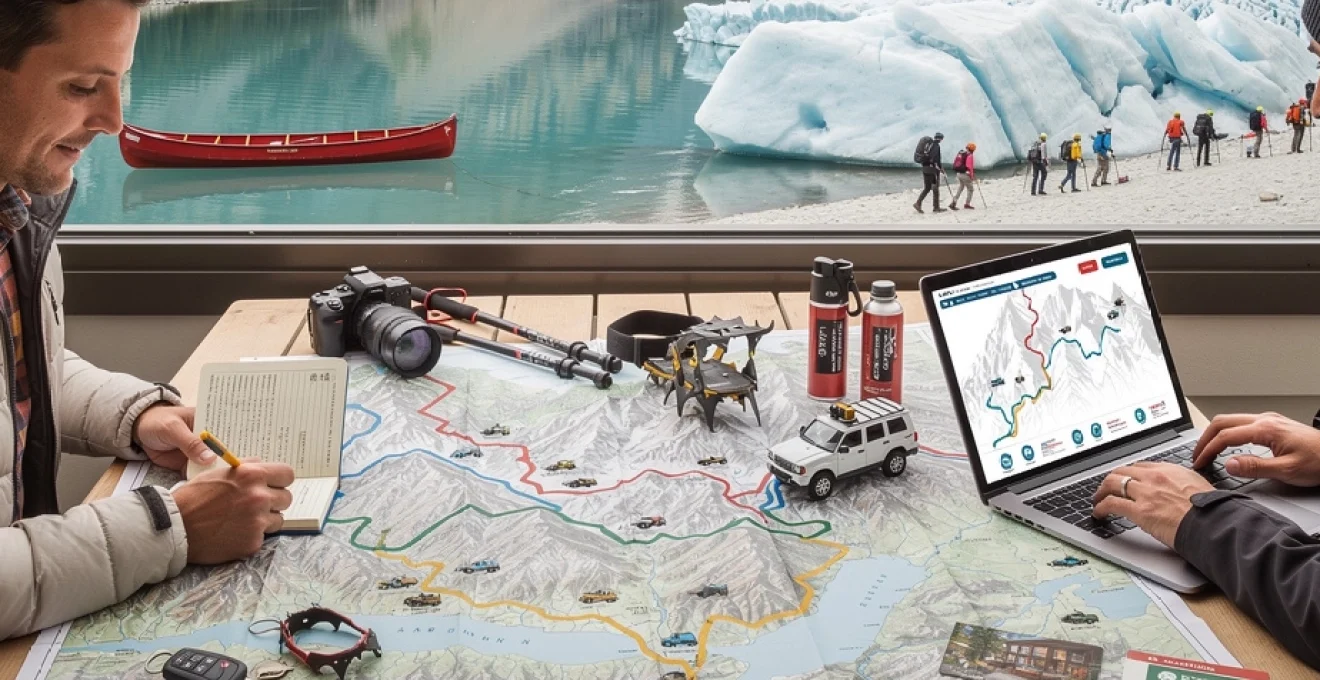
The Canadian Rockies stand as one of the world’s most magnificent natural theatres, where towering peaks pierce azure skies and glacial lakes shimmer like emeralds set in stone. This UNESCO World Heritage region encompasses over 23,000 square kilometres of pristine wilderness, offering travellers an extraordinary blend of accessible adventure and untamed beauty. From the iconic turquoise waters of Lake Louise to the vast Columbia Icefield, the Rockies present a landscape so dramatic it seems almost otherworldly.
Planning a journey through this remarkable region requires careful consideration of seasonal variations, accommodation availability, and the intricate network of national parks that protect these treasures. The difference between a good trip and an unforgettable adventure often lies in understanding the subtleties of timing, route selection, and activity prioritisation. Whether you’re seeking adrenaline-pumping glacier walks or serene lakeside contemplation, the Canadian Rockies reward those who approach their exploration with thoughtful preparation and respect for the natural environment.
Essential Pre-Trip planning and route optimization through banff and jasper national parks
The foundation of any successful Rockies expedition begins with strategic route planning that maximises both scenic impact and practical efficiency. The region’s geography naturally divides into distinct corridors, each offering unique perspectives on the mountain landscape. The primary arteries—Highway 1 (Trans-Canada Highway) and Highway 93 (Icefields Parkway)—serve as the backbone for most itineraries, but numerous secondary routes provide opportunities for deeper exploration.
Understanding the interconnected nature of Banff and Jasper National Parks proves crucial for optimising travel time and accommodation bookings. These parks collectively span 17,518 square kilometres, with Jasper being the larger of the two at 11,228 square kilometres. The distance between Calgary and Jasper town covers approximately 365 kilometres, whilst the scenic Icefields Parkway alone stretches 232 kilometres between Lake Louise and Jasper.
Peak season analysis: june to september weather patterns and crowd management strategies
Summer represents both the most rewarding and challenging time to explore the Canadian Rockies. During peak season, daily temperatures typically range from 10°C to 25°C in valley locations, whilst alpine areas may experience temperatures near freezing, even in July. Weather patterns in the Rockies are notoriously unpredictable, with afternoon thunderstorms common and snow possible at higher elevations throughout the summer months.
Crowd management becomes paramount during the peak season, particularly at iconic locations like Lake Louise and Moraine Lake. Recent data indicates that Banff National Park receives over 4 million visitors annually, with 60% of this traffic concentrated between June and September. To mitigate crowding, consider arriving at popular destinations before 8:00 AM or after 6:00 PM. Many photographers discover that the golden hour lighting during these times provides superior conditions compared to midday visits.
The shoulder seasons of late May and early September offer compelling alternatives, with reduced crowds and often spectacular weather. September brings the additional benefit of larch trees turning brilliant gold, creating a unique photographic opportunity in areas like the Larch Valley near Lake Louise.
Trans-canada highway vs icefields parkway: route selection and duration calculations
The choice between the Trans-Canada Highway and the Icefields Parkway represents one of the most significant route decisions for Rockies travellers. The Trans-Canada Highway offers efficiency, connecting Calgary to Vancouver in approximately 6 hours of driving time, whilst providing access to Banff, Lake Louise, and the Yoho Valley. This route proves ideal for travellers with limited time or those prioritising specific destinations over scenic driving.
Conversely, the Icefields Parkway stands as arguably the most beautiful drive in North America, requiring a minimum of 4-5 hours without stops but typically taking 8-10 hours with proper appreciation of viewpoints and attractions. This route connects Lake Louise to Jasper, passing the Columbia Icefield, Athabasca Glacier, and numerous spectacular viewpoints including Peyto Lake and Bow Lake.
The
The Icefields Parkway should never be rushed; think of it less as a road and more as a linear national park, where every few kilometres offers a new opportunity to pull over, explore a short trail, or simply absorb the vastness of the Canadian Rockies.
When calculating your driving durations, always factor in at least double the “straight-through” time suggested by navigation apps. Wildlife jams, weather changes, and irresistible viewpoints all add to the journey. For most travellers, the optimal strategy is to use the Trans-Canada Highway for efficiency between Calgary, Banff, Lake Louise and Yoho, and reserve a full day for the Icefields Parkway between Lake Louise and Jasper. This hybrid approach balances time management with the desire to experience one of the world’s most scenic drives in a relaxed, immersive way.
Accommodation booking timeline: fairmont chateau lake louise and alternative lodging options
Securing accommodation in the Canadian Rockies is often the single biggest planning challenge, particularly if you are travelling between late June and early September. Flagship properties such as the Fairmont Chateau Lake Louise, Fairmont Banff Springs, and Fairmont Jasper Park Lodge routinely sell out 6–12 months in advance for peak summer dates. If your dream Canadian Rockies itinerary includes waking up directly on the shores of Lake Louise, aim to book your stay at the Chateau as soon as you know your dates, especially for weekends and Canadian or US public holidays.
Fortunately, you do not need to stay in a castle to enjoy an unforgettable trip through the Canadian Rockies. In Banff, mid-range options like Elk + Avenue Hotel, Banff Caribou Lodge & Spa, and Rimrock Resort provide excellent comfort and access to town amenities. Around Lake Louise, accommodations such as Lake Louise Inn and the lodges in Lake Louise Village offer more cost-effective bases whilst still keeping you within a 10-minute drive or shuttle ride of the lake. In Jasper, properties like Forest Park Hotel, Pyramid Lake Lodge, and cabin-style resorts along the Athabasca River provide a quieter, more rustic feel.
As a rule of thumb, book peak season accommodation 9–12 months in advance, shoulder season (May, early June, September) 4–6 months ahead, and winter stays 3–4 months ahead, especially if you’re targeting popular ski dates. Flexible travellers can sometimes secure last-minute rooms, but selection will be limited and prices higher. To build resilience into your Canadian Rockies trip planning, consider splitting your stay between one luxury icon (such as the Fairmont Chateau Lake Louise) and several well-reviewed mid-range hotels or cabins; this approach spreads your budget whilst still providing that once-in-a-lifetime stay.
Parks canada discovery pass requirements and advanced reservation systems
Because most must-see locations in the Canadian Rockies lie within federally protected areas, understanding Parks Canada’s fee structure is essential. Every person (or vehicle, depending on the pass type) entering Banff, Jasper, Yoho, or Kootenay National Parks must hold a valid park pass for the duration of their stay. For itineraries of 7 days or more visiting multiple parks, the Parks Canada Discovery Pass is usually the most economical option, providing unlimited entry to over 80 national parks and historic sites across Canada for one year.
You can purchase passes online, at park gates, or at visitor centres, but buying in advance often saves time on arrival—especially on busy weekends when line-ups at park entrances can be long. As demand for key experiences has grown, Parks Canada has also expanded its advanced reservation systems. Popular campgrounds, backcountry permits, and some shuttle services (notably for Moraine Lake and Lake Louise) now open for booking months before the season begins, typically between January and March for the upcoming summer.
To avoid disappointment, check the Parks Canada reservation launch dates the previous autumn and set reminders for the day bookings open. Think of it like trying to secure concert tickets: the most coveted campsites and shuttle times can disappear within minutes. If you miss out on a specific campsite, do not panic—consider nearby alternatives or adjust your dates by a day or two. Building a little flexibility into your Canadian Rockies road trip plan can dramatically increase your chances of confirming the key elements you care about most.
Vehicle specifications: 4WD capabilities for maligne lake road and moraine lake access
For most travellers visiting the Canadian Rockies in summer, a standard 2WD rental car is entirely sufficient. Major highways such as the Trans-Canada Highway and Icefields Parkway are paved, well-maintained, and designed for passenger vehicles. Secondary routes to popular attractions—including Maligne Lake Road in Jasper, Bow Valley Parkway, and the road to Takakkaw Falls in Yoho—are also paved (or high-quality gravel in short sections) and generally accessible without four-wheel drive under normal conditions.
However, there are important nuances to consider when choosing your vehicle for a Canadian Rockies itinerary. First, Moraine Lake is now closed to private vehicles during the peak season; access is via Parks Canada shuttles, commercial tours, or bike, so 4WD will not change your access options there. Second, Maligne Lake Road, while paved, can experience variable conditions in shoulder seasons, including black ice, slush, and wildlife on the roadway at dawn and dusk. In May, October, or winter, an SUV with good ground clearance and proper all-season or winter tyres can provide additional confidence and safety.
When might 4WD or AWD be truly beneficial? If you are travelling in late fall, early spring, or winter, or if you plan to explore less-trafficked gravel roads outside the main national parks, an AWD SUV can help in snow or on steep grades. More important than drive type, though, is preparing correctly: ensure your rental includes seasonally appropriate tyres, a full-size spare, and basic emergency equipment. Even in summer, fuel and services can be sparse on routes like the Icefields Parkway; always start long stretches with a full tank, extra water, and a realistic understanding of your vehicle’s range.
Strategic itinerary development: calgary to vancouver multi-day framework
Once you understand the seasonal patterns, driving routes, and accommodation constraints, the next step is building a strategic multi-day framework from Calgary to Vancouver. Rather than thinking of your Canadian Rockies trip as a simple point-to-point drive, imagine it as a series of base camps and scenic corridors. Calgary serves as the primary gateway, with Banff and Lake Louise acting as hubs for day trips, Jasper as a northern anchor, and either Kamloops or a rail segment bridging the transition to Vancouver.
A well-structured itinerary balances driving days with immersive exploration days, allowing your body and mind time to absorb the magnitude of the landscape. Many travellers underestimate how mentally tiring mountain driving and constant sightseeing can be. By alternating longer drives (such as Calgary to Jasper or Jasper to Kamloops) with lighter, activity-focused days, you create natural recovery points in your schedule. This also provides buffers for weather-related changes—crucial in a region where a single storm can temporarily obscure views or close a mountain pass.
Day-by-day breakdown: lake louise to columbia icefield glacier adventure
The segment between Lake Louise and the Columbia Icefield is one of the most visually intense stretches of the entire Canadian Rockies road trip. To transform this drive into a true glacier adventure, plan a focused day that combines scenic stops, short hikes, and a guided experience on the Athabasca Glacier or Columbia Icefield Skywalk. Depart Lake Louise mid-morning after sunrise photography or a lakeside walk; this timing allows you to enjoy key viewpoints before the day’s major crowds build on the Icefields Parkway.
Within the first hour of driving north on Highway 93, you will encounter Peyto Lake and Bow Lake, both of which merit short detours. Peyto Lake’s viewpoint, accessed via a well-marked trail from the parking area, offers one of the most photogenic vistas in the Canadian Rockies, especially around sunrise or early morning. Continuing north, consider brief stops at Mistaya Canyon and the Weeping Wall before arriving at the Columbia Icefield Discovery Centre around midday. Pre-booked tours on the Ice Explorer or the Columbia Icefield Skywalk typically last 2–3 hours and provide safe access to the glacier environment with minimal technical requirements.
After your glacier excursion, you can either continue on to Jasper (about 1.5–2 hours’ drive) or break the journey with an overnight stay at the Glacier View Lodge. Staying at the lodge transforms this segment into a deeper experience, with quieter evening views of the Athabasca Glacier once day-trippers have left. For those pushing on to Jasper, plan for several scenic pullouts along the way, including Sunwapta Falls and Athabasca Falls. By anchoring this day around the Columbia Icefield experience, you ensure that one of the most unique elements of a Canadian Rockies itinerary—walking near or on a glacier—receives the time and attention it deserves.
Jasper townsite base camp: maligne canyon and pyramid lake circuit planning
Jasper townsite functions as an ideal base camp for exploring the northern Canadian Rockies, offering a more relaxed pace than Banff while still delivering world-class scenery. With two or three nights in Jasper, you can build a circuit that includes Maligne Canyon, Maligne Lake, Pyramid Lake, and several shorter hikes suitable for a wide range of abilities. Because distances are shorter and traffic lighter than in Banff National Park, you have greater flexibility to adjust your plans day by day based on weather and energy levels.
A classic Jasper day begins with an early drive along Maligne Lake Road, one of the premier wildlife-viewing corridors in the region. Stop first at Maligne Canyon to walk one of the loop trails that cross several deep, narrow bridges above the rushing river—an accessible way to experience the sheer power of glacial meltwater. From there, continue to Maligne Lake in time for a late-morning or early-afternoon cruise to Spirit Island, learning about the area’s geology and Indigenous cultural history from on-board guides. On your return to town, detour to Medicine Lake to observe its unique “disappearing” water phenomenon, where underground drainage causes dramatic seasonal changes in lake level.
On another day, keep things closer to Jasper townsite with a visit to Pyramid Lake and nearby Patricia Lake. This area is perfect if you are looking to mix light activity with downtime: rent a canoe or paddleboard, walk the short trail to Pyramid Island, or simply enjoy the reflections of Pyramid Mountain on calm water. In the evening, Jasper’s designation as a Dark Sky Preserve makes it an exceptional place for stargazing. Whether you join a guided astronomy program or simply step outside your accommodation after dark, using Jasper as your base camp lets you experience the Rockies by both day and night.
Yoho national park integration: takakkaw falls and emerald lake extensions
While Banff and Jasper often dominate Canadian Rockies trip planning, integrating Yoho National Park into your itinerary adds a refreshing west-of-the-divide perspective. Located just across the Alberta–British Columbia border, Yoho can be visited as a dedicated day trip from Lake Louise or as a convenient stop when transitioning between the Rockies and interior British Columbia. The park’s name derives from a Cree expression of awe, and it feels entirely appropriate as you stand at the base of Takakkaw Falls or on the shores of Emerald Lake.
A typical Yoho extension begins with a short drive from Lake Louise to the Yoho Valley Road, which leads to Takakkaw Falls. The access road includes tight switchbacks, so larger RVs may have restrictions, but standard vehicles can navigate it with care. Once there, an easy, mostly flat path brings you within mist-spray distance of one of Canada’s highest waterfalls. After visiting Takakkaw Falls, continue your exploration at Emerald Lake, where you can rent a canoe, walk the gentle lakeside loop, or enjoy a meal at the historic lodge. The lake’s intense colour rivals that of Lake Louise, yet the atmosphere is often calmer and less crowded.
If time allows, more adventurous travellers can seek out the Natural Bridge over the Kicking Horse River or join guided hikes to the Burgess Shale fossil beds, a UNESCO World Heritage Site known for exceptional soft-bodied fossil preservation. Because some Yoho attractions are seasonal and road-dependent, it is wise to check current conditions with Parks Canada before setting out. By incorporating Yoho National Park into your Canadian Rockies road trip, you gain additional variety in waterfalls, lakes, and geology without significantly increasing your driving time.
Photography golden hours: sunrise at peyto lake and sunset at mount assiniboine
Photographers—both casual and professional—quickly discover that the Canadian Rockies reward those willing to rise early and stay out late. The quality of light during the golden hours around sunrise and sunset transforms already impressive landscapes into scenes that feel almost surreal. Peyto Lake, positioned directly below a high vantage point along the Icefields Parkway, is one of the most rewarding locations for sunrise photography. In the early morning, the lake’s unique wolf-head shape, combined with soft alpenglow on the surrounding peaks, creates textbook examples of classic Canadian Rockies scenery.
Reaching Peyto Lake for sunrise requires careful timing: plan to arrive at the trailhead 30–40 minutes before official sunrise to allow for the short walk to the viewpoint and time to set up your camera. Bring warm layers, even in July, as winds can be brisk and temperatures close to freezing at dawn. In contrast, Mount Assiniboine—often called the “Matterhorn of the Rockies”—is more remote and typically accessed via multi-day backpacking trips or helicopter-assisted lodge stays. If your itinerary includes this area, sunsets there deliver some of the most dramatic light in the region, with the peak catching rich pink and orange hues as the sun drops behind distant ridgelines.
Even if you are not planning technical hikes, you can still structure your Canadian Rockies itinerary around favourable light. Consider visiting Lake Louise or Moraine Lake at dawn, when reflections are best and winds calm, then scheduling more strenuous activities (like hiking or glacier tours) for mid-morning to early afternoon. In the evening, viewpoints such as Vermilion Lakes near Banff or Pyramid Lake near Jasper offer excellent sunset compositions with minimal effort. By thinking like a photographer—asking yourself where you want to be when the light is softest—you inherently build a more contemplative, less rushed travel experience.
Advanced outdoor activity selection and technical requirements
As you refine your Canadian Rockies adventure, the next layer of planning involves aligning outdoor activities with your fitness level, skill set, and appetite for risk. The region caters to everyone from first-time hikers to seasoned mountaineers, but the key is matching ambitions to realities. Trail difficulty, elevation gain, and weather can all shift an outing from “pleasantly challenging” to “overwhelming” if misjudged. By understanding basic hiking classifications, glacier tour requirements, and wildlife safety protocols, you can confidently build a balanced, unforgettable trip through the Canadian Rockies.
Alpine hiking classifications: plain of six glaciers vs valley of five lakes trail difficulty
Two of the most popular hikes in the Canadian Rockies—Plain of Six Glaciers near Lake Louise and Valley of Five Lakes near Jasper—illustrate how trail selection affects your daily energy budget. The Plain of Six Glaciers trail is a classic alpine hike, typically covering about 13.8 km (round trip) with approximately 600 m of elevation gain. It begins on the relatively level Lake Louise shoreline but soon climbs into a high-mountain amphitheatre framed by glaciers and icefalls. For most moderately fit hikers, the outing takes 4–6 hours, and weather can shift from warm to chilly or even snowy near the end of the season.
By contrast, the Valley of Five Lakes loop is shorter—around 4–6 km depending on the chosen variation—with far less elevation change. Located a short drive south of Jasper, this trail presents gentle rolling terrain through forest and around several lakes of varying colours. It is ideal for families, newer hikers, or those seeking a lower-commitment excursion after a long driving day. Think of Plain of Six Glaciers as a full-course meal and Valley of Five Lakes as a satisfying, lighter lunch; both are rewarding, but they serve different purposes in your itinerary.
When reviewing hike options, pay attention to three main factors: total distance, cumulative elevation gain, and typical time suggested by Parks Canada or local guides. Elevation gain is often the most underappreciated element—300 m of climb may feel comfortable for many, but 700–900 m can be demanding at altitude, especially if you are jet-lagged. Build progressively, starting with easier walks on your first days in Banff or Jasper, then tackling more ambitious trails like Plain of Six Glaciers, Larch Valley, or Sulphur Mountain later in your stay when you are acclimatised.
Glacier walking equipment: columbia icefield skywalk and athabasca glacier tours
For many visitors, walking on or near a glacier is the highlight of their Canadian Rockies trip. However, glacier terrain presents unique hazards—hidden crevasses, unstable snow bridges, and rapidly changing surfaces—that require specialised equipment and expertise. Commercial operators at the Columbia Icefield mitigate these risks by providing guided tours using custom-built Ice Explorer vehicles, designated walking zones on the Athabasca Glacier, and the engineered Columbia Icefield Skywalk. As a result, most travellers can safely experience glacier environments with only basic personal gear.
What should you bring? At minimum, wear sturdy closed-toe shoes with good traction, warm layers (including a windproof jacket), gloves, and a hat. Even in August, temperatures on the glacier can hover near freezing, and wind chill can be substantial. Sunglasses and sunscreen are essential, as UV reflection off snow and ice is intense. Operators typically provide any necessary traction devices if conditions require them, but you will not need crampons or technical ice axes for standard tourist excursions. If you plan to join more advanced glacier hikes run by certified guides, additional equipment such as harnesses, helmets, and ropes will be provided as part of the tour.
The Columbia Icefield Skywalk, though often grouped with glacier experiences, is essentially a high, glass-floored viewpoint extending over a deep valley. It does not require technical gear, but those with vertigo may find it challenging. Think of guided glacier activities as a way to safely sample an environment that, independently, would demand mountaineering-level skills. By respecting guide instructions and coming prepared with the right clothing, you can immerse yourself in this ancient ice world without unnecessary risk.
Wildlife viewing protocols: grizzly bear safety in bow valley parkway
One of the great appeals of a Canadian Rockies road trip is the chance to see wildlife—elk grazing in meadows, bighorn sheep on cliffs, and, with luck, bears feeding along roadside ditches. Nowhere is this more apparent than along the Bow Valley Parkway, a scenic alternative to Highway 1 between Banff and Lake Louise. However, the same proximity that makes wildlife viewing exciting also demands strict safety protocols, particularly when it comes to grizzly bears. A bear encounter that feels magical from a safe distance can become dangerous if boundaries are ignored.
Parks Canada recommends staying at least 100 metres away from bears and remaining inside your vehicle if you see one along the road. If you encounter what locals call a “bear jam”—a cluster of cars stopped to watch an animal—avoid blocking the road, use your hazard lights, and never approach the bear on foot or attempt to feed it. When hiking along trails adjacent to Bow Valley Parkway, travel in groups, make noise (talking or calling out periodically), and carry bear spray within quick reach, not buried at the bottom of your pack. Bear spray is most effective within about 3–5 metres and should be treated like a fire extinguisher: learn how to use it before you need it.
It may help to think of bear safety as an etiquette system that protects both you and the animals. Habituated bears that learn to associate vehicles or humans with food are far more likely to be euthanised for public safety. By maintaining distance, keeping food secured, and respecting seasonal closures designed to give bears space, you contribute to the long-term health of the ecosystem you came to admire. Responsible wildlife viewing turns brief roadside sightings into memories you can cherish, rather than incidents you might regret.
Winter sports integration: lake louise ski resort and marmot basin connectivity
Although many travellers focus on summer, the Canadian Rockies are equally compelling for winter sports enthusiasts. Integrating ski days at Lake Louise Ski Resort and Marmot Basin into your itinerary requires additional logistical planning but can yield a “two-resort” experience within a single trip. Lake Louise, located within Banff National Park, offers over 4,200 acres of skiable terrain with wide-open bowls and long groomed runs. Marmot Basin, just outside Jasper, is smaller but boasts a high base elevation and a relaxed, uncrowded atmosphere.
In winter, road conditions become a central consideration. Sections of the Icefields Parkway can experience heavy snow, reduced visibility, and avalanche control work, and may close temporarily. As a result, many visitors opt to focus on one ski hub—either Banff/Lake Louise or Jasper—rather than attempting to drive between them mid-winter. If you do plan to ski both areas, consider using Banff as your primary base, with shuttle services connecting town to Lake Louise Ski Resort, and adding Jasper as a separate leg when forecasts and road reports are favourable.
For non-skiers or mixed groups, both resorts provide additional winter activities such as snowshoeing, tubing, and sightseeing gondolas. Lake Louise and Sunshine Village often partner with Banff accommodations to offer multi-day lift ticket packages, while Jasper hotels may include shuttle transfers to Marmot Basin. As with summer planning, booking accommodation and ski passes well in advance for key dates (Christmas, New Year, and long weekends) is essential. Whether you spend all your time on the slopes or blend skiing with ice walks and hot springs, thoughtful integration of winter sports can turn your Canadian Rockies itinerary into a diverse cold-season adventure.
Practical logistics and risk management strategies
Beneath the inspiring photos and poetic descriptions, a successful Canadian Rockies journey rests on solid logistics and risk management. Distances are long, services can be sparse between towns, and weather can shift rapidly. Treat your itinerary like an expedition plan rather than a simple holiday schedule: you are not just booking hotels and tours, you are designing a resilient framework that can adapt when reality diverges from the script.
Start by building realistic daily driving limits. In mountain terrain, 250–350 km can feel like a full day when you factor in viewpoints, short walks, and possible wildlife delays. Share your route and overnight stops with someone at home, and keep an offline copy of maps, as mobile coverage along the Icefields Parkway and in certain valleys is limited. Carry a small in-car kit with water, snacks, a first-aid kit, headlamp or flashlight, and a portable phone charger; these simple items go a long way if you experience unexpected delays.
Weather is another key risk element. Check multiple forecasts (for example, Banff, Lake Louise, Jasper, and the Icefields Parkway) rather than relying on a single city prediction, and be prepared to reorder your hiking or sightseeing days to match conditions. If a cold front brings low cloud and rain, it may be wiser to schedule museum visits, hot springs, or town exploration, saving your big viewpoints or helicopter flights for clearer days. Finally, respect all closure notices—whether for wildlife, avalanche control, or trail maintenance. The temptation to “just nip past a barrier” for a photo is not worth the potential safety consequences or fines.
Budget optimisation and cost-effective resource allocation
There is no denying that a multi-day Canadian Rockies trip can be expensive, especially in high season. However, with deliberate planning, you can allocate your budget toward experiences that matter most to you while trimming less essential costs. Think of your spending in layers: transportation, accommodation, activities, food, and contingency. Optimising each layer—even modestly—can add up to significant overall savings without diminishing the quality of your trip.
On the transportation side, renting a slightly smaller vehicle, travelling outside the absolute peak weeks of July and early August, or combining rail and road segments can reduce costs. For accommodation, consider mixing premium stays (such as one night at the Fairmont Chateau Lake Louise) with more economical options like motels, lodges in Canmore, or cabin-style resorts in Jasper. Many visitors find that one or two “splurge” nights, combined with well-chosen mid-range properties, deliver a sense of luxury without exhausting their budget.
Activities represent another area where strategic choices pay off. Guided excursions—glacier walks, lake cruises, wildlife tours—are often worth the investment, as they provide access, safety, and interpretation that self-guided experiences cannot match. To balance this, schedule several self-guided hikes or scenic drives, which cost little beyond your park pass and fuel. Self-catering some breakfasts and picnic lunches can further reduce daily expenses; grocery stores in Canmore, Banff, and Jasper offer good selections. Finally, set aside a contingency buffer (often 10–15% of your total budget) for unexpected opportunities or costs—perhaps an extra night in Jasper because you fell in love with the town, or a last-minute seat on a scenic helicopter flight when the weather turns perfect.
Cultural integration and indigenous heritage experiences in treaty 6 and treaty 7 territories
Beyond its natural splendour, the Canadian Rockies are also a deeply storied cultural landscape. Much of the region you will traverse lies within the traditional territories covered by Treaty 6 and Treaty 7, including the homelands of the Stoney Nakoda, Blackfoot Confederacy, Cree, Dene, and Métis peoples, among others. Integrating Indigenous-led experiences into your Canadian Rockies itinerary adds context and depth, transforming your journey from simple sightseeing into a more meaningful engagement with place.
In and around Banff (Treaty 7 territory), look for Indigenous-owned or led cultural tours that share oral histories, traditional ecological knowledge, and perspectives on how tourism has reshaped the region. Some experiences include guided walks that focus on plant use, storytelling evenings, or interpretive programs at local museums and cultural centres. In Jasper (Treaty 6 territory), interpretive cruises on Maligne Lake and guided hikes often weave in narratives about the Stoney people and the significance of sites such as Spirit Island. Listening to these stories can shift how you perceive the landscape—from a backdrop for recreation to a living homeland with ongoing cultural and spiritual significance.
As a visitor, you can also practice small but important forms of respect: learn the correct pronunciation of local Nation names, observe signage acknowledging treaty territories, and support Indigenous-owned businesses where possible. When visiting culturally significant locations—whether officially designated or shared by guides—follow all guidance about photography, access, and appropriate behaviour. Much like staying on marked trails protects fragile alpine environments, honouring cultural protocols helps ensure that these stories and traditions can continue to be shared. In doing so, your unforgettable trip through the Canadian Rockies becomes part of a broader, more respectful relationship between travellers and the lands they explore.