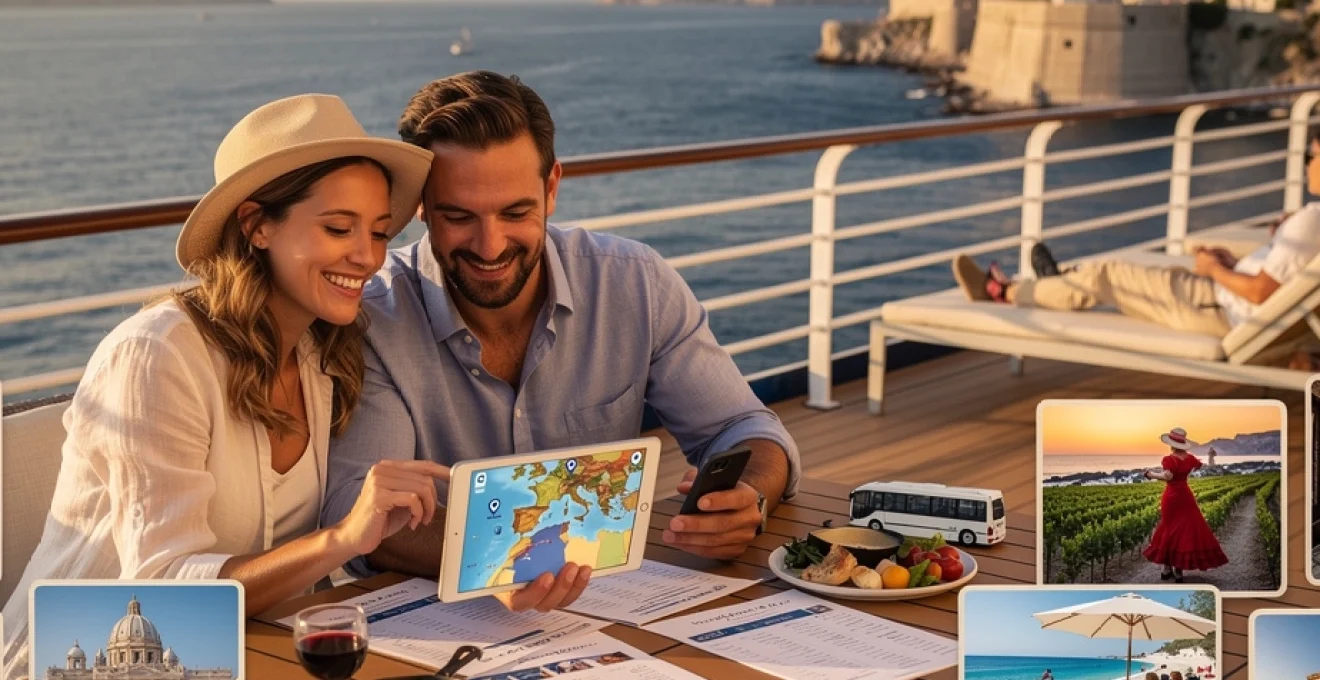
Mediterranean cruising offers an unparalleled opportunity to explore ancient civilisations, stunning coastlines, and vibrant cultures across multiple countries in a single holiday. The challenge lies not in deciding whether to book shore excursions, but in crafting an itinerary that maximises your time whilst avoiding the overwhelming rush that often characterises mass tourism. Smart excursion planning can transform your Mediterranean cruise from a series of hurried photo opportunities into a collection of meaningful cultural encounters and lasting memories.
The Mediterranean attracts over 200 million cruise passengers annually, yet many travellers find themselves disappointed by overcrowded attractions and rushed schedules. Success depends on understanding each port’s unique characteristics, timing your visits strategically, and selecting experiences that align with your interests rather than simply following the crowd. Whether you’re drawn to archaeological wonders, culinary adventures, or cultural immersion, thoughtful planning ensures that your shore excursions become the highlights of your cruise rather than expensive disappointments.
Pre-cruise mediterranean itinerary research and port analysis
Effective shore excursion planning begins months before you set sail, with comprehensive research into each port’s offerings, logistics, and seasonal considerations. Modern cruise itineraries often allow between 8-12 hours in each destination, but this seemingly generous timeframe can disappear quickly when you factor in disembarkation procedures, travel time to attractions, and the inevitable crowds that accompany popular destinations. Understanding the layout of each port city, the distance between major attractions, and the most efficient transportation options forms the foundation of successful excursion planning.
Mediterranean ports vary dramatically in their proximity to major attractions, with some cruise terminals located within walking distance of historic centres whilst others require significant travel time to reach primary destinations. Weather patterns also play a crucial role in planning, particularly for outdoor activities or destinations with seasonal accessibility. Spring and autumn generally offer the most favourable conditions for exploration, with temperatures ranging between 18-25°C and fewer crowds than the peak summer months when temperatures can exceed 35°C in many Mediterranean destinations.
Barcelona’s gothic quarter walking tours and sagrada familia Skip-the-Line access
Barcelona presents one of the Mediterranean’s most rewarding port experiences, with the cruise terminal positioned just minutes from the city centre via the efficient Rambla del Mar walkway. The Gothic Quarter offers an intimate introduction to Barcelona’s medieval heritage, with narrow cobblestone streets revealing Roman ruins, Gothic cathedrals, and atmospheric squares that showcase over 2,000 years of continuous habitation. Self-guided exploration proves particularly rewarding here, as the quarter’s compact size allows for spontaneous discoveries whilst maintaining easy navigation back to the cruise terminal.
Gaudí’s architectural masterpieces demand advance planning, with the Sagrada Familia regularly selling out weeks in advance during peak season. Skip-the-line access becomes essential not merely for convenience but for practical time management, as standard entry queues can consume 2-3 hours of your limited port time. The basilica’s intricate facades and stunning interior lighting effects justify the premium pricing, particularly when visited during the golden hour before sunset when the stained glass windows create spectacular colour displays throughout the nave.
Rome’s civitavecchia transfer logistics and vatican museums priority booking
Civitavecchia’s distance from Rome central attractions presents logistical challenges that require careful consideration when planning your day ashore. The 80-kilometre journey between the cruise port and Vatican City typically requires 90 minutes each way via shuttle bus, immediately reducing your available sightseeing time from 10 hours to approximately 7 hours. Train services offer a faster alternative, with frequent departures connecting Civitavecchia to Rome Termini station in just 75 minutes, though this option requires greater independence and navigation skills.
Vatican Museums demand the most sophisticated booking strategy of any Mediterranean attraction, with standard admission queues often extending beyond 3 hours during peak season. Priority access tickets, whilst commanding premium prices, prove essential for cruise passengers working within strict timeframes. The museums’ vast collection spans 54 galleries, making strategic route planning crucial for maximising your experience within the available timeframe. Focusing on the Sistine Chapel, Raphael Rooms, and key Renaissance masterpieces provides the most rewarding experience for time-constrained visitors.
Santorini
Santorini’s oia sunset photography spots and akrotiri archaeological site timing
Santorini is one of the most coveted Mediterranean cruise ports, but its popularity means that timing and crowd management are everything. Most ships anchor off Fira, and passengers tender ashore before taking the cable car, a steep walk, or a donkey ride up to the clifftop. If several ships are in port, queues for the cable car can easily exceed 45–60 minutes in both directions, eating into your limited time. Planning your Santorini shore excursion therefore starts with checking your ship’s arrival and departure times and the daily port schedule to anticipate congestion.
For travellers intent on capturing the famous Oia sunset, logistics become even more critical. Oia sits at the northern tip of the island, around 25–35 minutes by road from Fira, and its charming alleys fill quickly from mid-afternoon onwards as visitors stake out viewing points. To avoid spending most of your stop jostling for a photo, consider booking a late-afternoon transfer that arrives in Oia at least two hours before sunset, giving you time to scout quieter viewpoints behind the main castle ruins and along the lane toward the windmills. If your ship departs before dark, a morning or midday visit still offers excellent light for photography, with far fewer crowds.
Balancing Oia with the Akrotiri archaeological site requires a carefully paced day. Often dubbed the “Pompeii of the Aegean,” Akrotiri opens early and is best visited in the morning before the interior of the shelters becomes warm and coach tours arrive en masse. From Fira, the drive takes around 25 minutes, so a well-structured shore plan might include Akrotiri first, followed by a nearby winery or Red Beach viewpoint, and then a transfer to Oia. By sequencing your day in this way, you can maximise your time at each highlight instead of spending it stuck in traffic or in line for the cable car back to the tender dock.
Mykonos beach club reservations at psarou and paradise beach venues
Mykonos combines postcard-perfect Cycladic streets with some of the Mediterranean’s most famous beach clubs, making it a prime port for travellers seeking a blend of culture and relaxation. The cruise dock at Tourlos lies a short shuttle or water taxi ride from Mykonos Town, where you can wander through whitewashed lanes, photograph windmills, and stop at waterfront cafés. However, if your priority is a day at Psarou or Paradise Beach, it makes sense to head directly to the coast rather than linger too long in town. During peak summer months, loungers at popular clubs can sell out by late morning.
Psarou Beach, home to several upscale venues, typically attracts a stylish, higher-budget crowd and is ideal for those wanting table service, refined cocktails, and a more polished atmosphere. Paradise Beach, by contrast, is famous for its lively party vibe, with music that ramps up as the day progresses and a younger, more energetic demographic. Booking sunbeds and umbrellas in advance via the venues’ websites or email is strongly recommended, especially for front-row seats near the water. Treat these reservations like restaurant bookings: confirm your arrival time, know the minimum spend, and check cancellation policies in case your ship’s schedule changes.
Transport logistics can make or break your Mykonos beach day. Taxis on the island are limited, and queues build quickly when several ships are in port, so pre-arranged transfers or reliable shuttle services are worth the extra effort. Allow a generous buffer for the return journey to the ship, particularly if you’re leaving during sunset when traffic between the beaches and Mykonos Town increases. By locking in your beach club plans and transport before you sail, you can avoid the stress of last-minute decisions and focus on enjoying the Aegean sun and sea.
Dubrovnik’s old town game of thrones filming locations and city walls access
Dubrovnik has become synonymous with both its medieval heritage and its role as “King’s Landing” in Game of Thrones, which means cruise days here can feel exceptionally busy. Most ships dock at Port Gruž, around 10–15 minutes by taxi or shuttle bus from the Old Town’s Pile Gate. To make the most of your time, it pays to arrive at the city walls as early as possible, ideally within the first hour of opening, before the mid-morning influx of tours. Walking the full circuit of the walls takes 1.5–2 hours at a moderate pace, and the exposed sections can become hot in summer, so bring water and sun protection.
Game of Thrones fans will find numerous themed walking tours that highlight filming locations such as Fort Lovrijenac, the Jesuit Staircase, and various streets that doubled as King’s Landing. When comparing options, look at group size and duration; a small-group or private tour often provides a more engaging experience and allows you to pause for photos without feeling rushed. If you’d like to combine the walls with a filming-location tour, consider doing the walls independently as soon as you arrive and booking a mid-day or late-afternoon thematic tour once the sun is lower and temperatures drop slightly.
Because Dubrovnik’s Old Town is compact and largely traffic-free, it’s tempting to assume you can simply wander without a plan. Yet on peak summer days, narrow streets can feel like a one-way stream of people, and queues for tickets to the walls may extend beyond the main gate. Pre-purchasing your wall entry where possible, or at least arriving early, helps preserve your limited hours ashore for exploration rather than queueing. For a quieter perspective, some visitors opt for a short sea-kayak excursion around the city walls and Lokrum Island, which adds an active dimension to your Dubrovnik shore excursion while still leaving time to stroll the Old Town.
Shore excursion booking strategies and cruise line comparisons
Once you understand what each Mediterranean port offers, the next step is deciding how to book your shore excursions. You can rely on your cruise line’s curated options, organise experiences independently, or blend both approaches depending on the port. Each strategy has its own trade-offs in terms of cost, convenience, and risk. Cruise line excursions tend to be more expensive but offer the security that the ship will wait if a tour returns late, whereas independent tours may provide better value, smaller groups, and more flexible itineraries if you are comfortable managing your own time.
When comparing cruise lines, pay attention not only to the headline price of excursions but also to loyalty benefits, onboard credits, and package inclusions that can significantly change the overall value. Mediterranean cruise shore excursions often start around $80–$100 per person and can climb well above $300 for premium or small-group experiences. Making informed choices before you sail helps avoid impulse purchases onboard and allows you to prioritise meaningful experiences rather than simply booking what still has availability once you’re on the ship.
Royal caribbean’s crown & anchor society member exclusive excursions
Royal Caribbean’s Crown & Anchor Society offers members a range of perks, some of which directly impact shore excursion planning. On select sailings, higher-tier members receive early access to bookings or exclusive small-group tours that are not widely advertised. These might include behind-the-scenes experiences, intimate wine tastings in Mediterranean ports, or limited-capacity cultural encounters that sell out quickly once the general passenger base gains access. If you are a frequent Royal Caribbean cruiser, it is worth logging into your loyalty account as soon as shore excursions open to see if any member-only offerings align with your interests.
In practice, loyalty-based priority works much like having a fast-pass to the best-rated options. On heavily trafficked Mediterranean routes including Barcelona, Naples, and Athens, top tours can fill months in advance, particularly during school holidays. By taking advantage of early booking windows, you avoid being left with only high-capacity bus tours or generic panoramas. Additionally, members sometimes receive modest discounts or onboard credit that can be applied toward excursions, effectively reducing the headline price when planning multiple port days in a row.
Because Crown & Anchor benefits vary by tier and sailing, always review the specific offers for your cruise rather than assuming the same perks will apply every time. Ask yourself: is an exclusive, smaller-group tour worth a slight premium compared with a standard excursion? For travellers who value in-depth commentary, less time waiting for large groups to assemble, and a more personalised experience, the answer is often yes, especially at historically dense Mediterranean sites where crowding can diminish the experience.
Norwegian cruise line’s free at sea shore excursion credits maximisation
Norwegian Cruise Line’s Free at Sea promotion frequently includes a shore excursion credit, commonly structured as a fixed discount per port for the first guest in the cabin. While this can appear straightforward, maximising its value requires strategic planning. Because the credit usually applies only to tours purchased through NCL and only to one passenger per tour, it is most effective when used on moderately priced excursions across several ports rather than on a single high-cost experience. By spreading the benefit out, you can reduce the average cost of each Mediterranean port day.
For example, imagine you have a fixed credit per port and plan stops in Naples, Dubrovnik, and Kotor. Rather than booking one premium full-day Amalfi Coast excursion and ignoring the rest, you might choose three mid-priced, half-day tours that each qualify for the discount. This approach not only stretches your credit further but also leaves you with some free time in each port to explore independently, sample local cuisine, or simply relax. Before finalising your bookings, check the terms carefully so you understand which excursions and passengers qualify.
Because Norwegian often opens excursion bookings many months before sailing, early research pays off. Prioritise tours in ports that are logistically challenging or far from the city centre, such as Civitavecchia for Rome or Piraeus for Athens, where independent arrangements may be more complex. In easy, walkable ports like Split or Corfu, you can save money by exploring on your own and reserving your Free at Sea credits for destinations where ship-organised transport and timing provide clearer benefits.
Celebrity cruises’ go local and go big excursion categories analysis
Celebrity Cruises differentiates its Mediterranean shore excursions into themed categories such as “Go Local” and “Go Big,” each targeted at a specific style of traveller. Go Local tours focus on immersive, small-scale experiences—visiting family-run farms in the Tuscan countryside, shopping local markets in Athens with a guide, or spending a day with artisans in a Provencal village. These excursions typically feature smaller groups, more interaction with local hosts, and slower pacing. They are ideal if you want to feel as though you’ve stepped briefly into everyday life rather than onto a tour bus conveyor belt.
Go Big excursions, by contrast, concentrate on marquee attractions and bucket-list experiences, such as helicopter flights over the Amalfi Coast, full-day tours that combine multiple major sites, or high-adrenaline activities like speedboat trips or off-road adventures. While often more expensive, they can be an efficient way to tick off several highlights in a single port day, particularly in destinations where travel distances are significant. However, the intensity of these itineraries may leave little time for independent exploration or leisurely meals ashore.
When weighing Go Local against Go Big, consider your overall cruise rhythm. If you have several port-intensive days in a row, alternating an immersive, slower-paced experience with a headline-grabbing “big” day can prevent excursion fatigue. Ask yourself what you’ll remember a year later: a packed day of famous sights viewed from a distance, or an afternoon making bread with a local family in a hilltop village? There is no wrong answer, but aligning these categories with your personal travel style makes your Mediterranean shore planning far more satisfying.
Independent tour operator partnerships with GetYourGuide and viator
Independent platforms such as GetYourGuide and Viator have transformed how travellers book Mediterranean shore excursions, offering thousands of tours across popular ports from Barcelona to Santorini. These marketplaces often feature competitive pricing, smaller group sizes, and more niche experiences than the standard cruise line catalogues. By sorting listings according to rating and reviewing recent, verified guest feedback, you can quickly identify high-quality operators and avoid those with inconsistent service. Many top-rated tours clearly advertise their suitability for cruise passengers, including guaranteed return times and port pick-up options.
Nevertheless, independent booking carries inherent risk: if your tour runs late, the ship is not obligated to wait. To minimise this, choose operators with robust cruise-specific guarantees, generous time buffers, and clear cancellation policies. Favour departures within the first hour after your scheduled docking and tours that return at least two hours before all-aboard time, creating a safety margin for traffic or delays. Always carry the ship’s local agent contact details and travel insurance that covers missed connections when planning non-ship-organised excursions.
Price comparisons can be illuminating. In some cases, you may find near-identical itineraries offered both through the cruise line and on GetYourGuide or Viator at significantly different price points. If the independent option has excellent reviews and starts and ends close to the port, it can be a smart way to stretch your budget. However, in remote ports or those requiring long transfers—such as Civitavecchia for Rome or La Spezia for Florence—the security of a cruise-organised excursion may outweigh the savings. A hybrid strategy, mixing independent and official tours depending on the port’s complexity, often delivers the best overall value.
Cultural immersion experiences beyond standard tourist circuits
Many Mediterranean cruise passengers focus exclusively on famous landmarks, yet some of the most rewarding shore excursions are those that delve into local culture through food, crafts, and everyday life. Instead of limiting yourself to museum queues and crowded viewpoints, consider dedicating at least one port day to a cultural immersion experience. These activities, whether arranged through your cruise line or an independent operator, often take you away from the busiest streets into villages, farms, studios, and neighbourhoods where tourism blends more gently with local rhythms.
Cultural excursions tend to be slower paced, with more time for conversations, demonstrations, and hands-on participation. For multi-generational groups or travellers who have already visited the major sites, they can provide a deeper connection to a destination without the fatigue of rushing from monument to monument. Think of these experiences as the seasoning that transforms a basic itinerary into something truly memorable: subtle, sometimes unexpected, but essential to the overall flavour of your Mediterranean cruise.
Provence lavender fields access during marseille port calls
From Marseille, many passengers are tempted by the lure of Provence’s lavender fields, which have become iconic in travel photography. However, blooming season is highly specific, typically peaking from late June to mid-July depending on altitude and weather patterns. Outside of this window, fields may be green or harvested, so timing your Mediterranean cruise for lavender season is crucial if this experience sits high on your wish list. Even at peak, some fields are more reliably photogenic than others, and local guides know where to find the best views away from the busiest roadside stops.
Because the lavender plateau areas such as Valensole or Sault can be 1.5–2 hours from Marseille’s cruise terminal, a full-day excursion is usually required. This makes it important to choose a tour that balances driving time with opportunities to walk through the fields, visit distilleries, and explore nearby villages. Smaller-group or private tours often allow for flexible stops—perhaps pulling over at a particularly striking patch of blooms—which is rarely possible on large coaches. If your port call falls just before or after peak season, ask the operator for recent photos to set realistic expectations before booking.
For travellers visiting outside lavender season, Provence still offers rich cultural experiences from Marseille, including markets in Aix-en-Provence, olive oil tastings, and visits to hilltop villages. Thinking of lavender as a bonus rather than the sole reason for your excursion ensures you avoid disappointment if nature’s calendar doesn’t quite align with your sailing dates. As with all long-distance day trips, confirm travel times, restroom breaks, and how much free time you will have off the bus before committing.
Tuscan vineyard tastings in chianti classico region from livorno
Livorno serves as the gateway port to Tuscany, and while many passengers head straight for Florence or Pisa, dedicating a day to the Chianti Classico wine region can be a more relaxed and immersive alternative. The rolling hills, cypress-lined roads, and stone farmhouses you associate with classic Tuscan imagery are often found here, between Florence and Siena. From Livorno, the drive to central Chianti villages typically takes 1.5–2 hours each way, meaning that any vineyard-focused shore excursion will be a substantial part of your port day and should be chosen carefully.
Well-designed vineyard tours balance cellar visits, tastings, and time to enjoy the landscape rather than rushing from one estate to another. Look for excursions that limit group size, include a proper lunch featuring local produce, and showcase at least one family-run winery where you can speak directly with the owners or winemakers. These interactions transform a standard tasting into a cultural encounter, offering insight into regional traditions, harvest cycles, and the impact of modern regulations on centuries-old practices.
Non-drinkers and families can still enjoy Chianti excursions by focusing on estates that offer olive oil tastings, farm visits, or cooking demonstrations alongside wine. Remember that Mediterranean cruise itineraries often place Livorno between other intense sightseeing days, so a slower-paced, vineyard-centred shore excursion can serve as a welcome change of rhythm. As always, check how much walking is involved, whether the terrain is hilly, and if air-conditioned transport is provided during the summer months.
Authentic flamenco workshops in seville’s triana neighbourhood
When your ship docks in Cádiz or sometimes Málaga, you may have the option of a long day trip to Seville, the cultural heart of Andalusia. While many excursions focus on the cathedral and Alcázar, those seeking deeper cultural immersion might consider a flamenco workshop in Triana, a neighbourhood long associated with the art form. Rather than simply watching a performance, workshops invite you to learn basic rhythm patterns, hand claps, and footwork under the guidance of professional dancers or teachers. This participatory approach demystifies flamenco and reveals its role as a living, evolving tradition rather than a staged tourist show.
Because Seville lies around 1.5 hours from Cádiz by coach, combining a full historical tour with an in-depth flamenco workshop can make for a very long day. One solution is to choose a shore excursion that offers a brief city orientation followed by focused time in Triana, with a shorter walking tour and an extended workshop session. This way, you enjoy the highlights without spending your entire visit rushing between sites. Workshops also provide an excellent option for small groups or families looking for a shared activity that doesn’t require extensive prior knowledge or physical fitness.
To ensure authenticity, look for experiences hosted in established dance schools or cultural centres rather than generic event spaces. Reviews and photos can help you distinguish between serious, locally respected studios and more commercial operations. If your ship’s schedule or distance to Seville makes such a workshop impractical, consider a shorter flamenco class or rhythm session in Cádiz itself, which still offers a taste of Andalusian musical culture with less travel time.
Traditional greek cooking classes on crete’s heraklion plateau
Crete’s port of Heraklion provides a gateway not only to ancient sites like Knossos but also to a rich culinary heritage shaped by mountain villages and fertile plateaus. A traditional cooking class in the Heraklion plateau region typically involves a scenic drive into the countryside, where you might visit a family home, small taverna, or rural cooking school. Here, local hosts guide you through recipes that rely on olive oil, seasonal vegetables, herbs, and simple techniques passed down through generations. For many travellers, kneading bread or rolling filo pastry becomes as memorable as any archaeological ruin.
Cooking classes often combine hands-on preparation with short farm or garden tours, olive oil tastings, and shared meals around communal tables. This creates a full cultural arc—from understanding ingredient origins to enjoying the finished dishes—that appeals to both adults and older children. Because such experiences are usually limited to small groups, they offer a sense of intimacy and connection that can be hard to find in busier coastal towns. When comparing excursions, pay attention to class size, duration, and whether dietary preferences or allergies can be accommodated.
Given the drive time inland and the length of a typical class and meal, a cooking-focused shore excursion may take up most of your Heraklion port call. To decide if it is right for you, weigh it against more traditional options like visiting Knossos and the Archaeological Museum. If you have already seen similar Minoan sites or prefer experiential learning to museum visits, a day spent cooking with Cretan hosts can provide a refreshing, sensory-rich alternative that deepens your appreciation of Mediterranean cuisine.
Adventure and active excursion planning for mediterranean ports
Not all Mediterranean shore excursions are about museums and markets; the region also offers abundant opportunities for hiking, cycling, kayaking, and other active pursuits. For travellers who prefer to burn energy rather than stand in queues, planning adventure excursions can help balance more sedentary sightseeing days. However, activity-based tours require extra attention to fitness levels, safety standards, and seasonal conditions. Intense summer heat, for example, can make midday hiking in southern Spain or Greece uncomfortable or even unsafe without proper precautions.
When evaluating active excursions, examine the distance, elevation, and technical difficulty described in the tour information rather than relying on vague labels like “moderate.” Ask yourself whether you would comfortably complete a similar activity at home; if not, it may be ambitious to attempt it in unfamiliar terrain and climate. It is also crucial to consider transit times: some adventure outings involve lengthy coach rides to reach suitable landscapes, so verify how much actual activity time you will enjoy versus time spent in transit. Ensuring that the balance works in your favour will help you return to the ship tired in a good way, rather than exhausted from logistics.
Historical and archaeological site access optimisation
The Mediterranean basin is one of the most archaeologically rich regions in the world, with sites ranging from Bronze Age palaces to Roman amphitheatres and Byzantine churches. Yet visiting these places from a cruise ship presents unique challenges, including limited time, crowding, and sometimes complex transport arrangements. Optimising your access means more than simply buying tickets; it involves choosing the right time of day, the right type of tour, and the right depth of information for your interests. A well-planned visit to a single major site can be far more rewarding than a rushed attempt to see three in one afternoon.
Priority or timed-entry tickets are increasingly common at blockbuster attractions such as the Colosseum, Pompeii, and the Acropolis. Whenever possible, opt for early-morning or late-afternoon slots that reduce both heat and crowds, leaving the middle of the day for lunch, shaded walks, or indoor museums. In some ports, small-group or specialist-led tours—such as those run by archaeologists or historians—add layers of context that transform ruins from piles of stones into vivid stories. As with an intricate puzzle, the more carefully you position each piece of your archaeological itinerary, the clearer and more satisfying the overall picture becomes.
Mediterranean cuisine and gastronomic shore experience curation
Food is one of the most direct ways to experience Mediterranean culture, and thoughtful gastronomic planning can elevate your shore excursions from simple sightseeing to fully immersive days. Rather than treating meals as an afterthought squeezed between tours, consider them key components of your itinerary. This might mean booking a guided food walk in Naples focused on pizza and sfogliatella, seeking out tapas bars in Barcelona’s lesser-known neighbourhoods, or reserving a seaside taverna in a Greek island port with time to linger over mezze and grilled fish.
To curate memorable culinary experiences, start by researching regional specialities for each port and noting a short list of recommended venues within easy reach of your likely sightseeing route. Online reviews, local food blogs, and guidebooks can help you distinguish between tourist traps and establishments frequented by residents. When time in port is limited, aim for high-impact experiences such as market visits combined with tastings, or single-dish pilgrimages to renowned bakeries or cafés. These focused stops often fit comfortably around museum visits or walking tours without adding significant stress to your schedule.
Finally, balance shipboard dining with local meals. While your cruise fare may include extensive onboard options, allocating some of your budget to eating ashore connects you directly with the flavours, ingredients, and hospitality that define each region. By approaching Mediterranean cuisine as a central thread running through your shore excursions rather than a side note, you ensure that your memories of the trip are as much about tastes and aromas as they are about views and monuments.