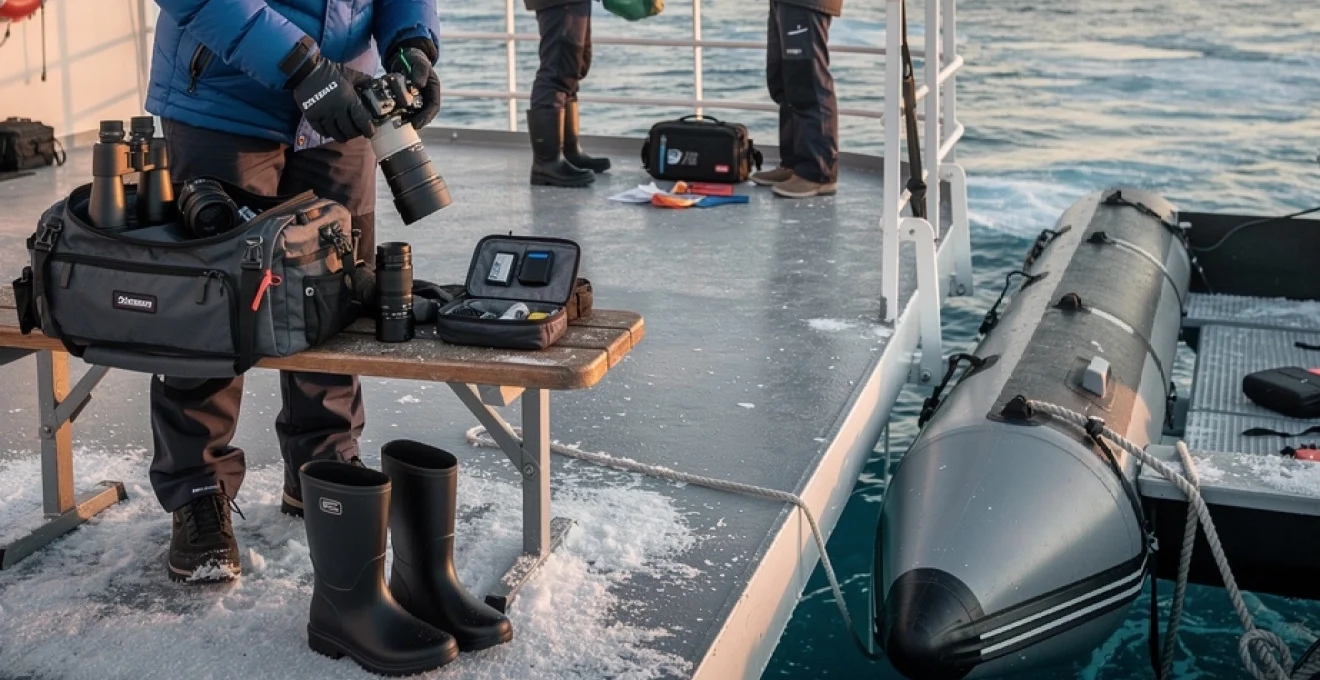
The Arctic represents one of Earth’s last true wilderness frontiers, where colossal icebergs drift through crystalline waters and apex predators rule pristine landscapes untouched by human development. For wildlife enthusiasts and adventure seekers, an Arctic expedition cruise offers unparalleled opportunities to witness polar bears hunting seals on pack ice, walrus colonies basking on rocky shores, and narwhals breaking through the surface with their distinctive tusks. Yet this remarkable journey demands thorough preparation beyond simply booking a ticket and packing a suitcase. The extreme conditions, unpredictable weather patterns, and remote locations require specialized equipment, medical precautions, and technical knowledge that can mean the difference between an extraordinary experience and a challenging ordeal.
Successfully navigating the Arctic’s demanding environment whilst capturing stunning wildlife imagery requires understanding everything from cold-weather maritime gear systems to Zodiac landing protocols. Whether you’re planning to photograph walruses in Svalbard, track polar bears across Franz Josef Land, or explore Greenland’s dramatic fjords, proper preparation ensures both safety and the ability to fully appreciate these extraordinary ecosystems. The investment in quality equipment and advance planning pays dividends when you’re standing on deck at midnight under the Arctic sun, watching a pod of beluga whales surface mere metres from your vessel.
Understanding arctic expedition cruise operators: poseidon expeditions, hurtigruten and quark expeditions
Selecting the appropriate expedition operator fundamentally shapes your Arctic wildlife experience, as different companies offer distinct vessel specifications, itinerary focus areas, and expedition team expertise. Poseidon Expeditions operates ice-strengthened vessels specifically designed for polar navigation, with their fleet including ships capable of pushing through consolidated pack ice to reach remote wildlife habitats inaccessible to standard cruise vessels. Their expeditions typically emphasize reaching the highest latitudes possible, maximizing opportunities for polar bear encounters and accessing breeding colonies of Arctic seabirds on isolated cliff faces.
Hurtigruten brings over 125 years of Norwegian coastal navigation expertise to their Arctic expeditions, combining traditional maritime heritage with modern hybrid propulsion technology that significantly reduces environmental impact. Their expedition teams include marine biologists, ornithologists, and geologists who provide comprehensive educational programming alongside wildlife viewing opportunities. Hurtigruten’s itineraries often incorporate cultural elements, visiting remote Inuit communities and historical whaling stations that provide context for understanding how humans have adapted to Arctic conditions over centuries.
Quark Expeditions pioneered consumer Arctic travel in 1991 and maintains the most extensive polar expedition portfolio amongst major operators. Their vessels range from intimate 128-passenger ships to larger 200-passenger expedition cruisers, all equipped with fleets of Zodiac landing craft and specialized equipment for activities including sea kayaking, stand-up paddleboarding, and even scuba diving beneath Arctic ice. Quark’s expedition staff typically includes photographers who conduct workshops on polar wildlife photography techniques, helping passengers optimize their camera settings for challenging lighting conditions and fast-moving subjects.
When evaluating operators, examine the ratio of expedition staff to passengers, as higher ratios enable more personalized guidance during wildlife encounters and shore excursions. Consider the vessel’s ice classification rating—ships with 1A or 1AS ratings can navigate heavier ice conditions, potentially accessing areas where wildlife concentrations are higher. Review the specific itinerary focus: some expeditions prioritize bird colonies and Arctic fox dens in Svalbard, whilst others concentrate on walrus haul-outs and polar bear tracking along the Russian Arctic coastline. The timing of your expedition also matters significantly, as July offers peak seabird breeding activity and wildflower blooms, whilst August and September provide better chances for observing polar bears as sea ice contracts.
Essential Cold-Weather maritime gear and technical clothing systems
Arctic maritime environments present unique clothing challenges that differ substantially from land-based cold weather activities, as the combination of wind chill, ocean spray, and extended periods remaining stationary during wildlife observation can rapidly lead to hypothermia without proper insulation systems. Understanding the technical specifications of modern cold-weather gear enables informed purchasing decisions that balance thermal protection with the mobility required for photographing wildlife and navigating Zodiac craft.
Four-layer insulation protocol for Sub-Zero deck activities
The foundation of Arctic clothing systems rests on a moisture-wicking base layer constructed from
synthetic fibres such as merino wool blends or technical polyester. Cotton should be avoided entirely, as it absorbs perspiration and dries very slowly, increasing the risk of chill once you step out on deck or into a Zodiac. Above this, a mid-layer of fleece or lightweight down provides the primary insulation, trapping warm air close to your body whilst remaining breathable during short hikes on shore. A third, heavier insulating layer such as a baffled down or synthetic parka can be added for extended wildlife vigils in sub-zero windchill conditions. The final outer layer is a fully waterproof and windproof shell, sized generously enough to accommodate the inner insulation without compressing it and reducing its thermal efficiency.
Many expedition cruise operators supply a branded parka as part of your voyage cost, but you should still travel with your own complete layering system to adapt to varying conditions from the relatively mild decks of coastal Norway to katabatic winds funnelling down Greenlandic fjords. Think of your four-layer protocol as a toolbox: on calmer days you may only require the first two layers, whilst pack-ice transits or late-night polar bear watches will justify deploying all four. Practise combining and removing layers before departure so you can adjust quickly in confined spaces such as gangways and Zodiacs without fumbling with zips and straps. This familiarity pays off when a sudden wildlife sighting is announced and you have only minutes to get outside.
Waterproof Expedition-Grade outerwear: Gore-Tex vs dermizax technology
Selecting a high-performance waterproof shell is critical for Arctic wildlife cruises, where wind-driven spray and sleet can penetrate sub-standard jackets in minutes. Two of the most common membrane technologies you will encounter are Gore‑Tex and Dermizax, each using a different approach to balancing waterproofness, breathability, and durability. Gore‑Tex relies on a microporous PTFE membrane containing billions of microscopic holes that are small enough to block liquid water but large enough to allow water vapour to escape, making it ideal for moderately active shore landings and Zodiac transits. Dermizax, developed by Toray, is a non-porous hydrophilic membrane that transports moisture through molecular movement rather than physical pores, resulting in very high waterproof ratings and excellent stretch characteristics.
From a practical standpoint, both technologies perform extremely well for Arctic cruise conditions if you choose a shell with at least a 20,000 mm hydrostatic head and robust seam taping. Gore‑Tex garments often have a slightly crisper hand-feel and may be marginally more breathable during intense activity, whilst Dermizax shells excel in long-duration precipitation and offer improved comfort due to their softer, quieter fabrics. For extended wildlife observation where you may be sitting or kneeling on wet Zodiac tubes or snow, prioritise models with reinforced shoulders and seat panels, laminated zips, and storm hoods large enough to fit over insulated hats. Remember that in the Arctic, your waterproof layer is not a luxury; it is the final barrier between you and windchill that can drop effective temperatures by 10–15 °C in seconds.
Zodiac landing footwear: muck boots and Arctic-Rated wellies
Footwear for Arctic expedition cruises must cope with a combination of cold seawater, slushy shorelines, and uneven rocky terrain. Standard hiking boots, even if waterproof, are rarely tall enough or sufficiently insulated for repeated Zodiac wet landings, where you step directly into shallow water or onto kelp-covered rocks. Instead, most experienced polar travellers rely on insulated rubber boots such as Muck Boots, Baffin, or other Arctic-rated wellingtons with a minimum height to mid-calf and aggressive tread patterns. These boots create a waterproof barrier for your lower leg whilst trapping a layer of warm air around thick wool or synthetic socks.
Before departure, verify whether your operator provides loan boots; Hurtigruten and some Quark Expeditions voyages, for example, stock a wide range of sizes onboard, whereas other companies require you to bring your own. If you are purchasing boots, try them on with the socks you intend to wear and ensure there is enough room to wiggle your toes—compression reduces circulation and makes your feet colder, not warmer. Breaking in rubber boots may seem unnecessary, but wearing them on several walks prior to your trip can reveal any rub points that might cause blisters during longer tundra hikes. For extra stability when stepping between ship and Zodiac, consider pairing your boots with adjustable trekking poles, particularly in early or late season when shorelines may be icy.
Optical equipment: selecting binoculars with Cold-Resistant nitrogen purging
High-quality binoculars transform your wildlife cruise in the Arctic region from a distant sightseeing experience into an intimate observation of animal behaviour. However, the combination of sub-zero air temperatures and warm, humid breath can easily cause lesser optics to fog internally, rendering them useless at critical moments. To avoid this, prioritise binoculars that are nitrogen- or argon-purged and fully sealed to IPX7 or IPX8 waterproof standards; the inert gas filling prevents internal condensation while O-ring seals block moisture ingress. A magnification of 8x or 10x with an objective lens diameter of 32–42 mm strikes the best balance between reach, brightness, and hand-held stability on a moving deck or Zodiac.
In low-contrast environments where white ice, grey sky, and pale fur dominate the visual palette, optical clarity and colour fidelity become particularly important. Look for models with fully multi-coated lenses and high-quality prisms (Bak‑4 or equivalent) to maximise light transmission during overcast conditions or late-night wildlife watches under the midnight sun. Ergonomics also matter: large focus wheels operable with gloved hands, rubber armour for secure grip, and eyecups that accommodate glasses make extended use far more comfortable. Treat binoculars as essential safety tools as well as wildlife viewing aids—spotting a polar bear on shore before landing can influence whether a Zodiac excursion proceeds or is rerouted.
Pre-departure medical preparations and polar health protocols
The remote nature of Arctic expedition cruises means that even minor medical issues can escalate if not anticipated and managed proactively. Evacuation to advanced medical facilities may require coordination of shipboard helicopters, fixed-wing aircraft, and local authorities, with associated delays and high costs. As a result, thorough pre-departure medical preparation is not merely advisable but integral to responsible polar travel. Most reputable operators require a detailed medical questionnaire for all guests and may request additional documentation from your physician if you have chronic conditions, mobility limitations, or a history of cardiovascular issues.
When considering how to prepare for a wildlife cruise in the Arctic region, start with a comprehensive consultation with a travel medicine specialist four to six weeks before departure. Discuss your planned activities, expected temperatures, and potential stressors such as rough seas or strenuous landings. This is the ideal time to review routine vaccinations, assess your fitness level for repeated Zodiac embarkations, and create a personalised medication plan. Approach this process as you would pre-climb training for a high-altitude trek: careful preparation on land dramatically increases comfort and safety once you are far from conventional infrastructure.
Hypothermia prevention training and cold water immersion response
Hypothermia remains one of the primary physiological risks during Arctic wildlife cruises, particularly during prolonged exposure on deck in high winds or following an accidental fall into cold water. Understanding early warning signs and basic response protocols can make the difference between a minor incident and a medical emergency. Mild hypothermia may present as uncontrolled shivering, clumsiness, or unusual apathy; if you or a fellow passenger exhibit these symptoms, it is essential to move indoors, remove damp clothing, and begin passive rewarming with blankets and warm, sweet drinks. Expedition medical staff will be trained to escalate care as needed, but your ability to recognise problems early is crucial.
Cold water immersion is especially dangerous because body heat is lost approximately 25 times faster in water than in air at the same temperature. During mandatory safety briefings, pay close attention to information on lifejackets, immersion suits, and man-overboard procedures; if you are unsure about any element, ask for clarification. It can be helpful to mentally rehearse your own response: where is the nearest alarm, how would you call for help, and how would you assist someone re-boarding a Zodiac from the water? While accidental immersion is rare due to strict protocols, treating hypothermia prevention with the same seriousness as fire drills or aircraft safety briefings ensures you respond calmly and effectively under pressure.
Motion sickness management in drake passage and barents sea conditions
Although many Arctic itineraries avoid the notorious Drake Passage, rough seas can still be encountered in the Barents Sea, Fram Strait, or Denmark Strait between Greenland and Iceland. Even travellers who rarely suffer from motion sickness on conventional cruises may find the lower, more mobile profile of expedition ships challenging in heavy swell. Proactive management begins before symptoms appear: if you know you are susceptible, discuss prescription options such as scopolamine patches or specific antihistamines with your doctor and bring an appropriate supply from home. Shipboard medical centres often stock basic remedies, but availability can vary and may not match your previous experience.
Simple behavioural strategies also help. Choosing a midship cabin on a lower deck usually minimises motion, and spending time on open decks looking at the horizon can reduce sensory conflict between your inner ear and visual perception. Eating small, frequent meals, avoiding heavy alcohol consumption, and staying hydrated all support your body’s ability to adapt. If nausea begins, lie down in a dark, well-ventilated space and avoid reading or screen use, which can exacerbate symptoms. Remember that seasickness is common and nothing to be embarrassed about—expedition staff see it on almost every voyage and are well positioned to offer practical support.
Vaccination requirements and Arctic-Specific travel insurance coverage
From a vaccination standpoint, most Arctic destinations do not require specialised immunisations beyond standard schedules recommended in your home country. Nevertheless, ensuring that tetanus, diphtheria, polio, and MMR boosters are up to date is a sensible precaution, as is considering hepatitis A and B coverage depending on your overall travel plans. Some embarkation ports—such as those in Canada or Norway—may impose specific entry requirements that change over time, so always check official government advisories and your operator’s pre-departure documentation. If your itinerary includes visits to indigenous communities, maintaining a strong vaccination baseline also helps protect vulnerable populations with limited healthcare access.
Travel insurance for Arctic expedition cruises should go beyond basic trip cancellation and baggage protection. Look for policies that explicitly cover emergency medical evacuation from remote polar regions, ideally with limits of at least USD 250,000–500,000. Verify that the policy is valid north of the Arctic Circle and on expedition vessels, as some standard cruise policies exclude high-latitude operations. Scrutinise pre-existing condition clauses; you may need to purchase coverage within a specific window after booking to ensure full benefits. Given the cost and complexity of coordinating evacuations from areas like Svalbard or East Greenland, comprehensive insurance is as essential as your parka or boots.
Prescription medication storage in extreme low temperatures
Many prescription medications have narrow temperature tolerances, and repeated exposure to freezing air on open decks or unheated Zodiacs can degrade their effectiveness. Before travelling, review storage requirements for each medication with your pharmacist and ask for written guidance, particularly for injectable drugs such as insulin or biologics. As a general rule, medicines should be kept in your cabin at stable room temperature, protected from direct sunlight and away from exterior bulkheads where condensation can form. Using insulated pouches or small dry bags helps maintain conditions when transferring supplies between ship and shore.
If you require medications that must be refrigerated, contact your operator well in advance to confirm onboard storage options and access procedures. Never place essential medicines in checked luggage on flights to Arctic embarkation points; lost baggage can take days to reach isolated ports, and local pharmacies may not stock your specific formulation. Bring a detailed medication list—including generic names, dosages, and prescribing physician contacts—in case of emergency replacement needs. Finally, pack at least an extra week’s supply beyond your planned itinerary length; weather-related delays are not uncommon, and you do not want your health compromised by an extended stay in a remote harbour.
Wildlife photography equipment for arctic marine mammals
For many travellers, the opportunity to photograph polar bears, walruses, and whales in their natural environment is a primary motivation for booking an Arctic wildlife cruise. However, the combination of cold temperatures, salt spray, and constantly shifting platforms presents unique challenges for camera gear. Treat your photographic equipment as part of your technical kit, on par with clothing and medical preparation. Investing time in understanding how different lenses perform in low-contrast, high-dynamic-range scenes—and how batteries behave at minus temperatures—will dramatically increase your keeper rate.
Rather than attempting to replicate professional setups costing tens of thousands of dollars, aim for a robust, versatile system you can operate confidently with gloved hands in a rocking Zodiac. Modern mirrorless and DSLR bodies paired with appropriate telephoto zooms are more than capable of producing publication-quality images if used thoughtfully. Ask yourself: do you want to prioritise reach for distant polar bears on the ice, or flexibility for closer encounters with curious seals and breaching humpbacks? The answer will guide your lens decisions and help ensure you pack only what you truly need.
Telephoto lens selection: 100-400mm vs 150-600mm for polar bear documentation
Choosing between a 100–400 mm and a 150–600 mm telephoto zoom is one of the most common dilemmas for photographers preparing for a wildlife cruise in the Arctic region. A 100–400 mm lens, especially when paired with a crop-sensor body, offers a highly versatile focal range that covers everything from environmental portraits of wildlife in their icy surroundings to tighter frames on individual animals. Its relatively compact size and lighter weight make it easier to handle from Zodiac tubes, and autofocus performance on most modern variants is excellent. For many travellers, this lens represents the ideal balance between reach and practicality.
By contrast, a 150–600 mm zoom provides significantly greater magnification, invaluable when ships must maintain safe distances from polar bears or shy cetaceans. The trade-offs include increased weight, slower maximum apertures, and greater susceptibility to camera shake—issues magnified when shooting from moving platforms. If you opt for the longer lens, consider pairing it with a robust image-stabilised body and practising hand-held technique before departure. An analogy many photographers find helpful is to think of the 100–400 mm as a Swiss Army knife and the 150–600 mm as a specialist tool: if you are comfortable carrying and wielding the latter, it can deliver remarkable close-ups, but the former will serve you reliably in a wider range of scenarios.
Camera Cold-Weather protection and battery performance in minus 20°C
Digital cameras are remarkably resilient, but cold Arctic air and rapid temperature changes can still cause malfunctions if not managed carefully. Most mainstream bodies are rated to around −10 °C, yet you may encounter windchill equivalent to −20 °C or lower on exposed decks. In practice, cameras often continue to operate beyond their official limits, provided batteries are kept warm and condensation is controlled. Carry spare batteries in an inner pocket close to your body and rotate them regularly; lithium-ion cells can lose 30–50 % of their effective capacity in sub-zero conditions. When a battery indicator drops unexpectedly, swapping it for a warm spare and returning the cold unit to your pocket often restores significant charge.
To protect against condensation, adopt a simple but disciplined routine whenever you move between cold outdoors and warm interior spaces. Before re-entering the ship, place your camera and lenses in a sealable plastic bag or dry bag, expel excess air, and allow them to warm gradually for an hour or more before opening. This prevents moist indoor air from condensing on cold glass and electronic components. Lens hoods help shield front elements from snow and spray, while weather-sealed bodies and lenses provide an extra margin of safety. If your gear is not fully sealed, consider using a simple rain cover; even a clear shower cap secured with an elastic band can keep falling snow off critical controls without impeding access.
Stabilisation techniques for Zodiac-Based walrus and narwhal photography
Photographing marine mammals from a Zodiac is both exhilarating and technically demanding. The boat’s constant motion, low vantage point, and proximity to water make achieving sharp images more challenging than shooting from the relative stability of a ship’s deck. Image stabilisation—either in-lens, in-body, or both—is invaluable, but technique remains paramount. Use shutter priority or manual mode with auto-ISO to maintain shutter speeds of at least 1/1000 s for active subjects such as breaching whales or surfacing narwhals, increasing further if you are using longer focal lengths. A slightly higher ISO and a sharp image is far preferable to a noise-free but blurred frame.
Bracing your elbows against your torso and using the Zodiac tube as a support where permitted can significantly reduce camera shake, though you should avoid hard contact that might transmit sudden jolts. Listen closely to your guide’s instructions about weight distribution; sudden movements can destabilise the boat. When possible, pre-focus roughly at the distance where animals are most likely to surface and use continuous autofocus with a small cluster of focus points. Think of Zodiac photography as the optical equivalent of shooting from a moving train window: you must anticipate rather than react, keeping your camera at the ready and your body relaxed but controlled.
Memory card management and backup systems during Multi-Day expeditions
On a typical 10–14 day Arctic expedition, it is common for enthusiastic photographers to return with tens of thousands of images. Managing this volume of data in a small cabin with limited power outlets requires a simple, robust workflow. Start by bringing enough high-quality memory cards to cover at least two full days of heavy shooting without reformatting; this buffer protects you if you experience technical issues with your backup system or encounter an unusually wildlife-rich period. Label cards clearly and adopt a consistent pattern—for example, using one brand or colour for each camera body—to minimise confusion.
For backups, a lightweight laptop paired with a solid-state external drive offers the greatest flexibility, allowing you to cull obvious failures and create duplicate copies of your best work each evening. If you prefer to travel without a computer, consider using a dedicated backup device with built-in storage and SD card slots, or simply treat your cards as write-once media and carry more of them. Whatever system you choose, store full cards separately from your camera bag when not in use, ideally in a waterproof case. This redundancy mirrors the principles of safe navigation in icy waters: never rely on a single point of failure when simple precautions can provide multiple layers of protection.
Navigating svalbard archipelago, franz josef land and greenland itineraries
Understanding the geographic and seasonal nuances of different Arctic regions helps you choose an itinerary aligned with your wildlife priorities and comfort thresholds. Svalbard, Franz Josef Land, and Greenland each offer distinct landscapes, species assemblages, and logistical considerations. Svalbard, lying between mainland Norway and the North Pole, is one of the most accessible Arctic wildlife destinations, with Longyearbyen serving as a well-connected embarkation port. Here, you can expect a mix of glaciers, bird cliffs, and historical sites from the era of coal mining and polar exploration, with good chances of encountering polar bears, walruses, and Arctic foxes between June and September.
Franz Josef Land, by contrast, is far more remote and seldom visited, lying deep within the Russian High Arctic. Access is tightly regulated, and itineraries that include this archipelago typically involve longer sea crossings and stricter environmental protocols. The reward is an environment that feels genuinely primordial: towering basalt cliffs, sprawling ice caps, and substantial polar bear densities on the pack ice. Greenland bridges these two extremes, combining vast inland ice sheets with dramatic coastal fjords, colourful Inuit settlements, and some of the largest icebergs on the planet, particularly in Disko Bay and the Ilulissat Icefjord. When comparing routes, consider not only which species you hope to see but also how many sea days you are comfortable with and whether cultural visits are a priority alongside pure wildlife viewing.
Seasonality plays a decisive role in what you will experience. Early season voyages in May and June often encounter more extensive sea ice, providing spectacular frozen vistas and the possibility of bears hunting seals at breathing holes, but limiting access to some landing sites. Mid-summer brings milder temperatures, nesting seabirds, and bursts of tundra wildflowers, whilst late August and September offer darker nights suitable for potential Northern Lights viewing and increased iceberg calving activity. Ask operators detailed questions about typical conditions on your chosen departure dates and remain flexible in your expectations; in the Arctic, itineraries are suggestions rather than guarantees, continually reshaped by ice charts, weather systems, and wildlife reports.
Zodiac excursion protocols and arctic landing site safety procedures
Zodiac operations are the lifeblood of Arctic expedition cruising, enabling close approaches to wildlife and landings on otherwise inaccessible shores. With this access comes a responsibility to follow strict safety and environmental protocols designed to protect both passengers and fragile ecosystems. Before your first outing, you will attend a mandatory briefing covering lifejacket use, embarkation techniques, and behaviour around wildlife; treat this session as essential training rather than routine housekeeping. You will typically be assigned to a specific Zodiac group with staggered boarding times, ensuring orderly operations and reducing crowding at gangways and landing beaches.
When boarding and disembarking, use the support of crew members and follow the “three points of contact” rule—two hands and one foot or two feet and one hand in contact with the boat or ladder at all times. Loose items such as hats, gloves, and camera straps should be secured before stepping onto the Zodiac to avoid distractions or accidental loss overboard. Once seated, remain in your assigned position unless directed to move by the driver; sudden shifts in weight can destabilise the craft, particularly in swell or when manoeuvring near ice. Lifejackets must remain fastened throughout the excursion, even in calm conditions. Think of a Zodiac as a finely balanced platform: individual actions may seem minor, but collective discipline is what makes operations safe and efficient.
Arctic landing sites themselves are governed by a combination of operator policies and regional guidelines issued by bodies such as AECO. Before each landing, expedition leaders will brief you on specific hazards, walking routes, and wildlife distances. You may notice armed guides establishing a perimeter and conducting bear watches while guests explore; this is not theatrical, but a critical layer of safety in polar bear habitat. Always stay within sight of a guide and respect cordoned-off zones, even if a better photographic angle beckons beyond. To protect fragile vegetation and nesting sites, you will often be asked to stick to marked paths or durable surfaces such as gravel and rock.
Biosecurity is another key component of landing protocols. To prevent the introduction of non-native species or pathogens, you may be required to disinfect boots and walking poles before and after each shore visit, and to avoid sitting or placing bags on the ground in sensitive areas. While these procedures can feel meticulous, they are part of a collective commitment to preserving the Arctic for future generations of wildlife and travellers alike. By embracing safety briefings, following Zodiac instructions diligently, and treading lightly at landing sites, you play an active role in ensuring that your own wildlife cruise in the Arctic region remains both unforgettable and environmentally responsible.