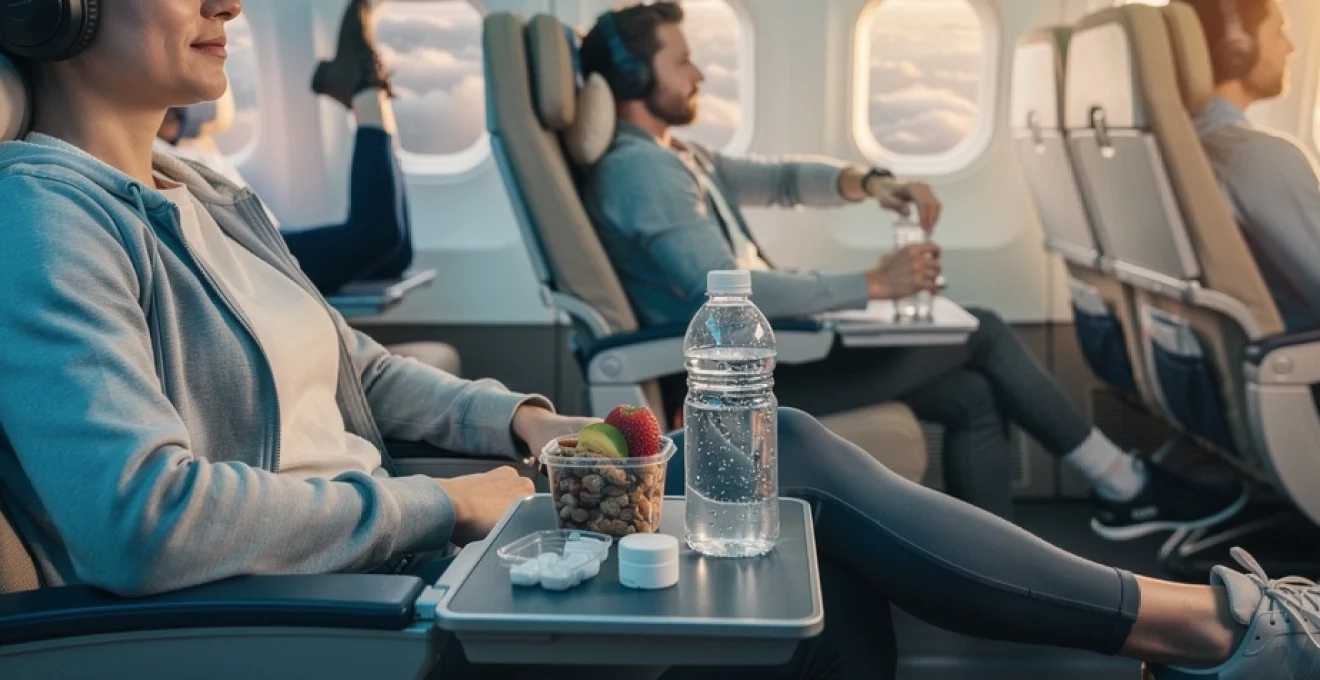
Long-haul flights present unique physiological and psychological challenges that can significantly impact your well-being both during and after travel. With the average ultra-long-range flight lasting between 12 to 17 hours, your body endures extended periods of cabin pressure changes, restricted movement, dehydration, and circadian rhythm disruption. Modern aviation has made distant destinations more accessible than ever, yet the human body hasn’t evolved to cope with crossing multiple time zones in a matter of hours. Understanding how to prepare for these marathon journeys can transform your travel experience from an endurance test into a manageable transition. The key lies in strategic preparation that begins days before departure and continues well after arrival, encompassing everything from sleep cycle adjustment to post-flight recovery protocols.
Pre-flight physiological preparation strategies for Ultra-Long-Range aviation
Effective preparation for long-haul flights begins approximately one week before departure, focusing on optimising your body’s natural systems to handle the upcoming stress. Your circadian rhythm, hydration levels, sleep reserves, and digestive patterns all require strategic adjustment to minimise the impact of extended air travel. Research indicates that passengers who implement comprehensive pre-flight preparation experience up to 40% less severe jet lag symptoms compared to those who travel without preparation.
The foundation of successful long-haul travel preparation involves creating a controlled environment for your body’s adaptation process. This means gradually shifting your daily routines to align more closely with your destination’s schedule whilst simultaneously building up physical and mental reserves. Professional athletes and frequent business travellers have long recognised that the journey begins well before boarding, with systematic preparation protocols that can make the difference between arriving refreshed and requiring days to recover.
Circadian rhythm synchronisation using light therapy and melatonin protocols
Your body’s internal clock operates on a roughly 24-hour cycle, regulated primarily by exposure to light and darkness. When travelling across multiple time zones, this natural rhythm becomes severely disrupted, leading to the constellation of symptoms we recognise as jet lag. Beginning three to four days before departure, you can start shifting your circadian rhythm by manipulating your light exposure and sleep schedule in 30-minute increments daily.
For eastward travel, gradually advance your bedtime and wake time by 30 minutes each night, whilst simultaneously reducing evening light exposure and increasing morning brightness. Westward journeys require the opposite approach – delaying your sleep schedule whilst maximising evening light and minimising morning exposure. Light therapy devices producing 10,000 lux can accelerate this process, requiring only 20-30 minutes of exposure at strategic times to effectively reset your biological clock.
Melatonin supplementation, when used correctly, can significantly enhance circadian rhythm adjustment. Taking 0.5-3mg of melatonin approximately 30 minutes before your target bedtime in the destination time zone helps signal your brain to prepare for sleep. However, timing is crucial – taking melatonin at the wrong time can actually worsen jet lag symptoms by reinforcing the wrong circadian signals.
Hydration optimisation techniques for cabin pressure environments
Aircraft cabins maintain humidity levels between 10-20%, significantly lower than the 40-60% found in most indoor environments. This extreme dryness, combined with cabin pressure equivalent to being at 6,000-8,000 feet altitude, creates a perfect storm for dehydration. Your body loses approximately 1.5 litres of water during a typical 10-hour flight through increased respiratory water loss and reduced fluid intake.
Optimal hydration preparation begins 48 hours before departure with increased water consumption and strategic electrolyte management. Aim to consume an additional 500ml of water daily in the two days preceding travel, whilst reducing alcohol and caffeine intake to prevent counterproductive dehydration. Coconut water provides an excellent pre-flight hydration option, containing natural electrolytes that help your cells retain moisture more effectively than plain water alone.
Consider incorporating oral rehydration solutions designed specifically for air travel, which contain carefully balanced sodium, potassium, and glucose ratios to optimise fluid absorption. These solutions prove particularly valuable for travellers prone to altitude-related symptoms or those with naturally high fluid turnover rates.
Strategic sleep banking and power napping
In the week leading up to departure, think of “sleep banking” as building a reserve fund for your body. Numerous sleep studies show that extending your sleep by even 60–90 minutes per night for several nights before a period of restriction can improve alertness, mood, and reaction time. Aim for 8–9 hours of sleep on at least three nights before your long-haul flight, and avoid late-night screen time that erodes sleep quality. If you normally sleep 6 hours, even moving to 7–7.5 hours will help buffer the effects of overnight travel and time zone changes.
On the actual travel day, short, well-timed power naps can become a powerful tool rather than a way to accidentally worsen jet lag. Pre-flight, a 20–30 minute nap can reduce sleep pressure and make the airport experience less draining without pushing you into deep sleep, which often leaves you groggy. In-flight, try to nap only when it aligns with night-time at your destination. Set an alarm for 25–30 minutes, use an eye mask and earplugs, and avoid napping repeatedly during what will be daytime on arrival, or you risk dragging your circadian rhythm in the wrong direction.
Jet lag mitigation through chronotherapy and meal timing
Chronotherapy is the deliberate manipulation of your sleep, light exposure, and behaviour to shift your internal clock towards a new time zone. Rather than hoping your body “catches up” on its own, you proactively nudge it in the right direction. Two to three days before departure, begin shifting your sleep and wake times by 30–60 minutes towards your destination’s schedule, complementing the light strategies mentioned earlier. This gradual approach is particularly valuable when crossing more than six time zones, where abrupt changes can leave you awake at 3 a.m. local time for days.
Meal timing is an often-overlooked lever in reducing jet lag and travel fatigue. Your digestive system also follows a circadian pattern, and eating in sync with your destination can help “teach” your body when daytime has begun. On the day before and the day of travel, start aligning your main meals with the destination’s breakfast, lunch, and dinner windows as closely as possible. If that means a lighter supper or a later breakfast, treat it as part of your pre-flight protocol rather than a disruption.
During the flight, think strategically about when you eat rather than accepting every meal as it is served. If cabin service offers a heavy meal at what will be 2 a.m. at your destination, consider opting for something light or a protein-rich snack instead, then prioritise a more substantial meal when it aligns with daytime at your arrival location. After landing, commit to eating according to local mealtimes, even if your appetite feels out of sync; within 48–72 hours, this coordinated use of chronotherapy and meal timing can significantly reduce the intensity and duration of jet lag symptoms.
In-flight ergonomic solutions and seating configuration analysis
Once you are on board, how you sit and move during a long-haul flight has a direct impact on how you feel afterwards. Prolonged immobility, poor lumbar support, and awkward neck positions can all contribute to stiffness, headaches, and even increased risk of circulatory issues. Approaching your seat and in-flight setup as you would a temporary workstation helps you maintain better posture, circulation, and comfort. This is particularly important on ultra-long-range routes where you may be seated for 14 hours or more.
Small ergonomic adjustments—such as the angle of your recline, the placement of your feet, and the support for your lower back and neck—can transform your experience from “endure and arrive sore” to “rest and arrive functional.” The goal is not to maintain a rigid posture, but to create a neutral, supported position that you can adjust regularly without straining muscles or compressing joints. This begins with choosing the appropriate cabin class and seat type for your needs and continues with thoughtful use of compression garments, cushions, and mobility breaks.
Premium economy vs business class seat specifications for postural health
From a postural health perspective, the difference between Economy, Premium Economy, and Business Class is more than just legroom; it is about how effectively you can maintain neutral spinal alignment and vary your position over time. Premium Economy typically offers increased seat pitch (often 36–40 inches versus 31–32 in standard Economy), greater recline, and adjustable leg rests. These upgrades allow a more open hip angle and reduced compression behind the knees, both of which help circulation and lower back comfort on long-haul flights.
Business Class, particularly on modern wide-body aircraft, often provides lie-flat or near lie-flat beds with significantly more lateral space. For ultra-long-range travel over 10–12 hours, this ability to adopt a true sleeping posture often results in markedly better recovery and reduced travel fatigue. However, even in Business Class, posture still matters—sleeping twisted or with your neck unsupported can leave you feeling surprisingly sore. If you are weighing an upgrade, ask yourself: will this flight significantly affect performance at your destination, such as for an important meeting, athletic event, or tight sightseeing schedule? In those cases, the ergonomic benefits of Premium Economy or Business Class can be a strategic investment in your well-being.
Compression garment selection for deep vein thrombosis prevention
Extended periods of sitting in a confined space can slow blood flow in the legs, increasing the risk of swelling and, in susceptible individuals, Deep Vein Thrombosis (DVT). Graduated compression garments—most commonly knee-high compression socks—are designed to apply gentle pressure at the ankle that gradually decreases up the calf, helping to maintain venous return. For long flights, many aviation medicine guidelines recommend compression stockings providing 15–30 mmHg of pressure, especially if you have additional risk factors such as previous clots, recent surgery, pregnancy, or certain hormonal treatments.
When choosing compression garments for air travel, prioritise medical-grade products from reputable brands rather than fashion-oriented “support socks.” Proper sizing is crucial: measure your ankle and calf circumference according to the manufacturer’s chart and avoid socks that feel painfully tight or create bands of constriction. For ultra-long-haul flights, consider combining compression socks with loose, non-restrictive clothing to further support circulation. Remember that compression garments are an adjunct—not a replacement—for regular movement; you still need to stand, stretch, and walk the aisle periodically to maximise protection against DVT and reduce leg fatigue.
Lumbar support systems and cervical alignment techniques
Aircraft seats are designed for durability and safety first, ergonomics second. As a result, many long-haul travellers find that their lower back rounds and their head protrudes forward over time, placing stress on the spinal discs and neck muscles. Bringing your own lumbar support cushion, or improvising one with a rolled-up jumper or blanket, can help restore the natural curve of your lower spine. Position the support at the small of your back, not under your upper back, so that your pelvis tilts slightly forward and your chest can open.
Cervical alignment is equally important, especially when you plan to sleep in a semi-reclined position. A well-designed travel pillow should support your neck rather than simply cushioning it; look for models that stabilise the head from the side to reduce the “head bobbing” that strains neck muscles. If you use the airline pillow, place it behind your upper back and shoulders rather than only behind your head to prevent your chin from dropping towards your chest. Periodically perform gentle neck rotations and shoulder rolls to maintain mobility. These small adjustments can dramatically reduce the likelihood of waking with tension headaches or upper back stiffness after a long-haul sector.
Aisle vs window seat strategic selection for movement accessibility
Choosing between an aisle and a window seat is more than a preference for views or easy exits; it directly affects your ability to move, rest, and manage travel fatigue. If you value uninterrupted sleep and don’t mind limiting your movement, a window seat allows you to lean against the fuselage, control your blind, and avoid being disturbed by other passengers. This can be ideal if you have carefully timed your in-flight sleep to match your destination’s night-time and want to minimise disruptions.
An aisle seat, by contrast, offers superior accessibility for movement, stretching, and regular trips to the galley or lavatory, all of which are important for circulation and comfort. For travellers with a history of circulatory issues, joint stiffness, or a strong need to move frequently, an aisle seat in the centre section can be a strategic choice, as you’ll typically have fewer people climbing over you and better access to both sides of the cabin. Ask yourself: will you prioritise consolidated rest or frequent mobility on this particular sector? Aligning your seat choice with your movement strategy can significantly improve how you feel on arrival.
Advanced in-flight exercise protocols and movement strategies
Movement during a long-haul flight does far more than simply “stretch your legs.” It supports venous return, reduces muscle stiffness, helps regulate blood sugar, and can even improve mood and alertness. Rather than occasional, unplanned trips to the aisle, you can treat in-flight movement as a structured, low-intensity exercise routine adapted to the cabin environment. Aim for a short movement sequence every 60–90 minutes, using a combination of seated exercises and brief standing or walking intervals, depending on seat belt sign restrictions.
Think of these protocols as micro-workouts that maintain joint mobility and circulation without disturbing fellow passengers. Seated ankle pumps, where you flex and point your feet repeatedly, help activate the calf “muscle pump” that returns blood to the heart. Gentle knee lifts, seated spinal twists, and shoulder rolls can all be performed within your seat space and are particularly useful when turbulence restricts walking. When you are able to stand, a slow walk down the aisle, combined with a few discreet calf raises or quad stretches at the back of the cabin, provides an effective reset for your lower body.
Breathing exercises also play a role in reducing travel fatigue. Periodically practice slow, diaphragmatic breathing—inhale for four seconds, hold for four, exhale for six—to lower sympathetic nervous system activation and counteract the low-level stress of the cabin environment. This can be especially helpful if you feel anxious about flying or find it difficult to relax enough to sleep. By integrating these movement and breathing strategies into your in-flight routine, you transform passive sitting time into active recovery, helping you step off the aircraft feeling more energised and less stiff.
Cabin environment optimisation and air quality management
Although you cannot control the overall air quality or pressure in the aircraft, you can create a micro-environment around your seat that better supports comfort and reduces travel fatigue. Cabin air is filtered and recirculated, but its low humidity accelerates water loss from your skin and mucous membranes. This dryness can contribute to headaches, sore throat, eye irritation, and an increased perception of fatigue. By combining smart hydration habits with simple protective measures, you can mitigate many of these effects.
Start by managing your immediate surroundings. Adjust the overhead air vent so that it provides gentle airflow across your torso rather than blowing directly into your face, which can further dry your eyes and nasal passages. Using saline nasal spray every few hours can help keep mucous membranes moist, acting as a barrier against irritants. For your eyes, preservative-free lubricating drops or rewetting drops (especially if you wear contact lenses) can reduce dryness and redness. A lightweight moisturiser or facial oil applied after take-off and again mid-flight can help your skin cope with the low humidity, particularly on ultra-long-range routes.
Noise and light exposure are also components of your personal cabin environment that influence how rested you feel. Continuous background noise and intermittent announcements can fragment sleep, even if you don’t fully wake. High-quality earplugs or noise-cancelling headphones help create a quieter bubble, while a contoured eye mask blocks ambient light and the glow from neighbouring screens. Controlling these inputs makes it easier to follow your planned sleep schedule and arrive less mentally drained. By viewing the aircraft cabin not just as a shared space but as a series of adjustable micro-environments, you gain more control over your comfort and energy levels throughout the flight.
Post-flight recovery acceleration techniques and adaptation protocols
The hours immediately after landing are just as important as your pre-flight and in-flight strategies when it comes to reducing travel fatigue and jet lag. Many travellers assume that the journey ends at passport control, but your body is still adjusting to new time cues, temperature, humidity, and activity levels. A focused post-flight protocol can shorten recovery time, improve sleep quality in the first few nights, and help you feel more like yourself sooner. Think of this phase as the “cool-down” after an intense workout: skipping it may not cause immediate issues, but it will almost certainly leave you stiffer and more fatigued later.
Effective post-flight recovery combines light exposure management, strategic rehydration, and gentle physical activity. The aim is to signal clearly to your body whether it is now “day” or “night,” restore fluid and electrolyte balance, and ease muscular tension built up over many hours of sitting. Rather than collapsing on the hotel bed as soon as you check in, following a short, structured routine—no more than 60–90 minutes—can dramatically improve how you adapt over the next 24–72 hours.
Ground-based circadian reset procedures using natural light exposure
Once you arrive, natural light becomes your most powerful tool for resetting your internal clock to the local time zone. If you land in the morning or early afternoon, aim to spend at least 30–60 minutes outside within the first two hours after arrival. A gentle walk in daylight, even if you feel tired, sends a strong cue to your brain that it is now daytime, helping suppress residual melatonin and boosting alertness. This approach is especially effective after eastbound flights, which typically make it harder to fall asleep at an appropriate local bedtime.
If you land late in the evening or at night, your goal shifts: minimise bright light exposure so you can fall asleep and begin aligning with local night-time. Use blue-light–filtering settings on your devices, keep room lighting soft and warm, and avoid long sessions of screen time. In some cases, travellers use low-dose melatonin (0.5–1 mg) 30–60 minutes before their target bedtime for the first one or two nights to reinforce the new schedule; however, this should complement, not replace, natural light cues the following morning. By consciously managing when you seek or avoid light, you speed up circadian adaptation and reduce the “wide awake at 3 a.m.” pattern many long-haul travellers experience.
Rehydration strategies and electrolyte balance restoration
Even with diligent in-flight hydration, most people arrive mildly dehydrated after a long-haul sector due to low humidity, altered drinking habits, and increased respiratory water loss. Rehydration should therefore be a priority in your post-flight routine. Start with 500–750 ml of water in the first hour after landing, sipped gradually rather than consumed all at once to avoid gastrointestinal discomfort. Incorporating an oral rehydration solution or electrolyte tablet can help restore sodium, potassium, and other minerals that support fluid balance and muscle function.
What about caffeine and alcohol after landing? A moderate amount of caffeine in the local morning—roughly 1–2 cups of coffee—can improve alertness and cognitive performance without significantly disrupting adaptation for most people. However, avoid using caffeine late in the local day as a way to “push through,” as this often leads to difficulty sleeping that night. Similarly, while an alcoholic drink might seem tempting to celebrate arrival or encourage sleep, alcohol fragments sleep architecture and can leave you feeling less rested, not more. Focusing instead on water, electrolytes, and light, balanced meals high in protein and moderate in complex carbohydrates will support both hydration and stable energy as you adjust.
Active recovery methods for muscular tension release
After hours of constrained sitting, your muscles, fascia, and joints need deliberate movement to restore normal function. A short session of active recovery can be as simple as a 30–45 minute walk near your accommodation, ideally in natural light, or as structured as a gentle yoga or mobility routine in your hotel room. Focus on areas that typically suffer most during long-haul flights: calves, hip flexors, lower back, and upper shoulders. Dynamic stretches—such as leg swings, hip circles, and arm rotations—help increase blood flow without overloading already fatigued tissues.
If you have access to tools such as a travel-sized foam roller or massage ball, spend 5–10 minutes on your calves, glutes, and upper back to ease trigger points and improve circulation. A warm shower or bath afterwards can further relax tight muscles and signal to your nervous system that it is safe to unwind. Finally, aim for a consistent, reasonable local bedtime on your first night rather than staying up excessively late or napping for long periods during the day. By combining active recovery with smart sleep timing, you give your body the best chance to reset quickly and reduce the lingering effects of travel fatigue over the days that follow.