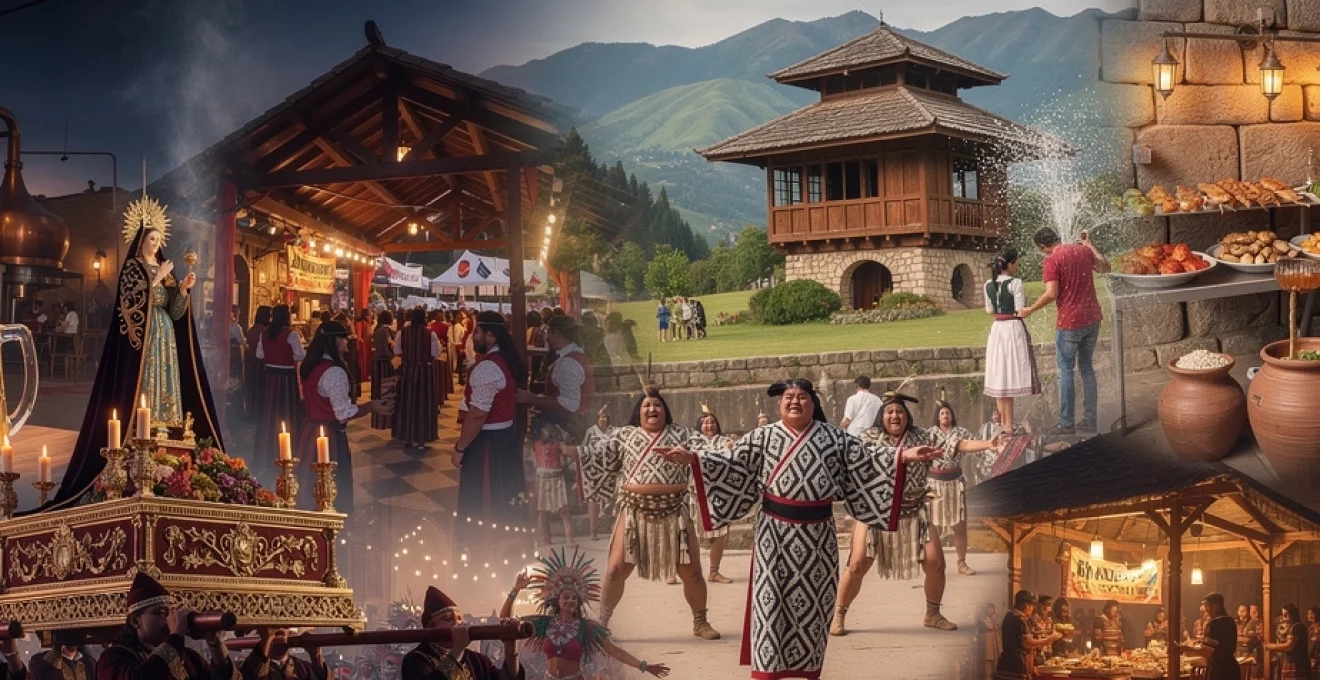
Traditional festivals serve as powerful windows into the soul of a destination, offering travellers and researchers alike an unparalleled opportunity to witness cultural identity in its most vivid and authentic form. These celebrations transcend mere entertainment, functioning as complex repositories of collective memory, social values, and historical continuity. When you attend a traditional festival, you’re not simply observing a performance—you’re experiencing centuries of accumulated wisdom, artistic expression, and community bonds that have been carefully preserved and transmitted across generations. The rituals, foods, music, and visual elements present at these gatherings encode profound messages about what communities value, how they understand their place in the world, and the narratives they choose to perpetuate about their heritage.
Understanding festivals as ethnographic texts requires moving beyond superficial appreciation of colourful costumes and lively music. Each element within a traditional celebration carries symbolic weight, from the specific dates chosen for observance to the materials used in ceremonial objects. These gatherings often mark agricultural cycles, religious observances, or historical commemorations that have shaped local identity over centuries. Recent research indicates that approximately 78% of travellers now seek authentic cultural experiences during their journeys, with traditional festivals ranking among the most desired attractions. This growing interest reflects a broader recognition that festivals offer something increasingly rare in our globalised world: genuine insight into the distinctive character of a place and its people.
Ethnographic manifestations through ceremonial practices and ritual performance
Ceremonial practices embedded within festival contexts reveal fundamental aspects of how communities structure meaning, maintain social cohesion, and transmit cultural knowledge. These rituals often follow prescribed patterns that have remained remarkably consistent across centuries, demonstrating the resilience of cultural memory even in rapidly changing societies. When you witness a traditional ceremony, you’re observing a living link to ancestral practices, with each gesture, chant, or procession carrying significance that extends far beyond its immediate aesthetic impact.
Sacred processions at semana santa in seville: religious iconography as cultural memory
The Holy Week celebrations in Seville represent one of Europe’s most elaborate expressions of religious devotion translated into public spectacle. Dating back to the 16th century, these processions feature ornate pasos—religious floats—carried through narrow streets by brotherhoods known as cofradías. Each brotherhood maintains distinctive iconography, musical accompaniment, and processional routes that have been refined over centuries. The intricate embroidery on ceremonial robes, the specific incense formulations used during processions, and even the particular rhythm of the marching bands all communicate aspects of Sevillian identity rooted in Catholic tradition, Baroque artistic sensibilities, and Andalusian emotional expression.
What makes Semana Santa particularly revealing is how it demonstrates the intersection of religious orthodoxy with regional cultural interpretation. The dramatic intensity of the celebrations—complete with mournful saetas sung from balconies and the physical endurance required of costaleros carrying multi-ton floats—reflects distinctly Andalusian approaches to spiritual expression. Statistics show that over 60,000 participants take part in these processions annually, with generations of families maintaining membership in the same brotherhoods, illustrating how festival participation creates vertical cultural transmission across time.
Māori haka performance protocols at waitangi day: indigenous sovereignty expression
New Zealand’s national day commemorates the signing of the Treaty of Waitangi in 1840, but the celebration has evolved into a complex platform for Māori cultural assertion and the ongoing negotiation of indigenous rights. The haka performances that punctuate Waitangi Day ceremonies are far more than athletic displays—they represent sophisticated protocols of challenge, welcome, and political statement. Each movement within a haka carries specific meaning, from the pūkana (facial expressions) to the precise footwork that connects performers to the land.
Understanding haka performance requires recognising it as a form of embodied knowledge transmission. The vigorous movements and vocal intensity express mana (spiritual power and authority), while the lyrics often reference ancestral histories, land rights, and contemporary political concerns. When you witness haka at Waitangi Day, you’re observing how indigenous communities utilise traditional performance forms to maintain cultural continuity while addressing present-day sovereignty issues. Research indicates that Māori cultural tourism has grown by
by approximately 35% over the past decade, with surveys showing that haka performances at national events are among the most frequently cited motivations for visitors seeking insight into contemporary Māori identity. For local communities, this visibility reinforces pride and supports broader movements for language revitalisation and land restitution, demonstrating how festival performance can function simultaneously as resistance, education, and tourism.
Diwali rangoli artistry in rajasthan: symbolic geometry and regional aesthetic traditions
During Diwali in Rajasthan, the creation of rangoli designs at thresholds and courtyards operates as an everyday art form that encapsulates regional aesthetics and spiritual symbolism. These intricate geometric and floral patterns, made from coloured powders, flower petals, or grains, are not merely decorative; they mark sacred space, invite prosperity, and visually narrate cosmological ideas about harmony and balance. Artisans and household practitioners alike draw upon inherited repertoires of motifs—lotus flowers, conch shells, peacocks—that encode local myths and Hindu philosophical concepts.
What can a single doorway pattern tell you about a destination’s identity? In Rajasthan’s cities and desert towns, the scale, colour palette, and complexity of rangoli often reflect caste histories, economic status, and regional craft traditions. Recent cultural surveys note that over 70% of households in smaller Rajasthani towns still practice some form of rangoli-making during Diwali, despite rapid urbanisation. For travellers, attending Diwali workshops or observing pre-dawn preparations offers a rare glimpse into domestic ritual life, where visual art, gendered knowledge (often passed from mothers to daughters), and ideas of auspiciousness converge in a living canvas.
Day of the dead altar construction in oaxaca: ancestral veneration and syncretic spirituality
In Oaxaca, Mexico, the Día de Muertos (Day of the Dead) festival is most vividly expressed through the construction of household and public altars, or ofrendas, dedicated to deceased relatives. These multi-tiered structures, adorned with marigolds, sugar skulls, candles, photographs, and favourite foods of the departed, materialise a worldview in which the boundaries between the living and the dead are porous and cyclical rather than absolute. The spatial arrangement of objects—water on one level, salt on another, papel picado above—follows a sophisticated symbolic grammar blending pre-Hispanic cosmology with Catholic iconography.
This syncretic spirituality reveals how Oaxacan identity has been shaped by both Indigenous traditions and colonial history, yet remains distinctly local in its expression. Anthropological studies show that over 90% of Oaxacan families participate in altar-building in some form, making it one of the most widespread ritual practices in the region. For visitors, respectfully observing or assisting with an ofrenda construction provides insight into how memory, material culture, and everyday devotion intersect. You’re not just seeing colourful decorations—you’re witnessing a community’s philosophy of life, death, and continuity translated into tangible form.
Gastronomic heritage preservation through festival culinary traditions
Food rituals at traditional festivals offer some of the clearest clues to a destination’s cultural identity, encapsulating agricultural history, trade routes, religious prescriptions, and family customs in a single bite. Festival-specific dishes often appear only once a year, preserving recipes and techniques that might otherwise disappear in the face of globalised fast food and homogenised restaurant culture. When you taste a ceremonial dish in its original context, you’re engaging with a living archive of local knowledge: from seed selection and fermentation methods to table etiquette and communal sharing practices.
Gastronomic heritage is also a major driver of cultural tourism, with recent reports indicating that over 80% of international travellers consider local food experiences a key factor in choosing a destination. Festivals amplify this appeal by concentrating culinary offerings in time and space, turning streets and plazas into open-air galleries of regional flavours. At the same time, they pose complex questions: how can communities welcome visitors and innovate with presentation while safeguarding the integrity of traditional recipes and production methods?
Oktoberfest reinheitsgebot compliance in munich: bavarian brewing authenticity standards
Munich’s Oktoberfest is perhaps the world’s most famous beer festival, but behind the jovial atmosphere lies a rigorous framework of authenticity standards rooted in the Bavarian Reinheitsgebot (Beer Purity Law) of 1516. Only six Munich breweries are allowed to serve beer at the festival, and those beers must conform to strict guidelines regarding ingredients—traditionally just water, barley, hops, and later yeast. This legal and cultural framework does more than regulate quality; it communicates a narrative of Bavarian precision, continuity, and pride in local brewing heritage.
From a cultural identity perspective, Oktoberfest becomes a stage on which Munich asserts its historical role as a brewing capital, using law as a tool of heritage preservation. Studies show that around 6 million visitors attend each year, consuming beer that is not only locally produced but also embedded in centuries of regional practice. For travellers seeking authentic cultural experiences, understanding the Reinheitsgebot adds a deeper dimension to the festivities: every stein you raise is both a beverage and a symbol of how legal codes, economic interests, and cultural memory intersect in a single festival tradition.
Songkran street food rituals in chiang mai: thai culinary seasonality and community exchange
Thailand’s Songkran festival, marking the traditional New Year in April, is best known internationally for exuberant water fights, but its culinary dimension is equally revealing. In Chiang Mai, streets and temple grounds fill with stalls offering seasonal dishes that respond to the region’s climate, agricultural cycles, and Buddhist values. Light, refreshing foods—green papaya salads, herbal drinks, and fruit-based desserts—reflect the need to cool the body during the hottest period of the year, while offerings of sticky rice, curries, and sweets at temples express merit-making and intergenerational care.
These Songkran street food rituals transform the city into a vast communal dining room, where sharing, gifting, and feeding others become key markers of social cohesion. Local surveys indicate that nearly 75% of Chiang Mai residents prepare special foods to give to monks, neighbours, or visiting relatives during the festival. For you as a visitor, participating in these exchanges—perhaps by joining a family for a meal or learning to prepare a traditional dessert—offers insight into how Thai cultural identity weaves together hospitality, spirituality, and seasonality in everyday practice.
Inti raymi chicha de jora production in cusco: pre-columbian fermentation techniques
In Cusco, Peru, the Inti Raymi festival honouring the Inca sun god has been revived as a major cultural and tourist event, but one of its most telling expressions of continuity lies in the production of chicha de jora, a traditional fermented corn beverage. Prepared using pre-Columbian techniques—soaking, germinating, and boiling specific maize varieties—chicha is more than a drink; it is a ritual medium offered to deities, the earth (Pachamama), and community members in acts of reciprocity. The clay vessels, fermentation times, and even the choreography of pouring reveal layers of Andean cosmology and social structure.
Ethnographic research suggests that while commercial beers have gained ground in urban Peru, over half of rural communities in the Cusco region still produce chicha for ceremonial occasions, with Inti Raymi serving as a focal point for showcasing this heritage to wider audiences. As a culturally curious traveller, visiting a traditional chichería or farm during the festival allows you to see how knowledge about crops, climate, and ritual propriety is encoded in fermentation practices. It’s a reminder that gastronomic traditions are not static recipes but dynamic systems of knowledge adapted over centuries to place and purpose.
Textile craftsmanship and traditional costume symbolism in festival contexts
Textiles and costumes worn during festivals function like visual passports, immediately signalling a person’s regional origin, social role, or ancestral lineage. The choice of fabric, colour, motif, and garment structure is rarely arbitrary; instead, it draws upon long-standing codes that experienced community members can “read” at a glance. When festivals take place, these sartorial languages become more concentrated and visible, turning streets, plazas, and stages into moving exhibitions of a destination’s textile heritage.
In many destinations, festival costume production sustains specialised crafts—embroidery, weaving, beadwork—that might otherwise decline under pressure from mass-produced clothing. UNESCO reports note that intangible cultural heritage linked to traditional dress is particularly vulnerable, making festival contexts crucial spaces for intergenerational transmission. For travellers, understanding what a specific pattern or accessory signifies can transform passive observation into an engaged, respectful encounter with local identity.
Carnival blocos costumes in salvador da bahia: afro-brazilian identity articulation
In Salvador da Bahia, Brazil, Carnival is inseparable from Afro-Brazilian identity, and nowhere is this more visible than in the costumes of the city’s numerous blocos (street groups). Afro-blocos such as Olodum and Ilê Aiyê use colour schemes, patterns, and headdresses rooted in Candomblé orixá symbolism and Pan-African aesthetics to assert Black pride and historical consciousness. The fabrics and accessories chosen—whether cowrie shells, Ankara prints, or white lace—reference both West African heritage and local adaptations forged through centuries of resistance.
These costumes transform the streets into a political and cultural catwalk, challenging narratives that have historically marginalised Afro-descendant communities. Cultural studies indicate that participation in Afro-blocos has contributed to increased self-esteem and cultural awareness among Bahian youth, with membership numbers rising steadily since the 1980s. For visitors, understanding the meaning behind a colour combination or emblem is essential: what might look like simple “Carnival fashion” is in fact a carefully curated visual manifesto of belonging, spirituality, and anti-racist activism.
Gion matsuri kimono patterns in kyoto: edo period textile preservation methods
Kyoto’s Gion Matsuri, one of Japan’s most renowned festivals, offers an exceptional view into how textile traditions are meticulously preserved and showcased. Participants associated with the festival’s yamaboko (floats) often wear kimono featuring patterns and weaving techniques that date back to the Edo period. These garments, sometimes passed down within merchant families or commissioned from long-established workshops, incorporate motifs such as waves, pine trees, or phoenixes that symbolise prosperity, resilience, and auspicious change.
Behind each kimono lies a complex ecosystem of artisans: dyers, weavers, and embroiderers who maintain time-intensive methods in an age of synthetic fabrics and digital printing. Local heritage organisations report that a significant portion of high-end kimono production in Kyoto is now tied directly or indirectly to festival demand, making Gion Matsuri a lifeline for endangered craft practices. When you observe the procession, you’re not just admiring elegant clothing—you’re seeing a living museum of Japanese textile history in motion, where authenticity is measured in warp threads, hand-placed dyes, and the stories embedded in every motif.
Highland games tartan clan systems in inverness: scottish genealogical visual coding
At Highland Games events around Inverness and the wider Scottish Highlands, tartan patterns worn on kilts, sashes, and accessories serve as a powerful form of genealogical coding. Each clan or district tartan, distinguished by its unique arrangement of colours and line thicknesses, signals ancestral affiliation and territorial roots. During the Games—featuring caber tossing, piping competitions, and Highland dancing—these woven identities are on full display, turning the grounds into a mosaic of historical alliances and family narratives.
The modern tartan system, while partly codified in the 19th century, draws on older traditions of regional cloth production and patronage. Contemporary research into diaspora tourism notes that more than 50% of international visitors to Highland Games report a personal or familial connection to Scotland, often using the event to explore or reclaim a sense of belonging. For you, learning to distinguish a few tartans or tracing your own potential links can make attendance feel less like watching a spectacle and more like participating in an unfolding story of identity, memory, and place.
Holi natural dye preparation in mathura: ayurvedic colour symbolism and regional variations
In Mathura and Vrindavan—towns closely associated with the life of Krishna—Holi takes on especially elaborate forms, and the preparation of natural dyes is central to the festival’s cultural identity. Traditional gulal powders are made from dried flowers like marigold and palash, mixed with flours and herbal ingredients that carry both aesthetic and medicinal value. Each colour embodies specific symbolic meanings rooted in Hindu cosmology and Ayurveda: red for love and fertility, yellow for knowledge and turmeric’s healing power, green for renewal, and blue for Krishna himself.
While synthetic dyes have become widespread, there is a notable revival of interest in natural Holi colours, driven by environmental concerns and a desire to reconnect with heritage. Community initiatives and NGOs in the Mathura region report that sales of plant-based colours have increased significantly in the last five years, supported by workshops that teach traditional preparation methods. As a visitor, choosing natural dyes and learning about their symbolism enables you to participate in the exuberant play of Holi while aligning with local efforts to protect both cultural and ecological well-being.
Musical ethnomusicology and instrumental heritage transmission
Music at traditional festivals is far more than background entertainment; it is a primary vehicle for transmitting language, stories, emotions, and social norms. Distinctive rhythm patterns, scales, and instrumentation can reveal a destination’s historical trade connections, religious influences, and social hierarchies. In many communities, festival performances are among the few remaining contexts where older musical forms are maintained in their full ceremonial richness, rather than condensed into shortened tourist shows or commercial recordings.
Ethnomusicological research underscores that up to 40% of documented traditional musical genres worldwide are at risk, often due to urban migration and lack of institutional support. Festivals thus serve as critical “time capsules,” where elders, master musicians, and younger apprentices converge. When you listen carefully—not just with your ears but with a curiosity about context—you begin to hear how sound itself carries cultural identity across generations.
Carnival samba bateria rhythm structures in rio de janeiro: west african polyrhythmic lineage
Rio de Janeiro’s Carnival parades would be unthinkable without the driving force of the bateria, the large percussion ensembles that accompany each samba school. Their layered rhythms, created by instruments such as the surdo, caixa, repinique, and agogo, draw heavily on West African polyrhythmic traditions brought to Brazil through the transatlantic slave trade. Each school develops its own rhythmic signatures and “calls,” turning the procession into a sonic competition as much as a visual one.
For Afro-Brazilian communities, mastering these rhythms is a way of asserting continuity with ancestral practices while innovating within a contemporary urban setting. Musicologists have traced specific samba patterns back to Congolese and Yoruba drumming structures, highlighting how cultural memory can survive in altered but recognisable forms. With thousands of drummers participating across Rio’s samba schools, Carnival becomes a massive, collective act of remembrance and reinvention, inviting you to feel history not through textbooks but through vibration and movement.
Naadam khöömei throat singing in ulaanbaatar: mongolian pastoral acoustic traditions
Mongolia’s Naadam festival—celebrating the “three manly games” of wrestling, archery, and horse racing—also serves as a key platform for showcasing khöömei (overtone throat singing). This distinctive vocal technique, in which a singer produces multiple pitches simultaneously, is deeply rooted in the soundscapes of the steppe: wind, flowing water, and animal calls. Performed during opening ceremonies and cultural programmes, khöömei embodies the close relationship between nomadic herders and their environment, transforming landscape into melody.
UNESCO’s inscription of Mongolian khöömei on the Representative List of the Intangible Cultural Heritage of Humanity has spurred renewed interest in formal training and documentation, with specialised schools and community workshops emerging in Ulaanbaatar and regional centres. For visitors attending Naadam, hearing khöömei live offers an almost otherworldly experience—an acoustic bridge to pastoral lifeways that persist beneath the surface of rapid urban development. It’s a reminder that vocal styles, like dialects, encode place-specific relationships between people, animals, and land.
Edinburgh hogmanay bagpipe piobaireachd forms: celtic musical oral transmission
Scotland’s Hogmanay celebrations in Edinburgh, marking the New Year, often feature ceremonial bagpipe performances that include not only familiar marches and reels but also the more meditative piobaireachd (or pìobaireachd) forms. Sometimes described as the “classical music” of the Great Highland bagpipe, piobaireachd pieces are lengthy, theme-and-variation compositions historically associated with clan chiefs, commemoration, and lament. Their transmission has traditionally relied on oral teaching methods and canntaireachd—vocal syllables used to memorise complex patterns.
When pipers perform piobaireachd during Hogmanay events or related gatherings, they invoke layers of Celtic history and social structure, from Highland clearances to contemporary cultural revival. Organisations such as the Piobaireachd Society note growing global interest, with students from over 20 countries now studying the form, often drawn in by festival exposure. For you as a listener, taking time to hear a full piobaireachd—even if it challenges modern attention spans—offers a direct line into how Scots have historically used music to process conflict, loss, and renewal.
Spatial anthropology and festival urban planning adaptations
Festivals do not simply take place in cities and villages; they actively reshape them, if only for a few hours or days. Streets become processional routes, squares transform into stages, and everyday landmarks acquire new symbolic roles. This temporary reconfiguration of space reveals how communities imagine their collective identity and negotiate power: which neighbourhoods become central, who controls access, and how public versus sacred zones are delineated.
Urban planners and anthropologists increasingly study festivals as laboratories of “temporary urbanism,” noting that crowd flows, security measures, and pop-up infrastructures can leave lasting legacies on city design. For travellers, paying attention to how spaces are transformed during a festival—where barriers are placed, which buildings are illuminated, how markets expand—provides a deeper understanding of a destination’s social geography and underlying tensions as well as its celebrations.
La tomatina street transformation in buñol: temporary spatial reconfiguration dynamics
During La Tomatina in Buñol, Spain, an otherwise quiet town undergoes a radical, tomato-fuelled makeover for a single chaotic hour. Trucks deliver tonnes of overripe tomatoes to the historic centre, where streets are cleared of vehicles, windows are protected with plastic, and ground floors are prepared for an onslaught of red pulp. This orchestrated transformation requires careful planning: designated entry points, emergency routes, and post-event cleaning protocols all reflect a finely tuned choreography between municipal authorities, residents, and visitors.
From a spatial anthropology perspective, La Tomatina temporarily suspends usual rules of decorum and property, turning the town centre into a communal playground where strangers pelt each other on equal terms. Yet this apparent anarchy is underpinned by strict regulations, including caps on participant numbers introduced in recent years for safety. Observing how Buñol reclaims and sanitises the space within hours after the event hints at broader cultural values around order, cleanliness, and the acceptable bounds of collective exuberance.
Kumbh mela tent city infrastructure at prayagraj: pilgrimage urbanism and sacred geography
The Kumbh Mela at Prayagraj (Allahabad) in India represents one of the most striking examples of large-scale temporary urbanism on the planet. For several weeks, a vast “tent city” arises at the confluence of the Ganges, Yamuna, and mythical Saraswati rivers, accommodating millions of pilgrims who come to bathe in the sacred waters. This ephemeral settlement includes roads, sanitation systems, electricity grids, medical facilities, and policing structures—essentially a fully functioning city that exists only for the duration of the festival.
Researchers from disciplines ranging from public health to architecture have studied the Kumbh as a model of flexible, low-cost infrastructure that can expand and contract in response to human flows and environmental factors. Government reports for the 2019 Prayagraj Kumbh note attendance figures surpassing 200 million visits over the festival period, requiring unprecedented coordination. For spiritually motivated travellers, experiencing the Kumbh offers insight not just into Hindu devotional practices, but also into how sacred geography drives urban design: the entire layout of the tent city orients toward the rivers and key bathing ghats, making landscape itself the central axis of identity.
Notting hill carnival route design in london: diaspora spatial claim-making strategies
London’s Notting Hill Carnival, rooted in Caribbean migrant communities’ efforts to combat racism and assert their presence in the 1960s, uses parade routes and sound system locations as tools of spatial claim-making. The carefully negotiated circuit through predominantly residential streets symbolically inscribes Afro-Caribbean culture onto a part of the city historically associated with class tension and gentrification. Each year, debates over route changes, crowd control, and noise levels reflect deeper questions: who has the right to occupy and define public space, and under what conditions?
Geographers have noted that during Carnival, Notting Hill’s usual commercial and social hierarchies are inverted: side streets become main arteries, small squares become central stages, and West Indian food stalls temporarily overshadow upscale boutiques. With over 2 million attendees across the weekend in some years, the event stands as Europe’s largest street festival and a major expression of Black British identity. As a visitor, following the route on foot allows you to grasp how music, movement, and bodies collectively redraw the mental map of London, if only for a fleeting moment.
Intangible cultural heritage documentation and unesco recognition frameworks
As globalisation accelerates cultural change, the need to safeguard fragile festival traditions has become more urgent. Intangible cultural heritage—encompassing practices, expressions, knowledge, and skills—is, by definition, vulnerable to erosion if transmission is interrupted. Documentation, legal recognition, and community-led safeguarding plans are therefore central to ensuring that festivals continue to reveal a destination’s cultural identity rather than becoming hollow imitations designed solely for tourist consumption.
UNESCO’s Convention for the Safeguarding of the Intangible Cultural Heritage, adopted in 2003, provides an international framework for identifying and supporting living traditions. Yet listing alone is not a panacea; effective protection depends on local participation, ethical tourism practices, and adaptable strategies that respect communities’ right to evolve. For you as a traveller, understanding these frameworks can help you choose experiences that contribute to preservation rather than exploitation.
Carnival of barranquilla safeguarding measures: colombian living heritage protection protocols
The Carnival of Barranquilla in Colombia, inscribed on UNESCO’s Representative List in 2008, showcases a blend of Indigenous, African, and European traditions through dances, music, and elaborate masks. Recognition has spurred the development of detailed safeguarding measures: archives of choreographies and costumes, educational programmes in schools, and micro-grants for traditional mask-makers and musicians. These initiatives aim to ensure that key characters—such as the Marimonda or the Congo dancer—remain community-anchored rather than being reduced to generic entertainment.
Local cultural foundations report that, since UNESCO inscription, youth participation in traditional troupes has increased, partly due to pride in the festival’s global status and expanded training opportunities. At the same time, organisers carefully manage commercial sponsorship and media exposure to avoid diluting core practices. When you attend Barranquilla’s Carnival, you’re encountering a living system in which heritage professionals, community elders, and performers collaborate to balance visibility with integrity—a delicate dance that many festival destinations now grapple with.
Jemaa el-fnaa storytelling preservation in marrakech: oral tradition digital archiving methods
In Marrakech, Morocco, the Jemaa el-Fnaa square has long been famed for its storytellers, musicians, and performers who animate the space each evening. Recognised by UNESCO as a Masterpiece of the Oral and Intangible Heritage of Humanity in 2001, the square’s narrative traditions—once central to collective memory—faced decline as younger audiences turned to television and smartphones. In response, local organisations and researchers have launched digital archiving projects, recording tales in multiple languages and formats to create an accessible repository.
These initiatives illustrate how new technologies can support, rather than replace, face-to-face transmission. By cataloguing story variants, performance styles, and biographical information about master storytellers, digital archives help future generations reconnect with a repertoire that might otherwise vanish. For visitors, seeking out an evening storytelling session—ideally with a local guide to explain context—offers a rare chance to experience oral literature in its native habitat, while being aware that the tale you’re hearing may also exist in a parallel digital life, safeguarded for research and revival.
Krakelingen festival medieval continuity in geraardsbergen: authenticity verification methodologies
The Krakelingen festival in Geraardsbergen, Belgium, centres on a procession and bread-throwing ritual that recall medieval practices of civic unity and abundance. Participants, dressed in period-inspired costumes, carry a holy relic and a large fish—symbols of faith and sustenance—before loaves of bread are tossed to the crowd from a hilltop. Claims of an unbroken line of tradition stretching back to the Middle Ages have been key to the festival’s identity and its inscription on UNESCO’s Representative List.
However, historians and heritage managers have engaged in careful authenticity verification, examining archival records, iconography, and oral accounts to distinguish continuous practices from later reconstructions. Rather than undermining the festival, this scrutiny has led to more transparent storytelling about its evolution, acknowledging adaptations while affirming core symbolic elements. As a culturally informed traveller, you can appreciate Krakelingen as both a genuine link to the past and a consciously curated heritage experience—an example of how destinations navigate the fine line between tradition and reinvention while keeping cultural identity at the heart of their celebrations.