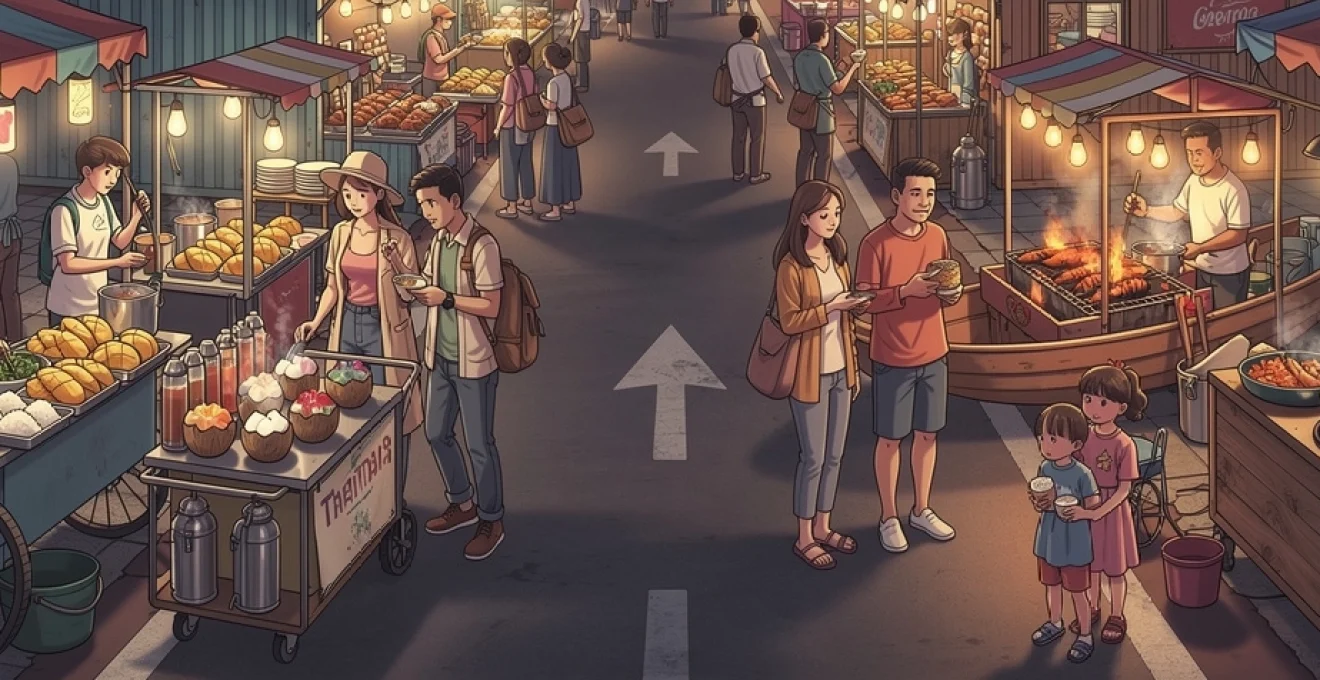
Bangkok’s street food scene represents one of the world’s most vibrant culinary landscapes, where ancient traditions merge with contemporary innovation across hundreds of night markets and food stalls. The city’s nocturnal dining culture transforms neighbourhoods into bustling gastronomic theatres, offering authentic Thai flavours at prices that remain accessible to locals and visitors alike. From traditional cart-based vendors serving regional specialities to modern food courts featuring Instagram-worthy presentations, Bangkok’s night markets have evolved into comprehensive cultural experiences that extend far beyond simple dining.
The diversity of Bangkok’s street food ecosystem reflects Thailand’s rich culinary heritage, with vendors specialising in everything from som tam (green papaya salad) to intricate dessert preparations that have been passed down through generations. Understanding this complex network of markets, vendors, and food traditions requires strategic planning and cultural awareness to maximise both culinary discoveries and authentic local experiences.
Bangkok’s legendary night market districts and street food ecosystems
Bangkok’s night market districts function as interconnected food ecosystems, each developing distinct personalities based on their location, history, and primary customer base. These areas represent more than mere commercial spaces; they serve as cultural hubs where traditional Thai social customs blend with modern urban dining trends. The city’s most prominent night market districts have evolved over decades, creating unique vendor networks and establishing specialised food offerings that reflect both local preferences and tourist expectations.
Chatuchak weekend market: thailand’s largest street food complex
Chatuchak Weekend Market operates as Thailand’s most extensive street food complex, featuring over 15,000 stalls across 35 acres of dedicated commercial space. This massive market transforms every weekend into a comprehensive culinary destination, where traditional Thai street vendors operate alongside international food concepts. The market’s food sections are strategically organised to accommodate different dining preferences, from quick snacks for shoppers to substantial meals for families spending entire days exploring.
The market’s vendor selection process ensures quality standards while maintaining competitive pricing structures. Established vendors often occupy prime locations near main thoroughfares, while newer establishments typically start in less visible areas before earning advancement to better positions based on customer satisfaction and sales performance. This internal hierarchy creates natural quality control mechanisms that benefit consumers seeking reliable dining options.
Rot fai ratchada night market: contemporary urban food court architecture
Rot Fai Ratchada represents Bangkok’s modern approach to night market design, featuring purpose-built structures that accommodate both traditional street food vendors and contemporary dining concepts. The market’s architectural framework includes proper ventilation systems, organised waste management, and designated seating areas that enhance the overall dining experience. This infrastructure allows vendors to focus on food preparation rather than basic operational challenges common in more traditional market settings.
The market’s layout encourages exploration through interconnected food zones, each specialising in different culinary categories. Dessert sections feature elaborate Thai sweets and international fusion options, while main dining areas focus on regional Thai specialities and grilled seafood preparations. This organisation system helps visitors navigate the extensive food options while ensuring vendors can develop specialised reputations within their designated categories.
Wang thonglang night market: traditional local vendor networks
Wang Thonglang Night Market preserves traditional vendor network structures that have characterised Bangkok’s street food culture for generations. Family-operated stalls dominate this market, with many businesses spanning multiple generations of the same families. These hereditary food traditions create authentic dining experiences that remain largely unchanged despite Bangkok’s rapid modernisation.
The market’s pricing structure reflects its primarily local customer base, with portions sized for regular consumption rather than tourist expectations. Vendors here often maintain relationships with specific suppliers, ensuring ingredient quality while keeping costs manageable. This traditional supply chain approach results in seasonal menu variations that follow natural ingredient availability rather than standardised year-round offerings.
Huai khwang night market: authentic northeastern thai street cuisine
Huai Khwang Night Market specialises in Isaan cuisine, representing Thailand’s northeastern regional food traditions through authentic vendor preparations. The market features numerous stalls dedicated to som tam variations, grilled meats, and fermented fish preparations that reflect the agricultural heritage of Thailand’s Isaan provinces. Many vendors here originate from northeastern Thailand, bringing traditional recipes
that have been refined over decades of family practice. Visitors looking to understand Bangkok’s night markets beyond the tourist trail will find Huai Khwang an ideal case study in how regional migration shapes urban food culture. Spicy flavour profiles, sticky rice accompaniments, and charcoal-grilled preparations dominate here, with late-night opening hours catering to shift workers and service industry staff who rely on the market for everyday meals.
Prices and portion sizes in Huai Khwang Night Market are calibrated for frequent local consumption rather than one-time indulgences. You will notice extensive use of fresh herbs, fermented ingredients, and chilli-based sauces, which are prepared in high volumes each evening. For travellers interested in exploring authentic northeastern Thai street cuisine, it is advisable to start with milder som tam variations and gradually experiment with more pungent dishes such as pla ra (fermented fish) as familiarity with the flavour spectrum increases.
Street food vendor classification systems and culinary specialisations
Bangkok’s street food landscape can appear chaotic at first glance, but it actually operates according to informal classification systems based on equipment, mobility, and culinary expertise. Understanding these vendor types helps you predict menu offerings, service speed, and food quality across different night markets. Broadly, vendors fall into four operational categories: cart-based mobile vendors, fixed stalls, restaurant-style units, and specialised dessert and beverage operators.
Each category fulfils a specific role within Bangkok’s street food markets, much like different departments in a well-organised restaurant ecosystem. Cart-based vendors supply high-volume, quick-turnover snacks; fixed stalls handle signature noodle and stir-fry dishes; restaurant-style operations focus on group dining and grilled seafood; dessert and beverage specialists complete the meal cycle with sweets and drinks. Recognising these patterns allows you to design more efficient tasting strategies when exploring multiple markets in a single evening.
Cart-based mobile vendors: som tam and mango sticky rice specialists
Cart-based mobile vendors form the most flexible layer of Bangkok’s street food system, moving between intersections, alleyways, and market peripheries based on pedestrian flow. These vendors typically specialise in quick-preparation items that require minimal fixed infrastructure, such as som tam, grilled skewers, and khao niao mamuang (mango sticky rice). Their mobility allows them to concentrate near transport hubs and market entrances, where hungry visitors first arrive.
Som tam carts illustrate how this model works in practice. Equipped with large mortars and pestles, pre-shredded green papaya, and trays of fresh ingredients, vendors can customise each order in under two minutes. You can specify spice level, sweetness, and protein additions such as salted egg or fermented fish. Mango sticky rice vendors follow a similar pattern, steaming glutinous rice in stacked bamboo baskets and slicing ripe mangoes to order, ensuring high turnover and freshness.
When evaluating cart-based vendors, look for clear separation between raw and cooked ingredients, frequent customer turnover, and clean cutting boards and knives. Because these vendors operate at the edge of formal regulation, basic visual assessments of hygiene, ingredient temperature, and hand-washing habits become your primary quality controls. In high-traffic night markets, the longest queues at mobile carts often indicate consistent flavour and safe preparation practices.
Fixed stall operations: pad thai and boat noodle heritage vendors
Fixed stalls represent the backbone of Bangkok’s night market food culture, occupying semi-permanent structures with dedicated cooking stations and basic storage facilities. These units usually specialise in one or two core dishes that define their reputation, such as pad thai, boat noodles, or pad kra pao (basil stir-fry). Many have operated from the same location for decades, building loyal customer bases and refining tightly focused menus.
Heritage boat noodle vendors, for example, rely on deeply seasoned broths simmered for hours, enriched with spices, herbs, and occasionally cow or pig blood for richness. These stalls typically offer small bowls designed to encourage multiple orders, allowing customers to sample different noodle types and broth variations. Pad thai stalls follow a similar specialisation pattern, controlling heat precisely in large woks to achieve the characteristic smokiness and balanced flavour profile.
Because fixed stalls operate under more consistent conditions, they can maintain higher standards for ingredient storage, refrigeration, and waste disposal compared with mobile carts. You will often see clear signage, framed newspaper reviews, or awards that indicate long-standing reputations. For visitors navigating Bangkok street food for the first time, choosing established fixed stalls in busy night markets offers a reliable introduction to classic noodle and stir-fry dishes.
Restaurant-style night market establishments: grilled seafood and isaan cuisine
At the largest Bangkok night markets, restaurant-style establishments bridge the gap between informal street stalls and conventional indoor restaurants. These operations typically feature covered seating areas, table service, and extensive menus that include grilled seafood, hotpots, and full Isaan-style sharing meals. They are particularly prominent in markets such as Talad Rot Fai Srinakarin and Jodd Fairs Rama 9, where visitors often combine shopping with social dining.
Grilled seafood restaurants showcase Bangkok’s access to fresh marine ingredients, displaying ice-filled counters of prawns, squid, shellfish, and whole fish. Customers select items by weight before they are seasoned and cooked over charcoal grills, often accompanied by spicy dipping sauces and shared plates of som tam and sticky rice. Isaan-focused venues operate on a similar shared-plate model, encouraging groups to order multiple dishes that balance spicy, sour, salty, and herbal notes.
From a practical standpoint, these restaurant-style units are ideal when you plan to spend several hours at a night market and prefer a more structured dining experience. They usually accept larger groups, offer restrooms, and sometimes provide live music. However, because of higher overhead costs, prices here can be 20–40% higher than smaller stalls. Reviewing bilingual menus, checking seafood display temperatures, and observing how quickly tables turn can help you judge value and freshness before committing to a full meal.
Dessert and beverage specialists: thai tea and coconut ice cream artisans
No exploration of Bangkok’s food stalls and night markets is complete without understanding dessert and beverage specialists. These vendors focus exclusively on drinks and sweets, ranging from traditional coconut-based desserts to modern bubble tea concepts. Their presence transforms markets into full-service dining environments, allowing you to follow a complete meal progression from savoury dishes to sweet finishes and refreshments.
Thai tea operators illustrate the craftsmanship involved in seemingly simple beverages. Using strong-brewed Ceylon or Assam-based tea blends, condensed milk, and evaporated milk, they perfect the balance between sweetness and tannins. Repeated pouring between metal canisters both aerates and cools the tea, creating the familiar frothy texture served over crushed ice. Similarly, coconut ice cream vendors often churn small-batch mixtures enriched with coconut milk and palm sugar, then serve scoops in coconut shells with toppings like sticky rice, peanuts, or sweet corn.
In recent years, night markets have also seen a rise in specialty coffee stalls, fruit smoothie bars, and fusion dessert stands offering items such as Thai tea crepes or pandan waffles. When selecting dessert and beverage vendors, prioritise those using visible fresh ingredients and avoiding pre-mixed or artificially coloured bases where possible. Treat these stalls as the final stop in your night market route, giving yourself time to sit, cool down, and observe the surrounding street life.
Navigation strategies for bangkok’s premium food market locations
Efficient navigation is crucial when exploring Bangkok’s premium food market locations, particularly if you aim to sample multiple dishes in a limited timeframe. The city’s most popular night markets can easily overwhelm first-time visitors with their size and density. By approaching them as structured environments—with identifiable zones, logical traffic flows, and predictable vendor clusters—you can move more strategically and avoid common pitfalls such as backtracking or missing entire sections.
Public transport integration further shapes navigation strategies. Many of Bangkok’s night markets are deliberately positioned near BTS Skytrain or MRT stations to facilitate access, while others require short taxi or motorcycle connections from key transit nodes. Understanding these access points, combined with basic internal mapping of food zones, allows you to design market visits that minimise walking distances and maximise time spent actually eating and observing.
Saphan phut night market: wholesale district food corridor mapping
Saphan Phut Night Market, located near Memorial Bridge along the Chao Phraya River, sits at the intersection of retail and wholesale districts. Historically associated with clothing and accessories, it has evolved to include concentrated street food corridors running parallel to the main shopping lanes. These corridors cluster snack vendors, noodle stalls, and grilled meat carts into clearly defined strips, making it easier to navigate by food category.
To approach Saphan Phut efficiently, it is useful to imagine the market as a series of parallel “food streets” layered beside the main retail spine. One corridor may focus on fried snacks and skewers, another on noodles and rice dishes, and yet another on drinks and desserts. By walking the full length of each corridor before purchasing, you can quickly map available options and then double back to your preferred vendors, rather than stopping at the first stall you encounter.
Because Saphan Phut is reachable via river boat and nearby bus routes, many visitors arrive in waves tied to transport schedules. Planning your visit slightly outside peak arrival times—around 18:00 or after 21:30—can significantly reduce congestion in narrow food lanes. As with other wholesale-adjacent markets, keep an eye on moving trolleys and delivery carts, which share the same pathways as diners and can influence your route choices.
Talad rot fai srinakarin: vintage market food zone layout
Talad Rot Fai Srinakarin, often referred to as the Srinakarin Train Night Market, combines vintage retail zones with extensive food areas arranged in a semi-grid pattern. The market’s layout can be divided into three primary components: the Market Zone with mainstream food and fashion stalls, the Warehouse Zone with vintage and antique shops, and dedicated open-air food courts interspersed between them. Understanding this structure before arrival simplifies both navigation and dining decisions.
A practical strategy is to begin in the main food court near the central entrance, where you will find high-density clusters of grilled seafood, noodles, and Thai classics. From there, you can move outward toward the Warehouse Zone, using the vintage shops as orientation landmarks while identifying secondary food pockets offering desserts, craft beer, and regional specialities. Because the market covers a large area, treating each section as a separate “neighbourhood” helps prevent disorientation.
Wayfinding at Talad Rot Fai Srinakarin is facilitated by wide central aisles and visible landmarks such as retro cars, neon signs, and container bars. You can use these as reference points much like station names on a transit map, mentally linking specific food zones to memorable visual cues. For example, you might associate a particular cluster of Isaan stalls with a nearby classic car display, making it easier to return later if you decide to sample more dishes.
Indy night market talad rod fai: boutique vendor cluster analysis
Indy Night Market Talad Rod Fai, sometimes called the “Indy Market,” operates on a smaller scale than Srinakarin but follows a similar principle of curated clusters. Here, boutique fashion, craft vendors, and compact food stalls are arranged in tight rows that encourage strolling and impulse purchases. The food component is interwoven with retail, rather than isolated in a single court, which changes how you should plan your route.
Instead of heading directly to a central food area, you can treat the entire market as a continuous loop, sampling small portions as you progress. Start with light snacks—such as grilled skewers or fried appetisers—then transition to noodle bowls or rice dishes once you have a better sense of the available options. Because vendor clusters often repeat categories (several dessert carts, multiple Thai tea stands), mapping them mentally as you walk helps avoid redundancy.
For efficient navigation, identify two or three anchor points, such as a live music stage, a central bar, or an entrance sign. Use these anchors to orient yourself when moving between rows, especially if you are visiting during peak hours when crowds can obscure smaller lanes. If you are travelling in a group, agreeing on a central meeting point before dispersing to explore food stalls can prevent confusion later in the evening.
Jodd fairs rama 9: modern food court spatial organisation
Jodd Fairs Rama 9 exemplifies Bangkok’s new generation of design-conscious night markets, with clearly organised food courts, curated vendor selections, and wide walkways. Unlike older markets that grew organically, Jodd Fairs was planned with deliberate zoning for food, retail, and seating areas. This results in a more intuitive navigation experience, particularly for visitors who may feel intimidated by the labyrinthine nature of traditional markets.
The main food sections are typically grouped by cuisine type, with dedicated lanes for Thai favourites, regional specialities, and international street food. Central seating islands provide shared tables, allowing you to purchase from multiple vendors and reconvene with your group in one place. For those intent on photographing popular dishes or stalls, this structured layout makes it easier to identify and revisit visually striking vendors without getting lost.
To optimise your visit, consider conducting a full circuit of the main food court before ordering, noting which stalls have the longest lines and which dishes appear most frequently on diners’ tables. This simple observational method often reveals signature items and high-performing vendors. Because Jodd Fairs is directly accessible from MRT Rama 9 via a short walk, you can also time your arrival to coincide with market opening hours, securing seats before peak crowds build around 19:30–21:00.
Food safety protocols and vendor quality assessment techniques
While Bangkok’s street food enjoys a strong reputation for flavour and affordability, maintaining basic food safety standards is essential for a positive experience. Most high-traffic night markets operate under local health regulations and informal community oversight, but vendor practices still vary. As a visitor, you can apply simple assessment techniques to reduce risk without sacrificing culinary exploration.
Begin by observing overall stall cleanliness, including work surfaces, cutting boards, and utensil storage. Vendors who regularly wipe down their stations, separate raw and cooked items, and use tongs rather than bare hands for serving typically maintain higher hygiene standards. High turnover is another positive indicator: dishes prepared continuously and sold quickly are less likely to sit at room temperature for extended periods, which is especially important in Bangkok’s humid climate.
When it comes to specific foods, grilled and freshly cooked dishes are generally safer choices than items that have been pre-prepared and displayed for long periods. For salads and fresh herbs, check that ingredients are stored in covered containers and replenished frequently. If ice is used in drinks or dessert presentations, pay attention to whether it comes from sealed commercial bags rather than large exposed blocks, as commercially produced ice in Thailand must meet regulated water quality standards.
A cautious yet open-minded approach works best. If a vendor appears overwhelmed, disorganised, or inattentive to cross-contamination—such as using the same knife for raw meat and ready-to-eat food—it may be wise to move on, regardless of how appealing the menu looks. Carrying basic supplies such as hand sanitiser and tissues allows you to clean your hands before eating, especially when using shared tables or handling skewers and finger foods.
Cultural etiquette and local dining customs in bangkok street markets
Respecting local dining customs enhances your experience in Bangkok’s night markets and helps maintain the friendly, communal atmosphere that defines these spaces. Many social norms are unspoken but easy to follow once you understand their underlying logic. In essence, night markets function as shared living rooms for Bangkok residents, where politeness, flexibility, and cooperation are valued.
Seating is often communal, with plastic stools and tables shared between unrelated groups. It is perfectly acceptable to ask, with a smile, if a free seat is available at an occupied table. When finished eating, stacking your dishes neatly or moving trays to designated return areas, if provided, signals respect for the next diners and helps stall operators manage high turnover. Speaking in a moderate tone and keeping bags or shopping out of walkways also contributes to smoother crowd flow.
Payment etiquette varies slightly depending on vendor type, but cash in small denominations remains the standard across most markets. You usually pay after eating at noodle and rice stalls, while skewers, desserts, and drinks are often paid for upfront. If you wish to bargain at markets that combine food and non-food items, limit negotiation to retail goods; haggling over food prices is uncommon and can be perceived as disrespectful, especially at family-run stalls.
Basic Thai phrases such as khop khun krap/ka (thank you), aroi mak (very delicious), and mai phet (not spicy) are widely appreciated and can lead to more engaging interactions with vendors. As with many aspects of Thai culture, maintaining a relaxed, good-humoured attitude—even when navigating crowds or queues—aligns with local expectations and often results in better service and occasional extra samples.
Seasonal food availability and peak operating hours analysis
Bangkok’s status as a year-round food destination can obscure the subtle seasonal patterns that influence night market offerings. While many staples are available in every month, certain fruits, desserts, and regional specialities appear only during specific periods. Understanding these cycles helps you align your visit with peak freshness and variety, particularly if you are interested in seasonal Thai street food experiences.
For example, mango sticky rice reaches its fullest expression during mango season, typically March to June, when premium varieties such as Nam Dok Mai are most abundant. During the cool season (November to February), grilled meats and hot soups like boat noodles and tom yum become especially popular in evening markets, aligning with slightly lower temperatures. Rainy season, from May to October, brings an influx of tropical fruits such as durian, mangosteen, and rambutan, many of which appear in improvised dessert stalls and fruit carts.
Operating hours also follow consistent patterns across Bangkok’s street food and night markets. Most night markets begin setting up around 16:00–17:00, with peak activity occurring between 19:00 and 22:00. Some, particularly those near entertainment districts or transportation hubs, extend operations until midnight or later. If you prioritise maximum vendor availability and atmosphere, arriving around 19:00 offers the best balance between selection and ambience. For those who prefer thinner crowds and shorter queues, arriving shortly after opening or closer to closing time can be more comfortable.
Public transport schedules indirectly shape these rhythms. BTS and MRT services typically run until around midnight, influencing when both locals and visitors choose to depart night markets. Planning your exit strategy in advance—whether by train, taxi, or ride-hailing service—ensures you can fully enjoy Bangkok’s street food culture without worrying about last-minute transport issues. By aligning your tasting schedule with seasonal availability and peak operating hours, you can experience Bangkok’s food stalls and night markets at their most dynamic and flavourful.