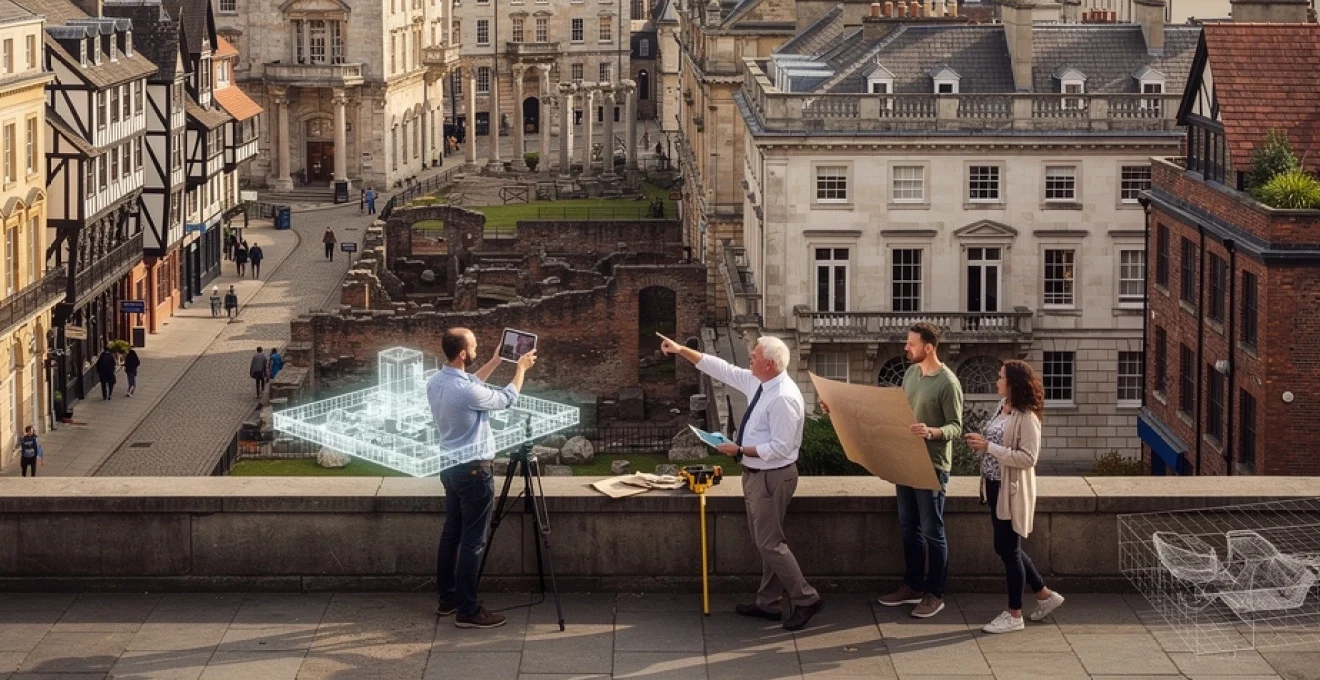
Historic cities serve as living repositories of human civilisation, where architectural forms transcend mere functionality to become profound expressions of cultural identity. The relationship between built environments and collective memory demonstrates how physical structures shape not only urban landscapes but also the very essence of communal belonging. From the cobblestone streets of medieval towns to the grand boulevards of imperial capitals, architecture functions as cultural DNA, encoding centuries of social values, technological innovation, and aesthetic preferences into the urban fabric.
Understanding this intricate relationship becomes increasingly crucial as globalisation threatens to homogenise urban environments worldwide. The preservation of architectural heritage represents far more than aesthetic conservation; it maintains the fundamental character that distinguishes one place from another. These distinctive urban environments continue to influence contemporary life, tourism patterns, and economic development while serving as tangible connections to ancestral wisdom and traditional building practices.
Architectural heritage as cultural DNA: morphological analysis of historic urban centres
The morphological characteristics of historic cities reveal how architectural heritage functions as cultural DNA, transmitting essential information about community values, social structures, and environmental adaptations across generations. This architectural genetics manifests through building typologies, spatial arrangements, and material choices that reflect centuries of evolutionary development. The analysis of urban morphology demonstrates how physical forms encode cultural narratives, creating distinctive urban personalities that remain recognisable despite ongoing transformations.
Contemporary urban planners increasingly recognise the importance of morphological analysis in understanding how historic cities maintain their cultural authenticity. The study of building heights, street widths, plot divisions, and public space hierarchies reveals underlying principles that governed traditional urban development. These morphological patterns provide crucial insights into how communities historically organised themselves spatially, reflecting social stratification, economic activities, and cultural practices through built form.
Vernacular building techniques and regional material culture in bath’s georgian terraces
Bath’s Georgian terraces exemplify how vernacular building techniques and regional material culture create distinctive architectural identities that transcend individual structures. The uniform use of honey-coloured Bath stone, quarried locally since Roman times, demonstrates how geological resources fundamentally shape urban character. This limestone’s unique properties enabled the creation of elegant curved terraces and intricate classical detailing that defines Bath’s visual identity.
The Georgian development of Bath between 1720 and 1840 represents a masterclass in coordinated urban design that respects local materials while implementing sophisticated architectural principles. The terraced housing typology, with its repeating rhythm of identical facades punctuated by subtle variations, creates visual harmony whilst maintaining individual property identity. The standardisation of window proportions, door designs, and decorative elements demonstrates how vernacular traditions can be elevated through systematic application of classical architectural principles.
The building techniques employed in Bath’s terraces reveal deep understanding of local climate conditions and material properties. The use of dressed stone facades with rubble stone backing provided excellent thermal mass, whilst the careful attention to rainwater management through elegant downpipes and guttering systems reflects centuries of adaptation to the local environment. These pragmatic solutions, refined over generations, created architectural solutions that remain both beautiful and functional after more than two centuries.
Typological evolution of medieval street patterns in york’s shambles district
York’s Shambles district preserves one of Europe’s best-surviving examples of medieval urban typology, where narrow streets and overhanging timber-framed buildings create an atmospheric reminder of medieval commercial life. The distinctive jettied construction, where upper floors project beyond the ground floor, reflects both practical building economies and social customs of the medieval period. This building technique maximised upper floor space whilst maintaining narrow street frontages dictated by medieval property divisions.
The evolution of York’s medieval street patterns demonstrates how commercial activities shaped urban form through centuries of organic development. The narrow width of Shambles, originally designed for butchers’ shops, allowed for efficient waste management and provided natural cooling for meat storage. The gradual encroachment of buildings into street space reflects the ongoing negotiation between private interests and public access that characterised medieval urban development.
Contemporary analysis of the Shambles reveals how medieval building regulations and guild practices created distinctive architectural typologies that remain functionally relevant today. The combination of commercial ground floors with residential upper levels established mixed-use patterns that modern urban planning increasingly recognises as sustainable development models. The survival of these medieval patterns demonstrates their inherent resilience and adaptability to changing commercial needs.
Palim
Palimpsest urbanism: layered archaeological narratives in rome’s campo marzio
Rome’s Campo Marzio district offers a textbook example of palimpsest urbanism, where successive architectural layers coexist rather than erase one another. Ancient stadiums, imperial baths, Renaissance palazzi, Baroque churches, and modern infrastructure overlap within a compressed urban fabric. Each intervention has partially adapted, partially overwritten, and partially revealed its predecessors, creating a spatial narrative that can be read like a manuscript with multiple revisions.
This layered condition profoundly shapes the cultural identity of Rome as a city where history is not a backdrop but an active presence in daily life. The irregular street network follows the ghost lines of ancient structures such as the Stadium of Domitian and the Theatre of Pompey, even when those monuments are no longer fully visible. The persistence of these archaic geometries underpins a sense of continuity that contemporary Romans and visitors experience when moving through Campo Marzio’s streets and piazzas.
Urban archaeology and sensitive architectural infill have become essential tools in managing this complex palimpsest. Rather than pursuing tabula rasa redevelopment, planners and architects work with fragmentary remains, sightlines, and buried structures to inform new projects. When you walk through Campo Marzio today, you are effectively navigating a three-dimensional archive in which each facade, courtyard, and alleyway adds another line to the ongoing story of Rome.
Baroque spatial hierarchies and social stratification in prague’s lesser town
Prague’s Lesser Town (Malá Strana) exemplifies how Baroque urbanism encoded social order into spatial hierarchies. Following the Counter-Reformation and Habsburg consolidation of power, the district was reshaped with grand aristocratic palaces stepping down the slopes beneath Prague Castle, while modest dwellings and artisan workshops clustered in secondary streets. This deliberate composition turned the entire quarter into a theatrical setting where processions, ceremonies, and everyday life reinforced social stratification.
Baroque churches, such as St. Nicholas, occupy dominant visual and topographical positions, acting as both spiritual anchors and urban reference points. Their elaborate facades, vertical emphasis, and orchestrated approach routes frame key vistas and choreograph movement through space. The sequencing of narrow lanes opening suddenly into expansive squares operates much like stagecraft, directing attention and emotion, and reminding inhabitants of the prevailing religious and political order.
Today, these Baroque spatial hierarchies still influence how the Lesser Town is perceived and used. Diplomatic buildings, cultural institutions, and high-end residences often occupy former noble palaces, while tourism follows traditional ceremonial routes between the castle, churches, and river. For contemporary designers, understanding these inherited hierarchies is crucial when introducing new functions, ensuring that interventions respect the district’s carefully calibrated balance between monumentality and intimate urban spaces.
Phenomenological impact of monumental architecture on collective memory formation
Monumental architecture plays a central role in how historic cities cultivate and transmit collective memory. Beyond their physical scale, monuments and landmark buildings structure emotional experiences, rituals, and shared narratives. When we speak of a city’s identity, we often invoke the silhouette of its cathedral, the profile of its castle, or the volume of its civic halls long before we recall its statistical data or administrative boundaries.
Phenomenology, the study of lived experience, helps explain why these structures are so powerful in shaping urban cultural identity. Monumental architecture orchestrates light, sound, proportion, and movement to create memorable episodes in everyday life. Seasonal festivals, political protests, religious processions, and personal milestones often unfold in front of or within these spaces, embedding them deeply into communal memory. As a result, any change to such buildings or their immediate surroundings can feel like a disturbance not just of the skyline, but of the city’s shared story.
Historic cities that manage their monumental architecture carefully tend to maintain stronger place attachment among residents and greater distinctiveness in global perception. Conversely, when monuments are neglected, trivialised by inappropriate development, or reduced to mere tourist backdrops, the city’s narrative coherence can erode. For urban decision-makers, the question is not only how to preserve these structures physically, but also how to sustain the living traditions and daily practices that keep them meaningful.
Sacred geometry and pilgrimage routes: canterbury cathedral’s urban magnetism
Canterbury Cathedral illustrates how sacred geometry and pilgrimage routes generate lasting urban magnetism. Since the Middle Ages, the cathedral’s carefully proportioned volumes, axial alignments, and ritual pathways have organised both spiritual practice and urban growth. The building’s longitudinal axis, oriented towards the high altar and the shrine of Thomas Becket, once extended beyond the walls into a wider network of approach roads, waystations, and hospices serving pilgrims from across Europe.
The cathedral precinct, with its cloisters, chapter house, and ancillary buildings, functioned as a semi-autonomous urban enclave. Streets in the surrounding city bent and narrowed to frame glimpses of towers and buttresses, turning the journey towards the cathedral into a sequence of revelations. This spatial choreography encouraged a rhythm of anticipation and arrival that still shapes visitor experience today, even for those arriving by train or coach rather than on foot.
In contemporary Canterbury, heritage management and city branding continue to revolve around this sacred core. Wayfinding strategies, pedestrianisation measures, and interpretive signage consciously reference historic pilgrimage routes. For planners and cultural managers, maintaining these spatial and symbolic connections is essential to sustaining the city’s identity as a spiritual and cultural destination rather than just another retail centre. The lesson for other historic cities is clear: when spiritual or symbolic landscapes are respected in urban design, they can continue to anchor collective memory over centuries.
Civic symbolism through neoclassical facades in edinburgh’s new town
Edinburgh’s New Town offers a contrasting example in which civic identity is articulated through Neoclassical architecture rather than medieval or sacred forms. Developed from the late 18th century as a rational counterpoint to the crowded Old Town, the New Town employed terraces, squares, and axial vistas to express Enlightenment ideals of order, reason, and civic virtue. Its restrained yet monumental facades communicate a collective aspiration towards progress and public responsibility.
Key public buildings and major street fronts rely on classical proportions, columnar orders, and pedimented gateways to convey stability and dignity. Even where individual houses are privately owned, the outward uniformity of the facades reinforces a sense of shared citizenship. The recurring visual language of rusticated basements, piano nobile windows, and continuous cornice lines creates a coherent urban stage for political life, commerce, and everyday social interaction.
Today, the New Town’s Neoclassical architecture remains central to Edinburgh’s cultural identity and economic vitality, underpinning its UNESCO World Heritage status and its reputation as a festival city. Regulatory frameworks controlling alterations to facades, rooflines, and street furniture are not simply aesthetic constraints; they are instruments for protecting the semiotic system through which the city communicates its values. For contemporary architects working in the New Town, the challenge is to design in a way that dialogues with this civic symbolism without resorting to superficial pastiche.
Industrial heritage transformation: manchester’s cotton mill adaptive reuse strategies
Manchester’s former cotton mills reveal how industrial heritage can be transformed into a catalyst for renewed cultural identity. Once emblematic of pollution, exploitation, and urban blight, these vast brick structures now house creative industries, housing, and cultural venues. Their conversion demonstrates how adaptive reuse strategies can reconcile heritage conservation with contemporary economic needs and sustainability goals.
Adaptive reuse projects in districts like Ancoats typically retain load-bearing brick walls, cast-iron columns, and generous floor spans while inserting new services, insulation, and circulation cores. This approach preserves the tactile memory of industrial labour—the patina of bricks, the rhythm of windows, the height of spaces—while enabling new uses. Exposed structural elements act as narrative devices, reminding occupants of the city’s role in the Industrial Revolution and its global cotton trade connections.
From a policy perspective, Manchester’s regeneration shows that industrial architecture can anchor a post-industrial identity grounded in creativity and innovation rather than erasing the manufacturing past. Incentives such as heritage-led regeneration grants, flexible zoning, and design guidelines have encouraged private developers to retain and reinterpret mills rather than demolish them. For cities facing similar post-industrial transitions, Manchester offers practical evidence that cultural identity and economic restructuring can reinforce one another when industrial heritage is strategically reimagined.
Defensive architecture narratives: carcassonne’s fortified identity preservation
Carcassonne, with its double ring of medieval walls and fairy-tale towers, embodies the potent narrative power of defensive architecture. The fortified city, dramatically restored in the 19th century, communicates a clear story of siege, protection, and frontier life that strongly shapes both local and international perceptions. Its architecture does more than illustrate military history; it frames a collective identity rooted in resilience and regional distinctiveness.
The citadel’s gates, barbicans, and ramparts structure visitor movement and visual experience, constantly reminding us of the city’s former strategic significance. Walking along the walls, one experiences an elevated linear promenade that offers expansive views of the surrounding landscape, reinforcing the idea of vigilance and territorial awareness. The contrast between the dense, inward-looking medieval core and the more open modern town below further dramatises the protective role of the fortifications.
However, Carcassonne also highlights the complexities of restoration and identity construction. Viollet-le-Duc’s interventions, including conical slate roofs not historically accurate for the region, have become part of the city’s accepted image despite scholarly criticism. This raises important questions: when does preservation become reinvention, and how do such choices influence contemporary cultural identity? For heritage professionals, Carcassonne is both a triumph of defensive architecture preservation and a cautionary tale about the power of restoration philosophies to fix a particular, sometimes simplified, version of the past.
Morphological continuity versus contemporary intervention dilemmas
Historic cities constantly face dilemmas about how to accommodate growth and changing needs without undermining morphological continuity. Street patterns, plot structures, and characteristic building heights form a kind of urban skeleton that supports cultural identity. When new interventions disregard this underlying framework, they risk fragmenting the city’s narrative and diminishing its sense of place.
One of the central challenges is reconciling the demands of modern infrastructure, housing standards, and climate adaptation with inherited urban forms. Wider roads for cars, large-footprint retail complexes, and high-rise development often conflict with fine-grained medieval or early modern fabrics. Decisions about where to densify, where to preserve, and where to transform effectively determine which aspects of a city’s identity will persist and which may fade.
Several European cities have adopted design codes and morphological guidelines that aim to manage this tension. These frameworks typically address building envelopes, street front continuity, and the relationship between public and private space, rather than prescribing stylistic details. For practitioners, a useful rule of thumb is to treat the existing fabric as a set of enduring patterns—such as block size or courtyard typologies—that can be reinterpreted in contemporary materials and forms, rather than as a museum to be frozen in time.
From a practical standpoint, involving local communities in design decisions can help balance continuity and change. Residents often have deep, experiential knowledge of how particular spaces function and what they symbolise, which may not be apparent from plans alone. By engaging with this lived understanding, you can design contemporary interventions that respond to current needs while reinforcing, rather than eroding, the morphological and cultural logic of the historic city.
Semiotics of architectural language in multi-cultural urban contexts
In multicultural historic cities, architecture operates as a complex semiotic system in which forms, ornaments, and spatial arrangements communicate cultural affiliations and social meanings. Mosques, synagogues, churches, guild halls, and bathhouses may coexist within a few streets, each using distinct architectural languages to signal identity and belonging. Reading these signs is key to understanding how diverse communities have negotiated space and visibility over time.
Façade elements such as inscriptions, iconography, colours, and roof forms can indicate religious orientation, ethnic origin, or professional status. Subtle variations in door height, window proportion, or courtyard layout often reflect historical regulations or social hierarchies that shaped who could build what, and where. In cities like Sarajevo, Istanbul, or Fez, overlapping semiotic systems create layered identities, where a single street may tell stories of coexistence, conflict, and exchange.
Contemporary interventions can unintentionally disrupt these semiotic networks if they ignore the symbolic meanings embedded in the existing built environment. Generic curtain-wall facades or oversized branding can flatten distinctions that once communicated cultural diversity and local specificity. For designers and planners, the challenge is to develop new architectural languages that converse with, rather than silence, the historic signs in the urban fabric.
One effective strategy is to work with abstracted motifs, material palettes, or spatial patterns derived from local traditions, instead of directly copying historical styles. This approach allows new buildings to participate in the city’s ongoing semiotic conversation without pretending to be old. When you treat architecture as a language with grammar, vocabulary, and dialects, you can design interventions that enrich cultural identity instead of diluting it.
Conservation philosophy applications: ruskin versus viollet-le-duc methodologies
The contrasting conservation philosophies of John Ruskin and Eugène Viollet-le-Duc continue to shape how historic cities manage their architectural heritage. Ruskin advocated for minimal intervention, emphasising the moral value of age, patina, and gradual decay. For him, restoring a building to a conjectured original state was tantamount to falsifying history. Viollet-le-Duc, by contrast, supported comprehensive restoration, often completing or even redesigning structures in a way he believed expressed their ideal form.
In practice, many historic cities oscillate between these positions. Ruskinian approaches favour consolidation, repair, and careful documentation, allowing buildings to bear visible traces of time and use. This method reinforces a sense of authenticity, as residents and visitors can read the layers of history in weathered stone, mismatched repairs, and adaptive modifications. However, strict non-intervention can limit functional adaptation, potentially consigning buildings to obsolescence.
Viollet-le-Duc’s methodology, exemplified by his work at Carcassonne and Notre-Dame de Paris (prior to the 2019 fire), often results in visually coherent ensembles that strongly shape popular perceptions of the past. Yet critics argue that such restorations risk imposing a singular, sometimes romanticised, narrative on complex historical realities. When restoration choices harden into a new “authentic” image, alternative readings of history can be marginalised.
Today, international charters and organisations such as UNESCO and ICOMOS encourage more nuanced, context-specific approaches. Integrative strategies might combine Ruskin’s respect for material ageing with Viollet-le-Duc’s willingness to intervene, guided by rigorous research, reversible techniques, and stakeholder participation. For professionals, the key question is not simply “restore or not?” but “how will this intervention affect the ways current and future communities understand and inhabit their city’s past?”
Digital documentation technologies for architectural heritage preservation
Digital technologies have transformed how we document, analyse, and safeguard the architectural heritage of historic cities. High-resolution laser scanning, photogrammetry, and drone-based surveying now enable the creation of precise three-dimensional models of buildings and urban ensembles. These digital twins capture not only geometry, but also surface conditions and material textures, providing a detailed baseline for monitoring change over time.
Such tools proved particularly valuable in recent emergencies, such as the 2019 Notre-Dame fire, where pre-existing 3D scans and models informed stabilisation and reconstruction strategies. In earthquake-prone or conflict-affected regions, comprehensive digital documentation can function as an insurance policy against irreversible loss, preserving information that might otherwise vanish. At the same time, open-access platforms and virtual reality experiences derived from these datasets make heritage more accessible to global audiences, potentially strengthening support for its preservation.
However, the adoption of digital documentation also raises important questions. Who controls the data, and how is it maintained over decades as software and hardware evolve? Can digital surrogates ever substitute for the embodied experience of walking through a historic street or entering a centuries-old building? For practitioners, the goal should be to use technology as a complement, not a replacement, for physical conservation and community engagement.
Looking ahead, integrating digital models into planning processes offers powerful opportunities. You can simulate the impact of proposed interventions on skylines, view corridors, and microclimates before construction begins, reducing the risk of harm to heritage values. When combined with participatory tools—such as interactive visualisations that allow residents to explore alternatives—digital documentation becomes not just a record of the past, but an active instrument for shaping culturally sensitive futures in historic cities.