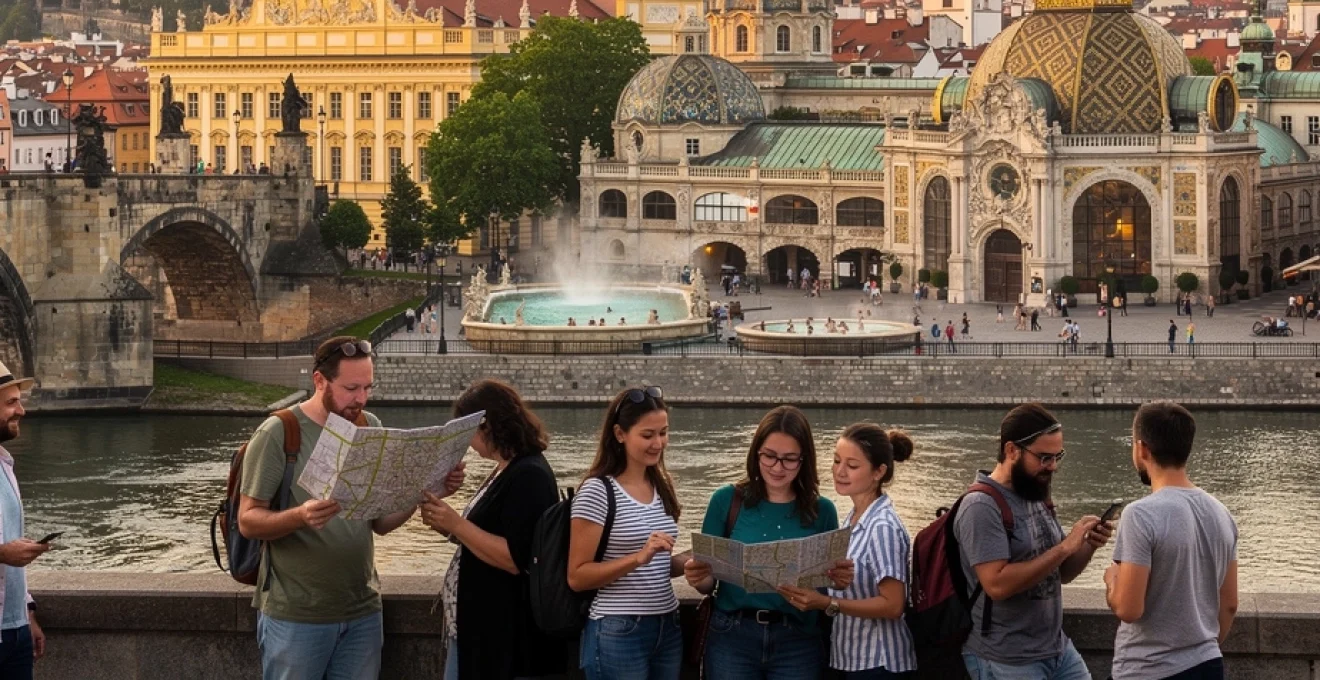
Central Europe stands as one of the world’s most remarkable repositories of architectural heritage, where centuries of imperial grandeur, religious devotion, and artistic innovation have left an indelible mark on the urban landscape. From the Gothic spires of Prague to the Baroque palaces of Vienna, these historic cities offer travellers an unparalleled journey through European architectural evolution. The region’s strategic position at the crossroads of Western and Eastern European influences has created a unique architectural tapestry that reflects the complex political and cultural forces that have shaped this continent.
The architectural wealth of Central European cities extends far beyond mere aesthetic appeal. Each structure tells a story of technological advancement, artistic movements, and cultural exchange that has defined European civilisation for over a millennium. Whether you’re drawn to the intricate stonework of medieval cathedrals, the opulent decoration of imperial palaces, or the innovative urban planning of the Habsburg era, Central Europe provides an extraordinary educational experience for architecture enthusiasts and cultural travellers alike.
Prague’s gothic and baroque architectural heritage
Prague’s architectural landscape represents one of Europe’s most comprehensive collections of Gothic and Baroque structures, earning the city its designation as a UNESCO World Heritage Site. The Czech capital’s unique position as the seat of the Holy Roman Empire during the 14th century sparked an unprecedented period of architectural innovation that continues to captivate visitors today. The city’s remarkable preservation through centuries of political upheaval has left modern travellers with an intact medieval cityscape that functions as a living museum of Central European architectural development.
The architectural evolution of Prague reflects broader European trends whilst maintaining distinctly Bohemian characteristics. Gothic architecture arrived in Prague during the reign of Charles IV, who commissioned ambitious building projects that would establish the city as a major European cultural centre. The subsequent Baroque period, following the Counter-Reformation, saw the transformation of many existing structures and the addition of ornate decorative elements that created Prague’s distinctive architectural harmony between medieval foundations and Baroque embellishments.
Charles bridge’s medieval engineering and stone masonry techniques
Charles Bridge stands as a testament to 14th-century engineering prowess, incorporating advanced construction techniques that have enabled the structure to withstand over 650 years of weathering, warfare, and urban development. The bridge’s foundation system utilises a revolutionary combination of sandstone blocks and oak pilings driven deep into the Vltava riverbed, creating unprecedented stability for a structure of this scale. The engineering team, led by Peter Parler, implemented innovative arch construction methods that distributed weight more effectively than previous bridge designs, allowing for the bridge’s remarkable 16-arch span across the river.
The stone masonry techniques employed in Charles Bridge’s construction demonstrate the sophisticated craftsmanship available to medieval builders. Each sandstone block was individually shaped and fitted using traditional dry-stone methods, with mortar composed of lime, sand, and egg whites to ensure exceptional durability. The bridge’s famous statues, added primarily during the Baroque period, required specialised mounting techniques that preserved the structural integrity whilst accommodating the additional weight and wind resistance of these decorative elements.
St. vitus cathedral’s flying buttress system and spire construction
St. Vitus Cathedral showcases the pinnacle of Gothic architectural achievement through its sophisticated flying buttress system and innovative spire construction methods. The cathedral’s exterior buttresses transfer the immense weight of the stone vaulting away from the walls, allowing for the creation of vast interior spaces and the installation of enormous stained glass windows that flood the interior with coloured light. This engineering solution enabled Gothic architects to achieve unprecedented height whilst maintaining structural stability, creating the soaring vertical emphasis that defines Gothic cathedral design.
The cathedral’s spire construction demonstrates remarkable medieval engineering capabilities, with the main tower reaching 96.6 metres through the use of advanced stone-cutting techniques and innovative weight distribution methods. The spire’s internal framework combines stone construction with iron reinforcement elements, a technique that predates modern steel-frame construction by several centuries. The precision required for the spire’s construction involved complex mathematical calculations to ensure that wind loads and thermal expansion would not compromise the structure’s integrity over time.
Old town square’s astronomical clock mechanism and astronomical calculations
The Prague Astronomical Clock represents one of the most sophisticated mechanical achievements of the medieval period, combining complex astronomical calculations with precision clockwork engineering that continues to function accurately after more than 600 years of operation
. In addition to indicating the hour, the mechanism displays Central European time, Old Bohemian time, the movement of the sun and moon through the zodiac, and the relative position of celestial bodies. For medieval residents of Prague, this intricate device functioned as a compact astronomical observatory, translating complex calculations into a visual language that anyone in Old Town Square could read.
The clock’s mechanism, first installed in 1410 and refined in the 16th and 19th centuries, relies on a sophisticated system of gears, cams, and astronomical dials calibrated to the apparent motion of the sun and moon. The main dial operates as an astrolabe, projecting the ecliptic onto a two-dimensional plane, while the calendar dial below cycles through months and saints’ days. Maintaining this level of precision requires ongoing conservation: modern restorers balance historical authenticity with subtle technological updates, such as stabilising temperature-sensitive components and applying corrosion-resistant coatings to metal parts, ensuring the clock continues to perform its astronomical calculations accurately.
Prague castle’s romaneskue foundation integration with gothic additions
Prague Castle presents a rare opportunity to observe how Romanesque foundations have been successfully integrated with later Gothic additions to form a cohesive architectural ensemble. The earliest stone structures on the hill date back to the 10th and 11th centuries, with thick Romanesque walls and barrel vaults designed for defence rather than ornament. When Gothic architects began expanding the complex in the 14th century, they faced the challenge of building higher and lighter structures on top of these robust but relatively low-rise foundations.
The solution involved a careful structural analysis that would not look out of place in contemporary engineering. Gothic builders reinforced key Romanesque walls with buttresses, inserted transition elements such as pointed arches, and redistributed loads so that new vaults and towers could safely rest on older masonry. For visitors today, this multi-layered construction reads almost like a geological cross-section of Central European history: Romanesque chapels, Gothic halls, Baroque facades and 20th-century restorations all coexist, demonstrating how adaptive reuse and sensitive integration can extend a monument’s life across many centuries.
Vienna’s imperial architecture and habsburg cultural legacy
Vienna’s cityscape is inseparable from the legacy of the Habsburg dynasty, whose architectural patronage transformed the city into a showcase of imperial power and refined culture. Walking through the Austrian capital, you move through successive layers of architectural history: late Gothic churches, Baroque palaces, neo-classical museums and ring-road mansions all narrate different chapters of Central Europe’s political evolution. For travellers seeking a cultural and architectural getaway, Vienna offers an immersive lesson in how urban design, dynastic ambition and artistic innovation intersect.
The Habsburgs understood that architecture was an effective tool for projecting stability and prestige across a fragmented empire. Palaces like Schönbrunn and the Belvedere, the monumental buildings along the Ringstrasse, and the towering silhouette of St. Stephen’s Cathedral all contribute to a carefully curated imperial image. At the same time, Vienna’s UNESCO-listed historic centre highlights the city’s success in preserving this architectural heritage through meticulous conservation programmes, adaptive reuse policies and a strong culture of public engagement with history.
Schönbrunn palace’s rococo interior design and fresco restoration methods
Schönbrunn Palace, the Habsburgs’ former summer residence, is a masterclass in Rococo interior design and 18th-century craftsmanship. Delicate stucco work, gilded ornament and pastel-coloured wall panels create a light, theatrical atmosphere that contrasts with the more austere Baroque exteriors. The palace’s celebrated rooms, such as the Mirror Room and the Great Gallery, were designed not only for comfort but also to impress visiting dignitaries with an overwhelming display of artistic skill and wealth. For anyone interested in period interiors, a guided tour offers a detailed look at how surfaces, light and colour were manipulated to shape courtly life.
Maintaining these fragile interiors in the 21st century requires sophisticated fresco restoration methods and ongoing conservation. Specialists analyse original pigments using non-invasive techniques such as X-ray fluorescence and infrared reflectography to determine the most appropriate restoration materials. Where previous interventions used heavy overpainting, contemporary conservators carefully remove these layers, stabilise the underlying plaster and reintegrate losses with reversible paints. This approach ensures that visitors today experience Schönbrunn’s Rococo splendour as authentically as possible while preserving the artwork for future generations—a useful model for heritage professionals facing similar challenges in other Central European palaces.
Ringstrasse’s neo-classical urban planning and architectural cohesion
The Ringstrasse, Vienna’s grand circular boulevard, epitomises 19th-century ambitions in neo-classical urban planning and remains a benchmark for coherent city design. Built after the demolition of the medieval city walls, the Ringstrasse was conceived as both a traffic artery and an architectural showcase, lined with monumental buildings such as the Parliament, City Hall and the State Opera. Despite their varying historical styles—from neo-Gothic to neo-Renaissance—these structures share similar heights, materials and setbacks, creating a harmonious streetscape that feels remarkably unified.
From an urban planning perspective, the Ringstrasse demonstrates how a single, well-defined design framework can integrate diverse architectural expressions. Building regulations dictated cornice lines and facade rhythms, ensuring that even private mansions conformed to the boulevard’s visual order. For visitors, a tram ride along the Ring offers an accessible way to grasp Vienna’s transformation from fortified medieval town to modern imperial capital. For architects and planners, the boulevard provides valuable lessons in balancing aesthetic cohesion with functional needs, such as traffic flow, public transport and green spaces.
Belvedere palace’s baroque garden geometry and hydraulic water features
The Belvedere Palace complex, originally built for Prince Eugene of Savoy, combines Baroque architecture with meticulously designed gardens that exemplify geometric precision and symbolic planning. The terraced layout, with its axial pathways, clipped hedges and carefully placed fountains, demonstrates the Baroque belief that nature should be ordered and framed by human reason. Looking down from the Upper Belvedere towards the Lower Belvedere and the city beyond, you can clearly read the main garden axis, which aligns architecture, sculpture and landscape into a single theatrical composition.
Behind this elegance lies advanced engineering, particularly in the palace’s hydraulic water features. 18th-century engineers developed a network of underground channels, cisterns and gravity-fed systems to supply the fountains and reflecting pools with a steady flow of water. Modern conservation teams must now contend with ageing infrastructure, changing groundwater levels and more extreme weather patterns. Their work involves discreetly upgrading pipes and pumps while preserving historic stone basins and original sculptural elements—a delicate balance of technical innovation and heritage sensitivity that many historic gardens across Central Europe are currently navigating.
St. stephen’s cathedral’s gothic roof tile patterns and structural reinforcement
St. Stephen’s Cathedral, or Stephansdom, is one of Vienna’s most recognisable landmarks, thanks in large part to its colourful patterned roof. More than 230,000 glazed tiles form intricate zigzag and chevron designs, including depictions of the double-headed eagle of the Habsburgs and the coats of arms of Vienna and Austria. This decorative scheme transforms what could have been a purely functional surface into a powerful visual symbol, visible from many vantage points across the city. For travellers with an eye for detail, the roof’s precise geometry offers a fascinating study in how ornament can be integrated into structural elements.
Structurally, the cathedral has undergone significant reinforcement to address the stresses imposed by time, warfare and environmental change. After heavy damage during the Second World War, engineers installed steel and concrete supports that strengthen the medieval stonework without disrupting the building’s Gothic character. Ongoing monitoring—using tools such as laser scanning and crack gauges—helps conservation teams identify subtle movements in the masonry before they become critical. This combination of traditional craftsmanship and modern engineering exemplifies how Central European cities safeguard their most important monuments while keeping them accessible to millions of visitors each year.
Budapest’s thermal bath architecture and art nouveau movement
Budapest’s architectural identity is strongly shaped by its thermal bath culture and its rich collection of Art Nouveau buildings, making the city an ideal destination for travellers seeking both relaxation and design inspiration. Built atop a network of more than 100 hot springs, the Hungarian capital has developed bath complexes that range from Ottoman-era domed structures to lavish fin-de-siècle spa palaces. These spaces are not only places of leisure but also social and cultural institutions, where architecture and wellbeing intersect in daily life.
Art Nouveau, known locally as Szecesszió, found a particularly distinctive expression in Budapest at the turn of the 20th century. Architects such as Ödön Lechner combined flowing organic lines and floral motifs with Hungarian folk patterns and Eastern influences, creating buildings that feel both cosmopolitan and rooted in local tradition. When you visit landmarks like the Gellért Baths or the Geological Institute, you experience this synthesis first-hand: ceramic tiles, wrought-iron details and stained glass work together to produce interiors that are as therapeutic for the eyes as the thermal waters are for the body.
The city’s thermal baths themselves reveal sophisticated engineering solutions that rival those of any modern wellness centre. Complex filtration systems, heat exchangers and mineral-balancing processes ensure water quality while preserving the distinctive chemical composition that gives each spring its reputed health benefits. Conservation teams must constantly adapt these systems to contemporary hygiene standards without compromising historic fabric, a challenge shared by heritage spas across Central Europe. For visitors, the practical takeaway is simple: bring a swimsuit, arrive early to avoid crowds, and allow enough time to fully explore the architectural details while you soak.
Kraków’s unesco world heritage preservation techniques
Kraków’s Old Town and Wawel Hill were among the first sites inscribed on the UNESCO World Heritage List in 1978, reflecting the city’s exceptional state of preservation and its importance to Central European history. Unlike many other Polish cities, Kraków escaped large-scale destruction during the Second World War, allowing its medieval street pattern and key monuments to survive largely intact. However, this does not mean preservation is effortless; on the contrary, the city has become a laboratory for innovative conservation techniques that balance tourism, urban life and heritage protection.
Municipal authorities, universities and international experts collaborate on long-term management plans that address issues such as pollution, visitor pressure and climate change. Initiatives include limiting car traffic in the historic core, regulating building renovations, and using digital documentation to track the condition of facades and interiors. For cultural travellers, this careful stewardship ensures that experiences like walking through the Main Market Square or climbing Wawel Hill remain authentic, not over-commercialised reproductions.
Cloth hall’s renaissance arcade restoration and conservation protocols
The Cloth Hall (Sukiennice) dominates Kraków’s Main Market Square and serves as an outstanding example of Renaissance commercial architecture adapted for modern use. Originally a medieval trading hall, it was rebuilt in the 16th century with elegant arcades that provided covered walkways for merchants and customers. Today, these arcades still host stalls selling local crafts, while the upper floor houses a branch of the National Museum—proof that heritage buildings can successfully support contemporary economic activity when managed thoughtfully.
Restoring the Cloth Hall’s arcades has required strict conservation protocols to protect both stonework and decorative details. Specialists regularly clean soot and particulate matter from the sandstone using gentle methods such as micro-abrasion and low-pressure water misting, avoiding harsh chemicals that could damage the surface. Mortar joints are repointed with lime-based mixes similar to the original, allowing the masonry to “breathe” and respond flexibly to temperature changes. For visitors, one practical benefit of these efforts is simply comfort: the restored arcades provide a sheltered, aesthetically pleasing route around the square in all seasons.
Wawel castle’s multi-period architectural stratification analysis
Wawel Castle is one of Central Europe’s most instructive sites for studying multi-period architectural stratification—how different styles and historical layers coexist within a single complex. The hilltop site has been continuously occupied since at least the 10th century, with Romanesque fragments, Gothic fortifications, Renaissance courtyards and later Baroque chapels all visible within a relatively compact area. Rather than hiding earlier phases behind uniform facades, Polish conservators have intentionally exposed and interpreted these layers, turning the castle into a three-dimensional textbook of architectural history.
Archaeologists and architects work closely together to document and analyse each building phase before any restoration takes place. Techniques such as stratigraphic wall analysis, dendrochronology (tree-ring dating of wooden elements) and thermoluminescence dating of bricks help establish a precise chronology. Interpretive signage and guided tours then translate this research into accessible narratives for the public. When you explore Wawel, you are not just visiting a “castle” in the generic sense, but engaging with a complex palimpsest of Central European power, religion and artistic taste.
St. mary’s basilica trumpet tower acoustics and medieval timekeeping
St. Mary’s Basilica, overlooking Kraków’s Main Market Square, is famous for the hourly trumpet call—or hejnał—played from the taller of its two towers. This musical signal, abruptly cut off mid-melody, commemorates a legendary 13th-century trumpeter allegedly shot while warning of a Mongol attack. Beyond the romance of the story, the practice offers insight into medieval timekeeping and urban communication: before mechanical clocks were widespread, sound served as a primary way to mark hours and announce important events to residents.
The tower’s acoustics play a crucial role in projecting the trumpet’s notes across the square. The narrow windows act like directional speakers, focusing sound towards different parts of the city depending on where the trumpeter stands. Acoustic studies have shown that the combination of tower height, opening dimensions and surrounding building facades creates an effective “amplification chamber,” ensuring the call remains audible even amid modern urban noise. Visitors can climb the tower to observe this system in action, gaining a new appreciation for how architecture and sound design worked together long before microphones and loudspeakers existed.
Salzburg’s mozart era architecture and ecclesiastical building methods
Salzburg, framed by Alpine peaks and divided by the River Salzach, offers one of Central Europe’s most harmonious ensembles of Baroque and early classical architecture. As the seat of powerful prince-archbishops, the city invested heavily in ecclesiastical building projects during the 17th and 18th centuries, creating a skyline dominated by domes, towers and monastery complexes. When Mozart was born here in 1756, he grew up amid this architectural splendour, which formed the visual backdrop to his musical education and later inspired the city’s UNESCO World Heritage designation.
The construction of Salzburg’s key churches, such as the Cathedral, Kollegienkirche and the churches of St. Peter’s Abbey, reflected advanced ecclesiastical building methods for their time. Master builders adapted Italian Baroque models to local conditions, using lighter stucco decoration on exteriors to cope with harsh winters while reserving richer ornament for interiors. Thick masonry walls, carefully designed drainage systems and robust stone roofing helped these structures withstand heavy snowfall and shifting mountain weather. For modern travellers, this means you can explore ornate interiors that feel remarkably intact, even after centuries of exposure to a challenging climate.
Today, conservation efforts in Salzburg focus on managing moisture, air pollution and tourism-related wear. Churches employ discreet environmental monitoring systems to track humidity and temperature, ensuring that frescoes, organs and wooden furnishings remain stable. Sensitive lighting design protects artworks from UV damage while still allowing visitors to appreciate details. As you wander through Salzburg’s historic centre, you are essentially moving through a finely tuned cultural ecosystem, where architecture, music and landscape come together in a carefully preserved whole.
Ljubljana’s jože plečnik architectural philosophy and modernist integration
Ljubljana, Slovenia’s charming capital, offers a different perspective on Central European architecture through the work of Jože Plečnik, one of the 20th century’s most distinctive architects. Rather than relying on monumental imperial structures, Plečnik transformed his native city with a series of human-scaled interventions—bridges, riverside promenades, public squares and university buildings—that subtly redefined how residents interact with their urban environment. His philosophy emphasised continuity with classical traditions while embracing modern needs, resulting in a unique blend of historic references and fresh spatial ideas.
Plečnik’s best-known projects in Ljubljana, such as the Triple Bridge, the National and University Library and the arrangement of the riverside markets, demonstrate his talent for integrating modernist principles into a historic context. Instead of imposing starkly contrasting forms, he used familiar materials like stone, brick and wood, organising them in inventive patterns and proportions. Columns, balustrades and arcades recall ancient architecture, but their placement and detailing respond to contemporary circulation patterns and urban life. For visitors, the effect is almost like walking through a thoughtfully curated open-air museum of urban design, where every bench, staircase and lamp post has been considered.
In recent years, Ljubljana’s authorities have undertaken careful restoration of Plečnik’s works, supported by their inclusion on the UNESCO World Heritage List. Conservation teams pay close attention to original construction techniques, down to the specific types of mortar and stone finishes he favoured. At the same time, the city has integrated new infrastructure—such as cycle lanes and accessibility features—without undermining the coherence of Plečnik’s vision. If you are interested in how historic cities can evolve without losing their soul, Ljubljana offers a compelling case study: a place where modern life and architectural heritage are not in conflict, but in continuous dialogue.