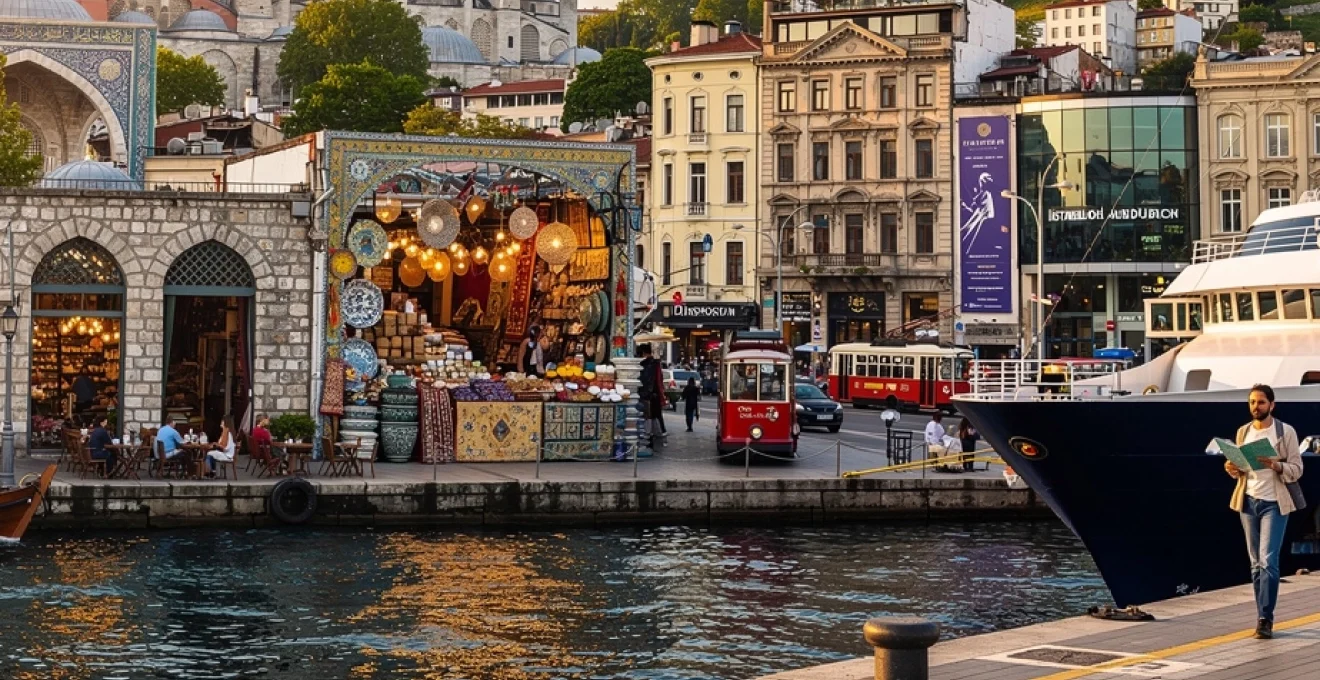
Istanbul’s strategic position at the crossroads of Europe and Asia has created one of the world’s most culturally rich destinations, making it an essential port of call for Mediterranean cruise itineraries. The city’s remarkable heritage spans over 2,500 years, encompassing Byzantine, Ottoman, and modern Turkish influences that manifest in architectural masterpieces, vibrant neighbourhoods, and deeply rooted traditions. Cruise passengers arriving at Galataport have unprecedented access to this cultural treasure trove, with efficient transport links and carefully planned excursion routes that maximise limited port time whilst ensuring authentic experiences.
The concentration of world-class cultural sites within a relatively compact area makes Istanbul particularly suited to cruise tourism, where time constraints demand strategic planning and expert guidance. From the architectural marvels of Sultanahmet to the contemporary art scenes of Beyoğlu, the city offers layers of cultural discovery that can be meaningfully explored even during brief stopovers. Understanding the logistical considerations and cultural protocols enhances both accessibility and appreciation of these remarkable sites.
Byzantine heritage sites within walking distance of galata port terminal
The proximity of Galataport to Istanbul’s historic peninsula creates exceptional opportunities for cruise passengers to experience the city’s Byzantine legacy without extensive travel time. The strategic positioning allows visitors to reach major heritage sites via efficient tram connections, transforming what could be challenging logistics into seamless cultural exploration. This accessibility proves particularly valuable given the time-sensitive nature of cruise schedules and the desire to maximise authentic cultural engagement.
Hagia sophia museum complex: architectural analysis and visitor navigation
Hagia Sophia stands as perhaps the most architecturally significant monument in Istanbul, representing the pinnacle of Byzantine engineering and artistic achievement. Originally constructed as a cathedral in 537 CE under Emperor Justinian I, this extraordinary structure dominated the Constantinople skyline for nearly a millennium before its transformation into an imperial mosque following the Ottoman conquest in 1453. The building’s massive dome, measuring 31 metres in diameter, represented a revolutionary engineering feat that influenced architectural development across the Eastern Mediterranean for centuries.
The interior preserves remarkable Byzantine mosaics alongside Ottoman calligraphic elements, creating a unique cultural dialogue that reflects Istanbul’s complex historical layers. Visitors encounter stunning examples of opus sectile marble work, intricate geometric patterns, and figurative representations that demonstrate the sophistication of medieval artistic techniques. The recent restoration efforts have revealed previously concealed mosaics, including depictions of emperors and religious figures that provide invaluable insights into Byzantine court culture and artistic traditions.
The architectural genius of Hagia Sophia lies not merely in its engineering prowess, but in its ability to create a transcendent spatial experience that bridges earthly and divine realms through light, proportion, and symbolic decoration.
Navigation within the complex requires understanding both the physical layout and cultural protocols that enhance the visitor experience. Pre-reserved tickets prove essential during peak tourist seasons, whilst audio guides in multiple languages provide contextual information that brings the monument’s layered history to life. The strategic timing of visits can significantly impact the quality of experience, with early morning or late afternoon providing optimal lighting conditions for appreciating the interior’s architectural details.
Basilica cistern underground chamber: historical engineering and access routes
The Basilica Cistern represents one of Istanbul’s most remarkable examples of Byzantine infrastructure engineering, demonstrating the sophisticated urban planning that supported Constantinople’s role as the Eastern Roman capital. Constructed during the 6th century, this subterranean marvel extends over 9,800 square metres and originally stored approximately 80,000 cubic metres of water through an intricate system of channels and aqueducts that supplied the imperial palace complex and surrounding districts.
The cistern’s 336 columns, many repurposed from earlier Roman structures, create a cathedral-like atmosphere that transforms practical infrastructure into an almost mystical environment. Visitors can observe the famous Medusa head column bases, which showcase the pragmatic Roman approach to architectural recycling whilst adding layers of symbolic meaning to the space. The sophisticated engineering includes precise calculations for water pressure, drainage, and structural support that enabled continuous operation for over a millennium.
Modern accessibility enhancements include elevated walkways that allow visitors to appreciate the engineering whilst protecting the historical fabric. The atmospheric lighting system highlights architectural details whilst maintaining the mysterious ambiance that has captivated
Modern accessibility enhancements include elevated walkways that allow visitors to appreciate the engineering whilst protecting the historical fabric. The atmospheric lighting system highlights architectural details whilst maintaining the mysterious ambiance that has captivated travellers for centuries. From Galataport, you can reach the Basilica Cistern efficiently by tram to Sultanahmet and a short walk, making it an ideal addition to a tightly scheduled cruise stopover. Because timed-entry systems and capacity controls are often in place, it is advisable to secure advance tickets and allow buffer time for security checks. For many visitors, this underground chamber provides a striking contrast to Istanbul’s sunlit monuments, underscoring the hidden infrastructure that kept the Byzantine capital functioning.
Topkapi palace harem quarters: ottoman imperial court cultural immersion
Topkapi Palace, the primary residence of Ottoman sultans for nearly four centuries, offers a comprehensive introduction to imperial court culture, ceremonial protocol, and daily life at the heart of the empire. While the wider palace complex includes audience halls, treasury rooms, and sacred relic chambers, the Harem quarters provide the most intimate insight into the social dynamics of the ruling dynasty. This secluded area housed the sultan’s family, concubines, and attendants, governed by strict hierarchies and elaborate etiquette that shaped both personal relationships and political alliances.
Architecturally, the Harem is a layered composition of tiled chambers, courtyards, and passageways that reflect successive phases of expansion from the 16th to the 19th century. Visitors can observe exquisite Iznik tiles, gilded wooden ceilings, and stained glass windows that demonstrate the refinement of Ottoman interior design. As you move through corridors leading to the Queen Mother’s apartments, the sultan’s private rooms, and the concubines’ quarters, the changing scale and ornamentation subtly signal rank and proximity to power. Interpreting these spatial cues turns a simple visit into a deeper reading of imperial ideology written in stone, tile, and wood.
For cruise passengers, including the Harem in a Topkapi visit requires careful time management, as entry to this section is often via a separate ticket and involves timed admission. To optimise a limited port day, it can be effective to focus on the Harem, the Imperial Council Chamber, and the palace terraces overlooking the Bosphorus, which together present a coherent narrative of governance and private life. Arriving early in the morning usually reduces crowding, enabling you to appreciate quieter details such as calligraphic panels, marble fountains, and subtle acoustic design. Comfortable footwear is essential, as surfaces vary from stone courtyards to slightly uneven interior floors, and you will be standing or walking for extended periods.
Blue mosque sultan ahmed camii: islamic architecture study and prayer etiquette
The Blue Mosque, officially the Sultan Ahmed Mosque, remains one of Istanbul’s most celebrated landmarks and an essential stop for travellers interested in Islamic architecture and devotional space. Completed in 1616 during the reign of Sultan Ahmed I, the mosque is renowned for its harmonious cascade of domes and semi-domes, six slender minarets, and a courtyard that rivals the prayer hall in scale. Its nickname derives from the more than 20,000 hand-painted Iznik tiles that line the interior, featuring predominantly blue floral and geometric motifs that create a serene yet visually rich atmosphere.
From an architectural perspective, the Blue Mosque represents a synthesis of Byzantine and earlier Ottoman influences, visible in its central dome system and spatial organisation. The building’s design responds not only to structural demands but also to liturgical requirements, such as clear orientation towards Mecca and the acoustics needed to carry the imam’s voice throughout the prayer hall. As you step inside, notice how light filters through over 200 stained glass windows, softening the transition between exterior bustle and interior contemplation. For those interested in comparative architecture, it is illuminating to contrast this space with Hagia Sophia, located just opposite, to see how Ottoman architects engaged with and reinterpreted the city’s Byzantine legacy.
Respectful behaviour and dress are crucial when visiting the Blue Mosque, particularly during a brief cruise stop when you may be moving quickly between sites. Men and women must wear clothing that covers shoulders and knees, while women are required to cover their hair with a scarf; shawls and wraparound skirts are often provided at the entrance, but bringing your own speeds up the process. Because the mosque remains an active place of worship, non-Muslim visitors are not permitted during main prayer times, so checking schedules in advance helps avoid disappointment. Shoes must be removed before entering the carpeted prayer hall, and photography should be discreet, avoiding flash and refraining from capturing worshippers at close range. By approaching the visit with sensitivity, you not only show respect but also gain a more authentic sense of how the mosque functions in contemporary Istanbul life.
Ottoman-era cultural districts accessible via metro and tram networks
Beyond the immediate vicinity of Galataport and the most iconic monuments, Istanbul’s extensive metro and tram networks open up a range of Ottoman-era cultural districts suited to time-limited cruise excursions. The T1 tram line, in particular, connects Karaköy and Galata to Sultanahmet, Beyazıt, and Eminönü, effectively forming a cultural spine that links major mosques, bazaars, and educational complexes. For cruise passengers, this reliable public transport offers an efficient alternative to road traffic, which can be unpredictable during peak hours. With a bit of planning, you can structure themed itineraries that combine architectural exploration, historical interpretation, and local encounters within a six-to-twelve-hour port window.
These Ottoman districts reveal how the city evolved as an imperial capital, commercial hub, and religious centre, often layered on top of earlier Byzantine and even Roman foundations. Walking through them is akin to reading a multi-volume history in situ, as caravanserais, madrasas, hammams, and bazaars articulate different aspects of urban life. Because many sites cluster within short walking distances of each other, you can adapt your route according to energy levels, weather conditions, or unexpected crowds. In practice, this flexibility allows you to maintain control over your limited shore time while still embracing serendipitous discoveries, such as a traditional tea house tucked behind a mosque courtyard.
Sultanahmet archaeological park: multi-period historical site exploration
Sultanahmet Archaeological Park, sometimes referred to as the Hippodrome area, serves as an open-air textbook of Istanbul’s multi-period history. Here, remnants of the ancient Hippodrome of Constantinople coexist with Ottoman-era monuments, creating a landscape where you can trace continuity and change across more than 1,500 years. The surviving structures include the Egyptian Obelisk of Theodosius, the Serpent Column from Delphi, and the Walled Obelisk, each carrying inscriptions and iconography that speak to imperial ambition and religious symbolism. When combined with the nearby German Fountain and the surrounding mosque complexes, the park encapsulates Istanbul’s role as a ceremonial and political stage.
For travellers arriving on a cruise, this compact area offers a particularly efficient way to engage with multiple historical periods in a single circuit. You can walk from the Blue Mosque to Hagia Sophia, pause at the Hippodrome monuments, and continue towards the Istanbul Archaeology Museums, all within a radius of less than one kilometre. Audio guides, guided tours, or well-chosen reference apps help decode the layered narratives embedded in columns, reliefs, and inscriptions, turning a casual stroll into a more informed form of cultural immersion. Have you ever wondered how crowds in the ancient Hippodrome might compare to modern football stadiums? Standing here, you can almost hear the echoes of chariot races and political demonstrations that once animated this space.
Logistically, Sultanahmet Archaeological Park is easily reached from Galataport by taking the T1 tram from Karaköy or Tophane and alighting at Sultanahmet station. Because this is one of Istanbul’s busiest tourism nodes, visiting early in the morning often yields a more contemplative experience and better photographic opportunities. Shade can be limited in some sections of the park, especially in summer, so sun protection and water are advisable when planning a walking-intensive route. The open nature of the site also makes it adaptable to changing circumstances; you can shorten or extend your stay without the constraint of fixed entry times.
Grand bazaar kapali carsi: traditional artisan craft workshops and guild systems
The Grand Bazaar, or Kapalı Çarşı, functions not only as a bustling commercial centre but also as a living archive of Istanbul’s craft traditions and guild structures. Founded in the 15th century and expanded over time, this labyrinthine complex of more than 4,000 shops is organised into streets historically associated with specific trades, from jewellers and carpet sellers to coppersmiths and leatherworkers. While the modern bazaar caters heavily to tourism, many family-run workshops still maintain techniques that have been passed down for generations. Observing a master engraver at work or a carpet seller explaining knot density offers direct insight into the skills that underpinned Ottoman urban economies.
Navigating the Grand Bazaar during a cruise stopover can feel overwhelming at first, given its scale and density. A helpful strategy is to focus on one or two product categories of interest, such as textiles or ceramics, and plan a route accordingly, using the main gates as orientation points. Remember that bargaining is an expected part of the purchasing process, but it should remain friendly and respectful; think of it as a cultural exchange as much as a financial negotiation. Asking questions about materials, production techniques, and regional styles transforms shopping into an educational experience, helping you distinguish mass-produced items from higher-quality artisanal work.
From Galataport, you can ride the T1 tram to Beyazıt–Kapalıçarşı station and enter the bazaar through the nearby gates, minimising lost time in traffic. Because the complex is covered, it offers a practical option in case of rain or intense midday sun, allowing you to continue your cultural excursion regardless of weather conditions. Keep in mind that the bazaar can become very crowded, especially when multiple cruise ships are in port, so secure bags, situational awareness, and pre-agreed meeting points are sensible precautions. For many travellers, the Grand Bazaar becomes a highlight not just for purchases but for the human interactions and sensory impressions that capture the dynamism of Istanbul’s trading heritage.
Beyazit mosque complex: classical ottoman religious architecture analysis
Just a short walk from the Grand Bazaar lies the Beyazıt Mosque complex, one of the earliest major imperial mosques of Istanbul and an important reference point for the development of classical Ottoman architecture. Commissioned by Sultan Bayezid II and completed in the early 16th century, the mosque exhibits a transitional style that bridges earlier, more experimental forms and the later fully mature works of master architect Mimar Sinan. Its central dome, flanking semi-domes, and harmonious courtyard anticipate spatial compositions that would be refined in subsequent imperial projects.
The Beyazıt complex originally included not only the mosque but also a medrese (theological school), imaret (public kitchen), and caravansary, reflecting the Ottoman approach of integrating religious, educational, and social functions. Although some auxiliary structures have been altered or repurposed over time, the mosque’s setting between the university and the bazaar preserves its role as a meeting point for different social groups. Standing in the courtyard, you can observe how the architectural vocabulary—pointed arches, stone arcades, and slender minarets—creates a sense of rhythm and proportion that feels both monumental and human-scaled. It is an ideal site for travellers who wish to analyse mosque architecture in a slightly less crowded environment than the Blue Mosque.
Reaching Beyazıt Mosque from Galataport is straightforward via the T1 tram, with the Beyazıt stop placing you within minutes of the complex. Because this is an active place of worship, the same dress and behavioural guidelines apply as in other mosques: modest clothing, quiet conduct, and sensitivity around prayer times. If you are studying architectural history, consider bringing a small notebook or digital device to sketch ground plans or note proportional relationships, much as earlier scholars did when documenting Ottoman monuments. In doing so, you transform a brief visit into a focused field study, deepening your understanding of Istanbul’s religious and urban development.
Suleymaniye kulliye educational complex: mimar sinan masterwork study
The Süleymaniye Mosque and its surrounding külliye (multi-functional complex) represent one of the crowning achievements of Mimar Sinan, the chief architect of the Ottoman Empire during the 16th century. Commissioned by Sultan Süleyman the Magnificent and completed in 1557, the complex occupies a commanding hilltop position overlooking the Golden Horn, symbolically asserting imperial authority while visually anchoring the city’s skyline. Architecturally, the mosque synthesises Sinan’s experiments with dome systems, buttressing, and interior light to create a space that feels simultaneously vast and finely calibrated. Many scholars consider Süleymaniye a key turning point in Ottoman architecture, where structural innovation and aesthetic clarity reach a harmonious balance.
The wider külliye once encompassed a rich array of institutions, including medreses, a hospital, a caravanserai, a hammam, and soup kitchens, underscoring the Ottoman vision of mosques as centres of social welfare and education. Walking through the courtyards and former school buildings, you can trace how spatial organisation supported different forms of learning and community service, from advanced theology to basic literacy and healthcare. The tombs of Sultan Süleyman and his consort Hürrem Sultan, located within the complex, add a dynastic dimension that links architectural patronage to political history. For visitors interested in the work of Mimar Sinan, comparing Süleymaniye with his other projects, such as the Şehzade Mosque or the later Selimiye Mosque in Edirne, reveals how he refined key design principles over time.
Accessing Süleymaniye from Galataport typically involves a combination of tram and a short uphill walk from either Eminönü or Beyazıt, so comfortable shoes and a moderate level of fitness are helpful. The relative tranquillity of the complex, especially compared with busier areas like Sultanahmet, makes it a rewarding stop for those seeking a more contemplative atmosphere. Have you ever felt that certain spaces seem to “breathe” more easily than others? Many visitors report a sense of calm here, attributed in part to Sinan’s mastery of proportion, acoustics, and natural light. Incorporating Süleymaniye into a cruise excursion offers not only architectural insight but also sweeping panoramic views that visually connect many of the other sites discussed in this guide.
Bosphorus strait maritime heritage and waterfront cultural venues
The Bosphorus Strait, the narrow waterway separating Europe and Asia, has shaped Istanbul’s identity as a maritime gateway for millennia, and experiencing it first-hand is one of the most rewarding cultural excursions available during a cruise stopover. Beyond its scenic value, the Bosphorus is a living archive of defensive fortresses, Ottoman waterfront mansions (yalı), palatial complexes, and working fishing communities. Boarding a local ferry or joining a curated Bosphorus cruise allows you to see layers of history unfold along both shores, from the medieval Rumeli Hisarı fortress to 19th-century palaces such as Dolmabahçe and Beylerbeyi. For many travellers, this vantage point provides a crucial missing piece in understanding how geography, trade, and defence strategies intertwined in the city’s development.
From a logistical perspective, the Bosphorus offers a surprisingly time-efficient excursion option for cruise passengers, especially when avoiding road congestion. Public ferries operated by the city’s official company and reputable private operators depart from central piers such as Eminönü, Karaköy, and Kabataş, all accessible from Galataport either on foot or via a brief tram ride. Depending on your available time, you can choose between short circular cruises of 90–120 minutes or longer journeys extending towards the Black Sea with stops in villages like Anadolu Kavağı. Digital audio guides in multiple languages, increasingly used on these routes, help contextualise the palaces, mosques, and neighbourhoods gliding past your window, turning what might otherwise be a simple boat ride into a structured cultural narrative.
A Bosphorus excursion can also be tailored to different interests and energy levels. If you are primarily focused on photography and panoramic views, a daytime cruise offers crisp visuals of major landmarks and bridges, especially in the clear light of early morning or late afternoon. Those more interested in atmospheric experiences may prefer an evening or sunset departure, when the city’s skyline and waterfront monuments are illuminated and reflections play on the water’s surface. Night cruises that include a stop for dinner in a Bosphorus-side village provide opportunities to sample local seafood traditions, blending maritime heritage with gastronomy in a single outing. Just as a well-edited documentary condenses complex stories into a coherent narrative, a thoughtfully chosen Bosphorus tour distils the city’s expansive shoreline into a manageable yet evocative experience during your limited port time.
Traditional turkish culinary districts and authentic gastronomic experiences
Cuisine offers one of the most immediate and memorable pathways into Istanbul’s culture, and even a short cruise stop can accommodate meaningful gastronomic experiences if planned wisely. Rather than relying solely on restaurants adjacent to major monuments, consider exploring neighbourhoods known for specific culinary specialities or historic food markets. Districts such as Karaköy, Eminönü, and Kadıköy (on the Asian side) provide accessible entry points into everyday food culture, from simit bakeries and meze restaurants to multi-generational pastry shops. Engaging with these spaces allows you to observe how traditional techniques and seasonal ingredients continue to shape daily life in the metropolis.
For cruise passengers with limited time, a focused food walk can be an efficient way to sample diverse elements of Turkish cuisine in a single outing. In Eminönü, for example, you might begin with freshly grilled fish sandwiches near the Galata Bridge, continue to spice stalls in the Egyptian Bazaar, and finish with Turkish delight and nut-based sweets from long-established confectioners. In Karaköy, revitalised warehouses now house third-wave coffee roasters and contemporary bakeries, offering a modern counterpart to more traditional tea houses and lokantas (casual eateries). Have you noticed how certain smells instantly transport you to another time or place? The aroma of roasting chestnuts, simmering lentil soup, or grinding coffee can anchor your memory of Istanbul as powerfully as any photograph.
Authentic gastronomic experiences also involve understanding local dining etiquette and meal structure. Turkish breakfasts, often featuring cheeses, olives, eggs, and fresh breads, differ markedly from the quick coffee-and-pastry model common in many Western cities, while shared meze platters at lunch or dinner encourage conviviality and conversation. When ordering, do not hesitate to ask staff for recommendations or daily specials, as many establishments pride themselves on seasonal dishes that may not appear on printed menus. If you have dietary restrictions, learning a few key phrases in Turkish or carrying them written down can help you navigate menus more confidently. In this way, food becomes not just sustenance but a vehicle for cultural exchange during your brief but impactful stay.
Contemporary art galleries and modern cultural institutions in beyoglu
While Istanbul’s historic monuments often dominate cruise excursion itineraries, the city’s contemporary art scene, concentrated in Beyoğlu and Karaköy, provides essential context for understanding its present-day cultural dynamics. Former bank buildings, warehouses, and apartment blocks have been transformed into museums, galleries, and cultural centres that engage with topics ranging from Ottoman economic history to cutting-edge installations by emerging Turkish artists. For visitors docking at Galataport, these institutions are particularly convenient, often located within walking distance or a short tram ride, and they offer flexible visiting hours suited to variable cruise schedules.
Exploring Beyoğlu’s modern cultural institutions can serve as a counterpoint to the more traditional heritage sites, revealing how Istanbul negotiates its complex past while participating in global artistic conversations. As you move between venues, you also experience the district’s distinctive urban fabric: narrow streets, late-Ottoman apartment blocks, and pockets of street art that collectively signal ongoing processes of gentrification and cultural production. This juxtaposition of old and new can feel like shifting between different chapters of a single book, each written in a slightly different stylistic register but contributing to a coherent narrative. For travellers seeking a more nuanced portrait of the city, allocating even a couple of hours to Beyoğlu’s art institutions can be deeply rewarding.
Istanbul modern sanat muzesi: turkish contemporary art collections
Istanbul Modern, recently rehoused in a purpose-built structure along the Karaköy waterfront, stands as the city’s flagship institution for modern and contemporary Turkish art. Its collections and rotating exhibitions trace the evolution of artistic practices from the late Ottoman period through the Republican era and into the 21st century, highlighting how local artists have engaged with movements such as abstract expressionism, conceptual art, and new media. Large gallery spaces, educational programmes, and screening rooms enable the museum to present both canonical figures and emerging voices, offering visitors an overview that is difficult to obtain elsewhere in a single visit.
From Galataport, Istanbul Modern is reachable on foot within a matter of minutes, making it an ideal option for cruise passengers who wish to maximise cultural engagement without committing to long transfers. The museum’s waterfront terraces and café provide additional value, offering views of the Bosphorus and historic peninsula that complement the interior exhibitions. Audio guides and bilingual wall texts help situate works within broader historical and sociopolitical contexts, making the collection accessible even if you are unfamiliar with Turkish art history. For those who appreciate architecture, the building itself—combining industrial references with contemporary design—embodies Istanbul’s ongoing dialogue between heritage and modernity.
Pera museum orientalist painting exhibitions and anatolian weights
The Pera Museum, housed in a restored late-19th-century hotel building near İstiklal Avenue, specialises in collections that illuminate cultural encounters between the Ottoman Empire and Europe. Its renowned holdings of Orientalist paintings, including works by artists such as Osman Hamdi Bey, provide critical insight into how Istanbul and the broader region were visualised and imagined during the 19th century. These images, sometimes idealised and sometimes documentary, serve as valuable sources for examining cross-cultural perceptions, representation, and power dynamics. The museum’s permanent exhibition of Anatolian weights and measures, meanwhile, offers a more technical but equally fascinating window into historical trade systems and daily life.
Visiting the Pera Museum during a cruise stopover allows you to engage with Istanbul’s image as seen through external and internal lenses, complementing your on-the-ground impressions of the city. Curated temporary exhibitions often explore themes such as photography, urban transformation, or regional modernisms, ensuring that repeat visitors encounter fresh material. Practical considerations include a compact layout that can be comfortably explored in one to two hours, and a location accessible via tram and a short uphill walk or taxi from Galataport. As you move between paintings of 19th-century streets and the contemporary city outside, you may find yourself comparing visual narratives across time, much like comparing two different editions of the same story.
Galata mevlevi lodge dervish ceremony performances and sufi culture
The Galata Mevlevi Lodge, located near the top of the Galata Hill, offers a rare opportunity to learn about Mevlevi Sufism and, on selected days, to witness the ritual whirling ceremony known as the sema. Established in the 15th century, the lodge functioned for centuries as a centre of spiritual practice, music, and poetry, closely associated with the teachings of the poet-mystic Rumi. Today, its museum displays musical instruments, calligraphic panels, and everyday objects related to Sufi life, while interpretive texts explain key concepts such as zikr (remembrance of God) and spiritual discipline. For visitors curious about the inner dimensions of Islamic culture, this site provides an accessible starting point.
Attending a sema performance, when schedules align with your port call, can be a powerful experience that blends ritual, music, and movement. It is important to remember that, even in a performance context, the ceremony retains its religious significance, and respectful behaviour—quiet observation, modest dress, and refraining from flash photography—is essential. Because seating is limited and performances are popular, advance reservations are strongly recommended, particularly during peak tourist seasons. For cruise travellers, integrating a late-afternoon visit to the lodge museum with an early evening ceremony can create a meaningful conclusion to a day of cultural exploration in Beyoğlu before returning to the ship.
SALT galata research library: ottoman bank archives and digital collections
SALT Galata, housed in the former headquarters of the Ottoman Bank near Karaköy Square, exemplifies Istanbul’s creative reuse of historic buildings for contemporary cultural purposes. The institution combines exhibition spaces with a research library and archives that focus on the social, economic, and visual history of the region from the late Ottoman period to the present. Architectural restoration has preserved original features such as vault doors and banking halls, which now coexist with minimalist reading rooms and digital workstations. This juxtaposition offers a tangible sense of continuity between the city’s financial past and its current role as a centre of knowledge production and cultural debate.
For visitors, especially those with academic or professional interests, SALT Galata’s library and digital collections provide an unusually rich resource that can be accessed even during a brief port call. The reading rooms, open to the public, offer quiet spaces for consultation of books, periodicals, and digitised archival materials, including the extensive Ottoman Bank archives. Temporary exhibitions and public programmes address topics such as urbanism, visual culture, and critical historiography, often presented in bilingual formats. Because SALT Galata is located within walking distance of Galataport, it can easily be combined with nearby sites such as the Galata Tower, Istanbul Modern, or the spice markets, forming part of a thematic itinerary around trade, finance, and cultural exchange.
Time-efficient cultural route planning for 6-12 hour port stops
Effectively planning a cultural route for a 6–12 hour cruise stopover in Istanbul involves balancing ambition with realism, prioritising depth over sheer quantity of sites. Start by confirming your exact time window from disembarkation to the last possible return to the ship, then subtract at least one hour as a safety buffer; the remaining time is your true cultural budget. Within this frame, choose one or two thematic clusters—for example, “Byzantine and Ottoman classics in Sultanahmet” or “Bosphorus views and Beyoğlu art institutions”—rather than attempting to sample every major monument. This approach reduces transit time, minimises fatigue, and allows you to engage more thoughtfully with each site you visit.
Public transport, particularly the T1 tram line and local ferries, is often more predictable than road traffic and should be central to your planning. Consider structuring your day around 60–90 minute blocks, each dedicated to a specific activity: one block for Hagia Sophia and the Blue Mosque, another for the Basilica Cistern and Hippodrome, a third for a Bosphorus mini-cruise, and a final block for a meal and brief stroll in Beyoğlu. Building small buffer periods between these blocks—10 to 15 minutes for unexpected queues, ticketing issues, or simple rest—can make the difference between a calm, enjoyable day and a stressful race against the clock. Asking yourself, “If I had to skip one activity at the last minute, which would it be?” helps you establish priorities before you are on the ground.
Guided shore excursions specifically designed for cruise passengers can offer additional security and logistical ease, particularly when they include timed-entry tickets and guaranteed return-to-ship policies. However, independent travellers can achieve comparable efficiency by pre-booking key admissions, such as Hagia Sophia or Topkapi Palace, and familiarising themselves with tram and ferry routes in advance. Using digital mapping tools offline and saving locations like Galataport, major tram stops, and meeting points ensures you remain oriented even if mobile data access is limited. Just as a well-curated exhibition leads you through a coherent storyline rather than overwhelming you with every object in storage, a thoughtfully planned shore itinerary will leave you with vivid, lasting impressions of Istanbul’s culture without exhausting your time or energy.