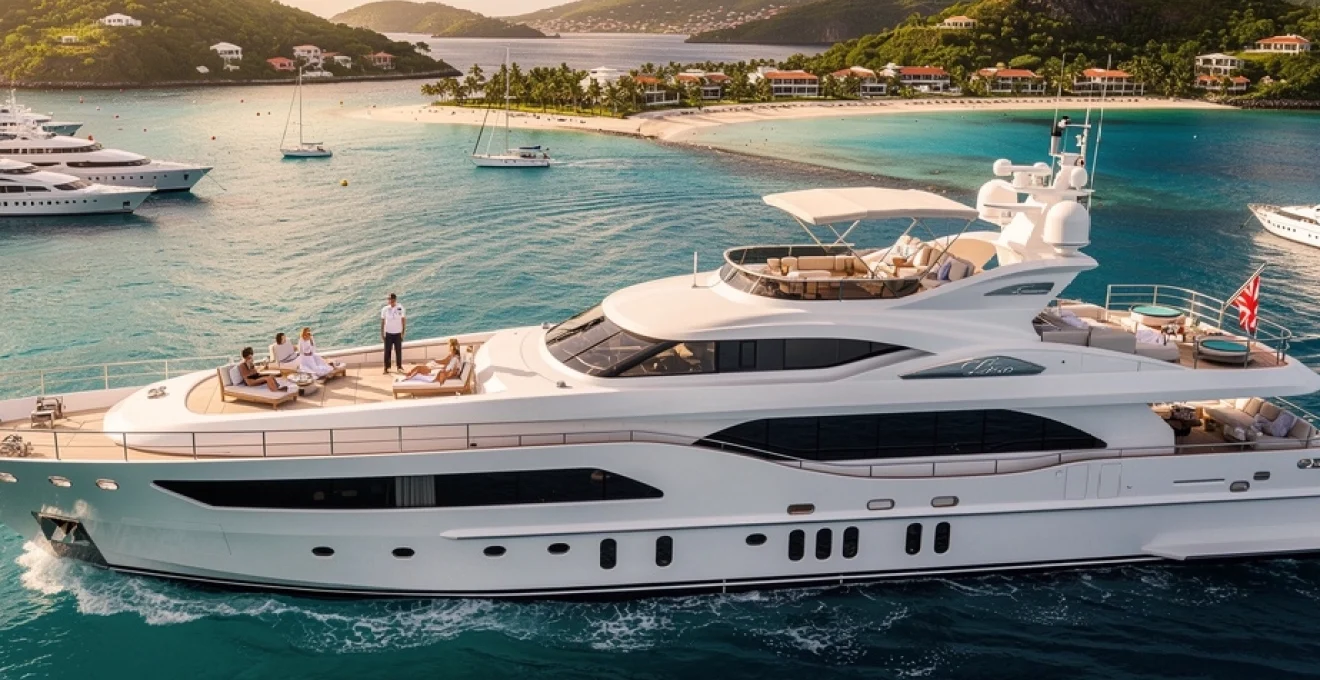
The Caribbean archipelago represents the pinnacle of luxury yacht cruising, offering an unmatched combination of pristine waters, exclusive anchorages, and world-class marine infrastructure. With over 7,000 islands scattered across crystalline seas, this tropical paradise has evolved into the premier winter destination for discerning superyacht owners and charter guests seeking the ultimate maritime escape. From the sophisticated French elegance of St. Barths to the untouched natural beauty of the Grenadines, each destination offers its own unique character and compelling reasons for inclusion in your charter itinerary.
The region’s appeal extends far beyond its picture-perfect beaches and turquoise waters. State-of-the-art marinas accommodate vessels exceeding 100 metres, whilst exclusive island resorts provide seamless yacht-to-shore experiences. The Caribbean’s strategic positioning between the Atlantic and Gulf of Mexico creates favourable sailing conditions for most of the year, particularly during the peak season from December through April when trade winds provide consistent 15-20 knot breezes and temperatures hover between 24-28°C.
Premium caribbean charter routes for superyacht navigation
The Caribbean’s geography naturally divides into distinct cruising regions, each offering unique advantages for luxury yacht charters. Understanding these primary routes enables you to maximise your charter experience whilst minimising passage times between destinations. The region’s protected waters and relatively short distances between islands make it ideal for both leisurely island-hopping and more ambitious inter-island passages.
Leeward islands circuit: antigua to st. martin luxury itinerary
The Leeward Islands circuit represents one of the Caribbean’s most sophisticated yacht charter routes, encompassing approximately 200 nautical miles of premium cruising grounds. Starting from Antigua’s renowned Nelson’s Dockyard, this itinerary includes stops at Barbuda’s pristine pink sand beaches, St. Kitts and Nevis for their volcanic landscapes and luxury resorts, and concludes at St. Martin’s cosmopolitan French-Dutch paradise. The route typically requires 7-10 days to complete properly, allowing sufficient time to explore each destination’s unique offerings.
Antigua serves as an exceptional starting point with its comprehensive superyacht facilities and rich maritime heritage dating back to Admiral Nelson’s era. The island’s 365 beaches provide endless options for secluded anchorages, whilst English Harbour offers sophisticated dining and nightlife options. Barbuda’s Frigate Bird Sanctuary and 17-mile stretch of untouched coastline create an otherworldly contrast to Antigua’s developed infrastructure.
Windward islands passage: st. lucia to grenada elite route
The Windward Islands passage from St. Lucia to Grenada encompasses some of the Caribbean’s most dramatic scenery and exclusive destinations. This 120-nautical-mile route includes the legendary Pitons of St. Lucia, the sophisticated sailing culture of St. Vincent and the Grenadines, and Grenada’s spice-scented harbours. The passage typically involves overnight anchorages at Marigot Bay, Bequia, Mustique, and the Tobago Cays Marine Park.
St. Lucia’s iconic Pitons create a UNESCO World Heritage backdrop for luxury charters, with exclusive resorts like Jade Mountain and Anse Chastanet providing yacht guests with world-class spa treatments and fine dining experiences. The journey south through the Grenadines reveals increasingly exclusive destinations, culminating in Mustique’s celebrity-favoured Cotton House resort and the Tobago Cays’ protected marine sanctuary where swimming with sea turtles represents a daily possibility.
Virgin islands yacht haven: st. thomas to tortola premium waters
The Virgin Islands cluster offers the Caribbean’s most concentrated luxury yacht charter experience, with the US and British Virgin Islands providing over 50 islands within a 50-square-mile area. This intimate cruising ground allows charter guests to experience multiple destinations daily whilst maintaining the flexibility to extend stays at preferred locations. The protected waters of the Francis Drake Channel ensure comfortable sailing conditions regardless of weather.
St. Thomas’s Charlotte Amalie provides duty-free shopping and sophisticated urban amenities, whilst nearby St. John’s Virgin Islands National Park offers pristine beaches and hiking trails. The British Virgin Islands contribute Tortola
and Virgin Gorda’s iconic Baths, where granite boulders form natural sea pools and grottoes that have become a bucket-list stop for private yacht charters. From here, many itineraries continue to Jost Van Dyke for barefoot beach bars at White Bay and on to Anegada’s remote sandbars and lobster shacks, before looping back via Norman Island’s caves for snorkelling and sunset cocktails on board. Distances between anchorages rarely exceed 15–20 nautical miles, allowing you to balance relaxed mornings under way with long afternoons at anchor, diving, paddleboarding, or simply enjoying the yacht’s beach club.
Lesser antilles deep water navigation for 50+ metre vessels
For owners and charterers operating yachts over 50 metres, the Lesser Antilles provide deep-water channels and reliable navigation conditions suitable for larger drafts and beams. The arc from Dominica down to Grenada offers numerous passages with charted depths in excess of 50 metres just a few miles offshore, allowing you to cruise comfortably while maintaining the seclusion associated with blue-water yachting. Most major islands along this chain feature at least one commercial port or yacht marina capable of handling provisioning, bunkering, and formalities for superyachts.
Deep-draft vessels often alternate between offshore legs in open water and carefully selected anchorages in naturally deep bays such as Prince Rupert Bay in Dominica, Marigot Bay in St. Lucia, and Tyrell Bay in Carriacou. These anchorages combine sufficient depth with good holding and shelter from prevailing swells, making them ideal staging points for shore excursions and tender operations. When planning a luxury yacht cruise in the Caribbean at this scale, your captain and broker will typically design a route that minimises shallow, reef-strewn approaches whilst still granting access to the region’s most exclusive beaches and resorts.
Ultra-high-net-worth caribbean destinations with superyacht infrastructure
Beyond idyllic anchorages, the top destinations for a luxury yacht cruise in the Caribbean are distinguished by robust superyacht infrastructure. Full-service marinas, reliable technical support, and premium shore facilities ensure that even the most complex vessels can operate smoothly throughout the season. For ultra-high-net-worth travellers, these hubs serve as both logistical bases and lifestyle playgrounds, blending five-star hospitality with efficient maritime services.
Barbados port st. charles: full-service superyacht marina facilities
Port St. Charles, located on Barbados’ tranquil west coast, is a premier entry point for transatlantic superyachts arriving from Europe. The marina offers alongside berths and deep-water access for vessels up to approximately 80 metres, combined with on-site customs and immigration that streamline arrival formalities. Its hurricane-safe latitude, modern fuel dock, and high-standard utilities make it particularly attractive for yachts positioning for the winter season.
For guests, Port St. Charles functions as a boutique resort, with private villas, a members’ beach club, and easy tender access to some of Barbados’ best snorkelling and diving sites. You can disembark directly from the yacht to enjoy fine dining in nearby Holetown, world-class golf at Sandy Lane, or duty-free shopping in Bridgetown. Many owners and charterers use Barbados as a start or end point for their luxury yacht cruise in the Caribbean, combining a few days on land with onward flights from the island’s well-connected international airport.
St. maarten simpson bay: megayacht berthing and customs clearance
Simpson Bay Lagoon on St. Maarten is widely regarded as one of the Caribbean’s most important superyacht hubs, with several marinas capable of accommodating vessels over 80 metres. The protected, near landlocked lagoon offers exceptional shelter from swell and wind, while the Simpson Bay Bridge provides controlled access to the open sea. Facilities such as Isle de Sol and Yacht Club Port de Plaisance provide high-amperage shore power, comprehensive refit yards, and dedicated concierge services.
From an operational standpoint, St. Maarten’s efficient customs and immigration process, competitive fuel pricing, and extensive provisioning options make it a logical base for large charter operations. For guests, the island’s dual French–Dutch identity adds cultural flair: you can enjoy gourmet dining and patisseries in Marigot, designer boutiques and casinos in Philipsburg, and lively beach clubs at Orient Bay. Need to reposition quickly to St. Barths, Anguilla, or the BVIs? St. Maarten’s central location keeps passage times short, maximising your time at anchor rather than under way.
Antigua nelson’s dockyard: historic luxury yacht haven
Nelson’s Dockyard in Antigua is both a UNESCO World Heritage Site and one of the Caribbean’s most atmospheric superyacht harbours. Set within the natural amphitheatre of English Harbour, its restored 18th-century buildings now house chic restaurants, boutiques, and yacht services that cater to a discerning international clientele. Berths here are in high demand during events such as Antigua Charter Yacht Show and Antigua Sailing Week, when the harbour becomes a living showcase of the global superyacht fleet.
Despite its historic charm, Nelson’s Dockyard offers thoroughly modern support, from skilled riggers and engineers to provisioning agents experienced with large-scale charter operations. From this base, 50+ metre yachts can easily access Falmouth Harbour’s deep-water anchorage and additional berthing, as well as remote bays like Carlisle Bay and Green Island. For many, mooring alongside the old stone quays beneath palm-fringed hills is the quintessential start to a luxury yacht cruise in the Caribbean.
USVI yacht haven grande: premium charter base operations
Yacht Haven Grande in Charlotte Amalie, St. Thomas, is one of the Caribbean’s flagship superyacht marinas, purpose-built to handle megayachts up to 200 metres. Located just minutes from an international airport with frequent US and European connections, it operates as a primary embarkation point for luxury yacht charters in the Virgin Islands. The marina complex includes high-end boutiques, restaurants, crew facilities, and round-the-clock security, making it ideal for both short turnarounds and longer layovers.
From a guest perspective, starting your charter at Yacht Haven Grande means effortless transfers, duty-free shopping, and immediate access to the sheltered waters of the USVI and BVI. Many itineraries begin with an overnight alongside in Charlotte Amalie before slipping lines at first light and heading for St. John’s national park beaches or Jost Van Dyke’s iconic beach bars. For captains and management companies, the marina’s established relationships with local authorities, pilots, and contractors simplify virtually every aspect of operations.
Grenada port louis marina: hurricane season secure storage
Situated just outside the traditional hurricane belt, Grenada’s Port Louis Marina is a strategic choice for yachts seeking secure berthing and reduced weather risk during the Atlantic storm season. The marina offers deep-water slips for superyachts up to around 90 metres, robust mooring systems, and comprehensive shore support, including technical services and guarded storage. This has made Grenada a preferred long-stay base for many vessels between July and November.
Beyond safety considerations, Port Louis also provides an attractive lifestyle proposition. St. George’s picturesque harbour, spice markets, and colonial architecture create a charming backdrop for layovers, while nearby Grand Anse Beach offers classic Caribbean scenery within a short tender ride. When the high season approaches, yachts based here can reposition northwards through the Grenadines or directly to St. Lucia or Barbados, timing their movements with the latest weather and charter bookings.
Exclusive island anchorages for private yacht charters
While marina hubs are essential, the true magic of a luxury yacht cruise in the Caribbean often unfolds at remote, carefully chosen anchorages. These secluded bays and cays allow you to step away from the bustle and experience the region’s natural beauty in near-total privacy. Choosing the right ones involves balancing shelter, depth, and access with the desire for solitude and pristine surroundings.
Among the standout anchorages are the Tobago Cays in St. Vincent and the Grenadines, a protected marine park where crystal-clear shallows and coral reefs create a natural aquarium for snorkellers. In the BVIs, the anchorages off Anegada and the boulder-strewn coves around Virgin Gorda offer both visual drama and easy tender access to beach bars and boutique resorts. Further north, Colombier Bay in St. Barths and Anse de Colombier in St. Martin provide quiet alternatives to busy harbours, with hiking trails and panoramic viewpoints ashore.
When planning your route, it is worth discussing with your captain how you want to balance nights at anchor versus marina stays. Do you prefer waking up alone in a horseshoe-shaped bay, with only the sound of the surf on the reef, or strolling ashore for a late-night drink after dinner? The flexibility of a private yacht charter means you can combine both experiences within a single itinerary, adjusting on the fly according to weather, mood, and crowd levels.
Caribbean superyacht seasons and weather windows for optimal cruising
Understanding the region’s seasonal patterns is crucial to planning a safe, comfortable, and enjoyable luxury yacht cruise in the Caribbean. Although the climate is generally warm year-round, variations in wind strength, rainfall, and storm risk can significantly influence your experience. Working with an experienced captain, broker, and weather routing service helps you choose the ideal window for your specific plans, whether that is festive-season socialising or shoulder-season tranquillity.
Trade wind patterns: december to april peak charter season
The peak charter season from December to April coincides with the most reliable trade wind patterns, offering consistent easterly breezes of 15–20 knots across much of the region. These conditions create ideal sailing weather: strong enough for exhilarating passages but rarely uncomfortable for guests not used to life at sea. Air temperatures typically hover between 24–28°C, with low humidity compared to the late summer months.
During this period, high-pressure systems over the Atlantic stabilise conditions, leading to clear skies, predictable swell, and minimal rainfall across the Leeward and Windward Islands. It is no coincidence that the busiest events on the Caribbean yachting calendar—such as New Year’s in St. Barths and the Antigua Charter Yacht Show—take place in this window. If your priority is smooth cruising and vibrant social scenes, securing a yacht for these dates 9–12 months in advance is wise due to strong demand.
Hurricane belt navigation: june to november risk assessment
From June to November, the Atlantic hurricane season introduces additional risk factors that cannot be ignored when scheduling a luxury yacht cruise in the Caribbean. While not every week brings storms, statistical peaks occur between August and October, particularly in the northern and eastern parts of the basin. Yachts operating during this period must maintain flexible itineraries and have clear contingency plans for rapid relocation or sheltered berthing.
Many captains mitigate risk by focusing on the southern Caribbean, including Grenada, Trinidad and Tobago, and the ABC islands (Aruba, Bonaire, Curaçao), which historically see fewer direct hits. Still, no area is entirely immune, so professional weather routing and constant monitoring of advisories from bodies like the National Hurricane Center are essential. For guests, booking outside the core storm months—say, late November or early May—can offer a sweet spot between lower rates and reduced meteorological uncertainty.
Tropical storm tracking systems for yacht route planning
Modern tropical storm tracking systems have transformed the way superyachts operate in the Caribbean, turning what was once guesswork into a science-backed decision process. Captains now rely on a combination of satellite data, ensemble weather models, and specialist routing services to anticipate developing systems up to 7–10 days in advance. This allows for proactive itinerary changes, such as altering island sequences or heading south to safer waters before a storm forms.
On board, many yachts are equipped with dedicated navigation software that integrates real-time weather overlays, GRIB files, and official warnings into the electronic chart display. For guests, this technology largely works behind the scenes, but its benefits are tangible: smoother passages, more time in settled anchorages, and a reduced likelihood of last-minute disruption. Think of it as having a team of expert meteorologists permanently on call, fine-tuning your route so you can focus on enjoying your surroundings.
Seasonal current analysis: caribbean sea and atlantic ocean interface
Currents in and around the Caribbean may be less immediately visible than wind or swell, but they play a significant role in fuel consumption, passage times, and comfort. The primary feature is the Caribbean Current, which flows generally westward from the Atlantic through the Lesser Antilles, feeding into the Gulf of Mexico via the Yucatán Channel. Along popular yacht routes, current speeds typically range from 0.5 to 2 knots, enough to influence optimum headings and speed-over-ground calculations.
At the interface between the Caribbean Sea and open Atlantic—particularly around the Anegada Passage and north of the Virgin Islands—ocean swell and current can combine to create more confused seas. Experienced captains time these crossings to align with favourable conditions, often choosing early morning departures when winds and local thermal effects are minimal. For you as a guest, proper current analysis simply means more efficient cruising and fewer surprises, much like choosing the right lane on a motorway to avoid traffic and arrive sooner.
Luxury yacht charter costs and pricing structure across caribbean regions
Budgeting for a luxury yacht cruise in the Caribbean involves more than just the base charter rate. While headline weekly prices for a 30–60 metre yacht can range from approximately €70,000 to over €500,000, regional factors such as tax regimes, fuel availability, and berth fees all influence the final cost. Understanding how these elements interact across different cruising areas helps you make informed decisions about where and when to charter.
Most superyacht charters in the Caribbean operate on a “plus expenses” basis governed by an Advance Provisioning Allowance (APA), typically 25–35% of the base rate. This fund covers fuel, food and beverages, port charges, local taxes, and incidental costs, with a detailed reconciliation at the end of the trip. In jurisdictions like the BVIs or St. Maarten, local taxes and cruising permits are relatively modest, whereas certain territories may apply higher VAT or environmental levies.
Geography also affects running costs. Island groups with longer distances between ports, such as itineraries that include both the Leewards and Windwards in one trip, will naturally demand higher fuel consumption than a compact BVI loop. Marinas in prestige locations like St. Barths at New Year’s or Gustavia Harbour during regattas can command premium berthing fees, while more remote anchorages may incur little more than a modest park mooring charge. Working closely with your broker to prioritise destinations and experiences enables you to balance overall spend with the level of luxury you expect on board.
Caribbean superyacht regulations and customs protocols for international waters
Navigating the regulatory landscape is a vital aspect of planning a luxury yacht cruise in the Caribbean, especially when your itinerary spans multiple jurisdictions. Each island nation or territory maintains its own rules regarding customs clearance, immigration, cabotage, and charter licensing, and non-compliance can result in fines or operational delays. Fortunately, experienced yacht management teams and local agents specialise in smoothing these processes so that guests rarely need to engage with the bureaucracy directly.
Typically, a yacht will clear in at its first port of call within a country, presenting ship’s papers, crew lists, and passenger manifests to customs and immigration officials. Some jurisdictions, such as the French Caribbean (Martinique, Guadeloupe, St. Barths) and Dutch Caribbean (St. Maarten, Curaçao), benefit from harmonised entry procedures within their respective territories, simplifying multi-island itineraries. Others require separate formalities for each island, particularly where national parks or marine reserves are involved, so advance planning is essential.
International regulations relating to safety and environmental protection—such as SOLAS, MARPOL, and STCW—apply throughout the region and are standard for commercially operated superyachts. You may notice this in the form of waste segregation policies on board, grey- and black-water management systems, and restrictions on anchoring in sensitive reef areas. Far from being an inconvenience, these protocols help preserve the very ecosystems that make a luxury yacht cruise in the Caribbean so compelling. By working with a reputable charter provider and following crew guidance, you can enjoy the freedom of international waters while respecting local laws and protecting these extraordinary islands for future voyages.