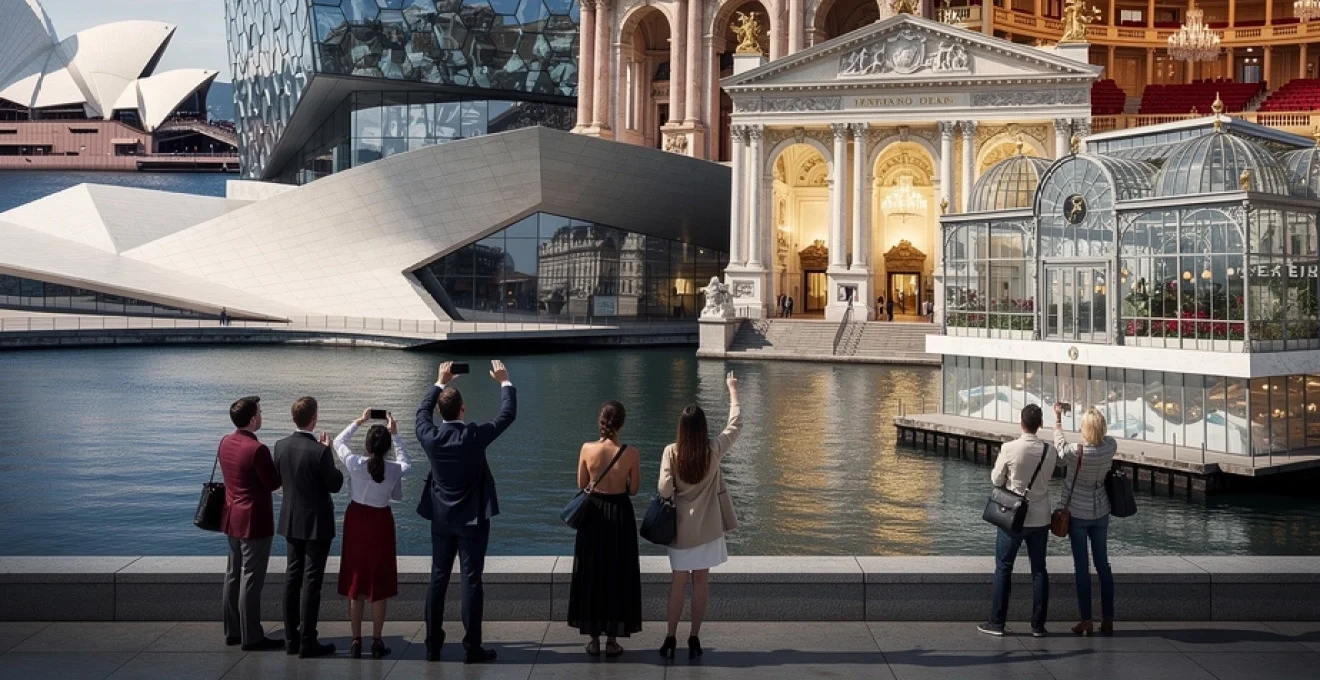
Opera houses represent the perfect fusion of architectural grandeur and artistic excellence, serving as magnificent showcases for both performing arts and innovative design. These cultural palaces have evolved from intimate aristocratic venues into breathtaking architectural achievements that reflect the ambitions, artistic sensibilities, and engineering capabilities of their respective eras. From the ornate Baroque splendour of European masterpieces to the daring contemporary structures that challenge traditional design conventions, opera houses continue to captivate visitors with their extraordinary beauty and acoustic brilliance.
The architectural significance of these venues extends far beyond their primary function as performance spaces. They embody the cultural aspirations of entire nations, showcase revolutionary building techniques, and house some of the world’s most precious artistic collections. Whether you’re drawn to the gilded opulence of 18th-century Neoclassical design or the cutting-edge parametric architecture of modern venues, these remarkable buildings offer unparalleled experiences for architecture enthusiasts and art lovers alike.
Neoclassical and baroque architectural masterpieces in european opera houses
European opera houses stand as monumental testaments to the architectural sophistication and cultural refinement that defined the continent’s golden age of performing arts. These venues, constructed primarily during the 18th and 19th centuries, showcase the finest examples of Neoclassical and Baroque architectural principles, featuring elaborate decorative schemes, innovative structural engineering, and meticulously crafted interior spaces that continue to inspire architects and designers today.
La scala milan’s horseshoe auditorium and gilded box tier configuration
Teatro alla Scala in Milan represents the quintessential opera house experience, combining architectural elegance with unparalleled acoustic excellence. Giuseppe Piermarini’s 1778 design established the classic horseshoe-shaped auditorium configuration that became the gold standard for opera house architecture worldwide. The venue’s distinctive four-tier box arrangement, adorned with intricate gilded details and crimson velvet upholstery, creates an intimate yet grandiose atmosphere that has hosted legendary premieres by Verdi, Puccini, and countless other masters.
The architectural innovation that sets La Scala apart lies in its revolutionary concave channel beneath the wooden orchestra floor. This ingenious engineering solution, designed to enhance acoustic properties, demonstrates how form and function can achieve perfect harmony in architectural design. The venue’s recent restoration by Swiss architect Mario Botta preserved these historical elements while incorporating modern technologies, proving that contemporary interventions can respectfully enhance rather than compromise architectural heritage.
Vienna state opera’s Neo-Renaissance façade and grand foyer restoration
The Vienna State Opera showcases Neo-Renaissance architectural grandeur through its imposing façade and meticulously restored interior spaces. Built in 1869 by architects August Sicard von Sicardsburg and Eduard van der Nüll, the building survived devastating World War II bombing that destroyed much of the auditorium while miraculously preserving the grand staircase and main foyer areas. These surviving elements provide authentic glimpses into 19th-century Viennese architectural sophistication.
The post-war reconstruction, completed in 1955, demonstrates remarkable architectural sensitivity in balancing historical accuracy with modern functionality. The restored auditorium maintains the original’s proportions and decorative schemes while incorporating advanced acoustic engineering and contemporary safety systems. The venue’s commitment to architectural preservation extends to its maintenance of original Chippendale chairs and period-appropriate decorative elements that transport visitors to the height of imperial Austrian cultural refinement.
Palais garnier’s Beaux-Arts marble grand staircase and chagall ceiling
Charles Garnier’s Palais Garnier epitomises Beaux-Arts architectural excess through its spectacular marriage of classical proportions and decorative abundance. The venue’s famous marble grand staircase, crafted from different coloured marbles sourced across Europe, creates a dramatic ascent that serves as both functional circulation space and architectural spectacle. This monumental stairway, with its sweeping curves and ornate balustrades, establishes the theatrical atmosphere before visitors even enter the auditorium.
The building’s most celebrated architectural feature remains Marc Chagall’s 1962
ceiling, which overlays the traditional gilded auditorium with a vivid kaleidoscope of modern colour. Chagall’s circular fresco reimagines scenes from operas by composers such as Mozart, Wagner, and Ravel, turning the dome into a symbolic celebration of operatic history. The juxtaposition of this 20th-century artwork against Garnier’s Second Empire décor demonstrates how historic opera houses can absorb new artistic interventions without losing their original character. For architecture and art lovers, the Palais Garnier offers an almost museum-like experience, where every corridor, salon, and sculpted façade tells a story of French cultural ambition.
Beyond its interior opulence, the Palais Garnier’s exterior composition exemplifies Beaux-Arts principles: a richly ornamented façade, symmetrical composition, and the expressive use of sculpture and relief to communicate the building’s purpose. Caryatids, masks, lyres, and allegorical figures adorn the main elevation, while the signature copper-green dome and rooftop statuary create one of Paris’s most recognisable silhouettes. The building’s complex structural system, which incorporates iron framing concealed behind stone cladding, allowed Garnier to create large interior volumes without compromising on ornamentation. Walking around the perimeter, you can read the building almost like an open-air textbook of 19th-century architectural vocabulary.
Royal opera house covent garden’s cast iron and glass floral hall extension
The Royal Opera House in London’s Covent Garden is a compelling example of how historic theatres can evolve while retaining their architectural soul. Although an opera house has occupied the site since the 18th century, the current building largely dates from the mid-19th century, with extensive 20th- and 21st-century renovations. The most striking contemporary addition is the restored and reimagined Floral Hall, a cast-iron and glass structure originally built as a flower market. Today, this soaring volume functions as a light-filled foyer and event space, creating a visual and spatial dialogue between Victorian engineering and modern cultural life.
For architecture enthusiasts, the Floral Hall showcases the elegance of 19th-century iron-and-glass construction, similar in spirit to London landmarks like the Crystal Palace and Covent Garden Market. After a devastating fire in 1956 and a later period of neglect, the hall was painstakingly rebuilt and integrated into the Royal Opera House’s 1990s redevelopment. The new design preserved the historic cast-iron columns and arches while introducing modern services, circulation routes, and improved accessibility. As you stand beneath the glazed roof, with views across the Covent Garden piazza, you can appreciate how adaptive reuse can breathe new life into heritage architecture without diluting its character.
Inside the auditorium, the Royal Opera House maintains its traditional horseshoe layout, ornately decorated tiers, and plush red-and-gold colour palette. Yet behind the scenes, the complex is one of the most technologically advanced opera venues in the world, with state-of-the-art stage machinery and rehearsal spaces concealed within an urban block. This fusion of historic envelope and contemporary infrastructure makes Covent Garden a fascinating case study in how to future-proof a 19th-century opera house while preserving the ritual and romance that regular visitors cherish.
Teatro real madrid’s original 1850 italianate design and modern underground expansion
Teatro Real, overlooking Madrid’s Plaza de Oriente, offers a different but equally intriguing take on the relationship between historic design and modern performance requirements. Originally inaugurated in 1850, the opera house was conceived in an Italianate style, with a sober, almost palatial exterior that reflects its proximity to the Royal Palace. Inside, the traditional horseshoe-shaped auditorium, framed by tiers of boxes and gilded ornament, follows the classic model set by Italian theatres like La Scala and San Carlo. This layout creates both excellent sightlines and an intimate connection between performers and audience, key to the immersive opera experience.
After suffering structural issues and closure in the late 20th century, Teatro Real underwent a major restoration and expansion that completely redefined its functional core. Rather than altering the historic exterior, architects and engineers extended the building downward and backward, carving out vast underground volumes for stage machinery, workshops, and technical facilities. The result is a kind of architectural iceberg: while visitors see a dignified 19th-century façade, the true scale of the modern opera factory lies largely hidden below ground. This approach allowed Teatro Real to join the ranks of top-tier international opera houses while preserving its urban and historical context.
Today, visitors to Teatro Real can appreciate not only the carefully restored stucco, gilding, and royal box, but also the subtle ways in which contemporary lighting, acoustics, and circulation have been integrated. The theatre’s commitment to digital innovation, including its My Opera Player streaming platform, echoes this physical transformation: historic walls housing a forward-looking institution. If you’re interested in how 19th-century Italianate architecture can be adapted for 21st-century performance without visible disruption, Madrid’s opera house is a compelling destination.
Contemporary architectural innovation in modern opera house design
While historic European opera houses embody the splendour of Neoclassical and Baroque traditions, contemporary venues push the boundaries of form, structure, and materials. Many of the world’s most famous modern opera houses are as radical in their architecture as the music they host, using cutting-edge engineering and bold silhouettes to redefine what a cultural building can be. These spaces are often designed as civic landmarks as much as performance venues, inviting the wider public onto their roofs, into their plazas, and through their promenades.
For architecture and art lovers, modern opera house design offers a unique opportunity to experience parametric facades, complex geometries, and innovative environmental strategies at a grand scale. How do architects translate the fluidity of music into steel, concrete, and glass? And how do these daring buildings still meet the demanding acoustical and technical needs of opera production? The following examples showcase four contemporary masterpieces where structure, landscape, and cultural ambition are woven together.
Sydney opera house’s precast concrete shell geometry and expressionist structure
The Sydney Opera House is arguably the most recognisable modern opera building in the world, and a UNESCO World Heritage Site since 2007. Designed by Danish architect Jørn Utzon and opened in 1973, its iconic roof is composed of a series of interlocking precast concrete shells, often compared to sails or seashells. These shells were not only a sculptural gesture but also an immense engineering challenge; Utzon ultimately solved their geometry by inscribing all the roof segments within a single sphere, allowing for modular prefabrication and consistent structural logic.
From an architectural perspective, the building is a textbook example of expressionist structure, where the load-bearing system is also the primary aesthetic statement. The ribbed shells are supported by massive concrete buttresses, creating a dramatic interplay of shadow and light both inside and out. Beneath the soaring roof forms, the various performance halls are contained within separate volumes clad in warm timber, creating an intimate counterpoint to the monumental exterior. For visitors, one of the most rewarding experiences is simply walking around the podium, observing how the shells shift in profile and reflect the ever-changing light of Sydney Harbour.
Inside, each theatre is finely tuned through extensive use of timber panelling, acoustic reflectors, and adjustable elements that respond to different types of performances. The contrast between the cool, sculptural concrete exterior and the tactile, warm interiors is deliberate, almost like stepping from a cliff face into a finely crafted musical instrument. For anyone interested in modern structural engineering and architectural symbolism, the Sydney Opera House is an essential pilgrimage.
Harpa reykjavik’s crystalline glass façade and led-integrated exterior
Harpa Concert Hall and Conference Centre in Reykjavik, completed in 2011, shows how an opera and concert venue can double as a contemporary art installation. Designed by Henning Larsen Architects in collaboration with artist Olafur Eliasson, Harpa’s most striking feature is its crystalline glass façade. This skin is composed of a three-dimensional steel and glass “quasi-brick” system that refracts and reflects Iceland’s dramatic light conditions, echoing the forms of basalt columns found in the local landscape.
The façade incorporates LED lighting within its geometric modules, allowing the entire building to glow, pulse, or shift colour in response to programmed sequences or live performances. At night, Harpa becomes a luminous sculpture on Reykjavik’s harbour, blurring the boundaries between architecture, public art, and stage set. From the inside, the multifaceted glass wall frames constantly changing views of the sea, sky, and city, turning the foyer into an immersive viewing platform as well as a gathering space.
Acoustically, Harpa’s main hall—Eldborg—is wrapped in sculpted red surfaces that resemble volcanic rock formations, continuing the building’s dialogue with Icelandic geology. The combination of faceted glass, bold colour, and advanced LED technology makes Harpa a fascinating case study in how digital tools and artistic collaboration can transform a conventional concert hall into a dynamic urban landmark.
Oslo opera house’s travertine marble roof-walking experience and fjord integration
The Oslo Opera House, designed by Snøhetta and opened in 2008, is renowned for its radical invitation to the public: you can walk on its roof. Clad in white Italian marble and angled gently upward from the waterfront, the building blurs the line between landscape and architecture. Rather than treating the roof as a purely technical element, Snøhetta transformed it into a vast urban plaza that slopes into the Oslo Fjord, encouraging locals and visitors to climb, sit, and wander across the building throughout the year.
This roof-walking experience creates an unusually direct, tactile relationship between the public and a major cultural institution. In winter, the marble surface can resemble an ice field; in summer, it becomes a sunlit terrace overlooking the city and water. The building’s low, angular form reflects the surrounding mountains and shoreline, making the opera house feel like a piece of the natural landscape that has been gently folded up to reveal performance spaces beneath.
Beneath the sculpted exterior, the main auditorium balances Nordic minimalism with warm, intimate materials, most notably oak. The interior lighting, fritted glass walls, and carefully calibrated sightlines contribute to an atmosphere that is both serene and technically sophisticated. For those interested in how contemporary architecture can integrate with its setting and expand the idea of public space, Oslo’s opera house offers a masterclass.
Guangzhou opera house’s parametric design and zaha hadid’s fluid architecture
The Guangzhou Opera House in southern China, completed in 2010, represents Zaha Hadid Architects’ distinctive approach to fluid, parametric design. Often described as resembling two pebbles sculpted by the Pearl River, the building consists of a pair of asymmetrical volumes clad in triangular glass and granite panels. The complex curves and interlocking geometries were developed using advanced digital modelling tools, enabling a sculptural form that would have been almost impossible to realise with traditional methods.
For visitors, the experience begins with the exterior landscape, where paths and plazas weave between and around the two main “stones.” This flowing ground plane continues into the interior, where staircases, balconies, and walls merge seamlessly, creating the impression of a continuous, eroded surface rather than discrete architectural elements. The main auditorium is sheathed in moulded panels that ripple across walls and ceilings, enhancing both the visual drama and the acoustics of the space.
The Guangzhou Opera House demonstrates how parametric design can translate musical ideas—rhythm, variation, and fluidity—into built form. It also reflects a broader trend in global opera house architecture: the use of complex geometries and advanced fabrication techniques to create one-of-a-kind cultural icons. For architecture and art lovers fascinated by digital design and free-form structures, Guangzhou offers a compelling counterpoint to the orthogonal grandeur of historic European venues.
Acoustical engineering excellence and sound design features
No matter how visually spectacular an opera house may be, its success ultimately depends on what cannot be seen: the quality of its sound. Acoustical engineering in opera houses is both a science and an art, requiring careful calibration of volume, reverberation time, clarity, and warmth. In many ways, designing an opera house is like crafting a giant musical instrument, where every surface, cavity, and material choice influences the final tone.
Historic venues such as La Scala, the Vienna State Opera, and Buenos Aires’s Teatro Colón are celebrated for their “natural” acoustics, honed through empirical craftsmanship long before modern simulation tools existed. Contemporary opera houses, by contrast, typically rely on sophisticated computer modelling, adjustable panels, and variable acoustic systems to adapt to different repertoire and performance styles. As a visitor, you may not notice the hidden reflectors above the stage or the cavities beneath the floor, but you certainly hear their impact.
Consider Teatro Colón, frequently ranked among the top acoustic spaces in the world. Its horseshoe auditorium, multi-layered balconies, and mix of hard and soft surfaces create a reverberation that is rich yet precise. Luciano Pavarotti famously remarked that its acoustics were “too perfect,” because any singer’s mistake was immediately audible. Similarly, La Scala’s concave channel beneath the orchestra floor amplifies and blends sound before it reaches the audience, a 1770s innovation that still outperforms many modern systems.
In newer opera houses such as the Oslo Opera House or Guangzhou Opera House, acoustic engineers collaborate closely with architects from the earliest design phases. Digital simulations allow teams to test hundreds of configurations for ceiling geometry, wall angles, and surface materials long before construction. Many modern halls incorporate adjustable acoustic banners, movable reflectors, or tunable wall cavities, enabling the same space to host unamplified opera one night and amplified contemporary music the next. The goal is to achieve the ideal balance between intimacy and power, so that even in a 2,000-seat hall, you feel the singer’s breath as well as their high notes.
For architecture and art lovers planning a visit, one practical tip is to take a guided tour that focuses on acoustic design, where available. Guides often reveal details you would otherwise miss: hidden reverberation chambers, the thickness of the walls, or the way balconies are staggered to break up echoes. Ask yourself as you listen: does the sound feel like it’s wrapping around you, or coming directly from the stage? Becoming aware of these subtleties adds a new layer of appreciation to every performance.
Interior artistic collections and performance space aesthetics
Stepping into an opera house can feel like entering a living museum, where paintings, sculptures, textiles, and decorative arts converge to frame the performance on stage. Many of the world’s best opera houses are home not only to music but also to extraordinary art collections and interior design schemes that rival major galleries. For architecture and art lovers, the experience of wandering through foyers, staircases, and salons can be as compelling as the opera itself.
In historic venues, interior aesthetics often reflect the tastes and political ambitions of the era in which they were built. The Palais Garnier’s opulent foyers, gilded cornices, and monumental mirrors, for instance, are a manifesto of Second Empire extravagance, while the Vienna State Opera’s murals and statuary celebrate the cultural prestige of the Habsburg court. At La Scala, the red-and-gold auditorium, crystal chandeliers, and velvet draperies create a sense of ceremonial grandeur that prepares audiences for the drama to come.
Contemporary opera houses, by contrast, frequently adopt a more restrained or conceptual approach to interior decoration. Harpa’s lava-like red hall, Oslo’s warm oak shell, and Guangzhou’s sculpted, monochrome surfaces all use a limited palette of materials deployed with great precision. Rather than layering multiple decorative motifs, these interiors rely on form, light, and texture to shape the emotional atmosphere. Walking into these spaces can feel less like entering a palace and more like stepping into a carefully composed installation artwork.
Beyond permanent décor, many opera houses curate rotating exhibitions of costumes, stage designs, and archival materials. The museum spaces at La Scala and the Royal Opera House offer glimpses into historic productions, displaying original scores, sketches, and garments worn by legendary singers. These exhibits illustrate how visual and performing arts intersect in opera production, from the cut of a 19th-century gown to the avant-garde minimalism of a modern staging.
If you are planning a visit with a focus on architecture and art, check whether the opera house offers backstage or museum tours. These experiences often include access to rehearsal rooms, costume workshops, and set-building facilities—spaces where artistry and craft merge in tangible ways. Think of the opera house not only as a venue but as a complete artistic ecosystem, in which every corridor, studio, and storage room contributes to the magic you see on stage.
Cultural heritage preservation and UNESCO world heritage opera houses
Opera houses are more than performance venues; they are repositories of cultural memory and identity. Recognising this, organisations such as UNESCO have granted World Heritage status to several opera-related sites, underscoring their universal value. The Margravial Opera House in Bayreuth, for example, is one of the best-preserved Baroque theatres in the world, its timber-and-canvas interior offering an almost time-capsule experience of 18th-century court culture. The Sydney Opera House, on the other hand, was inscribed as a masterpiece of 20th-century architecture and engineering, highlighting how heritage can also be modern.
Preserving opera houses poses complex challenges. Historic structures must meet contemporary safety standards, accessibility requirements, and technical demands without sacrificing their original fabric. La Fenice in Venice, rebuilt after devastating fires in the 19th and late 20th centuries, demonstrates both the vulnerability and resilience of these buildings. Each reconstruction has aimed to restore the theatre “as it was, where it was,” while discreetly integrating new technologies and materials. In this sense, preservation is less about freezing an opera house in time and more about managing its continuous evolution.
Many opera houses balance active performance schedules with their role as heritage attractions. During the day, guided tours and educational programmes introduce visitors to the building’s history, while at night, the same spaces come alive with live music and theatre. This dual function helps sustain the financial and cultural viability of these complex structures. The Vienna State Opera, Royal Opera House, and Teatro Real all run extensive outreach programmes, ensuring that future generations understand the historical significance of these landmarks as well as their artistic mission.
As a visitor, you can contribute to cultural heritage preservation simply by engaging respectfully with these sites: following tour guidelines, supporting in-house museums, and, where possible, attending performances. Think of your ticket not just as entry to a show but as an investment in the long-term care of an irreplaceable building. In an era of rapid urban change, opera houses remind us that architecture can carry stories across centuries, linking past, present, and future audiences.
Regional architectural influences in global opera house construction
Although opera originated in Italy, the architectural language of opera houses has evolved to reflect local cultures, climates, and urban contexts around the world. One of the most fascinating aspects of visiting different venues is observing how the same building typology—stage, auditorium, foyer—can look and feel so different from city to city. From Neoclassical facades in Europe to futuristic shells in Asia and sculptural concrete forms in Latin America, regional influences shape everything from material choices to spatial organisation.
In Mediterranean countries such as Italy and Spain, historic opera houses often draw heavily on classical and Baroque motifs: colonnades, pediments, frescoed ceilings, and gilded ornament. Northern European venues, influenced by local climates and building traditions, may emphasise heavier masonry, enclosed foyers, and more restrained decoration. In Latin America, theatres like Teatro Colón in Buenos Aires and Teatro Amazonas in Manaus blend European styles with local narratives, materials, and contexts, creating hybrid architectures that reflect colonial histories and emerging national identities.
Contemporary opera houses in Asia and the Middle East frequently adopt bold, iconic forms that signal emerging cultural ambitions. The Guangzhou Opera House, the National Centre for the Performing Arts in Beijing, and the Royal Opera House Muscat in Oman all combine advanced engineering with gestures drawn from local landscapes or aesthetics. In these projects, you might notice façades inspired by calligraphy, dunes, river stones, or traditional textiles, translated into glass, steel, and stone through parametric design tools.
Climate also plays a significant role in regional opera architecture. In colder cities like Oslo or Reykjavik, foyers are conceived as welcoming interior “urban rooms,” protecting visitors from harsh weather while offering panoramic views. In warmer climates, such as Sydney or Valencia, architects may prioritise outdoor terraces, shaded promenades, and natural ventilation strategies, allowing performances and gatherings to spill into the open air. The result is that each opera house becomes a kind of architectural portrait of its city and landscape.
As you explore opera houses around the world, try to read them not just as isolated monuments but as expressions of local culture. Ask yourself: how does this building respond to its climate, its history, and its urban setting? Does it look inward, like a jewel box, or outward, like a public plaza? By paying attention to these regional nuances, you deepen your understanding of how global opera architecture continues to evolve—proving that, even within a shared tradition, there are countless ways to stage the meeting of music, art, and space.