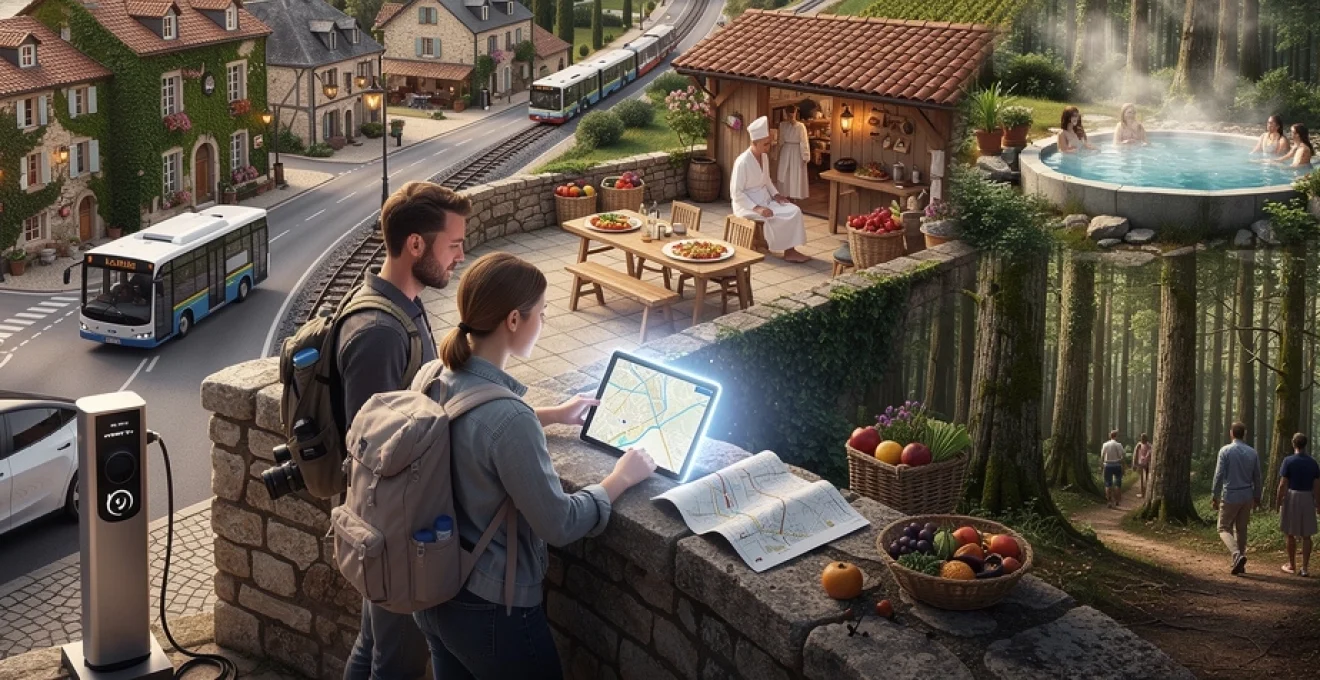
The modern traveller increasingly seeks authentic experiences that transcend superficial tourist attractions. Charming villages represent the perfect antidote to rushed itineraries and crowded destinations, offering genuine cultural immersion whilst serving as strategic waypoints on extended journeys. These settlements provide infrastructure advantages, economic sustainability models, and wellness opportunities that transform ordinary trips into meaningful adventures.
The concept of slow travel has revolutionised how we approach extended journeys, with villages emerging as natural focal points for deeper exploration. Unlike major cities that can overwhelm with options, these smaller communities offer manageable environments where travellers can genuinely connect with local culture and traditions. The intimate scale of village life creates opportunities for spontaneous interactions and discoveries that remain elusive in larger urban centres.
Strategic route planning through historic market towns and UNESCO heritage sites
Effective route planning through Europe’s charming villages requires understanding the historical trade networks that connected these communities for centuries. These ancient pathways, from Roman roads to medieval pilgrimage routes, create natural corridors linking villages with complementary attractions and services. Modern travellers benefit from infrastructure originally designed to facilitate commerce and cultural exchange between settlements.
The strategic positioning of villages along major transit routes stems from geographical advantages that remain relevant today. River valleys, mountain passes, and coastal stretches provided natural stopping points for historical travellers, and these same locations offer contemporary visitors logical break points during extended journeys. The enduring appeal of these locations demonstrates their fundamental suitability as travel anchors.
Cotswolds circuit integration: Bourton-on-the-Water and chipping campden positioning
The Cotswolds exemplifies how village clustering creates mutually reinforcing tourism networks. Bourton-on-the-Water serves as a central hub with its river-side position and diverse accommodation options, whilst Chipping Campden anchors the northern circuit with its perfectly preserved medieval streetscape. The 15-kilometre distance between these settlements allows comfortable day trips whilst encouraging multi-night stays that benefit local economies.
This strategic positioning enables visitors to explore the Cotswold Way gradually, experiencing different village characters without constant packing and unpacking. The complementary nature of these settlements—one offering water features and family attractions, the other showcasing architectural heritage—demonstrates how villages can specialise whilst maintaining collective appeal.
Loire valley château route optimisation: amboise and chenonceau village anchors
The Loire Valley’s village network demonstrates sophisticated tourism planning where settlements serve as gateways to major attractions whilst maintaining distinct identities. Amboise functions as both a château destination and a service centre for exploring surrounding vineyards and artisan workshops. The village’s compact size allows visitors to appreciate its medieval charm whilst accessing modern amenities essential for extended travel.
Nearby village clusters around Chenonceau create opportunities for agricultural tourism experiences that complement château visits. These rural settlements offer wine tastings, local markets, and traditional craft demonstrations that provide cultural depth beyond architectural sightseeing. The integration of accommodation, dining, and activities within walking distance reduces transport requirements whilst maximising authentic experiences.
Alpine pass villages as geographic waypoints: hallstatt and grindelwald connectivity
Alpine villages serve unique functions as geographical transition points between different cultural and linguistic regions. Hallstatt’s position between Austrian lake country and mountain territories makes it an ideal staging point for exploring diverse landscapes within short distances. The village’s infrastructure accommodates varying activity levels, from gentle lake walks to challenging mountain ascents.
Grindelwald demonstrates how villages can anchor entire regional experiences whilst maintaining human scale. The settlement’s position provides access to three major mountain areas without requiring visitors to navigate complex urban environments. Village amenities support everything from family hiking to technical mountaineering, creating inclusive environments for diverse travel groups.
Tuscany hill town network: san gimignano and montepulciano transit hubs
Tuscan hill towns illustrate how elevation and visibility create natural navigation aids for travellers exploring rural regions. San Gimignano’s distinctive towers serve as landmarks visible from considerable distances, whilst the settlement’s position allows exploration of surrounding vineyards and olive groves. The village’s compact medieval layout concentrates services efficiently, reducing time spent on logistics.
Montepulciano’s ridge-top position demonstrates how topography influences
Montepulciano’s ridge-top position demonstrates how topography influences both visibility and defensive advantages, which historically justified substantial investment in infrastructure and public buildings. For modern travellers, this translates into a remarkably dense cluster of services, wineries, and cultural sites within walking distance of each other. The village operates as a practical transit hub between Siena, Pienza, and the Val d’Orcia, allowing you to create circular day routes rather than repetitive out‑and‑back drives. By using Montepulciano as a base, longer trips through Tuscany become more efficient, with less time spent navigating rural roads and more time spent enjoying tastings, views, and short countryside walks.
Accommodation infrastructure and logistical advantages in rural settings
Once route planning is in place, the next question is where you will actually stay during a longer trip. Charming villages offer a surprisingly sophisticated accommodation infrastructure that often rivals larger towns, but with added character and a slower pace. Because these settlements evolved over centuries to host traders, pilgrims, and seasonal workers, they are naturally equipped to support modern slow travel. From historic inns to working farms, the range of options allows you to match your preferred comfort level with your desire for authenticity and connection.
Logistically, village stays simplify longer itineraries by reducing daily transit times and making it easier to plan multi-night bases. Instead of constantly checking in and out of anonymous hotels, you can settle into one rural property for several days and explore the region in relaxed loops. This approach reduces travel fatigue, helps keep budgets under control, and deepens your sense of place as you begin to recognise local faces and routines.
Historic inn conversion models: converted monasteries and coaching houses
Across Europe, many of the most atmospheric places to stay in charming villages began life as monasteries, coaching inns, or merchant houses. These historic buildings were designed to host travellers long before modern tourism existed, which makes them natural candidates for thoughtful conversion into boutique accommodation. High ceilings, stone staircases, cloistered courtyards, and timber beams become features rather than inconveniences when carefully restored, offering you a tangible connection to the region’s history.
Converted monasteries often provide generous communal spaces and gardens that lend themselves to slow mornings and reflective evenings. Former coaching houses, meanwhile, tend to occupy prime positions on village squares or old trade routes, meaning you step straight into the heart of local life when you leave your room. For longer trips, this kind of accommodation can feel like an evolving story rather than a series of disconnected nights: each property adds another chapter to your understanding of the region, while still delivering modern amenities such as Wi‑Fi, en‑suite bathrooms, and reliable heating or air conditioning.
Farm-to-table gastronomy integration in agriturismos and pension networks
One of the biggest advantages of including villages in a long journey is direct access to farm‑to‑table food. In Italy’s agriturismos, France’s chambres d’hôtes, or Germany’s family‑run pensions, you are often staying within walking distance of the fields, orchards, or vineyards that supply your dinner. This short supply chain means seasonal menus, fresher ingredients, and often lower prices than you would expect for similar quality in big cities. It also transforms each meal into a mini masterclass in regional cuisine.
From a logistical perspective, integrated gastronomy reduces the need to plan every restaurant in advance or drive long distances after dark in search of dinner. Many rural accommodations offer half‑board packages, turning your base into both a place to sleep and a reliable dining option. For those interested in slow travel, this connectivity between accommodation and agriculture creates a powerful feedback loop: your spending directly supports small producers, while you gain a more nuanced understanding of how local landscapes shape what appears on your plate.
Electric vehicle charging infrastructure in remote village locations
As electric vehicles become more common on European road trips, the availability of charging points increasingly influences route decisions. Village authorities and small businesses have recognised this shift and, in many regions, are installing EV chargers near central car parks, hotels, or tourist information offices. According to the European Alternative Fuels Observatory, rural charging coverage has grown steadily since 2020, with many pilot projects specifically targeting scenic driving routes and heritage villages.
For you as a traveller, this means charming villages can double as practical charging stops during longer itineraries. Rather than waiting at anonymous motorway service stations, you can plug in your car and spend an hour wandering cobbled streets, visiting a bakery, or taking a short countryside walk. Over several weeks on the road, these integrated charging breaks can transform what might otherwise be “lost time” into some of the most memorable parts of your journey.
Local transport connectivity: bus networks and regional rail terminus points
Not every traveller wants to drive, and villages are increasingly well-connected by bus and regional rail. Historically, many of these small settlements served as local transport nodes, with market days and school runs dictating frequent services. Today, those patterns often remain, giving you reliable options for low‑carbon mobility during a longer trip. In the UK, for example, market towns like Hexham or Ludlow act as bus hubs for surrounding villages, while in Italy and Spain, regional trains link hill towns to larger urban centres.
Practical advantages include the ability to base yourself in one village and use public transport for day trips, reducing parking stress and environmental impact. In some areas, integrated ticketing makes it easy to combine local buses with regional trains on a single pass. When planning your route, checking village timetables can reveal unexpected connections and allow you to add car‑free days into a longer road or rail journey, aligning perfectly with the principles of slow travel.
Cultural immersion opportunities through traditional craft preservation
Beyond logistics and scenery, one of the most compelling reasons to stop in charming villages during a longer trip is the chance to engage with living traditions. Many crafts that have disappeared from big cities still thrive in smaller communities, where skills are passed down through families and apprenticeships. From Cotswold stone masonry and Provençal pottery to Tyrolean woodcarving and Portuguese azulejo painting, village workshops act as custodians of cultural memory.
For travellers, these preserved crafts offer more than just attractive souvenirs. Studio visits, short workshops, and open demonstrations let you see how materials from the local landscape—stone, clay, wool, or timber—are transformed into functional and artistic objects. This hands‑on exposure turns an abstract “heritage” label into something tangible and personal. Have you ever watched a weaver at work and realised how much time, rhythm, and concentration each pattern requires? Experiences like this can reshape how you think about value, consumption, and the stories embedded in everyday objects.
Including villages known for specific crafts can therefore add structure and purpose to a longer route. You might plan a morning learning about Welsh slate carving, then continue to a French village famous for copperware or a Spanish town with a centuries‑old leather tradition. Instead of racing through viewpoints, you build an itinerary around skills and stories, creating deeper connections with the places you visit and the people who keep these traditions alive.
Economic impact of slow tourism models on village sustainability
When you choose to pause in charming villages rather than rushing between big cities, you are also influencing how tourism revenue is distributed. Slow tourism models that emphasise longer stays, off‑season visits, and local services can significantly improve the economic resilience of small communities. According to various regional studies in France, Italy, and the UK, visitors who stay at least two nights in rural areas tend to spend more per trip on local food, activities, and accommodation than day‑trippers, while placing less strain on peak‑hour infrastructure.
This spending pattern is critical for village sustainability. Many rural economies face challenges such as ageing populations, limited employment options, and pressure on traditional industries. Tourism alone cannot solve these issues, but when it is spread throughout the year and focused on locally owned businesses, it can provide a stable secondary income stream. Think of your journey as a kind of mobile investment: every night you choose a family‑run guesthouse over a highway chain, you help keep another small enterprise viable.
Slow tourism also encourages better resource management and community planning. Villages that attract conscious travellers often prioritise pedestrian zones, protect walking trails, and maintain heritage buildings, knowing that these assets underpin their appeal. There is a virtuous circle here: by valuing authenticity and quality of life, they make themselves even more attractive to visitors who are seeking precisely those qualities. For you, understanding this dynamic can turn travel decisions into a form of ethical engagement, where your enjoyment and the village’s long‑term wellbeing are aligned rather than in conflict.
Digital detox environments and wellness tourism applications
In an era of constant notifications and screen time, another defining advantage of village stops during longer trips is the potential for digital detox and wellness. Many rural settlements sit in landscapes where mobile coverage is patchy and the night sky is still dark enough to reveal the Milky Way. Far from being inconveniences, these conditions can become assets if you are intentionally seeking rest, reflection, or a reset from daily pressures. Villages have the scale and calm to support wellness tourism without feeling like contrived retreats.
Wellness‑oriented stays in charming villages often blend light activity, nature immersion, and gentle social contact. A morning loop through fields or forests, an afternoon in a thermal bath, and an evening meal with local produce can do more for your stress levels than yet another packed sightseeing schedule. The slower rhythms of village life—shops closing for lunch, church bells marking the hour, neighbours chatting in the square—provide subtle cues that it is acceptable to slow down, too. Rather than seeing wellness as a separate add‑on, you begin to experience it as woven into everyday routines.
Forest bathing programmes in black forest villages: triberg and schönbuch examples
Forest bathing, or shinrin-yoku, has moved from niche practice to mainstream wellness trend in recent years, and many European villages are ideally placed to offer structured versions of it. In Germany’s Black Forest region, settlements such as Triberg and villages near the Schönbuch Nature Park have developed marked trails and guided experiences specifically designed for mindful immersion in woodland environments. These programmes build on scientific research showing that time spent in forests can lower heart rate, reduce cortisol levels, and improve mood.
Practically, this means you can plan a longer trip that includes intentional pauses for nature‑based restoration without sacrificing variety. One day you might follow a signed forest bathing trail that encourages you to focus on sound, scent, and touch; the next, you could continue your road or rail journey to another cultural region. The villages act as gateways where health‑orientated infrastructure—quiet benches, interpretive boards, local guides—is easy to access. If you have ever wished for a way to make your travels feel less like a race and more like a retreat, incorporating a Black Forest village stop can be a powerful starting point.
Thermal spring integration: bath and Baden-Baden village wellness circuits
Thermal springs have attracted travellers for millennia, and some of the most famous spa destinations still retain a distinctly village‑like scale. Bath in England and Baden‑Baden in Germany, while technically towns, function as nodal points in larger networks of smaller settlements that share access to mineral‑rich waters. Using these places as wellness anchors during a longer trip allows you to alternate between active sightseeing days and restorative spa sessions, maintaining your energy over several weeks on the road.
Modern spa complexes in these destinations often combine historic architecture with contemporary health facilities: think Georgian facades hiding rooftop pools in Bath, or belle époque pavilions above steaming baths in Baden‑Baden. Surrounding villages then provide quieter, often more affordable accommodation, as well as walking trails that connect viewpoints, vineyards, and woodland chapels. By structuring your route as a “wellness circuit”—moving between thermal centres and nearby rural bases—you transform transit days into gentle transitions, with your own wellbeing built into the itinerary rather than treated as an afterthought.
Mindfulness retreat infrastructure in provençal villages: gordes and roussillon
Provence’s hilltop villages, such as Gordes and Roussillon, illustrate how charming settlements can evolve into hubs for mindfulness and creative retreats without losing their regional character. Their dramatic settings—perched above valleys of lavender, vineyards, and ochre cliffs—naturally invite contemplation. Over time, this has attracted yoga teachers, writers’ groups, and meditation practitioners who run seasonal programmes in converted stone houses or small boutique hotels. For travellers, the result is a rich menu of short courses and drop‑in sessions that can be woven into a broader itinerary.
Imagine pausing your road trip for three days of early‑morning yoga on a terrace overlooking terraced fields, followed by unhurried afternoons wandering quiet lanes or sketching in a café. Integrating these micro‑retreats into a longer journey can act like punctuation marks in a sentence, giving your mind space to absorb experiences before you move on. Crucially, the surrounding village life continues at its own pace: you are not isolated in a resort bubble, but gently folded into local rhythms. This blend of structure and spontaneity is one of the key reasons why charming villages are so well suited to wellness‑focused slow travel.
Seasonal tourism distribution and village capacity management systems
While charming villages offer many advantages for longer trips, they also face real challenges when visitor numbers spike. Some well‑known destinations can become crowded in peak summer months, putting pressure on small infrastructures such as parking, waste collection, and water supply. In response, many regions are experimenting with capacity management systems that spread tourism across seasons and neighbouring settlements. As a traveller, being aware of these dynamics helps you plan more enjoyable, less stressful stops—and supports more sustainable tourism patterns.
One emerging strategy is to promote shoulder‑season travel, highlighting autumn foliage, spring blossoms, or winter festivals instead of focusing solely on July and August. Villages in the Lake District, the Cotswolds, or the Dolomites, for example, often run cultural events outside the main holiday period to encourage more even visitor flows. Another approach involves coordinated promotion of “secondary” villages close to famous hotspots. Rather than everyone crowding into a single postcard‑perfect square, visitors are invited to base themselves in nearby communities and access popular sites via shuttle buses, walking trails, or cycle paths.
For you, adapting your itinerary to these systems can bring several benefits. Travelling slightly out of season usually means quieter streets, more availability in sought‑after accommodations, and greater chances for meaningful interactions with residents. Planning to stay in an adjacent village rather than the most famous address can reduce costs and parking headaches, while still putting you within easy reach of key sights. In effect, you help distribute tourism like a series of gentle ripples instead of a single overwhelming wave—making your own experience smoother while contributing to the long‑term viability of the places you have come to enjoy.