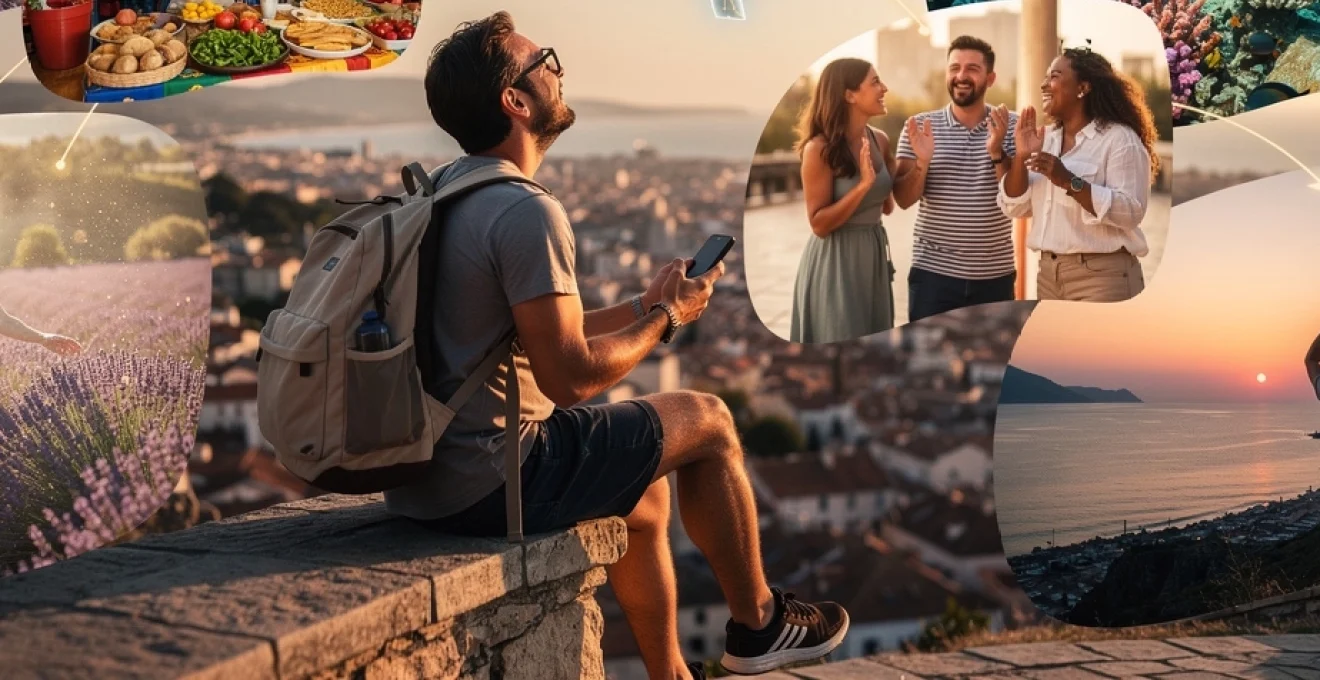
Standing at the edge of the Grand Canyon or wandering through Tokyo’s neon-lit streets, you might wonder why certain moments etch themselves permanently into your consciousness while everyday experiences fade within hours. The transformation of a simple vacation into an unforgettable collection of vivid memories involves a complex interplay of neurological processes, sensory engagement, and psychological mechanisms that distinguish travel experiences from routine daily life. Understanding these underlying factors can help you craft journeys that resonate deeply and endure far beyond your return home.
The human brain processes travel experiences fundamentally differently than it handles familiar, repetitive activities. When you step into unfamiliar territory, your neural architecture shifts into a heightened state of awareness and encoding, creating stronger memory traces that persist across decades. This phenomenon explains why a week-long holiday can feel more memorable than an entire month of regular work routines, despite the significant difference in duration.
Neuropsychological impact of Novelty-Seeking and dopamine regulation during travel
Your brain craves novelty with an intensity that rivals basic survival instincts. When you encounter new environments, cultures, or experiences during travel, your ventral tegmental area releases dopamine—a neurotransmitter intimately connected with reward, motivation, and memory formation. This dopaminergic surge doesn’t merely make you feel good; it fundamentally alters how your brain processes and stores information, creating what neuroscientists call “reward-motivated learning.”
The anticipation phase preceding your journey activates these same reward circuits, explaining why planning a trip often generates excitement comparable to the experience itself. Research indicates that this anticipatory period can extend pleasurable neural activation for weeks or even months before departure, effectively multiplying the psychological benefits of travel. This pre-journey dopamine release primes your memory systems for enhanced encoding once you actually arrive at your destination.
How hippocampal encoding strengthens episodic memory formation in unfamiliar environments
Your hippocampus—the seahorse-shaped structure deep within your brain’s temporal lobes—serves as the command center for episodic memory formation. When you navigate unfamiliar streets in Barcelona or explore Angkor Wat’s ancient temples, your hippocampus works overtime to create detailed spatial maps and contextual associations. This heightened hippocampal activity during novel experiences explains why you can recall specific details from a vacation taken years ago while struggling to remember what you ate for breakfast last Tuesday.
The encoding process becomes particularly robust when multiple contextual elements converge: unique locations, emotional significance, sensory richness, and social interactions. Your hippocampus binds these diverse elements together, creating what memory researchers call “episode nodes”—comprehensive memory packages that preserve not just visual information but also emotional states, physical sensations, and temporal sequences. Studies demonstrate that hippocampal encoding during travel experiences can be up to 40% more efficient than during routine activities, resulting in memories that maintain their vividness for significantly longer periods.
The role of dopaminergic reward pathways in Adventure-Based activities
Adventure activities—whether skiing down alpine slopes, diving with manta rays, or even navigating a challenging hiking trail—trigger intense dopaminergic responses that cement memories through a process called “reward-based consolidation.” Your brain essentially marks these experiences as highly significant, prioritizing them for long-term storage and periodic reinforcement during subsequent mental replay.
The moderate stress associated with controlled adventure activities also contributes to memory enhancement through norepinephrine release, which amplifies the salience of the experience. This explains why slightly challenging experiences—those that push you just beyond your comfort zone without triggering genuine distress—often become your most cherished travel memories. The sweet spot exists where excitement meets manageable challenge, creating optimal conditions for dopamine release and subsequent memory consolidation.
Cortisol reduction and parasympathetic activation through environmental change
Chronic stress elevates cortisol levels, which paradoxically impairs memory formation while simultaneously making existing memories harder to access. Travel, particularly to natural environments or relaxing destinations, activates your parasympathetic nervous system—the “rest and digest” mode that counteracts stress responses. This physiological shift reduces cortisol production while enhancing cognitive functions including attention, creativity, and memory encoding.
As your nervous system downshifts, you become more capable of fully inhabiting each moment: you notice subtler details, linger longer in conversations, and absorb the nuances of a new place. Lower cortisol also supports hippocampal functioning, meaning that the relaxed state you drop into on a beach in Bali or a quiet riad in Marrakech is biologically primed for better memory consolidation. In other words, the calm you feel on vacation is not just pleasant in the moment; it is actively building the foundation for the lasting memories you will carry home.
Psychological distance theory and mental perspective transformation
Beyond biochemistry, travel alters how you perceive your own life through what psychologists call psychological distance. When you step away from familiar routines, locations, and social roles, your daily concerns feel less immediate, as if you are observing them from a balcony instead of standing in the crowd. This mental distance allows you to think more abstractly about your goals, values, and identity, which is one reason so many people report “big realizations” on long trips or sabbaticals.
According to construal level theory, increased distance in time, space, or social context encourages higher-level thinking and reframing. Being thousands of miles from your office or home makes it easier to ask: “Is this really how I want to be spending my days?” or “What do I want the next decade to feel like?” These reflective questions are often anchored to specific scenes—writing in a café in Lisbon, watching sunrise in the Atacama Desert—so that the place becomes inseparable from the insight. Years later, recalling the destination also brings back the new perspective you formed there, reinforcing the memory’s emotional significance.
Multisensory engagement and embodied cognition in destination experiences
Memorable vacations are rarely built on visuals alone. The most powerful travel memories are multisensory, engaging sight, sound, smell, taste, and touch in ways that make experiences feel fully “lived in” rather than simply observed. Cognitive scientists refer to this as embodied cognition: the idea that your body and senses are not just receivers of information, but active participants in how you think, remember, and make meaning.
When you walk through a busy night market in Bangkok or along a quiet coastal path in New Zealand, your brain is encoding layers of input—humidity on your skin, the rhythm of local music, the smell of street food, the feel of uneven cobblestones underfoot. The richer the sensory tapestry, the more retrieval cues your brain has to work with later, which is why even a faint whiff of sunscreen or jasmine can suddenly transport you back to a specific trip. Designing a vacation that maximizes multisensory engagement is one of the most reliable ways to create memories that feel exceptionally vivid and enduring.
Olfactory memory consolidation: scent anchoring in places like provence lavender fields
Of all the senses, smell has a uniquely direct route to the brain’s emotional and memory centers. Unlike visual or auditory information, which must pass through multiple neural relays, olfactory signals project straight to the amygdala and hippocampus. This is why stepping into a lavender field in Provence or a spice market in Marrakech can produce an almost overwhelming sense of presence and emotional intensity.
Neuroscience studies show that odor-evoked memories tend to be older, more vivid, and more emotionally toned than memories triggered by other senses. When you inhale the sharp, herbal fragrance of lavender in the summer heat, your brain is binding that scent to the temperature, the color of the sky, the people you are with, and even your internal mood state. Later, encountering a similar scent in a candle or essential oil can “unlock” the entire episode—an effect often referred to as scent anchoring. If you want to engineer lasting vacation memories, deliberately collecting scent cues (local soaps, spices, teas, or perfumes) is a simple yet powerful strategy.
Gustatory novel experiences and cultural food immersion in destinations like oaxaca
Food is often the most accessible gateway into a new culture, and it also plays a central role in how we remember trips. Trying mole in Oaxaca, fresh uni in Hokkaido, or injera in Addis Ababa engages complex gustatory and olfactory networks while also carrying layers of cultural meaning. These meals are not just flavors; they are stories about history, trade, climate, and tradition, all condensed onto your plate.
From a neuropsychological perspective, gustatory novelty is especially memorable because taste is closely tied to emotion and context. Sharing a long mezcal tasting with friends or taking a cooking class with a local chef creates a high-density memory event: you are learning, socializing, savoring, and often hearing personal anecdotes. To transform a simple vacation dinner into a lasting memory, prioritize experiences that combine new flavors with narrative—farm visits, market tours, or home-cooked meals—rather than defaulting to generic restaurant options that could exist anywhere.
Tactile interactions and proprioceptive engagement in activities like diving the great barrier reef
Physical experiences that engage your sense of touch and body position—known as proprioception—leave especially deep memory traces. Consider how different it feels to simply look at the ocean from a hotel balcony compared to diving the Great Barrier Reef, gripping the side of a boat, adjusting your buoyancy underwater, and feeling the slight resistance of warm currents against your skin. The second scenario recruits your entire body as an information-gathering system.
Activities such as rock climbing in Greece, kayaking through Norwegian fjords, or trekking in Patagonia create “embodied episodes” in memory. Your brain encodes not just the view but also muscle exertion, balance corrections, and even the temperature of the air on your face. These tactile and proprioceptive signals act like embedded bookmarks that make the experience easier to recall in rich detail. When planning travel, intentionally including at least one activity that involves active movement—rather than only passive observation—can dramatically enhance how memorable the trip becomes.
Auditory landscape recognition and soundscape memory formation
Every destination has a distinct soundscape: the layered mix of human voices, nature sounds, and environmental noise that gives a place its acoustic fingerprint. The call to prayer echoing over Istanbul at dawn, cicadas buzzing in the Tuscan countryside, or subway announcements in New York all become part of what your brain encodes as “there.” These auditory cues are surprisingly potent for later recall, especially when they diverge markedly from your home environment.
Research on auditory memory indicates that environmental sounds are often stored alongside spatial and emotional information, enhancing what psychologists call context-dependent recall. You might not consciously focus on the rhythm of waves in Hawaii or the clink of cups in a Lisbon café, but these sounds will quietly strengthen your sense of “being there” when you mentally revisit the trip. To harness this, you can make brief audio recordings of local soundscapes or simply pause periodically to close your eyes and listen deeply; both practices help your brain prioritize auditory details for long-term storage.
Social bonding mechanisms and oxytocin release through shared travel experiences
While solo travel can be transformative, many of our strongest vacation memories involve other people: family road trips, friends’ getaways, honeymoons, or even fleeting connections with strangers on a tour. These social experiences are underpinned by oxytocin, often called the “bonding hormone,” which is released during moments of trust, affection, and shared vulnerability. Travel naturally creates conditions for these moments—navigating a foreign subway system together, sharing a bottle of wine at sunset, or laughing over a minor mishap like a missed train.
Oxytocin not only strengthens interpersonal attachment but also enhances social memory, making joint experiences more salient and easier to recall. Studies suggest that emotionally synchronized events—when people feel “in sync” with one another—are especially memorable because multiple nervous systems are co-creating the narrative. This is one reason why a simple picnic with friends in a Paris park might overshadow a much grander solo excursion in memory. If you want your vacations to foster lasting bonds as well as lasting memories, prioritize activities that encourage collaboration, conversation, and shared decision-making rather than everyone retreating into their own devices.
Photographic documentation and external memory storage systems
In the digital age, our relationship with vacation memories is increasingly mediated by technology. Smartphones have turned virtually everyone into a casual photographer, creating vast archives of images, videos, and notes. These archives function as external memory storage systems, extending what cognitive scientists call your “transactive memory”—the combined store of what you remember personally and what you know you can access externally.
Yet this abundance raises a pressing question: does taking more photos make vacations more memorable, or does it distance you from the lived experience? The answer depends on how you use your devices. When photography is integrated mindfully—supporting attention rather than fragmenting it—it can strengthen memory traces and provide powerful cues for later recall. When it becomes compulsive or purely performative, it can interfere with the deep encoding that underpins truly lasting memories.
Smartphone camera technology and digital memory offloading effects
Modern smartphone cameras are so capable that they can capture detail your eyes might miss in the moment, from subtle architectural textures to faint stars in the night sky. This power makes it tempting to “outsource” observation to the device, a phenomenon known as digital memory offloading. We take the photo and unconsciously assume we no longer need to pay close attention, because the image will “remember” for us.
Research from the University of California and other institutions has found that heavy reliance on external storage—whether cloud albums or note apps—can reduce our motivation to encode information internally. You may end up with thousands of images but surprisingly fuzzy recollections. To counter this effect on your next vacation, you might adopt simple constraints: limit yourself to a few intentional shots per location, pause after each photo to look again without the screen, and describe to yourself what you see and feel. These small habits keep your brain engaged while still leveraging technology as a helpful backup.
Instagram geotagging and social media memory reinforcement algorithms
Posting travel photos on platforms like Instagram or TikTok adds another layer: social validation and algorithmic reinforcement. Each time you geotag a location and share an image, you are engaging in what psychologists call social rehearsal—publicly telling the story of your experience. Comments, likes, and shares then encourage you to revisit the memory, either by re-reading your own captions or scrolling through the gallery of a particular trip.
Algorithms amplify this effect by resurfacing “On this day” memories or suggesting past content, prompting repeated exposure to the same travel episodes. This repetition can strengthen neural pathways associated with those memories, making them feel central to your life narrative. The downside is that your recollection may become shaped by the performative version of the trip—the highlights you posted—rather than the full, nuanced reality. To preserve authenticity, consider occasionally posting about quieter, less photogenic moments that still felt meaningful, or keeping a private album for scenes that matter to you even if they never appear in a feed.
The photography-impairment effect versus mindful visual encoding
Several studies, including work from Fairfield University, have documented a “photography-impairment effect,” where people who took photos during a museum tour remembered fewer details than those who simply observed. The act of photographing can divide attention, preventing deep visual encoding. However, follow-up research shows that this impairment is reduced—or even reversed—when people use photography as a tool to focus more carefully on specific details.
The key distinction is whether you are snapping pictures on autopilot or using the camera to look more closely. On vacation, you might choose one or two elements in each setting to photograph with intent: the pattern of tiles in a Lisbon staircase, the way light hits the water at golden hour, the handwritten menu at a tiny café. Before and after taking the photo, pause and consciously note colors, shapes, and your emotional response. This brief moment of mindful visual encoding can transform photography from a memory distraction into a memory amplifier.
Narrative construction and autobiographical memory integration post-journey
When you return home, your vacation does not immediately become a stable memory; it undergoes a process of narrative construction. You tell the story to friends, post recaps online, sort through photos, and perhaps jot down highlights in a journal. Each retelling is a form of reconstruction, emphasizing certain scenes, downplaying others, and linking experiences into a coherent plot with a beginning, middle, and end.
This process is how travel memories become part of your broader autobiographical memory—the story you tell yourself about who you are and how your life is unfolding. A challenging trek might become “the time I proved to myself I can do hard things,” while a quiet retreat could become “the trip that reminded me to slow down.” If you want to intentionally shape how a vacation lives on in your psyche, you can ask yourself reflective questions after you return: What surprised me most? How did this trip change how I see my everyday life? What moments do I most want to remember in ten years? Capturing your answers in writing or conversation helps solidify the deeper meaning of the journey, not just the itinerary.
Duration perception distortion and the holiday paradox phenomenon
One of the most intriguing aspects of vacation memory is the so-called holiday paradox: time seems to pass quickly while you are traveling, yet when you look back, the same period feels long and full. During the trip, dense schedules and continuous novelty can make days blur together. Retrospectively, however, the abundance of distinct memories expands your sense of how much time you lived through.
This distortion arises from the way your brain encodes and retrieves events. Clock time is constant, but psychological time stretches or contracts depending on the number and intensity of memorable episodes. Routine compresses time in hindsight because few distinct markers stand out; novelty expands it because there are many. Understanding this can help you design vacations that feel longer and richer, even if you are working with limited days off.
Chronological density and memory-rich experiences in multi-destination itineraries
Trips that include multiple destinations—say, a week split between Barcelona, the Costa Brava, and the Pyrenees—often feel disproportionately long in memory. Each shift in setting, climate, and activity creates a new “chapter,” increasing what researchers call chronological density: the number of distinct, recallable episodes packed into a given span of time. The more chapter breaks your brain perceives, the more expansive the trip feels in retrospect.
However, packing in too many stops can backfire, creating surface-level impressions without enough time for deep encoding. A useful analogy is reading: skimming ten books in a week may leave you with less retention than reading three attentively. When planning multi-destination vacations, aim for a balance—enough variety to create clear mental chapters, but enough time in each place to form specific, sensory-rich memories and personal connections.
Retrospective time expansion in novel versus routine activities
Novel activities—learning to surf, joining a local festival, taking a pottery class—require more cognitive processing than familiar routines. Your brain has to build new models rather than relying on existing templates, which generates more memory “data” per hour. In hindsight, this data density makes the period feel longer and more substantial, a phenomenon known as retrospective time expansion.
Interestingly, even short bursts of novelty embedded within otherwise routine days can produce this effect. A single afternoon exploring a new neighborhood in your own city can stand out in your mental timeline compared to weeks of unremarkable repetition. On vacation, you can leverage this by sprinkling deliberate novelty throughout the trip: try one unfamiliar activity, visit a lesser-known district, or say yes to an invitation that stretches your comfort zone. These moments act like anchors, expanding your sense of the trip’s length and depth.
Segmentation theory applied to travel day structure and recall accuracy
Segmentation theory suggests that our brains naturally divide continuous experience into discrete “events” based on changes in context, activity, or goal. Clear segments—morning market visit, afternoon hike, evening concert—are easier to encode and later recall than amorphous stretches of time. Travel days that are structured around a few distinct segments tend to yield more accurate and detailed memories than days that drift without markers.
Practically, this means you can enhance both enjoyment and recall by loosely organizing each day into two or three meaningful blocks rather than over-scheduling or leaving everything to chance. For example, you might dedicate the morning to a guided cultural experience, the afternoon to unstructured wandering, and the evening to a special meal or show. Brief rituals at the boundaries of these segments—such as jotting down a few notes, snapping one intentional photo, or sharing “best moment so far” with your travel companions—signal to your brain that an episode has concluded, helping to “save” the memory. Over time, these well-defined segments become the building blocks of the lasting story your vacation tells in your mind.