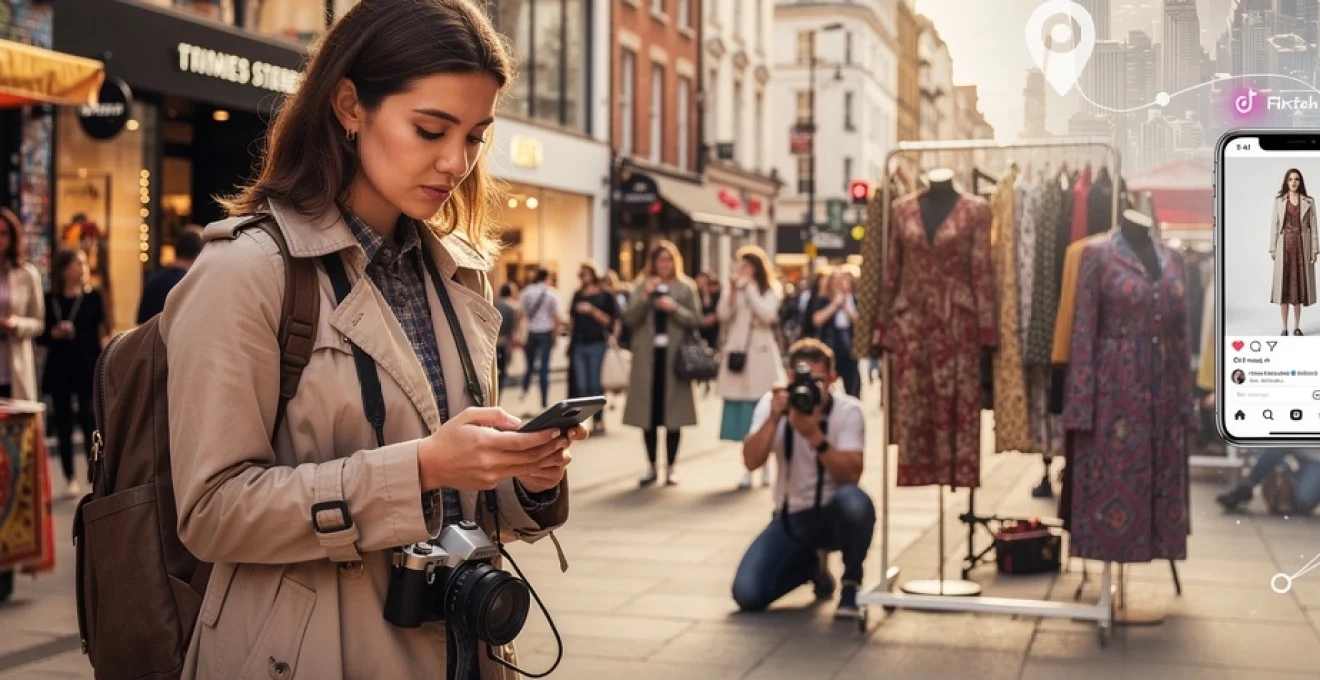
Fashion trends emerge from the streets long before they reach international runways, making travel an invaluable opportunity for discovering authentic style movements. While mainstream fashion capitals dominate headlines, the most exciting trends often begin in neighbourhood boutiques, local markets, and street corners where creativity meets cultural expression. Understanding where and how to identify these emerging fashion movements transforms any trip into a trend-spotting expedition, whether you’re exploring established fashion districts or uncovering hidden style gems in unexpected locations.
The art of fashion discovery during travel requires more than casual observation. Successful trend identification involves understanding local cultural nuances, recognising emerging designer talent, and distinguishing between fleeting fads and lasting style movements. From analysing street photography hotspots to timing visits with fashion weeks, strategic planning enhances your ability to capture authentic fashion insights that extend far beyond tourist-focused shopping districts.
Fashion district navigation and trend discovery techniques
Fashion districts serve as concentrated hubs of creativity where emerging trends crystallise before spreading to mainstream markets. These areas typically feature a dense concentration of independent designers, concept stores, and fashion-forward consumers who collectively create the perfect environment for trend observation. Understanding the layout and rhythm of these districts maximises your fashion discovery potential during any visit.
Successful navigation requires timing your visits strategically. Early morning hours reveal how locals naturally dress for daily life, while evening periods showcase aspirational styling for social occasions. Weekdays often provide more authentic insights than weekends, when areas may be saturated with tourists seeking mainstream experiences rather than genuine fashion exploration.
Identifying emerging designer boutiques in shoreditch and camden markets
Shoreditch represents London’s contemporary fashion frontier, where emerging designers establish their first physical retail presence. The area’s industrial aesthetic provides the perfect backdrop for experimental fashion, with converted warehouses housing boutiques that challenge conventional retail approaches. Focus your exploration on Redchurch Street and surrounding side streets, where rent affordability allows creative risks that established fashion districts cannot accommodate.
Camden Market operates differently, functioning as an incubator for alternative fashion movements. Here, trend identification requires distinguishing between vintage reproductions and genuinely innovative approaches to familiar styles. The most significant trends emerge from stalls that reimagine classic pieces through contemporary construction techniques or unexpected fabric combinations.
Street style photography hotspots along oxford street and carnaby street
Oxford Street’s intersection points provide prime locations for observing how international fashion influences blend with British sensibilities. The area surrounding Oxford Circus tube station serves as a natural convergence point where diverse style tribes cross paths, creating spontaneous fashion moments worth documenting. Pay particular attention to how locals accessorise international brands, as these personalisation techniques often indicate emerging trend directions.
Carnaby Street maintains its historical significance as a style laboratory, though modern trend-spotting here requires looking beyond the obvious tourist attractions. The smaller streets radiating from the main thoroughfare host independent boutiques where London’s fashion insiders shop for unique pieces. Effective observation involves noting which pieces appear repeatedly across different stylistic interpretations, suggesting broader trend adoption.
Independent fashion retail clusters in notting hill and brick lane
Notting Hill’s Westbourne Grove section concentrates high-end independent retailers whose buying decisions influence broader fashion movements. These stores often stock pieces from emerging designers six months before they reach mainstream attention, making them valuable indicators of future trends. The area’s affluent demographic provides insights into how luxury markets interpret street-level innovations.
Brick Lane’s fashion landscape reflects London’s multicultural influences, where traditional South Asian textiles merge with contemporary British tailoring. This intersection creates unique aesthetic combinations that frequently inspire broader fashion movements. Trend identification here requires understanding cultural context, as many innovations represent modern interpretations of traditional dress codes rather than entirely new concepts.
Vintage fashion archaeology methods in portobello road and spitalfields
Portobello Road’s vintage market provides archaeological insights into fashion’s cyclical nature, where past trends resurface with contemporary modifications. Successful trend-spotting involves identifying which historical periods are experiencing renewed interest and how current consumers are adapting vintage pieces for modern wear. The most significant trends often emerge from unexpected historical connections rather than obvious nostalgic revivals.
Spitalfields Market, by contrast, operates as a living archive where yesterday’s workwear, sportswear, and partywear are continuously re-edited by new generations. Look for patterns in what resellers are buying and curating rather than what they are simply offloading. When you see multiple stalls reworking similar eras or silhouettes – for example, 1990s utility vests or 1970s boho blouses – you are likely observing the early stages of a revived micro-trend that will migrate back into contemporary collections.
Fashion week calendar synchronisation for travel planning
Aligning your travel dates with global fashion weeks dramatically increases your chances of spotting local fashion trends at their source. During these periods, entire neighbourhoods transform into open-air runways, and the streets around show venues often reveal more about future style movements than the catwalks themselves. By synchronising your itinerary with key events in Milan, Paris, Copenhagen, and New York, you gain structured access to concentrated fashion communities, industry conversations, and real-time trend experimentation.
Strategic planning begins months in advance. Fashion councils typically publish provisional calendars six to nine months ahead, allowing you to select dates that balance access to events with manageable accommodation costs. Consider staying slightly outside primary show zones and commuting in; you will often encounter more authentic street style in these transitional areas where industry professionals, students, and locals intersect away from the cameras.
Milan fashion week street style documentation strategies
Milan Fashion Week turns districts like Brera, Porta Venezia, and the area around Via Savona into dense style laboratories. To document emerging trends without overwhelming yourself, treat each zone as a different data set. One afternoon might be dedicated to observing tailoring details near menswear-focused shows, while another morning could focus on accessories and footwear around womenswear presentations. This segmented approach helps you recognise which elements recur across contexts and demographics.
When capturing Milan street style, think like a researcher rather than a paparazzo. Instead of hundreds of random photos, aim for a concise series that highlights specific elements: proportions, colour combinations, and fabric textures. Save images with short notes such as “oversized camel coat + bold sneaker” or “double leather layering, muted palette.” Over the course of a few days, these annotated observations will reveal patterns that indicate genuine directional trends rather than one-off statements.
Paris fashion week showroom access and trend forecasting
Paris Fashion Week is not only about runway shows; much of the true business of fashion happens in quiet showroom spaces spread across Le Marais, Saint-Germain, and near the Champs-Élysées. While many showrooms are invitation-only, smaller labels and multi-brand spaces occasionally open to buyers and press-accredited visitors without strict appointment structures. Monitoring brand newsletters and social media announcements before your trip can reveal public presentations, open houses, or trunk shows.
Once inside a showroom, approach the experience as a trend forecaster rather than a shopper. Pay attention to how collections are grouped: colour stories, material themes, and silhouette families often signal where the designer believes consumer demand is heading next season. Ask staff about the most-ordered pieces or fabrics; these insights provide a grounded view of what will likely appear in global retail six to twelve months later, allowing you to anticipate and interpret trends back home.
Copenhagen fashion week sustainable fashion trend analysis
Copenhagen Fashion Week has positioned itself as a global leader in sustainable fashion travel experiences, making it an ideal destination for travellers interested in conscious style. Many participating brands must meet stringent sustainability requirements to show, which means the street style and showrooms provide a concentrated view of how ethics and aesthetics intersect. As you move through areas like Vesterbro and Nørrebro, observe how locals integrate functional, eco-conscious pieces into everyday looks rather than reserving them for fashion week alone.
For effective sustainable trend analysis, focus less on logos and more on construction details: visible mending, modular layering, recycled materials, and low-impact colour palettes. Notice the prevalence of long-lasting outerwear, versatile knitwear, and practical footwear, all styled in ways that still feel distinctly Scandinavian and modern. Ask yourself: which of these choices are simply regional preferences, and which could realistically translate into your own wardrobe while supporting more responsible consumption?
New york fashion week pop-up installation tracking
New York Fashion Week extends beyond runways into a web of pop-up installations, concept spaces, and brand activations, particularly in SoHo, the Meatpacking District, and Lower East Side. These temporary spaces often serve as experimental laboratories where labels test new silhouettes, digital experiences, or collaborative capsules before committing to full-scale production. Tracking these installations gives you a front-row seat to early-stage ideas that may later influence mainstream retail.
Because pop-ups change quickly, use location-based searches and event platforms a few days before and during your trip to build a live map of must-visit spots. When you arrive at each installation, observe not only the clothes but also the environment: set design, sound, and interactive elements often reflect broader cultural themes designers believe will resonate with future consumers. Take notes on recurring motifs – such as nostalgia-driven tech references or wellness-inspired colour schemes – to better understand how lifestyle shifts are shaping upcoming fashion narratives.
Cultural fashion anthropology through local markets
Beyond formal fashion districts, local markets function as open textbooks on regional style, craftsmanship, and everyday dressing. Treating these spaces as sites of cultural fashion anthropology allows you to move past souvenir shopping and towards meaningful trend observation. From fabric stalls in Marrakech to textile markets in Mexico City, the arrangement of goods, pricing structures, and customer interactions all offer clues about what locals value in their clothing.
To decode these environments, start by noting which items attract consistent local attention rather than only tourist curiosity. Are residents buying practical workwear, ornate festival garments, or hybrid pieces that merge traditional prints with modern cuts? Speak with vendors about which colours sell fastest or which patterns have returned after years of absence; these micro-histories often correspond to broader cultural revivals or generational style shifts. By the time you leave, you will have built a richer picture of how fashion operates as both a daily necessity and a form of identity in that community.
Digital fashion intelligence gathering via geolocation
Physical exploration is only half of modern trend-spotting. The other half unfolds on your phone through geolocated content that reveals what locals are wearing in real time. Digital platforms have turned every street corner into a potential lookbook, and learning to read this data strategically can transform your trip into a focused research project. Rather than scrolling aimlessly, you can use geolocation tools on Instagram, TikTok, and Pinterest to map style movements across neighbourhoods and cities.
Think of these platforms as complementary lenses: Instagram offers curated imagery, TikTok captures motion and context, and Pinterest synthesises patterns into visual roadmaps. By cross-referencing what you see online with what you observe in person, you build a more accurate view of local fashion trends. This dual approach helps you avoid relying solely on tourist-heavy areas, instead zeroing in on authentic style hubs where residents experiment freely with new looks.
Instagram geotag analysis for trend mapping in williamsburg and SoHo
In cities like New York, neighbourhoods such as Williamsburg and SoHo act as early indicators for global fashion movements. Instagram’s geotag feature allows you to sample these environments before you arrive and refine your in-person route. Start by searching for the neighbourhood tag and sorting by “Most Recent” rather than “Top” posts; this reduces the influence of professional campaigns and highlights what locals and visitors are actually wearing on a given week.
As you scroll, look for recurring combinations: perhaps multiple users pair vintage denim with sculptural boots, or oversized blazers consistently appear over casual athleisure. Save representative images into organised collections labelled by neighbourhood or theme. When you later walk through Williamsburg’s side streets or SoHo’s cast-iron blocks, you can compare the digital mood board to real-life outfits, determining whether those trends are spreading, evolving, or remaining niche.
Tiktok algorithm exploitation for Real-Time fashion discovery
TikTok’s algorithm, while opaque, can become a powerful ally for real-time fashion discovery while travelling if you guide it intentionally. Before or during your trip, engage with content that combines city hashtags with fashion-related terms – for example, #londonstyle, #parisoutfits, or #seoulstreetfashion. Within a short period, your “For You” page will begin surfacing clips from local creators showcasing daily looks, store hauls, or styling tips specific to your destination.
Because TikTok emphasises movement, pay attention to how garments behave: the drape of wide-leg trousers on city staircases, the practicality of platform boots on cobblestones, or the layering of outerwear in shifting climates. Ask yourself which outfits appear comfortable enough for real life versus designed solely for the camera. By filtering your watch history towards content that balances aesthetics with functionality, you gain more reliable insights into trends that are likely to persist beyond the platform.
Pinterest trend forecasting through Location-Based searches
While Pinterest is less immediate than TikTok, it excels at turning scattered observations into coherent visual patterns, making it ideal for fashion trend forecasting during travel. Use location-based or city-specific keywords such as “Copenhagen winter street style” or “Lisbon summer outfits” to generate boards that aggregate looks over time. Unlike other platforms, Pinterest’s algorithm favours images that continue to receive saves, which often correlates with styles that have genuine staying power.
As you compile pins, treat your board like a research wall. Group images by silhouette, colour story, or fabric type to see which elements repeat across different users and seasons. When you later step into those cities, you can test your digital forecast against real-world outfits: do locals favour the same tonal palettes you identified, or has a new micro-trend begun to replace them? This comparison sharpens your ability to distinguish enduring shifts from short-lived digital hype.
Fashion industry insider access points during travel
Gaining insider-level access during your travels does not necessarily require professional credentials; it requires curiosity, preparation, and respect for industry boundaries. Many educational institutions, concept stores, and cultural centres host public lectures, exhibitions, or open studios that quietly attract designers, buyers, and stylists. By targeting these spaces, you can observe how professionals discuss and interpret local fashion trends, providing a deeper layer of understanding than street style alone.
Begin by researching fashion schools, design incubators, and museum programs in your destination. Institutions like the Fashion and Textile Museum in London or specialised galleries in Tokyo and Antwerp often run temporary shows that unpack regional aesthetics, materials, or subcultures. Attend openings or panel discussions where possible; the Q&A segments reveal which issues – sustainability, digital styling, craftsmanship – currently dominate the local conversation. Even short, informal chats with curators or students can yield insights into where the scene is heading next.
Cross-cultural fashion translation and trend adaptation methodologies
Spotting a compelling look abroad is only the first step; the real challenge lies in translating that style into your own cultural and practical context. Cross-cultural fashion translation is similar to learning a language: direct copying rarely works, but understanding grammar – in this case, proportion, colour balance, and fabric behaviour – allows you to create fluent, personal interpretations. Instead of reproducing an outfit piece-for-piece, consider which underlying principles made it resonate with you.
Begin by breaking a look into components: silhouette, dominant colour, texture contrast, and key accessory. Which of these elements aligns with your climate, daily activities, and existing wardrobe? If the oversized wool coat you admired in Stockholm is impractical in your warmer home city, perhaps you can adapt the same elongated silhouette through a lightweight trench. This approach ensures that you honour the inspiration while avoiding costume-like repetition.
It is also important to respect cultural specificity. Certain garments, prints, or symbols carry deep local significance and may not be appropriate to replicate without context or consent. When in doubt, focus on adaptable aspects such as layering methods, fabric mixes, or general palettes rather than sacred or ceremonial pieces. By treating travel-inspired fashion as a dialogue rather than a souvenir, you build a wardrobe that reflects global influences while remaining sensitive, functional, and distinctly your own.