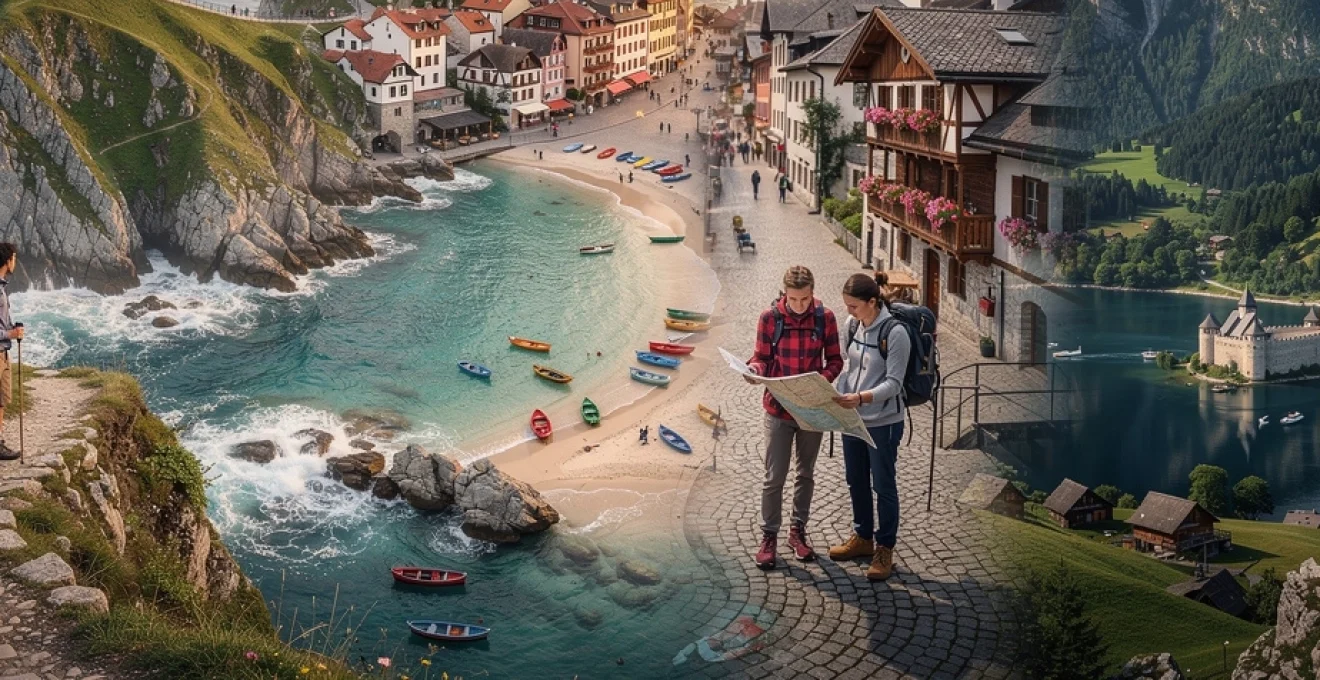
Europe’s most celebrated destinations often overshadow extraordinary places that offer equally compelling experiences without the overwhelming crowds. While millions flock to Paris, Rome, and Barcelona each year, an entirely different side of Europe awaits discovery—one where authentic local culture thrives, pristine landscapes remain untouched, and remarkable historical sites stand virtually empty. These hidden gems represent the continent’s best-kept secrets, offering travellers the opportunity to explore medieval citadels, pristine coastlines, and dramatic mountain ranges in relative solitude.
The appeal of these lesser-known destinations extends beyond simply avoiding tourist masses. They provide intimate glimpses into local traditions, offer better value for money, and create the kind of memorable experiences that become treasured stories rather than typical holiday snapshots. From the fjord-like bays of Montenegro to the medieval towns of Romania, these remarkable locations prove that Europe’s most rewarding adventures often lie just beyond the guidebook recommendations.
Hidden coastal treasures along europe’s remote shorelines
Europe’s coastline stretches over 68,000 kilometres, yet most travellers experience only a fraction of its diverse maritime landscapes. The continent’s remote shorelines harbour some of its most spectacular natural phenomena, from dramatic sea cliffs carved by millennia of Atlantic storms to pristine archipelagos that serve as sanctuaries for rare marine life. These coastal gems offer experiences that rival the Mediterranean’s most famous beaches whilst providing the tranquillity that mass tourism has erased from popular destinations.
Faroe islands’ kallur lighthouse trail and dramatic sea cliffs
The Faroe Islands represent one of Europe’s last frontiers, where Nordic culture meets some of the planet’s most dramatic coastal scenery. The Kallur Lighthouse Trail on Kalsoy island leads to the northernmost point of the archipelago, offering views across knife-edge ridges that plunge 400 metres into the North Atlantic. This challenging hike rewards adventurous travellers with panoramic vistas that encompass multiple islands and the endless expanse of the Arctic Ocean.
What makes the Faroe Islands particularly compelling is their unique position between Iceland and Norway, creating a distinctive culture that blends Scandinavian traditions with Celtic influences. The islands’ grass-roof architecture, traditional chain dancing, and fermented delicacies reflect centuries of isolation that have preserved customs lost elsewhere in Europe. Weather patterns change rapidly here, creating an ever-shifting landscape of mist-shrouded peaks and brilliant sunshine that photographers find irresistible.
Albania’s riviera: dhërmi beach and himara’s pristine coves
The Albanian Riviera offers Mediterranean beauty that rivals the French Côte d’Azur at a fraction of the cost and with minimal crowds. Dhërmi Beach stretches for six kilometres along the Ionian Sea, backed by olive groves and traditional stone villages that have remained largely unchanged for generations. The crystal-clear waters here achieve visibility depths of up to 20 metres, making it exceptional for snorkelling and diving enthusiasts seeking to explore underwater caves and ancient shipwrecks.
Himara’s coastline features a series of hidden coves accessible only by foot or boat, where pristine pebble beaches meet dramatic limestone cliffs. The region’s culinary traditions reflect both Mediterranean and Balkan influences, with local restaurants serving fresh seafood caught by traditional fishing boats each morning. Albania’s tourism infrastructure has developed rapidly in recent years, yet the country still receives fewer visitors than many single attractions in neighbouring Greece or Italy.
Portugal’s berlengas archipelago marine reserve
Just 10 kilometres off Portugal’s western coast lies the Berlengas Archipelago, a protected marine reserve that feels worlds away from the mainland. The main island, Berlenga Grande, features a 17th-century fortress connected to the shore by a narrow causeway, creating one of Europe’s most photographed yet least visited historical sites. The surrounding waters form part of a UNESCO Biosphere Reserve, protecting unique bird species and marine ecosystems found nowhere else in Europe.
Access to the islands is deliberately limited to preserve their fragile ecosystems, with daily visitor numbers capped and boat transfers operating only between May and September. This restriction ensures that those who make the
journey feel more like an expedition than a standard day trip. Once on Berlenga Grande, you can follow marked hiking trails to secluded viewpoints, explore sea caves by kayak, or snorkel in clear waters that reveal thriving kelp forests and colourful fish species. Because accommodation on the islands is extremely limited, most visitors stay in nearby Peniche, turning the excursion into a rewarding addition to a wider Portugal itinerary rather than a mass-market beach stop.
Estonia’s saaremaa island: kuressaare castle and kaali meteorite crater
On Estonia’s western fringes, Saaremaa Island offers a peaceful alternative to Europe’s busier coastal regions. The island’s main town, Kuressaare, is home to one of the best-preserved medieval fortresses in the Baltic region: Kuressaare Castle. Surrounded by a wide moat and manicured parkland, the castle now houses a regional museum that traces Saaremaa’s history from pagan times through Swedish and Russian rule. Its imposing bastions and stone walls contrast beautifully with the relaxed seaside atmosphere of the town.
Further inland, the Kaali Meteorite Crater field reveals a dramatic episode in the island’s geological past. Formed by a meteorite impact roughly 4,000 years ago, the largest crater spans 110 metres in diameter and is filled with emerald-green water. Archaeological evidence suggests that Kaali was once a sacred site, with ancient rituals centred around the mysterious lake at its core. For travellers seeking lesser-known European gems, Saaremaa pairs easily with Tallinn via regular ferries and buses, and rewards slow exploration by bicycle, car, or even on foot along its quiet coastal roads.
Undiscovered medieval towns and architectural marvels
Europe’s medieval towns often feel like open-air museums, yet the most famous examples can be overwhelmed by day-trippers and cruise excursions. Venture just a little further, however, and you’ll find citadels, castles, and fortified villages where life continues at a gentler pace. These under-the-radar destinations combine architectural wonder with living history, allowing you to walk cobbled streets, climb city walls, and step inside centuries-old churches without queues or crowds.
Romania’s sighișoara citadel: vlad the impaler’s birthplace
Perched atop a hill in Transylvania, Sighișoara Citadel is one of Europe’s last inhabited medieval fortresses and a UNESCO World Heritage Site. Its pastel-coloured houses, narrow stairways, and defensive towers have changed little since the 16th century, creating a remarkably immersive atmosphere. The town is famously associated with Vlad Țepeș, known as Vlad the Impaler, whose birthplace is now a small museum and restaurant that embraces the Dracula legend while contextualising the real historical figure.
Sighișoara’s fortified church, covered stairway, and clock tower offer tangible links to the region’s Saxon heritage. Unlike more commercialised “medieval” attractions, the citadel remains a lived-in community, with locals hanging washing from wooden balconies and children playing in quiet squares. For travellers designing a lesser-known Europe itinerary, Sighișoara combines easily with nearby fortified churches such as Biertan, providing a deep dive into Transylvania’s layered past away from busier Romanian hotspots.
Slovenia’s škocjan caves unesco world heritage complex
While many visitors to Slovenia focus on Lake Bled and Postojna Cave, the Škocjan Caves complex delivers an even more dramatic subterranean experience with a fraction of the footfall. This UNESCO World Heritage Site contains one of the world’s largest known underground canyons, carved by the Reka River over millions of years. Walking along suspended bridges and narrow walkways, you’ll peer down into a roaring chasm that feels more like a fantasy film set than a real landscape.
The caves are managed with strict environmental protections, limiting visitor numbers on guided tours to preserve delicate formations and subterranean ecosystems. Above ground, the surrounding Karst region offers tranquil hiking paths, traditional stone villages, and family-run farms producing local wine and cured meats. If you’re planning a hidden-gem European road trip, Škocjan works particularly well as a stop between Ljubljana and the Adriatic coast, offering a natural counterpoint to the region’s medieval towns and coastal scenery.
Czech republic’s český krumlov castle and historic centre
Situated on a dramatic bend in the Vltava River, Český Krumlov is a picture-book Bohemian town whose fairy-tale appearance belies its relative anonymity compared with Prague. Dominated by a vast Renaissance castle complex, the historic centre is a UNESCO-listed maze of cobbled lanes, painted façades, and riverside taverns. The castle itself combines Baroque interiors, a preserved Baroque theatre, and sweeping views across terracotta rooftops, offering plenty to explore over the course of a day or two.
Although Český Krumlov has grown in popularity, it still sees far fewer visitors than Europe’s major capitals, especially outside peak summer weekends. Staying overnight lets you experience the town after the day-trippers have left, when quiet courtyards and softly lit streets reclaim their charm. Kayaking or rafting down the Vltava provides an alternative perspective on the town’s architecture, while nearby Šumava National Park adds hiking and cycling opportunities for travellers wanting to combine culture with nature.
Poland’s zakopane tatra mountains and wooden architecture
At the foot of the Tatra Mountains, Zakopane has long served as Poland’s winter sports hub, but its unique wooden architecture and highland traditions make it a compelling year-round destination. The town’s distinctive “Zakopane Style,” developed in the late 19th century, blends local folk motifs with chalet influences, resulting in ornately carved wooden villas and chapels. Walking along streets such as Kościeliska, you can admire these buildings up close and step into small museums that recount the region’s cultural history.
Just beyond town, trails lead into the Tatra National Park, where alpine lakes such as Morskie Oko reflect jagged peaks and dense forests. In winter, ski slopes and cross-country routes attract active travellers, while summer brings hikers and climbers seeking cooler temperatures than in Poland’s cities. Despite its domestic popularity, Zakopane receives far fewer international visitors than other European mountain resorts, making it an excellent option if you’re searching for authentic mountain culture without Swiss or Austrian price tags.
Off-the-beaten-path mountain regions and alpine adventures
Mountain landscapes often serve as natural refuges from mass tourism, offering wide-open spaces, fresh air, and an inherent sense of adventure. Beyond the well-known Alps and Pyrenees, Europe is criss-crossed by lesser-known ranges that provide equally spectacular scenery at a more relaxed pace. From glacier-carved valleys to pristine lakes and dense primeval forests, these off-the-beaten-path mountain regions invite you to slow down, lace up your boots, and immerse yourself in wild, unspoilt nature.
North macedonia’s ohrid lake and byzantine church heritage
Straddling the border between North Macedonia and Albania, Lake Ohrid is one of Europe’s oldest and deepest lakes, with an ecosystem so unique that UNESCO has recognised both its natural and cultural value. The town of Ohrid itself cascades down a hillside towards the water, crowned by the medieval Samuel’s Fortress and punctuated by dozens of Byzantine churches. Perhaps the most iconic is the Church of St. John at Kaneo, perched dramatically on a cliff above the lake and offering sunrise and sunset views that feel almost otherworldly.
Ohrid’s long history as a spiritual centre has earned it the nickname “the Jerusalem of the Balkans,” and walking its streets is like paging through a living history book. Yet, despite this rich heritage, visitor numbers remain modest compared with Western Europe’s religious hubs. Boat trips to secluded beaches, visits to traditional lakeside villages, and tastings of local Ohrid trout create a well-rounded experience that blends nature, culture, and gastronomy in a compact, easy-to-navigate region.
Montenegro’s durmitor national park and tara river canyon
Beyond Montenegro’s coastal allure lies Durmitor National Park, a rugged mountain paradise shaped by glaciers and rivers over millennia. Centred around the town of Žabljak, the park boasts more than 18 glacial lakes, known locally as “mountain eyes,” with the Black Lake (Crno Jezero) providing an accessible introduction to the area’s natural beauty. Hiking trails range from family-friendly circuits around the lake to challenging ascents of Bobotov Kuk, Durmitor’s highest peak at 2,523 metres.
Carving its way along the park’s edge, the Tara River Canyon is often cited as Europe’s deepest gorge, with some sections plunging more than 1,300 metres. White-water rafting excursions navigate turquoise rapids through dense forests and under towering cliffs, offering an adrenaline-filled way to experience this wilderness. Because Durmitor remains less developed than classic Alpine resorts, you can still find traditional guesthouses, hearty home-cooked meals, and starlit skies free from light pollution—ideal for travellers craving a more elemental mountain escape.
Slovakia’s high tatras: spiš castle and bojnice fortress
Slovakia’s High Tatras may be compact, but they deliver classic alpine scenery without the crowds or costs associated with more famous ranges. Jagged peaks, glacial valleys, and clear mountain lakes make this region a favourite among Central European hikers and skiers, yet it remains surprisingly under-the-radar internationally. Base yourself in towns like Tatranská Lomnica or Starý Smokovec to access well-marked trails, cable cars, and mountain huts that offer simple, hearty food and warm hospitality.
Complementing the natural drama are some of Europe’s most impressive castles, including the sprawling ruins of Spiš Castle. One of the largest castle complexes in Central Europe, it dominates a limestone hilltop and offers panoramic views across rolling countryside. Further west, Bojnice Castle contrasts with its romantic, fairy-tale appearance—a 19th-century reconstruction on medieval foundations, complete with turrets, courtyards, and landscaped parks. Combining these fortresses with time in the High Tatras creates a varied itinerary that balances outdoor adventure with historical exploration.
Bosnia and herzegovina’s sutjeska national park primeval forests
In Bosnia and Herzegovina, Sutjeska National Park shelters one of Europe’s last remaining primeval forests, Perućica, a dense, ancient woodland that has thrived with minimal human interference. Here, towering beech and fir trees, some more than 300 years old, create a canopy that feels almost cathedral-like, with shafts of light filtering down onto moss-covered ground. The park also encompasses Maglić, the country’s highest peak, and the dramatic Skakavac waterfall, which tumbles nearly 75 metres into a lush valley.
Because access to the core of the primeval forest is controlled and usually requires a guide, your visit directly supports conservation while offering rare insight into how Europe’s forests looked before large-scale logging. For adventurous travellers, multi-day hikes and wild camping are possible in designated areas, while those seeking a gentler pace can opt for shorter walks and scenic drives. Compared with Western Europe’s national parks, Sutjeska remains blissfully uncrowded, giving you a sense of discovery that’s increasingly hard to find.
Emerging cultural capitals and artistic renaissance hubs
Not all hidden gems are tucked away in mountains or along remote coastlines; some are vibrant cities quietly undergoing cultural renaissances. Across Europe, former industrial centres and overlooked capitals are reinventing themselves as hubs of creativity, gastronomy, and contemporary art. Exploring these emerging cultural capitals lets you experience street murals instead of selfie sticks, local markets instead of souvenir strips, and neighbourhood cafés where you share space with residents rather than tour groups.
Cities such as Tirana, Belgrade, Riga, and Vilnius have invested heavily in cultural infrastructure, from modern art museums to revitalised waterfronts. Their compact size makes them ideal for long weekends, while affordable prices stretch your travel budget further than in Western Europe’s marquee cities. As you wander repurposed factories turned galleries or sample innovative tasting menus in former workers’ canteens, you witness a living analogy for Europe’s own transformation—where history and modernity overlap rather than compete.
Strategic transportation networks for lesser-known european destinations
One common misconception about lesser-known European destinations is that they’re hard to reach. In reality, Europe’s dense network of regional airports, rail lines, and bus connections means that even remote-seeming locations are often just a few transfers away. With a bit of planning, you can stitch together an itinerary that hops between hidden gems using public transport, reducing both your costs and your environmental footprint.
When considering how to reach these places, think of Europe’s major cities as transit hubs rather than final destinations. For example, you might fly into Vienna and continue by train to Slovakia’s High Tatras, or arrive in Milan and connect onwards to Slovenia or the Balkans by bus. Rail passes, such as those offered by Eurail or Interrail, can make spontaneous detours easier, while local bus networks often provide the final link to smaller towns, national parks, and coastal villages.
Of course, some regions—particularly in the Balkans and Baltic states—still rely heavily on buses rather than high-speed trains. In these cases, journey times may be longer, but the routes themselves can be part of the experience, offering glimpses of everyday rural life you’d miss from a motorway. By treating transport as an integral part of your hidden-gem adventure rather than a hurdle, you turn seemingly complex logistics into opportunities for serendipitous discoveries.
Seasonal tourism patterns and optimal visiting windows for hidden gems
Choosing when to visit lesser-known European gems can be just as important as deciding where to go. While these destinations rarely experience the overwhelming crowds seen in major hotspots, seasonal tourism patterns still shape prices, availability, and the overall feel of a place. As a general rule, shoulder seasons—spring (April to early June) and autumn (September to October)—offer a sweet spot of mild weather, open attractions, and quieter streets.
Mountain regions such as Durmitor, the High Tatras, and Sutjeska National Park each have dual personalities: snow sports and dramatic winter scenery from December to March, then hiking, rafting, and alpine lakes from late May to September. Coastal destinations like the Albanian Riviera or Saaremaa Island are most appealing between late May and early October, with July and August bringing warmer seas but also higher local visitor numbers. For cave complexes and medieval towns, cooler months can be particularly atmospheric, as misty mornings and early dusk add drama without significantly impacting access.
Weather aside, it’s worth considering local festivals and public holidays, which can transform your experience, for better or worse. A small town’s cultural festival might provide unique insights and lively street life, but it can also book out accommodation and raise prices. Checking event calendars in advance and balancing your desire for atmosphere against your preference for tranquillity helps you find the right visiting window. Ultimately, by aligning your travel dates with what you most want to experience—be it wildflower-covered hillsides, autumn foliage, or snow-dusted castles—you ensure that these lesser-known European gems reveal their very best side.