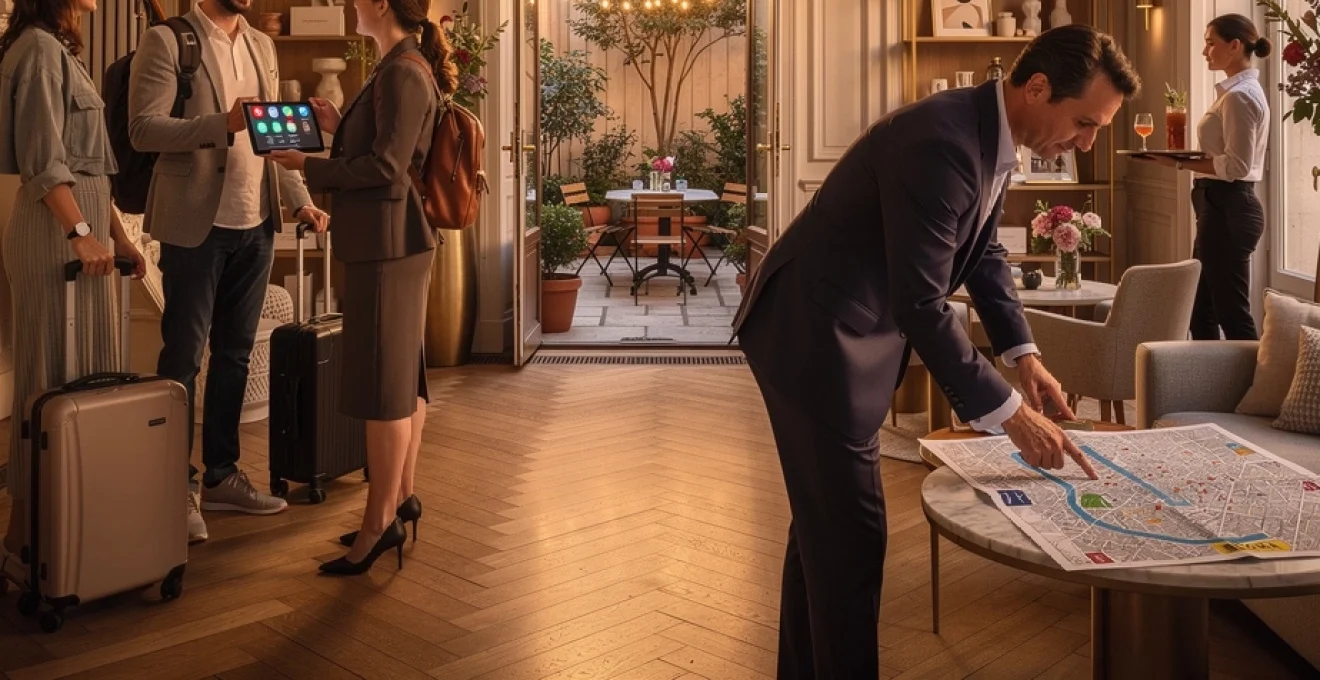
The landscape of luxury hospitality in Paris has transformed dramatically over the past decade, with boutique hotels emerging as the preferred choice for discerning travellers seeking authentic, personalised experiences. Unlike standardised chain properties that prioritise efficiency over individuality, Parisian boutique hotels have mastered the art of creating intimate, bespoke stays that reflect both the city’s rich cultural heritage and contemporary sophistication. This shift represents more than just a trend in accommodation preferences; it embodies a fundamental change in how modern travellers define luxury and value in their journeys.
The appeal of boutique properties lies not merely in their smaller scale, but in their ability to craft unique narratives that resonate with each guest’s personal travel aspirations. These establishments understand that today’s affluent travellers seek transformative experiences that extend far beyond comfortable beds and room service. They desire authentic connections with local culture, personalised service that anticipates their needs, and environments that tell compelling stories through thoughtful design and curated experiences.
Personalised guest recognition systems in parisian boutique properties
Modern boutique hotels in Paris have revolutionised guest recognition through sophisticated yet discreet systems that enable staff to provide seamlessly personalised service. These properties leverage technology and human insight to create detailed guest profiles that capture preferences, habits, and special requirements, transforming each subsequent visit into a homecoming rather than a hotel stay. The most successful establishments balance data collection with privacy, ensuring that personalisation feels intuitive rather than intrusive.
Pre-arrival guest profiling at hotel des grands boulevards
Hotel des Grands Boulevards exemplifies excellence in pre-arrival guest profiling through their comprehensive digital questionnaire system that captures dining preferences, room configuration needs, and activity interests. Their team reviews previous stay notes, social media preferences, and special occasion details to create individualised welcome experiences. Guest services managers conduct personalised phone consultations for returning clients, updating profiles with new preferences and ensuring that each stay builds upon previous positive experiences.
Bespoke concierge memory protocols at le lotti
Le Lotti has developed an innovative concierge memory protocol system where staff members maintain detailed digital and handwritten notes about guest interactions, preferences, and memorable moments from previous stays. This approach enables concierges to reference specific conversations, recommend new experiences based on past enjoyment, and surprise guests with thoughtful gestures that demonstrate genuine care and attention. The system ensures continuity across staff shifts and seasons, creating a sense of familiarity that rivals staying with close friends.
Digital guest preference tracking at hotel malte opera
Hotel Malte Opera utilises an advanced customer relationship management system that tracks everything from preferred room temperature and pillow firmness to favourite local restaurants and transportation methods. Their digital platform integrates with housekeeping, dining, and concierge services, enabling real-time personalisation throughout the guest journey. This technology-driven approach allows staff to anticipate needs proactively, such as pre-setting room environments or arranging preferred amenities before arrival.
Staff-to-guest ratio optimisation in Saint-Germain establishments
Boutique hotels in the prestigious Saint-Germain district maintain optimal staff-to-guest ratios that typically range from 1:1 to 2:1, significantly higher than larger chain properties. This staffing philosophy enables team members to develop genuine relationships with guests, remember personal details without consulting databases, and provide immediate, personalised assistance throughout their stay. The investment in human resources translates directly into service quality that feels authentic and unrushed.
Intimate property architecture and spatial design philosophy
The architectural foundation of Parisian boutique hotels plays a crucial role in creating intimate, personal experiences that larger properties simply cannot replicate. These establishments typically occupy historic buildings with unique characteristics, period features, and spatial configurations that naturally foster closer connections between guests and their environment. The scale and design of these properties encourage exploration, discovery, and a sense of belonging that transforms accommodation into an immersive cultural experience.
Most boutique properties feature between 15 and 50 rooms, allowing for varied yet cohesive design themes that reflect individual character while maintaining overall harmony. This limited capacity enables designers to invest in custom furnishings, unique artwork, and bespoke architectural details that would be cost-prohibitive
in larger, standardised hotels. In Paris, this attention to spatial detail is one of the most tangible ways boutique properties deliver a more personal travel experience, turning every corridor, staircase and sitting room into a meaningful part of the guest journey.
Historic haussmannian building conversions in le marais
In Le Marais, many boutique hotels occupy converted Haussmannian buildings where original architectural elements have been restored rather than erased. High ceilings with ornate mouldings, tall windows, wrought-iron balconies and herringbone parquet floors create an immediate sense of place that you simply cannot reproduce in a new-build tower. Instead of carving these properties into anonymous boxes, designers work with the existing fabric of the building, allowing slight irregularities in room shapes or corridor layouts to become part of the charm.
This type of conversion philosophy directly supports a more personal hotel experience in Paris. Guests feel as though they are staying in a private Parisian residence rather than a generic room that could be in any city. Intimate stairwells, compact landings and small lifts naturally limit traffic, reducing noise and promoting privacy. As a result, when you return from the bustle of Rue des Francs-Bourgeois or Place des Vosges, the hotel feels like a calm, characterful refuge woven into the history of the neighbourhood.
Boutique room configuration strategies at hotel henriette
Hotel Henriette, on the Left Bank near the Jardin des Plantes, offers a masterclass in boutique room configuration strategies. Rather than repeating a single layout across floors, the property embraces the quirks of its historic shell to create a variety of room types: under-the-eaves hideaways, interconnected family suites, cosy single rooms for solo travellers, and corner rooms with double-aspect windows. This diversity allows the hotel to match specific room personalities to different guest profiles, a key advantage when you are seeking a tailored boutique stay in Paris.
The design team at Hotel Henriette uses built-in storage, custom headboards and compact writing desks to maximise usable space without sacrificing comfort. Clever zoning with textiles and lighting separates sleeping, working and lounging areas, even in smaller rooms. For guests, this means that a “small double” can still feel like an inviting retreat rather than a compromise. The hotel’s ability to recommend a particular room for a book-writing retreat, a romantic weekend or a business trip is directly linked to these thoughtful configuration choices.
Common area intimacy design at hotel des grands boulevards
At Hotel des Grands Boulevards, the intimacy of the common areas is carefully engineered to encourage connection without crowding. Instead of a vast, anonymous lobby, the entrance flows into a series of human-scale spaces: a reception nook, a garden-facing restaurant, and a bar area that feels more like a private salon than a public venue. Seating clusters are arranged to create micro-environments where couples, solo travellers and small groups can each find their own corner without feeling exposed.
Acoustic treatments, layered lighting and a restrained soundscape ensure that the atmosphere remains calm even during peak hours. Guests can hold a quiet conversation, catch up on emails or simply watch Parisian life from a window seat. This kind of spatial choreography is one of the reasons boutique hotels in Paris feel so personal: you are not passing through a transit zone but inhabiting a sequence of curated environments designed with your comfort and mood in mind.
Authentic parisian courtyard utilisation techniques
Many boutique hotels in Paris are built around internal courtyards, and the most successful properties treat these spaces as outdoor living rooms rather than decorative voids. Carefully selected plantings, soft lighting, and weather-appropriate furnishings turn courtyards into year-round extensions of the lobby and lounge. In spring and summer, breakfasts or aperitifs may be served al fresco; in the cooler months, heaters and blankets transform the space into a cosy, candlelit retreat.
For guests, these courtyards provide a rare combination of fresh air, privacy and Parisian atmosphere. You might enjoy a morning espresso beneath climbing vines, or a late-evening glass of wine hearing only the distant murmur of the city. Because access is limited to residents, the space feels like a shared secret rather than a crowded terrace. This thoughtful utilisation of courtyards reinforces the sense that you are part of a small, privileged community during your stay.
Curated local experience integration methodologies
One of the most compelling reasons to choose a boutique hotel in Paris is the way these properties integrate curated local experiences into the stay. Instead of offering generic tour desk brochures, many boutique hotels act as cultural matchmakers, connecting you with neighbourhood artisans, independent galleries, niche food tours and intimate performances you would be unlikely to discover alone. This goes far beyond a simple list of recommendations; it is a structured methodology for embedding local Parisian life into each guest itinerary.
Typically, this process begins before you arrive. Through pre-stay questionnaires or brief calls, guest relations teams identify your interests: perhaps natural wine bars in the 11th, contemporary art in Belleville, or vintage shopping in the Haut-Marais. Based on this profile, the hotel curates two or three “anchor” experiences and then layers in flexible suggestions that you can explore spontaneously. During the stay, concierges adjust the plan in real time according to your feedback, weather conditions and city events, turning your Paris boutique hotel into an agile basecamp for authentic discovery.
Owner-operator hospitality management models
A defining feature of many boutique hotels in Paris is the owner-operator model, where the proprietor or founding family remains closely involved in day-to-day operations. This direct oversight creates a short feedback loop between guest experience and strategic decisions. When an owner regularly walks the property, speaks with guests over breakfast, or tests new amenities personally, adjustments can be made quickly and intuitively. The result is a hotel environment that feels alive, responsive and deeply invested in its clientele.
From a guest perspective, this management style often translates into a sense of being welcomed into someone’s curated home rather than a corporate asset. Policies can be flexed when it makes sense—an early breakfast for a marathon runner, a late check-out for a red-eye departure, or the ad hoc organisation of a small celebration. Because reputation and repeat business are vital to independent properties, owner-operators tend to prioritise long-term relationships over short-term upselling. This is a key reason why a boutique hotel stay in Paris often feels more human, more forgiving and more genuinely caring.
Artisanal service differentiation strategies
To stand out in a city dense with luxury options, Paris boutique hotels increasingly rely on artisanal service differentiation. Rather than competing on scale or opulence, they focus on details that convey craftsmanship, locality and personality. Think of it as moving from mass-produced hospitality to a made-to-measure experience: the same core functions—sleeping, dining, relaxing—are present, but they are delivered with a level of nuance that feels closer to a tailor-made suit than an off-the-rack garment.
Handcrafted amenity procurement from parisian ateliers
One of the most visible expressions of this strategy is the sourcing of amenities from local Parisian ateliers. Instead of generic toiletries and anonymous decor, many boutique hotels collaborate with small-batch perfumers, ceramicists, weavers and chocolatiers based in the city. Bathroom products may be created by an independent fragrance house in the 3rd arrondissement; ceramic coffee cups might come from a studio along the Canal Saint-Martin; bed linens could be custom-woven by a heritage textile maker.
For guests, these choices offer two distinct benefits. First, they elevate everyday rituals—showering, making tea, writing postcards—into sensorial experiences rooted in place. Second, they provide an immediate gateway into the local creative ecosystem. Curious travellers can ask the front desk for addresses or studio visits, turning an appreciated object in their room into the starting point for an afternoon exploring hidden Parisian workshops. In this way, even the amenities become part of a broader story about the city and its artisans.
Personalised dining experiences at hotel fabric restaurant
At Hotel Fabric, located in a former textile factory in the 11th arrondissement, personalised dining is central to the property’s boutique philosophy. While the hotel may not operate a large, formal restaurant in the traditional sense, its food and beverage programme is carefully curated and highly adaptable. Breakfast features a compact but meticulously sourced selection of breads, cheeses, charcuterie and seasonal fruit, with staff ready to accommodate dietary preferences or create off-menu combinations for guests with specific needs.
For lunch and dinner, the team works closely with nearby bistros, wine bars and neo-brasseries, effectively extending the hotel’s “restaurant” into the surrounding streets. They can secure hard-to-get reservations, arrange tasting menus that cater to your tastes, or design progressive evenings that move from apéritif at one address to dessert at another. This network-based approach turns the wider neighbourhood into your dining room, while the hotel remains your trusted curator and coordinator.
Bespoke cultural itinerary development processes
Developing bespoke cultural itineraries is another hallmark of Paris boutique hotels focused on personal service. Rather than directing all guests to the same landmarks at the same times, experienced concierges design schedules that balance iconic attractions with lesser-known experiences, adjusted to your pace and interests. If you have already visited the Louvre, perhaps they will book a private tour of the Musée de la Vie Romantique; if you love cinema, they may suggest a restored art-house cinema in the Latin Quarter instead of a mainstream multiplex.
This process often resembles the work of a travel designer more than a traditional hotel concierge. It can involve timed-entry ticket management, private guide bookings, restaurant pairing with exhibitions, and even thematic days—such as “Belle Époque Paris” or “Contemporary design and galleries in the 10th and 11th”. Because teams stay in close contact with local guides, galleries and venues, they can respond quickly to last-minute opportunities or cancellations, ensuring that your time in the city remains fluid and optimised rather than rigidly programmed.
Local artisan partnership integration at hotel national des arts et métiers
Hotel National Des Arts et Métiers demonstrates how deep integration with local artisans can define the entire guest experience. From its name to its interior concept, the property celebrates the craftsmanship of the surrounding Arts-et-Métiers district. Furniture, lighting and decorative objects are often commissioned from nearby designers, while rotating art installations feature emerging Paris-based creators. The hotel’s bar and restaurant further this narrative with collaborations involving natural winemakers, small roasters and experimental chefs.
These partnerships do more than decorate the space; they create a living ecosystem that guests can tap into. The hotel regularly hosts workshops, tastings and small exhibitions where travellers can meet the makers behind the objects and flavours they encounter during their stay. This level of integration transforms the hotel into a cultural hub rather than a passive backdrop, giving guests a vivid sense of belonging to a creative community, even if only for a weekend.
Technology integration for enhanced personal touch
While the charm of boutique hotels in Paris often lies in their historic buildings and human-scale service, technology plays an increasingly important role in delivering personalisation without friction. The most forward-thinking properties adopt a “quiet tech” philosophy, using digital tools to streamline operations and gather insights, while keeping the visible guest journey warm and analogue. The aim is not to replace human interaction with screens, but to free staff from repetitive tasks so they can focus on meaningful contact.
Behind the scenes, integrated property management systems and guest apps centralise information about preferences, schedules and requests. A note about your preferred check-in drink or pillow type, recorded during a previous stay, can automatically inform housekeeping and bar teams before you arrive. Smart room controls may allow you to adjust lighting and temperature from your phone, but they are deliberately simple and intuitive, avoiding the “tech for tech’s sake” trap. When done well, this technology disappears into the background, leaving you with the impression that the hotel somehow “just knew” what you wanted.
Looking ahead, we can expect boutique hotels in Paris to deepen this blend of digital intelligence and human warmth. Some properties are already experimenting with AI-assisted itinerary planning, using algorithms to suggest neighbourhood walks or café stops based on your interests, then refining recommendations with human oversight. Others use messaging platforms to offer instant yet personal communication before and during the stay, so you can request a late-night herbal tea or a sunrise taxi without picking up the phone. The common thread is clear: technology is not the star, but a discreet ally helping boutique hoteliers deliver the kind of nuanced, personal travel experience that keeps guests returning to Paris again and again.