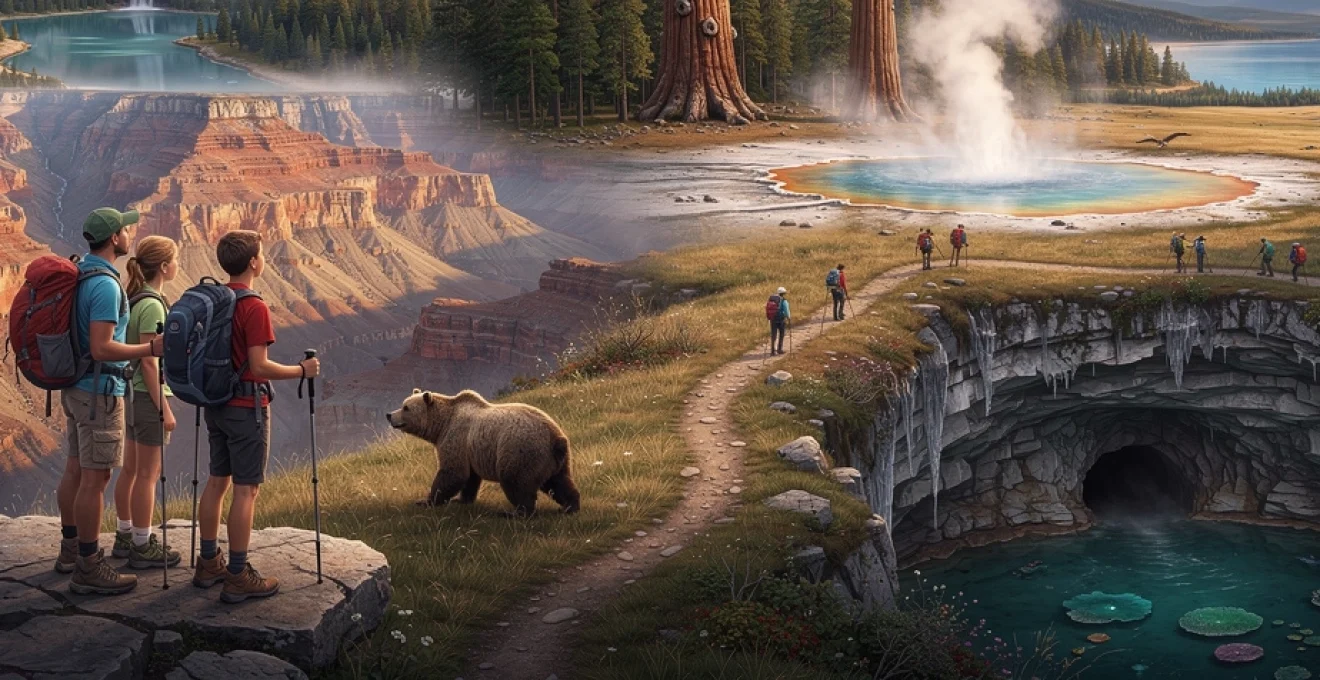
The United States harbours some of the planet’s most spectacular natural landscapes, meticulously protected within a network of national parks that stretches from volcanic archipelagos to ancient mountain ranges. These protected wilderness areas offer nature enthusiasts unparalleled opportunities to witness geological phenomena that have shaped continents over millions of years, observe wildlife species in their undisturbed habitats, and experience the profound silence of truly remote backcountry terrain. With over 84 million acres of preserved ecosystems encompassing deserts, rainforests, glaciers, and coral reefs, American national parks represent biological and geological diversity on a scale rarely matched anywhere on Earth. For those seeking authentic connection with the natural world, these sanctuaries provide not merely scenic backdrops but living laboratories where evolutionary processes, climatic forces, and ecological relationships continue to unfold in real time.
Geological diversity across america’s protected wilderness areas
The geological tapestry preserved within American national parks tells a story spanning billions of years, from Precambrian metamorphic rocks to landscapes still being actively shaped by volcanic and glacial forces today. This extraordinary range of geological features provides visitors with tangible evidence of continental drift, mountain building episodes, erosion cycles, and the dynamic forces that continue to reshape our planet’s surface. Each park functions as an outdoor museum where you can witness geological processes that textbooks can only describe in abstract terms.
Volcanic formations at yellowstone national park and hawaii volcanoes national park
Yellowstone National Park sits atop one of the world’s most powerful supervolcanoes, a massive magma chamber that fuels over 10,000 hydrothermal features including the famous Old Faithful geyser. The park’s volcanic origins become immediately apparent when you observe the columnar basalt formations, obsidian flows, and mineral-encrusted terraces that characterise this geothermal wonderland. The Grand Prismatic Spring, measuring approximately 370 feet in diameter, displays a stunning spectrum of colours created by thermophilic bacteria thriving at different temperature zones—a vivid demonstration of life’s ability to colonise even the most extreme environments.
Hawaii Volcanoes National Park offers an entirely different volcanic experience, showcasing shield volcanoes that have built the Hawaiian archipelago through millions of years of effusive eruptions. Kilauea, one of the world’s most active volcanoes, provides unprecedented opportunities to witness ongoing geological creation as lava flows steadily add new land to the island. The park’s diverse volcanic features include lava tubes you can walk through, volcanic craters of various ages, and petroglyphs carved into ancient lava flows by Native Hawaiians—demonstrating the deep cultural connections between indigenous peoples and these dynamic landscapes.
Sedimentary rock layers exposed in grand canyon national park
Grand Canyon National Park preserves perhaps the most complete and accessible geological record on Earth, with nearly two billion years of history exposed in stratified rock layers descending over a mile to the Colorado River. The canyon’s walls function as a geological timeline, with each distinctive layer representing a different depositional environment—from ancient seas that covered the region to desert dune fields and river deltas. The Vishnu Schist at the canyon’s base, dating back approximately 1.7 billion years, represents some of the oldest exposed rock in North America.
What makes the Grand Canyon particularly valuable for geological education is the clarity with which you can observe the principles of stratigraphy, unconformities, and erosional processes. The Great Unconformity, where 1.2-billion-year-old rocks directly contact 525-million-year-old strata, represents a missing chapter in Earth’s history that geologists continue to investigate. Recent studies suggest that over 12,000 cubic miles of material have been eroded from the canyon system, transported downstream by the relentless force of the Colorado River over approximately six million years.
Glacial carved landscapes of glacier national park and yosemite national park
Glacier National Park in Montana showcases the dramatic sculpting power of ice, with over 200 glacially carved valleys, cirques, and arêtes testifying to past ice ages when massive glaciers dominated this landscape. The park currently contains 26 named glaciers, though climate data indicates these ice masses have shrunk by
shrinking rapidly over the last century, offering a sobering real-time case study of climate change impacts on alpine environments.
Yosemite National Park in California presents another masterclass in glacial geomorphology, with its iconic U-shaped valleys, hanging waterfalls, and sheer granite cliffs carved by Pleistocene ice. Landmarks such as Half Dome and El Capitan owe their dramatic profiles to a combination of glacial plucking and exfoliation, processes that peeled away slabs of rock over hundreds of thousands of years. As you stand in Yosemite Valley and look up at the towering walls around you, you’re effectively reading the story of how ice once filled this entire landscape to heights comparable to modern skyscrapers. For visitors, this means you can see in a single panoramic view what it might otherwise take several textbooks to explain about glacial carved landscapes.
Limestone karst topography at mammoth cave national park
Mammoth Cave National Park in Kentucky protects the world’s longest known cave system, with more than 426 miles of surveyed passageways and new sections still being mapped. This subterranean labyrinth developed within thick beds of Mississippian-age limestone, gradually dissolved by slightly acidic groundwater over millions of years. The result is a classic example of karst topography, characterised at the surface by sinkholes, disappearing streams, and springs, and underground by complex networks of tunnels, vertical shafts, and decorated chambers.
Exploring Mammoth Cave gives you a rare chance to experience geological processes from the inside out. Stalactites, stalagmites, flowstone draperies, and gypsum crystals reveal how mineral-rich water continues to reshape the cave at a pace measured in millimetres per century. Ranger-led tours explain how changes in climate, sea level, and river systems influenced the cave’s development, turning what might seem like a static underground world into a dynamic system still responding to modern environmental conditions.
Endemic flora and fauna species conservation programmes
Beyond their geological wonders, national parks in the United States are critical strongholds for endemic flora and fauna that exist nowhere else on Earth. Many of these protected areas function as living laboratories for wildlife conservation, where long-term monitoring, habitat restoration, and collaborative research underpin species recovery programmes. For nature lovers, visiting these parks offers a chance not only to see rare animals and plants in the wild, but also to understand how modern conservation biology is applied on the ground.
Grizzly bear population management in greater yellowstone ecosystem
The Greater Yellowstone Ecosystem, which includes Yellowstone and Grand Teton National Parks along with surrounding public lands, is one of the last places in the contiguous United States where grizzly bears still roam across a large, connected landscape. Once reduced to fewer than 150 individuals in the 1970s, the grizzly population here has rebounded to an estimated 1,000 bears thanks to decades of targeted conservation measures. These efforts have included strict regulation of hunting, closing garbage dumps that attracted bears, and intensive public education on how to recreate safely in bear country.
Today, grizzly bear population management balances ecological goals with human safety and local community needs. Biologists use radio collars, genetic sampling, and remote camera traps to track bear movements and assess population health, while managers implement seasonal trail closures and food storage regulations in popular backcountry areas. For visitors, this means you may have a realistic chance of seeing a grizzly from a safe distance, but it also requires careful planning—carrying bear spray, hiking in groups, and following Leave No Trace principles are essential parts of exploring this wild ecosystem responsibly.
California condor reintroduction at grand canyon and pinnacles national parks
The California condor, North America’s largest flying bird, came perilously close to extinction in the 1980s, when only 27 individuals remained worldwide. A landmark captive breeding and reintroduction programme spearheaded by federal agencies, zoos, and conservation organisations has since helped their numbers climb to more than 500 birds, with over half now living in the wild. Grand Canyon and Pinnacles National Parks are two of the primary release and monitoring sites, offering rare opportunities for visitors to witness these massive scavengers soaring along cliff faces and thermal updrafts.
Reintroducing condors to their historic range has involved tackling complex threats, particularly lead poisoning from spent ammunition in carcasses the birds feed on. Ongoing conservation initiatives include voluntary non-lead ammunition programmes for hunters, intensive monitoring of individual condors, and occasional recapture for health checks and treatment. When you spot a condor with numbered wing tags at Grand Canyon’s South Rim or above the rugged spires of Pinnacles, you’re seeing a conservation success story still in progress—a reminder that meticulous, long-term efforts can bring even critically endangered species back from the brink.
Giant sequoia preservation efforts at sequoia and kings canyon national parks
Giant sequoias, some of the largest and oldest living organisms on Earth, are found naturally only on the western slopes of California’s Sierra Nevada. Sequoia and Kings Canyon National Parks protect dozens of groves where individual trees can reach over 250 feet in height and live for more than 3,000 years. However, shifts in fire regimes, prolonged drought, and insect outbreaks linked to climate change have significantly increased sequoia mortality in recent decades, prompting an urgent wave of preservation efforts.
Park managers are now using a mix of traditional ecological knowledge, modern fire science, and careful experimentation to safeguard these iconic trees. Prescribed burns and mechanical thinning help restore the low-intensity fire cycles that giant sequoias evolved with, clearing underbrush and creating open, sunny patches where seedlings can take root. Some groves are also being monitored with high-resolution lidar and drone imagery, allowing scientists to track canopy health and fuel loads with remarkable detail. For visitors walking through the Giant Forest or Grant Grove, interpretive signs and ranger talks explain how these active management strategies aim to ensure that future generations can still stand at the base of living trees older than many human civilisations.
Coral reef ecosystems monitoring in biscayne and dry tortugas national parks
While many people picture mountains and forests when they think of US national parks, Biscayne and Dry Tortugas National Parks in Florida protect vast marine environments dominated by coral reefs and seagrass beds. These underwater ecosystems host an astonishing array of fish, invertebrates, and marine plants, making them a dream destination for snorkelers and divers. At the same time, they are among the most vulnerable habitats to warming seas, ocean acidification, and coral disease, turning these parks into front-line observatories for global environmental change.
Coral reef monitoring programmes in both parks involve regular surveys of coral cover, water quality, and fish populations, often carried out by teams of scientists, rangers, and trained volunteers. Researchers deploy temperature loggers, settlement tiles, and photogrammetry techniques to track subtle changes in reef structure over time, much like a doctor might use scans to monitor a patient’s health. As a visitor, you can contribute by following reef-safe guidelines—using mineral-based sunscreen, avoiding contact with corals, and participating in citizen science projects that document sightings of key species. Experiencing these reefs in person underscores why marine conservation is such a crucial part of the broader national park mission.
Backcountry trail networks and wilderness accessibility
One of the most compelling reasons nature lovers flock to national parks in the United States is the extensive network of backcountry trails that weave through remote valleys, high ridges, and pristine forests. These long-distance routes transform national parks from scenic viewpoints into immersive wilderness experiences where you can spend days or weeks immersed in the natural world. At the same time, park managers must balance access with conservation, ensuring that increasing interest in backcountry hiking does not erode the very solitude and ecological integrity that make these places special.
Appalachian trail segments through great smoky mountains and shenandoah national parks
The Appalachian Trail (AT), stretching roughly 2,200 miles from Georgia to Maine, passes through several national parks, including Great Smoky Mountains and Shenandoah. In Great Smoky Mountains National Park, the AT follows the crest of the Smokies for about 71 miles, offering high-elevation views, misty spruce–fir forests, and frequent encounters with the park’s famed biodiversity. Shelter-to-shelter distances make it practical for multi-day section hikes, while day hikers can sample iconic stretches near Newfound Gap or Clingmans Dome without carrying a full backpacking kit.
Farther north, Shenandoah National Park hosts about 105 miles of the Appalachian Trail, often running parallel to the Skyline Drive scenic roadway. This configuration makes backcountry access unusually flexible—you can plan shorter hikes using multiple trailheads or commit to a longer traverse that strings together numerous overlooks and creek valleys. Regardless of your approach, it’s wise to check seasonal regulations, bear activity reports, and weather forecasts, as mountain conditions can change rapidly. For many hikers, these AT segments serve as a gateway experience, introducing them to the rhythm of long-distance hiking within a relatively well-supported environment.
Pacific crest trail routing across north cascades and crater lake national parks
The Pacific Crest Trail (PCT) offers a more rugged and remote counterpart to the AT, running about 2,650 miles from Mexico to Canada. In Washington’s North Cascades National Park Complex, the PCT traverses some of the steepest and most dramatic terrain along its entire length. Here, hikers navigate glacially carved valleys, knife-edge ridges, and dense conifer forests, often crossing snowfields well into summer. The combination of heavy snowfall, limited road access, and variable weather means that proper gear, navigation skills, and flexible planning are essential for anyone tackling this section.
In Oregon, the PCT skirts the rim of Crater Lake National Park, providing panoramic views of the deepest lake in the United States, formed by the violent collapse of Mount Mazama about 7,700 years ago. This stretch is more forgiving in terms of elevation gain, but it still demands attention to water sources, sun exposure, and afternoon thunderstorms. Whether you are thru-hiking the entire trail or just completing a short national park section, you quickly realise that the PCT is not simply a line on a map—it’s a living corridor linking volcanic plateaus, old-growth forests, and high-alpine ecosystems across three states.
Continental divide trail passages in rocky mountain and glacier national parks
The Continental Divide Trail (CDT) traces the spine of North America, following the hydrological divide where waters flow either toward the Atlantic or Pacific Oceans. In both Rocky Mountain and Glacier National Parks, the CDT showcases some of the most spectacular alpine scenery in the United States. Rocky Mountain National Park’s segment includes exposed passes such as Flattop Mountain and sections of the high, windswept tundra where weather can turn from clear skies to sleet in a matter of minutes. Hikers here must be prepared for altitude, sudden storms, and minimal shelter, making careful timing and route selection critical.
Glacier National Park’s portion of the CDT often overlaps with the park’s famed Highline and Ptarmigan Tunnel trails, offering views of serrated peaks, turquoise lakes, and frequent wildlife sightings, including mountain goats and bighorn sheep. Because these routes traverse prime grizzly bear habitat, strict food storage rules and group size recommendations are enforced. For experienced backpackers, completing CDT segments through both parks can feel like stitching together chapters of a grand geological and ecological story, with each high pass and valley revealing new insights into how climate, topography, and wildlife interact along the Continental Divide.
Remote backcountry permits for denali national park expeditions
Denali National Park in Alaska offers a very different model of backcountry access compared with many lower-48 parks. Instead of marked trail networks, most of Denali’s six million acres are trail-less wilderness divided into large backcountry units, each with strict quotas on the number of overnight groups allowed at any given time. Before setting out, backpackers must attend a backcountry orientation, obtain a unit-specific permit, and demonstrate that they have appropriate gear and bear-resistant food storage. This system helps preserve a profound sense of solitude—it’s entirely possible to spend several days hiking along braided rivers and across tundra benches without seeing another human being.
Navigating Denali’s remote backcountry demands strong map and compass skills, as well as an appreciation for river crossings, swiftly changing weather, and encounters with large mammals such as grizzly bears and moose. Yet for those prepared for the challenge, the rewards are immense: uninterrupted vistas of the Alaska Range, the possibility of glimpsing Denali itself emerging from the clouds, and the experience of moving through a landscape that still feels largely untouched by modern infrastructure. Planning well in advance, building contingency days into your schedule, and respecting seasonal wildlife closures are all essential strategies for a safe and meaningful Denali expedition.
Seasonal phenological events and wildlife migration patterns
National parks in the United States are not static postcard scenes; they are dynamic systems where seasonal cycles and wildlife migrations create ever-changing experiences for visitors. Phenology—the study of recurring natural events such as flowering, leaf-out, and animal breeding—offers a powerful lens for understanding how climate and ecosystems interact. By timing your visit to coincide with key seasonal events, you can witness extraordinary natural spectacles that reveal the deeper rhythms of these protected landscapes.
In Great Smoky Mountains National Park, for instance, spring wildflower season transforms forest floors into vibrant mosaics of trillium, lady’s slipper orchids, and bloodroot, attracting botanists, photographers, and casual hikers alike. In late September and October, the park shifts into one of the most renowned autumn foliage displays in North America, as the deciduous forests blaze with reds, oranges, and golds. Similarly, in Yellowstone and Grand Teton, the autumn elk rut fills valleys with the haunting sound of bugling males, while in spring and early summer, newborn bison calves and bear families emerge onto greening meadows.
Migration patterns add another layer of intrigue. Along the Pacific Flyway, Point Reyes National Seashore and nearby refuges host massive gatherings of shorebirds and waterfowl during spring and fall migrations, turning tidal wetlands into bustling avian crossroads. In Everglades National Park, seasonal water levels dictate the movement of wading birds, alligators, and fish, concentrating wildlife in particular sloughs and ponds during the dry season from December to April. Paying attention to these cycles—and consulting park phenology calendars or ranger recommendations—allows you to plan trips that align with salmon runs, monarch butterfly movements, or desert superblooms, making each national park visit not just a place-based experience but a time-sensitive event.
Dark sky certification and astrophotography opportunities
As urban light pollution continues to spread across much of the globe, national parks have become critical refuges not just for wildlife, but for the night sky itself. Many parks in the United States now hold official designations from the International Dark-Sky Association, recognising their efforts to protect natural darkness through thoughtful lighting policies and public education. For nature lovers and photographers, this means there are still places where you can see the Milky Way arching from horizon to horizon, observe meteor showers without urban glare, and experience the deep quiet that falls over landscapes after sunset.
Parks such as Big Bend, Great Basin, and Canyonlands are renowned for their exceptionally dark skies, regularly hosting astronomy festivals, ranger-led stargazing programmes, and astrophotography workshops. Even in more visited parks like Arches or Grand Canyon, stepping just a short distance away from developed areas can reveal an astonishing blanket of stars. If you’re planning a night-sky-focused trip, consider visiting during a new moon, checking cloud forecasts, and bringing a headlamp with a red-light setting to preserve your night vision. For photographers, a sturdy tripod, wide-aperture lens, and basic understanding of long-exposure settings can turn the night into a creative playground, capturing star trails over hoodoos or the galactic core reflected in a high-elevation lake.
Indigenous cultural heritage sites and archaeological preservation
Many national parks in the United States protect not only natural wonders but also deeply significant Indigenous cultural heritage sites and archaeological resources. From ancient cliff dwellings to sacred mountains and petroglyph panels, these landscapes hold stories that long predate the establishment of the national park system. Recognising this human history broadens our understanding of what it means to be a nature lover: appreciating that these environments have been inhabited, managed, and spiritually revered by Native peoples for thousands of years.
Parks such as Mesa Verde, Chaco Culture, and Canyon de Chelly preserve intricate networks of ancestral Puebloan dwellings, kivas, and ceremonial structures, offering powerful insights into how past societies adapted to challenging environments. In places like Bears Ears National Monument and Grand Canyon National Park, contemporary tribal nations continue to advocate for co-management and respectful visitation practices, emphasising that archaeological sites are not simply ruins to be photographed but living connections to their communities’ histories. When you visit rock art sites, burial grounds, or historic villages within national parks, following posted guidelines—staying on designated paths, not touching fragile surfaces, and refraining from removing artefacts—is essential to preserving these irreplaceable resources.
Many parks now collaborate closely with tribal governments to incorporate Indigenous perspectives into interpretive programmes, trail naming, and management decisions. Ranger talks may be co-led by tribal historians, or audio guides might feature traditional stories that relate to particular landmarks and seasons. As a visitor, taking the time to engage with this cultural context—whether by attending a presentation, visiting a cultural centre, or reading about the Indigenous nations connected to the land—can transform a scenic stop into a more profound experience of respect and understanding. In this way, exploring national parks in the United States becomes not just a dream for nature lovers, but an opportunity to encounter the intertwined histories of land, people, and place.