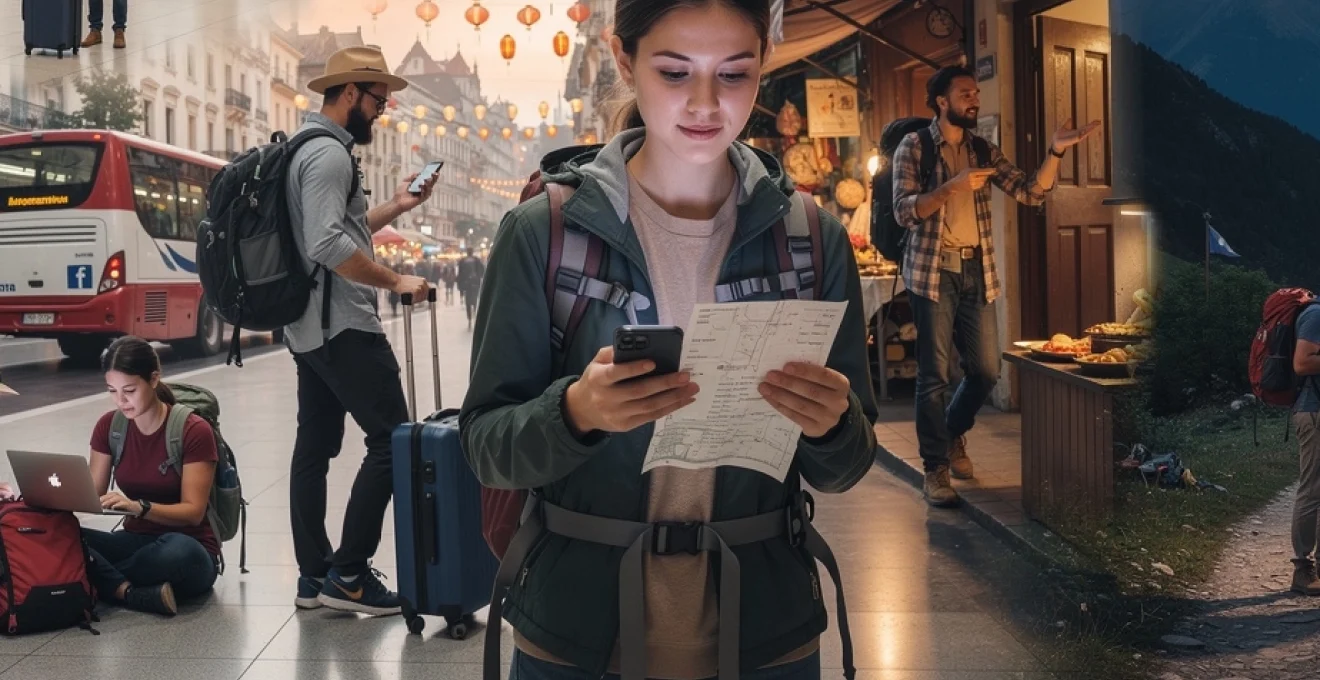
Modern travel demands a fundamentally different mindset than the rigid itineraries of previous decades. Today’s successful travellers embrace uncertainty as an opportunity rather than viewing disruptions as catastrophes. The ability to adapt quickly to changing circumstances has transformed from a useful trait into an essential survival skill for anyone venturing beyond their comfort zone. Research consistently demonstrates that flexible travellers experience lower stress levels, discover more authentic experiences, and develop stronger problem-solving capabilities that benefit them long after returning home.
The unpredictable nature of contemporary travel—from climate-related disruptions to political upheavals and technological failures—requires travellers to cultivate adaptability at every level. Those who master flexibility find themselves better equipped to navigate complex international environments, forge meaningful connections with local communities, and maximise their travel budgets through dynamic decision-making. This adaptability extends far beyond simple itinerary changes, encompassing cultural sensitivity, communication strategies, safety protocols, and resource management across diverse global contexts.
Adaptive itinerary management during unpredictable travel disruptions
Travel disruptions have become increasingly frequent, with European airports reporting over 2.2 million flight delays in 2023 alone. Effective itinerary management requires building flexibility into every aspect of your travel plans from the outset. Successful travellers understand that rigid schedules create vulnerability, whilst adaptive planning provides resilience against unforeseen circumstances. This approach involves creating buffer time between connections, maintaining alternative accommodation options, and developing contingency routes for major destinations.
The modern travel landscape demands a portfolio approach to planning, where primary itineraries are supported by multiple backup options. Smart travellers research alternative transportation methods, maintain lists of flexible accommodation providers, and establish relationships with local contacts who can provide real-time updates. This preparation transforms potential disasters into minor inconveniences, allowing travellers to maintain momentum even when original plans collapse completely.
Flight cancellation recovery strategies for european budget airlines
European budget airline cancellations affect approximately 3.2% of all flights annually, with the highest disruption rates occurring during summer peak season and winter weather events. Developing effective recovery strategies begins with understanding passenger rights under EU Regulation 261/2004, which provides compensation and alternative transport obligations for airlines operating within European Union airspace. Travellers should maintain digital copies of their passenger rights documentation and understand the specific thresholds for compensation eligibility.
Recovery tactics include booking flexible tickets when possible, maintaining accounts with multiple budget carriers, and understanding hub airport alternatives for major destinations. Experienced travellers often purchase travel insurance specifically covering budget airline disruptions and maintain emergency accommodation funds for unexpected overnight stays. Building relationships with airline customer service teams through social media channels can also provide faster resolution during mass cancellation events.
Alternative accommodation sourcing when bookings fall through
Accommodation failures affect approximately 8% of international travellers annually, with higher rates during peak seasons and major events. Successful backup accommodation strategies involve maintaining accounts across multiple booking platforms, understanding local accommodation alternatives beyond traditional hotels, and developing relationships with local accommodation providers. Research indicates that travellers with diverse accommodation portfolios experience 40% less stress during booking failures.
Local alternatives often provide superior value and cultural immersion compared to international hotel chains. These include guesthouses, homestays, monastery accommodations, and university dormitories during academic breaks. Savvy travellers research these options in advance, maintaining contact information and basic booking procedures for rapid deployment during emergencies.
Real-time transportation pivoting in southeast asian transit systems
Southeast Asian transportation networks operate with different reliability standards and booking systems compared to Western infrastructure. Successful navigation requires understanding local transportation hierarchies, seasonal variations, and cultural booking practices. Bus systems in countries like Vietnam and Thailand often operate on informal schedules, requiring real-time adaptation and multiple backup routing options.
Effective pivoting strategies include maintaining cash reserves in local currencies, understanding informal transportation networks, and developing basic communication skills for transportation negotiations. Mobile applications like Grab and local equivalents provide backup options when traditional transportation fails, whilst understanding regional ferry systems and domestic flight networks enables rapid route modifications.
Weather-related route modifications for himalayan trekking expeditions
Himalayan weather patterns can change dramatically within hours, requiring instant
shifts in route planning, turnaround times, and even evacuation decisions. Flexible trekkers monitor local forecasts daily, consult with guides about recent trail conditions, and remain willing to shorten or reroute expeditions when safety demands it. Rather than fixating on summits or specific passes, they prioritise altitude acclimatisation, weather windows, and evacuation routes, treating their itinerary as a living document rather than a fixed contract.
Practical weather-related flexibility includes planning extra buffer days for delays, carrying gear suitable for unexpected snow or rain, and understanding alternative lower-altitude trails. Many experienced Himalayan travellers adopt decision points along the route—predefined locations where they reassess weather, health, and timing before committing to higher-risk sections. This approach transforms severe weather from an existential threat into a manageable variable within a broader risk management framework.
Cultural immersion through spontaneous local engagement techniques
Whilst many travellers focus on ticking off famous landmarks, the most memorable travel experiences often emerge from unplanned cultural encounters. Flexibility in how you spend your days—and in how you respond to local invitations—can turn a standard trip into deep cultural immersion. Instead of rigidly following guidebook recommendations, culturally flexible travellers leave space in their schedule for unexpected conversations, community events, and local recommendations.
Developing this skill requires a shift from performance-based travel (“Did I see everything?”) to connection-based travel (“Did I understand anything?”). It also means accepting that you will sometimes feel awkward, confused, or out of place. By remaining open, observant, and respectful, you create conditions where spontaneous local engagement becomes both possible and rewarding.
Unplanned festival participation in rural rajasthan communities
Rural Rajasthan offers countless local festivals that rarely appear in mainstream travel guides—village fairs, harvest celebrations, and temple anniversaries. Flexible travellers who adjust their Rajasthan travel itinerary on the fly can join these events when locals invite them, rather than insisting on sticking to a pre-booked schedule. Such participation creates opportunities to observe traditional music, dress, and rituals that large cities seldom showcase.
To engage respectfully, travellers should first observe from the periphery, noting where locals stand, how they dress, and which areas appear restricted. Asking permission before photographing rituals, dressing modestly, and accepting guidance from village elders demonstrates cultural sensitivity. When you approach an unfamiliar festival like a guest entering someone’s home—curious but cautious—you allow local hosts to decide how much to share, which often leads to richer, more authentic interactions.
Street food navigation without language barriers in vietnam markets
Vietnamese street markets can feel overwhelming: dozens of stalls, unfamiliar dishes, rapid-fire conversations, and limited English. Flexible food travellers treat this not as a barrier but as an opportunity to experiment with non-verbal communication and adaptive decision-making. Instead of demanding precise ingredient lists, they rely on observation, pointing, and simple phrases to navigate the street food landscape.
Practical techniques include watching which stalls attract local queues, pointing at prepared dishes instead of menus, and using translation apps for key dietary phrases like “no peanuts” or “vegetarian only.” Think of it as a culinary version of charades—gestures, smiles, and patience often work better than perfect grammar. By accepting that you may not fully understand every ingredient but remaining vigilant about allergies and preferences, you can safely explore a rich variety of Vietnamese street foods.
Homestay negotiations in remote andean villages
In remote Andean communities, formal online booking platforms are often absent; instead, homestays emerge through informal negotiations and local networks. Travellers with flexible expectations about comfort and amenities find it far easier to arrange last-minute accommodation in these villages. Rather than demanding Western hotel standards, they focus on core needs: warmth, safety, cleanliness, and basic privacy.
Negotiations typically involve agreeing on price, meals, and length of stay using a mix of basic Spanish, gestures, and written numbers. Having a flexible budget range and an open mind about room layout or facilities can transform what could be a stressful interaction into a mutually beneficial arrangement. In many cases, staying with local families provides deeper insight into Andean life than any organised tour, illustrating how flexibility with comfort levels unlocks access to authentic experiences.
Sacred site etiquette adaptation across buddhist temple networks
Buddhist temples across Thailand, Myanmar, Sri Lanka, and Japan share core principles but differ significantly in local etiquette. What is acceptable in one monastery may be inappropriate in another. Flexible cultural travellers approach each temple as a new context, ready to adapt their behaviour quickly based on cues from signage, monks, and local visitors. This adaptable mindset is essential for responsible temple tourism in Asia.
Key adaptive behaviours include adjusting clothing (covering shoulders and knees), learning local rules on photography, and observing whether people sit with feet pointing away from statues or monks. When unsure, following the most conservative visible practice is wiser than assuming uniform standards. By treating each temple visit as a learning opportunity rather than a photo stop, you not only avoid accidental disrespect but also gain a deeper appreciation of regional religious nuances.
Budget optimisation through dynamic spending adjustments
Financial flexibility is as important as emotional flexibility when travelling. Even the most carefully planned travel budgets can be disrupted by currency fluctuations, unexpected fees, or sudden opportunities like last-minute tours. Travellers who cling rigidly to a daily spending target often experience unnecessary stress, whereas those who adjust spending categories dynamically maintain overall budget control without sacrificing meaningful experiences.
Effective dynamic budgeting starts with identifying non-negotiable expenses—visas, core transport, essential insurance—and separating them from flexible categories like dining, souvenirs, and premium activities. When costs rise unexpectedly in one area, you consciously compensate by reducing spending elsewhere rather than abandoning the entire budget plan. Think of your budget as a set of communicating vessels: when one side rises, the other can lower to keep the total volume stable.
Practical strategies include tracking expenses in a simple app, setting weekly rather than daily targets, and maintaining an emergency fund distinct from regular spending. You might decide to downgrade accommodation for two nights to afford an unplanned dive trip, or skip restaurant meals for street food after splurging on a theatre ticket. This adaptive approach to travel money management ensures that your most meaningful experiences are funded, while still protecting you from running out of cash before the journey ends.
Communication barriers resolution in multi-linguistic environments
In many regions—the Caucasus, West Africa, Central Asia—multiple languages coexist within short distances. Travellers who expect English to function everywhere quickly encounter frustration, while those who treat communication as a creative problem to solve fare far better. Flexibility in communication means shifting between spoken language, gestures, translation tools, maps, and even drawings depending on context.
Instead of repeating English phrases louder when not understood, adaptive travellers simplify sentences, use international words, or change channels entirely (for example, typing on a phone, pointing at signs, or sharing a photo of their destination). They also learn a handful of high-impact phrases in each local language, such as “please,” “thank you,” “how much,” and “where is.” This willingness to experiment with different communication modes not only improves practical outcomes but also demonstrates respect, often encouraging locals to go the extra mile to help.
Interestingly, research in intercultural communication shows that willingness to engage—smiling, maintaining open body language, and showing patience—often matters more than vocabulary size. By viewing miscommunication as a shared puzzle rather than a failure, you maintain emotional equilibrium even when complex arrangements, like bus transfers or medical appointments, require multiple attempts to clarify.
Risk mitigation strategies for solo female travellers in developing regions
Solo female travel continues to grow globally, with surveys indicating that over 60% of solo bookings on some platforms are now made by women. Yet travelling alone as a woman in developing regions still involves unique risk calculations and adaptive safety strategies. Flexibility plays a crucial role here: adjusting routes, timings, clothing, and social interactions based on real-time assessments rather than rigid plans.
Effective risk mitigation does not mean avoiding entire countries or regions; instead, it involves fine-tuning behaviour to each specific context. Solo female travellers who practice situational awareness, maintain multiple backup options, and remain willing to change accommodation or transport at short notice generally report feeling both safer and more empowered. The goal is not to remove all risk—an impossible task—but to reduce unnecessary exposure through informed, flexible decision-making.
Safety protocol modifications in sub-saharan african urban areas
Urban centres in Sub-Saharan Africa—such as Nairobi, Lagos, or Johannesburg—offer rich cultural experiences but also present safety challenges, especially for solo women. Crime patterns can vary by neighbourhood and time of day, meaning that a route safe at 10 a.m. may feel very different at dusk. Flexible safety protocols allow travellers to adapt quickly as they receive new information from locals, hostel staff, or updated travel advisories.
Practical adjustments might include switching from walking to trusted ride-hailing services after dark, changing hotels if a neighbourhood feels unsafe, or modifying clothing to align more closely with local norms. Keeping valuables distributed between multiple locations (money belt, day pack, secure accommodation) ensures that losing one item does not create a full-blown crisis. By viewing safety as a set of dials you can turn up or down—visibility, mobility, exposure—you stay in control rather than feeling like a passive target.
Emergency contact network establishment in remote patagonian territories
Remote trekking in Patagonia, whether in Chile or Argentina, demands robust contingency planning. Mobile coverage is patchy, weather changes rapidly, and trails can be sparsely populated outside peak season. Solo travellers in these territories benefit from building an emergency contact network before departure and updating it dynamically as conditions change. This network typically includes local hostel owners, park rangers, tour operators, and a trusted contact at home.
Smart safety practice involves sharing your rough itinerary, expected check-in points, and timeframes for raising the alarm if you do not report back. Carrying offline maps, downloading emergency numbers for both countries, and understanding how to reach refugios or ranger stations adds further resilience. Think of this network as your invisible safety harness: most of the time you will not need it, but in the event of an accident, illness, or sudden border closure, having these connections pre-established can dramatically speed up assistance.
Cultural sensitivity adaptation in conservative middle eastern societies
For solo female travellers, conservative societies in the Middle East require additional cultural adaptation. Expectations around clothing, gender interaction, and public behaviour can differ markedly from Western norms. Flexibility here means adjusting not only your wardrobe but also your daily rhythms and social strategies to align with local expectations, especially outside cosmopolitan hubs like Dubai or Doha.
Adaptations may include wearing loose-fitting clothing that covers shoulders, chest, and knees, avoiding solo outings late at night, and choosing women-only sections of public transport when available. Seeking accommodation in family-run guesthouses, women-friendly hostels, or international chains with clear safety protocols can further reduce risk. By viewing these adjustments not as restrictions but as part of a broader intercultural learning process, you maintain agency while signalling respect—often unlocking warmer, more protective responses from local communities.
Technology integration for enhanced travel adaptability
Digital tools have become the backbone of flexible travel, but technology only enhances adaptability when used strategically. Relying blindly on apps without contingency plans can create new vulnerabilities, especially when batteries die or networks fail. The most resilient travellers leverage technology to expand their options while still maintaining low-tech backups—printed confirmations, handwritten addresses, and memorised key phrases.
Integrated use of navigation apps, translation tools, mobile banking, and local SIM cards reduces friction at every stage of international travel. At the same time, a flexible mindset means being ready to switch platforms when one fails, or to revert to analogue methods when power or data vanish. In essence, technology becomes a toolkit rather than a crutch, supporting—but not replacing—your own problem-solving skills.
Offline navigation solutions for data-limited environments
In many parts of the world—rural Balkans, Central Asia, interior South America—mobile data is slow, expensive, or simply unavailable. Flexible navigation strategies therefore rely heavily on offline mapping. Before entering data-limited environments, savvy travellers download detailed regional maps on apps that function fully offline and save critical locations such as guesthouses, bus stations, embassies, and hospitals.
Equally important is learning to cross-check digital navigation with physical landmarks and local advice. Asking a shopkeeper to confirm directions or comparing your offline map with a paper bus schedule provides redundancy if GPS accuracy drops. Think of offline maps as your digital compass: dependable in most circumstances, but always more effective when combined with human input and common sense.
Translation app optimisation for mandarin-english communication
Mandarin-speaking regions present significant language challenges for travellers who do not read Chinese characters. Translation apps can bridge this gap, but only when used intelligently. Instead of typing long, complex English sentences, flexible communicators input short, clear phrases that automatic translation handles more reliably. Many apps also allow you to download Mandarin language packs for offline use, ensuring access even without a data connection.
Optical character recognition (OCR) functions are particularly powerful in China, Taiwan, and Singapore: you can scan menus, street signs, or train schedules and receive instant translations. When accuracy matters—such as for medication labels or legal documents—using multiple translation apps and comparing results significantly reduces the risk of misinterpretation. By treating these tools as helpful assistants rather than infallible authorities, you maintain both clarity and safety in complex interactions.
Currency exchange rate monitoring through mobile banking platforms
Exchange rates can shift rapidly, especially in countries experiencing economic volatility. Travellers who ignore these fluctuations may end up paying significantly more for the same services than those who monitor rates and adjust behaviour accordingly. Modern mobile banking and finance apps allow you to track live currency movements, compare rates between ATMs and exchange bureaus, and receive alerts when your home currency strengthens or weakens.
Practical flexibility might mean withdrawing slightly more cash when rates are favourable, using cards with no foreign transaction fees in stable economies, or switching to cash-based spending when card surcharges are high. You can also adapt your travel money strategy country by country: for example, relying on ATMs in Japan but preferring licensed exchanges in some parts of South America. By aligning your spending patterns with real-time financial data, you effectively turn your smartphone into a portable economic advisor.
Local sim card procurement strategies across international borders
Reliable connectivity underpins many other aspects of travel flexibility, from real-time navigation to last-minute bookings. However, purchasing local SIM cards can be surprisingly complex, with regulations, ID requirements, and pricing structures varying widely between countries. Travellers who approach SIM procurement flexibly—researching options in advance but adapting on arrival—tend to secure better coverage at lower cost.
Strategies include comparing airport kiosks with city-centre providers, checking whether eSIM options are available for your destination, and confirming which networks perform best in rural areas you plan to visit. In some regions, purchasing a SIM may require passport photocopies or local addresses, so having digital copies of your documents ready can speed up the process. By viewing connectivity not as a binary (online/offline) but as a spectrum—Wi-Fi only, local SIM, roaming—you can choose the most efficient option for each border crossing, keeping your travel plans agile and well-informed.