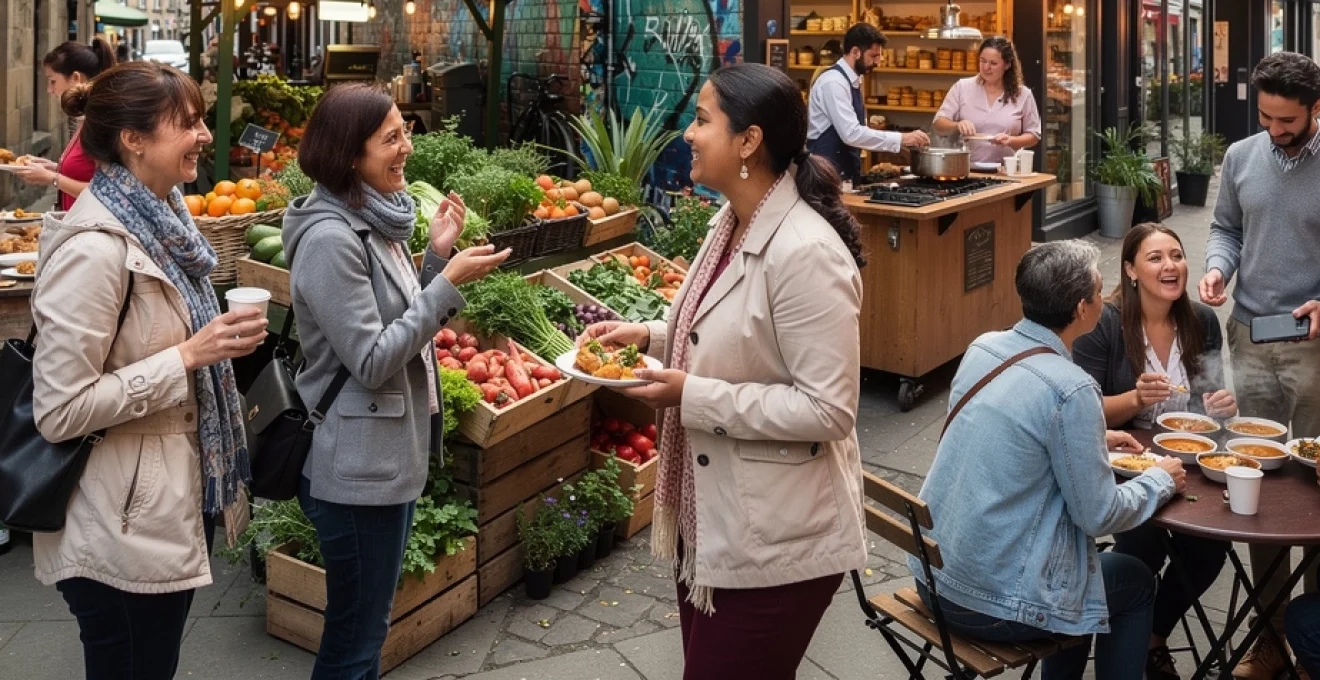
Food serves as a living testament to a city’s identity, weaving together threads of history, tradition, and contemporary life into a tapestry that speaks volumes about local culture. When you embark on a guided culinary exploration, you’re not merely sampling dishes—you’re unlocking centuries of cultural evolution, community stories, and social dynamics that have shaped urban landscapes across Britain and beyond. These immersive gastronomic experiences offer unparalleled insights into the authentic character of destinations, revealing layers of meaning that traditional sightseeing simply cannot match.
The profound connection between food and cultural understanding becomes immediately apparent when skilled guides lead you through neighbourhood streets, introducing you to vendors whose families have preserved recipes for generations. Every bite carries the weight of history, from ancient trade routes that brought exotic spices to British shores to contemporary immigration patterns that continue to enrich local culinary scenes. This intimate approach to cultural discovery transforms casual tourists into engaged cultural participants, fostering genuine connections between visitors and the communities they explore.
Culinary heritage preservation through guided gastronomic experiences
Professional food tour operators serve as cultural custodians, actively participating in the preservation of culinary traditions that might otherwise disappear beneath the homogenising influence of globalisation. These carefully curated experiences create sustainable platforms for traditional food preparation methods, ensuring that artisanal techniques continue to thrive in an increasingly mechanised world. When you participate in these guided explorations, you become part of a living museum where cultural preservation happens through active engagement rather than passive observation.
Heritage preservation through food tours operates on multiple levels, from documenting endangered recipes to supporting small-scale producers who maintain traditional farming practices. Tour guides often collaborate with cultural institutions, local historians, and community elders to ensure accuracy in their presentations of historical culinary practices. This collaborative approach transforms each tour into an educational experience that benefits both participants and local communities whilst creating economic incentives for heritage preservation.
Traditional recipe transmission in edinburgh’s old town food walks
Edinburgh’s ancient cobblestone streets provide the perfect backdrop for understanding how traditional Scottish recipes have survived centuries of social and political upheaval. Guided food walks through the Old Town reveal how dishes like haggis, shortbread, and Cullen skink emerged from practical necessity and evolved into symbols of national identity. Local guides share stories of how these recipes were passed down through generations, often modified by available ingredients and changing social circumstances whilst maintaining their essential character.
The preservation of traditional recipes in Edinburgh demonstrates the crucial role that food tours play in maintaining cultural continuity. Many family-run establishments along the Royal Mile continue to prepare dishes using methods their ancestors employed centuries ago, creating tangible links between past and present. Tour participants gain insights into how historical events, from clan warfare to industrialisation, influenced local cooking practices and ingredient availability.
Indigenous ingredient sourcing at borough market london tours
Borough Market represents one of London’s most significant centres for indigenous ingredient preservation, where centuries-old trading traditions continue to flourish alongside contemporary culinary innovation. Guided tours through this historic marketplace reveal how traditional British ingredients—from heritage apple varieties to rare breed meats—are being actively preserved by passionate artisans and small-scale producers. These experiences demonstrate the vital connection between agricultural heritage and cultural identity.
Tour guides at Borough Market possess encyclopaedic knowledge about seasonal availability, traditional preparation methods, and the historical significance of various indigenous ingredients. They explain how climate change and agricultural modernisation have threatened many traditional varieties, whilst highlighting the efforts of dedicated producers who continue to cultivate heritage breeds and heirloom vegetables. This educational approach helps visitors understand the broader implications of their food choices on cultural preservation.
Generational cooking technique documentation in brick lane experiences
Brick Lane’s vibrant culinary scene provides an exceptional example of how generational cooking techniques adapt and evolve whilst maintaining their cultural authenticity. Food tours through this historic East London neighbourhood reveal how Bangladeshi immigrant families have preserved traditional cooking methods across multiple generations, adapting to local ingredients and equipment whilst maintaining the essential character of their ancestral recipes.
The documentation of these cooking techniques through guided experiences serves multiple purposes: preserving cultural knowledge, educating visitors about immigration history, and supporting local businesses that serve as community anchors. Tour guides often arrange visits to family-run establishments
where owners are happy to share their stories, demonstrate specialist techniques, or even invite guests into the kitchen for a behind-the-scenes look at how signature dishes are prepared. This form of living documentation is particularly powerful because it captures not only the technical aspects of cooking, but also the social rituals, family narratives, and community values embedded in each recipe. As a result, Brick Lane food tours become dynamic archives of generational knowledge, ensuring that evolving urban food cultures remain rooted in their historical origins.
Cultural food ritual interpretation during istanbul bazaar explorations
Istanbul’s bustling bazaars demonstrate how food rituals and everyday customs can reveal complex layers of cultural and religious identity. Guided tours through spaces like the Spice Bazaar or the Grand Bazaar help visitors decode the symbolic meanings behind ingredients, preparation methods, and shared eating practices. Rather than simply tasting Turkish delight or sipping çay, participants learn why tea is served in tulip-shaped glasses, how coffee fortune-telling emerged, and what role communal feasts play in religious and family celebrations.
Skilled guides act as interpreters of these rituals, explaining, for example, why certain sweets are prepared for Ramazan or how specific dishes mark life events such as weddings, births, and religious holidays. By contextualising tasting experiences within broader social and spiritual frameworks, these bazaar tours transform seemingly ordinary snacks into cultural artefacts. For many travellers, this deeper understanding of food rituals becomes the most memorable part of their Istanbul visit, offering insights that extend far beyond the market stalls themselves.
Neighbourhood socio-economic storytelling via street food immersion
Street food tours are uniquely positioned to illuminate the socio-economic realities of urban neighbourhoods, revealing how issues such as gentrification, migration, and industrial decline are etched into everyday eating habits. When you walk through a city with a food-focused guide, you are not simply navigating menus; you are encountering living case studies in urban change. The price of a sandwich, the survival of a market stall, or the disappearance of a traditional café can each point to broader economic pressures and policy decisions shaping local communities.
Across Britain, many of the most insightful food tours deliberately focus on transitional neighbourhoods—areas where longstanding working-class communities, immigrant populations, and new creative industries intersect. Through street food immersion, guides use each tasting stop to tell stories about rent increases, licensing laws, labour migration, and the resilience of small businesses. This nuanced storytelling helps visitors see that a city’s food culture is not static; it is constantly being negotiated between competing social and economic forces.
Gentrification impact analysis through shoreditch market tours
Shoreditch has become a textbook example of how gentrification reshapes food landscapes. Market-based food tours in this East London district trace the transformation from a historically industrial and working-class area into a hub of creative agencies, start-ups, and high-end eateries. At first glance, the abundance of speciality coffee bars and artisanal bakeries might simply seem like an upgrade, but guides encourage participants to ask: who benefits, and who gets pushed out?
By contrasting long-established greasy spoons and pie-and-mash shops with contemporary street food vendors and concept restaurants, tours make visible the gradual displacement of older businesses. Guides may share stories of traders who have been priced out of the area or landlords who shifted from weekly to daily rents, making survival difficult for family-run stalls. For visitors, Shoreditch market tours function almost like a walking seminar on urban policy, using each bite as an entry point into discussions about housing, commercial rents, and cultural branding.
Immigration pattern recognition in manchester’s curry mile experiences
Manchester’s Curry Mile offers a powerful lens for examining immigration patterns and diasporic identities through food. Guided tours along this famous strip reveal how successive waves of South Asian, Middle Eastern, and North African migrants have left their mark on the local restaurant scene. Menus become informal historical documents, tracing the arrival of Pakistani and Bangladeshi communities in the 1960s and 1970s, followed by later Iraqi, Syrian, and Somali influences.
Food tour guides help participants read these patterns by drawing attention to language on signage, ownership histories, and the evolution of dishes over time. Why did certain curries become sweeter or milder? How did late-night student culture shape opening hours and portion sizes? By unpacking these questions, visitors gain an understanding of how immigrant entrepreneurs adapt to new markets while maintaining links to their homelands. In this way, Manchester’s Curry Mile becomes a living archive of migration history expressed in kebabs, biryanis, and falafel wraps.
Working-class heritage preservation at glasgow’s merchant city food walks
Glasgow’s Merchant City food tours spotlight the region’s working-class heritage, offering a counterpoint to the area’s current reputation for upmarket bars and cultural venues. Historically associated with warehouses and trade, this district was deeply connected to dockworkers, factory labourers, and the shipbuilding industry along the Clyde. Food walks through Merchant City explore how inexpensive, hearty dishes fuelled physically demanding work, and how those recipes persist in contemporary comfort food.
Guides might stop at traditional pubs serving stovies or Scotch pies, using these dishes to open discussions about labour rights, industrial decline, and community solidarity. Visitors learn how changes in shipping routes and global competition affected employment, and how local residents responded by creating new forms of social and culinary life. By spotlighting everyday eating habits instead of only glamorous fine dining, Merchant City tours ensure that the stories of workers, rather than just merchants and magnates, remain central to Glasgow’s cultural memory.
Artisan community sustainability in bath’s independent vendor tours
In Bath, independent vendor tours focus on artisan sustainability and community resilience within a city heavily reliant on tourism. While global chains and high-street brands dominate many historic centres, Bath still maintains a network of small bakeries, cheesemongers, and chocolatiers whose survival is far from guaranteed. Food tours that deliberately highlight these businesses help redirect visitor spending into the local economy, strengthening the city’s distinctive food culture.
Guides often explain the financial realities behind running an independent food business—rising energy costs, competition from supermarkets, and seasonal fluctuations in tourist numbers. By sharing this context while guests sample handmade fudge or locally milled bread, tours foster a sense of responsibility and connection. Visitors leave not only with an appreciation for high-quality products, but with an understanding that their choices help sustain a fragile ecosystem of craftspeople and producers who give Bath its character.
Authentic local vendor interaction methodologies
One of the defining features of high-quality food tours is their commitment to authentic local vendor interactions, rather than scripted or purely transactional encounters. But how do guides and operators cultivate these genuine relationships? The answer lies in long-term partnerships, mutual trust, and a shared commitment to representing local culture with integrity. Thoughtful tour design ensures that vendors are not simply backdrops for visitor photos, but respected collaborators and storytellers in their own right.
Experienced guides often begin by curating a small, reliable network of partners—bakers, market traders, street food cooks, café owners—whom they visit consistently and support throughout the year. Over time, this creates a rhythm of interaction where vendors feel comfortable sharing personal anecdotes, family histories, and even business challenges. You might be invited behind the counter to see how pastries are shaped, or to smell spices as they are ground, because the relationship between guide and vendor resembles that of neighbours rather than distant business contacts.
Ethical methodologies also involve transparency and consent. Reputable operators brief vendors on group sizes, photography policies, and payment arrangements, ensuring visits do not overwhelm small premises or disrupt regular customers. Some tours schedule quieter times of day, allowing deeper conversations without affecting daily trade. Others rotate stops to prevent over-reliance on a single venue. For travellers seeking an authentic way to discover a city’s culture, these behind-the-scenes practices are invisible—but they are crucial to maintaining the warmth and spontaneity that make vendor interactions so memorable.
Historical narrative integration through regional cuisine exploration
Food tours excel at turning abstract historical narratives into tangible, flavourful experiences. Rather than memorising dates and names, participants encounter history through dishes shaped by specific events: invasions that introduced new spices, trade agreements that popularised sugar, or industrial shifts that changed how people cooked at home. In this sense, each plate functions like a primary source document, offering clues about power, technology, and cultural exchange.
Across the UK, regional cuisine exploration has become an effective tool for public history. Guides weave together stories about medieval guilds, colonial shipping routes, and wartime rationing while guests taste recipes that emerged in those eras. The result is a multi-layered understanding of place: you don’t just learn that York was a Viking stronghold or that Birmingham was an industrial powerhouse—you taste how those identities still linger in contemporary food culture. This integrated approach makes complex histories more accessible and emotionally resonant for visitors of all ages.
Medieval trade route influence in york’s viking food heritage tours
York’s Viking food heritage tours highlight how medieval trade routes transformed local diets and laid the foundations for modern British cuisine. Guides explain how Norse traders brought dried fish, preserved meats, and specific grains, while also opening pathways for exotic goods like spices and wine via continental Europe. As participants sample dishes inspired by archaeological findings and historical texts, they begin to see the city not just as a museum piece, but as a former global trading hub.
For example, a simple barley stew served with smoked fish becomes an entry point into conversations about preservation techniques, long-distance shipping, and the social hierarchies of medieval feasting. Why were certain ingredients reserved for elites, while others sustained ordinary people through harsh winters? By answering such questions at the table rather than in a classroom, York’s food tours make centuries-old economic and political systems easier to grasp—much like decoding a map by walking the streets instead of studying it on paper.
Colonial period flavour integration at liverpool’s albert dock experiences
Liverpool’s Albert Dock food experiences confront the culinary legacies of the colonial period, revealing both the richness and the ethical complexity of flavours that arrived through imperial trade. As one of Britain’s most important ports, Liverpool played a central role in the movement of sugar, coffee, cocoa, rum, and spices—products that now feel inseparable from British food culture, but which are rooted in histories of exploitation and resistance.
Guided tastings might include sweet treats, spiced cakes, or Caribbean-inspired street food, each accompanied by narratives about how enslaved and indentured labour shaped global supply chains. Rather than glossing over uncomfortable truths, thoughtful guides use food as a bridge to discuss power imbalances, cultural appropriation, and contemporary efforts to source ingredients ethically. Visitors come away with a fuller understanding of how colonialism still flavours everyday life, from the cup of tea on a breakfast table to the chocolate bar in a handbag.
Industrial revolution impact on birmingham’s balti triangle tours
In Birmingham’s Balti Triangle, food tours reveal how the Industrial Revolution and post-war migration converged to create one of Britain’s most distinctive regional dishes. The balti itself—cooked quickly in a thin steel wok-like pan—reflects industrial-era metalworking expertise as much as South Asian culinary traditions. Guides explain how Birmingham’s manufacturing heritage provided the tools and infrastructure that allowed immigrant entrepreneurs to develop a new style of curry adapted to local tastes.
As participants sample different versions of balti, they learn about factory shifts, late-night dining patterns, and the emergence of “bring your own” restaurants that kept costs low for working-class customers. This fusion of industrial history and culinary innovation illustrates how cities reinvent themselves through food: what began as a practical response to the needs of shift workers has become a celebrated part of Birmingham’s cultural identity. For visitors, tasting a balti in situ becomes a way of literally digesting the city’s industrial past.
Maritime heritage preservation through brighton’s seafood trail programmes
Brighton’s seafood trail programmes showcase how maritime heritage continues to shape local identity and environmental consciousness. Guided walks along the seafront and through former fishing quarters introduce participants to traditional dishes like jellied eels, cockles, and locally caught mackerel, while also addressing the realities of overfishing, climate change, and coastal erosion. In this context, each portion of fish and chips carries a story about centuries of seafaring, regulation, and ecological change.
Guides often highlight the difference between large-scale industrial trawling and small day-boat fishing, encouraging visitors to support vendors who prioritise seasonal, sustainably caught species. By tying tasting experiences to discussions about marine conservation and fishing cooperatives, Brighton’s tours help preserve not only recipes, but the livelihoods and knowledge systems of coastal communities. For travellers, this creates a deeper sense of connection to the sea and a clearer understanding of how their culinary choices affect ocean health.
Multi-sensory cultural immersion techniques in organised food expeditions
Well-designed food tours rely on multi-sensory immersion to turn city streets into open-air classrooms. Sight, sound, smell, taste, and touch are all deliberately engaged to help you absorb cultural information in a way that feels natural and memorable. It’s the difference between reading about a spice market and actually standing in one, hearing traders call out prices, smelling freshly ground cumin, and feeling the warm paper cone in your hand as you taste roasted nuts.
Guides use a variety of techniques to heighten these sensory experiences. They might pause outside a bakery just as loaves are being pulled from the oven, encourage guests to compare the textures of artisanal cheeses, or invite everyone to close their eyes for a moment to identify spices by aroma alone. These small exercises turn passive observation into active participation, helping you internalise details about local ingredients and cooking methods without even realising you are learning.
Multi-sensory immersion also supports cross-disciplinary understanding. A sip of bitter herbal liqueur can lead to discussions about traditional medicine; the rhythm of a street musician outside a café may open a conversation about migration and musical influences. When different senses are engaged simultaneously, the brain forms more complex associations, much like layering instruments in an orchestra to create a fuller sound. For travellers seeking a genuinely deep way to discover a city’s culture, this holistic approach turns every stop into a richly textured memory rather than a fleeting taste.
Cross-cultural dialogue facilitation through communal dining experiences
Perhaps the most profound contribution of food tours to cultural understanding lies in their ability to facilitate cross-cultural dialogue through communal dining. Sharing a table with strangers—often from different countries and backgrounds—creates a natural setting for conversation that might feel forced in other contexts. As plates are passed and recommendations exchanged, barriers soften, and people begin to discuss not only what they are eating, but what food means in their own lives back home.
Many tours deliberately end with a seated meal, family-style platters, or a tasting session where guests and hosts can talk at length. Guides might prompt discussion with simple questions—“How does this compare to a similar dish where you live?” or “What foods do you associate with celebration?”—that invite participants to reflect on both similarities and differences. In this way, the table becomes a microcosm of global society, where diverse perspectives are expressed and respected over shared bread rather than debated from behind screens.
Communal dining also offers hosts and vendors a chance to tell their own stories directly. A Syrian baker in London, a Bangladeshi restaurateur in Birmingham, or a Scottish cheesemaker in Edinburgh can explain how they navigated migration, regulation, or rural isolation to keep their craft alive. For visitors, hearing these narratives in an informal, friendly setting turns abstract concepts like “diaspora” or “sustainability” into human experiences. Over time, such encounters can shift attitudes, challenge stereotypes, and encourage more thoughtful forms of tourism.
In an era where many people feel disconnected despite constant digital communication, sitting down to eat with others remains one of the simplest and most powerful ways to build understanding. By orchestrating these moments of connection and embedding them within broader explorations of neighbourhoods, histories, and flavours, food tours offer travellers an exceptionally rich way to discover a city’s culture—one conversation, and one shared plate, at a time.