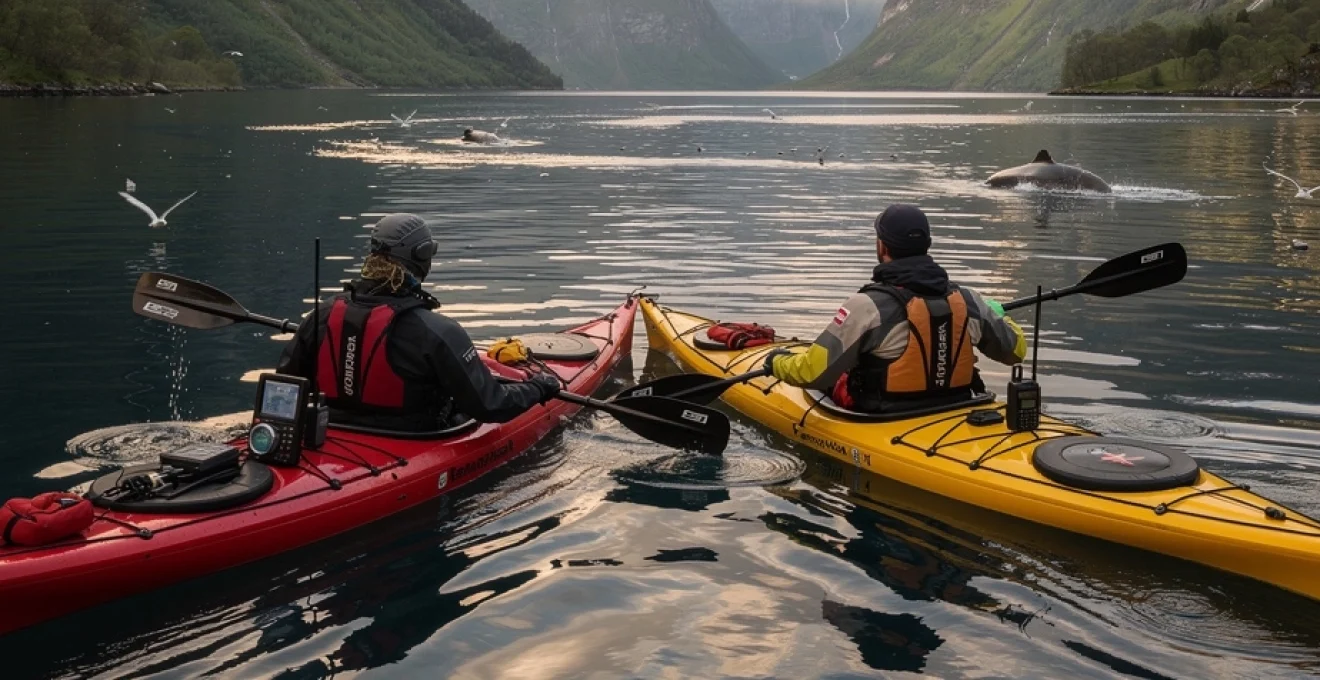
Norway’s dramatic fjords represent one of the world’s most spectacular kayaking destinations, where ancient glacial valleys filled with seawater create protected waterways surrounded by towering cliff faces. These natural cathedrals offer paddlers an intimate connection with some of Europe’s most pristine wilderness, where the only sounds are the gentle splash of paddles and distant waterfalls cascading from heights exceeding 1,000 metres. The fjord system spans over 1,100 kilometres of coastline, providing endless opportunities for both novice and experienced kayakers to explore hidden coves, encounter diverse wildlife, and witness geological formations that have remained unchanged for millennia.
The unique geography of Norwegian fjords creates exceptionally sheltered paddling conditions that allow kayakers to venture deep into mountain valleys without exposure to open ocean swells. This protection, combined with the country’s “Right to Roam” legislation, grants paddlers unprecedented access to some of the most remote and beautiful waterways on Earth, making fjord kayaking an essential experience for any serious outdoor enthusiast.
Norway’s fjord geography and optimal kayaking conditions
The Norwegian fjord system represents a masterpiece of geological engineering, carved by massive glaciers during successive ice ages over the past 2.6 million years. These U-shaped valleys, now flooded with seawater, extend inland for distances exceeding 200 kilometres in some cases, creating natural highways through otherwise impassable mountain terrain. The steep-sided nature of fjords means that winds are often channelled and redirected, creating unique microclimates that can vary dramatically within short distances.
Understanding fjord meteorology is crucial for safe kayaking, as weather patterns can change rapidly due to the interaction between maritime air masses and towering mountain barriers. The orographic effect causes warm, moist air to rise rapidly along fjord walls, often creating sudden precipitation and temperature drops. However, this same geography provides excellent protection from prevailing westerly winds, making many fjords surprisingly calm even during stormy conditions outside the valley systems.
Geirangerfjord’s UNESCO world heritage paddling routes
Geirangerfjord stands as perhaps the most iconic of Norway’s paddling destinations, recognised by UNESCO for its outstanding natural beauty and well-preserved cultural landscape. The 15-kilometre-long fjord offers multiple launching points, with Geiranger village serving as the primary access hub for kayaking expeditions. The Seven Sisters waterfall provides a spectacular focal point for paddling routes, where kayakers can approach within metres of the 250-metre cascades during high water periods.
The fjord’s narrow width, averaging just 1.5 kilometres, creates an intimate paddling environment where every stroke brings new perspectives on abandoned mountain farms clinging to impossible cliff ledges. Advanced kayakers often attempt the challenging route from Geiranger to Hellesylt, a full-day expedition requiring precise navigation around ferry routes and careful monitoring of afternoon wind patterns that typically develop as thermal heating creates updrafts along the fjord walls.
Nærøyfjord’s narrow channel navigation challenges
Nærøyfjord presents some of Europe’s most technically demanding fjord kayaking, with its narrowest section measuring just 250 metres between towering 1,800-metre cliff walls. This extreme geography creates unique paddling conditions where echoes from paddle strokes reverberate off opposite walls, and the psychological impact of being surrounded by such massive vertical terrain can be overwhelming for inexperienced paddlers.
Navigation through Nærøyfjord requires constant awareness of tourist ferry schedules, as the narrow channel forces large vessels to maintain specific routes and speeds. The UNESCO World Heritage designation has increased marine traffic significantly, making early morning or late evening paddling sessions optimal for avoiding commercial vessel conflicts.
The interplay between natural acoustics and human activity creates a unique soundscape where the distant rumble of waterfalls mingles with the mechanical rhythm of ferry engines.
Hardangerfjord’s seasonal water temperature variations
Hardangerfjord’s 179-kilometre length and multiple tributary branches create significant water temperature variations throughout the paddling season. Surface temperatures range from 4°C in early May to peak levels of 16°
in late July and August, but can fluctuate by several degrees between inner arms like Sørfjorden and more exposed outer sections closer to the North Sea. For kayakers, these micro-variations matter: a sheltered bay in late spring can feel almost temperate, while shaded sections beneath steep cliffs may remain bone-chilling throughout the season. Spring snowmelt also introduces layers of fresher, colder water near river mouths, creating subtle thermoclines that you will feel on your paddle blades and occasionally as a faint tingling through your spray skirt.
Planning optimal paddling times on Hardangerfjord therefore means balancing air and water temperatures with daylight hours and wind forecasts. Early summer offers dramatic contrasts, with snow still clinging to high ridges while fruit orchards along the shore burst into blossom, but the water remains cold enough to demand robust immersion protection. By late summer, slightly warmer surface temperatures can make longer crossings more comfortable, yet afternoon thermal winds tend to strengthen, pushing kayakers back toward the shoreline. Understanding this seasonal rhythm helps you decide when to tackle longer stretches and when to keep your route close to easy landing points.
Sognefjord’s deep water safety considerations
Sognefjord, often called the “King of the Fjords,” reaches depths of over 1,300 metres, making it one of the deepest fjords in the world. From a kayaking perspective, this immense depth has several important safety implications, even though you will rarely paddle far from shore. Deep water bodies retain cold temperatures year-round, and in Sognefjord, surface layers can remain below 8°C well into early summer, significantly reducing survival times in the event of a capsize without proper thermal protection.
The fjord’s steep walls mean that safe landing spots can be surprisingly sparse, particularly along the most vertical sections between Gudvangen and Undredal. When planning a kayaking route on Sognefjord, you should identify evacuation points and sheltered bays in advance, treating them like “emergency exits” on a long-haul flight. In windy conditions, katabatic gusts can accelerate down the side valleys, creating short, steep wind waves that feel disproportionate to the apparent weather. Maintaining a conservative distance from cliffs and avoiding direct exposure to funnelled side winds is crucial, especially for less experienced paddlers.
Lysefjord’s tidal current patterns and timing
Lysefjord, famous for Preikestolen (Pulpit Rock) and Kjerag, combines steep granite walls with more pronounced tidal influence than many inner fjords. Although tidal ranges in western Norway are modest compared to places like the Bay of Fundy, constrictions in Lysefjord can amplify current speeds in narrow sections and around headlands. For sea kayakers, this means that certain stretches feel more like river paddling, with subtle eddies and counter-currents forming behind rocks and promontories.
Timing your crossings with the tide can dramatically affect both effort and safety. On a flooding tide, currents tend to push you deeper into the fjord, which is convenient when heading toward Lysebotn but challenging on the return if you misjudge the timing. Local tide tables and current predictions should be consulted before launching, and guided tours will typically schedule departures to coincide with slack water or favourable flow. Treat these tidal corridors like moving walkways in an airport: used wisely, they carry you along with minimal effort; used carelessly, they drain your energy and reduce your margin for error.
Sea kayaking equipment specifications for norwegian fjord conditions
Kayaking in Norway’s fjords demands equipment that goes beyond what you might pack for a mellow summer lake paddle. Cold seawater, rapidly changing weather, and often remote shorelines mean every piece of gear needs to be chosen with safety, durability, and performance in mind. While many guided tours supply core equipment, understanding the specifications that matter in fjord conditions helps you evaluate rental setups and make smarter decisions about what personal gear to bring.
Think of your kit as a layered safety system rather than a random assortment of items. The kayak hull design, cockpit outfitting, immersion protection, and navigation tools all work together to keep you efficient, warm, and in control if conditions deteriorate. Below, we break down the most important categories of sea kayaking gear for Norwegian fjord trips, from cold water clothing to emergency communications for remote areas with limited mobile coverage.
Cold water immersion protection gear requirements
Even in midsummer, many Norwegian fjords sit well below the 15°C threshold where cold water shock and hypothermia become serious risks. For this reason, appropriate immersion protection is non-negotiable for safe sea kayaking in Norway. On shorter, guided day trips in relatively sheltered arms like Aurlandsfjord, a 4–5 mm full wetsuit combined with a windproof paddling jacket often provides adequate protection, especially when you are constantly moving and generating body heat.
For longer crossings, early-season paddling, or itineraries that venture far from easy rescue, a breathable drysuit with integrated socks and a properly layered thermal base system is strongly recommended. This setup allows you to remain functional for significantly longer in cold water, buying critical time for self-rescue or assisted recovery. Neoprene paddling boots, a snug-fitting neoprene hood, and pogies (paddle mitts) or neoprene gloves further reduce heat loss from your extremities. Ask yourself: if you fell in 200 metres from shore, would your current clothing keep you capable of swimming and re-entering your kayak?
GPS navigation systems for fjord wall interference
The towering rock walls of Norway’s fjords can interfere with both satellite and terrestrial signals, creating navigation challenges that surprise paddlers used to open coastal environments. While traditional chart and compass skills remain invaluable, modern GPS devices still play a key role in route tracking, especially in poor visibility or during long-distance expeditions. To mitigate signal dropouts near vertical cliffs, choose a GPS unit with a high-sensitivity receiver and multi-constellation support (such as GPS, GLONASS, and Galileo).
Mounting your GPS on the deck with a secure, low-profile cradle keeps it in open view of the sky and allows for quick glances without interrupting your paddling rhythm. Many experienced fjord kayakers also carry a backup navigation option, such as a waterproofed smartphone running offline maps in airplane mode, stored in a deck-mounted dry case. Think of the fjord walls as urban skyscrapers: just as city canyons can disrupt GPS in downtown districts, steep cliffs can create brief blind spots that you should anticipate and plan around.
Paddle selection for high wind resistance
Fjord wind patterns can shift quickly from flat calm to strong funnelled gusts, especially in the afternoon when thermal effects peak. Your paddle choice has a direct impact on how efficiently you can handle these changing conditions. Many paddlers favour a mid-sized, high-angle touring paddle with a stiff shaft for responsive control in gusty crosswinds, paired with a feather angle (often 30–45 degrees) that reduces wind resistance on the recovery stroke.
For smaller paddlers or those planning multi-day trips, a slightly smaller blade surface can help prevent shoulder fatigue while still providing enough power to manoeuvre in chop and boat wake. Two-piece or four-piece paddles with robust ferrules allow for easier transport through tunnels and on public transport, while also giving you the option of carrying a compact spare on your deck lines. If you imagine your paddle as the engine of your kayak, choosing a model tuned to your strength and the fjord’s typical wind conditions will make every kilometre feel smoother and more controlled.
Emergency communication devices in remote fjord areas
Despite Norway’s advanced infrastructure, large sections of inner fjords still have patchy or non-existent mobile phone coverage, particularly near steep walls and in remote side arms. For safety, you should plan as if you may not be able to place a standard phone call in an emergency. At a minimum, every group should carry a waterproof VHF marine radio tuned to local channels, enabling contact with nearby vessels or coastal rescue services if needed.
For more remote expeditions or solo trips, adding a satellite-based communicator, such as a PLB (Personal Locator Beacon) or a two-way satellite messenger, significantly increases your safety margin. These devices allow you to send SOS signals and sometimes short text messages even when deep inside narrow fjords. A loud, pea-less whistle attached to your PFD and a compact signal mirror remain surprisingly effective low-tech options for attracting attention from passing boats or hikers high on the fjord walls.
Technical paddling techniques for fjord environment navigation
Mastering a few key technical paddling techniques can transform your fjord kayaking experience from merely scenic to genuinely confident and efficient. Norwegian fjords may look like placid lakes at first glance, but hidden dynamics—wind funnels, boat wake, and refracting waves off rock walls—demand strong boat handling skills. By practising targeted strokes and rescues before you arrive, you give yourself a much bigger margin for error when conditions inevitably change mid-paddle.
One essential technique in fjord environments is the sweep stroke, used to pivot your kayak quickly when ferry traffic or gusts push you off course. Combined with an edge control—tilting the kayak slightly toward the outside of the turn—you can carve smooth arcs along cliff bases and around headlands. Bracing strokes, both low and high, help you stabilise when a ferry wake rebounds off the rock wall, creating standing waves that can feel like a washing machine. Think of these braces as the equivalent of putting your hand on a railing when a train jolts: a quick, instinctive movement that prevents a much bigger problem.
Equally important are rescue and self-rescue techniques tailored to cold water. A reliable wet exit followed by an assisted T-rescue or paddle float re-entry should be second nature before you tackle more remote fjord routes. Practising these in cold water, with your actual immersion gear, reveals how much more effort is required when neoprene or drysuit layers restrict movement. Lastly, developing a relaxed yet efficient forward stroke—using torso rotation rather than arm power—allows you to cover long distances typical of fjord itineraries without overtaxing your shoulders and wrists.
Wildlife encounter protocols during norwegian fjord expeditions
One of the great joys of kayaking in Norway’s fjords is the chance to encounter wildlife at eye level, from curious seals to soaring sea eagles. However, sharing these waterways responsibly means following clear protocols that prioritise the animals’ wellbeing while still allowing you to savour the moment. In many cases, the best wildlife interactions happen when you slow down, keep a respectful distance, and let the animals decide how close they want to come.
When approaching marine mammals such as porpoises, seals, or the occasional whale, you should maintain a minimum distance of 50 metres and avoid crossing directly in their path. If animals approach your kayak of their own accord, remain quiet and keep your paddle low on the water to reduce sudden movements. Never attempt to follow a retreating animal, as this can turn a passive observation into harassment. Remember that in the calm acoustics of a fjord, your conversations and paddle splashes travel much farther than you might expect.
Birdlife, including puffins, guillemots, and white-tailed eagles, is abundant along many fjord walls and islands. During nesting season, typically late spring to early summer, it is especially important to avoid landing on small islets or narrow ledges where birds may be incubating eggs or caring for chicks. Use binoculars from your kayak to observe cliff nests instead of scrambling onto rocks. If birds begin calling loudly, circling overhead, or performing distraction displays, you are likely too close and should back away calmly. By treating the fjords as a shared habitat rather than a playground, you help ensure that future paddlers can enjoy the same thriving ecosystems.
Weather pattern analysis and risk assessment strategies
Norway’s fjord weather is famously changeable, with locals fond of saying you can experience all four seasons in a single day. For kayakers, this variability makes weather analysis and risk assessment just as important as choosing the right kayak or paddle. Before launching, you should consult multiple forecast sources, paying attention not only to predicted wind speeds and precipitation but also to temperature trends and thunderstorm probabilities along your specific fjord route.
Microclimates inside the fjords mean that regional forecasts often under-represent local gusts or squalls generated by rapid heating of sunlit rock faces. A practical strategy is to treat forecasts as a broad canvas and then refine your expectations on site by observing cloud formations, wind direction at water level, and the presence of katabatic flows descending valley sides. Low, fast-moving clouds channelling along the fjord axis, or sudden gusts descending from side valleys, can both signal an approaching shift in conditions. Asking yourself “what will this look like in two hours if things worsen?” is a simple but powerful mental exercise.
Sound risk assessment also involves honest appraisal of group experience, fitness, and gear. Establish clear turnaround times and weather thresholds before you set off—for example, deciding to hug the shore if winds exceed a certain speed or to abort a crossing if whitecaps start forming. Carrying a spare set of dry clothes in a waterproof bag, along with hot drinks in a vacuum flask, significantly improves your resilience if someone gets chilled. In many fjords, there is no shame in waiting out a squall onshore under a tarp; the landscapes are so impressive that even enforced pauses feel like part of the adventure rather than a setback.
Access points and launching infrastructure across major fjord systems
One of the practical advantages of kayaking in Norway’s fjords is the generally excellent access infrastructure, from small village harbours to purpose-built kayak piers. However, launch conditions vary widely, and understanding where and how you can put in helps you design more efficient and enjoyable itineraries. Many of the classic fjords—Geirangerfjord, Nærøyfjord, and Aurlandsfjord among them—offer dedicated kayak outfitters right at the water’s edge, with slipways or floating pontoons that simplify entry and exit even at low tide.
In more remote arms and along less developed stretches, you may rely on small pebble beaches, gently sloping rock slabs, or even roadside pull-outs where a short carry leads to the water. When scouting potential access points on maps or satellite imagery, look for sheltered coves rather than exposed headlands, especially if you anticipate wind or boat wake at launch time. Local camping grounds and guesthouses often provide informal launching rights for guests, adding flexibility to your daily route planning. By combining well-equipped hubs with quieter, more rustic launch spots, you can tailor your fjord kayaking journey to match both your comfort level and your appetite for exploration.