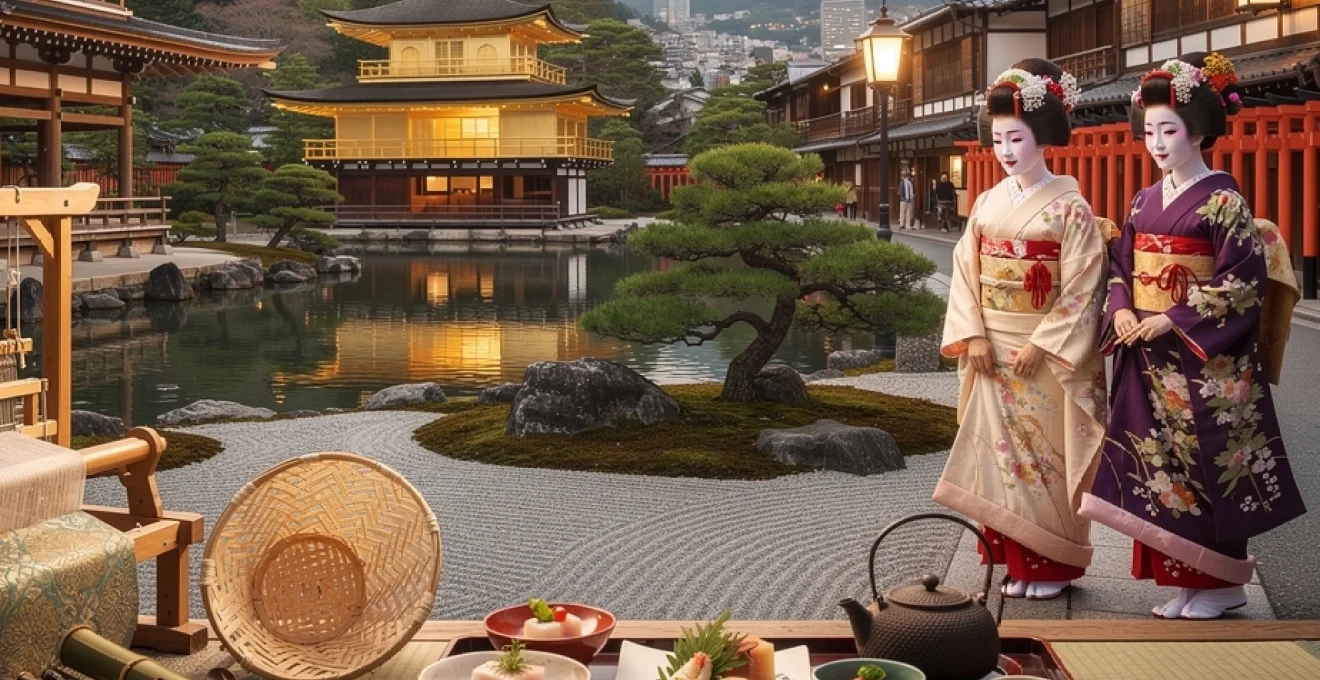
Kyoto stands as Japan’s undisputed cultural capital, where centuries of tradition continue to flourish amidst modern urban life. This ancient city, which served as Japan’s imperial capital for over 1,000 years, preserves an extraordinary collection of cultural treasures that define the essence of Japanese civilisation. From its 17 UNESCO World Heritage Sites to its meticulously maintained temples, traditional arts, and seasonal festivals, Kyoto offers visitors an immersive journey through Japan’s most profound cultural expressions.
The city’s unique position stems from its remarkable ability to maintain authentic cultural practices while adapting to contemporary life. Unlike many historical destinations that function primarily as museums, Kyoto remains a living cultural laboratory where traditional artisans, performers, and spiritual practitioners continue their ancestral crafts. This dynamic preservation has created an environment where you can witness centuries-old ceremonies, participate in traditional arts education, and observe the daily rhythms of cultural practices that have shaped Japanese identity for generations.
Ancient temple architecture and sacred spaces in kyoto’s cultural landscape
Kyoto’s temple architecture represents the pinnacle of Japanese religious design, combining spiritual symbolism with exceptional craftsmanship. The city houses over 2,000 temples and shrines, each reflecting different periods of architectural evolution and religious philosophy. These sacred spaces serve not merely as historical monuments but as active centres of worship, meditation, and cultural transmission that continue to influence contemporary Japanese spiritual life.
The architectural diversity found within Kyoto’s religious complexes demonstrates the sophisticated development of Japanese design principles over twelve centuries. From the early Heian period structures to later Zen monastery designs, these buildings showcase innovations in wooden construction techniques, garden integration, and spatial harmony that remain influential in modern Japanese architecture. The temples function as repositories of cultural knowledge, housing invaluable collections of art, manuscripts, and religious artefacts that preserve Japan’s intellectual and spiritual heritage.
Kiyomizu-dera’s wooden stage construction and pilgrimage traditions
The famous wooden stage of Kiyomizu-dera exemplifies the extraordinary engineering capabilities of medieval Japanese craftsmen. This massive platform, extending 13 metres above the hillside, was constructed entirely without nails, using traditional sashimono joinery techniques that have withstood earthquakes and centuries of weathering. The stage serves both practical and symbolic purposes, providing a viewing platform for the city below whilst representing humanity’s attempt to transcend earthly limitations through spiritual elevation.
The pilgrimage traditions associated with Kiyomizu-dera continue to draw millions of visitors annually, maintaining practices that date back over 1,200 years. Pilgrims traditionally drink from the temple’s sacred waterfall, believing it grants longevity, academic success, or romantic fortune. This ongoing ritual demonstrates how Kyoto’s temples preserve not just architectural heritage but also the spiritual practices that give these spaces their cultural significance.
Fushimi inari taisha’s senbon torii gates and shinto ritualistic pathways
The thousands of vermillion torii gates ascending Mount Inari create one of Japan’s most recognisable spiritual landscapes. These gates, donated by individuals and businesses as offerings to the Shinto deity Inari, form continuous tunnels that transform the mountain pilgrimage into a meditative journey through sacred space. The senbon torii pathway represents the intersection of personal devotion and communal worship that characterises Shinto practice.
Each torii gate bears inscriptions recording the donor’s name and wishes, creating a physical manifestation of collective prayer that spans generations. The maintenance and renewal of these gates involves traditional craftsmanship skills passed down through specialised artisan families, ensuring the continuity of both the visual spectacle and the underlying cultural knowledge. This system exemplifies how Kyoto’s religious sites maintain their spiritual significance through ongoing community participation and traditional craft preservation.
Kinkaku-ji’s golden pavilion zen garden design principles
The Golden Pavilion’s garden design represents the sophisticated integration of architectural elements with natural landscape that defines Japanese aesthetic philosophy. The pavilion’s positioning relative to its reflecting pond demonstrates the principle of shakkei (borrowed scenery), where distant mountains become part of the garden’s composition
This careful framing also reflects Zen principles of asymmetry, restraint, and controlled perspective, encouraging viewers to contemplate impermanence and stillness as they walk around the pond. Rather than offering a single “correct” viewpoint, the garden unfolds gradually, revealing new relationships between water, stone, and architecture with each step. In this way, Kinkaku-ji functions as a three-dimensional mandala, guiding visitors through a meditative experience that unites visual beauty with spiritual reflection.
Behind the seemingly simple arrangement lies a sophisticated system of proportion and spatial sequencing. Paths are designed to slow your pace, subtly directing your gaze toward key focal points such as stone lanterns, small islands, or distant tree lines. This approach has influenced garden and landscape design across Japan and abroad, making Kinkaku-ji not only a religious site but also a reference point for anyone interested in traditional Japanese aesthetics and Zen-inspired spaces.
Gion corner’s preserved machiya townhouse architecture
While Kyoto is renowned for its temples and shrines, the traditional streetscapes of Gion are equally crucial to the city’s cultural identity. Gion Corner and its surrounding lanes preserve classic machiya townhouses, whose narrow facades and deep interiors reflect historic urban planning and merchant life. These wooden buildings, characterised by latticed windows, earthen walls, and tiled roofs, demonstrate how residential and commercial functions were harmonised in premodern Kyoto.
The architecture of Gion’s machiya offers insight into how space was organised to support family businesses, guest reception, and private living quarters within a single elongated structure. Sliding doors and paper screens allow interiors to be reconfigured throughout the day, much like a theatre stage set changing between acts. By walking through Gion Corner, you can see first-hand how these flexible layouts continue to support cultural performances, tea houses, and artisan workshops, bridging past and present in a living urban museum.
Preservation efforts in this district focus not only on individual buildings but on entire streetscapes, including stone-paved alleys, lantern lighting, and traditional signage. Local regulations restrict modern alterations to exteriors, helping to maintain the historic skyline and the subtle play of light and shadow across wooden facades at dusk. For visitors interested in traditional Japanese culture, this environment provides a rare opportunity to experience an intact historical urban fabric rather than isolated monuments.
Traditional performing arts and geisha culture preservation
Kyoto’s cultural landscape would be incomplete without its performing arts, many of which have evolved here over centuries. The city remains a central stage for kabuki, noh, traditional dance, and geisha culture, all of which continue to be practiced as living arts rather than nostalgic re-enactments. These disciplines demand years of rigorous training, ensuring that subtle performance techniques, musical vocabularies, and etiquette are transmitted from master to apprentice.
For visitors, Kyoto offers an unparalleled chance to witness these art forms in their original context, often within historic theatres or tea houses closely tied to their development. Rather than simply watching a show, you are stepping into a complex ecosystem of teachers, patrons, artisans, and musicians whose collaboration sustains these traditions. This is one of the key reasons Kyoto is considered a global hub for traditional Japanese culture: the entire city functions like a conservatory where the performing arts are woven into daily life.
Kabuki theatre performances at kyoto’s minamiza playhouse
Minamiza, located near the Kamo River, is one of the oldest and most significant kabuki theatres in Japan. Its origins date back to the early 17th century, when Kyoto was a key cradle of kabuki’s evolution from popular street entertainment to high art. The current building, reconstructed in the early 20th century, combines Western-influenced theatre infrastructure with traditional Japanese aesthetics, reflecting Kyoto’s long history of adapting foreign influences to local culture.
Performances at Minamiza showcase the full spectrum of kabuki techniques: exaggerated makeup, stylised movement, and powerful vocal delivery, all accompanied by traditional shamisen music and percussion. For many visitors, the most striking element is the use of the hanamichi, a raised runway extending from the stage into the audience that allows actors to make dramatic entrances and interact with spectators. Experiencing kabuki in this historic venue offers a direct link to centuries of popular entertainment, where moral lessons, heroic tales, and supernatural stories were brought to life through spectacle.
To make kabuki accessible to modern audiences, Minamiza often offers performances with multilingual headsets or short, digestible program segments. This makes it easier for first-time visitors to appreciate the narrative and symbolic gestures without needing extensive prior knowledge. If you are planning a trip, it is wise to check seasonal performance schedules and book tickets in advance, especially during peak travel periods such as spring and autumn.
Maiko training systems in hanami-koji district
The Hanami-koji district in Gion is at the heart of Kyoto’s geisha culture, where young women train as maiko (apprentice geisha) before becoming full-fledged geiko. Their training system resembles a traditional guild apprenticeship, combining artistic education, social etiquette, and community responsibility. Maiko typically begin their training in their teens, living in shared houses known as okiya under the guidance of senior geiko and experienced house mothers.
Daily routines in Hanami-koji involve lessons in classical dance, shamisen, drum, and traditional singing, alongside instruction in tea ceremony and refined conversation. Just as an athlete repeats foundational drills, maiko spend countless hours practising basic steps and gestures until they become second nature. This intense discipline ensures that when you glimpse a maiko moving through Gion’s narrow lanes, every tilt of the head and measured step reflects generations of accumulated knowledge.
Respectful observation is essential when visiting Hanami-koji. While it can be tempting to approach maiko for photos, remember that they are commuting professionals, not tourist attractions. Instead, you can experience geisha culture through sanctioned performances, cultural experiences, or evening dinners at specific theatres and venues that collaborate with local associations. This approach helps sustain the traditional economy of the Hanamachi and protects the dignity of its performers.
Tea ceremony mastery schools: urasenke and omotesenke foundations
Kyoto is home to the main schools of the Japanese tea ceremony, particularly the Urasenke and Omotesenke lineages, both tracing their roots back to the 16th-century tea master Sen no Rikyū. These schools formalise the art of preparing and serving matcha into a comprehensive philosophical system that shapes everything from architecture and garden design to seasonal etiquette. In Kyoto, tea ceremony is not merely a performance; it is a disciplined practice of mindfulness and hospitality.
The Urasenke and Omotesenke schools operate headquarters and training centres in Kyoto where students from across Japan and around the world come to study. Instruction covers precise movements, the correct handling of utensils, and an understanding of seasonal aesthetics, such as choosing appropriate tea bowls or flower arrangements. Much like learning a musical instrument, progress is incremental, with students gradually mastering set forms that later allow for subtle, personal expression within strict rules.
Many tea rooms affiliated with these schools occasionally open short introductory experiences for visitors, providing a rare chance to learn about tea etiquette directly from qualified practitioners. When you participate, you are not simply tasting matcha; you are entering a carefully choreographed environment where timing, silence, and gesture are as important as flavour. This immersion explains why Kyoto is often described as the spiritual heart of Japanese tea culture and why tea ceremony remains central to its reputation as a city of refinement.
Noh drama techniques at kanze nohgakudo theatre
Noh, one of Japan’s oldest theatrical traditions, is especially prominent in Kyoto, where several schools maintain classic repertoires and performance techniques. The Kanze Nohgakudo Theatre and related venues uphold a style of drama that emphasises minimal movement, poetic language, and symbolic masks over elaborate staging. For first-time viewers, noh can seem slow, but this deliberate pacing is designed to open space for contemplation, much like a minimalist painting invites you to notice every brushstroke.
The technical demands of noh are considerable: actors must control their breathing, posture, and vocal intonation with exceptional precision, often while wearing heavy costumes and partial-vision masks. Training starts in childhood and continues over a lifetime, with senior masters refining their art well into old age. This longevity adds depth to performances, as mature performers bring decades of embodied experience to roles drawn from classical literature, Buddhist parables, and courtly legends.
Watching noh in Kyoto gives you access to the art form in a city that helped shape its aesthetic language, from costume patterns to musical accompaniment. Many theatres occasionally offer introductory lectures or surtitles in English to help international visitors follow the storyline. If you are curious about the philosophical side of Japanese culture—ideas of impermanence, purification, and the boundary between worlds—noh provides a powerful, if subtle, window into this dimension of Kyoto’s heritage.
Artisanal craftsmanship and UNESCO intangible cultural heritage
Kyoto’s cultural richness extends beyond performance and spirituality into a remarkable ecosystem of traditional crafts. Many local techniques are recognised as part of Japan’s Important Intangible Cultural Properties, and several have contributed to UNESCO’s wider framework for safeguarding intangible heritage. Unlike mass-produced souvenirs, Kyoto’s artisanal works embody deep technical knowledge, regional materials, and aesthetic philosophies refined over centuries.
What makes Kyoto especially compelling for those interested in craft traditions is the accessibility of its workshops and studios. In districts such as Higashiyama, Nishijin, and Arashiyama, you can observe artisans at work, join short workshops, or visit specialised museums that explain historical development and contemporary adaptation. This direct contact reveals that traditional Japanese culture in Kyoto is not frozen in time; it is constantly innovating while remaining anchored in established techniques and values.
Kiyomizu pottery techniques and raku ware production methods
Kiyomizu pottery, produced in and around the Kiyomizu-zaka area, is one of Kyoto’s most distinctive ceramic traditions. Known collectively as Kyo-yaki or Kiyomizu-yaki, these wares are characterised by refined shapes and rich overglaze painting, often depicting seasonal flowers, landscapes, or geometric patterns. The production process involves multiple firings and careful layering of glazes, requiring precise temperature control and a keen eye for colour transformation in the kiln.
Closely related is the celebrated tradition of Raku ware, developed in Kyoto in the late 16th century for use in tea ceremony. Unlike many ceramics that aim for uniform perfection, Raku pieces embrace irregularity and spontaneity, produced through hand-moulding and rapid, low-temperature firing. This approach could be compared to jazz improvisation in music: guided by rules but open to chance, resulting in unique, unrepeatable works that embody the wabi-sabi aesthetic.
Many Kiyomizu and Raku studios in Kyoto offer short hands-on experiences where visitors can shape a tea bowl or learn basic glazing methods under expert guidance. Participating in such a workshop deepens your appreciation of Kyoto’s traditional Japanese culture, as you come to understand how much skill and intuition are required to craft an object that appears, at first glance, elegantly simple. These encounters also support local artisan economies, helping to ensure that younger generations can continue these time-intensive professions.
Nishijin textile weaving traditions and obi silk manufacturing
The Nishijin district in north-central Kyoto is synonymous with high-end silk weaving, particularly in the production of obi sashes for kimono. For over a thousand years, artisans here have perfected complex techniques involving multiple coloured threads, gold leaf, and intricate patterning. Modern Nishijin weaving often combines computer-assisted design with hand-operated looms, but the fundamental skills of warping, dyeing, and shuttle control remain rooted in age-old practices.
The scale and density of Nishijin workshops once earned Kyoto the reputation of being a “city of looms,” and even today you can hear the rhythmic clatter of weaving machines in side streets. Creating a single formal obi can take weeks or months, as designers balance pattern symbolism, seasonal motifs, and the intended wearer’s age and occasion. In this sense, each textile functions like a visual poem, encoding cultural knowledge and social cues into colour and weave structure.
Several Nishijin centres and museums provide weaving demonstrations and opportunities to try operating a hand loom. For travellers exploring traditional Japanese culture, witnessing the transformation from raw silk thread to finished fabric offers a vivid analogy for Kyoto itself: individual strands of history and technique interlaced into a cohesive, shimmering whole. Investing in a small Nishijin accessory—such as a pouch or tie—allows you to carry a tangible piece of this heritage home.
Kyoto lacquerware urushi application and maki-e gold decoration
Kyoto is also renowned for its lacquerware, which relies on the painstaking application of urushi, a natural resin harvested from lacquer trees. Artisans apply many ultra-thin layers of lacquer to wooden or papier-mâché bases, polishing between coats to build up a deep, lustrous surface. This process can take months, and requires specialised ventilation and humidity control due to urushi’s sensitivity to environmental conditions.
Within this tradition, maki-e—the technique of sprinkling gold or silver powder onto wet lacquer to create patterns—is particularly associated with Kyoto’s refined aesthetic. Designs range from minimalist motifs to complex story scenes inspired by classical literature and seasonal landscapes. Much like illuminated manuscripts in European tradition, these objects combine functional purpose with narrative and symbolic richness.
Because high-quality lacquerware is both durable and repairable, many Kyoto families preserve pieces across generations, making them part of a shared cultural memory. For visitors, learning to recognise the subtle depth of urushi and the precision of maki-e decoration can transform how you see everyday objects, from writing boxes to trays. Some studios also offer short “gold-sprinkling” workshops, providing a hands-on introduction to techniques that normally require years to master.
Bamboo craft specialisation in arashiyama district
Arashiyama, famous for its atmospheric bamboo groves, has long been a centre for bamboo craftsmanship. Local artisans transform this fast-growing, sustainable material into baskets, tea ceremony implements, fences, and interior décor, each piece reflecting a balance between structural strength and visual lightness. Working with bamboo demands acute sensitivity to grain direction, moisture content, and cutting angles, similar to how a violin maker must understand the nuances of different woods.
Traditional bamboo crafts in Kyoto are closely tied to other cultural practices. Tea ceremony requires finely woven baskets and flower holders; garden design depends on elegant fences and gates; and even theatre props often incorporate bamboo’s flexibility and resilience. When you walk through Arashiyama’s streets, you’ll find small shops selling items that range from everyday chopsticks to museum-quality art pieces, all drawing from the same underlying material knowledge.
Many workshops in the area allow visitors to observe splitting, shaving, and weaving processes at close range. Participating in a simple basket-weaving lesson offers a tactile understanding of how Kyoto’s artisans turn raw natural resources into refined cultural objects. This connection between local landscape and craft production underlines why Kyoto is so often praised as a city where nature and culture are inseparable.
Traditional incense making at shoyeido and kunmeido workshops
Incense holds a special place in Kyoto’s religious and cultural life, used in Buddhist rituals, tea ceremonies, and daily practices of purification. Long-established companies such as Shoyeido and Kunmeido have been blending incense in Kyoto for centuries, developing proprietary formulas that balance aromatic woods, resins, and herbs. Unlike many modern fragrances, traditional Japanese incense contains no synthetic oils; instead, it relies on natural ingredients like aloeswood, sandalwood, and clove.
The craft of incense making is both scientific and intuitive. Artisans must understand how different materials burn, how their scents interact over time, and how subtle changes in humidity or grinding affect the final product. Recipes are guarded like family heirlooms, passed down through generations of incense masters who refine ratios based on experience and sensory memory.
Visitors can explore this world through factory tours, small museum exhibits, or short workshops where you can make your own incense sticks or cones. These experiences illuminate another facet of traditional Japanese culture in Kyoto: the importance of invisible elements such as scent and atmosphere in shaping spiritual and aesthetic experiences. The act of quietly enjoying a single stick of incense at home can become a way of reconnecting with the calm and depth you encountered in Kyoto’s temples and tea rooms.
Seasonal festival cycles and matsuri cultural significance
Kyoto’s annual calendar is punctuated by an impressive array of matsuri, or festivals, many of which date back centuries. These events weave together Shinto and Buddhist beliefs, local community identity, and artistic display into elaborate public rituals. For residents, matsuri mark the passage of time and the changing of seasons; for visitors, they offer immersive windows into traditional Japanese culture at its most vibrant and communal.
Major festivals such as Gion Matsuri, Aoi Matsuri, and Jidai Matsuri are complemented by countless smaller neighbourhood celebrations and temple observances. Each has its own choreography of processions, costumes, music, and offerings, often involving months of preparation by local associations. Much like a symphony orchestra requires coordination between many sections, Kyoto’s festival culture depends on the collaboration of carpenters, textile makers, musicians, priests, and volunteers.
From a cultural heritage perspective, matsuri also serve as powerful mechanisms of knowledge transmission. Children grow up helping to decorate floats, learning traditional songs, or participating in rituals, absorbing unwritten rules of etiquette and community responsibility. If you plan your visit around a major festival, it is wise to research viewing spots, schedules, and etiquette in advance, as popular events can draw hundreds of thousands of people and place pressure on local infrastructure.
Culinary heritage and kaiseki fine dining traditions
Kyoto’s culinary traditions are essential to understanding why the city is regarded as a cradle of traditional Japanese culture. The region’s refined cuisine developed in close dialogue with courtly rituals, temple vegetarian practices, and seasonal aesthetics, eventually crystallising into kaiseki—a multi-course dining style that showcases harmony between flavour, texture, and presentation. In Kyoto, food is not just nourishment; it is a carefully orchestrated performance of nature’s cycles.
Classic Kyoto dishes make extensive use of local ingredients such as kyo-yasai (traditional Kyoto vegetables), tofu, yuba, and freshwater fish from nearby rivers. Chefs arrange each plate like a small landscape, using colour contrasts and garnishes to evoke seasonal scenes—autumn leaves, spring blossoms, or winter snows. This approach turns every course into a visual and sensory narrative, echoing the same principles that guide garden design and tea ceremony.
For visitors, there are multiple levels at which to experience Kyoto’s food culture. High-end ryotei restaurants offer formal kaiseki meals, often served in private tatami rooms with garden views, while simpler establishments specialise in Buddhist shojin ryori, tofu-focused menus, or sweets made to accompany matcha. Even a stroll through Nishiki Market can become a cultural lesson, as you encounter pickles, dried fish, and traditional confectionery that reveal how Kyoto households have historically preserved and celebrated seasonal bounty.
One practical tip: when booking kaiseki in Kyoto, be mindful of dietary requirements and seasonal menus. Many traditional venues require advance reservations and may have limited flexibility, since dishes are planned around carefully sourced ingredients. However, an increasing number of restaurants are adapting to international visitors while retaining core culinary philosophies, making it easier than ever to engage deeply with Kyoto’s food heritage.
Historic district preservation and cultural landscape management
Kyoto’s ability to sustain such a rich concentration of traditional Japanese culture is not accidental; it results from deliberate preservation policies and community efforts. The city has designated multiple historic districts, such as Gion, Higashiyama, and parts of Nishijin, where building regulations limit height, materials, and facade alterations. These controls are not merely aesthetic; they aim to protect entire cultural landscapes, including views to surrounding mountains and the interplay of streets, waterways, and religious sites.
Managing this heritage in the face of modern tourism and development pressures is an ongoing challenge. Kyoto must balance the needs of residents, who require contemporary infrastructure and affordable housing, with the expectations of millions of visitors seeking “authentic” experiences. This tension has led to initiatives promoting responsible tourism, encouraging travellers to explore less-crowded areas, respect local customs, and visit during off-peak seasons. In effect, every visitor becomes a stakeholder in safeguarding Kyoto’s living traditions.
Urban planners and cultural agencies in Kyoto also work closely with temple administrations, neighbourhood associations, and craft cooperatives to maintain intangible heritage. Support measures range from subsidies for traditional roof repairs to recognition programs for master artisans and performers. By viewing the entire city as a cultural ecosystem rather than a collection of isolated attractions, Kyoto offers a model for heritage management that many other historic destinations are studying.
As you walk through Kyoto—whether along a lantern-lit alley in Gion, a moss-lined path in a temple garden, or a bustling market arcade—you are moving through layers of intentional design and communal effort. Understanding this context deepens the experience of visiting: you are not just seeing beautiful temples or enjoying refined cuisine, but participating, however briefly, in a complex, living tapestry of traditional Japanese culture that Kyoto has spent more than a millennium weaving and protecting.