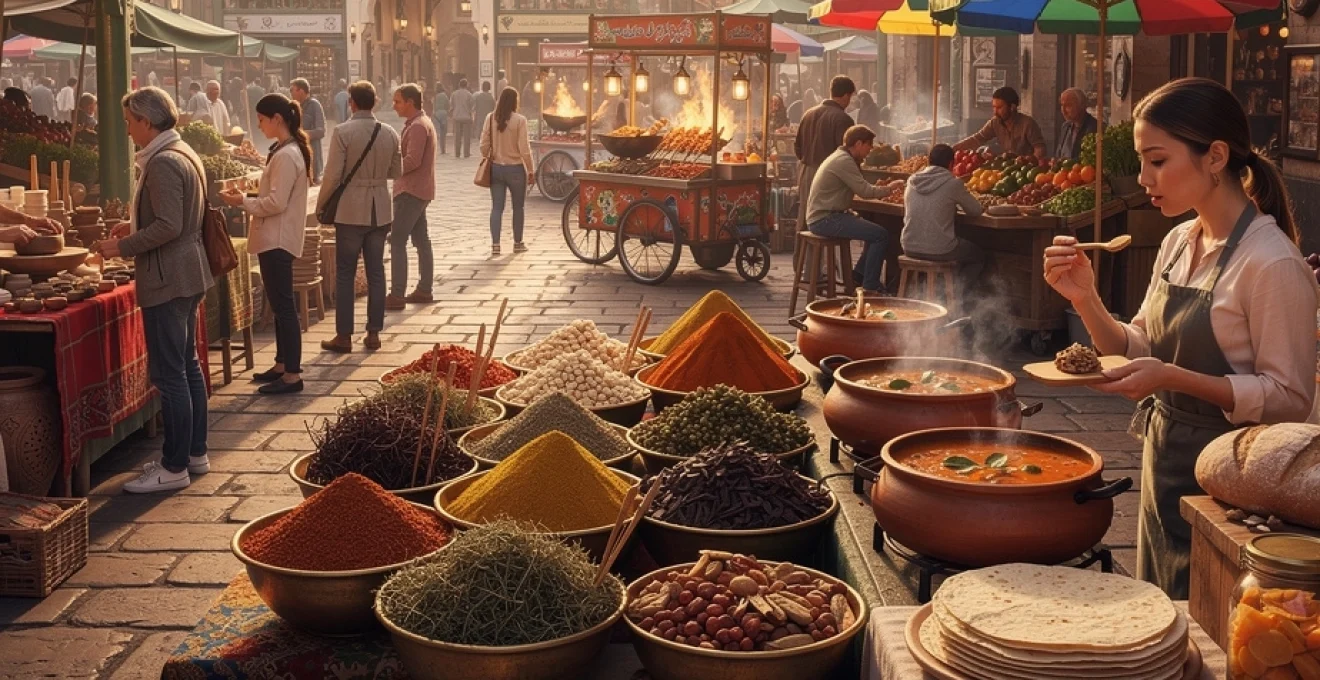
Local markets represent the beating heart of any community, offering visitors an unfiltered glimpse into the soul of a destination. Unlike polished tourist attractions or curated cultural experiences, these bustling hubs of commerce provide an authentic window into daily life, culinary traditions, and social dynamics that define a place. When you step into a traditional market, you’re not merely observing culture from a distance – you’re immersing yourself in the very fabric of local society.
The significance of markets extends far beyond simple commercial transactions. They serve as cultural repositories where generations of knowledge, recipes, and traditions are preserved and transmitted. From the ancient souks of Morocco to the vibrant floating markets of Thailand, these spaces have evolved as natural gathering points where communities celebrate their heritage through food, crafts, and social interaction. Understanding why markets offer such profound cultural experiences requires examining their multifaceted role in preserving authenticity whilst adapting to modern realities.
Sensory immersion through traditional market architecture and spatial design
The physical architecture of traditional markets creates an immediate sensory experience that distinguishes them from modern shopping centres. These spaces have evolved organically over centuries, with their layout reflecting the natural flow of human interaction and commerce. The narrow alleyways, covered passages, and interconnected stalls create an intimate atmosphere that encourages exploration and discovery.
Organic layout patterns in borough market london and mercado de san miguel madrid
Borough Market in London exemplifies how historical market architecture creates unique cultural experiences. The Victorian iron and glass structures provide natural acoustics that amplify the sounds of trade, whilst the labyrinthine layout encourages visitors to wander and stumble upon unexpected discoveries. Similarly, Madrid’s Mercado de San Miguel showcases how traditional market design facilitates social interaction through its central courtyard arrangement and communal eating areas.
These organic patterns contrast sharply with the sterile efficiency of supermarkets. The seemingly chaotic organisation of traditional markets reflects centuries of cultural evolution, where vendors have positioned themselves based on customer flow, product compatibility, and community relationships. This spatial intelligence creates natural navigation patterns that feel intuitive to locals whilst offering fascinating exploration opportunities for visitors.
Acoustic environments created by vendor interactions and multilingual negotiations
The soundscape of traditional markets provides an immediate cultural immersion that modern retail environments cannot replicate. The symphony of vendor calls, customer negotiations, and background conversations creates a dynamic audio environment that reflects the linguistic diversity and social dynamics of the community. These acoustic layers tell stories about local dialects, traditional sales techniques, and community relationships.
In multilingual markets, the constant switching between languages during negotiations reveals the cosmopolitan nature of many traditional communities. Vendors often demonstrate remarkable linguistic flexibility, adapting their communication style based on customer background and preferences. This linguistic agility reflects centuries of cross-cultural trade and highlights how markets serve as natural bridges between different communities.
Olfactory mapping of spice markets in istanbul’s grand bazaar and marrakech’s souk el attarine
The aromatic landscape of spice markets provides perhaps the most powerful sensory connection to local culinary culture. Istanbul’s Grand Bazaar and Marrakech’s Souk el Attarine demonstrate how scent creates emotional memories that connect visitors to place long after they’ve departed. The careful arrangement of spices reflects not only commercial considerations but also cultural hierarchies and traditional medicinal practices.
Each spice tells a story of trade routes, colonial history, and cultural exchange. The positioning of premium saffron near the entrance of many Middle Eastern markets reflects its historical significance as a luxury commodity, whilst the clustering of medicinal herbs reveals traditional healing practices that persist alongside modern medicine. These olfactory experiences create lasting impressions that guidebooks and museums cannot replicate.
Tactile engagement through artisanal product sampling and traditional craft demonstrations
Traditional markets encourage tactile engagement that modern retail actively discourages. The ability to touch fabrics, examine produce quality, and handle crafted items creates a deeper connection to local production methods and cultural values. This hands-on approach reflects traditional shopping practices where quality assessment required physical examination.
Many markets feature live demonstrations of traditional crafts, allowing visitors to witness skilled artisans at work. <blockqu
blockquote>allow visitors to ask questions, feel the weight of tools, and understand the time investment behind each object.
In many Southeast Asian and African markets, you can watch basket weavers, woodcarvers, or textile dyers transforming raw materials into finished products in real time. This tactile proximity to production demystifies the supply chain and makes cultural heritage feel immediate rather than abstract. When you roll handmade pasta in an Italian market cooking stall or shape clay in a Moroccan pottery corner, you are not only buying a product – you are participating, however briefly, in a living tradition.
This physical engagement also shapes how we remember a destination. Psychological studies on memory show that multi-sensory experiences – particularly those involving touch – are encoded more deeply than purely visual encounters. Handling a hand-loomed scarf or grinding spices with a mortar and pestle engages muscles as well as the mind, anchoring cultural knowledge in embodied experience. Markets, by design, invite this kind of contact, making them powerful sites for authentic cultural learning.
Indigenous culinary heritage preservation within market ecosystems
Local markets are among the most effective guardians of indigenous culinary heritage. In contrast to global supermarket chains, which tend to standardise products, traditional markets protect niche ingredients, regional recipes, and cooking techniques that might otherwise fade. Because vendors rely on loyal, often multi-generational customers, they are incentivised to maintain flavours and methods that resonate with local identity. As a result, markets function as decentralized archives of food culture, curated not by institutions but by everyday cooks.
For travellers seeking authentic culture, this makes markets uniquely valuable. Tasting a dish where it has been cooked the same way for decades – sometimes centuries – connects you to a continuous culinary story. You are not just sampling “street food”; you are encountering the edible expression of climate, geography, migration, and memory. Understanding this dynamic helps explain why food tourism and cultural tourism are now so tightly interwoven in many destinations.
Ancestral recipe transmission networks among vendors in mexico city’s mercado de coyoacán
Mercado de Coyoacán in Mexico City is an excellent case study in how ancestral recipes travel through informal networks. Many food stalls here are run by families who have been operating for two or three generations, with recipes passed down orally or in handwritten notebooks. A tamales vendor may still follow the exact ratio of masa to lard that her grandmother used, while a stall selling antojitos preserves regional variations in salsa that reflect the owners’ home state. These micro-traditions coexist in one space, turning the market into a living map of Mexican culinary diversity.
Recipe transmission often occurs through apprenticeship rather than formal instruction. Younger relatives learn by assisting with prep work, gradually internalising techniques – the pressure used when patting out tortillas, the moment when a mole sauce is considered “ready,” or how to adjust seasoning based on seasonal variations in chillies. For visitors, engaging with vendors about these processes can reveal how recipes adapt over time without losing their core identity. This kind of casual conversation, facilitated by the intimacy of the market, is far harder to access in a restaurant setting.
These intergenerational networks also act as a form of economic resilience. When a stall gains a reputation for a particular dish – say, chiles en nogada at a specific time of year – the knowledge embedded in that recipe becomes an asset that can support future family members. By choosing to eat in markets like Coyoacán, you indirectly support the survival of these culinary lineages, making your search for authentic culture part of a broader system of heritage preservation.
Seasonal ingredient cycles and traditional agricultural calendar observance
One of the clearest signs that a market is deeply rooted in local culture is its alignment with the traditional agricultural calendar. Instead of offering the same produce year-round, many markets still operate in tune with planting and harvest cycles that have shaped community life for generations. In southern Europe, for instance, autumn stalls burst with wild mushrooms and chestnuts, while spring brings tender greens and young cheeses. In East Asia, festivals like Lunar New Year are marked by specific seasonal foods that suddenly dominate market displays.
These ingredient cycles are more than practical responses to weather; they carry symbolic and ritual meaning. Certain fruits or herbs may be associated with good fortune, purification, or remembrance, appearing in markets only in the weeks surrounding particular festivals. By paying attention to what is abundant and what is conspicuously absent, you can read the local calendar as clearly as if you had checked a cultural events guide. Markets thus function as visual and edible almanacs, encoding knowledge that predates modern logistics.
For travellers, tuning into these cycles can transform how you plan your visit. Instead of asking, “What is the best local dish?” a more culturally sensitive question becomes, “What is in season right now, and how are people cooking with it?” This shift encourages you to experience the destination as locals do, embracing anticipation and ephemerality. Just as wildflower blooms attract nature tourists at specific times of year, fleeting culinary seasons – from white asparagus in Germany to mango festivals in India – can anchor your itinerary around genuinely local rhythms.
Regional speciality documentation through street food vendors in bangkok’s chatuchak market
Bangkok’s Chatuchak Market is often described as overwhelming, but beneath its scale lies an intricate system for documenting and displaying regional Thai specialities. Many vendors here do not simply sell generic “Thai food”; they showcase dishes from their home provinces, from Isaan-style grilled chicken and sticky rice to rich southern curries infused with turmeric and coconut. Signage, decoration, and even the accent of the vendor can signal these regional roots, turning each stall into a micro-embassy of provincial identity.
In this way, Chatuchak acts like a living catalogue of Thai street food traditions. Instead of reading a cookbook that lists dishes by region, you can walk the aisles and see how recipes diverge in spice level, texture, and presentation. The casual, open setting encourages questions: you can ask where a particular sausage originates, why a chilli paste looks darker, or how a dessert differs from a neighbouring stall. This informal “field research” offers more nuance than many scripted cultural shows, because it arises from genuine commercial and personal pride.
For cultural tourism, markets like Chatuchak offer a powerful model: they democratise access to regional diversity within a single, navigable space. Rather than spending weeks travelling the country, you can gain an introductory overview of culinary differences in one afternoon. Of course, this should not replace deeper exploration, but it can act as a compass, helping you decide which regions or dishes you want to delve into on future trips. In that sense, Chatuchak is both a destination and a launchpad for more targeted food journeys.
Fermentation techniques and artisanal food production methods in pike place market seattle
Pike Place Market in Seattle illustrates how traditional food production techniques can coexist with contemporary tastes. While many visitors associate the market with flying fish, it is also home to small-scale producers of fermented foods, cured meats, and artisanal cheeses that draw on Old World methods. Here, you might encounter a kimchi vendor explaining the optimal fermentation time for seasonal cabbage, or a craft pickle maker discussing brine ratios and spice blends inherited from grandparents.
Fermentation is particularly significant from a cultural perspective because it embodies patience, trust in natural processes, and an intimate understanding of local climate. Each jar or barrel is a collaboration between human knowledge and microbial activity, shaped by temperature, humidity, and time. Markets like Pike Place allow you to see, smell, and sometimes taste these processes at different stages – a stark contrast to the sealed anonymity of supermarket shelves. By talking with producers, you gain insight into how immigration patterns and regional agriculture intersect to create new, hybrid food traditions.
Engaging with these artisans also reveals broader trends in sustainable and authentic food experiences. As interest in probiotics, slow food, and low-waste cooking grows, fermentation has moved from the margins to the mainstream. Yet in many cultures, it was never marginal at all; it was a survival strategy and flavour amplifier. Markets act as bridges between these contemporary wellness trends and their historical roots, reminding us that what appears “innovative” in urban cafés is often a direct descendant of practices long preserved at market stalls.
Socioeconomic cultural dynamics and community integration patterns
Beyond food and sensory experience, local markets play a crucial role in structuring community relationships and economic flows. They are often among the few urban spaces where people from different social classes, age groups, and ethnic backgrounds interact regularly and on relatively equal terms. A teacher, a street cleaner, and a tech worker may all queue at the same vegetable stall, negotiating prices with the same vendor. This everyday mixing creates what sociologists call “weak ties” – casual connections that help knit a community together.
Markets also support layered economies. Alongside formal, licensed vendors, you may find informal workers carrying goods, repairing equipment, or providing childcare. In many cities, a significant portion of women’s economic participation happens in or around markets, whether through selling prepared food, managing household purchases, or running micro-stalls. These activities rarely appear in official GDP figures, yet they are vital to household resilience and cultural continuity. When you observe a bustling market square, you are seeing not just commerce, but a complex social safety net in action.
At the same time, markets can mirror and sometimes challenge social hierarchies. Who gets prime stall locations? Which products command the highest prices? How are disputes resolved? Answers to these questions reveal local power structures, from municipal authorities to informal elders’ councils. Some markets have evolved cooperative models, where vendors collectively negotiate with landlords or city officials, strengthening their bargaining position. Others remain fragmented, leaving small traders vulnerable to rent hikes or redevelopment. As cultural tourists, recognising these dynamics can help us move beyond romanticised images of “exotic bazaars” and appreciate markets as contested, living institutions.
Ethnographic research methodologies for market-based cultural analysis
Because markets condense so many aspects of daily life into a single space, they are fertile ground for ethnographic research. Anthropologists, sociologists, and increasingly, travel writers use markets as field sites to understand how culture is produced, negotiated, and displayed. If you are interested in going beyond surface-level impressions on your trips, borrowing some basic ethnographic techniques can deepen your appreciation of these environments. It is less about turning your holiday into a research project, and more about learning to observe with intention.
Ethnographic approaches emphasise immersion, patience, and respect. Rather than rushing through to “tick off” a famous bazaar, you might choose one or two sections to revisit over several days, getting to know vendors and noticing changes in stock or clientele. You may keep a simple field notebook or voice memos, jotting down observations about how people greet one another, who arrives early, or how weather affects activity. These small habits transform markets from photogenic backdrops into rich texts that you can learn to read.
Participant observation techniques in la boquería barcelona and camden market london
Participant observation is a core ethnographic method that involves taking part in everyday activities while simultaneously observing them. In La Boquería, Barcelona’s iconic food market, this might mean choosing a stool at a busy seafood counter and watching how locals order, how dishes are sequenced, and how staff interact with regulars versus tourists. You are not just eating; you are studying patterns – who lingers, who rushes, who seems to know the unwritten rules. Over time, you begin to discern subtle cultural codes around queuing, tipping, or sharing plates.
In Camden Market, London, participant observation could involve browsing alternative fashion stalls, engaging in casual conversation with vendors about music subcultures, or attending a small gig in one of the venues attached to the market. Here, the focus might be on how youth identities are constructed and performed through clothing, tattoos, and décor. By participating – perhaps trying on a jacket, requesting a song, or asking for styling advice – you gain access to narratives that would be invisible from a purely observational distance.
If you want to apply this method as a culturally curious traveller, the key is to balance engagement with humility. You can ask yourself: “What would I notice here if I were not trying to buy anything at all?” Then, after some time watching, you can intentionally join in – sampling a dish, buying a small item, or asking a respectful question. This oscillation between observer and participant is what gives the technique its depth, allowing markets to reveal layers of meaning beyond price tags and product descriptions.
Interview protocols for multi-generational vendor family documentation
Informal interviews are another powerful way to understand market culture, especially when focused on multi-generational vendor families. Many stallholders are proud of their heritage and will share their story if approached with genuine interest and sensitivity. A simple, structured approach can help: start with easy factual questions (“How long have you had this stall?”), move to process-oriented ones (“How did you learn to make this product?”), and only then explore more reflective topics (“What has changed in the market since you were a child?”).
Respecting time and context is essential. Vendors are there to work, so choosing quieter moments – early in the day, or when there is a lull between customers – increases the likelihood of a meaningful conversation. If you do not share a language, consider using translation apps or learning a few key phrases in advance to show respect. You can also ask permission before taking photos or recording audio, making it clear that your interest is personal rather than commercial. This ethical awareness is a cornerstone of responsible cultural tourism.
Over time, these micro-interviews can build a richer picture of how markets evolve. You might hear about shifts from cash to digital payments, changes in supply chains, or how tourism has altered demand. Comparing stories from different generations within one family – a grandmother who started selling produce in the 1970s and a grandchild managing the stall’s social media today – highlights how tradition and innovation coexist. For travellers, such narratives turn a generic “market visit” into a human-centred experience anchored in real lives.
Digital ethnography applications for social media market community mapping
In the last decade, digital ethnography has become an important tool for understanding how market communities extend beyond physical space. Many vendors now maintain Instagram accounts, Facebook pages, or WhatsApp groups where they share daily specials, announce closures, or coordinate deliveries. By following these channels before and after your visit, you can see how the market functions as an online community as well as a brick-and-mortar one. Posts about festivals, political events, or supply disruptions reveal how broader social forces impact everyday trade.
Social media also allows you to trace networks between markets, producers, and consumers. A cheese seller in an urban market might tag a rural farm, while customers share photos and reviews that create a feedback loop influencing demand. Mapping these connections – even informally, by noticing recurring names and places – offers insight into the market’s role within a larger food or craft ecosystem. You begin to understand that the stall you visited is just one node in a web of relationships stretching across regions or even continents.
For cultural tourists, digital ethnography raises important questions about authenticity. When a dish becomes Instagram-famous, does its preparation change to prioritise visual appeal over taste or tradition? When a market’s aesthetic is curated for online audiences, what happens to less photogenic but culturally significant practices? Reflecting on these tensions can help you navigate your own role as a visitor with a smartphone, encouraging you to document responsibly and remember that behind every post is a working environment and a community with its own priorities.
Comparative analysis of global market typologies and cultural expression models
Not all markets look or function the same way, and these differences are culturally revealing. Broadly speaking, we can distinguish several market typologies – from tightly organised farmers’ markets and covered halls to labyrinthine bazaars and pop-up night markets. Each type encodes particular attitudes toward space, regulation, and social interaction. Just as architectural styles reflect climate and history, market formats embody local ideas about order, trust, and public life.
Covered markets in Europe, for example, often emerged from municipal efforts to regulate hygiene and taxation in the 19th century. Their orderly stalls, fixed hours, and permanent infrastructure signal a high degree of state involvement. By contrast, open-air bazaars and souks in parts of the Middle East and North Africa tend to grow more organically, with vendor placement shifting in response to demand, family networks, or seasonal needs. Neither model is inherently more “authentic”; rather, each expresses a different balance between formal governance and informal community norms.
Night markets and weekend flea markets represent yet another typology, one closely linked to leisure and experimentation. In places like Taiwan, Thailand, or Portugal, these markets double as social events, where people stroll, snack, and browse with no specific shopping list in mind. The lighting, music, and temporary structures create a festival-like atmosphere, blurring the line between commerce and entertainment. When you compare these settings across countries, you begin to see recurring patterns – for instance, how food often anchors evening markets, while second-hand goods dominate Sunday markets – and how local cultures tweak these templates in distinct ways.
For travellers, learning to recognise market typologies is like acquiring a new language of place-reading. You might ask yourself: is this market primarily about essentials or indulgences? Is it oriented toward locals, tourists, or both? How permanent do the structures feel? The answers can guide not only what you buy, but how you behave – whether you should bargain, how long you can reasonably linger, or which areas are more appropriate for photography. Over time, this comparative lens turns market visits into a form of ongoing cultural analysis, enriching each new destination with insights drawn from the last.
Tourism impact assessment on authentic cultural market experiences
As cultural tourism has grown, so has its impact on traditional markets. On the positive side, visitors can bring much-needed revenue, helping vendors invest in better infrastructure, diversify their products, or pass businesses on to younger generations who might otherwise pursue different careers. UNESCO estimates that cultural and creative industries account for over 6% of global GDP, and markets are an important component of that economy in many cities. When managed well, tourism can thus reinforce the viability of markets as cultural institutions rather than hasten their decline.
However, increased tourist attention also carries risks. One common pattern is the gradual replacement of everyday goods with souvenirs, as vendors chase higher margins. A stall that once sold staple vegetables might pivot to decorative spices packaged for display, while a local snack stand simplifies flavours to suit international palates. Over time, the market can become more of a stage set than a functional community hub, catering to outside expectations of “authenticity” rather than local needs. This paradox – where the search for authentic culture erodes the very practices that made a place special – is a central challenge for market-based tourism.
How can we, as travellers, help tilt the balance toward positive outcomes? One approach is to be intentional about our spending. Choosing to buy staple foods, simple household items, or locally popular snacks – rather than only souvenir-ready products – supports vendors who continue to serve their neighbours as well as visitors. Another is to respect market etiquette: avoiding intrusive photography, dressing appropriately, and being mindful of space in narrow aisles. In destinations already struggling with overtourism, visiting at off-peak times or exploring smaller neighbourhood markets rather than only the most famous ones can also ease pressure.
Ultimately, markets thrive on reciprocity. They offer us access to authentic culture through taste, sound, and touch; in return, we can offer fair payment, curiosity without entitlement, and advocacy for their preservation. When we talk about our favourite markets back home, we can highlight not just their “vibe” but the real economic and social functions they serve. In this way, each visit becomes more than a personal memory – it becomes a small contribution to keeping these vital spaces alive for the communities that created them and for future travellers seeking genuine connection.