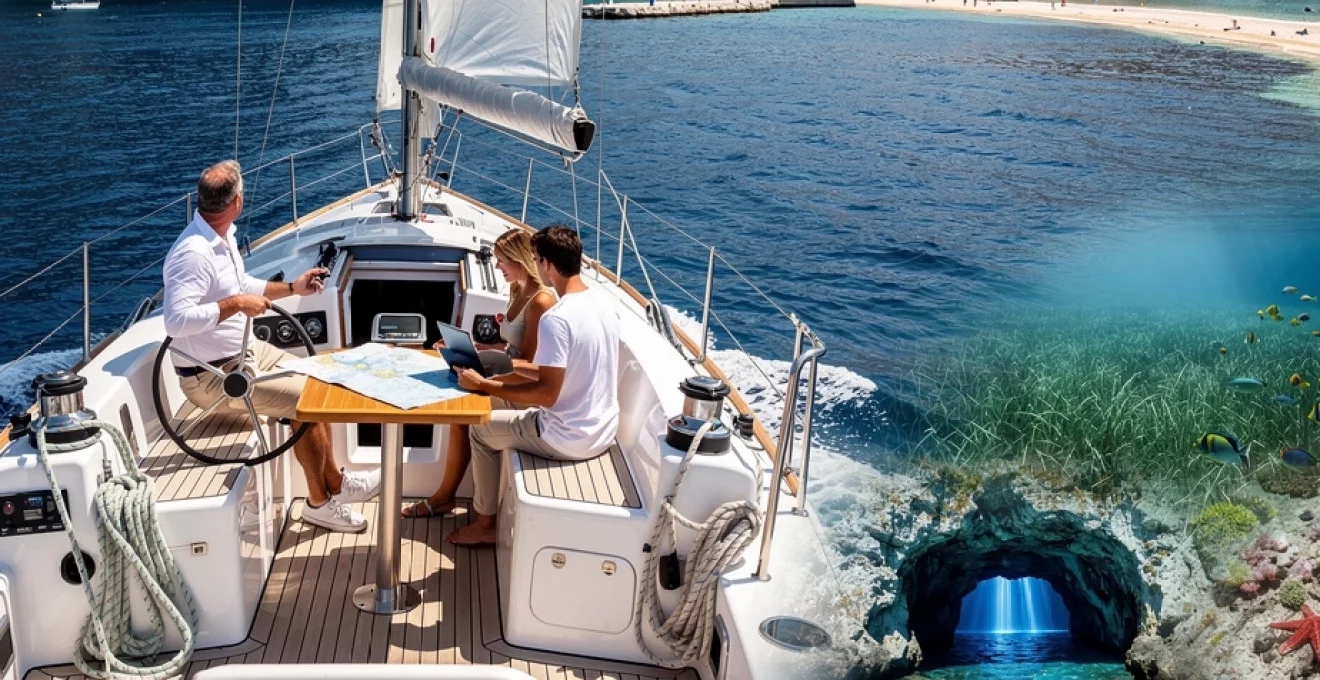
The Adriatic Sea’s eastern shores unveil one of Europe’s most magnificent sailing destinations, where crystalline waters lap against ancient limestone cliffs and medieval towns perch dramatically above secluded coves. Croatia’s Dalmatian Coast stretches over 1,200 kilometres of jagged coastline, encompassing more than 1,100 islands that create an intricate maritime labyrinth perfect for yacht exploration. This spectacular region combines UNESCO World Heritage sites with pristine national parks, offering sailors access to destinations that larger cruise ships simply cannot reach.
The unique geography of the Dalmatian Coast, shaped by millennia of karst limestone erosion and tectonic activity, has created an unparalleled sailing environment. From the historic port of Split, where Diocletian’s Palace stands as a testament to Roman grandeur, to the pearl of the Adriatic in Dubrovnik, every nautical mile reveals new wonders. The region’s consistent maestral winds and protected channels provide ideal sailing conditions from April through October, making it accessible to both experienced mariners and those seeking their first yacht charter adventure.
Navigational excellence through adriatic maritime routes and Island-Hopping itineraries
The Dalmatian Coast’s sailing routes offer exceptional diversity, with protected channels between islands creating calm waters ideal for extended cruising. The Adriatic’s eastern shoreline benefits from the shelter provided by the Dinaric Alps, which deflect harsh Mediterranean storms and create predictable wind patterns. Professional charter companies report visibility exceeding 15 nautical miles on average, with depths ranging from shallow anchorages perfect for swimming to deep-water channels accommodating vessels up to 60 metres in length.
Modern navigation technology complements traditional seamanship knowledge, with detailed chartplotting systems covering every reef, shoal, and safe harbour along the coast. The Croatian Hydrographic Institute maintains precise nautical charts updated annually, ensuring sailors have access to accurate depth soundings and current information. Marina facilities throughout the region provide comprehensive services, from fuel and fresh water to technical support and provisioning.
Split to dubrovnik coastal navigation: UNESCO heritage ports and anchorage points
The classic Split to Dubrovnik route spans approximately 140 nautical miles, typically completed over seven to ten days depending on weather conditions and desired exploration time. This flagship itinerary connects eight UNESCO World Heritage sites, including Diocletian’s Palace in Split, the medieval city of Trogir, and Dubrovnik’s magnificent city walls. Professional sailors recommend departing Split in the early morning to take advantage of the maestral winds that typically strengthen after 10:00 AM.
Strategic anchorage points along this route include the protected bay of Stari Grad on Hvar island, where ancient Greek agricultural terraces create a UNESCO-protected landscape. The harbour at Korčula town offers excellent shelter from southerly winds, whilst providing access to the alleged birthplace of Marco Polo. Each overnight stop features well-protected anchorages with holding depths between 8-15 metres, suitable for modern anchor systems.
Hvar, korčula, and vis island archipelago: strategic mooring locations and marina facilities
The central Dalmatian islands form a natural sailing paradise, with Hvar serving as the primary hub for yacht services and provisioning. Hvar’s ACI Marina accommodates vessels up to 80 metres, featuring 165 berths with comprehensive facilities including 24-hour security, fuel dock, and technical services. The marina’s strategic location provides easy access to the famous Pakleni Islands, where secluded coves offer pristine swimming conditions in waters reaching 25°C during summer months.
Korčula island presents multiple mooring options, from the medieval harbour within the old town walls to the modern facilities at Luka Korčula marina. The island’s diverse coastline includes both sandy beaches on the southern shores and dramatic cliffs facing the open Adriatic. Vis island, once closed to tourism due to its military significance, now offers authentic Croatian culture alongside excellent anchorages at Komiža and Vis town.
Prevailing maestral and bora wind patterns: seasonal sailing conditions and weather
Understanding these wind systems is essential to planning safe and enjoyable itineraries along the Dalmatian Coast. The prevailing summer wind, the afternoon maestral, blows from the northwest and typically builds from 10–11 AM, peaking in the mid‑afternoon at 10–20 knots before easing at sunset. In contrast, the bora is a cold, dry northeasterly that can arrive suddenly, funnelling down from the Dinaric Alps and accelerating over the coastal plains. While modern forecasts and local VHF weather bulletins give sailors ample warning, you should always factor in sheltered bolt‑holes and alternative anchorages when plotting daily passages.
From May to September, sea temperatures range between 21–26°C, and the Adriatic is generally calm, with wave heights often below one metre in the coastal channels. Shoulder seasons in April and October can bring more frequent low‑pressure systems, yet they also reward experienced sailors with quieter marinas and more favourable berth availability. Many charter companies recommend first‑time skippers aim for June, September, or early October, when the maestral is reliable but marinas are less congested. As a rule of thumb, planning shorter legs of 15–25 nautical miles allows you to adjust to changing wind conditions without pressure on your schedule.
Croatian national park waters: kornati, mljet, and krka river maritime access routes
Croatia’s national park waters are among the key reasons sailing the Dalmatian Coast feels so special compared with a conventional cruise. Kornati National Park, often described as a “nautical paradise” with around 89 islands, islets, and reefs, covers more than 220 square kilometres and is best accessed from Zadar, Šibenik, or Biograd. Entry requires a park ticket, which you can purchase in advance at marinas or online at a discounted rate. Designated overnight moorings and buoy fields in bays such as Telašćica and Vrulje offer secure anchorage, and depths of 5–20 metres make them well suited to modern keel yachts and catamarans.
Mljet National Park, further south near Dubrovnik, combines dense pine forests with two saltwater lakes, Veliko and Malo Jezero. Most sailors approach Mljet via Pomena or Polače, both of which provide sheltered bays and basic mooring facilities. From here, you can take park boats or rent bicycles to explore the Benedictine monastery on St. Mary’s islet. Krka National Park, by contrast, is accessed via an inland river route: yachts typically berth at Skradin after transiting up the Krka River from Šibenik. This fresh‑water run, protected from swell, offers an almost fjord‑like experience before you step ashore to visit Skradinski Buk, one of Europe’s most impressive waterfall systems.
Distinctive geological formations and karst limestone coastal architecture
The Dalmatian Coast owes much of its visual drama to its underlying karst limestone geology. Over millions of years, rainwater and rivers have carved fissures, caves, and canyons into the Dinaric Alps and the coastal plateau, creating a landscape where sheer cliffs plunge directly into the sea. This same stone has been quarried and used in coastal architecture, giving towns like Split, Dubrovnik, and Korčula their pale, almost luminous façades. When you sail here, you are not just moving between islands; you are travelling through an open‑air geology textbook where every headland tells a story of tectonic uplift and erosion.
These karst processes also explain the abundance of underground rivers, sinkholes, and blue‑green bays along the Dalmatian Coast. Many anchorages sit at the mouths of drowned valleys—rias—where river systems were inundated as sea levels rose. For sailors, this means deep‑water approaches close to shore, excellent holding in sandy or muddy pockets, and visually striking backdrops of terraced hillsides and limestone ramparts. It also means that coastal towns could develop strong stone‑building traditions, resulting in compact medieval centres that are both beautiful and resilient to the elements.
Dinaric alps coastal relief: vertical cliff formations and deep-water anchorages
The Dinaric Alps run parallel to the Adriatic, forming a towering wall that shapes both the climate and the sailing experience. In places like the Makarska Riviera, vertical limestone cliffs rise sharply from the shoreline to peaks above 1,700 metres, while deep coastal trenches run just offshore. This creates unique deep‑water anchorages where soundings of 20–40 metres can be found a short distance from the beach, allowing yachts to anchor close to dramatic rock faces. For those accustomed to gently shelving bays elsewhere in the Mediterranean, the sense of depth and scale here can feel almost alpine.
From a practical standpoint, these steep profiles provide natural protection from southern swells and help funnel local winds. Bays such as Pučišća on Brač or Vela Luka on Korčula benefit from this enclosed geography, offering reliable shelter even in less favourable conditions. Visual navigation is also enhanced: stark, stratified cliffs and prominent headlands act as clear waypoints, easily identifiable from nautical miles away. It’s not an exaggeration to say that every approach feels cinematic, particularly in late afternoon when the low sun accentuates the textures of the limestone walls.
Plitvice-style cascading formations: krka and skradinski buk waterfall systems
While many travellers associate Plitvice Lakes with inland Croatia, sailors along the Dalmatian Coast can experience similar cascading formations at Krka National Park. The Krka River descends through a series of travertine barriers, creating terraced pools and waterfalls that resemble a natural amphitheatre of water. Skradinski Buk, the park’s most famous feature, is a 45‑metre‑high network of cascades stretching over 800 metres in length. Approaching from the sea, you sail past Šibenik’s fortress‑lined estuary, then follow the river upstream into a landscape that feels worlds away from the open Adriatic.
These travertine formations are the result of dissolved limestone precipitating out of the water over thousands of years, gradually building natural dams and basins. For visitors arriving by yacht, the juxtaposition is striking: you move from saline coastal waters into freshwater river currents within a single day. Mooring at Skradin gives you direct access to boat tours and walking trails that wind around the cascades, offering multiple viewpoints. It is one of the few places in Europe where a sailing itinerary can seamlessly integrate both coastal cruising and riverine eco‑tourism in a single route.
Zlatni rat beach morphology: dynamic sand spit formation on brač island
Zlatni Rat, often translated as the “Golden Horn,” is one of the most recognisable coastal features on the Dalmatian Coast. Located near the town of Bol on Brač Island, this narrow spit of fine pebbles extends more than 400 metres into the Adriatic, changing shape with wind, waves, and currents. Satellite imagery and coastal studies show that the tip of Zlatni Rat can oscillate several metres in either direction over a season, pivoting like a weather vane in response to prevailing conditions. For sailors, this living landform is both a navigational landmark and a fascinating example of coastal geomorphology in action.
The beach’s distinctive form results from longshore drift, where sediment is transported along the coast and gradually deposited in deeper water. Strong summer thermals and the periodic bura help redistribute these pebbles, subtly redrawing the shoreline year after year. Anchorage is possible off Bol in settled weather, with depths of 8–20 metres and excellent visibility down to the seabed. Arriving by yacht allows you to appreciate Zlatni Rat from its most photogenic angle—offshore—where the contrast between the white spit and the turquoise shallows is most pronounced.
Blue cave biševo phenomenon: underwater light refraction and optimal viewing conditions
The Blue Cave (Modra špilja) on the tiny island of Biševo, near Vis, has become one of Croatia’s signature natural attractions. Its ethereal blue glow is caused by sunlight entering through an underwater opening on the cave’s southern side, then refracting off the sandy seabed and illuminating the interior from below. The effect is most intense when the sun is high—typically between 10:00 AM and 1:00 PM on clear summer days—turning the water an electric blue and bathing the cave walls in silver light. For many sailors, timing a visit here is a highlight of a Dalmatian Coast itinerary.
Access to the Blue Cave is regulated: visitors must transfer to official small boats at the designated mooring area near Mezoporat bay, where you pay an entrance fee before being ferried inside. Swell height and wind direction can affect access, as the cave entrance is low and narrow; tours are suspended in rough weather for safety reasons. Planning your arrival early in the day, before peak crowds, not only increases the chance of favourable conditions but also enhances the sense of calm inside the grotto. Seen from the perspective of a geologist, sailor, and photographer all at once, the Blue Cave captures the unique interplay of light, limestone, and Adriatic water that defines this coastline.
Mediterranean biodiversity hotspots and protected marine ecosystems
The Dalmatian Coast is more than a scenic backdrop; it is also a biodiversity hotspot within the Mediterranean basin. Numerous marine protected areas, including Kornati, Telašćica, and Mljet, safeguard habitats ranging from seagrass meadows (Posidonia oceanica) to rocky reefs. These seagrass beds are sometimes called the “lungs of the Mediterranean” because they absorb CO₂, produce oxygen, and stabilise the seabed, providing crucial nursery grounds for fish and invertebrates. As you sail through these waters, you are effectively passing above one of Europe’s most important underwater ecosystems.
Dolphins are a regular sight along the Dalmatian Coast, especially around the more remote islands and channels where fishing pressure is lower. Loggerhead sea turtles, though less common, also inhabit these waters, particularly in summer. Above the waterline, islands support a mosaic of pine forests, maquis shrubland, and vineyards that host diverse birdlife, from peregrine falcons on coastal cliffs to herons and kingfishers along river estuaries. For eco‑conscious sailors, this combination of marine and terrestrial biodiversity makes the region an ideal choice when compared with more heavily developed Mediterranean coastlines.
Croatia has introduced a range of measures to protect these ecosystems, including no‑anchoring zones over sensitive seagrass meadows, designated mooring buoys, and limitations on fishing in certain marine parks. Charter briefings usually include guidance on waste management, greywater discharge, and responsible anchoring techniques. If you’re planning a Dalmatian sailing holiday, it’s worth checking local park regulations in advance and purchasing valid permits—both to support conservation and to avoid fines. By following best practices, you help ensure that the very qualities that make this one of Europe’s most spectacular cruises remain intact for future generations.
Historical maritime heritage and venetian architectural preservation
The Dalmatian Coast’s visual charm is inseparable from its layered maritime history. For centuries, these waters formed a crucial corridor between East and West, linking Byzantine ports, Venetian trading posts, and later Habsburg naval bases. Coastal settlements like Dubrovnik (Ragusa), Šibenik, and Hvar flourished as independent republics or semi‑autonomous city‑states, building fleets that rivalled the great maritime powers of their time. When you approach these towns by sea, you follow in the wake of merchant galleys, Ottoman corsairs, and Venetian warships that once contested control of the Adriatic.
Venetian influence is particularly visible in the architecture: loggias, campaniles, and palazzi with carved stone balconies line the waterfronts of Korčula, Trogir, and Hvar. Many of these buildings were designed to be admired from the water, with façades oriented towards the harbour and sea gates serving as primary entrances. Unlike some parts of the Mediterranean where historic quays have been overshadowed by modern high‑rise development, Croatia has largely preserved the scale and character of its old ports. As a result, docking in a Dalmatian harbour often feels like stepping directly into a Renaissance painting.
Maritime museums in Split, Zadar, and Dubrovnik provide deeper context, displaying navigation instruments, ship models, and artefacts recovered from ancient wrecks. In Split, Diocletian’s Palace showcases how Roman imperial architecture was later adapted into a working medieval port city, while Dubrovnik’s city walls and arsenals testify to its former status as a formidable maritime republic. For culturally minded sailors, this combination of intact fortifications, active harbours, and well‑curated museums creates a level of historical immersion that few other cruising grounds can match.
Comparative analysis with alternative european sailing destinations
When sailors describe the Dalmatian Coast as one of Europe’s most spectacular cruises, they are often speaking from experience in other renowned regions. How does Dalmatia compare with the French Riviera, the Greek Cyclades, or Turkey’s Turquoise Coast? Each offers its own blend of scenery, culture, and sailing conditions, yet Dalmatia occupies a distinctive middle ground: less crowded and ostentatious than the Côte d’Azur, more sheltered and beginner‑friendly than much of the Aegean, and more architecturally preserved than large stretches of the eastern Mediterranean. Understanding these differences can help you choose the itinerary that best matches your expectations.
From an infrastructure perspective, Croatia has invested heavily in marinas and coastal facilities over the last two decades, resulting in a network of modern, well‑equipped harbours spaced at convenient intervals. At the same time, strict building regulations and UNESCO protections have limited the scale of new developments in key historic centres. The result is a cruising ground that feels simultaneously well serviced and authentically historic—a balance that can be harder to find in regions where mass tourism arrived earlier or more aggressively.
French riviera côte d’azur versus dalmatian coast: infrastructure and accessibility metrics
The French Riviera and the Dalmatian Coast both offer high‑quality marinas, yet they differ markedly in character and cost. The Côte d’Azur boasts some of the world’s most prestigious ports—Monaco, Nice, Cannes, Saint‑Tropez—designed to cater to superyachts and luxury clientele. Berthing fees in peak season can easily exceed €500 per night for larger vessels, and even mid‑sized yachts may find availability limited without advance booking. In contrast, Croatian marinas, while modern and well managed, tend to be more affordable, with a 12‑metre yacht often paying 30–40% less per night than on the French Riviera, depending on location and season.
Accessibility also differs. The French Riviera benefits from major international airports in Nice and Marseille, plus high‑speed rail links along the coast. Croatia’s main gateways—Split, Dubrovnik, and Zadar—are smaller but increasingly well connected, with a growing network of direct flights from European hubs during the sailing season. For cruisers, this means that one‑way or “Split to Dubrovnik” itineraries are logistically straightforward, similar to sailing from Nice to Marseille but with fewer crowds and a more varied mix of historic ports and national parks. If you value a balance of strong infrastructure, lower costs, and less congested anchorages, the Dalmatian Coast often has the edge.
Greek cyclades island chains: sailing complexity and cultural immersion comparison
The Greek Cyclades—Mykonos, Santorini, Paros, Naxos, and their neighbours—are legendary for their whitewashed villages, windmills, and azure bays. However, they are also known for the meltemi, a strong northerly wind that can blow at 25–35 knots or more for days at a time in July and August. For experienced crews, this offers exhilarating sailing; for less seasoned skippers or families, it can mean challenging passages, uncomfortable anchorages, and occasional port closures. By contrast, the Dalmatian Coast’s combination of sheltered channels, moderate maestral winds, and plentiful harbours tends to provide a more forgiving learning environment.
Culturally, both regions offer deep layers of history, yet they express it differently. The Cyclades present a predominantly Greek Orthodox and classical heritage, with temples, monasteries, and cubic island architecture. Dalmatia, on the other hand, blends Roman, Byzantine, Venetian, and Austro‑Hungarian influences within walking distance of each other. You might explore a Roman emperor’s palace in Split in the morning, stroll Venetian‑style loggias in Hvar in the afternoon, and dine under Austro‑Hungarian façades in Rijeka or Zadar later in your trip. For travellers seeking varied architectural styles and a cross‑roads of cultures within a compact sailing area, the Dalmatian Coast can feel richer and more diverse.
Turkish turquoise coast gulet cruising: service standards and authenticity factors
Turkey’s Turquoise Coast, stretching from Bodrum to Antalya, is famous for its traditional wooden gulets, which offer fully crewed cruises along pine‑backed bays and ancient ruins. Service standards on high‑end gulets are often excellent, with private chefs, attentive crews, and customised itineraries. In many ways, this style of cruising parallels Croatia’s crewed motor yachts and mini‑cruisers, where guests enjoy hotel‑level comfort while waking up in a different bay each day. The key differences lie in the architectural backdrop and density of development: Turkey’s coastline feels more rural and rugged in many stretches, whereas Dalmatia intersperses wild coves with compact, stone‑built towns.
Authenticity is a nuanced concept, but many travellers find that the Dalmatian Coast strikes an appealing balance between local life and visitor infrastructure. Fishing boats still unload their catch in small harbours; local families gather on evening promenades; and historic centres remain lived‑in rather than purely staged for tourism. While Turkey also offers genuine hospitality, language and cultural differences can feel greater for some European visitors. In Croatia, widespread English proficiency, the euro currency (from 2023), and EU membership simplify logistics without eroding the sense of place. If you are looking for a cruise that combines high service standards with walkable, intact medieval towns and straightforward travel formalities, sailing along the Dalmatian Coast is hard to beat.