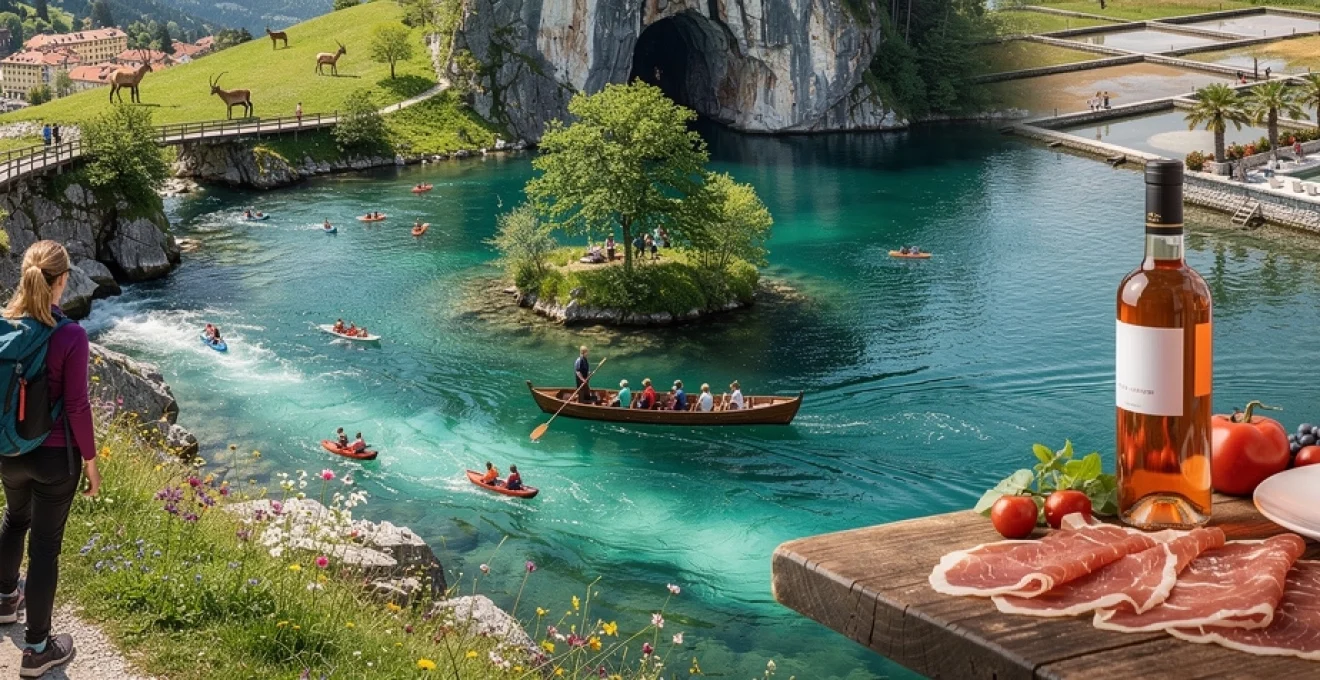
Tucked between the Julian Alps and a sliver of the Adriatic coastline, Slovenia has quietly transformed from a relatively obscure European nation into one of the continent’s most compelling destinations. This compact country—roughly the size of Wales or Massachusetts—packs an extraordinary diversity of landscapes and experiences into just over 20,000 square kilometres. With annual visitor numbers hovering around 6 million, compared to Italy’s 62 million or Croatia’s 21 million, Slovenia offers what has become increasingly rare in European tourism: authentic experiences without overwhelming crowds. The country’s recognition as National Geographic’s 2017 World Legacy Award winner for sustainable tourism, combined with Ljubljana’s designation as European Green Capital in 2016, signals a destination that has carefully balanced development with preservation. What makes Slovenia particularly fascinating is not just its pristine natural beauty or charming medieval towns, but rather how it embodies the best characteristics of its neighbours—Austrian alpine grandeur, Italian culinary sophistication, Mediterranean coastal charm, and Central European architectural elegance—whilst maintaining a distinctly Slovenian character that rewards deeper exploration.
Alpine grandeur meets mediterranean climate: slovenia’s triglav national park and soča valley
Triglav National Park, named after Slovenia’s highest peak at 2,864 metres, encompasses approximately 880 square kilometres of the Julian Alps, representing nearly four percent of Slovenia’s total territory. Established in 1981, though its origins trace back to a protected area designation in 1924, the park showcases geological formations shaped by glacial activity over millennia. The limestone karst topography creates dramatic contrasts between towering peaks, deep gorges, and verdant valleys, whilst the Mediterranean climate influences from the nearby Adriatic moderate temperatures in lower elevations, creating microclimates that support remarkable biodiversity.
The park’s network of over 9,000 kilometres of marked trails attracts hikers ranging from casual walkers to technical mountaineers. What distinguishes Triglav from other alpine destinations is the relatively short distances required to experience dramatic landscape transitions—you can breakfast beside a glacial lake, lunch in an alpine meadow dotted with wildflowers, and enjoy dinner in a valley where Mediterranean vegetation begins to appear. This geographical compression makes Slovenia exceptionally accessible for travellers with limited time who nevertheless seek diverse experiences.
Julian alps hiking routes: triglav summit via krma valley and vrata valley approaches
Ascending Mount Triglav represents a rite of passage for Slovenians, many of whom make the climb as children, and the mountain features prominently on the national flag and coat of arms. The Krma Valley approach offers a less technical route, typically requiring two days with an overnight stay at the Kredarica hut (at 2,515 metres, the highest mountain hut in Slovenia). This route traverses the Triglav Lakes Valley, a spectacular karst plateau featuring seven glacial lakes that shift in size depending on seasonal precipitation. The terrain requires reasonable fitness but involves minimal scrambling, making it accessible to determined hikers without mountaineering experience.
The Vrata Valley approach presents a more dramatic but technically demanding route. Beginning from the Aljažev Dom lodge, this path ascends the north face via fixed cables and steel pegs along exposed sections. The route passes beneath Triglav’s imposing 1,000-metre north wall, a magnet for technical climbers attempting some of Europe’s most challenging alpine routes. Both approaches require proper equipment—even in summer, temperatures near the summit can drop below freezing, and afternoon thunderstorms develop rapidly. Experienced guides recommend starting summit attempts before dawn to avoid afternoon weather deterioration and to witness sunrise illuminating the Adriatic Sea to the south and Austria’s peaks to the north.
Emerald-coloured soča river: kayaking, rafting and canyoning opportunities
The Soča River, flowing 138 kilometres from its source in Triglav National Park to the Adriatic, presents what many consider Europe’s most visually stunning waterway. Its distinctive emerald colour results from limestone rock flour suspended in glacial meltwater, creating an almost surreal turquoise hue that seems artificially enhanced in photographs but proves even more vivid in person. The river’s upper reaches near Bovec offer some of Europe’s finest whitewater kayaking, with rapids ranging from Class II to Class
III, depending on water levels. Commercial rafting operators based in Bovec and Kobarid typically run trips from late April to October, providing all necessary equipment and certified guides. For those seeking more technical challenges, canyoning in tributary gorges such as Sušec, Fratarica and Predelica offers natural slides, abseils down waterfalls and deep emerald pools carved into the limestone. Regulations introduced in recent years limit group sizes and designate specific access points, helping to protect riverbanks from erosion and to maintain water quality in what is one of Slovenia’s most fragile alpine ecosystems.
Kayaking and rafting on the Soča are weather- and season-dependent, with snowmelt in late spring creating higher, colder flows and more demanding conditions. Summer brings warmer waters and gentler levels, suitable for families and beginners, while autumn often offers clear, stable days with fewer visitors. Many outfitters now combine whitewater activities with guided history tours of the Soča Front, where heavy fighting took place during the First World War; remnants of trenches, bunkers and memorials dot the valley. Whether you opt for an adrenaline-filled descent or a slower-paced scenic float, safety briefings and proper equipment are essential—the river’s beauty can distract from its power.
Vintgar gorge and tolmin gorges: geological formations and wooden walkway infrastructure
Just a few kilometres from Lake Bled, Vintgar Gorge slices 1.6 kilometres through vertical walls of limestone, in places rising up to 100 metres above the Radovna River. Formed during the last Ice Age as glacial meltwater cut through fault lines in the rock, the gorge features rapids, whirlpools and the picturesque Šum Waterfall at its terminus. To make this narrow canyon accessible, engineers in the late 19th century constructed a series of wooden walkways, bridges and galleries clinging to the rock face. Today, these carefully maintained structures allow visitors to traverse the gorge in around one hour, creating a rare opportunity to experience such dramatic geology without technical hiking.
Further west, near the town of Tolmin on the edge of Triglav National Park, the Tolmin Gorges present a wilder counterpart to Vintgar. Here, the Tolminka and Zadlaščica rivers converge in a labyrinth of narrow ravines, rock arches and turquoise pools, with paths and staircases linking a network of viewing platforms. Wooden and metal walkways have been designed to minimise direct contact with the rock and vegetation, reducing erosion while still providing safe access. Visitor numbers are regulated through timed entry and seasonal opening hours, a model increasingly used across Slovenia’s most fragile natural sites to balance accessibility with conservation. For travellers interested in the country’s geological story, both gorges offer an accessible window into the forces that shaped the Julian Alps.
Alpine flora and fauna: endemic species in the triglav protected area
The compressed elevation gradients in Triglav National Park create a mosaic of habitats, from montane forests of beech and fir to subalpine meadows and high alpine scree slopes. This diversity supports more than 1,600 plant species, including several endemics such as the Julian Poppy (Papaver alpinum subsp. julicum) and the Triglav Hawkweed (Hieracium tridentatum). In early summer, alpine pastures explode with colour—gentians, edelweiss and Turk’s cap lilies attract pollinators and photographers alike. Traditional transhumance practices, with shepherds moving cattle to high pastures, have helped maintain these open meadows, preventing forest encroachment and preserving species-rich grasslands.
Wildlife in the park is equally varied. Chamois and ibex navigate seemingly impossible cliff faces, while red deer roam the forests and golden eagles patrol the skies. Brown bears and wolves, once nearly eradicated, have made a cautious comeback in the broader Dinaric-Alpine region, and though sightings in Triglav itself remain rare, their presence underscores Slovenia’s conservation success. For birdwatchers, the park offers chances to spot species such as the wallcreeper and the black woodpecker, both indicators of healthy, mature habitats. Visitors are encouraged to stay on marked trails, avoid feeding wildlife and adhere to quiet hours around mountain huts—simple steps that help ensure this biodiversity remains intact for future generations.
Lake bled and lake bohinj: glacial lake tourism infrastructure beyond the instagram aesthetic
Images of Lake Bled—a church-topped island reflected in turquoise water beneath snow-capped peaks—have become synonymous with Slovenia’s tourism marketing. Yet beyond the iconic vantage points and social media shots lies a carefully planned tourism infrastructure that has evolved over more than a century. The lakeside promenade, historic villas and rowing facilities reflect Bled’s long history as a resort town dating back to Habsburg times. In contrast, nearby Lake Bohinj, within Triglav National Park, has developed along more restrained lines, favouring low-rise accommodation and strict building regulations that keep the shoreline largely natural.
Together, Bled and Bohinj illustrate two complementary approaches to glacial lake tourism. Bled offers a broader range of hotels, conferences and wellness facilities, while Bohinj attracts hikers, climbers and those seeking quieter, nature-focused experiences. The distance between the two lakes is less than 30 kilometres, making it easy to base yourself in one and visit the other by bus, bike or rental car. As visitor numbers increase—Bled alone recorded over a million overnight stays in recent pre-pandemic years—local authorities have implemented various measures to distribute tourism more evenly and to encourage off-season travel.
Bled island’s assumption of mary church: pilgrimage routes and traditional pletna boat access
At the heart of Lake Bled’s appeal is its tiny central island, home to the Assumption of Mary Church, whose current Baroque form dates from the 17th century. Long before Instagram, the island served as a place of pilgrimage, reached by wooden boats or, in winter, on foot across the frozen lake. Today, motorised vessels are prohibited, and access is via traditional pletna boats—broad, flat-bottomed craft operated by standing oarsmen using a special rowing technique passed down through generations. Each pletna is privately owned, and numbers are limited by municipal regulation, providing a sustainable livelihood for local families and reducing wake-related erosion along the shore.
Pilgrims and visitors alike climb the island’s 99 stone steps to reach the church, where a “wishing bell” installed in 1534 invites guests to ring three times in the hope their wishes will be granted. Wedding parties sometimes maintain the local tradition in which the groom carries the bride up all 99 steps, a feat of strength that has become an attraction in its own right. For those planning a visit, early morning or late afternoon crossings typically offer calmer waters and fewer crowds. In winter, when mist hangs low over the lake and the Karavanke peaks are dusted with snow, the island’s atmosphere shifts from summery postcard to something akin to a medieval painting.
Bled castle medieval architecture: strategic clifftop positioning and museum collections
Perched 130 metres above the lake on a precipitous cliff, Bled Castle is among Slovenia’s oldest fortifications, with written records dating it to 1011. Its strategic position once allowed feudal lords to control trade routes through the Upper Carniola region; today, the same vantage point offers sweeping views across the lake, the town and the surrounding mountains. Architecturally, the castle is a palimpsest of Romanesque, Renaissance and Baroque elements, reflecting successive periods of renovation after earthquakes and fires. A drawbridge over a defensive moat hints at its medieval defensive function, while inner courtyards now host cultural events and seasonal markets.
The castle’s small but well-curated museum interprets the human history of the Bled area from prehistoric times through the Middle Ages and into the Habsburg era. Exhibits include archaeological finds, models of the castle at different historical stages and displays on medieval life in the region. Visitors can also watch demonstrations at the on-site printing workshop, where staff use replica Gutenberg presses to print commemorative documents, or sample local wines in the castle cellar. For those looking to avoid the steep walk from lakeside to castle gate, a year-round shuttle service and well-marked hiking trails provide alternative access routes that help disperse foot traffic.
Lake bohinj’s savica waterfall and vogel ski resort cable car connectivity
Lake Bohinj, the largest permanent lake in Slovenia, sits within the Bohinj Valley at the western edge of Triglav National Park. Less developed than Bled and surrounded by largely untouched forest, it serves as a gateway to some of the Julian Alps’ most rewarding hikes. One of the most popular excursions leads to Savica Waterfall, where the river plunges 78 metres into a natural amphitheatre of rock. Accessed via a well-maintained path and a series of stone steps, the viewpoint offers a close but controlled encounter with this karst spring, whose distinct “A” shape inspired 19th-century Romantic poets and painters.
On the opposite side of the lake, the Vogel cable car provides rapid access from 569 metres at the lower station to around 1,535 metres on the plateau above. In winter, this forms the core of the Vogel Ski Resort, known for its natural snow and panoramic views rather than extensive artificial infrastructure. In summer and autumn, the cable car functions as a lift for hikers and mountain bikers, reducing the need for private vehicle access and opening up high-altitude trails to a broader range of visitors. From the upper station, well-marked routes lead to vantage points such as Šija and Rodica, where you can take in views stretching from the central Julian Alps towards the Adriatic on a clear day.
Seasonal tourism management: sustainable visitor flow strategies at both lakes
Managing visitor flows has become a central challenge for both Bled and Bohinj, particularly during peak summer months and holiday weekends. To reduce congestion and emissions, Bled has introduced paid parking zones, seasonal shuttle buses and, more recently, pilot schemes encouraging park-and-ride from outlying areas. Cycling infrastructure has been expanded, and the traditional path encircling the lake is reserved for pedestrians and non-motorised users. These measures aim to preserve the lakeside’s tranquillity while accommodating growing interest from international and domestic tourists.
In Bohinj, the emphasis has been on limiting development and promoting public transport access to key trailheads, including free or low-cost shuttle buses to starting points such as Savica and the Mostnica Gorge during high season. Accommodation providers are incentivised to extend operations beyond the July–August peak, spreading demand into spring and autumn when hiking conditions are excellent. Both destinations have also invested in visitor education, with information boards and online resources explaining the ecological sensitivity of the lakes. As you plan your own itinerary, choosing midweek stays, travelling outside peak school holidays and using public transport where feasible are simple ways to support these sustainable tourism strategies.
Ljubljana’s urban renaissance: jože plečnik’s architectural legacy and green capital recognition
Ljubljana, Slovenia’s capital, has undergone a remarkable transformation over the past two decades, evolving from a car-clogged post-socialist city into one of Europe’s most liveable urban centres. At the heart of this renaissance lies the enduring influence of architect Jože Plečnik (1872–1957), whose early-20th-century projects gave Ljubljana a coherent visual identity. His work, now recognised on UNESCO’s World Heritage List, blends classical motifs with modern functionality, creating public spaces that encourage lingering rather than hurried transit. This human-centred urbanism laid the groundwork for contemporary initiatives that earned Ljubljana the title of European Green Capital in 2016.
Today, the city’s compact historic core is characterised by riverside promenades, lively squares and a striking mix of Baroque, Art Nouveau and modernist architecture. Cafés and restaurants spill out onto terraces along the Ljubljanica River, while tree-lined embankments provide shade in summer. What makes Ljubljana particularly compelling for urban planners and curious travellers alike is how it has leveraged its small scale as an advantage, implementing changes that might feel daunting in larger metropolises. The result is a city where you can cross the centre on foot in under 20 minutes yet still discover new architectural details and vantage points at every turn.
Plečnik’s triple bridge and central market colonnade: functionalist design philosophy
One of Plečnik’s most recognisable contributions to Ljubljana is the Triple Bridge (Tromostovje), completed in its current form in the early 1930s. Rather than replacing an existing 19th-century stone bridge across the Ljubljanica, Plečnik chose to flank it with two narrower pedestrian bridges, creating a fan-like ensemble that disperses foot traffic between Prešeren Square and the Old Town. The design integrates stone balustrades, decorative lamps and gentle ramps, demonstrating Plečnik’s belief that even utilitarian structures could be imbued with symbolic and aesthetic value. Today, the Triple Bridge functions not only as a crossing but as a stage for street performers and a gathering point during festivals.
Just downstream, Plečnik’s colonnaded Central Market complex stretches along the riverbank between the Triple Bridge and Dragon Bridge. Conceived as both a commercial and social space, the market’s covered arcades protect vendors and shoppers from the elements while maintaining visual connections to the river and castle hill. Arched windows, Doric columns and open loggias reference classical architecture, yet the layout prioritises everyday functionality: easy circulation, flexible stall arrangements and direct access to the outdoor farmers’ market on Vodnik Square. For visitors, browsing the market offers an immediate immersion into Ljubljana’s food culture, from seasonal produce and local cheeses to artisanal bread and honey.
Car-free city centre pedestrianisation: european green capital 2016 initiatives
Ljubljana’s designation as European Green Capital was largely due to its ambitious reconfiguration of the city centre around pedestrians, cyclists and public transport. Beginning in the late 2000s, authorities progressively closed key streets to private car traffic, extended pedestrian zones and introduced electric mini-buses (known as Kavalirs) to help residents with reduced mobility navigate the core. At first controversial, these measures have since become widely accepted, with surveys indicating high satisfaction among residents and business owners. Air pollution levels in the centre have dropped, noise has decreased and public spaces once dominated by parked cars now host markets, concerts and outdoor seating.
For travellers, this pedestrianisation means you can explore major sights—Prešeren Square, the Central Market, the riverside promenade and the medieval Old Town—entirely on foot or by bike. A citywide bike-sharing scheme, BicikeLJ, offers affordable short-term rentals, and a network of cycling lanes connects central districts with residential neighbourhoods. The city has also invested in green infrastructure, from pocket parks and riverside plantings to rainwater management systems. These initiatives demonstrate how even modestly sized cities can make significant strides towards sustainability by prioritising human-scale mobility and public space.
Ljubljana castle funicular railway: tourist mobility solutions and panoramic infrastructure
Dominating the skyline from its hilltop position, Ljubljana Castle has watched over the city in various forms for nearly 900 years. Historically, reaching the fortress required a steep climb, limiting access for those with mobility issues or limited time. In 2006, the city introduced a glass-enclosed funicular railway connecting the Old Town near the Central Market with the castle courtyard, covering the 70-metre elevation gain in just over a minute. The funicular operates year-round, with extended evening hours in summer, and is integrated into combined tickets that include castle museum entry.
From an urban planning perspective, the funicular exemplifies how targeted infrastructure can enhance tourism without increasing car dependency. By providing a convenient alternative to driving up the hill, it reduces traffic on narrow access roads and preserves the tranquillity of the surrounding parkland. For visitors, the short ride doubles as an attraction, offering evolving views over the river, the Old Town rooftops and, on clear days, the distant Alps. Once at the top, you can explore the castle’s interactive history exhibits, climb the viewing tower or simply enjoy a coffee on the terrace while tracing your footsteps through the city below.
Karst plateau underground network: škocjan caves UNESCO site and postojna cave system
Stretching across southwestern Slovenia towards the Italian border, the Karst Plateau lends its name to karst landscapes worldwide—terrains defined by soluble limestone, sinkholes, disappearing rivers and extensive cave systems. This porous geology has created some of Europe’s most spectacular subterranean environments, two of which—the Škocjan Caves and Postojna Cave—are accessible to the public. Though located less than 30 kilometres apart, they offer contrasting experiences: Škocjan emphasises raw, awe-inspiring natural forces, while Postojna showcases centuries of tourism innovation.
For travellers interested in geology, hydrology or simply otherworldly scenery, the Karst region provides an unforgettable counterpoint to Slovenia’s surface landscapes. It also illustrates important environmental themes, from groundwater vulnerability to habitat specialisation. Because karst aquifers supply drinking water to much of the region, strict protections govern land use above the caves. As you move between sunlit vineyards and shadowy caverns, it becomes clear how interconnected these environments are—what happens on the surface quickly filters down.
Škocjan caves’ reka river canyon: subterranean biodiversity and speleological significance
The Škocjan Caves, inscribed on the UNESCO World Heritage List in 1986, are best known for the colossal underground canyon carved by the Reka River. In some chambers, the ceiling soars more than 100 metres above the river, creating spaces large enough to house a cathedral. Visitors follow a guided route that traverses bridges suspended high above the rushing water, with viewpoints that reveal stalactites, stalagmites and flowstone formations shaped over hundreds of thousands of years. The experience is less about ornate cave decorations and more about sheer scale and the raw power of an active underground river.
Beyond its visual drama, Škocjan is a hotspot of subterranean biodiversity, hosting specialised invertebrates and troglobitic species adapted to perpetual darkness. The stable temperature and humidity make the cave an important natural laboratory for speleologists and climate scientists studying mineral deposits as archives of past environmental conditions. To protect this fragile ecosystem, group sizes are limited, lighting is carefully controlled and visitors are required to stay on designated paths with guides. Photography restrictions in certain sections may feel strict, but they help minimise disturbance to both fauna and delicate formations.
Postojna cave’s electric train system: europe’s oldest cave railway tourism model
Postojna Cave, first opened to the public in 1819, represents one of the oldest organised cave tourism operations in the world. Its most distinctive feature is the electric train system installed in 1928 and later upgraded, which carries visitors 3.7 kilometres into the heart of the cave complex. This allows even those with limited mobility to experience vast halls festooned with stalactites and stalagmites, some nicknamed for their resemblance to human figures or everyday objects. After the train ride, guided walking tours continue through elaborately decorated chambers, including the famous “Brilliant” stalagmite—a gleaming white column often used in promotional imagery.
The cave is also home to the proteus, or olm (Proteus anguinus), a blind aquatic salamander sometimes called the “human fish” due to its pale skin. A dedicated research and exhibition area introduces visitors to this unique species, which can live for over 70 years and survive long periods without food. Managing the balance between accessibility and conservation has been an ongoing challenge at Postojna, which welcomes close to a million visitors in busy years. Modern LED lighting, strict temperature monitoring and controlled visitor flows are among the measures implemented to reduce impact, making the cave a case study in sustainable show-cave management.
Predjama castle integration: medieval fortress within natural cave mouth architecture
Not far from Postojna, Predjama Castle offers one of Slovenia’s most striking examples of the interplay between natural and built environments. Clinging to a 123-metre-high cliff, the Renaissance-era castle is partially built into the mouth of a cave system, effectively merging fortress and rock face. This integration provided medieval occupants with both defensive advantages and discreet escape routes via hidden tunnels exiting in the forest above. From a distance, the castle appears almost theatrical, like a film set; up close, the ingenious use of existing cavities and ledges becomes apparent.
Inside, museum exhibits reconstruct everyday life in what was once one of the region’s most formidable strongholds, with period furnishings, weaponry and interpretive displays. Audio guides are available in multiple languages, offering narratives that weave together historical fact and local legends, such as that of Erazem of Predjama, a rebellious knight reputed to have withstood a siege for over a year. For visitors in summer, combined tickets with Postojna Cave provide a convenient way to experience both attractions in a single day, though allocating more time allows for less hurried exploration and short walks in the surrounding karst landscape.
Lipica stud farm: lipizzaner horse breeding heritage and equestrian tourism
On the southern edge of the Karst Plateau, the Lipica Stud Farm stands as the cradle of the Lipizzaner horse breed, famed for its performances at the Spanish Riding School in Vienna. Founded in 1580 by the Habsburg Archduke Charles II, Lipica selected and bred horses specifically adapted to the region’s limestone terrain and Mediterranean climate. Over centuries, careful lineage management produced the distinctive grey (born dark, turning white with age) Lipizzaner, prized for its agility, strength and temperament. Today, the stud farm spans over 300 hectares of meadows and oak groves, where herds of mares and foals graze freely.
For travellers, Lipica offers guided tours of historic stables, carriage collections and training arenas, as well as regular riding shows demonstrating classical dressage movements. Walking paths wind through the estate, allowing visitors to observe the horses at pasture and to appreciate the cultural landscape shaped by centuries of equestrian activity. Equestrian enthusiasts can book riding lessons or trail rides, while families may opt for carriage rides through the grounds. As with many Slovenian attractions, Lipica combines heritage preservation with modern tourism services, illustrating how specialised cultural traditions can underpin sustainable rural economies.
Adriatic coastline compactness: piran’s venetian heritage and portorož spa tourism
Slovenia’s Adriatic coastline measures just 46 kilometres, a tiny stretch compared to neighbouring Croatia or Italy, yet it condenses an impressive variety of coastal experiences into this short distance. The area centres on three main towns—Koper, Izola and Piran—along with the resort of Portorož and the Sečovlje salt pans at the Croatian border. Here, Mediterranean influences are unmistakable: terracotta roofs, narrow alleys perfumed with rosemary and grilled seafood, and sunsets that bathe the sea in shades of gold and rose. For travellers, the compactness of the coast means you can easily split your time between historic exploration, beach relaxation and nature-based activities.
Unlike some mass-tourism Mediterranean destinations, Slovenia’s coast has largely avoided high-rise development, maintaining a low-key, human-scaled character. Many visitors base themselves in one town and use local buses, bikes or short drives to explore the rest. This proximity to the interior—Ljubljana is under a 90-minute drive away—also makes the coast ideal for multi-centre itineraries that combine alpine hiking, cave exploration and seaside downtime in a single trip.
Piran’s tartini square and gothic venetian house: mediterranean architectural preservation
Piran, often described as a miniature Venice without canals, occupies a narrow peninsula that juts into the Adriatic. Its heart is Tartini Square, a former inner harbour that was filled in the 19th century to create a grand, oval-shaped piazza framed by elegant facades. Dominating one side is the Town Hall, while a standout among the surrounding buildings is the Venetian House, a 15th-century Gothic palace distinguished by its pointed windows, ornate stone tracery and a carved inscription declaring “Lassa pur dir” (“Let them talk”). This building encapsulates Piran’s centuries-long connection to the Venetian Republic, which left a deep imprint on the town’s architecture and urban layout.
Narrow lanes radiate from the square up towards the hilltop Church of St. George and its freestanding bell tower, modelled on Venice’s Campanile di San Marco. From the churchyard and preserved town walls, visitors are rewarded with panoramic views over the terra-cotta rooftops, the shimmering sea and, on clear days, the Italian and Croatian coasts. Piran’s status as a heritage town has led to strict regulations on building alterations and signage, helping to preserve its atmospheric streetscape. Staying within the old town, you can easily explore everything on foot, from hidden courtyards to tiny seafood restaurants tucked along the promenade.
Sečovlje salina nature park: traditional salt harvesting and ornithological significance
Just south of Portorož, the Sečovlje Salina Nature Park protects one of the northernmost traditional sea saltworks in the Mediterranean. Salt production here dates back at least to the 13th century, with shallow evaporation ponds, low earthen dykes and wooden tools reflecting centuries of accumulated know-how. Unlike industrial saltworks, Sečovlje continues to use traditional methods, including manual harvesting and the cultivation of a protective layer of microorganisms known as petola, which helps ensure the purity and distinctive mineral profile of the salt. The resulting product, Piran salt, has earned a Protected Designation of Origin (PDO) within the EU.
Ecologically, the salt pans provide a mosaic of habitats—shallow brine pools, mudflats and reedbeds—that support more than 270 recorded bird species, including avocets, black-winged stilts and various herons. Elevated paths and observation points allow visitors to observe birdlife with minimal disturbance, and guided tours explain both the cultural history and ecological value of the site. Visiting in spring or autumn, when migratory movements peak, offers especially rewarding birdwatching. As you walk among the geometric patterns of the pans, with mountains on one horizon and open sea on the other, it becomes apparent how this landscape embodies the interplay of human labour and natural processes.
Portorož thermal spa facilities: thalassotherapy and wellness tourism development
In contrast to Piran’s historic charm, nearby Portorož has long positioned itself as Slovenia’s principal seaside resort and wellness destination. Its development as a spa town dates to the late 19th century, when the therapeutic properties of local brine and mud were first harnessed for medical treatments. Today, a cluster of hotels along the bay offers a range of thalassotherapy, balneotherapy and wellness packages, combining mineral-rich seawater, salt-pan mud and modern spa techniques. Facilities typically include indoor and outdoor pools, saunas, massage services and specialised programmes targeting everything from respiratory issues to stress relief.
Portorož also serves as a base for recreational activities such as sailing, stand-up paddleboarding and cycling along the Parenzana trail, a converted narrow-gauge railway line that once linked Trieste and Poreč. While its skyline is more contemporary than Piran’s, municipal regulations have generally kept building heights moderate, preserving views of the bay and surrounding hills. For travellers, alternating days of exploration in Piran and Sečovlje with restorative time in Portorož’s spas can create a balanced coastal itinerary—especially appealing if you are combining the coast with more physically demanding hiking in the Julian Alps.
Culinary tourism emergence: hiša franko’s michelin recognition and karst prosciutto PDO status
Slovenia’s rise as a culinary destination has accelerated dramatically over the past decade, propelled by a new generation of chefs and producers committed to local ingredients and innovative techniques. The publication of the first Michelin Guide to Slovenia in 2020 formalised what food enthusiasts had already discovered: this small country punches far above its weight in gastronomy. From alpine dairy farms to coastal salt pans and karstic vineyards, distinct regional traditions provide a rich pantry for chefs who see the entire landscape as their larder.
For travellers, culinary tourism in Slovenia can range from casual tastings at village gostilna (traditional inns) to elaborate multi-course tasting menus at world-renowned restaurants. Wine routes in regions such as Goriška Brda and Vipava Valley invite slow exploration by car or bike, with cellar doors offering spontaneous sampling and conversation. As you move through the country, you will notice recurring themes: respect for seasonality, pride in indigenous grape varieties and a willingness to blend time-honoured recipes with contemporary presentation.
Ana roš at hiša franko kobarid: world’s best female chef and alpine gastronomy innovation
Few individuals have done more to spotlight Slovenian cuisine internationally than Ana Roš, chef-owner of Hiša Franko in Kobarid near the Soča Valley. Named World’s Best Female Chef by The World’s 50 Best Restaurants in 2017, Roš crafts tasting menus that reinterpret local ingredients—wild herbs, river fish, mountain cheeses—through a lens that is both deeply rooted and avant-garde. Her restaurant, housed in a rustic villa near the Italian border, exemplifies the idea of “zero-kilometre” sourcing, with a large portion of ingredients coming from nearby foragers, farmers and the restaurant’s own gardens.
Hiša Franko’s inclusion in the Michelin Guide, along with its multiple stars, has positioned Kobarid and the wider Soča region on the global gastronomic map. Reservations often book out months in advance, so planning ahead is essential if you hope to dine there. For those unable to secure a table, the influence of Roš and her peers can be seen in a growing network of ambitious bistros and inns across Slovenia, where chefs experiment with ferments, foraged plants and nose-to-tail cooking. In this context, a culinary road trip through Slovenia becomes a journey not only between regions but between different interpretations of what “local” can mean.
Kraški pršut protected designation: traditional Air-Dried ham production methods
On the Karst Plateau above the Adriatic, the production of Kraški pršut (Karst prosciutto) represents another cornerstone of Slovenia’s food identity. This air-dried ham, granted Protected Geographical Indication (PGI) status by the EU, relies on specific climatic conditions: cold bora winds from the northeast and milder Mediterranean breezes from the southwest. Fresh hams are salted—traditionally only with sea salt from nearby Sečovlje—then left to dry and mature in well-ventilated cellars for at least 12 months, often longer. The result is a deep-flavoured, ruby-red ham with a balanced fat layer and a subtle sweetness that distinguishes it from better-known Italian counterparts.
Many family-run producers offer tastings and tours, explaining how factors such as pig breed, feed and drying time influence the final product. Visitors can often sample pršut alongside other local specialities: teran red wine, goat and sheep cheeses, and pickled vegetables. Experiencing this in situ, in stone-built farmhouses overlooking stony vineyards and scrubland, brings home how intimately Karst cuisine is tied to its landscape. For travellers seeking authentic food experiences, a visit to a pršut producer can be as memorable as any Michelin-starred meal.
Brda wine region and vipava valley: orange wine production and viticultural terroir
Slovenia’s western wine regions—Goriška Brda, often dubbed “Slovenian Tuscany,” and the nearby Vipava Valley—have become hotspots for natural and orange wine production. Here, winemakers revive ancient techniques such as long maceration of white grapes on their skins, sometimes ageing the wines in clay amphorae buried in the earth. Indigenous varieties like Rebula (Ribolla Gialla), Zelen and Pinela gain new expression through these methods, producing complex, textural wines that have garnered international attention. Rolling hills covered with vineyard terraces, interspersed with orchards and small villages, create a landscape that invites slow travel and unhurried tasting.
Many wineries in Brda and Vipava are family operations, with generations working side by side in vineyard and cellar. Tasting rooms range from sleek, architect-designed spaces to cosy converted barns, but a common thread is the opportunity to talk directly with the people who grow the grapes and make the wine. Cycling routes link villages and cellar doors, offering an active way to explore while keeping driving to a minimum—though it is wise to plan spitting rather than sipping if you choose this option. Whether you are a seasoned oenophile or simply curious, exploring these regions reveals another dimension of why Slovenia is fast becoming one of Europe’s most fascinating and rewarding travel destinations.