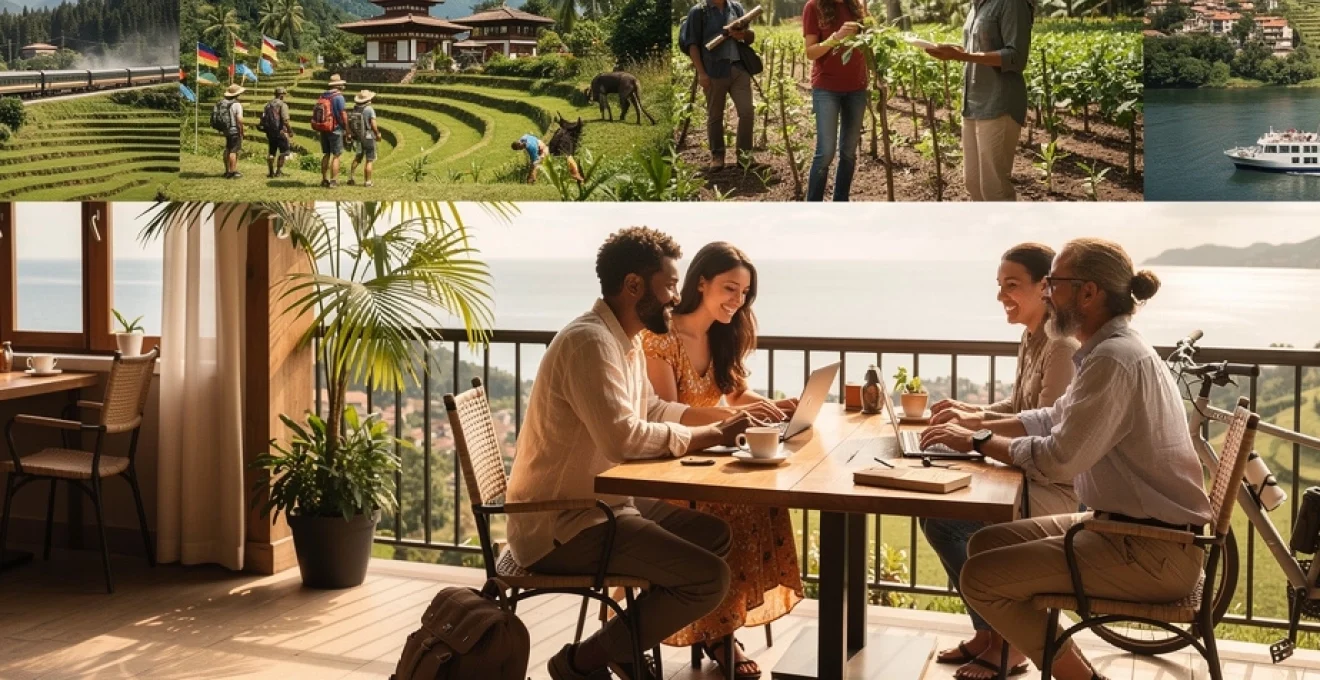
The travel landscape is experiencing a profound transformation as millions of people worldwide are abandoning the frantic pace of traditional tourism for a more deliberate and meaningful approach to exploration. This shift represents far more than a simple change in holiday preferences – it’s a fundamental reimagining of how we experience the world around us. Modern travellers are increasingly seeking authentic connections with local cultures, prioritising environmental sustainability, and recognising the profound psychological benefits of extended immersion in new environments.
This evolution in travel philosophy coincides with significant technological and societal changes that make extended stays not only possible but increasingly attractive. Remote work capabilities, evolving visa policies, and enhanced transportation networks are creating unprecedented opportunities for people to experience destinations deeply rather than superficially. The economic implications of this shift are equally significant, with local communities experiencing more sustainable tourism revenue streams that support long-term development rather than seasonal exploitation.
The growing body of research supporting the benefits of slow travel extends beyond individual satisfaction to encompass broader environmental and social considerations. As climate change concerns intensify and overtourism damages popular destinations, the slow travel movement offers a viable alternative that addresses these pressing challenges whilst delivering superior experiences for adventurous explorers.
Digital nomadism and remote work integration driving extended travel durations
The convergence of digital technology and evolving work cultures has created an unprecedented opportunity for professionals to integrate travel seamlessly into their careers. Recent surveys indicate that over 73% of companies now offer some form of remote work arrangement, with many employees leveraging this flexibility to extend their travel experiences far beyond traditional holiday durations. This fundamental shift in work paradigms has transformed the travel industry’s approach to long-term accommodation and destination services.
Digital nomadism has evolved from a niche lifestyle choice to a mainstream movement, with an estimated 4.8 million Americans identifying as digital nomads in 2023. This represents a staggering 131% increase from pre-pandemic levels, demonstrating the profound impact of remote work adoption on travel patterns. The economic implications are equally remarkable, with digital nomads contributing an average of $50,000 annually to local economies during extended stays.
Coworking spaces in bali, lisbon, and mexico city enabling Month-Long stays
Strategic destinations have emerged as digital nomad hubs by developing sophisticated coworking ecosystems that cater specifically to long-term visitors. Bali’s Canggu district now hosts over 150 coworking spaces, with facilities like Dojo Bali reporting 85% occupancy rates from international remote workers staying an average of 2.3 months. These spaces offer far more than traditional office amenities, providing community networking events, skills workshops, and cultural integration programmes that enhance the slow travel experience.
Lisbon has positioned itself as Europe’s premier digital nomad destination through strategic urban planning initiatives that designated specific neighbourhoods for coworking development. The city’s D7 visa programme specifically targets remote workers, offering simplified residency procedures for professionals earning above €760 monthly. Mexico City’s Roma Norte and Condesa districts have experienced a 340% increase in coworking space openings since 2021, with many facilities offering bilingual services and cultural immersion programmes specifically designed for extended-stay visitors.
Airbnb monthly discount structures supporting Long-Term accommodation booking
Accommodation platforms have revolutionised their pricing models to capture the growing slow travel market, with Airbnb’s monthly discount structure offering savings of up to 50% for stays exceeding 28 days. This pricing evolution has made extended travel financially accessible to a broader demographic, whilst providing property owners with more predictable income streams. The platform reported a 142% increase in month-long bookings during 2023, with average stay durations increasing from 6.4 days in 2019 to 11.7 days in 2023.
The economic mathematics of extended stays create compelling value propositions for both travellers and hosts. Monthly accommodation costs in popular nomad destinations often match or undercut rental prices in expensive metropolitan areas, whilst eliminating the hidden costs associated with frequent booking changes and transportation between multiple locations.
Time zone management strategies for remote workers in southeast asia
Professional nomads have developed sophisticated approaches to managing global collaboration requirements whilst
maintaining productivity across multiple time zones. In Southeast Asia, where local time can be 6–12 hours ahead of North American and European hubs, remote workers often adopt hybrid schedules that overlap with core team hours while still leaving daylight for exploration. Many nomads in Thailand, Vietnam, and Indonesia organise their days around early-morning deep work blocks, late-evening meetings, and long midday breaks for cultural immersion. This rhythm mirrors traditional siesta cultures and helps prevent burnout that might arise from constant late-night calls.
To manage digital fatigue, experienced slow travellers rely on strict calendar boundaries, asynchronous communication tools, and clear expectation setting with their teams. They prioritise written updates over real-time calls, batch meetings into specific days, and use scheduling tools that automatically convert time zones to avoid confusion. This disciplined approach means you can spend your afternoon at a local market in Chiang Mai or on a beach in Da Nang, then return to your laptop refreshed for a focused evening sprint. Rather than compromising work quality, these strategies often enhance concentration and creativity.
Visa policy changes in portugal and estonia facilitating digital nomad migration
Alongside workplace flexibility, progressive visa policies are accelerating the shift toward slow travel. Portugal’s D7 and new digital nomad visa frameworks offer remote workers the ability to reside in the country for extended periods while legally working for foreign employers. Applicants who meet minimum income thresholds gain access to healthcare, the Schengen Area, and the stability needed to commit to slower, more meaningful travel. This legal clarity removes the uncertainty that often forces travellers to hop between destinations every few weeks.
Estonia, often cited as Europe’s digital pioneer, has implemented a dedicated Digital Nomad Visa that formalises long-term stays for location-independent professionals. Combined with its e-Residency programme, this allows freelancers and entrepreneurs to base themselves in Tallinn for months at a time while running global operations. These policy shifts are not just administrative tweaks; they signal a broader recognition that mobile professionals are valuable contributors to local economies. As more countries compete for remote talent, we can expect a growing menu of visas tailored to extended immersion rather than quick visits.
Sustainable tourism models replacing traditional mass tourism infrastructure
As slow travel gains traction, it is reshaping tourism infrastructure away from high-volume, low-margin models toward smaller-scale, sustainable experiences. Destinations that once relied on cruise ship arrivals and all-inclusive resorts are experimenting with community-based tourism, eco-lodges, and low-impact transport options. This evolution aligns with travellers’ growing awareness of their environmental footprint and desire for responsible tourism. Instead of building ever-larger airports and theme parks, forward-thinking regions are investing in rail networks, protected areas, and cultural initiatives that support long-term resilience.
Slow travel’s emphasis on longer stays naturally reduces the frequency of flights and encourages overland journeys. This shift has enormous implications for carbon emissions, local employment, and urban planning. When visitors remain in one place for weeks rather than days, they spread their spending across neighbourhood businesses, use public transport instead of taxis, and become advocates for conservation. In many ways, slow travel functions like a pressure valve for overtouristed hotspots, redistributing demand to lesser-known regions and seasons.
Carbon footprint reduction through overland routes via Trans-Siberian railway
One of the clearest examples of low-impact slow travel is the renewed interest in long-distance rail journeys such as the Trans-Siberian Railway. Travelling from Moscow to Vladivostok by train takes around seven days, but it replaces a series of short-haul flights that would generate significantly higher emissions per passenger. Studies from European transport agencies consistently show that trains can produce up to 90% fewer CO2 emissions per kilometre compared with equivalent air travel. For climate-conscious travellers, trading speed for scenery is an ethical and experiential win.
Beyond carbon savings, overland routes encourage gradual cultural immersion. As you cross multiple time zones and regions by rail, landscapes and languages shift slowly, giving you time to absorb each change rather than experiencing “culture whiplash” with every flight. The train becomes a moving micro-community, where shared compartments and dining cars invite conversation. This is the essence of slow travel: the journey itself becomes a meaningful chapter, not just a logistical hurdle between destinations.
Local community tourism initiatives in bhutan’s gross national happiness framework
Bhutan offers a compelling case study in how national policy can embed slow tourism within a broader well-being framework. Guided by its Gross National Happiness (GNH) philosophy, the country has deliberately limited visitor numbers through a daily sustainable development fee that funds education, healthcare, and environmental conservation. Rather than chasing mass tourism, Bhutan focuses on attracting fewer visitors who stay longer, spend more per day, and engage respectfully with local culture. This approach ensures tourism supports community welfare instead of overwhelming it.
Community-based homestays, village treks, and cultural exchanges form the backbone of Bhutan’s slow travel offering. Guests might spend several days in a single valley, joining farmers in rice planting, learning traditional crafts, or attending local festivals. For travellers, the experience feels more like being hosted than serviced. For residents, it means tourism revenue is distributed across households rather than concentrated in a few large hotels. Bhutan’s model proves that when national priorities centre on collective well-being, slow travel becomes a natural outcome.
Regenerative travel programmes in costa rica’s osa peninsula conservation projects
While sustainable tourism aims to minimise harm, regenerative travel goes a step further by actively improving the places we visit. Costa Rica’s Osa Peninsula—home to 2.5% of the world’s biodiversity—is at the forefront of this shift. Eco-lodges and conservation organisations invite visitors to participate in reforestation, wildlife monitoring, and marine conservation projects. Instead of a quick rainforest tour, travellers might spend a week supporting mangrove restoration or assisting biologists with sea turtle nesting surveys.
This hands-on involvement deepens understanding of fragile ecosystems and builds emotional investment in their protection. It also aligns perfectly with slow travel: meaningful environmental work takes time. Many programmes require at least a one- or two-week commitment, encouraging visitors to settle into local rhythms. The result is a virtuous cycle where extended immersion generates both memorable experiences and concrete ecological benefits.
Slow fashion tourism integration in italian textile regions of tuscany
Slow travel is also intersecting with the slow fashion movement, particularly in regions with strong artisanal traditions. Tuscany’s historic textile towns, such as Prato and San Leucio, are attracting visitors interested in sustainable craftsmanship rather than fast-fashion shopping sprees. Instead of simply buying a souvenir scarf, travellers can spend several days visiting small workshops, learning about natural dyes, and even weaving their own pieces under the guidance of master artisans. This kind of textile tourism turns consumption into education.
From an economic perspective, these experiences channel revenue toward family-run studios that might otherwise struggle against global supply chains. For travellers, they offer a rare glimpse into the full life cycle of a garment—who made it, how fibres were sourced, and why certain techniques have endured for centuries. Much like a slow, multi-course meal reveals the soul of a cuisine, slow fashion tourism reveals the human stories woven into every thread.
Psychological well-being research supporting extended immersion travel patterns
Beyond economics and sustainability, slow travel is increasingly recognised for its benefits to mental health and overall well-being. Research in positive psychology suggests that immersive experiences, rich in novelty and social connection, contribute more to long-term happiness than material purchases. Extended stays create the conditions for these experiences by reducing the logistical stress and decision fatigue that often accompany whirlwind itineraries. When you are not racing to “do it all” in three days, your nervous system has space to relax.
Studies on “vacation afterglow” show that the benefits of travel typically fade within one to two weeks after returning home, especially if the trip was exhausting. However, travellers who adopt slow, restorative itineraries often report more enduring effects: improved mood, enhanced creativity, and a greater sense of perspective on their daily lives. Psychologists liken this to the difference between a power nap and a full night’s sleep—both are breaks, but only one allows for deep restoration.
Slow travel also supports mindfulness. With fewer checklists to complete, you can actually notice the details around you: the sound of church bells in a small European town, the pattern of light on a market stall, the rhythm of waves at dawn. These sensory anchors help pull your attention into the present moment, a core ingredient of psychological resilience. In a world of constant notifications, the simple act of wandering without an agenda can feel radical.
Economic impact analysis of slow travel on local destination economies
From an economic standpoint, slow travel represents a shift from high-volume, low-value tourism to lower-volume, higher-value engagement. Instead of thousands of day-trippers spending a few dollars each, destinations are seeing a growing cohort of visitors who stay for weeks or months and integrate into local economic life. This translates into steadier revenue streams and less vulnerability to seasonal boom-and-bust cycles. It also encourages the development of diverse small businesses—from co-working cafés to language schools—that serve both residents and long-stay guests.
Because slow travellers tend to self-cater and explore neighbourhoods beyond the main tourist strips, their spending patterns are more widely distributed. They are more likely to rent apartments from local owners, shop at weekly markets, use independent laundries, and frequent family-owned restaurants. Over time, this diversified spending can help rebalance urban economies that were previously dominated by large hotel chains or cruise terminals. For municipalities, the challenge is to harness this opportunity while preventing displacement and housing pressures for local residents.
Revenue distribution models in small-scale accommodation providers
Small-scale accommodation providers—guesthouses, boutique hotels, and homestays—stand to benefit significantly from slow travel trends. With fewer guests staying longer, operators can focus on quality relationships rather than constant turnover. Many adopt innovative revenue models such as tiered pricing for month-long stays, inclusive packages that bundle local experiences, or revenue-sharing partnerships with nearby guides and artisans. This ecosystem approach ensures that tourism dollars circulate within the community rather than leaking out through multinational intermediaries.
For example, a family-run riad in a Moroccan medina might offer a four-week stay that includes language lessons, cooking classes, and guided walks with local historians. While the nightly rate appears higher than a budget hotel on the outskirts, the integrated package delivers deeper value for both guest and host. The riad earns predictable income, partner businesses receive steady referrals, and travellers enjoy a curated, culturally rich slow travel experience. It’s a classic win-win scenario built on time rather than volume.
Artisan workshop participation rates in moroccan medina quarter development
Artisan districts in cities like Fez and Marrakech provide another lens on the economic impact of slow travel. Short-term visitors often browse souks for an hour and depart with a few small souvenirs. In contrast, slow travellers who remain in the medina for several weeks are far more likely to take part in workshops—learning ceramics, leatherwork, calligraphy, or traditional cooking. Local development agencies report that participation in such workshops has grown steadily, in some areas accounting for 20–30% of artisan income.
These hands-on experiences do more than boost revenue. They help preserve endangered crafts by giving younger artisans a viable business model that doesn’t rely solely on wholesale exports. For travellers, spending an afternoon learning from a master craftsman creates a story and a skill that far outlast a quick purchase. Have you ever noticed how much more you cherish an object when you’ve had a hand in making it? That emotional connection is a hallmark of slow travel’s economic contribution.
Agricultural tourism integration in new zealand’s south island wine regions
In rural areas, agricultural tourism—or agritourism—offers a powerful complement to traditional hospitality. New Zealand’s South Island wine regions, such as Marlborough and Central Otago, are increasingly inviting visitors to stay on working vineyards, join harvest activities, and learn about sustainable farming practices. Rather than a one-hour tasting, guests might spend several days pruning vines, blending their own wine, or exploring nearby cycling routes between cellar doors. This integrated approach spreads income across accommodation, agriculture, and ancillary services.
For farmers, hosting slow travellers diversifies revenue and builds direct relationships with consumers, insulating them from volatile global commodity markets. For visitors, the experience demystifies food and wine production, turning a simple glass of pinot noir into a story of soil, climate, and human care. It’s the economic equivalent of a long, thoughtful conversation instead of a quick transaction.
Transportation network adaptations facilitating multi-modal slow journey planning
To fully embrace slow travel, infrastructure must support journeys that prioritise comfort, connection, and flexibility over raw speed. Around the world, transport networks are quietly adapting to this demand. Rail operators are reviving night trains, port authorities are opening passenger cabins on freight routes, and cities are investing in cycling corridors that link urban centres with countryside trails. These changes make it easier for travellers to string together multi-modal itineraries that might include trains, ferries, bicycles, and riverboats.
Digital tools play a crucial role in coordinating these complex routes. Multi-modal journey planners and booking platforms now allow you to compare train, bus, and ferry options in a single interface, often highlighting lower-emission choices. As a result, planning a month-long overland trip across Europe or Southeast Asia no longer feels like solving a jigsaw puzzle. Instead, it becomes part of the adventure—an opportunity to design a journey that reflects your values and curiosity.
Interrail pass evolution and european rail infrastructure investment patterns
Europe’s Interrail and Eurail passes have long been symbols of youthful exploration, but they are increasingly being used by slow travellers of all ages. Recent updates to these passes offer greater flexibility for long stays, including options that spread a set number of travel days across several months. This structure encourages travellers to choose a home base—say, Lyon or Ljubljana—and take occasional rail trips to nearby regions rather than racing through a dozen capitals in ten days.
Simultaneously, the European Union and member states are investing heavily in rail modernisation and cross-border connectivity. New high-speed lines, upgraded night trains, and improved regional services make it more practical to rely on trains as the backbone of a slow travel itinerary. It’s a bit like switching from a series of short, frantic phone calls to a few long, thoughtful conversations—the substance of your journey changes when you give it more time.
Freight ship passenger services between hamburg and south america routes
For those truly committed to low-carbon, slow journeys, cargo ship travel offers a unique alternative to flying. Several freight lines operating between European ports like Hamburg and destinations in South America, Africa, or Asia reserve a small number of cabins for passengers. Voyages can last from 10 days to several weeks, during which travellers share deck space and mealtimes with crew members rather than cruise entertainers.
Life aboard a cargo ship is intentionally uneventful, which is precisely its appeal for some slow travellers. Days are marked by the rhythm of the ocean, distant horizons, and the occasional port call. With limited internet connectivity, many use the time to read, write, or simply disconnect from digital noise. While this mode of travel is not for everyone—schedules can change and comfort is basic—it embodies the essence of slow travel: surrendering speed for depth and reflection.
Cycling tourism infrastructure development along EuroVelo network corridors
Cycling is another pillar of the slow travel movement, especially in regions investing in long-distance bike routes. The EuroVelo network, a system of cycling corridors spanning over 90,000 kilometres across Europe, is gradually transforming how people move between cities, villages, and natural landscapes. Countries such as Germany, the Netherlands, and France are upgrading paths, adding signage, and creating bike-friendly services like luggage transfers and cycle-friendly accommodation.
For travellers, multi-day cycling trips offer an intimate, human-scale way to experience a region. You feel every gradient, smell every field, and can stop wherever curiosity strikes—a roadside bakery, a riverside picnic spot, a small-town festival. Because daily distances are moderate, there is no rush; the journey unfolds at the pace of your own legs. This physical engagement with the landscape is slow travel in its purest form.
River cruise adaptations for extended danube and mekong delta exploration
River cruises are also evolving to serve slow travellers seeking depth rather than spectacle. On waterways like the Danube in Europe or the Mekong in Southeast Asia, operators are redesigning itineraries to include longer stops, overnight stays in smaller ports, and optional excursions focused on local life. Instead of rushing from capital to capital, guests might spend a full day in a single riverside town, visiting family farms, learning regional recipes, or exploring on bicycles.
Many modern river vessels emphasise sustainability, with cleaner propulsion technologies, waste reduction programmes, and partnerships with local suppliers. Because these cruises operate at a gentle pace—often no faster than 10–15 kilometres per hour—they act as floating slow travel hubs. You unpack once, then watch landscapes, villages, and cultures gradually shift along the river’s course. In an age obsessed with getting there faster, this lingering, linear way of moving through the world feels quietly revolutionary.