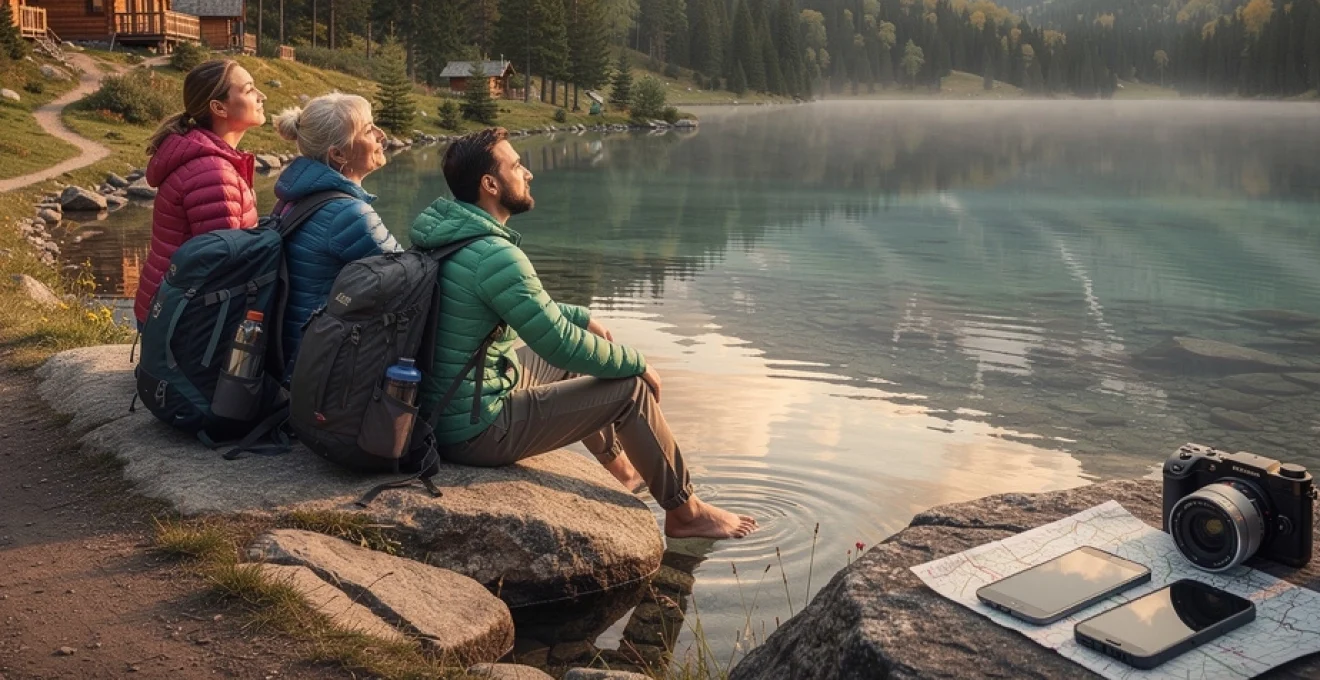
The modern traveller faces an unprecedented paradox: whilst technological advancement has made distant destinations more accessible than ever, there’s a growing yearning to disconnect from digital overwhelm and reconnect with the natural world. This shift represents more than a mere trend—it signals a fundamental transformation in how people perceive meaningful travel. Research indicates that 76% of travellers now actively seek sustainable, nature-focused experiences that offer deeper connection and purpose beyond traditional sightseeing. The growing awareness of conservation travel, wilderness immersion, and authentic cultural encounters demonstrates that proximity to nature isn’t merely an amenity—it’s becoming the cornerstone of transformative travel experiences that nourish both body and soul.
Psychological mechanisms behind Nature-Based travel preferences
The human attraction to natural environments during travel stems from deep-rooted psychological mechanisms that have evolved over millennia. These preferences aren’t arbitrary but reflect fundamental aspects of human psychology that influence well-being, cognitive function, and emotional restoration.
Biophilia theory applications in contemporary tourism psychology
E.O. Wilson’s biophilia hypothesis suggests that humans possess an innate affinity for living systems and natural environments. This evolutionary adaptation manifests powerfully in travel preferences, with wilderness tourism experiencing unprecedented growth rates of 15-20% annually. The theory explains why travellers instinctively gravitate towards destinations featuring pristine landscapes, diverse wildlife, and undisturbed ecosystems. Conservation vacations leverage this biophilic tendency by offering immersive experiences that satisfy our genetic predisposition to connect with nature whilst contributing to environmental preservation efforts.
Attention restoration theory and wilderness immersion effects
Attention Restoration Theory, developed by Kaplan and Kaplan, identifies four key components that make natural environments psychologically restorative: being away from routine stressors, fascination with natural phenomena, extent of the environment, and compatibility with personal inclinations. Wilderness immersion activates these restoration mechanisms simultaneously, creating powerful therapeutic effects that urban environments cannot replicate. Studies demonstrate that individuals engaging in multi-day nature expeditions show significant improvements in directed attention capacity, with effects persisting for weeks after returning home.
Stress reduction through natural environment exposure
The physiological stress reduction achieved through natural environment exposure follows predictable patterns that validate nature-based travel choices. Research consistently shows that exposure to natural settings triggers immediate reductions in cortisol levels, heart rate, and blood pressure. These benefits compound during extended nature stays, with participants in week-long wilderness programmes showing 23% reductions in stress hormone levels compared to baseline measurements. The forest bathing practice, originating from Japanese shinrin-yoku traditions, exemplifies how deliberate nature exposure creates measurable psychological benefits that enhance overall travel satisfaction.
Cognitive load reduction in forest bathing experiences
Forest bathing experiences demonstrate remarkable efficacy in reducing cognitive load—the amount of mental effort required for information processing. Natural environments provide what researchers term “soft fascination,” allowing the prefrontal cortex to rest whilst maintaining gentle engagement through sensory stimulation. This cognitive restoration occurs within minutes of forest immersion, with participants showing improved performance on attention-demanding tasks after just 20 minutes of nature exposure. The practice involves mindful observation of natural elements: breathing patterns of trees, soil textures, bird songs, and changing light patterns.
Physiological health transformations through wilderness tourism
Beyond psychological benefits, extended exposure to natural environments during travel creates measurable physiological improvements that contribute to overall health and vitality. These transformations occur through multiple biological pathways that modern medicine increasingly recognises as essential for optimal human functioning.
Circadian rhythm regulation in remote natural settings
Remote natural settings provide optimal conditions for circadian rhythm regulation through natural light exposure patterns unavailable in urban environments. The absence of artificial lighting allows melatonin production to follow natural cycles, whilst morning sunlight exposure helps reset internal body clocks disrupted by modern lifestyles. Participants in wilderness camping expeditions typically experience improved sleep quality within 48 hours, with sleep efficiency rates increasing from 75% to 91% over a week-long period. This chronotherapy effect extends beyond the travel period, often improving sleep patterns for months after returning home.
Cortisol level modulation during multi-day hiking expeditions
Multi-day hiking expeditions act as a natural reset button for the stress response system. Away from constant notifications, traffic noise, and work-related triggers, the hypothalamic–pituitary–adrenal (HPA) axis has an opportunity to stabilise. Field studies on trekking groups show average cortisol reductions of 15–25% after four to seven days in mountain or forest environments, with participants reporting fewer stress-related symptoms such as headaches, muscle tension, and insomnia. These changes are not just subjective impressions; saliva and blood samples reveal measurable hormonal shifts that align with the calmer emotional state travellers describe.
What’s particularly compelling is that nature-based travel combines physical exertion with scenic immersion, creating a feedback loop that accelerates recovery from chronic stress. As you move through varied terrain, your body releases endorphins while your visual and auditory systems absorb non-threatening, rhythmic stimuli like wind, water, and birdsong. This combination reduces the vigilance that city life demands, helping cortisol levels stabilise at a lower baseline. Many travellers notice that minor irritations that once felt overwhelming at home now barely register, a sign that their nervous system has recalibrated to a healthier range.
Immune system enhancement through phytoncide exposure
Forested environments provide more than aesthetic pleasure; they also release bioactive compounds that directly influence immune function. Trees and plants emit phytoncides—antimicrobial organic compounds that help protect them from pests and pathogens. When we inhale these compounds during forest walks or wilderness stays, they interact with our own physiology, particularly with natural killer (NK) cells that play a key role in immune defence. Controlled studies in Japan and South Korea have revealed that two to three days of forest bathing can increase NK cell activity by up to 50%, with elevated levels persisting for more than a week after returning home.
Wilderness tourism that emphasises slow, immersive time in wooded areas leverages this mechanism naturally. Instead of rushing from viewpoint to viewpoint, travellers spend longer periods walking, resting, and breathing under the canopy where phytoncide concentrations are higher. The result is a subtle but meaningful immune boost that supports better resistance to common infections, especially for those whose immune systems may be compromised by chronic stress or urban pollution. In this way, a nature-focused holiday becomes both a restorative break and a proactive investment in long-term health.
Cardiovascular benefits of high-altitude trekking adventures
High-altitude trekking presents a unique blend of challenge and adaptation that can deliver significant cardiovascular benefits when approached responsibly. At moderate elevations, reduced oxygen levels stimulate the body to produce more red blood cells, improving oxygen transport and efficiency. Over several days, travellers often experience lower resting heart rates and improved heart rate variability, both markers associated with better cardiovascular resilience. When combined with sustained, low-to-moderate intensity movement—typical of multi-hour trekking days—these adaptations support improved circulatory health long after the journey ends.
Of course, high-altitude environments are not without risk, and careful acclimatisation is essential to avoid altitude sickness. However, for healthy individuals who prepare adequately, treks in regions such as the Andes, Himalayas, or high Atlas Mountains can serve as powerful catalysts for cardiovascular conditioning. The key is to view the experience not as an extreme feat, but as a structured progression: gradual altitude gain, steady pacing, and regular hydration. In practice, this means that travellers return home not only with memories of panoramic ridgelines and glacial valleys, but with a measurable improvement in stamina, lung capacity, and heart health.
Authentic cultural immersion in remote natural communities
Staying close to nature often means staying close to the communities who have lived in balance with their environments for generations. Remote villages, Indigenous territories, and small-scale rural settlements frequently sit at the edges of national parks, forests, and marine reserves. Here, the travel experience shifts from simply observing landscapes to understanding how people, place, and culture are interwoven. Rather than consuming nature as a backdrop, you begin to see how local livelihoods, rituals, and stories are shaped by rainfall patterns, wildlife migrations, and seasonal cycles.
Authentic cultural immersion in these settings depends on respect and reciprocity. Community-led tourism initiatives increasingly invite guests to participate in daily activities—such as harvesting traditional crops, joining guided walks with local naturalists, or attending ceremonies that honour rivers and forests—under clear ethical guidelines. These experiences provide a richer understanding of sustainability than any brochure could, showing how knowledge of medicinal plants, water management, or wildlife tracking translates into real-world conservation. In turn, traveller spending on homestays, handicrafts, and guided excursions helps support education, healthcare, and habitat protection, creating a virtuous circle between nature-based travel and community wellbeing.
Sustainable tourism practices in pristine natural environments
As interest in wilderness tourism grows, so does the responsibility to protect the very ecosystems that draw travellers in. Sustainable tourism in pristine environments is not simply about reducing harm; increasingly, it aims to become nature positive—helping restore and regenerate habitats. This shift requires more than good intentions. It calls for clear frameworks, such as science-based conservation targets, credible sustainability certifications, and meaningful partnerships with local and Indigenous organisations. For the conscious traveller, choosing nature travel operators who can demonstrate these commitments is one of the most impactful decisions you can make.
In practice, sustainable nature travel weaves together several strategies: strict visitor management, low-impact infrastructure, emissions reduction, and direct support for conservation projects. When implemented well, these measures ensure that each trip leaves a lighter footprint while contributing to long-term ecological resilience. For hoteliers, tour operators, and destination managers, aligning with robust standards—whether national park regulations, international guidelines, or community-generated protocols—turns sustainability from a marketing slogan into a measurable operational reality.
Leave no trace principles implementation in patagonia national parks
Few regions illustrate the importance of rigorous outdoor ethics as clearly as Patagonia, where fragile steppe, glaciers, and alpine meadows are increasingly popular with trekkers. The Leave No Trace principles form the backbone of responsible behaviour here, guiding everything from how you pitch a tent to how you dispose of waste. Park authorities and local outfitters in areas such as Torres del Paine and Los Glaciares have integrated these principles into mandatory briefings, signage, and guide training, ensuring that visitors understand why a single misplaced footprint can accelerate erosion or damage sensitive plant life.
For travellers, applying Leave No Trace in Patagonia means planning ahead, staying on marked trails, packing out all rubbish (including organic waste), and minimising campfire use or avoiding it altogether. Many guided nature tours now incorporate micro-actions such as citizen science observations or trail maintenance into their itineraries, transforming passive hiking into active stewardship. The result is a model of nature tourism where every visitor becomes a caretaker, helping ensure that panoramic vistas, turquoise lakes, and wildlife corridors remain intact for future generations.
Carbon footprint minimisation through overland travel routes
One of the most effective ways to reduce the environmental impact of nature-based travel is to rethink how we move between destinations. Overland routes—by train, coach, shared transfer, or even bicycle—can dramatically lower emissions compared to multiple short-haul flights. In regions with robust rail networks, such as parts of Europe or East Asia, choosing a scenic train journey through mountains or along coastlines can become a highlight in itself, blending slow travel with low-carbon transport. Even in areas without rail, consolidated transfers and car-sharing schemes help reduce the number of vehicles on fragile roads that cut through forests or wetlands.
For travellers planning wilderness holidays, asking tour operators for rail-first or overland itineraries is a practical starting point. Many specialist nature travel companies now design routes that link national parks and protected areas via efficient ground transport, turning what used to be “transit days” into opportunities to observe changing landscapes and local life. This approach not only minimises your carbon footprint in nature; it also deepens your sense of continuity between ecosystems, making it easier to see how river valleys, highlands, and coastlines connect as part of a larger living system.
Indigenous community partnership models in amazon rainforest tourism
The Amazon rainforest showcases both the potential and the pitfalls of nature-based tourism. On one hand, unregulated lodges and poorly managed tours can contribute to deforestation, wildlife disturbance, and cultural exploitation. On the other, community-owned and co-managed tourism models demonstrate how travel can fund conservation while strengthening Indigenous sovereignty. In regions of Brazil, Peru, and Ecuador, Indigenous nations now operate eco-lodges, wildlife monitoring projects, and guided river expeditions that centre their knowledge systems and governance structures.
These partnership models typically prioritise small-group, low-impact stays that align with local cultural rhythms and ecological limits. Visitors might join guided walks that highlight medicinal plants, learn about traditional agroforestry practices, or participate in storytelling sessions that explain how specific animals or river bends feature in origin stories. Revenue from these experiences supports land titling, ranger patrols, and education programmes, creating a direct link between visitor presence and forest protection. For travellers, choosing these community-led operations over externally owned resorts is one of the most tangible ways to ensure that their Amazon journey actively supports both biodiversity and cultural continuity.
Wildlife conservation through responsible safari practices in maasai mara
In savannah ecosystems such as Kenya’s Maasai Mara, wildlife safaris remain a primary draw for international visitors—and a critical source of conservation funding. However, the way safaris are conducted can either support or undermine the health of wildlife populations. Responsible operators work closely with Maasai landowners, conservancy managers, and wildlife authorities to enforce strict viewing guidelines: maintaining respectful distances, limiting vehicle numbers at sightings, and avoiding any behaviour that alters animal movements or hunting patterns. Walking safaris and night drives are carefully regulated to reduce disturbance to sensitive species.
Importantly, many camps and conservancies now operate on revenue-sharing agreements that channel a significant portion of tourism income back to local communities. This creates strong financial incentives for habitat protection and anti-poaching efforts, transforming wildlife from a vulnerable resource into a valued long-term asset. For guests, the experience of watching lions hunt or elephants migrate across open plains becomes more meaningful when framed within this conservation context. You are not just taking photographs; you are actively supporting a complex web of land stewardship, cultural resilience, and ecosystem management.
Digital detoxification through remote wilderness expeditions
Staying close to nature does more than restore mood and energy—it also offers a rare opportunity to reset our relationship with technology. Remote wilderness expeditions, where mobile coverage is weak or non-existent, create natural conditions for digital detox. Without constant prompts to check messages or social feeds, attention gradually shifts outward to weather patterns, trail conditions, and subtle changes in light and sound. Many travellers report that what initially feels like disconnection anxiety soon transforms into a sense of relief and expanded mental space.
This intentional withdrawal from screens has profound implications for how we process experiences. Instead of viewing landscapes through a camera lens or curating them for social media, we are more likely to engage with them directly and memorably. You might notice the intricate structure of lichen on a rock, the specific call of a bird, or the way mist moves across a valley at dawn. These moments, unmediated by devices, strengthen our internal archive of sensory memories and support a deeper, more embodied connection to place.
Smartphone dependency recovery in off-grid locations
Smartphone dependency is increasingly recognised as a significant contributor to stress, fractured attention, and sleep disruption. Off-grid locations—from alpine huts to backcountry cabins and remote coastal lodges—offer an ideal environment for recalibrating this relationship. When devices lose their constant utility, we are forced to rediscover analog ways of navigating and relating: reading paper maps, asking guides questions, or simply sitting with our thoughts instead of reflexively scrolling. Within a few days, many travellers notice a drop in phantom notification checks and a reduced urge to document every moment.
Structured nature retreats often support this process by setting clear expectations around limited or no connectivity, encouraging guests to switch to flight mode on arrival. Some programmes even collect phones at check-in, storing them safely and offering specific times for necessary check-ins. Far from feeling punitive, this boundary becomes a form of permission: you are allowed, perhaps for the first time in years, to be unreachable. The result is a healthier baseline when you return home, with more intentional device use and a clearer sense of when screens enhance your life—and when they diminish it.
Neuroplasticity enhancement through technology abstinence
Cutting back on digital stimuli during nature travel does more than provide short-term relief; it also supports long-term brain flexibility. Continuous task-switching between apps, emails, and notifications taxes executive function and encourages shallow engagement. In contrast, extended periods of single-tasking in natural environments—walking a trail, paddling a canoe, or watching a campfire—allow neural pathways associated with sustained attention and deep reflection to strengthen. This is neuroplasticity in action: the brain reorganising itself based on new patterns of use.
Imagine your mind as a trail network. Constant digital distraction carves many short, tangled paths that rarely lead to a clear viewpoint. Time in nature, without screens, allows fewer but more coherent trails to form, leading to better problem-solving and creativity. Research on contemplative practices, such as mindful walking in green spaces, suggests that these experiences can enhance working memory and emotional regulation. When you combine them with the novelty and mild challenge of wilderness environments, you create ideal conditions for rewiring habits that no longer serve you.
Mindfulness practice integration in backcountry camping
Backcountry camping naturally lends itself to mindfulness, as the simplest tasks require presence and attention. Pitching a tent, collecting water, or preparing a meal over a camp stove all demand a grounded awareness of your surroundings. Many guided wilderness programmes now integrate explicit mindfulness practices into these routines, inviting travellers to notice breath, body sensations, and environmental cues as they move through the day. This can be as simple as a five-minute breathing exercise at sunrise or a silent walk at dusk, listening to the shift from birdsong to insect chorus.
For those new to meditation, nature often makes the practice more accessible. It is easier to focus on the sound of a river or the feel of wind on your skin than on an abstract mental object. Over several days, this anchored awareness can soften rumination and anxiety, replacing them with a steadier, more curious engagement with the present moment. When you return to daily life, you carry with you not only memories of starlit skies and forest paths, but also practical tools for staying centred amidst noise and demand.
Social media withdrawal benefits during extended nature retreats
Social media can be both a source of connection and a driver of comparison, FOMO, and fragmented attention. Extended nature retreats that encourage or require a pause from these platforms give you space to observe their true impact on your wellbeing. Without the constant drip of curated updates, many travellers notice a reduction in self-criticism and a greater acceptance of their own pace and preferences. Instead of measuring experiences against others’ highlight reels, you begin to evaluate them based on how they feel in your body and mind.
This withdrawal also reshapes how memories form. Psychological research suggests that overly focusing on capturing and sharing an event can diminish our ability to recall it later. When you let go of the need to post in real time, you are freer to immerse yourself fully in each moment, allowing richer, more integrated memories to take root. On returning home, some people choose to reintroduce social platforms with clearer boundaries—perhaps limiting usage to set windows or unfollowing accounts that trigger comparison—turning a temporary retreat into a long-term shift in digital habits.
Adventure tourism methodologies for enhanced nature connection
Adventure tourism is often associated with adrenaline—rafting rapids, climbing cliffs, or crossing deserts—but its deepest value may lie in how it reshapes our relationship with nature. When thoughtfully designed, adventure experiences become structured methodologies for connection rather than mere thrills. They combine challenge, skill-building, and guided reflection to help travellers engage with landscapes as dynamic, living systems. Instead of conquering a mountain, you learn to read weather patterns, understand rock formations, and respect the limits of your own body.
Operators at the forefront of this approach are shifting from purely objective-based itineraries (“summit this peak”, “cross that pass”) to journeys centred on process and presence. A multi-day kayak expedition, for example, might weave in sessions on marine ecology, navigation by stars, and low-impact camping practices. A wildlife tracking trip could pair physical exertion with lessons in animal behaviour, conservation challenges, and Indigenous knowledge systems. In each case, the adventure becomes a vehicle for ecological literacy and humility, not just a backdrop for achievement.
For travellers seeking a more meaningful nature-based experience, a few practical questions can help identify these connection-oriented methodologies. Does the itinerary allow time for reflection, rest, and unstructured observation, or is it packed with constant movement? Are local guides and communities involved in shaping the narrative, or is the focus solely on external expertise? Are there clear commitments to conservation, safety, and cultural respect? When the answer to these questions is yes, adventure tourism can evolve into a powerful form of experiential education—one that redefines travel not as escape, but as an ongoing practice of learning how to live more attentively on a changing planet.