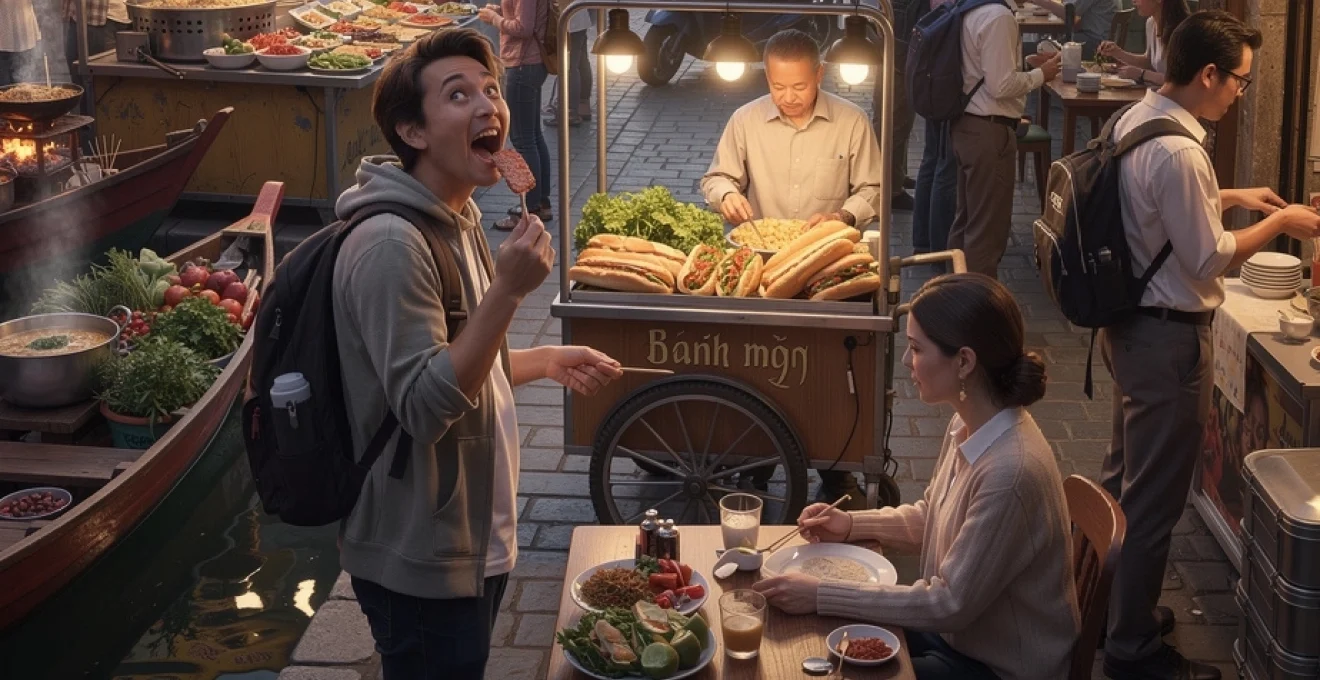
Street food represents far more than a convenient meal option for travellers seeking authentic cultural experiences. It serves as a living museum of culinary traditions, social dynamics, and economic structures that define local communities across the globe. From the bustling night markets of Bangkok to the aromatic spice-laden stalls of Marrakech, street food vendors offer an unfiltered glimpse into the soul of a destination. These humble establishments preserve centuries-old cooking techniques, showcase indigenous ingredients, and facilitate genuine connections between visitors and locals. Unlike sanitised restaurant experiences designed for tourists, street food provides an immersive encounter with authentic flavours, traditional preparation methods, and the socioeconomic fabric that sustains local communities. The growing recognition of street food culture by international organisations underscores its significance as both a cultural heritage and an economic lifeline for millions of vendors worldwide.
Culinary anthropology: how street food reflects local identity and heritage
Street food serves as a tangible manifestation of cultural identity, preserving traditional recipes and cooking techniques that might otherwise disappear in our increasingly globalised world. These culinary practices often reflect historical migrations, trade relationships, and cultural exchanges that have shaped local food traditions over centuries. The ingredients, preparation methods, and flavour profiles found in street food stalls tell stories of adaptation, resourcefulness, and cultural resilience that extend far beyond simple sustenance.
Traditional cooking methods preserved in bangkok’s floating markets
Bangkok’s floating markets exemplify how street food vendors maintain ancient culinary traditions despite rapid urbanisation. Vendors at Damnoen Saduak and Amphawa markets continue using traditional charcoal braziers and wooden steamers, techniques passed down through generations. The boat-based preparation of tom yum goong and fresh coconut ice cream demonstrates how environmental constraints have shaped cooking methods that remain unchanged for over a century. These vendors utilise minimal equipment yet produce complex flavours through time-tested techniques that commercial kitchens struggle to replicate.
The preservation of traditional cooking methods in these markets extends beyond nostalgia. Vendors maintain specific temperature controls using charcoal that gas burners cannot achieve, creating the distinctive wok hei (breath of the wok) essential to authentic Thai stir-fries. The use of banana leaves as natural packaging and coconut shells as serving vessels reflects sustainable practices rooted in local agricultural resources.
Indigenous ingredients and regional spice profiles in mexican taquerias
Mexican street food vendors showcase remarkable regional diversity through their use of indigenous ingredients and locally specific spice combinations. Taquerias in Oaxaca employ native chillies like chilhuacle negro and chile de agua that grow exclusively in the region’s unique microclimate. These ingredients create flavour profiles impossible to replicate elsewhere, making each regional taqueria a repository of localised culinary knowledge.
The integration of pre-Columbian ingredients such as huitlacoche (corn fungus) and quelites (edible wild greens) in contemporary street food demonstrates how vendors maintain connections to indigenous food systems. Street-side molcajetes grinding fresh salsas using techniques unchanged since Mesoamerican times illustrate the persistence of traditional food preparation methods in modern urban environments.
Colonial influences on vietnamese bánh mì street vendors
Vietnamese bánh mì stalls exemplify how street food reflects complex historical narratives of colonialism and cultural adaptation. The French baguette foundation combined with Vietnamese ingredients creates a unique fusion that tells the story of French colonial influence and subsequent Vietnamese adaptation. Street vendors have perfected this hybrid cuisine, using traditional Vietnamese pickling techniques for vegetables while incorporating French-inspired pâtés and mayonnaise.
The evolution of bánh mì demonstrates how street food vendors become cultural innovators, adapting foreign elements to local tastes and available ingredients. Contemporary variations incorporating Korean kimchi or Japanese tonkatsu reflect ongoing globalisation while maintaining the fundamental Vietnamese flavour profile that defines authentic bánh mì.
Generational knowledge transfer in istanbul’s grand bazaar food stalls
The food stalls within Istanbul’s Grand Bazaar represent living examples of intergenerational knowledge transfer in street food culture. Family-operated establishments have maintained traditional recipes for Ottoman-era
confections, grilled meats, and savoury pastries, with recipes preserved like family heirlooms. Many börek and köfte sellers can trace their lineage back three or four generations, each adding subtle refinements while honouring the original flavour profile. In these stalls, techniques such as hand-rolling phyllo dough or slow-braising offal for işkembe çorbası are taught not in culinary schools, but at home and on the shop floor. When you order a simple grilled sandwich or a cup of thick Turkish coffee, you are tasting the outcome of decades of practice, correction, and storytelling between parents, children, and grandchildren. For visitors, this makes Istanbul’s street food not only a delicious experience but also a rare opportunity to witness living culinary heritage being transmitted in real time.
Socioeconomic integration through hawker centre ecosystems
Beyond their gastronomic appeal, street food hubs function as complex socioeconomic ecosystems that knit together diverse segments of society. Hawker centres, markets, and informal food courts create affordable entry points for small entrepreneurs while providing accessible meals for urban residents. They offer a democratic dining environment where office workers, students, and tourists share space at the same plastic tables. By examining how these ecosystems work in different cities, we can better understand why street food is one of the best ways to experience a destination’s social fabric as well as its flavours.
Singapore’s kopitiam culture and cross-cultural food exchange
Singapore’s kopitiams (coffee shops) and hawker centres are often cited as models of organised street food culture. Developed as a way to regulate and support itinerant hawkers in the 1970s, these centres now host over 14,000 licensed food stalls across the city-state. At a single hawker centre, you can move from Hainanese chicken rice to South Indian thosai, Malay nasi lemak, and Peranakan desserts in just a few steps. This dense concentration of cuisines reflects Singapore’s multicultural identity, making hawker centres ideal places to observe cross-cultural food exchange in action.
For travellers, eating in a hawker centre offers a masterclass in local dining etiquette and everyday life. You might share a table with retirees reading the newspaper over kopi-o (black coffee), students slurping laksa between classes, and office workers grabbing a quick plate of char kway teow. The government’s decision to support and subsidise hawker culture—now recognised by UNESCO as intangible cultural heritage—has helped keep prices relatively low, ensuring that good food remains accessible to all income levels. When you navigate the bustle of a Singapore hawker centre, you’re not just choosing what to eat; you’re taking part in a carefully balanced ecosystem that sustains livelihoods and preserves culinary diversity.
Mumbai’s dabbawallahs and the working class food distribution network
In Mumbai, the famous dabbawallah system shows another side of street food and working-class nourishment. Every weekday, around 5,000 dabbawallahs deliver home-cooked meals in stacked metal tiffins from suburban kitchens to central business districts, serving an estimated 200,000 office workers. Although this network is not “street food” in the conventional sense of stalls and carts, it relies on the same public spaces, train stations, and pavements that define urban street food culture. The system’s astonishing accuracy—often cited as “Six Sigma” level by management experts—demonstrates how informal food networks can outperform high-tech logistics in reliability and efficiency.
For visitors, spotting the colour-coded tiffin towers balanced on bicycles or carried through crowded trains offers a glimpse into how deeply food is woven into Mumbai’s social infrastructure. The dabbawallahs embody trust-based micro-entrepreneurship: many are semi-literate, yet manage complex routes through a system of symbols and hand-painted codes. Their work connects home kitchens, small catering operations, and office workers in a mutually beneficial loop. When you eat at a street stall near a suburban railway station or business district, you are often sharing space with the same workforce that keeps the city fed, underscoring how public food culture and urban productivity are intertwined.
Lima’s mercado central and indigenous-urban food transitions
In Lima, the bustling Mercado Central and surrounding street food scene reveal how indigenous foodways adapt to rapid urbanisation. Vendors sell dishes like anticuchos (grilled beef heart), papa a la huancaína, and mazamorra morada, all rooted in Andean traditions but adjusted to the tastes and time constraints of city life. Many stallholders are internal migrants from the highlands who bring their culinary knowledge and agricultural connections with them. Their menus often reflect a negotiation between heritage and practicality—using cheaper cuts of meat, creatively incorporating offal, and relying on seasonal supplies from regional markets.
Eating at Lima’s markets gives travellers a front-row seat to this indigenous-urban transition. You might see quinoa and amaranth—once considered “poor people’s food”—reimagined as trendy health bowls for younger urbanites, while older customers stick to traditional stews and soups. The market environment also creates employment opportunities not just for cooks, but for porters, cleaners, and small-scale suppliers. When you choose a bowl of ceviche from a market counter rather than a high-end restaurant, you’re directly supporting this network of micro-businesses while tasting flavours that remain closer to their rural origins.
Marrakech’s jemaa el-fnaa square evening food markets
In Marrakech, the nightly transformation of Jemaa el-Fnaa square into a sprawling open-air food court is both a sensory spectacle and a vital economic engine. As evening falls, dozens of temporary stalls appear, each with its own number, signature dish, and team of cooks and touts. Here, travellers can sample everything from smoky grilled lamb and harira soup to snail broth and freshly squeezed orange juice. The atmosphere—steam rising under bare light bulbs, the call of vendors, the sizzle of meat on charcoal—creates an unforgettable experience that no restaurant can replicate.
Yet behind the theatrics lies a complex system of permits, informal hierarchies, and family businesses that have operated for decades. Many stalls are inherited from parents or uncles, with younger generations modernising menus, signage, and hygiene practices to meet the expectations of international visitors. When you sit shoulder to shoulder with locals at a communal bench, you are participating in a nightly ritual that blends tourism income with neighbourhood sustenance. You also see how street food markets can provide flexible, low-barrier employment for young people, recent migrants, and extended family members, helping to integrate them into the urban economy.
Authentic flavour profiles versus restaurant adaptations
One of the key reasons street food is such a powerful way to experience a destination is the difference between “street” flavour and “restaurant” flavour. In many cities, restaurant menus—especially in tourist districts—are subtly adjusted to match international expectations: less chilli, more sugar, fewer offal cuts, and safer, more familiar textures. Street vendors, however, typically cook first and foremost for locals, preserving traditional seasoning levels and ingredient combinations. Have you ever noticed how a dish you loved on the street tastes oddly muted when you order it back home? That gap is often the direct result of adaptation.
Authentic street food flavour profiles are shaped by repetition, immediate feedback, and close proximity to raw ingredients. A taco al pastor stall in Mexico City will adjust its marinade based on the sweetness of the pineapple and the fat content of the pork that week, just as a pho vendor in Hanoi instinctively modifies the broth according to the season and daily humidity. Restaurant kitchens, by contrast, tend to prioritise consistency, even if that means using pre-prepared sauces, frozen components, or standardised spice mixes. For travellers seeking to understand what a cuisine truly tastes like at its source, street food stalls often offer the most direct and unfiltered experience.
Of course, this does not mean that restaurants lack authenticity or value. Many fine-dining chefs now draw explicitly on street food traditions, elevating humble dishes through refined techniques and premium ingredients. Yet eating only in such spaces is like visiting a museum without ever stepping into the city streets outside. To grasp the full spectrum of a destination’s culinary identity, it helps to balance restaurant meals with time spent in markets, food courts, and roadside stands, where the flavours have been shaped as much by necessity and habit as by culinary ambition.
Hyperlocal food sourcing and seasonal ingredient availability
Another reason street food offers an unparalleled window into a place is its reliance on hyperlocal sourcing and seasonal cycles. Unlike large restaurant chains that can tap into global supply networks, many street vendors buy their produce, meat, and spices from nearby markets on a daily basis. This proximity means that what you eat on the street reflects not just the local cuisine, but also the current season, recent weather patterns, and short-term economic shifts. In this sense, a street food menu is like a daily snapshot of a destination’s food system.
Consider a night market in Chiang Mai or a pasar malam in Malaysia. When mangoes are in peak season, you’ll see an explosion of mango sticky rice, smoothies, and desserts, often at lower prices and with better flavour than at any other time of year. During monsoon or lean fishing periods, grilled river fish might replace ocean-caught species, and vendors adjust recipes to make the most of what is available. This flexible sourcing not only keeps costs down but also reduces food miles, making many street food options surprisingly low-impact from an environmental perspective.
For travellers interested in sustainable tourism, paying attention to what appears and disappears from street food stalls over the course of a trip can be eye-opening. You might notice how certain herbs are used to compensate for rising meat prices, or how offcuts and “secondary” ingredients are turned into beloved snacks and soups. Street food culture has long practised nose-to-tail and root-to-stem cooking, not as a trend but as a necessity. By choosing stalls that clearly use fresh, local produce—displayed in baskets by the cooking station, for example—you support these hyperlocal supply chains and gain a deeper understanding of how environment, economy, and flavour intersect.
Street food tourism’s impact on destination marketing strategies
As more travellers prioritise food-focused experiences, street food has moved from the margins of tourism marketing to centre stage. City tourism boards now feature night markets, hawker centres, and iconic street snacks in their official campaigns, recognising that a compelling food narrative can be as powerful as images of beaches or monuments. In 2024, the UN World Tourism Organization reported that over 60% of tourists participated in food-related activities during their trips, with street food tours and market visits among the fastest-growing segments. This shift has direct implications for how destinations position themselves, allocate resources, and manage the balance between preserving authenticity and accommodating visitor demand.
Food photography and social media amplification in tokyo’s tsukiji district
Tokyo’s Tsukiji district, historically known for its wholesale fish market, offers a clear example of how social media has transformed street food into a marketing asset. Even after the inner wholesale market relocated to Toyosu, the Tsukiji Outer Market remains packed with small stalls selling grilled seafood skewers, tamago omelettes, and onigiri. Instagram, TikTok, and travel vlogs now act as global megaphones, broadcasting images of overflowing uni bowls and perfectly scorched tuna to millions of potential visitors. For many travellers, a “must-try” street snack in Tsukiji is as iconic as visiting the nearby temples or shopping districts.
This visual amplification has both benefits and drawbacks. On the positive side, viral food photography drives foot traffic to small vendors, enabling them to command higher prices for premium ingredients and reinvest in their businesses. It also encourages destinations to protect and highlight traditional food areas, understanding that they function as powerful brand assets. On the other hand, viral fame can lead to overcrowding, rising rents, and a shift towards photogenic dishes designed more for the camera than for local palates. As responsible travellers, we can mitigate these effects by seeking out lesser-known stalls, visiting at off-peak times, and remembering that the best street food experiences are about genuine connection, not just the perfect shot.
Culinary tourism revenue streams in barcelona’s la boquería market
Barcelona’s La Boquería market illustrates how a historically local food hub can evolve into a major culinary tourism attraction. Once primarily a place where residents bought meat, fish, and vegetables, it now welcomes millions of visitors each year, many drawn by colourful displays and ready-to-eat tapas stalls. Guided food tours, cooking classes, and tasting sessions have sprung up around the market, creating new revenue streams for vendors and entrepreneurs alike. For the city’s tourism strategy, La Boquería has become a flagship site that encapsulates Catalan gastronomy in a compact, walkable space.
However, this popularity raises important questions: when does a market stop serving locals and start catering mainly to visitors? Some long-time stallholders have reported shifting from raw ingredients to more tourist-friendly products, while others struggle with rising rental costs. For travellers, understanding this tension can help us make more informed choices. Buying a simple plate of pimientos de padrón or a cone of jamón from a family-run stall, for example, contributes directly to market livelihoods, whereas purchasing only packaged souvenirs from chains may not. By approaching La Boquería and similar markets as living workplaces rather than just attractions, we better respect the balance that keeps them vibrant.
UNESCO gastronomy cities programme and street food recognition
The UNESCO Creative Cities of Gastronomy programme has further cemented the importance of local food cultures—including street food—in destination branding. Cities such as Chengdu, Phuket, and Östersund have been recognised for their culinary heritage, sustainable food systems, and innovation. In many of these cities, street vendors and market stalls form the backbone of the gastronomic identity that UNESCO celebrates. Recognition often brings increased funding for preservation, training, and infrastructure improvements, benefiting small-scale food entrepreneurs as well as high-profile restaurants.
For travellers, visiting a UNESCO-designated gastronomy city offers an implicit promise: that everyday places like food courts, night markets, and snack stalls will provide as much insight into local identity as formal cultural sites. You might learn more about Chengdu’s love affair with Sichuan peppercorns in a crowded noodle shop than in any museum exhibit. At the same time, UNESCO status can accelerate tourism flows, so it becomes even more important for cities to support vendors with clear regulations, hygiene training, and fair rental policies. When we choose to eat at these small establishments, we validate the idea that heritage lives as much in a bowl of noodles as in a historic building.
Dark tourism and street food recovery in post-conflict sarajevo
In post-conflict destinations like Sarajevo, street food can play a subtle but meaningful role in recovery and reconciliation. The city, once synonymous with siege and hardship, is now increasingly visited for its rich history, architecture, and emerging food scene. Stalls and modest eateries in the old bazaar area, Baščaršija, serve ćevapi, burek, and traditional Bosnian coffee to a mix of locals and tourists. For visitors drawn by “dark tourism” narratives—war museums, sniper alley tours, and memorials—sharing a simple meal in a lively square can help balance sombre reflections with experiences of everyday life continuing.
Street food vendors in such contexts often operate on thin margins, yet they contribute to social cohesion by creating neutral spaces where different communities, generations, and foreigners mingle. The act of eating side by side becomes a quiet counterpoint to the divisions of the past. From a marketing perspective, Sarajevo’s tourism board increasingly highlights its café and snack culture as part of a broader narrative of resilience and creativity. When you choose to eat somun bread hot from a street oven, you are supporting not only an individual baker but also a city striving to redefine itself beyond its most traumatic chapters.
Health perception barriers and food safety protocols in developing markets
Despite the many advantages of street food, concerns about hygiene and food safety often deter travellers from trying it. These fears are understandable—nobody wants to lose precious travel days to food poisoning—but they are sometimes based more on perception than reality. In many developing markets, street food vendors have strong economic incentives to keep customers healthy and returning; a single well-publicised incident can damage a stall’s reputation overnight. Moreover, the open nature of street kitchens allows you to observe food handling practices directly, something you cannot do in a closed restaurant kitchen.
That said, it is wise to take sensible precautions. Look for stalls that are busy with local customers, as high turnover reduces the time food spends in the “danger zone” where bacteria multiply. Observe whether raw and cooked items are kept separate, whether the vendor uses clean utensils, and if hot dishes are served piping hot. In destinations where tap water may be unsafe, favour foods that are boiled, steamed, or fried to order, and be cautious with ice or raw garnishes if you are unsure of their source. Carrying basic travel medicine—oral rehydration salts, a doctor-prescribed antibiotic for traveller’s diarrhoea, and anti-nausea tablets—can provide peace of mind.
On the regulatory side, many cities have introduced training programmes and certification schemes to improve street food safety without destroying the informal sector. Bangkok, for instance, runs periodic hygiene inspections and offers workshops for vendors, while cities like Bogotá and Cape Town have piloted microcredit schemes that help stallholders invest in refrigeration and handwashing facilities. As travellers, we can encourage these efforts by choosing vendors who display hygiene certificates or who visibly follow good practices, such as wearing gloves when handling ready-to-eat foods.
Ultimately, navigating street food safely is less about avoiding all risk and more about managing it wisely. Think of it like crossing a busy intersection in a foreign city: at first it seems chaotic, but once you observe the patterns and follow local cues, it becomes much less intimidating. By combining basic food safety awareness with curiosity and respect for local expertise, you can unlock some of the most rewarding culinary experiences of your travels—one skewer, noodle bowl, or stuffed flatbread at a time.