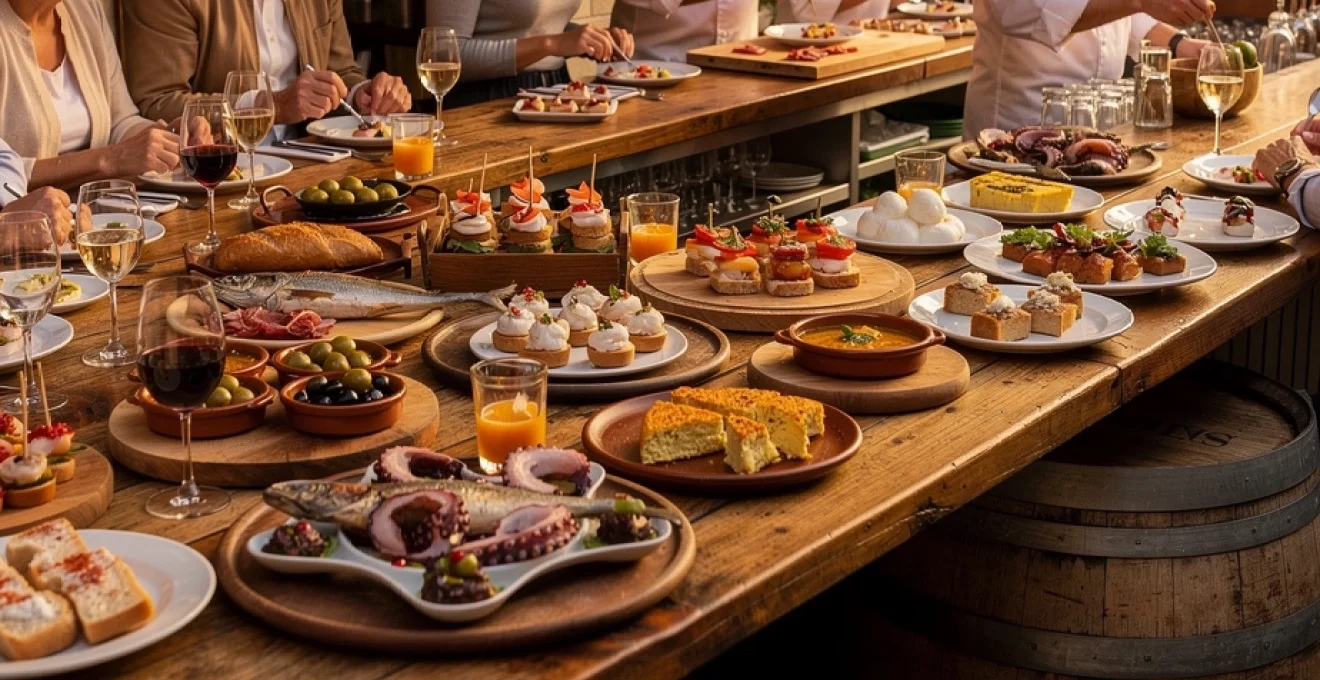
# Why tapas culture makes dining in Spain a unique experience
Spanish dining culture represents one of Europe’s most distinctive culinary traditions, where food transcends mere sustenance to become a social institution woven into the fabric of daily life. The tapas phenomenon exemplifies this perfectly—small plates that encourage sharing, conversation, and prolonged social interaction in ways rarely seen elsewhere in Western dining. Unlike the structured three-course meals prevalent across much of Europe, Spanish tapas culture prioritises flexibility, variety, and communal enjoyment. This approach transforms ordinary eating into an event that can stretch across hours, neighbourhoods, and countless conversations. Understanding what makes tapas culture genuinely unique requires examining not just the food itself, but the temporal rhythms, social rituals, regional variations, and underlying philosophy that distinguish Spanish dining from conventional restaurant experiences.
The historical evolution of tapas: from andalusian taverns to modern spanish gastronomy
The genesis of tapas remains pleasantly ambiguous, with multiple origin stories circulating through Spanish folklore and culinary history. The most widely accepted etymology traces tapa to the verb tapar, meaning “to cover,” suggesting these morsels originally served as protective lids placed atop wine glasses in medieval taverns. Whether shielding beverages from dust, flies, or the Andalusian wind, these edible covers evolved from practical necessity into gastronomic tradition. Historical records suggest that King Alfonso X of Castile may have institutionalised the practice during the 13th century, prescribing small portions of food alongside wine to counteract alcohol’s effects during his recovery from illness. This royal endorsement, whether factual or legendary, elevated tapas from tavern practicality to cultural legitimacy.
During Spain’s medieval period, roadside inns and taverns served travellers simple accompaniments—sliced bread, cured ham, cheese, olives—that required minimal preparation yet provided sustenance between longer journeys. These modest offerings reflected Spain’s agrarian economy and preservation techniques developed over centuries of Moorish influence. The ingredients themselves told stories of trade routes, climate adaptation, and regional agriculture: jamón ibérico from acorn-fed pigs in Extremadura, Manchego cheese from La Mancha’s sheep pastures, and olives cultivated since Roman occupation. As Spain’s culinary landscape diversified through exploration and colonial expansion, tapas menus absorbed New World ingredients like tomatoes, peppers, and potatoes, transforming simple bar snacks into increasingly elaborate small plates.
The twentieth century witnessed tapas transitioning from working-class sustenance to sophisticated gastronomy. Post-Franco Spain experienced economic modernisation and tourism growth that elevated traditional foods into cultural ambassadors. Contemporary Spanish chefs recognised tapas’ inherent versatility—the format’s small scale encouraged experimentation whilst maintaining accessibility. This evolution accelerated during the 1990s and 2000s as Spain’s culinary reputation surged internationally, with tapas bars proliferating across European capitals and beyond. Today’s tapas landscape encompasses everything from centuries-old recipes served in family-run tascas to avant-garde interpretations in Michelin-starred establishments, demonstrating remarkable adaptability whilst preserving cultural authenticity.
Sobremesa and the socialisation ritual: how spanish dining temporality differs from european norms
Perhaps nothing distinguishes Spanish dining culture more dramatically than its relationship with time. The concept of sobremesa—literally “over the table”—describes the extended post-meal period when diners remain seated, conversing long after plates have been cleared. This temporal elasticity permeates tapas culture, where the dining experience isn’t measured by efficient service but by the quality of social interaction. Spaniards typically eat dinner between 21:00 and 23:00, considerably later than most European countries, with tapas serving as the bridge between afternoon and evening meals. This schedule reflects Spain’s climate, work patterns, and cultural prioritisation of social connection over expedient consumption.
The temporal structure of Spanish dining also manifests in occupational rhythms and daily routines that accommodate prolonged meal periods. Traditional Spanish businesses observed extended midday closures, allowing employees time for substantial lunches followed by sobremesa before returning to work. Although globalisation has eroded this practice in larger cities, the underlying philosophy persists:
meals are opportunities for connection, and time spent at the table is viewed less as an indulgence and more as an investment in relationships. In the context of tapas culture, this means that a quick drink can effortlessly turn into an evening-long tapeo through several neighbourhood bars. Rather than booking a table for a fixed two-hour slot, you drift between venues, allowing conversations and cravings to dictate the pace. For visitors used to strict reservation times and rapid table turnover, this unhurried approach can feel almost radical—an invitation to slow down and experience Spain’s unique dining temporality from the inside.
This alternative sense of time also reshapes expectations around service. You may wait a little longer for your order when a bar is crowded, but you are rarely rushed to leave once your plate is empty. Instead of the subtle pressure of the bill arriving with your dessert, you often have to actively request la cuenta when you are ready to move on. In this way, tapas culture blurs the lines between meal and social event: the table—or the bar counter—becomes a stage where friendship, family life, and business relationships are all negotiated at a distinctly Spanish rhythm.
Regional tapas variations across spain’s autonomous communities
Although “tapas” serves as a convenient umbrella term for Spanish small-plate dining, the reality on the ground is far more diverse. Each autonomous community expresses its identity through distinctive formats, ingredients, and bar customs that together form a rich mosaic of regional tapas culture. Understanding these variations is key if you want to eat like a local rather than defaulting to the same three or four familiar dishes wherever you go. From skewered pintxos in the Basque Country to hearty raciones in Galicia, tapas culture in Spain is less a single tradition and more a constellation of related practices that mirror the country’s linguistic and cultural plurality.
For the culinary traveller, this means that dining in Spain becomes an ongoing journey of regional discovery rather than a repetition of standardised plates. You might begin with free tapas in Granada, graduate to cutting-edge pintxos in San Sebastián, then find yourself sharing seafood platters in Santiago de Compostela. Each stop teaches you new vocabulary, new etiquette, and new flavour profiles. In effect, regional tapas variations turn the entire country into a living, edible map—one you can read bite by bite.
Pintxos culture in the basque country: san sebastián’s parte vieja and bilbao’s casco viejo
In the Basque Country, tapas culture takes on a distinct identity through pintxos (or pintxos in Basque orthography). These are small, often elaborate bites typically served on slices of bread and secured with a wooden skewer—hence the name, derived from pinchar, “to pierce”. Walk into a bar in San Sebastián’s Parte Vieja or Bilbao’s Casco Viejo, and you will often find the counter overflowing with colourful creations: grilled prawns crowned with aioli, slow-cooked beef cheeks on creamy potato, or modernist reinterpretations featuring foams and gels. Rather than ordering from a menu, you visually select what appeals to you, building your own tapas tasting menu one pintxo at a time.
Billing in Basque pintxos bars follows its own logic. In more traditional venues, your toothpicks are counted at the end to calculate the total, while others rely on trust and the bartender’s sharp memory. This informal system reinforces the convivial culture of these bars, where locals and visitors stand shoulder to shoulder, balancing plates and glasses on crowded ledges. If you want to experience pintxos culture like a local, the typical strategy is to order one drink and one or two pintxos in each bar before moving on. In this way, a night out in San Sebastián or Bilbao becomes a culinary route through the old town, with every doorway opening onto a new set of flavours.
Andalusian tapas traditions: seville’s triana district and granada’s free tapas custom
Further south, Andalusia offers perhaps the most iconic expression of Spanish tapas culture. In neighbourhoods like Seville’s Triana district—historically home to sailors, potters, and flamenco artists—tapas bars line narrow streets, many of them family-run institutions passed down through generations. Here, you might snack on espinacas con garbanzos (spiced spinach with chickpeas), crispy bacalao fritters, or a simple but perfect plate of marinated olives and cured cheese. The atmosphere is often boisterous, with conversation, clinking glasses, and the occasional burst of song blending into a soundscape as characteristic as the dishes themselves.
Granada, meanwhile, is famous for preserving the custom of free tapas with each drink. Order a small beer or a glass of local wine, and a complimentary plate—perhaps a slice of tortilla, grilled pork skewer, or portion of paella—magically appears. As you order subsequent rounds, the tapas often become more substantial, turning what started as a casual stop into a full, informal dinner. This practice makes tapas culture in Andalusia particularly democratic: students, families, and tourists can all enjoy a night out without a significant financial outlay. It also adds an element of surprise, since you rarely know exactly what will arrive, encouraging you to embrace the spontaneity at the heart of Spanish dining.
Catalonian platillos and montaditos: barcelona’s el born neighbourhood offerings
In Catalonia, the tapas landscape is shaped by both Mediterranean ingredients and local culinary terminology. While you will certainly find classic Spanish tapas across Barcelona, many traditional bars and modern wine bistros focus on platillos—small, shareable plates that often resemble scaled-down versions of full restaurant dishes. Think slow-cooked beef stew, sautéed wild mushrooms with garlic, or esqueixada, a refreshing salad of shredded salt cod, onions, and peppers. These plates tend to be slightly larger and more elaborate than typical tapas, reflecting Catalonia’s strong bistro culture and emphasis on seasonal market produce.
The city is also known for montaditos, small open or closed sandwiches “mounted” on bread. In Barcelona’s El Born neighbourhood, you can easily spend an evening grazing on montaditos topped with grilled vegetables, anchovies, or local cured meats while sipping Catalan vermut on tap. Compared to the free-form chaos of some Andalusian bars, many Catalan establishments lean towards a more curated, design-conscious aesthetic, often pairing their small plates with extensive wine lists. Yet the underlying principle remains the same: shared plates, unhurried conversation, and a fluid movement between bars that makes dining in Spain feel more like a stroll than a scheduled event.
Galician raciones and pulpo a la gallega: santiago de compostela’s market-to-table approach
In Galicia, on Spain’s Atlantic northwest coast, the small-plates tradition revolves around the concept of raciones, larger dishes designed explicitly for sharing. The region’s abundant seafood and lush pastures mean that tapas culture here leans heavily on freshness and simplicity rather than complex preparation. In Santiago de Compostela, many of the best experiences unfold a stone’s throw from the Mercado de Abastos, where vendors sell octopus, shellfish, and seasonal vegetables that often head straight to surrounding bars and tascas. This market-to-table model gives Galician tapas an immediacy that is hard to replicate elsewhere.
The emblematic dish of the region, pulpo a la gallega (or pulpo a feira), encapsulates this ethos. Tender octopus is boiled, sliced onto a wooden board, sprinkled with coarse salt and smoked paprika, and drizzled with olive oil, then served as a ración for the table to share. Accompanied by crusty bread and a glass of local Albariño wine, it turns a simple bar stop into a memorable meal. Here, as in much of northern Spain, you are less likely to receive free tapas with drinks, but the generous portion sizes of raciones make communal dining both satisfying and cost-effective. For travellers interested in sustainable, locally anchored food culture, Galicia’s tapas scene offers a compelling model of how traditional techniques and modern hospitality can coexist.
The convivial dining format: shared plate consumption versus individual course structures
At the heart of tapas culture lies a distinctive dining format that challenges the typical Western progression from starter to main course to dessert. Instead of assigning each person a single, plated meal, Spanish tapas encourage you to treat the table as a communal canvas. A variety of dishes arrive in no fixed order, to be placed in the centre and sampled by everyone. This way of eating changes not only what you taste, but also how you interact: rather than each diner retreating into their own plate, the group remains engaged in a shared culinary conversation. You negotiate preferences, suggest favourites, and react collectively to new flavours.
From a practical standpoint, this shared plate structure also increases flexibility. Dietary restrictions can be accommodated by steering the selection towards seafood, vegetables, or meat-based tapas without isolating anyone at the table. Portions can be scaled up or down depending on hunger, and there is no obligation to commit to a single heavy main course. For visitors new to Spanish food, this format becomes a low-risk way to experiment—trying a bite of boquerones or morcilla without having to finish an entire dish. In this sense, tapas culture functions like a culinary tasting flight, making dining in Spain a uniquely exploratory experience.
El tapeo ritual: the traditional bar-hopping route through spanish neighbourhoods
The social choreography of tapas reaches its fullest expression in the ritual of ir de tapas or ir de tapeo—going out specifically to move between bars, having a drink and a small plate in each. Rather than spending the entire evening in a single restaurant, groups chart informal routes through their neighbourhood, choosing stops based on mood, weather, or a craving for a particular house speciality. In many Spanish cities, streets known for tapas culture—such as Calle Navas in Granada or Cava Baja in Madrid—become linear banquets, where you can step from one bar to the next in a matter of metres.
This mobility transforms the urban landscape into an extension of the dining room. Sidewalks, plazas, and corner bar counters all become stages for social encounter. You might meet colleagues in one bar, run into neighbours in the next, and end up joining forces for the rest of the evening. For travellers, joining a local tapeo is one of the most effective ways to understand how Spanish towns actually function after dark. Instead of treating dinner as an isolated event, you experience it as part of a wider flow of people, stories, and flavours that gives each city its personality.
Counter culture and standing service: the barra experience in traditional tascas
Another defining feature of tapas culture is the central role of the bar counter, or barra. In many traditional tascas—unpretentious neighbourhood bars—the action happens standing up, elbow-to-elbow with other patrons. The counter becomes a multi-purpose surface for ordering, eating, paying, and chatting with both staff and strangers. This “counter culture” is quite different from the seated, table-centric model that dominates in much of Europe and North America. It lowers the threshold for social interaction: a comment about a recommended dish or a query about a local wine can easily evolve into a longer conversation.
From a service perspective, the barra allows staff to maintain a continuous, almost theatrical presence. Orders are shouted to the kitchen, plates slide across the polished wood, and regulars are greeted by name. While it may feel chaotic at first, there is usually an underlying order: you signal to the bartender, state your drink and tapa, and trust that your presence has been mentally logged. For visitors, embracing the standing-bar experience is essential to understanding why dining in Spain feels so alive. It blurs the boundary between guest and spectator—you are part of the scene, not merely observing it from a distance.
Communal ordering patterns: group negotiation and collective taste exploration
Because tapas are designed for sharing, they require a kind of informal group negotiation that is itself a social ritual. Who suggests the first order? How do you balance the tastes of a friend who loves offal with another who prefers vegetables and seafood? These micro-decisions, made over menus or blackboards scrawled with daily specials, encourage communication and compromise. In many Spanish groups, there is often an unofficial “designated orderer” who knows the bar’s strengths and takes responsibility for coordinating requests, then later manages the bill. This role, far from being purely logistical, subtly reinforces social bonds and trust within the group.
For newcomers, participating in this collaborative ordering process can feel a bit like joining a small committee, but one with delicious outcomes. It pushes you to articulate your preferences, listen to others, and remain open to unfamiliar dishes. In effect, tapas transform the meal into a live tasting workshop, where everyone at the table becomes both curator and critic. This shared exploration is one of the reasons why tapas culture leaves such a lasting impression on visitors: you are not just consuming Spanish food, you are collectively constructing a unique, unrepeatable menu each time you sit—or stand—down to eat.
Tapas as culinary innovation laboratories: michelin-starred interpretations and avant-garde techniques
While tapas have deep roots in rustic tavern fare, they also occupy the cutting edge of contemporary Spanish gastronomy. The small-plate format lends itself naturally to experimentation: chefs can test new ideas in miniature, observe how diners respond, and refine recipes without the financial or logistical constraints of full-scale main courses. Over the past three decades, this has turned many tapas bars into de facto culinary laboratories, where traditional recipes are deconstructed, reassembled, or fused with global influences. As Spain’s fine-dining scene has risen in international rankings—at one point boasting more than ten restaurants in the World’s 50 Best list—its innovations have often filtered down into more casual tapas venues.
In cities like Barcelona, Madrid, and San Sebastián, you now find a spectrum ranging from no-frills bars serving classic ensaladilla rusa to sleek wine bars offering foie-gras-filled pintxos and liquid-centred croquettes. This coexistence of old and new means that a single evening of tapas can feel like moving between historical eras and culinary philosophies. For diners, it offers the rare chance to sample avant-garde techniques at an accessible price point, turning dining in Spain into both an education and an adventure.
Molecular gastronomy applications: ferran adrià’s influence on contemporary tapas bars
No discussion of innovation in Spanish tapas culture is complete without mentioning Ferran Adrià and his former restaurant El Bulli, which closed as a restaurant in 2011 but continues as a foundation and research centre. Adrià popularised the term “molecular gastronomy” in the public imagination, though he preferred “deconstructivist” or “techno-emotional” cuisine. Many of the techniques he helped to refine—spherification, foams, and textural transformations—have since been adapted for the tapas context. Instead of a single, elaborate tasting menu, you might encounter one or two “wow factor” bites embedded within a broader selection of more familiar dishes.
Across Spain, numerous chefs who trained in high-end kitchens now apply this experimental mindset to casual formats. You might taste an “olive” that bursts in the mouth as a liquid sphere, or a “Spanish omelette” reimagined as a layered shot in a glass. These playful reinterpretations invite you to question your assumptions about texture, temperature, and flavour, in much the same way that modern art asks you to reconsider what counts as a painting. For curious diners, seeking out these contemporary tapas bars becomes a way to access Spain’s most cutting-edge gastronomy without the waiting lists or price tags of a multi-hour tasting menu.
Miniaturisation of traditional dishes: technical precision in portion control
Even in more traditional contexts, the move towards smaller, tapas-style portions requires a high degree of technical skill. Miniaturising a stew, roast, or rice dish while preserving its flavour balance and textural integrity is not a trivial task. Chefs must adjust cooking times, plating techniques, and seasoning levels so that each bite-sized portion delivers a complete sensory experience. In many ways, it is akin to crafting a short story instead of a novel: there is less space for development, so every element must work harder.
This precision is particularly evident in dishes like croquetas, where a crisp exterior must give way to a creamy, intensely flavoured interior, or in bite-sized portions of cochinillo (roast suckling pig) with perfectly rendered skin. For the guest, the advantage of this miniaturisation is clear: you can sample multiple iconic Spanish dishes in a single sitting, rather than being limited to one or two heavy mains. It also aligns with contemporary preferences for variety and moderation, allowing you to indulge without overcommitting. As a result, the tapas format has become an ideal canvas for chefs who want to honour tradition while adapting to modern dining habits.
Wine and vermut pairing strategies: the maridaje concept in spanish tapas service
Another area where tapas bars function as laboratories is in the realm of drink pairings, or maridaje. Because tapas are served in small portions, they provide an opportunity to explore how different wines, beers, and vermouths interact with specific flavours. Rather than choosing a single bottle for the entire meal, you can switch drinks as you move through seafood, cured meats, and richer stews. Many contemporary bars now offer curated pairing suggestions by the glass, enabling you to experiment without significant cost or commitment. Spain’s extensive range of regional wines—from crisp Albariños and aromatic Verdejos to structured Riojas and robust Priorats—means that almost any tapa can find an ideal partner.
Vermouth, or vermut, has also experienced a notable revival, especially in cities like Madrid and Barcelona. Often served on tap, over ice with an orange slice and an olive, it pairs beautifully with salty, umami-rich tapas such as anchovies, olives, and cured cheese. For visitors, paying attention to these pairing strategies can deepen your understanding of Spanish gastronomy as a holistic system, where food and drink are designed to complement each other in dynamic, evolving combinations. It is a bit like tuning an instrument: small adjustments—switching from beer to sherry, for example—can suddenly make a familiar dish taste entirely new.
Economic accessibility and democratic dining: how tapas culture eliminates social barriers in spanish restaurants
Beyond its sensory pleasures, tapas culture in Spain plays a significant social and economic role. By offering small, individually priced portions, tapas bars lower the financial barrier to eating out, making restaurant culture accessible to a broader spectrum of society. You do not need to commit to a full three-course meal or an expensive bottle of wine to participate in the social life of the city. Instead, you can order a couple of modestly priced tapas and a drink, linger for an hour, and still feel fully included in the experience. This flexibility is particularly important in a country where youth unemployment and economic inequality have posed ongoing challenges in recent decades.
The informality of tapas venues also helps to flatten traditional hierarchies associated with dining. In the same bar, you might see students, office workers, retirees, and families all sharing the same space and ordering from the same menu. Dress codes are minimal, and reservations are often unnecessary, especially outside the busiest weekend hours. This democratic spirit extends to the structure of the bill: because dishes are shared, costs are easily split among friends, and no one is singled out for ordering something “more expensive”. In this way, tapas culture supports social cohesion by providing a neutral, affordable setting where different segments of society can meet on equal footing.
For travellers, this accessibility has two clear benefits. First, it allows you to sample high-quality local produce and cooking techniques without exhausting your budget; a study by Spain’s hospitality associations has repeatedly shown that average spend per person in tapas bars remains significantly lower than in full-service restaurants, even in major cities. Second, it makes it easier to integrate into local routines: you can spontaneously join colleagues or new acquaintances for a quick round of tapas after work without elaborate planning. When you step into a Spanish tapas bar, you are not just entering a restaurant—you are entering a social institution designed to welcome, feed, and connect people from all walks of life.