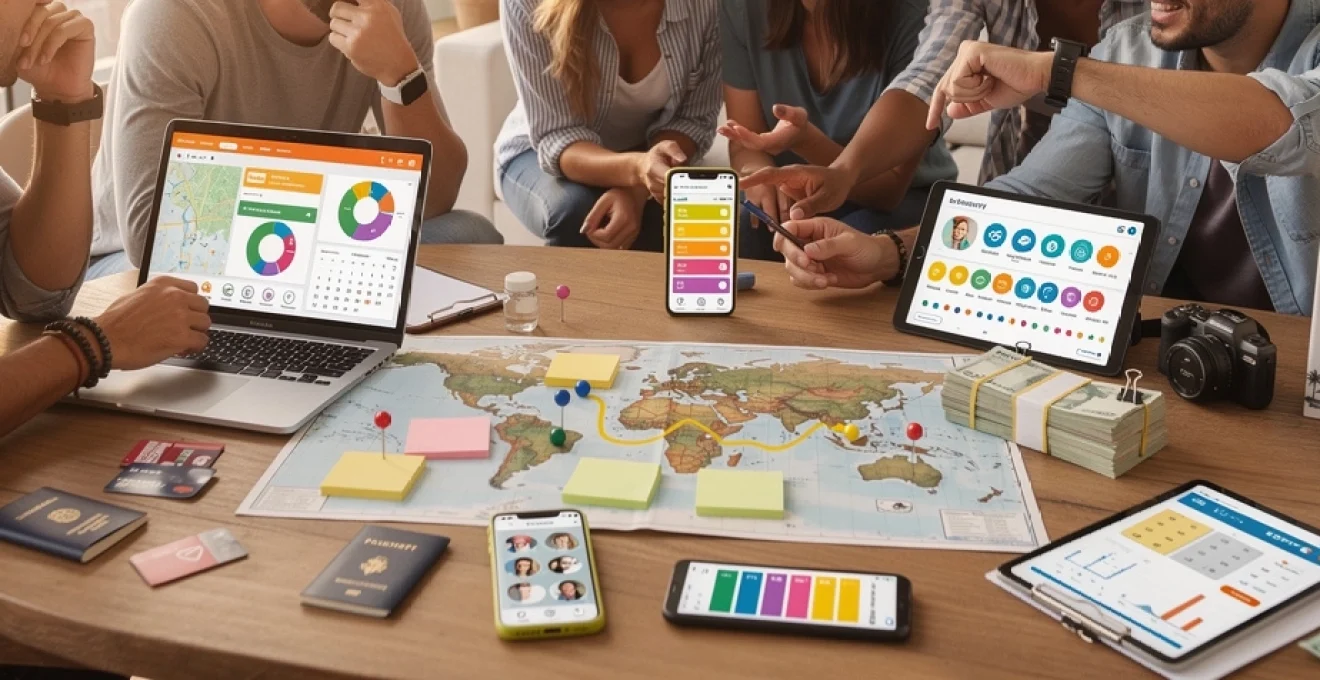
# Why traveling with friends requires good planning and communication
Traveling with friends can transform an ordinary holiday into an extraordinary collection of shared memories, inside jokes, and bonding experiences that last a lifetime. Yet, the difference between a harmonious adventure and a friendship-testing ordeal often comes down to one critical factor: preparation. Research from WYSE Travel Confederation indicates that Generation Z travelers actively motivate their peers to explore new destinations together, with nearly 80% of young travelers preferring group experiences. However, without proper planning frameworks and transparent communication protocols, even the closest friendships can face unexpected strain when navigating unfamiliar territories, managing shared expenses, and coordinating daily activities across different time zones and cultural contexts.
The psychology behind successful group travel extends far beyond simply booking flights and accommodation together. Studies published in the Journal of Leisure Sciences reveal that friendship dynamics fundamentally shift during travel, as routine-based relationships are suddenly tested in environments without familiar structures. When you remove the comfortable scaffolding of weekly dinner dates or gym classes, friendships must adapt to continuous proximity, shared decision-making, and the stress of navigating foreign environments. This adaptation requires intentional systems, clear boundaries, and collaborative frameworks established well before departure.
Pre-trip collaborative budgeting and financial transparency frameworks
Financial disagreements represent one of the most common sources of tension during group travel. When friends operate with different spending philosophies, income levels, or savings goals, even minor purchases can create uncomfortable dynamics. A comprehensive pre-trip budgeting session eliminates ambiguity and establishes shared financial expectations that protect both the trip and the friendship.
Implementing splitwise and TravelSpend for Real-Time expense tracking
Digital expense management platforms have revolutionized how travel groups handle shared costs. Splitwise, used by over 10 million travelers worldwide, allows you to log expenses in real-time, automatically calculate each person’s share, and settle balances through integrated payment systems. Unlike manual spreadsheets that require constant updates and recalculations, these applications provide instant transparency. When your friend pays for dinner in Barcelona, they simply photograph the receipt, upload it to the shared group, and the app distributes costs according to pre-established percentages.
TravelSpend offers additional functionality specifically designed for multi-destination journeys, including automatic currency conversion and category-based budget tracking. You can establish spending limits for accommodation, dining, activities, and transportation, then monitor real-time progress against those thresholds. This visibility prevents the uncomfortable scenario where one traveler discovers they’ve exceeded their budget halfway through the trip, forcing difficult conversations about curtailing activities or borrowing money from companions.
Establishing per diem allowances and shared cost categories
Creating a structured financial framework requires distinguishing between shared expenses and individual discretionary spending. Shared costs typically include accommodation, rental vehicles, group meals, and jointly attended activities. Individual expenses encompass personal purchases, solo dining, souvenirs, and optional excursions. By establishing a communal fund for shared expenses, you eliminate the constant mental calculation of “who owes what” that can overshadow the travel experience.
Many successful travel groups implement a per diem system where each member contributes a predetermined daily amount to the shared fund. This pooled resource covers predictable costs like accommodation and transportation, while individual budgets handle variable personal spending. When the communal fund runs low, everyone contributes equally to replenish it, maintaining financial equity throughout the journey.
Currency exchange rate protocols for Multi-Destination itineraries
Multi-country itineraries introduce currency exchange complexities that can distort expense tracking and create unintentional imbalances. When traveling from Thailand to Vietnam to Cambodia, you’re managing Thai baht, Vietnamese dong, and Cambodian riel simultaneously, each with fluctuating exchange rates against your home currency. Establish a protocol for handling these conversions before departure to prevent disputes over exchange rate calculations.
Modern expense tracking applications automatically convert foreign currency transactions using daily exchange rates, but manual tracking requires agreement on which rate to use: the rate when the purchase occurred, the rate when settling accounts, or an average rate across the trip period. Additionally, decide whether credit card foreign transaction fees (typically 1-3%) should be absorbed by the person making the purchase or distributed across
whether those fees are treated as part of the shared cost. Aligning on this in advance prevents awkward debates over a few extra dollars in bank charges once you are already on the road.
One practical approach is to nominate a “treasurer” responsible for holding a multicurrency card or app wallet (such as Wise or Revolut) and making most shared purchases from there. Everyone tops up their share in the home currency, and the app handles real-time exchange conversions with transparent fees. This system not only simplifies accounting, it also removes the emotional friction of one person constantly pulling out their card and feeling like they are always the one paying.
Contingency fund allocation and emergency financial protocols
Even the most carefully calculated travel budget cannot anticipate every scenario. Illness, lost luggage, transport strikes, or sudden itinerary changes can all create unplanned expenses. Creating a contingency fund—typically 10–20% of the total projected budget—gives your group a financial safety net and reduces the stress of unexpected costs.
Agree in advance on how this contingency fund will be used and replenished. Is it reserved only for genuine emergencies, such as medical treatment or last-minute accommodation when a booking falls through? Or can it also cover practical inconveniences like a missed train or replacement SIM cards? Establish a protocol for authorising use of the fund: for instance, a majority vote from the group, or unanimous agreement for expenses above a certain threshold. When everyone understands the rules, you avoid heated debates in the middle of a crisis.
It is also wise to discuss what happens if one traveler temporarily cannot cover their share of an essential expense. Will others step in with short-term loans? Will there be a written record of what is owed, perhaps within Splitwise or TravelSpend? You do not need a formal contract, but a clear verbal agreement about repayment expectations protects friendships from simmering resentment once you are back home.
Itinerary synchronisation using digital collaboration platforms
Coordinating a shared itinerary today is significantly easier than it was even a decade ago, thanks to digital collaboration tools. Yet technology only helps if your group uses it consistently and agrees on how decisions are made. Successful itinerary synchronisation blends structured planning with enough flexibility for spontaneity, ensuring that both planners and free spirits feel comfortable.
Google travel and TripIt integration for Multi-User route planning
For group trips involving multiple flights, trains, and accommodation changes, centralising all confirmations in a single shared platform is essential. Google Travel (formerly Google Trips) and TripIt both excel at automatically importing booking details from your email and creating a master timeline of your journey. Once your reservations are in place, you can invite friends to view or co-manage the itinerary, giving everyone a single source of truth.
TripIt Pro, for instance, will send real-time alerts about gate changes, delays, and cancellations. When one friend receives a notification about a delayed flight, nobody else is left in the dark at the departure lounge. Google Travel’s integration with Google Maps also helps you visualise distances between activities, reducing the risk of cramming too many events into a single day. Think of these tools as your shared “brain” for logistics, reducing the cognitive load on any one person.
To avoid confusion, decide which app will be your primary planning hub and stick with it. If half your group updates Google Docs, while the other half uses TripIt, important details will get lost. Nominate one central calendar—linked to your preferred platform—and encourage everyone to add it to their phone, with notifications enabled for major travel events like check-in times and transfers.
Consensus-building methodologies for conflicting destination preferences
What happens when half your group wants art museums and wine tasting, while the other half dreams of surf lessons and street food? This is where structured consensus-building methods can transform potential conflict into collaborative creativity. Borrowing from group decision-making research, three approaches work particularly well for planning a group trip: negotiation, voting, and rotation.
Negotiation involves openly stating your “must-dos” and “nice-to-haves.” Each traveler lists one or two non-negotiable experiences—perhaps visiting a specific temple, hiking a famous trail, or attending a local festival. The group then prioritises making those happen, filling the rest of the schedule with flexible options. This ensures that everyone feels seen and avoids the resentment that comes from leaving a dream experience on the table.
In larger groups, simple voting can be more efficient. Create a shortlist of activities or even potential destinations, then use ranked-choice voting so everyone can indicate first, second, and third preferences. This method prevents decisions being driven only by the loudest voice in the room. Another effective framework is a “rotation day” system, where each day one person becomes the “day captain” and chooses the main activity, within agreed budget and time constraints. Rotating leadership helps balance very different travel styles without endless debate.
Time zone management and activity scheduling buffer zones
When you plan a trip with friends living in different countries—or when your itinerary crosses multiple time zones—simple misunderstandings about timing can derail coordination. Agreeing on a “planning time zone” is a small but powerful step. Will all digital calendars be set to the destination time zone or to a default like UTC? Aligning this early ensures that a 7 p.m. dinner booking does not accidentally become 9 p.m. for someone viewing an un-synchronised calendar.
Beyond time zones, smart groups design their daily schedule with generous buffer zones. Over-optimistic itineraries, with back-to-back attractions and zero downtime, are one of the quickest ways to create friction. Plan at least one unscheduled block each day—perhaps a two-hour afternoon window—so people can rest, wander, or catch up on personal tasks. These buffers act like shock absorbers for your schedule, absorbing delays, missed buses, or impulsive detours without causing cascading stress.
You can also adopt simple rules, such as “no early activity before 9 a.m. on at least half the days” or “no more than two pre-booked time slots per day.” These guidelines respect different energy levels and morning routines, while still allowing you to secure key tickets and reservations. In effect, you are designing not simply an itinerary, but a sustainable rhythm for your shared time.
Real-time itinerary amendment procedures during travel
Even the best-planned itinerary will evolve on the road. A local might recommend a hidden beach, the weather might shut down a hike, or your group might unexpectedly fall in love with a small town and want to stay longer. The key is to decide in advance how real-time changes will be proposed, discussed, and confirmed so that no one feels blindsided.
One practical method is to schedule a brief “daily stand-up” each morning or evening—five to ten minutes where everyone reviews the plan for the next 24 hours. If someone wants to add or drop an activity, this is the moment to bring it up. You can quickly check availability, update any shared itinerary apps, and make sure everyone understands meeting points and times. Treat this like a mini team meeting: focused, respectful, and time-boxed.
For more significant changes, such as cancelling a city altogether or extending your stay by several days, agree on a decision threshold: perhaps unanimous agreement for big changes and majority agreement for minor tweaks. This avoids one person feeling overridden or another feeling trapped in a schedule they no longer enjoy. Remember, your travel plan is a living document, not a rigid contract; but your process for changing it should be stable and predictable.
Accommodation selection criteria and group booking strategies
Where you sleep has a profound impact on the quality of your group travel experience. The right accommodation can foster connection, provide enough personal space, and keep your budget on track. The wrong one can amplify every minor annoyance. Rather than treating lodging as an afterthought, approach it as a strategic decision that reflects your group dynamics, privacy needs, and travel goals.
Airbnb entire home configurations versus Multi-Room hotel reservations
Choosing between an entire home rental and multiple hotel rooms is not simply a question of price; it is a question of how you want to live together on the road. An Airbnb or similar vacation rental offers shared common areas, kitchens for self-catering, and often better value per person. This setup is ideal if your group enjoys cooking together, playing games at night, or debriefing the day over a late glass of wine in the living room.
However, an entire home also requires more negotiation around chores, noise levels, and shared spaces. Who takes which bedroom? Who cleans the kitchen? Do night owls and early risers have enough separation to coexist comfortably? In contrast, multi-room hotel reservations provide built-in boundaries. Each person or couple has a private sanctuary, with daily housekeeping and professional staff to handle issues. This can dramatically reduce friction, especially in groups that include light sleepers or people with very different routines.
A sensible approach is to match your accommodation style to the trip’s purpose. For a reunion where the main goal is extended time together, a shared house may be perfect. For a high-intensity sightseeing itinerary or a work-and-travel hybrid where people need quiet for calls, separate hotel rooms might be better. When comparing options, do not forget to factor in hidden costs such as resort fees, cleaning fees, and transportation distances from key attractions.
Hostel dormitory dynamics and privacy considerations
Hostels remain a popular choice for budget-conscious travelers and larger groups, offering social atmospheres and low per-night costs. Yet sharing a dormitory room with friends—and possibly strangers—requires explicit agreements about privacy and etiquette. Before booking a 10-bed dorm because it looks cheap, ask yourselves: how much are you willing to compromise on sleep quality, storage security, and personal space?
If you opt for hostel accommodation, consider booking a private dorm for your group only. This gives you the financial benefits of shared space without unknown roommates who may have very different schedules or noise levels. Establish simple rules about lights-out times, headphone use, and phone calls. Small gestures, like using red-light settings on phones at night and packing the next day’s clothes before bed, dramatically reduce irritation.
It is also worth checking whether the hostel offers mixed or single-gender dorms, secure lockers, and quiet hours. For some travelers, the lack of privacy in shared bathrooms or thin curtains between bunks can be emotionally draining over time. Think of hostel stays as high-energy environments best suited to short stints or specific segments of your trip, rather than the default for the entire journey—unless everyone in the group genuinely enjoys that style of travel.
Cancellation policy assessment and flexible booking options
Life rarely follows our itinerary with perfect precision. Illness, work commitments, or family emergencies can force last-minute changes, and rigid accommodation bookings can become an expensive liability. When traveling with friends, the ripple effects of a single cancellation can be significant, especially if you have prepaid non-refundable villas or multi-room packages.
To mitigate this risk, prioritise properties with flexible or semi-flexible cancellation policies, even if they cost slightly more upfront. Many hotels now offer free cancellation up to 24–72 hours before arrival, while some vacation rentals provide partial refunds on a sliding scale. Compare not just nightly rates, but also the financial impact of worst-case scenarios. A refundable booking that saves your group hundreds of dollars in penalties may be more “budget friendly” in practice than a cheaper non-refundable option.
It is also smart to clarify how changes in group size will affect pricing. If one friend drops out, will the remaining travelers be comfortable absorbing the increased cost per person? Make this explicit before anyone enters their card details. In some cases, booking through a travel advisor or reputable platform offers additional leverage for rebooking or negotiating credits if plans suddenly change.
Communication channel optimisation for On-Ground coordination
Once your trip begins, efficient communication becomes the backbone of smooth coordination. Missed messages, overflowing chat threads, or lack of connectivity can quickly derail meeting times and plans. Designing your communication channels with intention—before you land—saves time, prevents stress, and ensures that no one gets unintentionally left behind at a café or train station.
Whatsapp group protocols and information overload mitigation
For most groups, a dedicated WhatsApp (or similar messenger) group is the central hub for on-the-ground coordination. However, without simple rules, this channel can become chaotic, with important updates buried beneath memes, photos, and side conversations. To avoid information overload, create clear norms about what belongs in the main group chat versus private messages.
For example, you might reserve the primary group channel for logistical updates—meeting times, location pins, emergency notices—and encourage social chatter or photo sharing in a separate “media” or “banter” group. You can also ask one person to summarise key decisions in a single message after a flurry of discussion, making it easier for anyone who was offline to catch up. Think of your main chat as a noticeboard, not a never-ending stream of commentary.
Another helpful tactic is to use message reactions and short confirmations. A simple “👍” or “Seen” can reassure the organiser that everyone has received critical information, such as an updated departure time or new hotel address. This small discipline reduces the anxiety of wondering whether someone missed an important message while they were on a call or in a museum.
Offline messaging solutions including FireChat and bridgefy
Not every destination offers reliable mobile data or Wi-Fi. Mountain regions, festivals, or crowded urban events can all lead to patchy connectivity precisely when your group most needs to coordinate. Offline messaging apps such as FireChat and Bridgefy use Bluetooth and mesh networking to send messages between nearby devices without relying on traditional networks.
While these tools have limitations—shorter range, slower speeds, and security considerations—they can be invaluable for basic coordination, like confirming a meet-up point when you are separated in a market or at a concert. Before your trip, have everyone download and test your chosen offline app so they understand how it works. Do not wait until you are standing on a remote train platform with no signal.
Keep in mind that offline messaging is best viewed as a backup, not a primary channel. It complements, rather than replaces, your main communication system. Used wisely, it reduces the sense of vulnerability that can arise when connectivity drops, especially for less experienced travelers who may feel anxious being temporarily “off the grid.”
International roaming alternatives and local SIM card procurement
Reliable connectivity is no longer a luxury when traveling with friends; it is a foundational tool for navigation, translation, and safety. Yet international roaming charges can be notoriously expensive, and not all plans are created equal. Discuss connectivity strategies in advance so that each traveler understands their options and costs.
Some mobile carriers offer affordable day passes or regional packages that make roaming simple. Others are prohibitively costly, making local SIM cards or eSIMs a smarter choice. In many countries, you can purchase tourist SIM packages at airports or city kiosks, including generous data allowances and local call minutes. Decide whether everyone will obtain their own SIM or whether one or two “designated data holders” will handle navigation and hotspot sharing for the group.
Whichever route you choose, share key details in your planning documents: carrier names, likely costs, and identification requirements for purchase. Remember that not all phones are unlocked or compatible with every network. Checking this before departure avoids unpleasant surprises at the kiosk. With a clear connectivity plan, you reduce the risk of someone going offline at a critical moment due to unexpected roaming charges or data caps.
Emergency contact hierarchies and Meet-Up point designation
In an ideal world, your group will never face a serious emergency. In the real world, lost phones, minor accidents, or transport disruptions are common. Creating a simple emergency communication hierarchy—and a few pre-agreed physical meet-up points—can make the difference between brief confusion and genuine panic.
Start by sharing primary and secondary contact numbers for each traveler, including local SIM numbers, WhatsApp contacts, and an emergency contact back home. Designate one person as the primary point of contact in case of crisis, especially if they speak the local language or have the strongest administrative skills. This does not mean they shoulder all responsibility, but it creates clarity about who will coordinate with authorities or medical staff if needed.
Next, identify obvious, easy-to-find meet-up points in each city: the main square, a landmark near your accommodation, or a specific café. Agree that if digital communication fails—phones die, networks go down—everyone will make their way to the chosen point by a set time. This low-tech protocol, borrowed from mountaineering and expedition planning, is a powerful safety net in busy urban environments too.
Conflict resolution frameworks and personality compatibility assessment
Even the closest friends bring different expectations, energy levels, and communication styles to a shared trip. These differences can be enriching, offering fresh perspectives on a destination. But without tools for navigating disagreement, they can also lead to simmering tension. Building a basic conflict resolution framework before you travel is like packing a first-aid kit for your relationships.
Myers-briggs travel personality indicators and group dynamics
Personality frameworks such as the Myers-Briggs Type Indicator (MBTI) are not definitive science, but they can provide a useful vocabulary for discussing how you each prefer to travel. Is someone more introverted, needing quiet time to recharge after a busy day of sightseeing? Is another friend highly spontaneous, energised by last-minute changes and unexpected discoveries? Naming these tendencies helps you design a trip that does not inadvertently exhaust or frustrate anyone.
For example, an “INTJ” might crave structure and clear plans, while an “ENFP” might prioritise flexibility and connection with locals. Rather than labelling these as incompatible, you can agree on compromise zones: structured mornings with pre-booked attractions, followed by unplanned afternoons for wandering. When you recognise that a friend’s reluctance to add another activity is about energy management, not disinterest in your company, it becomes easier to respect their boundaries.
You do not need everyone to sit an official personality test. A simple conversation about how you each like to spend weekends, how you handle stress, and what you need to feel rested can reveal similar insights. The goal is not to box each other in, but to anticipate where friction might arise and proactively design around it.
Decision-making matrices for dining and activity selection
One of the most common flashpoints in group travel is the seemingly simple question: “Where should we eat?” When hunger, fatigue, and indecision collide, minor preferences can quickly escalate. A decision-making matrix—essentially a set of agreed rules—removes much of the emotional weight from these choices.
For dining, your group might agree on three rotating options: one night the planner chooses, the next night the foodie chooses, the third night is a democratic vote based on a shortlist. Alternatively, you can create a quick filter: must be within a 10-minute walk, within budget range X, and with at least one vegetarian option. Once an option ticks all boxes, you commit rather than endlessly scrolling reviews. This is like using a funnel to pour rice into a jar; the matrix narrows possibilities so decisions can flow smoothly.
For activities, you can combine this with your earlier consensus methods. Use group messaging polls to quickly gauge interest in optional tours or day trips. If only two people are excited about a particular museum, let them go while others pursue different interests. The unwritten rule that “we must always stay together” is often the real source of conflict; giving yourselves permission to split up removes pressure from every choice.
Alone time scheduling and personal space boundaries
Continuous togetherness, even with your favourite people, can be surprisingly draining. Many travelers underestimate how much alone time they need to feel like themselves. Building scheduled solo windows into your itinerary is not a sign that the trip is failing; it is a sign that you understand how to sustain it.
Discuss ahead of time how you each feel about doing things separately. Are you comfortable with someone opting out of a group hike to read in a café? Can you agree on basic check-in rules, such as sharing locations or estimated return times? When everyone knows that alone time is both normal and respected, it is easier to request it without guilt or fear of offending others.
On a practical level, you might designate certain mornings or afternoons as “free blocks” where no group activity is planned. Encourage people to use these however they like: catching up on sleep, journaling, calling home, or wandering solo. Much like a rest day in a training schedule, these personal-space intervals ensure that your social energy does not deplete completely by day four of a two-week trip.
Risk management protocols and travel insurance coordination
Risk is an inherent part of travel, whether you are navigating busy city traffic, trying new foods, or hiking in unfamiliar terrain. While you cannot eliminate every risk, you can drastically reduce the impact of unforeseen events through thoughtful preparation. Coordinating your approach to travel insurance, medical care, and document security provides a safety net that protects both your health and your friendships.
World nomads and SafetyWing group policy evaluations
Travel insurance often feels like a boring line item, but when you are traveling with friends, it becomes an essential component of your shared risk management strategy. Providers such as World Nomads and SafetyWing offer flexible policies designed for multi-country trips, long-term travel, and adventure activities that many standard insurers exclude.
Before booking, compare not only price but coverage details: medical expenses, evacuation, trip interruption, baggage loss, and liability. Do you plan to rent scooters in Bali, go trekking in Morocco, or try water sports? Ensure your chosen policy explicitly covers these. In mixed groups, some travelers may be comfortable with minimal coverage, while others prefer comprehensive protection. Having an open discussion about these differences prevents uncomfortable judgment later if someone’s policy—or lack of one—affects group decisions.
It is often helpful for everyone to use the same or similar providers, simply to streamline understanding of what is and is not covered. Share policy numbers, emergency contact lines, and coverage summaries in your shared planning document. That way, if someone is injured or faces a major delay, the group knows immediately how to support them and what costs may be claimable.
Medical emergency response plans for destinations like bali and morocco
Different destinations pose different health and safety challenges. In places like Bali, travelers commonly encounter motorbike accidents, dehydration, or food-related illness. In Morocco, heat exhaustion, unfamiliar road conditions, or altitude-related issues in mountain regions can be more prevalent. Doing basic destination-specific research allows you to anticipate likely risks and agree on response plans.
Identify reputable hospitals or clinics near your accommodation in each major stop, and store their addresses and phone numbers offline. Decide how you will handle a situation where one person needs medical attention: who accompanies them, who stays with the rest of the group, and how you will communicate updates. It may feel overly formal to discuss this before you depart, but in the moment, clarity saves time and reduces panic.
Also consider routine health management. Will everyone carry their own basic first-aid kit, or will one person pack a more comprehensive kit for the group? Does anyone have allergies, chronic conditions, or medications that others should be aware of in case they cannot speak for themselves? Sharing this information in confidence, with consent, allows friends to advocate effectively for each other if needed.
Document backup systems and shared cloud storage security
Losing a passport or phone abroad is inconvenient when you are solo; in a group, it can disrupt the entire itinerary. Creating robust document backup systems reduces the fallout from these common mishaps. Before your trip, scan or photograph key documents—passports, visas, insurance policies, vaccination records, and important bookings—and store them in a secure, shared cloud folder accessible offline.
To protect privacy, use a reputable cloud service with two-factor authentication and clear access controls. You might create separate subfolders for each traveler, with permissions set so individuals can see their own documents and only a small number of trusted friends (such as co-organisers) can view master files. Treat this like a digital safe: convenient in emergencies, but not casually browsed.
Complement digital backups with simple physical precautions. Keep photocopies of your passport data page in a separate bag from the original, and note the address and contact details of your country’s embassy or consulate in each destination. If the worst happens, these preparations turn a potential multi-day ordeal into a manageable administrative task. In the end, good planning and communication are not about anticipating every possible problem; they are about ensuring that when challenges arise, your friendships are strong enough—and your systems robust enough—to navigate them together.