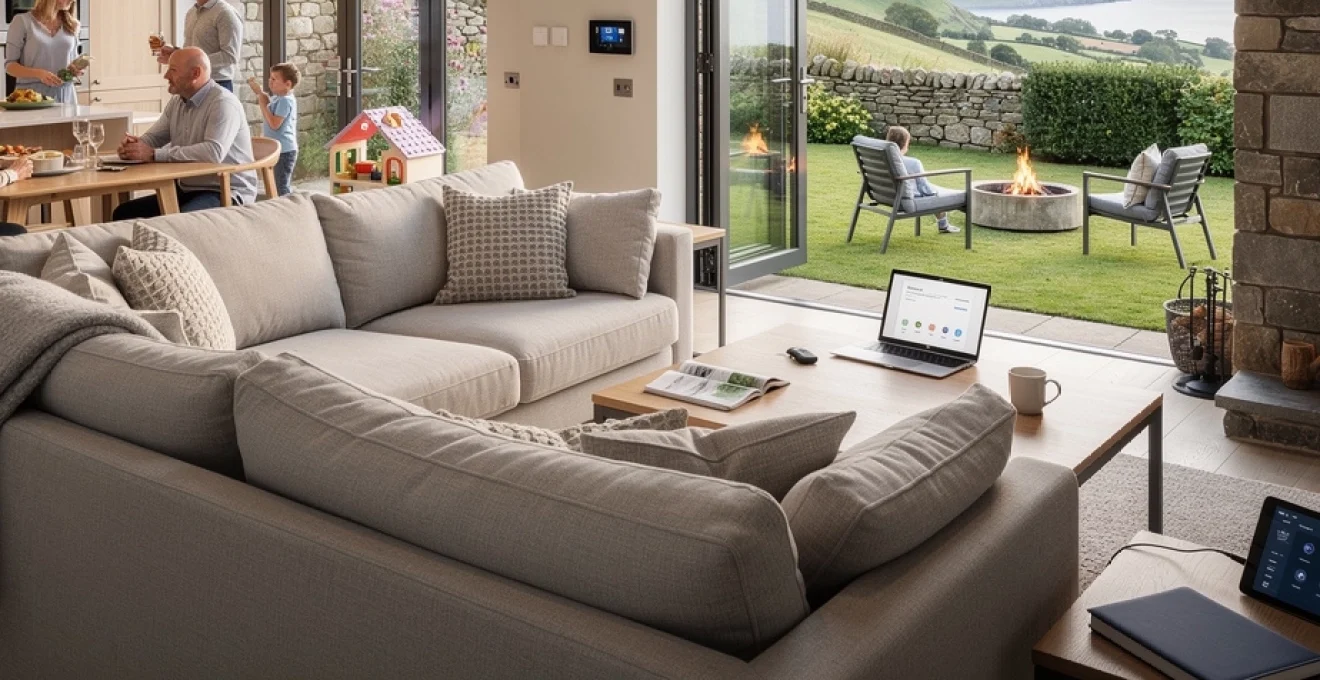
The hospitality landscape has experienced a dramatic shift in recent years, with vacation homes emerging as a compelling alternative to traditional hotel accommodation. This transformation reflects changing traveller preferences towards more spacious, personalised, and flexible lodging experiences. Modern holidaymakers increasingly seek accommodation that provides the comfort of home whilst maintaining the excitement of exploring new destinations.
Vacation homes have revolutionised the way families, groups, and business travellers approach their accommodation needs. Unlike standardised hotel rooms, these properties offer unique architectural features, generous living spaces, and amenities that cater to contemporary lifestyle demands. The appeal extends beyond mere space allocation to encompass privacy standards, technological integration, and location-specific advantages that traditional accommodation simply cannot match.
The financial implications of choosing vacation homes over hotels have become increasingly favourable, particularly for extended stays and larger groups. This accommodation model provides guests with unprecedented control over their environment, from meal preparation to entertainment choices, creating a more autonomous and comfortable travel experience.
Space allocation and privacy standards in vacation home accommodation
The fundamental advantage of vacation homes lies in their superior space allocation compared to traditional hotel accommodation. Modern travellers have come to expect more than the cramped confines of standard hotel rooms, seeking environments that allow for both social interaction and personal retreat. Vacation homes deliver this balance through thoughtfully designed layouts that accommodate various group dynamics and individual preferences.
Privacy standards in vacation home accommodation far exceed those found in conventional hotels. Guests enjoy exclusive access to entire properties, eliminating concerns about neighbouring rooms, shared corridors, or communal facilities. This level of privacy proves particularly valuable for families with young children, business groups requiring confidential discussions, or couples seeking romantic getaways without interruption.
Average square footage comparisons: vacation homes vs hotel suites
Statistical analysis reveals significant disparities in living space between vacation homes and hotel suites. A typical three-bedroom vacation home provides approximately 1,200 to 2,000 square feet of living space, whilst a luxury hotel suite rarely exceeds 800 square feet. This difference becomes even more pronounced when considering outdoor spaces, which vacation homes frequently include but hotels cannot offer at the individual guest level.
The spatial advantage extends beyond mere square footage to encompass functional room distribution. Vacation homes typically feature separate bedrooms, dedicated living areas, full kitchens, and multiple bathrooms, creating distinct zones for different activities. Hotel suites, despite their premium pricing, often compromise on this separation, combining sleeping and living areas in ways that limit privacy and functionality for groups.
Private garden and outdoor space accessibility in cornwall and lake district properties
Properties in Cornwall and the Lake District exemplify the outdoor space advantages that vacation homes provide. These locations offer vacation homes with private gardens ranging from 0.25 to 2 acres, providing guests with exclusive outdoor recreational opportunities. Cornwall coastal properties frequently feature private pathways to beaches, whilst Lake District homes offer direct access to hiking trails and mountain views.
The outdoor spaces in these regions serve multiple functions throughout different seasons. Summer months allow for outdoor dining and entertaining, whilst winter periods provide opportunities for stargazing and enjoying crackling fire pits. These amenities create memorable experiences that hotel accommodations simply cannot replicate, as guests have unrestricted access without competing with other visitors for prime outdoor locations.
Bedroom configuration flexibility for Multi-Generational family groups
Multi-generational travel has increased by 25% over the past five years, creating demand for flexible bedroom configurations that vacation homes can uniquely satisfy. These properties often feature master suites for grandparents, separate children’s rooms with bunk beds or twin configurations, and additional bedrooms for parents, ensuring everyone has appropriate sleeping arrangements whilst maintaining family cohesion.
The configuration flexibility extends to accessibility considerations, with many vacation homes offering ground-floor bedrooms and adapted bathroom facilities for elderly family members or those with mobility challenges. This adaptability proves crucial for multi-generational groups who might otherwise struggle to find suitable hotel accommodation that meets everyone’s needs within a single booking.
Dedicated Work-from-Home spaces in remote scottish highland retreats
The rise of remote working has created new demands for vacation properties that can accommodate professional responsibilities alongside leisure activities. Scottish Highland retreats have responded by incorporating dedicated office spaces with high-speed internet connectivity,
ergonomic chairs, and dual-monitor setups where possible. Many highland lodges now designate a quiet room or mezzanine as a study, ensuring that remote workers can join video calls without background noise from communal living areas. This separation between work and relaxation zones helps guests maintain boundaries, supporting healthier work-life balance even during extended stays.
From a practical perspective, these dedicated spaces often include multiple power outlets, adjustable lighting, and robust Wi-Fi repeaters to counteract any signal loss through thick stone walls. Some premium Scottish vacation homes now advertise guaranteed minimum bandwidth, recognising that reliable connectivity is as essential as heating or hot water for today’s traveller. For digital nomads or professionals extending their stay, this infrastructure makes remote Scottish Highland retreats a realistic base rather than a romantic but impractical dream.
Architectural design features enhancing guest comfort levels
Beyond raw square footage, the architectural design of vacation homes plays a decisive role in overall comfort levels. Thoughtful layouts, material choices, and climate-responsive design strategies can make a property feel welcoming in all seasons, particularly in the often changeable UK climate. Where hotel rooms are designed to be universally neutral, vacation homes can be tailored to specific environments, guest profiles, and regional characteristics.
Design elements such as open-plan kitchens, efficient heating systems, and strategic window placement are not merely aesthetic choices; they directly influence noise levels, temperature stability, natural light, and social interaction. For guests comparing vacation homes vs hotel accommodation, these subtle yet powerful features often translate into better sleep quality, more enjoyable communal time, and an overall sense of ease during their stay.
Open-plan kitchen integration in cotswolds countryside properties
Cotswolds countryside properties have become synonymous with open-plan living spaces that seamlessly integrate kitchen, dining, and lounge areas. This configuration reflects modern lifestyle preferences, where cooking is as much a social activity as a practical necessity. Rather than isolating the designated cook in a separate room, open-plan kitchens allow families and friends to socialise whilst preparing meals, making self-catering holidays feel more inclusive.
From a comfort perspective, open-plan layouts reduce circulation bottlenecks and create sightlines that help parents supervise children or keep an eye on elderly relatives. Large kitchen islands often double as informal breakfast bars or remote-working stations, increasing functionality without compromising aesthetic appeal. For guests used to compact hotel rooms, the ability to move freely between kitchen and living space, coffee in hand, replicates the relaxed flow of everyday home life.
Additionally, Cotswolds vacation homes often combine traditional materials—such as exposed beams and stone flooring—with contemporary fixtures and energy-efficient appliances. This blend preserves regional character whilst ensuring that guests enjoy modern conveniences like induction hobs, integrated dishwashers, and ample refrigeration. The result is a holiday rental environment that feels both authentically rural and effortlessly functional.
Fireplace and heating system configuration in peak district stone cottages
In the Peak District, where cooler temperatures and brisk evenings are common for much of the year, heating design is central to guest comfort. Traditional stone cottages can retain cold if poorly configured, but modern vacation homes in the region frequently combine original fireplaces with updated central heating systems or underfloor heating. This dual approach offers both efficient warmth and the atmospheric charm many guests seek from a countryside escape.
Open fires and wood-burning stoves function as focal points in living areas, encouraging guests to gather for board games, reading, or quiet conversation. Beyond aesthetics, a well-maintained stove provides consistent radiant heat, complementing the quick responsiveness of modern radiators. Many owners now provide clear usage instructions and starter logs or kindling, recognising that not all guests are familiar with operating solid-fuel fireplaces.
Energy efficiency is another consideration, particularly for eco-conscious travellers evaluating vacation homes vs hotels. High-spec stone cottages increasingly incorporate insulation improvements, double glazing, and programmable thermostats that allow guests to fine-tune temperatures room by room. This not only enhances comfort at night but also reduces unnecessary energy consumption, aligning with the growing demand for sustainable accommodation options.
Natural light optimisation through strategic window placement
Natural light has a measurable impact on mood, circadian rhythm, and perceived space. Vacation homes, particularly in rural UK locations, often enjoy greater freedom than urban hotels when it comes to window placement and size. Converted barns, coastal houses, and hillside cottages can incorporate expansive glazing, skylights, and dual-aspect rooms that maximise daylight throughout the day.
Strategic window orientation—such as east-facing bedrooms for gentle morning light and west-facing lounges for sunset views—helps guests feel more connected to the surrounding landscape. In practice, this might mean enjoying breakfast bathed in soft light overlooking a Cotswolds meadow, or reading by a large picture window with views across the Yorkshire Dales. Such experiences are difficult to reproduce in internal-facing hotel rooms or properties constrained by dense city planning.
Moreover, natural light optimisation directly supports energy efficiency, reducing the need for artificial lighting during daytime hours. Many contemporary vacation homes combine this with layered window treatments—such as blackout blinds in bedrooms and sheer curtains in living areas—giving guests control over brightness and privacy. The result is an environment that feels bright and uplifting by day, yet cosily enclosed in the evening.
Sound insulation properties in converted barn accommodations
Converted barns have become a hallmark of upscale rural vacation rentals across the UK, especially in regions like Devon, Yorkshire, and the Lake District. Whilst their high ceilings and exposed beams create dramatic visual impact, sound control is crucial to maintaining comfort. Without proper insulation and acoustic planning, these open volumes can amplify noise, turning a charming retreat into an echo chamber.
Quality barn conversions address this through a combination of insulated internal stud walls, acoustic plasterboard, and soft furnishings that absorb sound. Bedrooms are often positioned away from communal spaces, and solid-core doors are used to minimise sound transfer. For multi-generational families or groups of friends, this thoughtful sound management can mean the difference between restful sleep and constant disturbance.
When we compare vacation homes vs hotel suites, well-insulated barn accommodations often offer superior noise control because guests do not share walls or corridors with unrelated neighbours. For travellers sensitive to sound—such as parents with young children or professionals needing quiet for work calls—this can be a decisive factor in choosing a vacation rental over a traditional hotel stay.
Personalised amenity control systems and guest autonomy
One of the defining advantages of vacation homes over hotels is the degree of control guests have over their environment. Rather than conforming to fixed hotel schedules and centrally managed systems, visitors can adjust heating, lighting, ventilation, and entertainment options to match their preferences. This autonomy plays a significant role in perceived comfort, especially during longer stays.
Modern vacation properties increasingly feature zoned heating, where underfloor systems and radiators can be controlled independently in different rooms. Guests might choose a cooler temperature in bedrooms for improved sleep quality whilst maintaining cosy warmth in living areas. Similarly, dimmable LED lighting, bedside reading lamps, and task lighting in kitchens allow for nuanced control instead of the binary “on/off” overhead lights commonly found in hotel rooms.
Entertainment and media control is another area where vacation homes excel. Smart TVs with streaming services, Bluetooth speakers, and high-speed Wi-Fi give guests the freedom to curate their own films, music, and online content. Rather than relying on limited hotel television channels, families can organise movie nights, stream fitness classes, or connect gaming consoles brought from home. This level of personalisation creates a “home away from home” environment that many travellers now actively seek.
The kitchen exemplifies guest autonomy in a tangible way. With full-sized appliances, guests are free to cook at any time of day, cater to dietary requirements, or simply enjoy a leisurely brunch without watching the clock. For those managing allergies, specific diets, or travelling with young children, this flexibility often transforms the overall travel experience. In contrast, hotel guests remain dependent on restaurant opening hours, room service menus, and minibar pricing.
Cost-effectiveness analysis of extended stay vacation home rentals
When evaluating vacation homes vs hotel accommodation, cost-effectiveness becomes particularly apparent for extended stays and group travel. While nightly rates for well-located holiday homes can appear comparable to mid-range hotels, the value calculation changes once you factor in total usable space, self-catering options, and the ability to distribute costs among multiple guests. For stays of a week or more, vacation homes often provide superior value.
Firstly, the per-person cost decreases significantly in larger properties. A four-bedroom home in the Lake District, for example, might comfortably accommodate eight guests. When the total rental cost is divided by the number of occupants, the effective nightly rate per person often falls well below that of booking multiple hotel rooms of comparable quality. This is especially true during off-peak seasons, when many owners offer discounted weekly or monthly rates.
Secondly, self-catering facilities have a direct impact on daily expenses. Being able to prepare breakfast and some main meals at home can reduce restaurant spending by 30–50% over a week-long stay, depending on group size and dining habits. Access to laundry facilities also eliminates hotel laundry charges and allows travellers to pack more lightly, which can be particularly advantageous for those flying or using public transport.
From a business-travel perspective, extended-stay vacation homes can compare favourably with serviced apartments and corporate hotel rates. Companies sending teams to project sites for several weeks often find that a well-equipped house with high-speed internet, dedicated workspaces, and multiple bedrooms offers better value than separate hotel rooms. Beyond cost savings, the shared environment can also foster collaboration and team cohesion.
Of course, it is important to account for additional variables such as cleaning fees, security deposits, and energy usage when assessing total cost. However, even with these factors included, many travellers conclude that the overall comfort, privacy, and flexibility of vacation homes make them a financially prudent choice for longer stays. Put simply, you are not just paying for a bed—you are investing in a fully functional living environment.
Location-specific comfort advantages in premium UK destinations
Vacation homes across the UK are uniquely positioned to leverage their surroundings in ways that traditional hotels cannot always match. From coastal breezes in Devon to historic architecture in Bath, each region offers location-specific comfort benefits that enhance the holiday experience. When you choose a vacation rental, you are often selecting not just a property, but a particular lifestyle for the duration of your stay.
Premium destinations such as Devon, Dorset, the Welsh Valleys, the Yorkshire Dales, Bath, and Chester showcase how regional characteristics influence design, amenities, and daily rhythms. Coastal homes might prioritise outdoor showers and sea-view terraces, while mountain retreats focus on mudrooms, boot storage, and log stores. In historic city centres, well-converted townhouses and apartments balance heritage features with modern soundproofing and climate control to ensure a restful stay.
Coastal property benefits in devon and dorset seaside locations
Devon and Dorset seaside locations offer a distinctive combination of maritime climate, scenic views, and outdoor recreation that vacation homes are perfectly suited to harness. Coastal properties often include large windows, balconies, or terraces oriented towards the sea, allowing guests to enjoy sunrise coffees or sunset suppers without leaving their accommodation. For many travellers, this uninterrupted access to the coastline represents a core reason for choosing a vacation rental over a hotel room with partial or obstructed views.
Practical design features also enhance comfort in these seaside homes. Boot rooms or utility spaces near entrances provide storage for wetsuits, surfboards, walking boots, and sandy equipment, preventing clutter in living areas. Outdoor taps and showers are increasingly common, making it easy to rinse off after a beach day. These seemingly small details significantly reduce day-to-day friction and help maintain a clean, comfortable environment.
In terms of wellbeing, being able to step directly from your accommodation onto a coastal path or down to a sheltered cove can be transformative. Rather than navigating hotel lobbies and car parks, guests in Devon and Dorset vacation homes often enjoy immediate access to local trails, harbours, and village amenities. This ease of movement encourages spontaneous walks, early-morning swims, and relaxed evenings in nearby pubs—precisely the kind of lived-in experience many visitors are seeking.
Mountain retreat advantages in welsh valleys and yorkshire dales
Mountain and valley regions such as the Welsh Valleys and Yorkshire Dales deliver a different but equally compelling comfort profile. Here, vacation homes are often designed as refuges from the elements, with robust construction, highly efficient heating, and generous communal spaces where guests can unwind after days spent hiking, cycling, or exploring. Thick stone walls, snug window seats, and deep sofas create a cocooning effect that hotel lobbies seldom achieve.
One of the key advantages of mountain retreats is the seamless integration of outdoor and indoor living. Many properties feature drying rooms or utility spaces equipped with dehumidifiers and heated rails, allowing guests to dry wet gear overnight. Log stores and sheltered patios make it feasible to enjoy barbecues and hot drinks outdoors even in cooler months. This attention to the realities of rural, weather-dependent activities ensures that comfort is maintained regardless of conditions.
Moreover, the relative seclusion of many Welsh and Yorkshire vacation homes translates directly into peace and quiet. Without the background noise typical of hotels—such as passing traffic, late-night arrivals, or conference events—guests can enjoy uninterrupted sleep and restorative downtime. For urban residents, staying in a Dales farmhouse or a Welsh hillside cottage can feel like switching off the constant hum of daily life, allowing genuine mental and physical recovery.
Historic city centre vacation homes in bath and chester
Historic city centres like Bath and Chester offer yet another dimension to the vacation home experience. Here, the comfort advantage arises from proximity and character. Staying in a Georgian townhouse in Bath or a Tudor-fronted property in Chester places guests within walking distance of major attractions, independent shops, and restaurants, removing the need for taxis, buses, or long walks from out-of-town hotels.
Inside these properties, guests often find period features such as high ceilings, sash windows, fireplaces, and original staircases. When sensitively restored, these elements create a sense of place that chain hotels, with their standardised interiors, struggle to replicate. At the same time, modern upgrades—such as improved insulation, secondary glazing, and efficient heating—ensure that historic charm does not come at the expense of thermal comfort or quiet nights.
For travellers interested in culture, architecture, or gastronomy, a city-centre vacation home effectively functions as a private base camp. You can step out to visit Roman baths, medieval walls, or riverside paths, then return to a spacious living area to relax, cook, or host friends. This fluid movement between public and private spaces gives guests agency over their time and energy, making city breaks less rushed and more restorative.
Technology integration and smart home features in modern vacation properties
As traveller expectations evolve, technology integration has become a core differentiator for modern vacation homes. Where hotels have traditionally led with in-room telephones and pay-per-view systems, contemporary holiday rentals now incorporate smart home features that prioritise convenience, security, and energy efficiency. For many guests, the presence of intuitive technology is as reassuring as comfortable beds or quality linens.
Keyless entry systems, for example, eliminate the need for physical key handovers and reduce the risk of lost keys. Guests receive unique access codes or smartphone-based digital keys, allowing flexible arrival times and easy re-entry after excursions. For multi-generational groups or friends travelling together, this means everyone can come and go independently without coordinating key logistics.
Inside the property, smart thermostats and heating controls enable precise temperature regulation. Some systems learn usage patterns and adjust automatically, while others allow guests to manage settings via wall panels or mobile apps. This not only enhances comfort but also minimises energy waste, a growing concern for both owners and environmentally conscious travellers comparing vacation homes vs hotel stays.
Entertainment technology has also advanced considerably. High-definition smart TVs with built-in streaming apps, robust Wi-Fi mesh networks, and Bluetooth audio systems support everything from remote work to family movie nights. In some premium properties, dedicated media rooms or cinema spaces are equipped with surround sound, gaming consoles, and blackout blinds, transforming a rainy afternoon into an enjoyable event rather than an inconvenience.
Security and safety systems form another layer of technological comfort. External CCTV, motion-activated lighting, and monitored alarms provide peace of mind without intruding on privacy. Internally, integrated smoke detectors, carbon monoxide alarms, and occasionally smart leak sensors help protect both guests and property. Whilst you may never interact directly with these systems, their presence contributes to a sense of security that underpins a relaxing stay.
Ultimately, the thoughtful use of technology in vacation homes is less about novelty and more about removing friction from the guest experience. When you can adjust lighting with a dimmer, set the perfect room temperature, stream your favourite series, and arrive without worrying about check-in desks, your accommodation fades into the background and simply supports how you want to live. That, in essence, is what makes vacation homes such a compelling and comfortable alternative to traditional accommodation.